

Parts of the Eyes

Presentation
•
Science
•
3rd Grade
•
Practice Problem
•
Hard
+6
Standards-aligned

Conrado Mapili
Used 1+ times
FREE Resource
26 Slides • 0 Questions
1
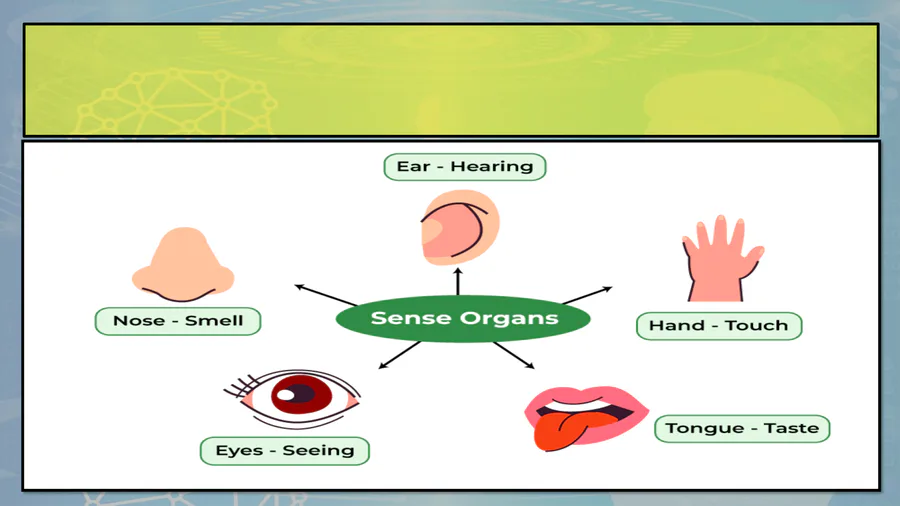
Sense Organs
2

Eyes
Eyes is used for
seeing.
3

Parts of the Eyes
Parts:
1. Cornea
2. Iris
3. Lens
4. Retina
5. Optic Nerve
4

5

Eyelids
Protects the eyes
from dust.
6

Iris
The Colored part
of the eyes.
7

Pupil
The opening in the
center of the eye.
Light enters the
eye through the
pupil.
8

Pupil
Regulates the
amount of light
that enters the
eye.
9
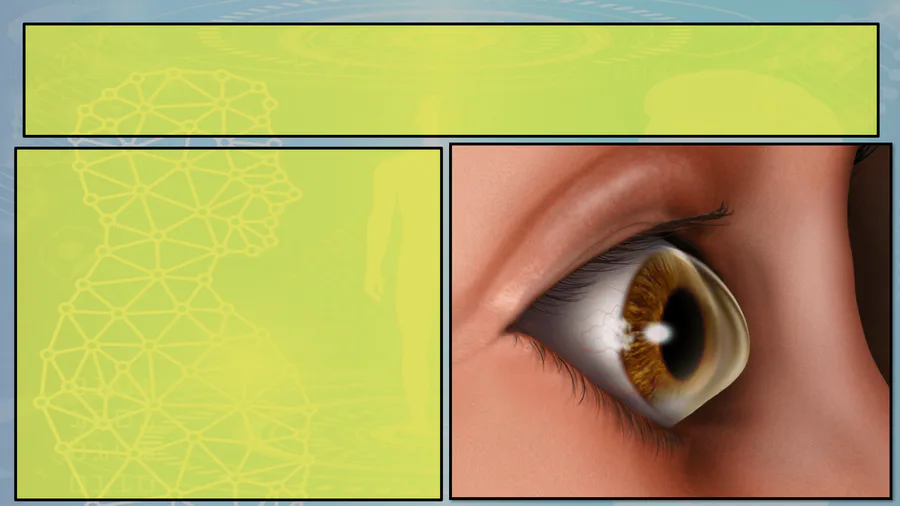
Cornea
Clear covering in
front of the eye.
Cornea allows
light to pass
through the pupil.
10

Lens
From the pupil, light
passes through the
lens. The lens
focuses the image
you are looking at
on the retina.
11

Retina
The retina, which lies
on the inner surface
at the back of the
eye, contains the
nerve endings of the
optic nerve.
12

Optic Nerve
Carries the image of
the object you are
looking at to the
brain.
13

Common Ailments of the Eyes
1. Sore Eyes or
Conjunctivitis
2. Nearsightedness
3. Farsightedness
4. Cataract
5. Color Blindness
14

Sore Eyes or Conjunctivitis
1. The membrane that
covers the eyeball
and the underside of
the eyelids become
red and inflamed
because of its
frequent exposure to
dust and germs.
15

Sore Eyes or Conjunctivitis
At first, the eyes become
red and dry, and may
feel like they are burning.
Later, you may observe
pus and a watery
secretion. During sleep,
the pus dries and makes
the lashes stick together.
16

Sore Eyes or Conjunctivitis
It is a contagious
disease. It may spread to
other people , unless
proper care is taken to
avoid this kind of
ailment.
17

Nearsightedness
This is a condition
wherein a person can
see near objects more
clearly than distant ones.
18

Nearsightedness
It occurs mainly because
the shape of the eyeball
is longer and more oval
than normal.
19

Nearsightedness
Nearsightedness can be
corrected by wearing
eyeglasses with concave
lenses. Concave lenses
have edges that are
thicker than the middle
part.
20

Farsightedness
This is a condition
wherein a person can
see distant objects more
clearly than the near
ones.
21

Farsightedness
It occurs mainly because
the shape of the eyeball
is shorter and less oval
than normal.
22
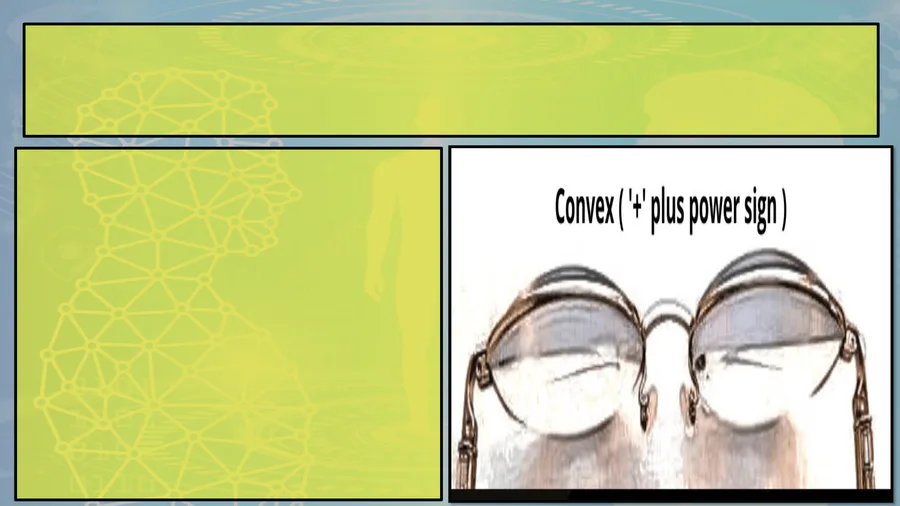
Farsightedness
Farsightedness can be
corrected by wearing
convex lenses.
23

Cataract
This is an eye defect in
which the lens of an eye
becomes cloudy, resulting
in an unclear vision.
Cataract is quite common
among elderly. However, it
can be corrected by
replacing the defective lens
with an artificial lens.
24

Color Blindness
This is a condition wherein a
person cannot recognize
certain colors. Green and
red are the color shades
most confused. People who
are completely colorblind
see all colors as gray. It is
inherited.
25

26

Seatwork:
Notebook
Draw and label the parts of the eyes.
Sense Organs
Show answer
Auto Play
Slide 1 / 26
SLIDE
Similar Resources on Wayground

17 questions
States of Matter and Energy Review
Presentation
•
3rd Grade
17 questions
Living and Nonliving Review
Presentation
•
3rd Grade
18 questions
Electricity (Electric Circuits)
Presentation
•
3rd Grade
20 questions
Changes in matter
Presentation
•
2nd Grade
20 questions
Forms of Energy/ Circuits Review
Presentation
•
4th Grade
19 questions
Soil
Presentation
•
3rd Grade
21 questions
Natural and Man Made Resources
Presentation
•
3rd - 4th Grade
17 questions
The Engineering Process
Presentation
•
3rd Grade
Popular Resources on Wayground
6 questions
PRIDE Always and Everywhere
Presentation
•
12th Grade
20 questions
Lab Safety Quiz

Quiz
•
6th Grade
26 questions
KOR Review Kahoot Questions
Quiz
•
8th Grade
21 questions
Continents and Oceans
Quiz
•
6th Grade
12 questions
Unit Zero lesson 2 cafeteria
Presentation
•
9th - 12th Grade
20 questions
Parts of Speech
Quiz
•
5th Grade
10 questions
Riddles Riddles fun Riddles
Quiz
•
6th - 12th Grade
16 questions
Subject & Predicate
Quiz
•
5th Grade
Discover more resources for Science
10 questions
States and Properties of Matter

Interactive video
•
3rd - 5th Grade
14 questions
Soil Progress Grade 1 Review
Quiz
•
3rd Grade
10 questions
Identifying Physical and Chemical Changes
Interactive video
•
1st - 5th Grade
10 questions
Exploring the Conservation of Mass in Everyday Life
Interactive video
•
1st - 5th Grade
10 questions
Exploring Properties of Matter
Interactive video
•
1st - 5th Grade
10 questions
Discovering the Properties of Matter
Interactive video
•
1st - 5th Grade
20 questions
Properties of Matter
Quiz
•
3rd Grade
20 questions
States of Matter
Quiz
•
3rd - 4th Grade