

IOPCAM analysis - How to...

Presentation
•
History
•
8th Grade
•
Practice Problem
•
Easy

Glen Culling
Used 3+ times
FREE Resource
16 Slides • 9 Questions
1
How to complete an IOPCAM analysis
2
Multiple Select
What does it mean to analyse?
To read something carefully
Breaking down something complex, making it simple so that it can be more easily understood
Describing something that you've read in more detail
Identifying separate features that make up a text, and explain their effects on their intended audience
3
Write down this definition:
To analyse means to:
examine anything complex in order to understand its nature or to determine its essential features : a thorough study.
Identify separate features that make up a text, and explain their effects on their intended audience.
4
Open Ended
What do you think we need to know about a text to conduct a thorough analysis?
5
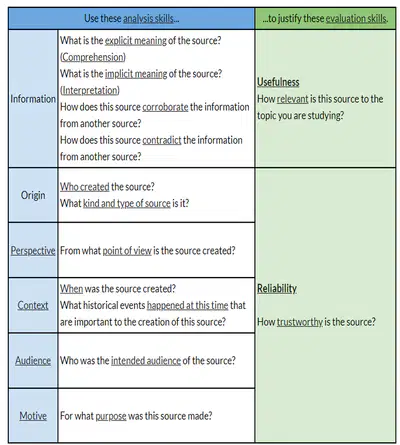
What is IOPCAM?
IOPCAM is a helpful acronym that some history students use to help with text analysis. These are the "features" of a text that we identify in analysis.
6
Multiple Select
What is information?
The explicit meaning of a text.
The implicit meaning of a text.
The details of a text.
Nformation, by Apple.
7
Write this definition down:
Information
Information refers to the explicit or implicit meaning of a text. When we determine a text's meaning, we consider all the details in the text and identify the ways in which a text corroborates or contradicts another text discussing the same event.
8
EXPLICIT VS IMPLICIT INFORMATION
Explicit information is information that does not need to be interpreted in a source. We can take it at face value. "It was very hot" is an explicit statement. It means exactly what it says, but what if I said "it was a sauna outside"?
9
10
IMPLICIT INFORMATION
Implicit information requires a degree of interpretation. Saying "it is a sauna outside" if taken at face value is a lie. There isn't really a sauna outside. But do I actually mean there is a literal sauna outside?
By saying it is a sauna outside, I actually mean to say that it is "hot". To understand what I mean, you need to interpret a little. This makes the the meaning "implicit".
11
Open Ended
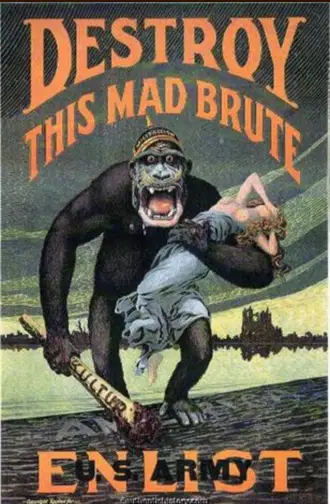
What is the implicit meaning of this text?
12
Origin: Write this definition down
The origin of a source is its author and source type. Origin tells us "who" wrote the source as well as the "genre" of the text.
13
Open Ended

What is the origin of this text?
14
Perspective (write this definition)
Perspective is about understanding an event the way a particular group or person experiences and understands it. People may experience the same event and develop different opinions and biases depending on how it effects them.
15
16
Multiple Choice
Why did the woman in the video think the neighbour's clothes were dirty?
The clothes were actually dirty
The window was dirty
17
Open Ended
Was the woman biased (i.e. was already prejudiced against her neighbour) or were her judgements based purely on what she could see at the time?
18
Open Ended

Looking back at a source we considered earlier, what can be said about the perspective of the person creating the source?
19
Context (Write this down)
The context of a text tells you when a source was created and what was happening around that time. Understanding context in history is very important. The meaning of a text can be completely different across different times and situations.
20
Open Ended
The word "sick" can have three different meanings depending on the context. Can you list their meanings in 1 minute?
21
Audience (write this down)
The audience is who the author created a source for. This matters, because usually an author will want to be understood in a particular way by a particular group of people.
22
Motive (write down)
Motive refers to the purpose for creating a source. An author will usually try to do one of six things:
- Entertain
- Persuade
- Dissuade
- Warn
- Encourage
- Inform
23
Origin, perspective, context, audience and motive help us to judge a source's reliability in recounting a historic event.
Reliability
In IOPCAM - the information part is where we find what we need to judge a source's usefulness for understanding an historic event.
Usefulness
Reliability and Usefulness
24
Usefulness and Reliability
At the end of your IOPCAM analysis, don't forget to make a judgement on your source's usefulness and reliability.
"Source __ is mostly reliable/unreliable because __________". Source is useful because ______________".
25
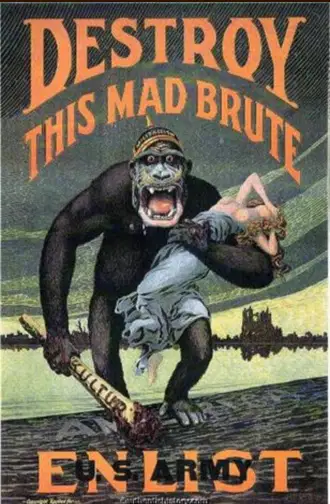
Use IOPCAM analysis to determine the reliability and usefulness of this source.
Homework
How to complete an IOPCAM analysis
Show answer
Auto Play
Slide 1 / 25
SLIDE
Similar Resources on Wayground

19 questions
Civil Rights part 1
Presentation
•
8th Grade
20 questions
Introduction to the Renaissance
Presentation
•
9th Grade
21 questions
Chapter 24: Section One: Boom Times
Presentation
•
KG
20 questions
Middle Colonies
Presentation
•
8th Grade
17 questions
Ch.16 Lesson 1 The Search for Compromise
Presentation
•
8th Grade
20 questions
CEFR B1 - B2 LISTENING (Activity 1)
Presentation
•
8th Grade
21 questions
Mini-Constitutions: Compromises
Presentation
•
8th Grade
19 questions
Athens Vs Sparta
Presentation
•
8th Grade
Popular Resources on Wayground
16 questions
Grade 3 Simulation Assessment 2

Quiz
•
3rd Grade
19 questions
HCS Grade 5 Simulation Assessment_1 2526sy
Quiz
•
5th Grade
10 questions
Cinco de Mayo Trivia Questions

Interactive video
•
3rd - 5th Grade
17 questions
HCS Grade 4 Simulation Assessment_2 2526sy
Quiz
•
4th Grade
24 questions
HCS Grade 5 Simulation Assessment_2 2526sy
Quiz
•
5th Grade
13 questions
Cinco de mayo
Interactive video
•
6th - 8th Grade
20 questions
Math Review
Quiz
•
3rd Grade
30 questions
GVMS House Trivia 2026
Quiz
•
6th - 8th Grade
Discover more resources for History
20 questions
CG5 - Juvy Justice GMAS
Quiz
•
8th Grade
13 questions
H6 GMAS Prep - Recon
Quiz
•
8th Grade
19 questions
H12 GMAS PREP
Quiz
•
8th Grade
14 questions
H10 GMAS Review
Quiz
•
8th Grade
50 questions
50 States and Capitals
Quiz
•
8th Grade
25 questions
Gov't GMAS Prep #1
Quiz
•
8th Grade
40 questions
Civics SOL Review
Quiz
•
8th Grade
10 questions
Exploring the Great Depression and World War II
Interactive video
•
6th - 10th Grade