
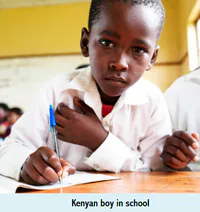
Africa - Standard of Living

Presentation
•
Social Studies
•
7th Grade
•
Easy

Anna Moore
Used 4+ times
FREE Resource
11 Slides • 6 Questions
1
Low Standards of Living in Africa
SS7CG2a
I can describe how government instability impacts access to education and the distribution of medicine and food to combat diseases and famine across Africa.
2
Low Standards of Living in Africa
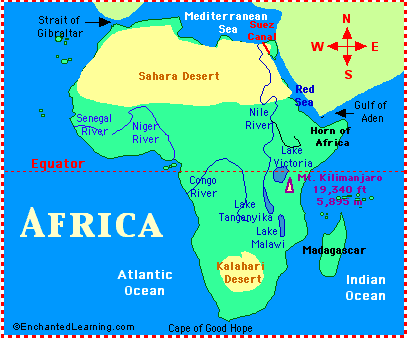
Many people in Africa suffer from a low standard of living, especially in sub-Saharan nations
poverty is widespread
people do not have adequate food, water, clothing, or shelter
There are many problems that affect people's quality of life
limited access to education
lack of medicine
threat of famine, or not enough food
Many governments are still dealing with affects of European colonization
3
Unstable Governments in Africa
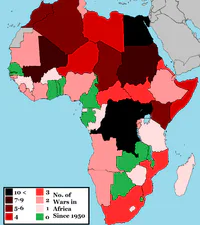
Government instability is one major issue preventing African nations from imrpoving their citizens' quality of life
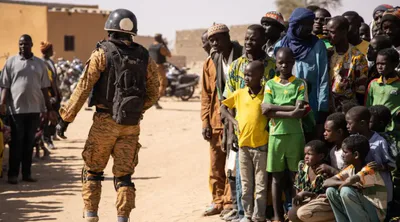
In part of Africa, power has changed hands many times through civil war, revolutions, and military coups
When a country's government is unstable, it can't meet the needs of its people
4
Access to Education
Education is a human right & more highly educated countries are better able to resolve conflicts and prevent civil war
Many sub-Saharan African nations have the highest rates of illiteracy in the world
especially in rural areas and poor urban communities
Factors that limit access to education:
shortage of teachers & school buildings
money - even if school is free, families still have to pay for transportation & school supplies
families are often too poor to send all their children to school & need some to help out at home
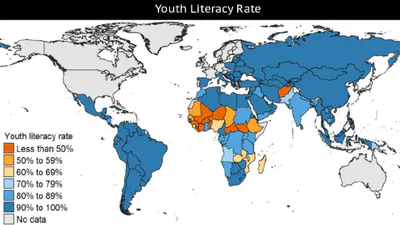
**Children from poor urban households are less likely to receive an education than children from rich urban households.
5
Access to Education
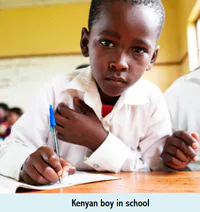
One problem many African nations face is the lack of education for women
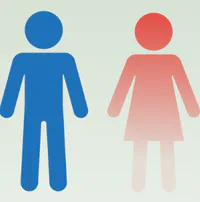
far more men are educated & literate than women
Why is there this gap?
African societies do not value education for girls as highly as education for boys
Girls are expected to learn to cook & clean to prepare them from marriage
Fewer African women can read & write than men, which makes it harder for women to own a business or work in government
6
Categorize
There is limited access to education in many African nations.
There is equal access to education across Africa.
Women in Africa tend to have lower literacy rates than men.
Children in rural areas of Africa are more likely to attend school than city children.
Civil wars in Africa have negatively impacted access to education.
Read the statements and decide if they are true or false.
7
Disease Outbreaks in Africa
Without stable governments, many African nations have struggled to establish proper healthcare for citizens
not enough hospitals, not enough doctors, not enough supplies
In the past, some African governments have not been effective at distributing medicine in emergency situations
this can cause outbreaks to turn into deadly epidemics
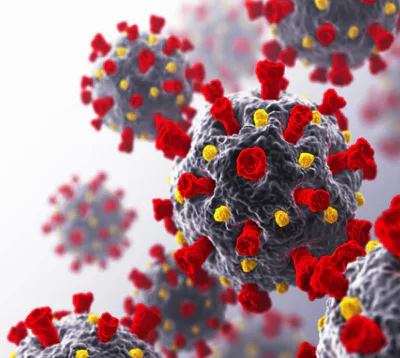
Common epidemics in Africa:
HIV/AIDS
Malaria
Tuberculosis
8
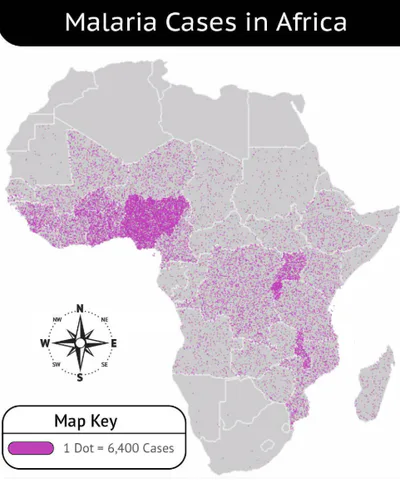
Malaria
caused by a parasite that is spread through infected mosquitoes
has existed more than 2.5 million years
infects millions of people around the world every year
70% of malaria-related deaths are in Africa
sub-Saharan Africa is the most susceptible
Nations around the world have worked to fight malaria through medicine, insecticides, and insecticide-treated bed nets.
These global efforts have reduced the numbers of malaria deaths in sub-Saharan Africa; however, none of the efforts succeeded at eliminating malaria.
Today, one of the biggest public health projects is a search for an effective malaria vaccine.
9
HIV/AIDS
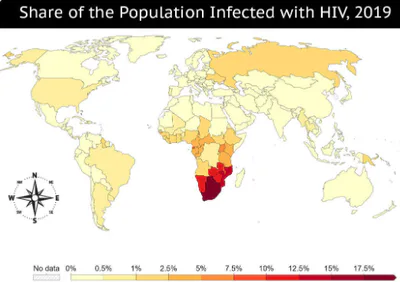
HIV is the virus that causes AIDS
AIDS is a global concern, but the number of people infected is especially high in Africa
In 2022, around 70% of people living with HIV were in Africa & around 630,000 people died, mostly in Africa
More than 75% of new HIV infections are in young people between the ages of 15 and 24
Girls & women are 3 times more likely to contract HIV than males
10
HIV/AIDS
Political instability is partly responsible for the prevelance of AIDS
The rise of AIDS did not receive the necessary attention or resources to stop it from coming an epidemic
African governments did not teach citizens how to prevent the spread of it
Poor health systems left people with HIV susceptible to other diseases, such as tuberculosis
Poor women & girls in poor communities have less access to education and treatment
Education and new treatment methods have reduced AIDS-related illnesses and deaths, but many African countries don't have the resources to identify people with the virus or gve them the medicine to treat it
11
Tuberculosis
a bacterial illness that primarily affects the lungs & is spread through the air through sneezing, coughing, talking, singing, etc.
People with AIDS are particularly at risk of contracting tuberculosis
Antibiotics are the primary treatment, but some form of tuberculosis have become resistant to antibiotics
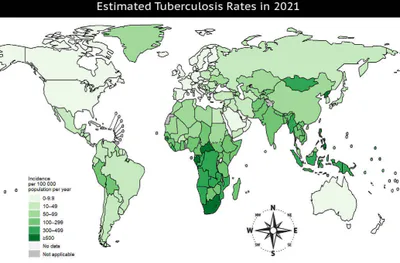
There were 7.5 million new tuberculosis diagnosis around the world in 2022
about 23% were in Africa
Main reasons for high numbers of tuberculosis in Africa:
limited & overburdened healthcare systems
lack of ability to afford preventative care
inadequate nutrition
12
Multiple Choice
True or False: The number of people infected with diseases is higher in Africa.
True
False
13
Multiple Choice
True or False: Women and girls have more access to education and healthcare than men and boys.
True
False
14
Multiple Choice
True or False: The lack of government response and access to healthcare are contributing factors to the high rate of infected people.
True
False
15
Famine in Africa
extreme scarcity of food
Caused by:
Government Instability & Corruption
governments have failed to provide support to their citizens & have even chosen to build armies or used food as a political weapon
Climate Change
droughts (very little or no rainfall) & floods make it hard to grow food
Civil Wars
not as many people able to farm, soldiers destroy crops & these wars caused people to have to move
Covid-19 - sick people were not able to work & made food shortages worse



16
Multiple Choice
True or False: The people of Africa have plenty of food and do not have to worry not having enough food, or a famine.
True
False
17
Open Ended
What is one thing you learned about Africa today?
Low Standards of Living in Africa
SS7CG2a
I can describe how government instability impacts access to education and the distribution of medicine and food to combat diseases and famine across Africa.
Show answer
Auto Play
Slide 1 / 17
SLIDE
Similar Resources on Wayground

15 questions
Unit 4 - Articles 4-7
Presentation
•
7th Grade
15 questions
James Monroe
Presentation
•
7th Grade
14 questions
Economics Terms Preview
Presentation
•
6th - 7th Grade
16 questions
Chapter 7 Review 2021-22
Presentation
•
7th Grade
16 questions
African Government DT#1 Re-Performance Lesson
Presentation
•
7th Grade
12 questions
Montgomery Bus Boycott
Presentation
•
7th Grade
15 questions
Notes: Argumentative Writing
Presentation
•
7th - 8th Grade
14 questions
Executive Branch
Presentation
•
7th Grade
Popular Resources on Wayground
6 questions
PRIDE Always and Everywhere
Presentation
•
12th Grade
20 questions
Lab Safety Quiz

Quiz
•
6th Grade
26 questions
KOR Review Kahoot Questions
Quiz
•
8th Grade
21 questions
Continents and Oceans
Quiz
•
6th Grade
12 questions
Unit Zero lesson 2 cafeteria
Presentation
•
9th - 12th Grade
20 questions
Parts of Speech
Quiz
•
5th Grade
10 questions
Riddles Riddles fun Riddles
Quiz
•
6th - 12th Grade
16 questions
Subject & Predicate
Quiz
•
5th Grade
Discover more resources for Social Studies
10 questions
Exploring the Age of Exploration: Key Events and Figures

Interactive video
•
6th - 10th Grade
20 questions
Primary and Secondary Sources
Quiz
•
7th Grade
21 questions
ss.7.cg.1.1- Ancient Influences
Quiz
•
7th Grade
13 questions
The French and Indian War
Interactive video
•
6th - 8th Grade
27 questions
SW Asia Geography Test Review
Quiz
•
7th Grade
25 questions
SS7G1 Africa Geography
Quiz
•
7th Grade
21 questions
Unit 2 Age of Contact 7th gr
Quiz
•
7th Grade
11 questions
Top 10 - B Cultural Diversity ME
Quiz
•
7th Grade