Search Header Logo
Plate Tectonic Practice

Plate Tectonic Practice

Assessment

Presentation

English

8th Grade

Easy

Created by

Rebecca Smith

Used 4+ times

FREE Resource

30 Slides • 53 Questions

1

Earthquakes and Volcanoes (Interactive!)

Adventure starts NOW!

media

2

Volcanoes

Lets start with volcanoes. You probably know that they are dangerous and they spit out lava, or magma I should say. Let's dive deeper into volcanoes!!

3

This is a active volcano. This volcano is spitting out lava. Lava is  hot, liquefied rock that flows from a volcano or other opening in the surface of Earth. Lava is very hot and can destroy and burn villages near the volcano that the lava falls on.

media

4

Volcanoes can be active, or dormant. Dormant volcanoes have a low chance of waking up and becoming an active volcano, what you see here on the screen. Active volcanoes spit out lava, but not all the time. After a volcano has erupted, the ground is very hot! Only Scientists can go near volcanoes, because they have a safe gear so they do not get burnt.

media

5

Multiple Choice

Match the answers! What is a active volcano?

1
2

6

7

Multiple Choice

How is a volcano formed?

1

It forms randomly inside mountains when it gets super hot.

2

When magma finds a way to escape from beneath the earth's surface, it creates a volcano.

3

When lava from the Earth's core finds a way into a mountain to create a volcano.

8

Multiple Choice

Question image

What is magma called when it reaches the surface of Earth?

1

Lava

2

viscosity

3

toxic gas

9

This is the aftermath of a earthquake. Earthquakes are very destructive. Lets take a look on how a earthquake forms! But first, we need to know what tectonic plates are!

media

10

Read this slide.

media

11

Plate tectonics is the theory that Earth's outer shell is divided into several plates that glide over the mantle, the rocky inner layer above the core. 

media

12

13

Multiple Choice

Question image
The huge pieces of the earth's crust are called ____________________________. 
1
crust
2
plates
3
directions
4
seismos

14

Multiple Choice

Question image
The outside layer of the earth is called ______________________.
1
core
2
crust
3
mantle
4
outer core

15

Lets look at the layers of the Earth. The crust is a thin outer layer of the Earth! The mantle is the layer under the crust. The outer core is VERY hot. And last but not least, the inner core. It is the hottest layer of the Earth.

media

16

17

Multiple Choice

Question image

How is this plate moving?

1

more on top of the other

2

bumping together

3

move away from each other

4

slide against each other

18

Multiple Choice

Question image

How are these plates moving?

1

bumping together

2

slide against each other

3

move away from each other

4

more on top of another

19

Multiple Choice

Question image

How are these plates moving?

1

move away from each other

2

bumping together

3

slide against each other

4

more on top of another

20

Multiple Choice

Question image

How are these plates moving?

1

slide against each other

2

move away from each other

3

more on top of another

4

bumping together

21

Multiple Choice

How do tectonic plates look like?

1
2
3
4

22

Multiple Choice

The earth has top layer called...

1

crust

2

ocean

3

land

4

sea

23

24

What have we learned?

  • The layers of the earth

  • How volcanoes are formed

  • How earthquakes are formed

  • What is magma and lava

  • What is tectonic plates

25

Plate Boundaries

media

26

Heat Transfer

Convection, Conduction, Radiation

27

media

28

​Heat Transfer

​Heat is the transfer of thermal energy from one object to another.

This can occur three ways:

  • ​Convection

  • ​Conduction

  • ​Radiation

media

29

media

30

Multiple Choice

Which of the following is not a form of heat transfer?

1

Convection

2

Conduction

3

Insulation

4

Radiation

31

Multiple Choice

Question image
What kind of plate boundary is shown here?
1
divergent
2
convergent
3
transform
4
strike slip

32

​Conduction

​Heat transfer through direct contact between two objects or substances

​Best in solids

​When two things are touching, their particles interact and heat is transferred between them.

media

33

Multiple Choice

Question image
What kind of plate boundary is shown here?
1
divergent
2
convergent
3
transform
4
submergent

34

Multiple Select

Which of the following are examples of heat transfer through conduction? You may choose more than one.

1

Using hand warmers to warm up your hands

2

Hot air balloon rising

3

Burning your hand on a curling iron

4

Spoon getting hot while sitting in hot tea

35

Multiple Choice

Question image

What kind of plate boundary is shown here?

1

divergent

2

convergent

3

transform

4

subducting

36

​Convection

​Occurs in fluids like liquids and gases

​As fluid heats up, the particles spread out, become less dense and rise

​As fluids cool down, the particles become more dense and sink

​"Heat Rises"

media

37

media

38

Multiple Select

Which of the following are examples of heat transfer through convection?

You may choose more than one.

1

Hot air balloon rising

2

The second floor of a house is warmer than the first floor

3

Boiling water on the stove

4

Sitting around a campfire and feeling the heat from the flames

39

media

40

​Radiation

​Transfer of thermal energy through waves

​If you hold your hand near a hot object (such as a lightbulb or a candle), you can feel the heat transferred through waves

media

41

media

42

Multiple Select

Which of the following are examples of heat transfer through radiation? You may choose more than one.

1

Feeling the heat from a candle

2

The water at the top of the pool feels warmer than the deep end

3

The sun warming the Earth

4

A space heater warming the room

43

media

44

Fill in the Blanks

media image

Type answer...

45

Multiple Choice

Mountains form from ...
1
plates sliding past one another
2
collision of plates
3
plates moving away from each other

46

Fill in the Blanks

media image

Type answer...

47

Multiple Choice

What geologic feature/event would you most likely to find at a convergent boundary between two pieces of continental crust?
1
Volcano
2
Mountain
3
Rift
4
Island Arc

48

Fill in the Blanks

media image

Type answer...

49

media

50

Fill in the Blanks

media image

Type answer...

51

Multiple Choice

What geologic feature/event would you most likely to find at a divergent boundary between two pieces of continental crust?
1
Mid-Ocean Ridge
2
Mountain
3
Rift Valley
4
Island Arc

52

Fill in the Blanks

Type answer...

53

Multiple Choice

What geologic feature/event would you most likely to find at a divergent boundary between two pieces of oceanic crust?
1
Rift Valley
2
Mid-Ocean Ridge
3
Island Arc
4
Flat land

54

Fill in the Blanks

Type answer...

55

media

56

Fill in the Blanks

media image

Type answer...

57

media

58

Fill in the Blanks

Type answer...

59

Multiple Choice

What geologic feature/event you be most likely to find at a transform boundary?
1
Earthquakes
2
Volcanoes
3
Mountains
4
Rift Valleys

60

media

61

media

62

Multiple Choice

A boundary where two plates move away from each other.
1
convergent boundary
2
divergent boundary
3
transform boundary
4
sergent boundary

63

Multiple Choice

A boundary where two plates slide past each other.
1
convergent boundary
2
convergent boundary
3
transform boundary
4
sergent boundary

64

Multiple Choice

A boundary where two plates collide into  each other.
1
convergent boundary
2
divergent boundary
3
transform boundary
4
sergent boundary

65

Multiple Choice

When two convergent plates come together where the denser one is forced under back into the mantle
1
reduction
2
conduction
3
subduction
4
convection

66

Multiple Choice

Large pieces of Earth's lithosphere that move around are called?
1
Sections
2
Plates
3
Land Masses
4
Faults

67

Multiple Choice

A deep valley that forms along a divergent boundary.
1
rift valley
2
canyon 
3
mid-ocean ridge
4
ocean valley

68

Multiple Choice

The denser and thinner of the two plate types.
1
continental crust
2
oceanic crust

69

Multiple Choice

The less dense and thicker of the two plate types.
1
oceanic crust
2
continental crust

70

Multiple Choice

Question image
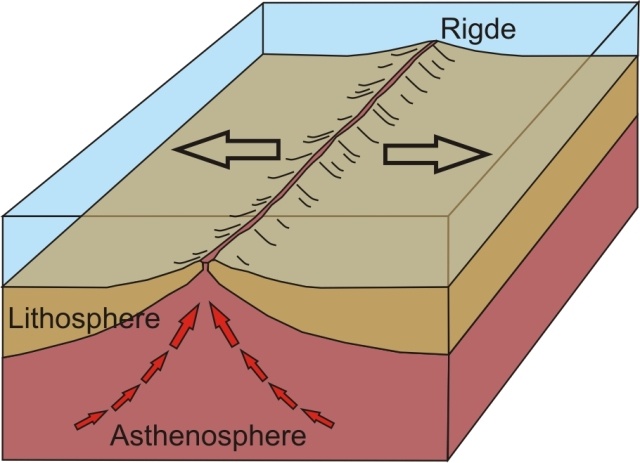
What special force is found in the asthenosphere?
1
Wind
2
Convection currents
3
Tides
4
Lava

71

Multiple Choice

Which type of plate boundary would cause mountains to form
1
Transform
2
Convergent
3
Divergent
4
Reform

72

Multiple Choice

The Great Rift Valley in Africa and the Mid-Ocean Ridge were all created by this boundary
1
Divergent
2
Convergent
3
Reform
4
Transform

73

Multiple Choice

What are the two types of crust
1
continental and oceanic
2
ocean and upper
3
lower and upper
4
pizza and subway

74

Multiple Choice

Question image
This image is of...
1
Convergent boundary
2
Transform Boundary
3
Divergent Boundary

75

Multiple Choice

Question image
Which of these events can ONLY happen on a DIVERGENT BOUNDARY?
1
Rift Valley
2
Mountain
3
A peninsula
4
An Insanely complex, long answer that you will click out of instinct. 

76

Multiple Choice

Which scientist posed the theory of continental drift?
1
Harry Hess
2
Drummond Matthews
3
Fred Vine
4
Alfred Wegener

77

Multiple Choice

What was Pangaea?
1
An African woman
2
A nation
3
A supercontinent
4
An Indian tribe

78

Multiple Choice

What makes up Pangaea?
1
Continents
2
Oceans
3
Religions

79

Multiple Choice

A subduction zone is formed...
1
when one tectonic plate sinks below another
2
at every type of convergent plate boundary
3
at every type of divergent plate boundary
4
at transform boundaries

80

Multiple Choice

The process that happens at the deep-ocean trench is called...
1
sea-floor spreading
2
adding material to the ocean floor
3
subduction

81

Multiple Choice

Older crust is found towards the...
1
Mid-ocean ridge
2
Deep-ocean trench
3
Asthenosphere

82

Multiple Choice

New crust is always formed at the...
1
mid-ocean ridge
2
deep-ocean trench
3
asthenosphere

83

Multiple Choice

Question image
What process is occurring at Z?
1
Convection currents       
2
 Subduction 
3
Two plates moving apart
4
New ocean floor forming

Earthquakes and Volcanoes (Interactive!)

Adventure starts NOW!

media

Show answer

Auto Play

Slide 1 / 83

SLIDE