Search Header Logo
7.5.3-Moving Cellular Material

7.5.3-Moving Cellular Material

Assessment

Presentation

Mathematics

7th Grade

Easy

Created by

Jessica Freeman

Used 1+ times

FREE Resource

55 Slides • 33 Questions

1

media

2

media

3

media

4

media

5

Passive Transport

media

6

Equilibrium

Molecules are equally spread out

media

7

media

8

media

9

media
media

Cell Membrane Structure

Phospholipid bilayer

Hydrophilic heads

Hydrophobic tails

Carbohydrates- ID tags, adhere cell to other cells

Proteins- transport materials, act as enzymes to speed up reactions, or receptors

Cholesterol- strength,
temperature regulation

Selectively permeable- it allows
some but not all materials to
cross

Maintains cell’s homeostasis

10

Multiple Choice

Marinating stable internal conditions is called ?

1

Lipids

2

Eukaryote

3

Homeostasis

4

polarity

11

12

media

13

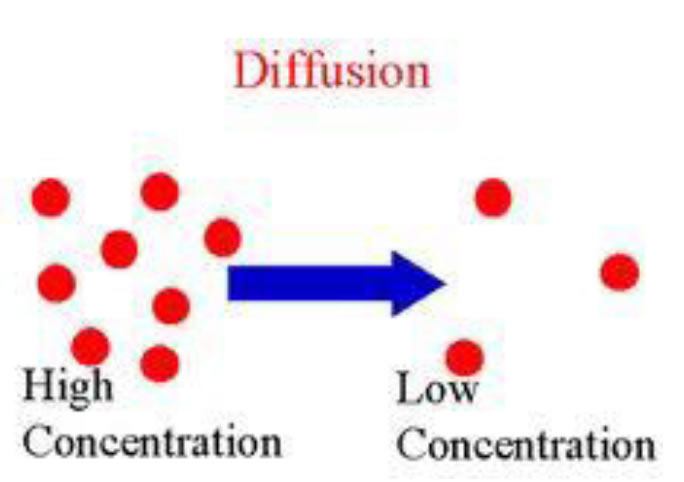
Diffusion

Movement of molecules from high concentration to low concentration.

Stops when equilibrium is reached

media

14

media

15

Poll

Have you smelled food cooking that was across the room? (like burnt popcorn in the microwave)

Yes

No

16

Multiple Choice

How do molecules move during diffusion?

1

From high concentration to low concentration

2

From low concentration to high concentration

17

Equilibrium

Molecules are equally spread out

media

18

Multiple Choice

What is the goal of diffusion called when molecules are equally spread out?

1

Samenss

2

Equilibrium

19

Passive Transport

  • Movement of substance across plasma membrane WITHOUT any energy

media

20

Multiple Choice

Does passive transport require energy?

1

Yes

2

No

21

Simple Diffusion

Molecules move from high concentration to low concentration through a membrane

media

22

Multiple Choice

True or False: In simple diffusion, molecules move from high concentration to low concentration across a membrane.

1

True

2

False

23

media

24

media

25

media

26

media

27

media

28

media

Osmosis

The movement of water across membrane from higher water concentration to lower water concentration

Water also moves from area
of lower solute concentration
to higher solute concentration

Higher concentration of solutes= lower concentration of water

29

Osmosis


  • Special type of diffusion

  • Often involves movement of water into the cell OR out of cell

30

Definition of Osmosis

  • The diffusion of only water molecules through a cell membrane

31

media

32

Multiple Select

Select TWO answers that describe OSMOSIS.

1

Small molecules

2

Large molecules

3

Water molecules

4

Molecules move between phospholipids

5

Molecules need a protein channel

33

media

Osmosis

-Down concentration gradient

-Does not require energy

-Involves only the movement of water molecules

-Occurs through a selectively permeable membrane

34

media
media

35

media

36

Facilitated Diffusion

Molecules move from high to low concentration through a PROTEIN

media

37

Facilitated Diffusion

Does NOT require energy

media

38

Multiple Choice

Which type of diffusion uses a protein to help molecules get across?

1

Simple diffusion

2

Facilitated diffusion

39

Remember:

Diffusion is how molecules cross your cell membrane WITHOUT any energy

media

40

media

41

media

42

Multiple Select

Question image

Check for Understanding:

Movement of particles from high to low concentration.

1

Passive Transport

2

Active Transport

43

Multiple Select

True or False: Passive transport occurs when molecules move from an area of low concentration to high concentration.

1

True

2

False

44

Multiple Choice

The movement of water across a membrane moving with the concentration gradient is called ________.

1

facilitated diffusion

2

osmosis

3

active transport

4

None of the above

45

Multiple Select

In facilitated diffusion, a _____ is needed to help molecules move across the cell membrane.

1

lipid

2

amino acid

3

carbohydrate

4

protein

46

Multiple Choice

True or False:

In passive transport, no energy is needed in order for molecules to move across the membrane.

1

True

2

False

47

Multiple Select

Diffusion across a cell membrane works best with large, complex molecules.

1

True

2

False

48

media

49

media

50

media

51

media

52

media

53

media
media

Active transport

requires energy from ATP to cause the protein channel to an area of lower concentration to an area of higher concentration
(HIGH TO LOW)

54

media

55

media

56

Endocytosis:

  • Cell shifts the cell membrane in order to bring substances INTO the cell

  • transports a bulk of molecules or molecules that are too large into the cell

  • Uses a lot of energy and is NOT always safe

media

57

Exocytosis

  • Cells shift the cell membrane to get rid of substances from the cell

  • Uses a lot of energy

  • transports a bulk of molecules out of the cell

  • Uses alot of energy ATP

media

58

media

59

media

60

Multiple Choice

Which is true about active transport?

1

it moves material from low to high concentration

2

it does not require energy

3

it moves material from high to low concentration

61

media

62

Multiple Choice

Type of cell transport that uses ATP (energy)

1

Passive Transport

2

Active Transport

63

Multiple Choice

True or False? Endocytosis brings large things into the cell and exocytosis brings large things outside of the cell

1

true

2

false

64

Multiple Choice

Which of the following is NOT a type of passive transport?

1

endocytosis

2

diffusion

3

osmosis

4

facilitated diffusion

65

media

66

media

67

media

68

Multiple Choice

In passive transport, molecules move from an area of __________ concentration to an area of __________ concentraiton
1
high, low
2
low, high
3
water, salt
4
active, passive

69

Multiple Choice

Osmosis is the movement of _____ across a membrane.
1
food
2
energy
3
oxygen
4
water

70

Multiple Choice

Passive transport requires no
1
concentration gradients
2
osmosis
3
motion
4
energy

71

Multiple Choice

What is diffusion?
1
when molecules move 
2
when molecules move from a high concentration to a low.
3
no movement 
4
molecules move everywhere

72

Multiple Choice

Which type of transport requires an input of energy?
1
Passive Transport
2
Osmosis
3
Simple Diffusion
4
Active Transport

73

Multiple Choice

The diffusion of water across a membrane is called
1
equilibrium.
2
osmosis.
3
facilitated diffusion.
4
active transport.

74

Multiple Choice

Question image
Someone sprays air freshener.  The scent fills the room.  This is an example of
1
active transport
2
osmosis
3
diffusion
4
cellular respiration

75

Multiple Choice

Which transport does not require energy?
1
Passive
2
Active 

76

Multiple Choice

Question image
Which of the following is a job of the cell membrane?
1
Regulates which materials enter and leave the cell.
2
Breaks apart lipids, carbohydrates, and proteins from foods.
3
Stores water, salt, proteins, and carbohydrates.
4
Keeps the cell wall in place.

77

Multiple Choice

Question image

Particles of dye, when placed in a beaker of water, eventually spread evenly throughout the water. This is an example of

1

isotonic

2

diffusion

3

osmosis

4

active transport

78

Multiple Choice

Question image
Movement of particles from high to low concentration. 
1
Passive Transport
2
Active Transport

79

Multiple Choice

Osmosis is a form of ______________. 
1
Passive Transport
2
Active Transport

80

Multiple Choice

Low to High
1
Passive Transport
2
Active Transport

81

Multiple Choice

ALL living cells have this in common
1
Nucleus
2
Cell Membrane
3
Cell Wall
4
Mitochondria

82

Multiple Choice

Controlling what goes into or out of the cell without energy is called
1
active transport
2
endocytosis
3
passive transport
4
exocytosis

83

media

84

media

85

media

86

media

87

media

88

media
media

Show answer

Auto Play

Slide 1 / 88

SLIDE