
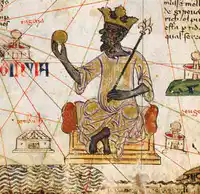
Mansa Musa's Hajj: DBQ

Presentation
•
Social Studies
•
6th Grade
•
Practice Problem
•
Easy

Michael Mcfadden
Used 15+ times
FREE Resource
9 Slides • 5 Questions
1
A Personal Journal
2
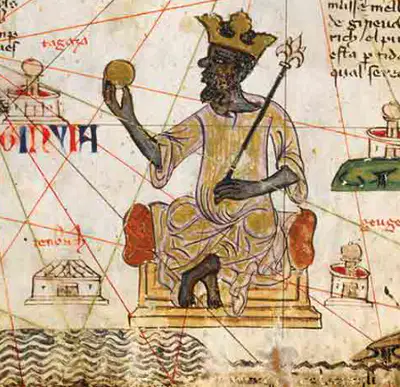
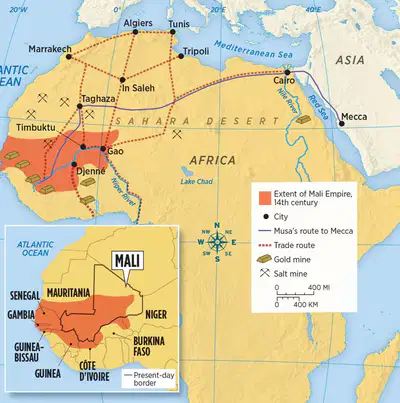
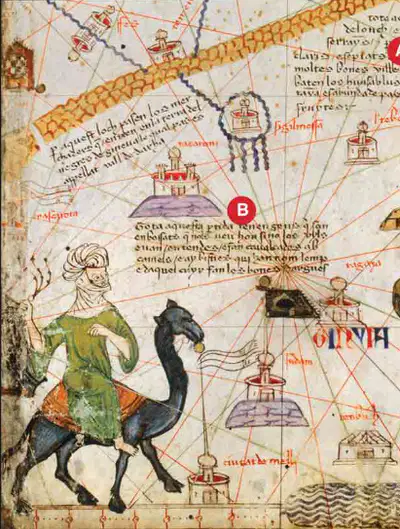
In 1324 CE, a caravan of as many as 60,000 people left Niani, the old capital of Mali in West Africa. They were heading to the Muslim holy city of Mecca, nearly 4,000 miles away. The leader of this journey was the ruler of Mali, Mansa Musa. The epic hajj, or pilgrimage, would spread the African king’s name far and wide.
This Mini-Q asks you to envision yourself as part of Mansa Musa’s magnificent caravan and to record your experiences at different points on the journey.
Overview
3
Multiple Choice
In the sentence, "The epic hajj, or pilgrimage, would spread the African king’s name far and wide." What is the meaning of the word "haji"?
4
Multiple Choice
The leader of this journey of 60,000 people was the ruler of Mali. What was his name?
Ali Baba
Mansa Musa
Genghis Khan
5
In this Mini-Q, you will examine several documents and then write six journal entries in the voice of a person who went on Mansa Musa’s hajj (pilgrimage).
First, choose the type of traveler you wish to be from the sketches provided later. Give your traveler a name from the list provided. This will be your persona.
Then fill out the profile of your persona using the biographical information and your knowledge of history, critical thinking skills—and creativity. Write in the first person.
6
Mansa Musa and the other officials brought many griots on the hajj to serve as oral historians.
A griot’s job was very hard and took a long time to learn well.
Griots had to serve as the living memory for an individual, village, or clan.
They combined history, music, poetry, dance, and drama to capture these memories and then entertain their audiences.
Griot (“gree-oh”)
To govern more efficiently, Mansa Musa divided his empire into provinces.
Over each province, he appointed a governor called a “ferba.” He typically chose relatives or other people he trusted for this position.
Ferbas oversaw the day-to-day running of the government. They had to rule according to strict instructions given them by Mansa Musa.
Many ferbas went on the hajj. Perhaps this was a way to keep them from plotting rebellion during the king’s long absence.
Ferba
7
Multiple Choice
Mansa Musa placed a governor over each province to help him rule. They were known as ______?
Ferba
Griot
Captain
Basja
8
Multiple Choice
What was the role/job of a griot?
9
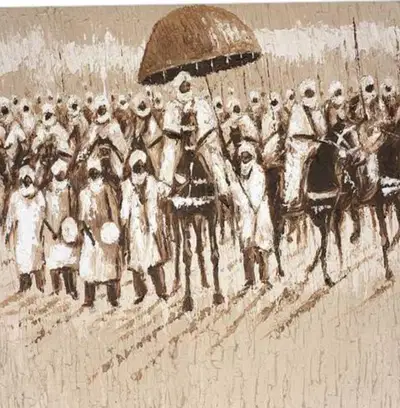
According to tradition, Mansa Musa kept an army of 100,000 soldiers in his empire.
Some of these rode on horseback or camels. Because Mansa Musa carried so much gold on the hajj, part of his army went along to protect the caravan.
In addition, the size of a ruler’s army demonstrated his status. A king as wealthy and powerful as Mansa Musa would never travel without a large armed escort.
Soldier
Scholars went on the hajj to offer advice and record observations of the journey.
Many scholars were educated in Niani, the capital of Mali, where Mansa Musa had established a mosque and school. Scholars could read and write.
They were fluent in both Arabic and various African languages. Scholars gave advice that helped Mansa Musa and his officials in difficult situations.
The written observations of scholars became important records once the caravan returned to Mali.
Muslim Scholar
10
Multiple Select
Which of the following reasons did Mansa Musa bring along a large number of soldiers on the haji?
(select all that apply)
To show his power and status
To protect the gold he was carrying
11
For his pilgrimage, Mansa Musa also brought doctors and other people with specific skills.
Because of the dangers everyone faced on such a long journey, especially the risk of illness and injury, doctors likely played key roles every step of the way.
By tending to the sick and injured, they also helped to ensure that the pilgrimage made steady progress to the holy city of Mecca.
Doctor
12
In this Mini-Q, you will examine several documents and then write six journal entries in the voice of a person who went on Mansa Musa’s hajj (pilgrimage).
First, choose the type of traveler you wish to be from the sketches on the handout provided. Give your traveler a name from the list. This will be your persona.
Then fill out the profile of your persona using the biographical information and your knowledge of history, critical thinking skills—and creativity. Write in the first person.
13
Reason for going on the hajj: I am Mansa Musa’s personal griot. I did not choose to go on the hajj; the king commanded it. However, as a griot, I will have the opportunity to travel, see new places, and record stories about the hajj. I know that once I return home, my stories will be used to teach the people of Mali about their ruler’s epic journey.
Other personal information: I am very skilled at storytelling and have practiced my art for many years. I earned this position as Mansa Musa’s griot because of my talent, both with words and with dance. I am a bit nervous about the journey. It will be long and difficult and quite different from my comfortable life at the palace in Niani.
Name: Kunburu
Age at the time of the hajj: about 30
Occupation: griot
Place of birth: Niani, Mali Empire
Marital status/spouse’s name (if married): not married
Children (if any): none
14
Complete the Hook Exercise:
Developing a Persona (on the handout)
A Personal Journal
Show answer
Auto Play
Slide 1 / 14
SLIDE
Similar Resources on Wayground

9 questions
American Revolution: Treaty Of Paris
Presentation
•
7th Grade
10 questions
Roman Republic
Presentation
•
6th Grade
9 questions
The Cold War
Presentation
•
6th Grade
12 questions
Spanish & Portuguese Influence on Latin America
Presentation
•
6th Grade
13 questions
Types of Government
Presentation
•
6th Grade
11 questions
West African Societies - STUDY GUIDE!
Presentation
•
6th Grade
9 questions
economies!
Presentation
•
6th Grade
9 questions
1st Continental Congress
Presentation
•
5th Grade
Popular Resources on Wayground
10 questions
How much do you know about our Portrait of an Eagle?

Quiz
•
10th Grade
10 questions
Fast Food Slogans
Quiz
•
6th - 8th Grade
21 questions
Continents and Oceans
Quiz
•
6th Grade
20 questions
Parts of Speech
Quiz
•
5th Grade
16 questions
Subject & Predicate
Quiz
•
5th Grade
25 questions
Multiplication Facts
Quiz
•
5th Grade
12 questions
Map Skills
Quiz
•
3rd Grade
22 questions
Continents and Oceans
Quiz
•
5th Grade
Discover more resources for Social Studies
10 questions
Exploring the Age of Exploration: Key Events and Figures

Interactive video
•
6th - 10th Grade
13 questions
13 Colonies Map Quiz
Quiz
•
6th - 8th Grade
12 questions
7 Continents and 5 Major Oceans
Quiz
•
6th Grade
10 questions
Pillars of Free Enterprise
Quiz
•
6th - 8th Grade
26 questions
QA 1 Review
Quiz
•
6th - 8th Grade
8 questions
Geography of Mesopotamia
Presentation
•
6th Grade
10 questions
Exploring the 13 Colonies Regions
Interactive video
•
6th - 10th Grade
20 questions
Latitude and Longitude Practice
Quiz
•
6th Grade