Search Header Logo
  1. Resource Library
  2. Science
  3. Earth & Space Science
  4. Eclipses
  5. Planet Motion/seasons/eclipses Review
Planet Motion/Seasons/Eclipses Review

Planet Motion/Seasons/Eclipses Review

Assessment

Presentation

•

Science

•

6th - 8th Grade

•

Hard

•
NGSS
MS-ESS1-1, MS-ESS1-2, MS-ESS1-3

+3

Standards-aligned

Created by

Kurt Trout

FREE Resource

19 Slides • 36 Questions

1

Planetary Motions-Seasons-Eclipses Review

By Kurt Trout

2

media

3

Multiple Choice

The earth is at the center of a ___ model.

1

heliocentric

2

geocentric

4

media

5

Multiple Choice

The heliocentric model has the solar system orbiting the ___.

1

sun

2

earth

6

Multiple Choice

Planets travel in ____ orbits.

1

elliptical

2

circular

7

media

VOCABULARY -

• astronomical unit : A unit of measure; 1 AU is the distance from

the Sun to Earth.

• orbit : the circular or elliptical path of an object as it revolves

around another object

• revolution : the orbiting of an object around another object

• rotation: the spinning of a celestial body, such as a planet,

around an axis

media

8

media
media

REVOLUTION VS. ROTATION

REVOLUTION

  • Orbiting of an object around another
    object

  • The MOTION of a planet around a sun
    or a moon around a planet

  • Orbit is the ellipitcal pathan object
    takes revolving around another object

9

media

REVOLUTION VS. ROTATION

  • The spinning of a celestial
    body (planet, moon, star)
    around an axis

  • Earth is tilted 23.5° on its
    axis

​Rotation

10

11

Multiple Choice

Which does the statement below describe??

When one side of the world is having daytime, the other side is having nighttime.

1

ROTATION

2

REVOLUTION

12

Multiple Choice

Which does the statement below describe??

The earth ORBITS around the Sun.

1

ROTATION

2

REVOLUTION

13

Multiple Choice

Which does the statement below describe??

The seasons change as the earth orbits around the Sun.

1

ROTATION

2

REVOLUTION

14

Multiple Choice

Which does the statement below describe??

The sun appears to rise in the east and set in the west.

1

ROTATION

2

REVOLUTION

15

Multiple Choice

Which does the statement below describe??

The earth SPINS on its axis.

1

ROTATION

2

REVOLUTION

16

Multiple Choice

Which does the statement below describe??

The earth SPINS at a constant speed always in the same direction.

1

ROTATION

2

REVOLUTION

17

Match

Match the following

Hemisphere

Tilt

Orbit

Axis

Rotation

18

Match

Question image

Match the following

1

2

3

4

Axis

Northern Hemisphere

Equator

Southern Hemisphere

19

Multiple Choice

The yearly orbit of Earth around the sun is called its _____________.

1

rotation

2

tilt

3

ellipse

4

revolution

20

Multiple Choice

The Moon takes approximately how long to revolve around the Earth?

1

24 hours

2

1 day

3

1 month

4

1 year

21

Multiple Choice

Revolution is the movement of the Earth around the ______.

1

Moon

2

Sun

3

Venus

4

Pluto

22

Reasons for Seasons

The main reason for seasons is the tilt of Earth's axis (NOT the distance to the sun). 


The Earth's axis is tilted by 23.5°

media

23

Seasons & Hemispheres

- At some parts of the year, the Northern hemisphere is tilted towards the sun, while the Southern hemisphere is tilted away causing different seasons.


- For example, when it is summer in the Northern Hemisphere, it is winter in the Southern Hemisphere (ref. image).

media

24

media

25

Direct & Indirect Sunlight

  • The earth is a sphere, so some parts of the earth receives 'direct sunlight', while other parts receives 'indirect sunlight'.

  • Direct sunlight is concentrated over a small area and results in more intense heat, while indirect sunlight is spread over a larger area and is less intense (ref. image).

media

26

Multiple Choice

What effect does the tilt of the earth have?

1

It changes the angle that the sun strikes the earth in different land areas

2

When the earth is tilted away from the sun we have night

3

It causes the earth to be farther away from the sun at different times of the year

4

When the earth is tilted away from the sun we have day

27

Multiple Choice

Which of the following best describes the tilt of the earth when it is summer in the southern hemisphere?

1

The northern hemisphere is tilted toward the sun

2

The northern hemisphere is tilted neither toward or away from the sun

3

The northern hemisphere is tilted away from the sun

4

Neither the northern nor the southern hemisphere is tilted towards the sun.

28

Multiple Choice

Question image
In summer, the axis of the earth is pointed away or toward the sun?
1
towards
2
up
3
down
4
away

29

Multiple Choice

What are the reasons for the seasons?
1
Earth's tilt and rotation.
2
Earth's rotation and revolution.
3
Earth's tilt and revolution.
4
Earth's tilt and resolution

30

Multiple Choice

Question image
Why is it warmer in the summer?
1
Closer to the sun
2
More direct light from Earth's tilt
3
Stronger light from the sun
4
Earth spins slower

31

Solstices

- Solstices occur twice a year, when the tilt of the Earth's axis is oriented directly towards or away from the sun.


- Winter solstice (and the shortest day in the NH): Dec. 21

- Summer solstice (and the longest day in the NH): Jun. 21

media

32

Equinoxes

  • Equinox literally means "equal night".

  • It occurs twice a year, and the Earth's tilt faces neither towards nor away from the sun.

  • Both hemispheres receives the same amount of sunlight. Day and night are the same length.

  • Spring equinox: March 21

  • Fall equinox: Sep. 21

media

33

Multiple Choice

On what two days of the year do the Winter and Summer Solstice occur?

1

Feb. 21 & Dec. 21

2

June 21 & Nov. 21

3

June.21 & Dec. 21

4

Feb. 21 & Nov. 21

34

Multiple Choice

What are the two results of the solstice days?

1

longest and shortest days of the year

2

hottest and coldest days of the year

3

longest and coldest days of the year

4

shortest and hottest day of the year

35

Multiple Choice

When daylight hours are almost equal to night time hours, it is called

1

Equinox

2

Solstice

36

Multiple Select

How many types of Solstices are there?

1

4

2

2

3

1

4

3

37

Multiple Choice

Question image

Which term best describes Earth's spin on its axis?

1

revolution

2

rotation

3

year

4

month

38

Multiple Choice

Question image

Which term best describes Earth orbiting around the sun?

1

revolution

2

rotation

3

month

4

day

39

Multiple Choice

Question image

When does Earth receive a nearly equal amount of day and nighttime hours?

1

equinox

2

solstice

3

perihelion

4

aphelion

40

Multiple Choice

Question image

What is the shortest day of the year?

1

vernal equinox

2

autumnal equinox

3

winter solstice

4

summer solstice

41

Multiple Choice

Question image

When is the longest day of the year?

1

winter solstice

2

summer solstice

3

vernal equinox

4

autumnal equinox

42

Multiple Choice

Question image

How long is one revolution around the sun?

1

a day

2

a month

3

a year

4

a leap year

43

media

44

media

45

media

46

media

47

media

48

media

49

Multiple Choice

Question image
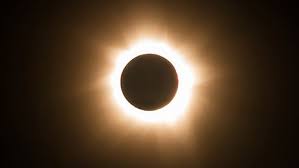
What type of eclipse is this?
1
Solar Eclipse
2
Lunar Eclipse

50

Multiple Choice

Question image
What type of eclipse is this?
1
Solar eclipse
2
Lunar eclipse

51

Multiple Choice

Question image

This model is showing us a...

1

lunar eclipse

2

solar eclipse

3

phases of the moon

4

earth eclipse

52

Multiple Choice

Question image

This image is showing us a.....

1

solar eclipse

2

lunar eclipse

3

phases of the moon

4

earth eclipse

53

Multiple Choice

Question image
During a solar eclipse...
1
The sun is blocked by the moon
2
The Earth is blocked moon
3
The moon is blocked by the sun
4
You are blocked

54

Multiple Choice

When the moon passes between the earth and the sun, this results in a.....

1

Waxing moon

2

lunar eclipse

3

solar eclipse

4

sun rise

55

Multiple Choice

Question image

When the sun, the moon, and Earth are in the positions shown in the diagram, what is occurring?

1

Eclipse of the Sun (Solar Eclipse)

2

Eclipse of the Moon (Lunar Eclipse)

3

The moon will be pulled closer to Earth

4

The spin of Earth could be increased

Planetary Motions-Seasons-Eclipses Review

By Kurt Trout

Show answer

Auto Play

Slide 1 / 55

SLIDE