

Cell Cycle and Mitosis

Presentation
•
Science
•
8th Grade
•
Hard

James Gonzalez
FREE Resource
33 Slides • 16 Questions
1

LESSON 2:
Cell Cyle and Mitosis
2
Multiple Choice
IT IS THE PROCESS IN WHICH ONE CELL DIVIDES INTO TO FORM NEW CELLS?
PARENT CELL
DAUGHTER CELL
CELL CYCLE
CELL DIVISION
3
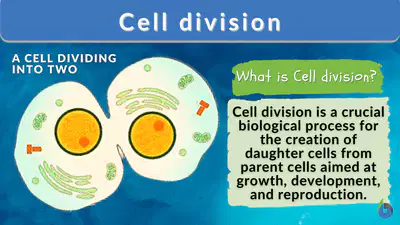
CELL DIVISION is the process in which one cell called PARENT CELL, divides to form new cells referred as DAUGTHER CELLS.
4
WHAT IS CELL DIVISION
CELL DIVISION
Cell division happens when a parent cell divides into two or more cells called daughter cells. Cell division usually occurs as part of a larger cell cycle. All cells reproduce by splitting into two, where each parental cell gives rise to two daughter cells.
5
In other words, such cycles of growth and division allow a single cell to form a structure consisting of millions of cells.
These newly formed daughter cells could themselves divide and grow, giving rise to a new cell population that is formed by the division and growth of a single parental cell and its descendant.
6
7
Repair cells
Replace cells
Reproduce cells
Grow cells
8

9

10

11

The first gap phase.
The cell increases in mass in
preparation for cell division.
For most cells, this is the
longest phase.
G1 phase or
first gap
12
Multiple Choice
THIS IS LIKE A RECIPE BOOK WHICH HOLDS THE INSTRUCTIONS FOR MAKING ALL PROTEINS IN OUR BODIES. WHAT IS THIS?
ORGANELLE
CHROMOSOME
DEOXYRIBUNUCLEIC ACID
CYTOKINESIS
13
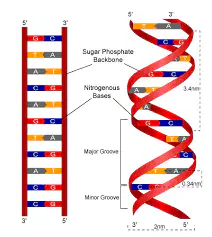
Deoxyribonucleic acid (abbreviated DNA) is the molecule that carries genetic information for the development and functioning of an organism. DNA is made of two linked strands that wind around each other to resemble a twisted ladder — a shape known as a double helix.
14

DNA is synthesized or
replicated.
S phase
or
Synthesis
Each of the 46
chromosomes is
REPLICATED by
the cell.
= 92
chromatids
15


Second gap phase.
The cell synthesizes
proteins and continues
to increase in size.
G2 phase or
second gap
“DOUBLE CHECKS”
the duplicated chromosomes
for error, making any needed
repairs.
16


MITOSIS
A process of nuclear division.
The most dramatic
biological processes.
It has four stages:
PROPHASE,
METAPHASE,
ANAPHASE, &
TELOPHASE.
17


Also, a process
where
single cell divides into two identical daughter cells.
The major purpose of
mitosis is for growth
and replace worn out
cells.

18
The daughter cells from mitosis are called diploid cells. Diploid cells have two complete sets of chromosomes and they have exact copies of their parent cell's DNA.

19
Multiple Choice

Fruit fly body cells have 8 chromosomes. After mitosis, you would expect a resulting fruit fly daughter cell to have -
8 chromosomes
16 chromosomes
32 chromosomes
64 chromosomes
20
Multiple Choice
When you start with 1 cell, at the end of mitosis, how many identical cells will you have?
1/2
1
2
4
21

22


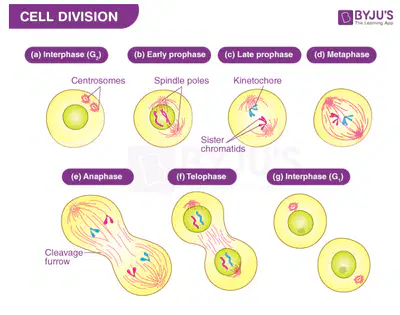
PROPHASE
The
NUCLEAR
MEMBRANE
is beginning to disappear/ disintegrates.
CHROMOSOMES condense
and become visible.
CENTRIOLESmove to opposite
poles and
SPINDLE FIBERS begin to
form.

23

24


METAPHASE
Thick, coiled
CHROMOSOMES are
lined up in the
center of the cell
(equatorial plate).
The SPINDLE FIBERS
are attached to the
chromosomes

25

26
ANAPHASE
Sister chromatids of each
chromosome
separate and are being
pulled by spindle fibers
and moving to the ends of
cell as their kinetochore
microtubules shorten.
Each chromatid becomes an individual chromosomes.


27

28
TELOPHASE
The chromosomes
cluster and decondense
at the opposite poles.
The spindle fibers
dissolve and
a nuclear membrane forms

29

30


The physical process of cell
division, which divides the
cytoplasm of a parental
cell into TWO daughter
diploid cells (46 chromosomes).
CYTOKINESIS
31

In animal cells, a cleavage
furrow forms when cell
divides.
CYTOKINESIS
In plant cells, a cell
plate forms when cell
divides.
32
the final stage of cell cycle is Cytokinesis: this stage completes the process. The cell's cytoplasm divides distributing the organelles into each of the two daughter cells.
The only step of this stage is to separate the two daughter cells from each other to create two separate daughter cells.
33


What will happen when a
significant event in a
particular stage failed to occur?
34


What Happens When Mitosis Goes Wrong?
By Scott Auerbach, March 13, 2018
When a cell divides, it creates two identical
daughter cell’s DNA - the name for this process is
Mitosis, and errors in the process result in incorrect DNA
copies. The effects of these errors in the health of the
organism range from benign to deadly, depending in
their number of errors and type. One potential
consequence is cancer; scientist trace all cancer types
back to harmful mutations multiplied by mitosis.
Cancer occurs when mutated cells ignore or
override the normal “checkpoints” regulating mitosis
and begin to reproduce uncontrollably.
35

or NUCLEAR CELL
DIVISION
It has four stages:
PROPHASE,
METAPHASE,
ANAPHASE, &
TELOPHASE.
It divides the
cytoplasm of a
parental cell into
TWO daughter
diploid cells
It consists the following
phases:
*G1 or first gap
(cell increases in size)
*S phase
(DNA synthesis)
*G2 or second gap
(double checks)
36
Multiple Select
Interphase is divided into three distinct stages and these are?
G1
G2
S
M
37
Multiple Choice
The cell synthesizes proteins and continues to increase in size.
G1
S
G2
M
38
Multiple Choice
Longest stage in Interphase
G1
S
G2
M
39
Multiple Choice
“DOUBLE CHECKS” the duplicated chromosomes for error, making any needed repairs.
G1
S
G2
M
40
Multiple Choice
The cell increases in mass in preparation for cell division.
G1
S
G2
M
41
Multiple Choice
DNA replication takes place during this phase.
G1
S
G2
M
42
Identify what phase of mitosis is being
described by each event.
43
Multiple Choice
Nuclear membrane form again around chromosomes.
Prophase
Metaphase
Prophase
Telophase
44
Multiple Choice
Thick, coiled chromosomes are lined up in the center of the cell (equatorial plate)
Prophase
Metaphase
Anaphase
Telophase
45
Multiple Choice
The nuclear membrane is beginning to disappear.
Chromosomes are condensed and thicken.
Prophase
Metaphase
Anaphase
Telophase
46
Multiple Choice
The chromatids of each chromosome have separated, and the daughter chromosomes are moving to the ends of cell as their kinetochore microtubules shorten.
Prophase
Metaphase
Anaphase
Telophase
47
Multiple Choice
Spindle fibers move apart.
Prophase
Metaphase
Anaphase
Telophase
48
Multiple Choice
WHICH OF THE FOLLOWING IS NOT TRUE ABOUT INTERPHASE?
A. IT HAS 3 SUBSTAGES: G1, S, & G2
B. IT IS ALSO CALLED THE CELL'S RESTING PHASE
C. IT IS ACTUAL PHASE WHERE CELL DIVIDES
D. IT IS THE PHASE THAT PREPARES THE CELL DIVISION.
49
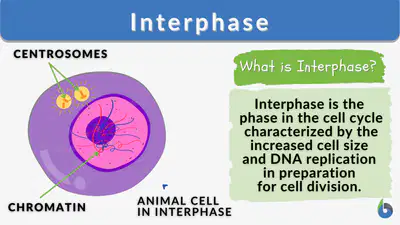
CHARACTERIZED BY THE INCREASED BY THE CELL SIZE & DNA REPLICATION IN PREPARATION FOR CELL DIVISION.
LESSON 2:
Cell Cyle and Mitosis
Show answer
Auto Play
Slide 1 / 49
SLIDE
Similar Resources on Wayground

42 questions
AKS 9B - Electromagnetic vs. Mechanical Waves
Presentation
•
8th Grade
42 questions
Mitosis and Meiosis Review
Presentation
•
7th - 8th Grade
45 questions
1b Elements, Compounds and Mixtures
Presentation
•
8th Grade
43 questions
Earth in Space
Presentation
•
7th - 8th Grade
45 questions
Atomic Structure Review
Presentation
•
8th Grade
45 questions
8th Grade Science STAAR writing prompts
Presentation
•
8th Grade
45 questions
Phrase and Verbal Practice
Presentation
•
8th Grade
42 questions
Seasons
Presentation
•
8th Grade
Popular Resources on Wayground
10 questions
How much do you know about our Portrait of an Eagle?

Quiz
•
10th Grade
10 questions
Fast Food Slogans
Quiz
•
6th - 8th Grade
21 questions
Continents and Oceans
Quiz
•
6th Grade
20 questions
Parts of Speech
Quiz
•
5th Grade
16 questions
Subject & Predicate
Quiz
•
5th Grade
25 questions
Multiplication Facts
Quiz
•
5th Grade
12 questions
Map Skills
Quiz
•
3rd Grade
22 questions
Continents and Oceans
Quiz
•
5th Grade
Discover more resources for Science
20 questions
Scientific Method and Variables
Quiz
•
8th Grade
20 questions
Scientific method and variables
Quiz
•
8th Grade
27 questions
Counting Atoms - Subscripts
Quiz
•
8th Grade
20 questions
Claim, Evidence and Reasoning (CER)
Quiz
•
6th - 8th Grade
18 questions
Counting Atoms
Quiz
•
7th - 8th Grade
20 questions
Elements, Compounds and Mixtures
Quiz
•
8th Grade
10 questions
Exploring Chemical and Physical Changes

Interactive video
•
6th - 10th Grade
10 questions
Decoding the Periodic Table of Elements
Interactive video
•
6th - 10th Grade