

Maya slides

Presentation
•
Social Studies
•
6th - 8th Grade
•
Hard

Caitlin Irwin
FREE Resource
90 Slides • 31 Questions
1
Maya Religion
By Caitlin Irwin
2
The Maya built pyramids that were used to worship the gods.
They believed their gods controlled the world around them.
earthquakes
thunder
rain

3
They worshipped many gods.
The most important god was the sun god. He went down to the underworld at sunset and became a jaguar god.
The maize god was highly respected as the Maya believed he had the power to control whether crops grew or not
4
The Maya had over 150 gods
They all looked different.
Some had human form
form of an animal
some were a natural phenomenon like weather or earthquakes

5

6

7

8

9

10

11

Maya priests were in charge of many religious ceremonies that were part of everyday life.
12
Multiple Choice
The Ancient Maya were:
Polytheistic:
they believed in many gods
Monotheistic: they believed in one god
Not religious
13
Hotspot
Correctly locate where the Maya settled.
14

When the Mayan civilization began, thick tropical forests covered most of the land, but the people cleared areas to farm and they lived in simple houses.
Gradually, Mayan culture became more complex. As the Mayan population grew, settlements became larger.
Origins
15

They adapted and developed ideas they had learned from the Olmecs. For example, they improved on Olmec building techniques.
Even though the Mayas lacked metal tools and had not discovered the wheel, they built enormous stone cities with elaborate and highly decorated temple pyramids and palaces.
At its height, the Mayan Empire included more than forty cities, including Tikal, Copan, Chichén Itzá, and Palenque.
Maya Cities
16
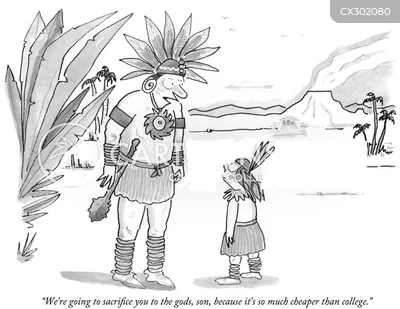
During the Christian holiday of Lent, many practicing Catholics give up certain foods or treats, like sweets or fast food. This is a way for them to practice self-discipline and focus on spiritual growth.
But can you imagine a religion that demands you make a sacrifice, giving something up, of a person?
The Mayas performed sacrifices at the top of huge pyramids built in order to worship their gods.
Practices
17

The Maya are perhaps most known for their many pyramids, many of which still stand today. Maya pyramids are large, stepped structures made of stone. They often had a flat top where temples or other important buildings were located.
Mayan pyramids were primarily temples and were painted in the sacred colors of the Mayan: red, blue, yellow and green.
Pyramids

18
Not all Mayan pyramids are constructed alike. The ancient Mayans built two types of pyramids: some to use for sacrificial rituals and some intended for the gods and to remain untouched.
Those built for sacrifice were meant to be climbed, since the sacrifice, often of humans, took place at the top.
Pyramids

Sacrificial Pyramid

Pyramid (home of the god)
19
20
The Maya worshiped many gods, such as a creator, a sun god, a moon goddess, and a maize god. Each god was believed to control a different aspect of daily life.
According to Maya beliefs, the gods could be helpful or harmful, so people tried to please the gods to get their help. The Maya believed their gods needed blood to prevent disasters or the end of the world. Every person offered blood to the gods by piercing their tongue or skin. On special occasions, the Maya made human sacrifices. They usually used prisoners captured in battle, offering their hearts to stone carvings of the gods.
21

Poll
Lesson: Maya Civilization
2/84
22
Poll
Do you like mysteries?
Yes!
No.
Sometimes.
23

Try this one: More than a thousand years ago, the Maya civilization built cities across Mesoamerica.
They built stone temples and pyramids that rose far above the forest treetops.
They discovered important mathematical ideas. They accurately predicted solar and lunar eclipses. Using this knowledge, they made a calendar almost as accurate as the one we use today. Then, after hundreds of years of growth, the people abandoned their cities.
No One Knows Why!
24
25

Not too long ago, jungles hid the cities once ruled by Mayan kings. These cities were located in Mesoamerica. This huge area is made up of Mexico and part of Central America. The Maya culture was rich and diverse. Its people were farmers and skilled warriors. They built huge stone temples. They honored their gods, offered sacrifices, and studied astronomy at the temples. The Maya were fascinated with time. They studied the stars and the planets. And many Maya tools, temples, and works of art have survived. These tools and treasures tell us many things about this ancient culture.
26
Hotspot
Correctly locate where the Maya settled.
27
Multiple Choice
In which North American region did the Mayan and Olmec settle?
28
When the Mayan civilization began, thick tropical forests covered most of the land, but the people cleared areas to farm and they lived in simple houses.
Gradually, Mayan culture became more complex. As the Mayan population grew, settlements became larger.
Origins
29
They adapted and developed ideas they had learned from the Olmecs. For example, they improved on Olmec building techniques.
Even though the Mayas lacked metal tools and had not discovered the wheel, they built enormous stone cities with elaborate and highly decorated temple pyramids and palaces.
At its height, the Mayan Empire included more than forty cities, including Tikal, Copan, Chichén Itzá, and Palenque.
Maya Cities
30

Each city was built in a similar way. Each Maya city had a central marketplace. Every city had a large plaza where people could gather. Every city also had huge pyramids, temples, at least one ball court, and a palace for the ruler.
Maya Cities
31

Not every Mayan lived in the city. In fact, tens of thousands of Mayans lived in residential areas surrounding the city center.
Maya Homes
32

Most Mayan families lived in simple homes built from materials found in the rainforest. Homes were made of wood and mud. The floors were covered with soil. Wood poles supported mud walls. Palms covered the roof.
Maya Homes
33
Multiple Choice
The Mayan civilization came after the Olmec civilization. What does the word civilization mean?
An economic system.
An ancient artifact found in ruins.
A form of government.
A society with cities, government, religion, technology, and art.
34
Multiple Choice
Which Mesoamerican civilization came first?
35
Dropdown
36

Much of what we know about the Maya comes from their writing. The Mayans developed a complex hieroglyphic (a method of writing where pictures or symbols, called hieroglyphs, represent words, syllables, or sounds) writing system.
Maya writing consisted of about 800 hieroglyphic symbols, or glyphs.
Some of these glyphs stand for whole words, while other represent sounds or syllables
Maya Achievements
37

The scribes (writers) had access to black ink made from coal and special turkey-feather pens called ‘quills’. They would write on long sheets of paper that could be folded together to make a book, called a ‘codex’. The Maya wrote codices about their gods, their leaders, their daily life, and their special events. Unfortunately, not many of the codices have survived because many were burned by Spanish explorers who thought the books were evil.
Maya Achievements
38

They also carved important information onto giant stone columns, called stelae. Stelae were used to honor significant events, such as the reign of a king, victories in battle, or important rituals.
Stelae
39

Today, archaeologists also study Maya ceramics to understand more about the Maya civilization. Maya ceramics are clay objects made by the Maya people, including pots, bowls, and vases.
Their ceramics were often painted with elaborate scenes of everyday life, the royal court, and war and sacrifice.
Ceramics
40

Experts have been studying the Maya hieroglyphs since 1843!
Today, experts know the meaning of 90% of their hieroglyphs.
41
Dropdown
42
Multiple Choice
The symbols used in Mayan writing are called
alphabetical letters
glyphs
43
Dropdown
44

The Maya math system is an advanced system of mathematics that many feel was superior to that of the Europeans.
The Maya used dots to represent numbers. Each dot stood for one unit, and a horizontal bar represented five. So, for example, three dots represented 3, and one bar and one dot represented 6.
Maya Math
45
The Maya were among the first people in the world to
develop the concept of zero. We all know that zero can stand for “nothing.” When it comes to a system of numbers, zero means a lot! Think,
for example, of the difference between the numbers twenty and
two hundred. The Maya symbol for zero was a shell.
Maya Math
46

Draw It
Lesson: Maya Civilization
22/84
47
Draw
The Mayas used a shell to equal 0, a dot to equal one, and a bar to equal 5. Correctly fill in the missing
Mayan number symbols.
48
49
During the Christian holiday of Lent, many practicing Catholics give up certain foods or treats, like sweets or fast food. This is a way for them to practice self-discipline and focus on spiritual growth.
But can you imagine a religion that demands you make a sacrifice, giving something up, of a person?
The Mayas performed sacrifices at the top of huge pyramids built in order to worship their gods.
Practices
50
The Maya are perhaps most known for their many pyramids, many of which still stand today. Maya pyramids are large, stepped structures made of stone. They often had a flat top where temples or other important buildings were located.
Mayan pyramids were primarily temples and were painted in the sacred colors of the Mayan: red, blue, yellow and green.
Pyramids
51
Not all Mayan pyramids are constructed alike. The ancient Mayans built two types of pyramids: some to use for sacrificial rituals and some intended for the gods and to remain untouched.
Those built for sacrifice were meant to be climbed, since the sacrifice, often of humans, took place at the top.
Pyramids
Sacrificial Pyramid
Pyramid (home of the god)
52
The pyramids sometimes doubled as astronomical observatories.
Long before telescopes, the Maya created detailed charts of the stars. They viewed the shifting night sky as a story of the gods' activities.
Astronomy


53
Poll
How would you know what day of the week or month of the year if you did not have a calendar?
54

Calendars help us keep track of time, but did you know that the Mayas developed one of the most accurate calendar systems of all times?
The Maya, working without scientific tools, calculated that there were 365.2420 days in a year. Modern astronomers used modern technology to measure the year at 365.2422 days!
Highly skilled Mayan astronomers and mathematicians created two accurate calendars that helped them to track the time and plan important events like religious ceremonies.
.
Calendar
55

The Maya created a solar calendar, or calendar based on the movement of the sun. This calendar is similar to our calendar, but there are some differences. We divide our year into twelve months. The Maya divided their year into eighteen months with names like Pop and Zip. A special five-day “month” completed the 365-day year.
Besides their 365-day solar calendar, Maya astronomers created another calendar called the Sacred Round. This calendar was 260 days long and was used to keep track of religious holidays and other important events.
Calendar
56

We can see the results of Maya astronomy in the placement of their temples and pyramids. These structures were built so the sun would shine directly on key areas on certain days. In Chichén Itzá, for example, the sun of the spring and fall equinoxes casts the shadow of a serpent statue onto the pyramid steps. As the sun rises, the shadow slithers down the stairs.
Astronomy at Work

57

Lesson: Maya Civilization
31/84
58
59
Multiple Choice
What mathematical achievements is associated with the Maya?
The invention of calculus.
The use of fractions and decimals.
The development of algebra.
The concept of zero.
60
Dropdown
61
Multiple Choice
The Maya had advanced scientific knowledge, but they did not develop
a system of numbers.
an accurate calendar
a system of writing
telescopes
62
Poll
How many different sports and sporting games played around the world today?
8
80
800
8000
63

According to the World Sports Encyclopedia, there are around 8000 different sports and sporting games played around the world today.
The Maya are well known for their game of Pok-a-tok– a sport invented by the Olmec around 3,500 years ago, making it the oldest organized sports game in history.
What Is Pok-a-tok?
Pok-a-tok is a team sport where players try to hit a heavy rubber ball through a stone hoop using their hips, elbows, and knees. They couldn’t use their hands.
The game was played on a special court shaped like a large "I." The court had stone walls with hoops placed high on the sides.
Pok-a-tok
64

Pok-a-tok was more than just a game; it had important religious meanings. It often represented the struggle between good and evil.
Sometimes, the game was played during religious ceremonies or festivals. The outcome could be very significant, with winners often celebrated and losers facing serious consequences (sacrifice.)
The players wore leather protective clothing and sometimes a ritual head dress.
Purpose of the Game
65

Lesson: Maya Civilization
38/84
66
67
Multiple Choice
What is a similarity between Pok-a-Tok and games we play today?
Both require studded boots.
Both require a referee.
68
Poll
What is your favorite type of tortilla?
Flour
Corn
Gordita
I don't like tortillas
69
70

Most Maya people made their living as farmers. Their main crop
was maize (corn). One of their staple (main) foods was something you may have eaten—a flat bread called a tortilla. Farmers also
grew beans, squash, sweet potatoes, tomatoes, and pumpkins.
Farmers
71

In forested areas, the Maya used a technique known as slash and burn. They slashed, or cut down, trees and then burned the area. Then they planted new crops. Ashes left from the fire added nutrients to the soil. After several years, the crops used up the nutrients in the soil. The Maya then repeated the process in another area.
Farmers
72

Maya farmer fields were used to grow many kinds of crops, such as maize, beans, squash and chilli. If farmers grew more than they could eat, they traded the leftovers in markets.
The Maya also gathered tree crops. Fruit trees thrived in the rainforest. The Maya also used many rainforest plants for medicine.
Farmers
73

Some Maya hunted game in the forests, including deer, rabbits, and other small mammals. They raised turkeys and dogs for food. They raised stingless bees for honey, which they used to sweeten foods and drinks. In coastal communities, the Maya ate fish and turtles as well.
Farmers
74
Multiple Choice
What was the major staple of the Maya's diet?
75
Multiple Choice
What type of technique did Maya farmers use to prepare soil?
76
Open Ended
What is your favorite chocolate candy?
77

We have the Maya to thank for chocolate. Maya records are filled with references to cacao. And it all starts with the cacao bean. The Maya would dry, grind, and mix the beans with water to create a drink. Think like hot chocolate but in fact it was quite bitter and frothy, and was often mixed with chili.
Chocolate!
78
79

Every culture has practices that seem odd to other people.
The Maya did two things that may seem a little strange to you.
Fashion
80

When a person is born, their skull isn’t completely
hard yet.
Babies’ skulls are made of soft, bony plates that can move around, which makes being born a lot easier. Those plates move into place and
harden by the time a person is two years old. For the first few months of a baby’s life, those plates can be shaped by outside forces. Today, babies who are born with skulls that are not round are fitted with little helmets to help their skulls become rounder.
Fashion
81

The Maya used this same principle when they used wooden boards to shape the backs of their babies’ skulls
to make them flat.
The Maya idea of beauty was to look like the corn god. This meant they favored long heads and flowing hair.
Fashion
82

The Maya also considered crossed eyes beautiful.
Parents would hang objects in front of a newborn’s eyes until the baby’s eyes were permanently crossed.
Fashion
83

The Mayas often went to their dentists, but not for fillings or to get a new crown put on. They went to have their teeth beautified with gemstones.
The process was undeniably painful. A dentist would have likely used a makeshift drill made from obsidian (volcanic glass) to punch a hole in the front of a tooth.
They would then use a natural adhesive to place the gemstone in the hole.
Fashion
84

Headgear varied from locale to locale, but one rule always seemed to hold true: the bigger the hat, the more important the head underneath it.
Fashion
85

The Mayan people were short. The average height of the men was just over five feet. The women were about four feet eight inches tall.
Mayans had straight black hair, and many painted their bodies black, red or blue. They also often had tattoos.
Their process for receiving a tattoo involved getting painted on and then cut into, and then applying another coat of paint over the open wound.
Fashion

86
Everyday clothes included a loincloth or short skirt for men and a long skirt for women.
These outfits would often be accessorized with jewelry such as bracelets and anklets, necklaces, and ear jewelry.
Jewelry was made from shark and crocodile and wood.
Hairstyles were given much attention, and would be tied up (almost never left loose) and decorated with bands of fabric and long feathers.
Fashion

87
Multiple Select
Which of the following body modifications was practiced by the Maya? SELECT 3 ANSWERS
Tattoos
Piercing
Cranial (head) shaping
foot binding
88
Multiple Choice
How did Maya men typically style their hair?
Maya men wore their hair short.
Maya men styled their hair in elaborate braids
89
The Maya used a variety of methods for trading:
Markets: Each city had a central market where people would gather to buy and sell goods. Markets were lively places where people exchanged not just items but also news and stories.
Barter System: Instead of using money like we do today, the Maya practiced bartering. This means they traded goods directly. For example, if someone wanted maize, they might trade it for a piece of pottery. This is also known as a traditional economy.
What did they trade? Foods, Textiles, Pottery, Luxury goods (obsidian, jade, feathers from exotic birds)
Economy


90
91

The Maya were not ruled by a single ruler. The Maya lived in city-states scattered across the land. Some of these city-states were larger than others. Each was ruled by a unlimited powerful monarch who governed his own city and surrounding areas. The city-states both traded and fought with one another.
Maya Kings
92

Maya society was divided into classes with kings in the highest class.
In Maya society, each city had its own monarch or king who were unlimited in power. The Maya believed that their kings were chosen by the gods.
Maya kings lived in grand palaces and wore beautiful clothes made of jade and feathers.
The kings also played a big role in Maya warfare. They would lead their armies into battle to capture enemies. Being a king meant both being a strong warrior and a wise ruler.
Class Society
93

Well educated priests were also among the noble, or highest, classes. Both kings and priests lived in palaces close to city centers.
Priests were very important in Maya society as it was believed that they could communicate directly with the gods. The priests were responsible for leading rituals of worship and sacrifices, and telling the people what the gods want them to do. They would tell the people when to plant crops, who to marry and what sacrifices they should make. The people did all these things because they believed that the priest was speaking the wishes of the gods.
Priests
94

The middle class was made up of the craftsmen, traders, and warriors.
Middle Class
95

Finally, at the bottom, came the common workers. They enjoyed few luxuries in life.
They lived in simple mud houses and worked hard all day.
The men were either planting and harvesting crops, or building pyramids and roadways.
Lower Class
96
Multiple Choice
What type of government did the Maya civilization have?
Theocracy
Monarchy
Democracy
Oligarchy
97
Dropdown
98
99

Religion was important to most aspects of Maya life. The Maya were polytheistic meaning they believed in many gods. The Maya’s belief in gods and goddesses helped them explain the mystery of life itself. They believed that gods controlled everything. The gods were responsible for the rising and setting of the sun and the phases of the moon. They were responsible for floods and droughts as well as sickness and health.
Ancestor worship was important to them as well. Maya households buried their dead underneath the floors so they could protect the living.
These gods had to be pleased so Maya communities made regular offerings to them, in the form of animal (and sometimes human) sacrifices.
Many gods
100

These gods had to be pleased so Maya communities made regular offerings to them. They prayed and made offerings of food, flowers, incense, and danced
Dance: The Maya loved to dance. Some scholars believe the Maya might have known a thousand different dances. Dance costumes were colorful, and headdresses were huge! .
Music: The Maya played drums. They rattled turtle shells and played pottery flutes.
Many gods
101

They also offered their gods blood sacrifices in exchange for favors.
The Maya usually sacrificed animals like dogs, turkeys, squirrels, and iguanas.
Sacrfice
102

But humans were sacrificed during large community ceremonies held for important requests like good crops.
Perhaps the Maya spilled blood so easily because they believed their gods had done so first.
According to Maya legend, the first humans were created when the gods mixed their blood with maize.
Sacrifice
103

The Mayans had three methods of giving the human sacrifices.
Often, the priests took the victim to the altar at the temple. Then the priests cut the heart out of the living victim and presented it to the god.
Sacrifice
104

Or the priests tied the victim to a wooden pole and threw spears and arrows at the victim’s chest in the area of the heart.
Sacrifice
105

In the third type of sacrifice, they threw the victim into a sacred well
I
Sacrifice
106

They also pierced their bodies with sharp needles and offered their blood, believing that this would nourish the gods.
They would pierce their ears or tongues with thorns or stingray spines
I
Sacrifice
107
Multiple Choice
The Mayans believed in more than one god. This is called _____________.
Buddhism
108
Multiple Select
To please the gods, the Maya offered: (SELECT 3 ANSWERS)
animal sacrifice
human sacrifice
dances and prayers
communion
109
Multiple Choice
Social class that led rituals and offered sacrifices
kings
nobles
priests
commoners
110
Mayans had many stories and myths that helped them explain how the world came to be, the actions of gods and heroes, and the mysteries of life and death. Maya myths and legends are full of adventure, heroes, and powerful gods. They teach lessons about courage, intelligence, the importance of nature (especially maize), and the afterlife. These stories helped the ancient Maya understand their world and make sense of the mysteries of life.
I
Myths and Legends
111
Until the Spaniards came, the Maya were among the mightiest people in the area. They fought one another from time to time, but joined forces when threatened by an outside enemy.
I
Warriors

112
Weapons included shields, spears, clubs, axes, knives, slings and dart-throwers.
War paint was used to frighten the enemy, as was loud shouting and hissing.
I
Warriors

113
114

The ancient Maya were amazing people who built a great civilization. That fact alone is a reason to find them interesting.
But one of the most fascinating questions about ancient Maya
civilization is what happened to cause it to end.
MYSTERY?
115

The Mayas abandoned their cities sometime between 800 and 900.
Until the 900s, the Maya kept careful historical records. They used their hieroglyphs to carve names and dates on pyramids and temples.
Then in the 900s, the writing mysteriously stopped. The temples and pyramids began to fall into disrepair.
So what happened? Archaeologists have theories, but they can’t find clear proof for any one of them.
MYSTERY?
116

Did disaster strike the Maya? Did drought or heavy rainfall bring famine? Was there an earthquake? Could invaders have toppled the civilization?
No one knows for sure.
We only know that the once-great Maya cities were abandoned and swallowed up by the rain forest. The Maya scattered. But the people themselves did not disappear.
Diasaster?
117

Though their grand cities have been abandoned, the Maya people have not disappeared.
Today, around 10 million Maya and perhaps more, live in the same regions of Mexico as their ancestors.
Maya Today
118

Even based on what little we know of them, the Maya were a remarkably advanced society. Despite their lack of technology, they made advancements in science and mathematics that are as good as those made hundreds of years later by peoples with far more sophisticated technology.
The Maya
119
120
Multiple Choice
How do experts know that the Maya left some cities during the 900s?
They let the surrounding tribes know they were leaving.
They painted pictures of them leaving.
Maya stopped all their writing at that time.
There are maps that showed where the people moved.
121
Multiple Choice
What happened to most Maya cities by the time the Spanish arrived?
They were abandoned and overgrown by jungle
They were thriving trade centers
They were transformed into military bases
They were converted into Spanish colonie
Maya Religion
By Caitlin Irwin
Show answer
Auto Play
Slide 1 / 121
SLIDE
Similar Resources on Wayground

110 questions
Early River Valley Civilizations
Presentation
•
6th - 7th Grade
119 questions
The Causes of the Civil War
Presentation
•
8th Grade
109 questions
Science of Friction
Presentation
•
6th - 8th Grade
122 questions
Math 8 Review
Presentation
•
8th Grade
116 questions
CATEGORY 3 CIVICS EOC REVIEW
Presentation
•
7th - 8th Grade
115 questions
Order of Operations Expressions and Equations
Presentation
•
6th - 8th Grade
115 questions
AP T1 G7
Presentation
•
7th Grade
115 questions
7E - Tamkeen Science - Term 1
Presentation
•
7th Grade
Popular Resources on Wayground
10 questions
Safety Day 2026 – Student Review

Quiz
•
9th Grade
21 questions
Continents and Oceans
Quiz
•
6th Grade
20 questions
Parts of Speech
Quiz
•
5th Grade
16 questions
Subject & Predicate
Quiz
•
5th Grade
25 questions
Multiplication Facts
Quiz
•
5th Grade
12 questions
Map Skills
Quiz
•
3rd Grade
22 questions
Continents and Oceans
Quiz
•
5th Grade
15 questions
Rounding Decimals
Quiz
•
5th Grade
Discover more resources for Social Studies
19 questions
Foundations of America
Quiz
•
6th - 8th Grade
5 questions
Mesopotamia Video Quiz

Interactive video
•
6th Grade
10 questions
Exploring the Age of Exploration: Key Events and Figures
Interactive video
•
6th - 10th Grade
20 questions
Articles of Confederation
Quiz
•
8th Grade
15 questions
Middle Ages of the Middle East Vocab List (CFA #2)
Quiz
•
6th - 8th Grade
13 questions
Ancient Egypt
Interactive video
•
6th Grade
10 questions
13 Colonies: Comparing Regions
Quiz
•
7th Grade
26 questions
SW Asia History
Quiz
•
7th Grade