

Plankton

Presentation
•
Biology
•
10th Grade
•
Hard

Joseph Anderson
FREE Resource
42 Slides • 3 Questions
1

Projector
Avery
Chloe
Xavier
Neil
Al
Mariah
Omar
Maitsaa
Rowan
Ethan
K.
Kali
Cameron
Danny
Ethan
S.
Ven
Jacob
Lisette
Ryan
Nolan
Hunter
Lena
2

Plankton!
3
4
5
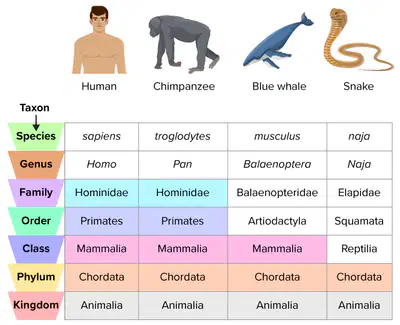
Linnaean Classification

6
What are plankton?
Plankton are microscopic weakly swimming or drifting organisms.
Plankton are not a single species, but a large group of organisms that fall into two categories;
1. phytoplankton (plants)
2. zooplankton (animals)
7
Multiple Choice
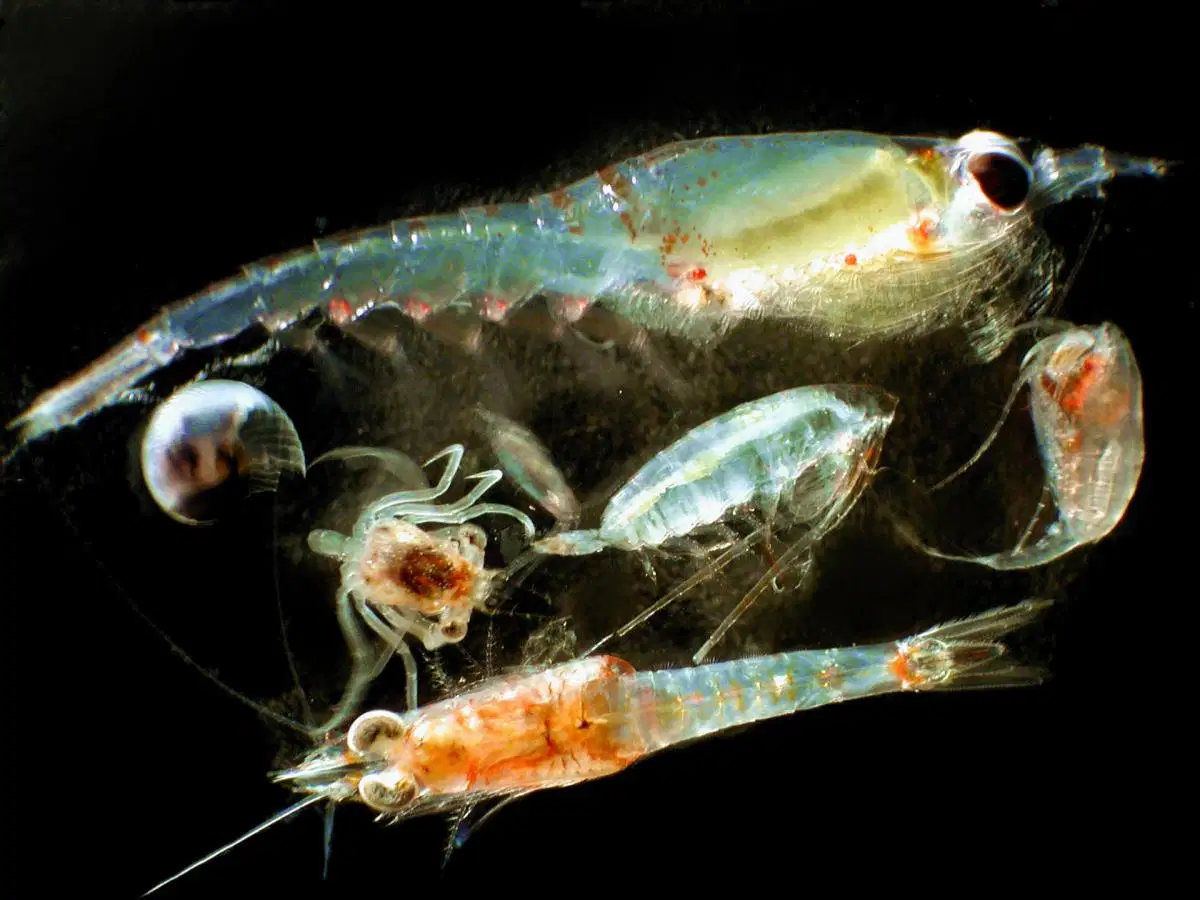
Phytoplankton or Zooplankton?
Phytoplankton
Zooplankton
8
Multiple Choice
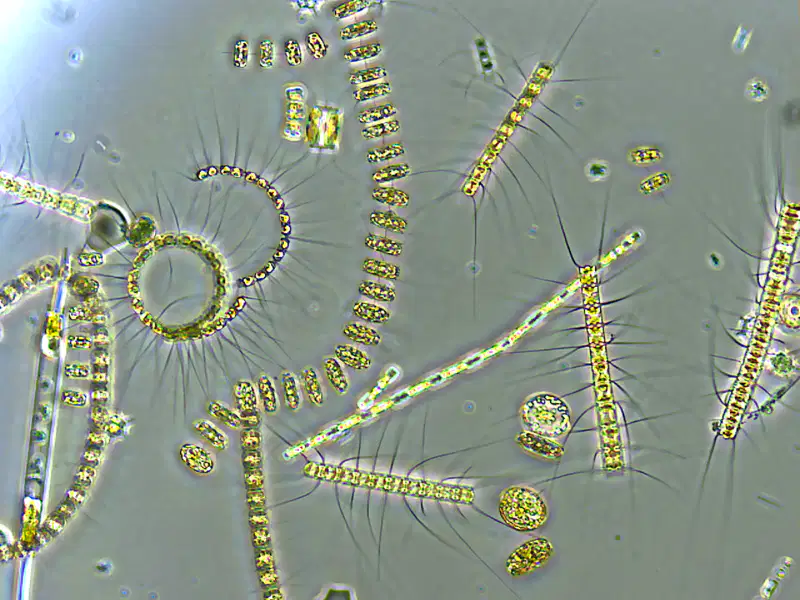
Phytoplankton or Zooplankton?
Phytoplankton
Zooplankton
9
Why are plankton important?
Important part of the global carbon cycle
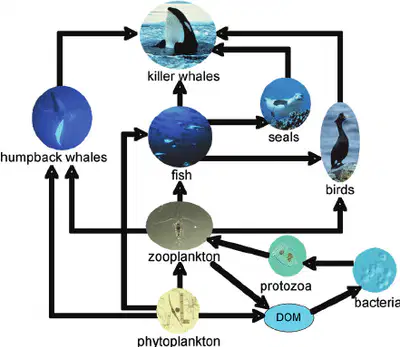
Food source (basis of the food web)
Produce of oxygen (photosynthesis)
10
Photosynthesis
Primary producers like plants and algae create energy from light through photosynthesis.
This energy supplies the entire food web as organisms are eaten up the food chain!
11
Plankton are this energy source for marine ecosystems
Many plankton are primary producers.
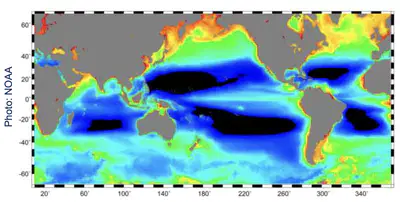
- Over 90% of marine primary production (energy produced) is from phytoplankton! The rest is from marine plants and other sources.
- This map shows productivity in the
Oceans. Red and yellow are most
productive, followed by green and blue.
Black is least productive.
12
Reorder
Reorder the following from lowest food level to highest food level.
Plankton
Fish
Bird
Seal
13
How do we study plankton?
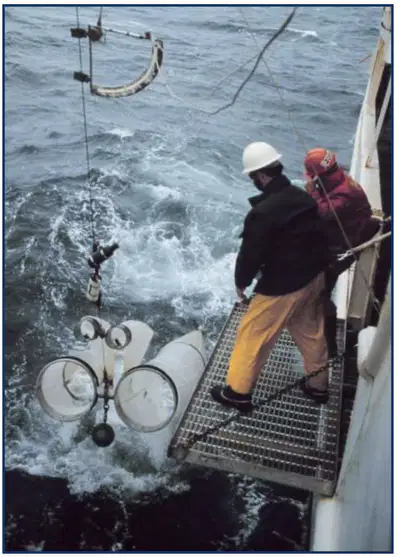
Collected with special nets and sampling bottle
Underwater cameras
Microscopes
Satellites
14
15
Satellites and Plankton
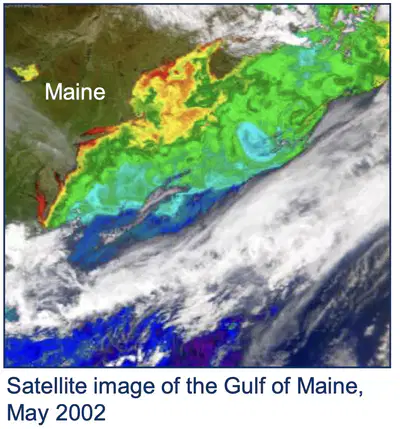
Satellites equipped with color scanners measure the concentration of chlorophyll in the ocean.
Chlorophyll is an indicator of plankton (think photosynthesis) and can be used to study plankton populations.
Red and orange indicate higher concentration of chlorophyll, while blue and green represent lower concentrations.
16
Do organisms spend their entire lives as plankton?
Holoplankton spend their entire life cycle as plankton
Examples include dinoflagellates, diatoms and krill
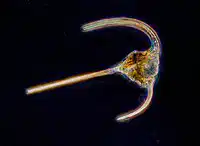
Dinoflagellate
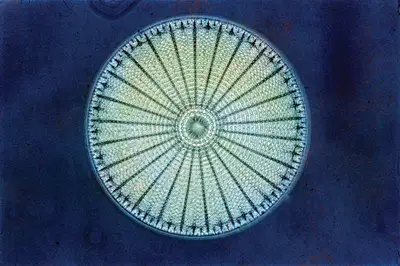
Diatom
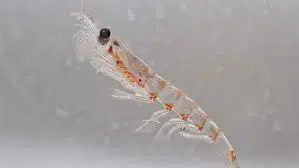
Krill
17
Do organisms spend their entire lives as plankton?
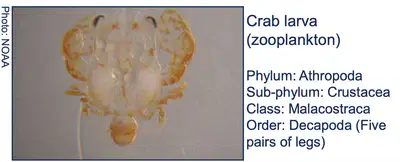
Meroplankton spend only a part of their life cycle drifting
As they mature they become nekton (free swimmers) or benthic (crawlers)
Examples include fish and crab larvae
18
Consumers (including herbivores and carnivores)
Include microscopic and macroscopic organisms
May vertically migrate (to a depth of 200m) during the day for protection but resurface at night to feed
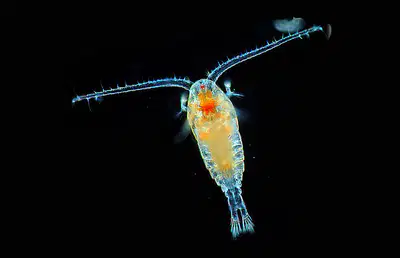
Zooplankton
Producers
Single cells or chains of cells including the smallest plankton – picoplankton (0.2 -2 microns)
Remain near the surface
Phytoplankton
Phytoplankton Vs. Zooplankton
19
How do scientists identify plankton?
Scientists;
Collect samples and carefully observe their characteristics
Communicate observations with sketches and photographs
Today, you're the scientists!
20
We've all been invited on a NOAA expedition as scientists to observe and classify plankton.
Imagine this:

21
Activity: Identifying Plankton
You will see 10 slides depicting specimens you found.
Note: They are from different tows representing different oceans and different depths.
Each slide will be visible for 3 minutes.
As the slides are shown, observe and, using a pencil, sketch each sample on your worksheet. If there is more than one specimen on the slide, choose one to draw. Note body shape, projections, sensory organs, appendages, type of covering and degree of transparency.
22
Activity: Identifying Plankton
For each sample, write your prediction about the following two questions:
Is the organism phytoplankton (plant) or zooplankton (animal)?
Is it holoplankton (spend entire lives as plankton) or meroplankton (spend only part of their lives as plankton)?
Following the drawing section, use your sketches and resources to identify the specimens. You may work in teams of 2-3 for this part.
23

24
Part 1: Draw & Note Characteristics
25
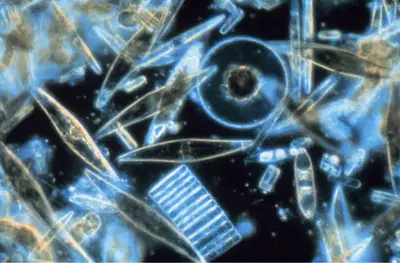
Specimen #1
26
Specimen #2

27
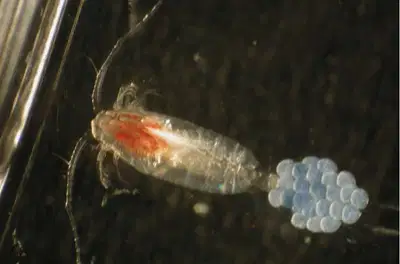
Specimen #3
28
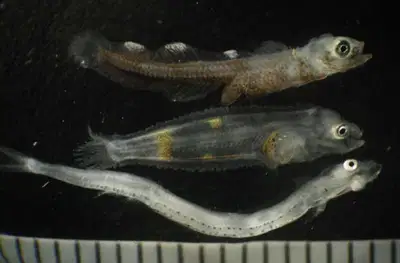
Specimen #4
29
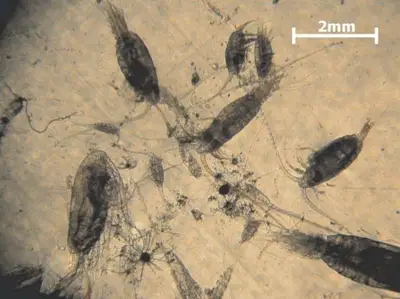
Specimen #5
30
Specimen #6
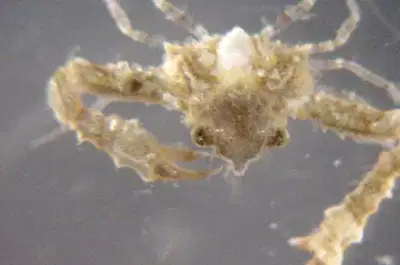
31
Specimen #7
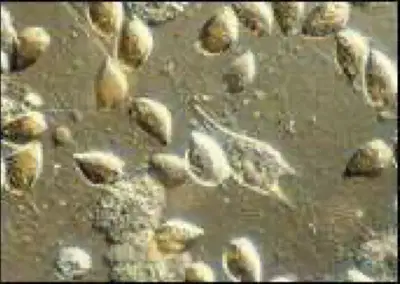
I know this is a super low quality picture.... just note the general shape
32
Specimen #8
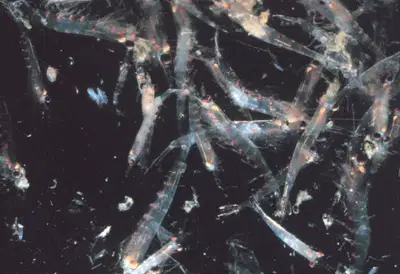
33
Specimen #9
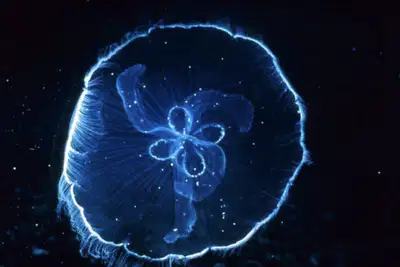
34
Specimen #10

35
End of drawing section. Now, use your drawings to identify your specimens. Work in groups of 2-4.
36
Specimen #1: Mixed Diatoms

37
Specimen #2: Amphipod

38
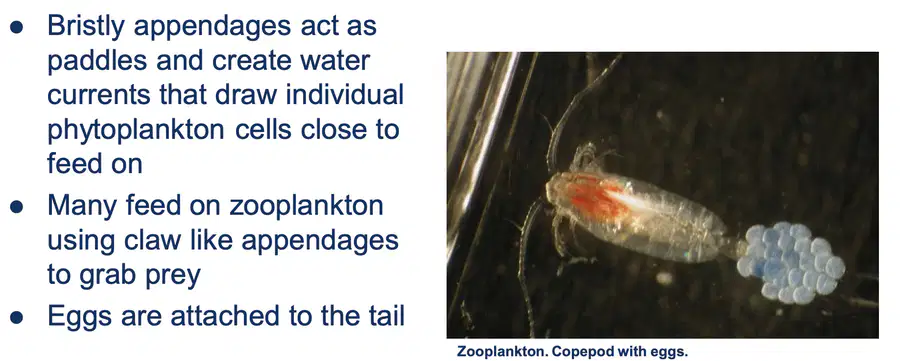
Specimen #3: Copepod w/ eggs
39
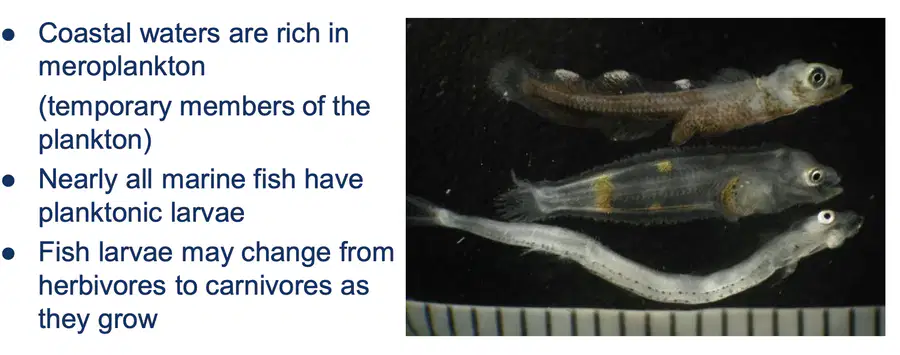
Specimen #4: Fish Larvae
40
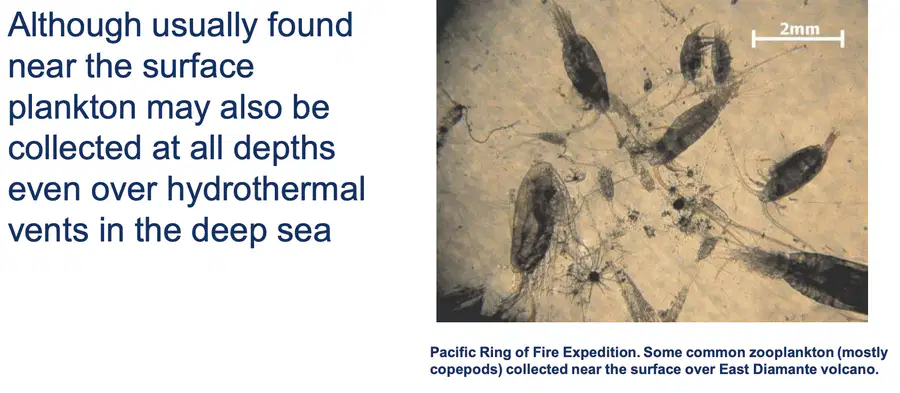
Specimen #5: Copepods
41
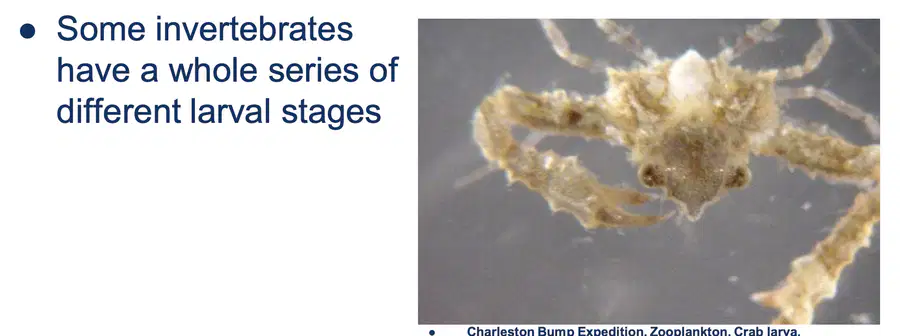
Specimen #6: Crab Larva
42
Specimen #7: Dinoflagellates

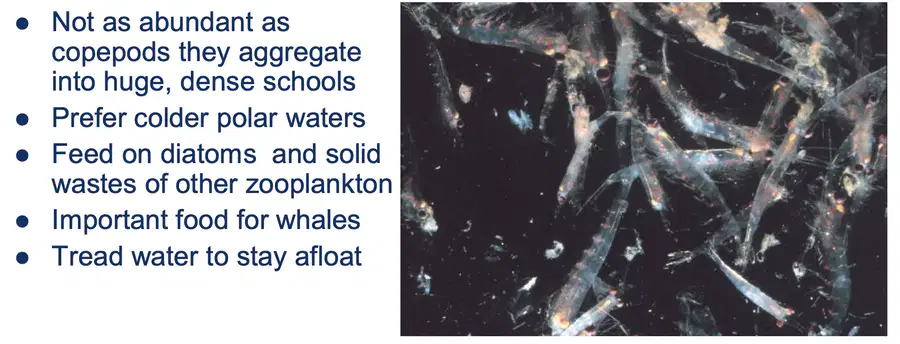
43
Specimen #8: Krill
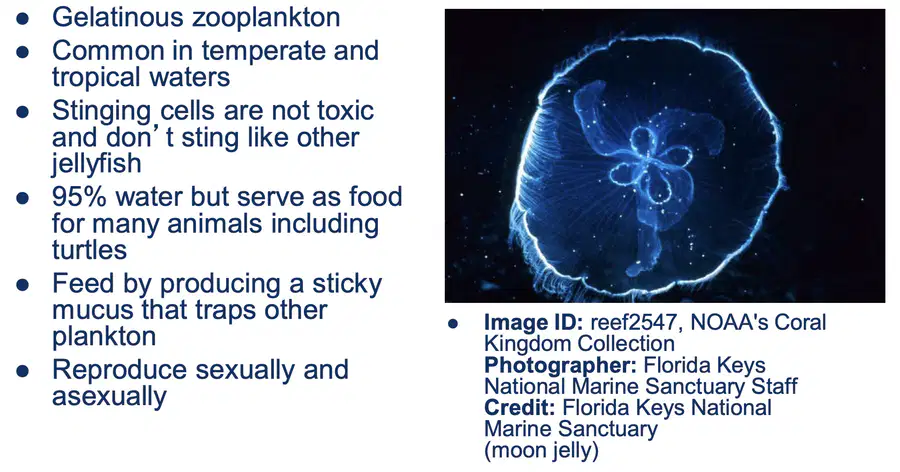
44
Specimen #9: Moon Jelly
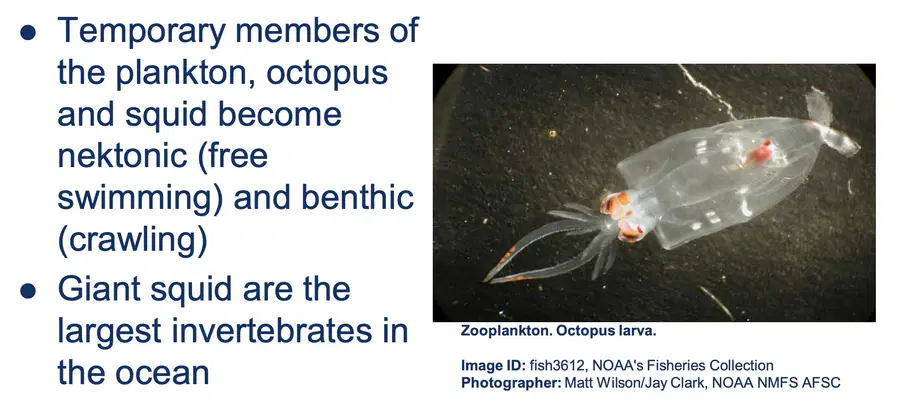
45
Specimen #10: Octopus Larva
Projector
Avery
Chloe
Xavier
Neil
Al
Mariah
Omar
Maitsaa
Rowan
Ethan
K.
Kali
Cameron
Danny
Ethan
S.
Ven
Jacob
Lisette
Ryan
Nolan
Hunter
Lena
Show answer
Auto Play
Slide 1 / 45
SLIDE
Similar Resources on Wayground

37 questions
Enzymes
Presentation
•
10th Grade
39 questions
Cellular Respiration and Fermentation
Presentation
•
10th Grade
39 questions
Ecology Terms Part 2
Presentation
•
9th - 10th Grade
38 questions
Genetics Terms part 2
Presentation
•
9th - 10th Grade
39 questions
Intro to Genetics
Presentation
•
9th Grade
39 questions
Cyber Security Lesson 1
Presentation
•
10th Grade
38 questions
Unit 1 Adventures on the Mississippi
Presentation
•
10th Grade
41 questions
Ch 1 Review
Presentation
•
9th - 10th Grade
Popular Resources on Wayground
19 questions
Naming Polygons

Quiz
•
3rd Grade
10 questions
Prime Factorization
Quiz
•
6th Grade
20 questions
Math Review
Quiz
•
3rd Grade
15 questions
Fast food
Quiz
•
7th Grade
20 questions
Main Idea and Details
Quiz
•
5th Grade
20 questions
Context Clues
Quiz
•
6th Grade
20 questions
Inferences
Quiz
•
4th Grade
19 questions
Classifying Quadrilaterals
Quiz
•
3rd Grade
Discover more resources for Biology
50 questions
Biology Final Review
Quiz
•
10th Grade
15 questions
Biology EOC Review P2
Quiz
•
10th Grade
20 questions
Food Chains and Food Webs
Quiz
•
7th - 12th Grade
20 questions
Biology EOC Review 1
Quiz
•
10th Grade
50 questions
NC EOC Biology Review part 1
Quiz
•
9th - 12th Grade
15 questions
Evolution and Natural Selection Review
Quiz
•
10th Grade
10 questions
Exploring Food Webs and Energy Pyramids

Interactive video
•
6th - 10th Grade
15 questions
Evidence of Evolution
Quiz
•
8th - 12th Grade