

Character Development Drama

Presentation
•
English
•
6th Grade
•
Hard

Joseph Anderson
FREE Resource
13 Slides • 14 Questions
1

2
Open Ended
What is the meaning of the word drama?
3

The word "drama" comes from the Greek word δρᾶμα (drâma), which means “action” or “deed.” This term is derived from the Greek verb δράω (dráō), meaning "to do" or "to act." In ancient Greece, "drama" referred to the performance of actions on stage, with an emphasis on telling a story through characters, dialogue, and conflict.
4

5
6

7
Open Ended
How would you organize a play?
8
9
Word Cloud
What elements of drama did you understand from the video?
10
Fill in the Blanks

What do we call this diagram?
11
Fill in the Blanks
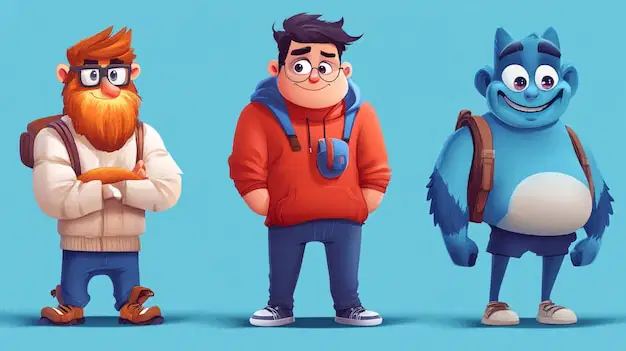
What do we call individuals or entities in a story?
12
Fill in the Blanks
What do we call where the story takes place?
13
1. Plot
The structured sequence of events in the story, involving a beginning, middle, and end. The plot includes conflicts, rising action, climax, and resolution, which drive the story forward.
2. Characters/Cast
The people, animals, or entities who take part in the action. Characters have unique personalities, motivations, and development arcs that contribute to the story.
3. Setting/ Scenary
The time and place in which the drama occurs. Setting provides context and can influence the characters’ behavior, mood, and actions.
14
Protagonist
The main character around whom the story revolves. The protagonist faces challenges and grows throughout the story. Example: Harry Potter
Antagonist
The character who opposes the protagonist and creates conflict. The antagonist isn’t always a villain but stands in the way of the protagonist’s goals. Example: Darth Vader in Star Wars.
Supporting Characters
These characters help develop the story and support the protagonist, often friends, allies, or mentors. They may have their own smaller storylines.
Example: Hermione Granger and Ron Weasley in Harry Potter.
15
Static Character
A character who does not change throughout the story. Their personality, beliefs, or attitude remains the same from beginning to end.
Example: Scar in The Lion King.
Dynamic Character
A character who undergoes significant internal change, such as a shift in personality, attitude, or beliefs, often due to the story’s events.
Example: Ebenezer Scrooge in A Christmas Carol.
16
Fill in the Blanks
What do we call the problem in a story?
17
4. Conflict The central struggle or problem in the drama, which creates tension and drives the narrative. Conflict can be: Internal (within a character, such as moral or emotional dilemmas). External (between characters, society, nature, or other forces).
5. Theme The underlying message, idea, or moral that the drama conveys. Themes give deeper meaning to the story and help audiences connect with the characters' experiences.
6. Dialogue The spoken words of the characters, which reveal their thoughts, personalities, and relationships. Dialogue drives the plot and reveals conflict and themes.
18
Act: A major division in a play, like chapters in a book. Acts break up the action into large parts to organize the story.
Scene: A division within an act that changes with a new setting, time, or shift in characters on stage. Scenes are smaller sections that make up each act.
Stage Directions: Instructions in the script for actors and the crew. They describe actions, movements, or emotions (like "Emma enters from stage left, looking around excitedly") and often explain settings, lighting, and sound. Stage directions help actors and directors understand how scenes should look and feel.
19
The Pizza Problem
Characters:
Alex – Over-thinks everything.
Jordan – Very laid-back, loves pizza.
[Scene opens in Alex’s apartment. ALEX is pacing in front of a pizza box on the coffee table, looking stressed. JORDAN is lounging on the couch, casually scrolling on their phone.]
ALEX
(frustrated) I don’t know what to do. Should I get the large or the medium?
JORDAN
(without looking up) I don’t know, but I’d recommend the large pizza.
ALEX
(sighs) It’s just… too much pressure! I want enough for leftovers but not too many leftovers. What if I regret it?
JORDAN
(pauses, then looks at Alex seriously) You won’t be satisfied until you get the large. Trust me. It’s always the large.
20
ALEX
(dramatically slumps onto the couch) But what if I can’t finish it? What if I feel like a failure?
JORDAN
(shrugs) You’ll feel like a failure with a medium too. You know it’s true.
ALEX
(looks at the pizza box, then at Jordan) Fine. Large it is. But only because you’ve convinced me.
JORDAN
(smiling) That's the spirit. Plus, you can always give me your leftovers.
ALEX
(eyes widening)
Wait, you were planning on stealing them?!
JORDAN
(grinning) Always.
[Scene ends as ALEX grabs the phone to order the large pizza.]
21
Multiple Choice
What is the primary conflict in the script?
A) Alex and Jordan disagree on pizza toppings
Alex is struggling with an internal dilemma about pizza size
Jordan wants to eat all of the pizza
Alex doesn’t know if they should invite someone to the pizza party
22
Multiple Choice
The setting of the script is:
A pizza restaurant
Alex’s apartment
A park
A coffee shop
23
Multiple Choice
A drama is a
story with no dialogue.
piece of scientific research.
story that's meant to be acted out.
short piece that is written in rhyme.
24
Multiple Choice
True or False: The only way to enjoy a drama is by watching it on a stage.
True
False
25
Multiple Choice
Which of these is an example of a stage direction?
George: Hello, Emily!
[Both face front, shy throughout]
George: You made a fine speech in class.
Emily: I was really ready to talk about the speech.
26
Multiple Choice
Gluskabe: It is very cold this winter, Grandmother.
This is an example of:
stage directions
theme
scene
dialogue
27
Multiple Choice
[Enters Milo in his car.]
This is an example of:
stage directions
dialogue
theme
conflict
Show answer
Auto Play
Slide 1 / 27
SLIDE
Similar Resources on Wayground

20 questions
Present Perfect and Past Simple
Presentation
•
6th Grade
20 questions
English
Presentation
•
6th Grade
20 questions
Inductive vs. Deductive Reasoning
Presentation
•
6th Grade
22 questions
Types of sentences
Presentation
•
6th Grade
22 questions
RI 6.8 Evaluating Arguments & Claims
Presentation
•
6th Grade
19 questions
All About Commas
Presentation
•
6th Grade
19 questions
Verb Tense
Presentation
•
6th Grade
21 questions
COMPARATIVES
Presentation
•
6th - 7th Grade
Popular Resources on Wayground
10 questions
How much do you know about our Portrait of an Eagle?

Quiz
•
10th Grade
10 questions
Fast Food Slogans
Quiz
•
6th - 8th Grade
21 questions
Continents and Oceans
Quiz
•
6th Grade
20 questions
Parts of Speech
Quiz
•
5th Grade
16 questions
Subject & Predicate
Quiz
•
5th Grade
25 questions
Multiplication Facts
Quiz
•
5th Grade
12 questions
Map Skills
Quiz
•
3rd Grade
22 questions
Continents and Oceans
Quiz
•
5th Grade
Discover more resources for English
20 questions
Context Clues
Quiz
•
6th Grade
20 questions
Types of sentences
Quiz
•
6th Grade
25 questions
Making Inferences
Quiz
•
6th - 8th Grade
20 questions
Figurative Language Review
Quiz
•
6th Grade
15 questions
Plot Elements
Quiz
•
6th Grade
18 questions
Main Idea
Quiz
•
4th - 6th Grade
10 questions
Main Idea and Supporting Details
Quiz
•
3rd - 6th Grade
20 questions
Theme vs. Main Idea
Quiz
•
6th Grade