

Chemical Nomenclature Lesson

Presentation
•
Science
•
9th Grade - University
•
Hard

Joseph Anderson
FREE Resource
32 Slides • 6 Questions
1
Module 7 - Year 12
2
What we will cover:
What is organic chemistry?
Syllabus inquiry questions
IUPAC nomenclature
Alkanes
Alkenes
Alkynes
Isomerism
3
Open Ended
What is your understanding of organic chemistry?
4
What is organic chemistry?
Life is carbon based
all Earthly life
pharmaceuticals, petrochemicals, agrichemicals, lubricants, solvents, plastics, fuels, explosives
Synthesising compounds or creating new ones

5
What we will learn in this module:


6

7
IUPAC Nomenclature
Naming is essential and specific
allows us to name incredibly complex chemical structures and every chemist around the world knows what we are talking about


8
generally it is based on the:
functional groups off this chain
number of carbons in the chain
the position of the functional groups
alphabetical order
different ways to represent:
molecular
structural
condensed structural
skeletal structural

9


Structural
10

11
IUPAC name or preferred name?
2-hydroxypropane - 1, 2, 3-tricarboxylic acid
Citric acid

12
Prefixes
We count the longest carbon chain, and this forms the basis of the organic compounds name
You need to remember these!

13
Hydrocarbons
Alkanes, alkenes alkynes

14
Multiple Choice
Choose the alkane
15
Alkanes
contain only C and H atoms (hydrocarbon)
contain single bonds
saturated molecule - cannot bond with anything else
has the general formula: CnH2n+2
Naming alkanes:
identify the longest continuous carbon chain
identify any alkyl side chains
number the carbon atoms in the chain (to give lowest numbers to side chains)
16
Example:
Count the number of carbons in the longest chain
Use the prefix and attach to
-ane

17
Alkyl side chains:
Branches off of the main carbon chain
suffix is -yl
Helps us to number the larger structure
Must have the lowest number possible attached
alphabetical order
3-ethyl-2-methylhexane

18
Your turn:

19
Your turn:

20
Multiple Choice
21
Multiple Choice
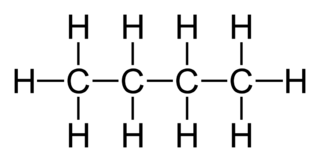
22
Multiple Choice

23
Multiple Choice
Which is the structures with IUPAC nomenclature
2,2,4-trimethylpentane
24
Alkenes
have a double bond between at least two carbons
unsaturated
general formula: CnH2n
Naming:
same as alkanes
replace -ane with -ene
place number before -ene to indicate where the double bond is

25
Your turn:

26

27
Your turn:

28

29
Alkynes
contains at least one triple bond between 2 carbons
uses the suffix -yne
unsaturated
general formula: CnH2n-2
naming:
same as alkanes
replace -ane with -yne
place number before -yne to indicate where the triple bond is

prop-1-yne
30
Your turn:

31

32
Your turn
Draw: 2,2-dimethyloct-3-yne
33
Your turn
Draw: 2,2-dimethyloct-3-yne

34
Isomers
molecules that have the same number and type of atoms, but have a different structure
can have very different physical and chemical properties
3 types of isomers:
Chain = have differing numbers of alkyl groups
Position = change in position of bonds or functional groups
Functional group = same atoms, but different functional groups (we will learn more about this later)

35
Chain Isomers

36
Position Isomers


37
Functional Isomers

38
What we will cover next:
Functional groups
haloalkanes, alcohols, amines, aldehydes, ketones, carboxylic acids, amides, esters
Module 7 - Year 12
Show answer
Auto Play
Slide 1 / 38
SLIDE
Similar Resources on Wayground

35 questions
12.1 Air Pollution
Presentation
•
9th - 12th Grade
37 questions
Intro to Chemical Bonding
Presentation
•
9th - 12th Grade
32 questions
Colligative properties practice
Presentation
•
10th - 12th Grade
34 questions
[6.1] Habitats, Niches, and Species Interactions
Presentation
•
10th - 12th Grade
34 questions
Chp. 10 PP Bio CR
Presentation
•
9th Grade - University
32 questions
Significant Figure Rules
Presentation
•
9th - 12th Grade
35 questions
MS-PS2-2: Forces and Motion
Presentation
•
8th Grade - University
31 questions
7.1 Biodiversity Lesson 1
Presentation
•
9th - 12th Grade
Popular Resources on Wayground
10 questions
Safety Day 2026 – Student Review

Quiz
•
9th Grade
21 questions
Continents and Oceans
Quiz
•
6th Grade
20 questions
Parts of Speech
Quiz
•
5th Grade
16 questions
Subject & Predicate
Quiz
•
5th Grade
25 questions
Multiplication Facts
Quiz
•
5th Grade
12 questions
Map Skills
Quiz
•
3rd Grade
22 questions
Continents and Oceans
Quiz
•
5th Grade
15 questions
Rounding Decimals
Quiz
•
5th Grade
Discover more resources for Science
10 questions
Exploring Chemical and Physical Changes

Interactive video
•
6th - 10th Grade
20 questions
Atomic Structure
Quiz
•
9th Grade
10 questions
Exploring the Electromagnetic Spectrum for Middle School Science
Interactive video
•
6th - 10th Grade
10 questions
Exploring Force and Motion Concepts
Interactive video
•
6th - 10th Grade
10 questions
Exploring Air Masses and Weather Fronts
Interactive video
•
6th - 10th Grade
14 questions
Periodic Trends
Interactive video
•
11th Grade
10 questions
Exploring the States of Matter
Interactive video
•
6th - 10th Grade
10 questions
Exploring Forces: Net Force, Normal Force, Gravity, and Friction
Interactive video
•
6th - 10th Grade