Search Header Logo
Force in One Dimension

Force in One Dimension

Assessment

Presentation

•

Physics

•

10th - 12th Grade

•

Hard

Created by

Joseph Anderson

FREE Resource

22 Slides • 61 Questions

1

Forces in One Dimension

Unit 4 TEST REVIEW

Slide image

2

Newton's First Law of Motion

  • also called "Law of Inertia"

  • A body in motion wants to stay in motion or a body at rest wants to stay at rest unless acted upon by an unbalanced force

Slide image

3


EXAMPLE of FIRST LAW


Slide image

4

INERTIA-tendency of an object to remain in the same state of motion

Look how momentarily the water in the water balloon stays together at rest when the balloon is popped. PRETTY NEAT huh...... :-)

Then..as you can guess the unbalanced force of gravity pulls it down and the male teacher gets soaked!!!!!!

Slide image

5

Newton's 1st Law of Motion

Table Cloth Trick

*Goal: to keep the dishes on the table yet remove the table cloth


(CLICK the ARROW in the center to PLAY the clip)

6

Multiple Choice

The tendency of an object to resist a change in motion is...
1
inertia
2
kinetic energy
3
vector
4
net force

7

Multiple Choice

What kind(s) of objects have inertia?
1
all objects with mass
2
only objects at rest
3
only objects in motion
4
only objects whose motion is being changed

8

Multiple Choice

Objects with greater _________ also have greater inertia.
1
speed
2
mass
3
temperature
4
friction

9

Multiple Choice

You push on a car and it does not move.  What is true about the inertia?
1
The inertia is changing
2
The inertia of the car is too great 
3
The inertia of the person is equal to the car
4
There is not inertia because of no movement

10

Multiple Choice

Newton's 1st Law is also called the Law of ...

1

Friction

2

Inertia

3

Unbalanced forces

4

Newtons

11

Multiple Choice

An object following a straight-line path at a constant speed

1

has zero acceleration

2

has no forces acting on it

3

has a net force acting in the direction of motion

4

none of these

12

Multiple Choice

Because of inertia, a resting object will remain at ________.
1
rest
2
a constant speed
3
school
4
inertia 

13

Multiple Choice

Because of inertia, a moving object will keep ________ unless acted on by an unbalanced force.

1

at rest

2

moving

3

in one spot

4

inertia

14

Multiple Choice

The law of inertia (Newton’s First Law) applies
1
to both moving and nonmoving objects
2
only to moving objects
3
only to objects that are not moving

15

Multiple Choice

An object in motion tends to stay in motion unless an ___ force acts on it.
1
unbalanced
2
balanced

16

Newton's 2nd Law of Motion

 a=Fma=\frac{F}{m}  acceleration = Force/mass

Slide image

17

Newton's 2nd Law of Motion

Slide image

18

Multiple Choice

What unit do we measure force in?

1

Kilometer/hr

2

Joules

3

Seconds

4

Newtons

19

Multiple Choice

A 25 kg bike accelerates at 10 m/s2. What was the force?

1

250 N

2

2.5 N

3

25 N

4

15 N

20

Multiple Choice

If an object was accelerating at 5 m/s2, and a force of 10 newtons was required to accelerate it, what was the object's mass?

1

50 kg

2

2 kg

3

0.5 kg

4

5 kg

21

Multiple Choice

Your car has a mass of 2500 kg and a force of 5000 N. How fast will it accelerate?

1

20 m/s2

2

0.5 m/s2

3

2 m/s2

4

120 N

22

Multiple Choice

True or False. 800 N = 800 kg â‹… m/s2

1

True

2

False

23

Newton's2nd Law of Motion

Applying the 2nd Law

Slide image

24

Newton's 2nd Law of Motion

Net Force & Free Body Diagrams

Slide image

25

Slide image

26

Newton's 2nd Law of Motion

  • If forces are BALANCED, the Net Force (FNET) = 0 and no acceleration occurs

  • If forces are UNBALANCED, the Net Force (FNET) = the sum or difference of all forces acting in the same direction.

  • Acceleration WILL OCCUR in direction of the Net Force

27

IMPORTANT NOTE:

BALANCED FORCES

FNET = 0 can occur when objects are at REST

FNET = 0 can occur when objects are at motion at CONSTANT SPEED

28

Multiple Choice

Question image
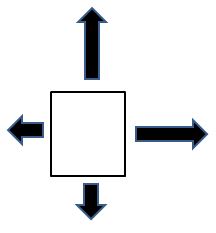
Which direction will the object move?
1
Right
2
Left
3
Up
4
Down

29

Multiple Choice

Question image
Forces that have a net force of zero ( the object is still).
1
Balanced force
2
Unbalanced force

30

Multiple Choice

With unbalanced forces, the object will move in the direction of the _______ force.
1
larger 
2
smaller 
3
equal 

31

Multiple Choice

Question image
Imagine a bat swinging with a force of 1200 N, hitting a ball pitched with a force of 400 N. At what net force does the ball move away from the bat?
1
1600 N
2
800 N
3
400 N
4
Net force of 0 N

32

Multiple Choice

8 N to the left , and 4 N to the right. Find the net force. Is this balanced 
1
12 N Right  No
2
4 N Left  No
3
12 N Right  Yes
4
4 N Left  Yes

33

Multiple Choice

Question image
What is the net force?
1
4.2 N left
2
4.2 N right
3
2.2 N left
4
2.2 N right

34

Multiple Choice

Question image

a) Calculate the resultant force

b) State if the object is accelerating or not and in which direction

1

a) 50N

b) accelerating to the right

2

a) 50N

b) not accelerating

3

a) 50N

b) accelerating downwards

4

a) 0N

b) not accelerating

35

Multiple Choice

Question image

How fast will the 7-kg box accelerate?

1

35 m/s2

2

65 m/s2

3

5 m/s2

4

7 m/s2

36

Slide image

37

Multiple Choice

Mass and weight are related by ____ .

1

The gravitational force

2

Newtons

3

Friction

4

Inertia

38

Multiple Choice

Question image

What is the magnitude of the force of tension in a rope that is supporting a 42kg bucket in the air?

1

41.2 N

2

412 N

3

.42N

4

There isn't enough information to tell

39

Types of Forces

Here is a list of SOME. There can be others...like Air Resistance or Drag Force, Buoyant Force,

Slide image

40

Slide image

41

Multiple Choice

Question image

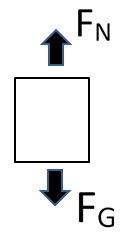
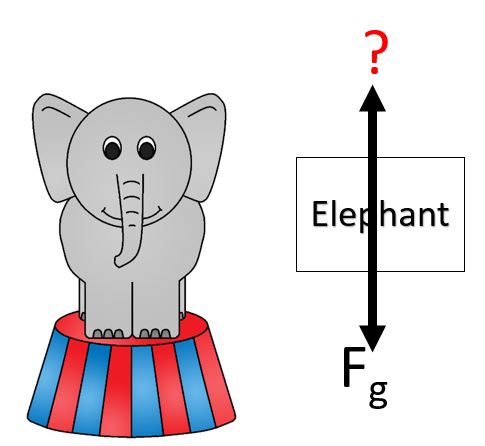
What is the name of the missing force in this free body diagram?

1

Tension Force

2

Normal Force

3

Weight Force

4

Frictional Force

42

Multiple Choice

Question image

Which of the following is true about this free-body diagram?

1

the forces are are balanced

2

the object is free-falling

3

the object is moving upward

4

the forces are unbalanced

43

Multiple Select

Question image

This object would be moving (pick all that are correct):

1

up

2

down

3

left

4

right

44

Multiple Choice

Question image

The down-arrow in this diagram is most-likely:

1

gravity

2

normal

3

a push or pull

4

friction

45

Multiple Choice

Question image
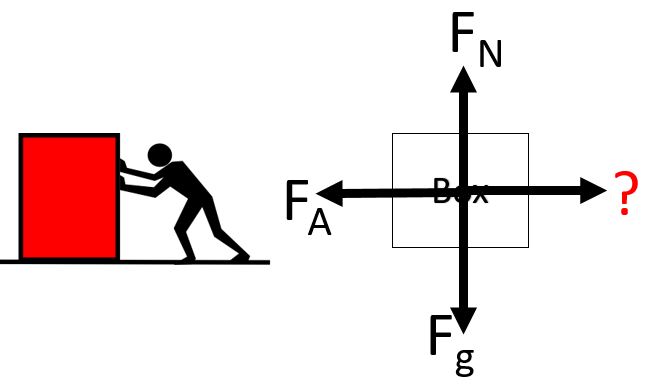
Name the missing force...
1
weight force
2
normal force
3
applied force
4
frictional force

46

Multiple Choice

Question image
Name the missing force...
1
tension force
2
gravitational force
3
normal force
4
applied force

47

Multiple Choice

Question image
Name the missing force...
1
weight force
2
normal force
3
buoyant force
4
applied force

48

Multiple Choice

Question image
Name the missing force...
1
frictional force
2
weight force
3
thrust
4
buoyant force

49

Multiple Choice

Question image
Name the missing force...
1
tension force
2
frictional force
3
normal force
4
spring force

50

Multiple Choice

Question image
Name the missing force...
1
spring force
2
weight force
3
normal force
4
buoyant force

51

Multiple Choice

Question image
Name the missing force...
1
buoyant force
2
normal force
3
weight force
4
frictional force

52

Terminal Velocity

  • the highest velocity achieved by a falling object

  • occurs when unbalanced forces make you accelerate as you fall. This is because your weight is more than air resistance or air drag to begin with. becomes balanced

  • But as speed increases, air drag also increases

  • Eventually, your downward weight = upward air drag and you fall at CONSTANT SPEED all the way down

Slide image

53

Multiple Choice

Question image

When a falling object stops accelerating and falls at a constant speed, it is

1

static equilibrium

2

constant velocity

3

acceleration

4

terminal velocity

54

Multiple Choice

Just after she jumps out of the plane (before the parachute opens). The net force will be

1

zero

2

upward

3

downward

55

Multiple Select

Question image

There are blue and red arrows identifying forces acting on the skydiver. Identify 3 true statements:

1

The skydiver has just left the plane

2

Weight is increasing

3

There is no air drag

4

Weight is constant

5

Deceleration

56

Multiple Select

Question image

There are blue and red arrows identifying forces acting on the skydiver. Identify 2 true statements:

1

Air drag is increasing

2

Velocity is increasing

3

There is no air drag

4

Weight is increasing

5

Deceleration

57

Multiple Select

Question image

There are blue and red arrows identifying forces acting on the skydiver. Identify 2 true statements:

1

Air drag is increasing

2

Velocity is increasing

3

Terminal velocity

4

Acceleration

5

Air Drag=Weight

58

Multiple Choice

Explain why the skydiver will eventually stop accelerating

1

The air resistance continues to increase as long as the velocity increases. When the air resistance reaches the same value as the weight there will be no resultant force, hence no acceleration (F=ma)

2

The air resistance continues to decrease as long as the velocity increases. When the air resistance is larger than the weight there will be no resultant force, hence no acceleration (F=ma)

3

The air resistance stays the same so the velocity increases. There will be no resultant force, hence no acceleration (F=ma)

4

The air resistance continues to increase as long as the velocity increases. When the air resistance reaches the same value as the weight there will be an increase in acceleration

59

Multiple Choice

Question image

When a skydiver has jumped from the plane and begins falling, what happens to

a) her velocity

b) the air resistance?

1

a) Increases

b) increases

2

a) increases

b) decreases

3

a) increases

b) stays the same

4

a) stays the same

b) increases

60

Multiple Choice

John, 68kg dives out of an aeroplane

a) What is John's weight

b) What happens to John's weight as he falls?

1

a) 0.68N

b) stays the same

2

a) 680N

b) stays the same

3

a) 680N

b) increases

4

a) 0.68N

b) decreases

61

Newton's 3rd Law of Motion

For every action, there is and OPPOSITE and EQUAL reaction

Slide image

62

Slide image

63

Slide image

64

Slide image

65

Multiple Choice

Which law explains how rockets are launched into space?

1

Newton's First Law of Motion

2

Newton's Second Law of Motion

3

Newton's Third Law of Motion

4

Newton's Law of Universal Gravitation

66

Multiple Choice

What happens when two objects, such as a baseball and a bat, collide?

1

They hit each other with the same force in the same direction.

2

They hit each other with the same force in opposite directions.

3

They hit each other with unequal force in opposite directions.

4

One remains still while the other one moves in the same direction.

67

Multiple Choice

Question image

A swimmer pushes on the water and the water pushes on the hand and the swimmer moves forward. What is the REACTION force?

1

Swimmer pushes on the water

2

the water pushes on the hand and the swimmer moves forward

68

Multiple Choice

Question image

The space shuttle solid rocket boosters pushes exhaust out with 10,000 N of force. Without any other forces acting on the rocket, how much force does the rocket go forward?

1

15,000 N

2

1,000 N

3

10, 000 N

69

Multiple Choice

A baseball player bats a ball with a force of 1,000 N. The ball exerts a reaction force (without any additional forces action on it) against the bat of...
1
Less than 1, 000 N
2
1,000 N
3
More than 1,000 N

70

Multiple Choice

An archer shoots an arrow. The action force is the bowstring against the arrow, the reaction force is...
1
Air resistance against the bow
2
the arrow's push against the bowstring
3
the grip of the archer's hand on the bow

71

Apparent Weight

  • Combines aspects of all 3 of Newton's Laws of Motion

  • Think of Elevator Problem

  • You can appear to weight MORE

  • Sometimes you can appear to weigh LESS

  • When moving at constant speed you ALWAYS weigh the same as you normally do

Slide image

72

Slide image

73

Multiple Choice

Question image

The passenger has a mass of 85 kg. Calculate the normal force the floor exerts on the passenger when the elevator is sitting at rest.

(Hint: normal force should equal weight since forces are balanced)

1

1020 N

2

0 N

3

833 N

4

680 N

74

Multiple Choice

Question image

An elevator is accelerating upward from rest. Because of your inertia wanting you to stay at rest, initially...

1

you feel lighter

2

you feel your weight

3

you feel heavier

75

Multiple Choice

Question image

An elevator accelerates UPWARD at 2.0 m/s2, as illustrated in the diagram below:

The passenger has a mass of 85 kg. Calculate the normal force the floor exerts on the passenger.

(Hint: this would be the same as the passenger's "apparent weight" if he was standing on a set of scales)

1

1003 N

2

0 N

3

833 N

4

680 N

76

Multiple Choice

Question image

After a few moments, the upwardly accelerating elevator establishes a constant speed.

The passenger still has a mass of 85 kg. Calculate the normal force the floor exerts on the passenger.

1

1003 N

2

0 N

3

833 N

4

680 N

77

Multiple Choice

Question image

An elevator that has been moving upward gradually begins to decelerate as it slows to the chosen floor.


Because of your inertia wanting you to stay moving, momentarily...

1

you feel lighter

2

you feel your weight

3

you feel heavier

78

Multiple Choice

Question image

An elevator is approaching the 10th floor and will decelerate UPWARD at 2.0 m/s2.

The passenger has a mass of 85 kg. Calculate the normal force the floor exerts on the passenger.

1

1003 N

2

0 N

3

833 N

4

663 N

79

Multiple Choice

Question image

An elevator begins accelerating DOWNWARD from rest on the 10th floor as it travels back to the ground floor.


Considering your inertia wants to remain at rest, momentarily...

1

you feel lighter

2

you feel your weight

3

you feel heavier

80

Multiple Choice

Question image

An elevator beginning from rest begins descending to the ground floor and will accelerate DOWNWARD at 2.0 m/s2 as it leaves the 10th floor.


The passenger has a mass of 85 kg. Calculate the normal force the floor exerts on the passenger.

1

1003 N

2

0 N

3

833 N

4

663 N

81

Multiple Choice

Question image

After a few moments, the downwardly accelerating elevator establishes a constant speed.

The passenger still has a mass of 85 kg. Calculate the normal force the floor exerts on the passenger.

1

1003 N

2

0 N

3

833 N

4

680 N

82

Multiple Choice

Question image

A descending elevator begins to slow as it approaches the ground floor.


Considering your inertia wants to remain moving at the same speed, momentarily...

1

you feel lighter

2

you feel your weight

3

you feel heavier

83

Multiple Choice

Question image

An elevator is descending will decelerate DOWNWARD at 2.0 m/s2 as it comes to a stop at the ground floor.


The passenger has a mass of 85 kg. Calculate the normal force the floor exerts on the passenger.

1

1003 N

2

0 N

3

833 N

4

663 N

Forces in One Dimension

Unit 4 TEST REVIEW

Slide image

Show answer

Auto Play

Slide 1 / 83

SLIDE