Search Header Logo
Gas Chemistry

Gas Chemistry

Assessment

Presentation

Chemistry

University

Hard

Created by

Joseph Anderson

FREE Resource

13 Slides • 12 Questions

1

Chapter 11- Gases

Presenter: Dr Luis Bello


media

2

media

3

Multiple Choice

Chemical bonds form when atoms
1
combined nuclei
2
give up neutrons
3
gain protons
4
share or transfer electrons

4

Multiple Choice

Which type of bond has an unequal sharing of electrons?
1
Polar Covalent 
2
Non Polar Covalent
3
Ionic
4
Metallic

5

Multiple Choice

Which type of bond has an equal sharing of electrons?
1
Polar Covalent 
2
Non Polar Covalent
3
Ionic
4
Metallic

6

Multiple Choice

Question image

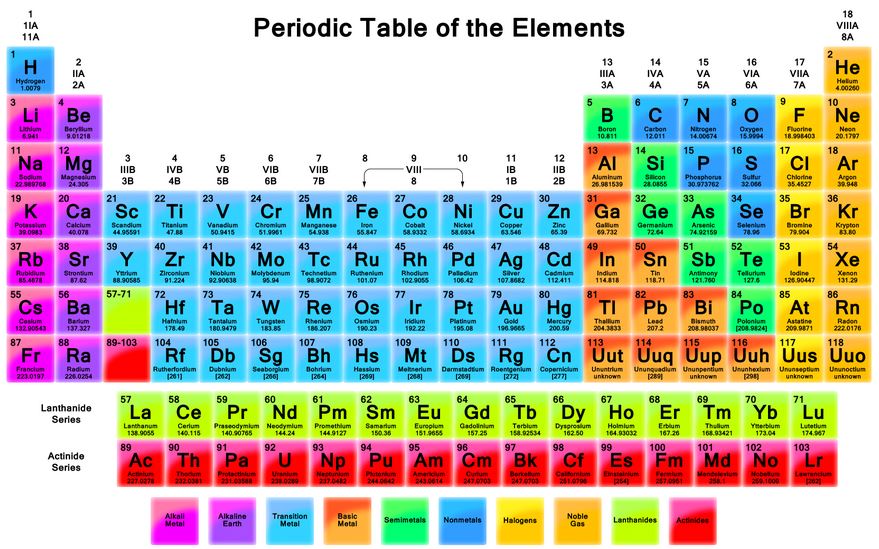
Elements on the LEFT side of the periodic table will most likely form:

1

Positive ions

2

Negative ions

3

Neutral Ions

4

None of these

7

Multiple Choice

The theory that is used to predict the arrangement of atoms about a central atom is called?

1

Valence shell repulsion

2

Valence shell electron sharing

3

Valence shell electron pair repulsion

4

Valence electron shell repulsion pair

8

Multiple Choice

Question image
A molecule of methane has what shape?
1
Tetrahedral
2
Triangular
3
Pyramidal
4
Octahedral

9

Multiple Choice

Question image
Which of the following is the correct Lewis dot structure for the molecule fluorine (F2)?
1
A
2
B
3
C
4
D

10

Multiple Choice

According to the octet rule most elements need _______ valence electrons.
1
2
2
8
3
6
4
18

11

media

12

media

13

14

Kinetic-molecular theory:

  1. Gases consist of large numbers of molecules that are in continuous, random motion

  2. The volume of all the molecules of the gas is negligible compared to the total volume in which the gas is contained

  3. Attractive and repulsive forces between gas molecules are negligible

  4. Energy can be transferred between molecules during collisions, but the average kinetic energy of the molecules does not change with time, as long as the temperature of the gas remains constant

  5. The average kinetic energy of the molecules is proportional to absolute temperature. At any given temperature, the molecules of all gases have the same average kinetic energy

15

16

17

media

18

media

19

media

20

21

Multiple Choice

A student inflates a balloon with helium then places it in the freezer. The student should expect

1

the balloon's volume to increase

2

the balloon's volume to decrease

3

the balloon's moles to increase

4

the balloon's moles to decrease

22

Multiple Choice

When the temperature of matter increases the particles...
1
speed up and move closer
2
speed up and move farther apart
3
slow down and move closer together
4
slow down and move farther apart

23

Multiple Choice

A balloon will pop in the atmosphere because..
1
Pressure goes down volume goes up
2
Pressure goes up volume goes down
3
temperature goes down volume goes up
4
volume goes down temperature goes down

24

Multiple Choice

Gas Laws involve what three terms?
1
Solid Liquid Gas 
2
Speed Velocity Acceleration 
3
Elements Compounds Mixtures 
4
Pressure Temperature Volume 

25

Chapter 11- Gases

Presenter: Dr Luis Bello


media

Show answer

Auto Play

Slide 1 / 25

SLIDE