

History of Energy

Presentation
•
Physics
•
Professional Development
•
Hard

Joseph Anderson
FREE Resource
117 Slides • 0 Questions
1

History of
Solar Energy
2

The sun is the center of
physical existence on Earth
The sun is the closest star to Earth. Even
at a distance of 150 million kilometers (93
million miles), its gravitational pull holds
the planet in orbit. It radiates light and
heat, or solar energy, which makes it
possible for life to exist on Earth.
3

Sustainability
Sustainability is a state
of balance between
natural resources and our
needs—between the
Earth and the human
species
4

Earth is our home: Living
Things
The Earth is home to all living things. Humans are in the
unique position of substantially controlling Earth’s resources—
land, water, minerals, and more. We are also unique among
species for noticeably affecting Earth’s systems at a
global scale, including the oceans, the atmosphere, hydrological
and biogeochemical cycles, ecologies, and biodiversity.
The Earth is the ultimate system boundary for humanity. “There
is no planet B” is now a commonly used phrase. Despite the
best efforts of extraordinary engineering that will likely take
humans to Mars and beyond, the Earth will remain the context
within which human society plays out its history. Society
delineates the system boundary for all human activities such
as scientific discovery, knowledge creation, industry,
technology, culture, and the arts. The set of activities that
concerns itself with the production and consumption of goods
and services is the economy.
5

Earth is our home:
Society and Economy
The Earth is home to society,which contains the economy. A sustainable
society strikes a balance within its economy by protecting natural
resources from depletion and degradation while deriving the materials and
energy necessary for sustaining life and serving the aspirations of human
civilization.
Sustainable practices allow renewable resources to regenerate and
ecosystems to thrive. These practices also place value on limited
resources and promote reusing and reducing consumption of
nonrenewable resources. Economic activities that promote a balance
between resources and our needs form the basis for sustainable
development.
6


Tragedy of the Commons
The tragedy of the commons is a scenario as
old as human society. It involves a commonly
held good or resource—like a field for grazing
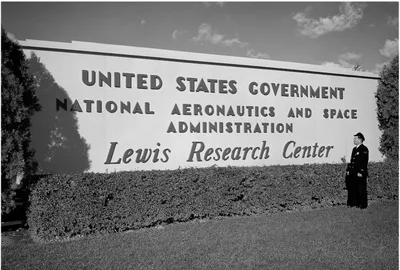
animals—and a group of people who partake
of that resource, individually and collectively.
Each individual or household serves its needs
from this common resource without coordination
with others. Each household is dependent on
continued access to a certain amount of that
resource, enough to serve their current and
near-future needs.
As a collective, the entire community is
dependent on the maintenance and continued
production from this commonly held resource,
but rather than planning for the aggregate
extraction of the collective, individual
households simply take what they need and
hope for continued productivity.
This Photo by Unknown Author is licensed under CC BY-SA
7

Our “Quality of Life” challenge
Will be taking the best path toward material and
energy sustainability that prioritizes thehealth and well-
being of all people on Earth. A global and sustained
reduction in CO₂ emissions is only a positive outcome if
poverty continues to decrease, gender equality flourishes,
and access to electricity, health care, clean air, and clean
water increases. Extremely low material and energy
consumption is a consequence of abject poverty: clearly not
a future to strive for—an inhumane future.
8

Temple of Kukulkan
This beauty is located in El Castillo,
Mexico. Archaeologists believe this temple
was built to worship the deity, Kukulkan,
the serpent god. Clearly, the ancient
Mayan civilization was enamored with the
sun in its construction. During the fall and
spring equinoxes, the sun and the temple
create a shadow that looks like a serpent.
9
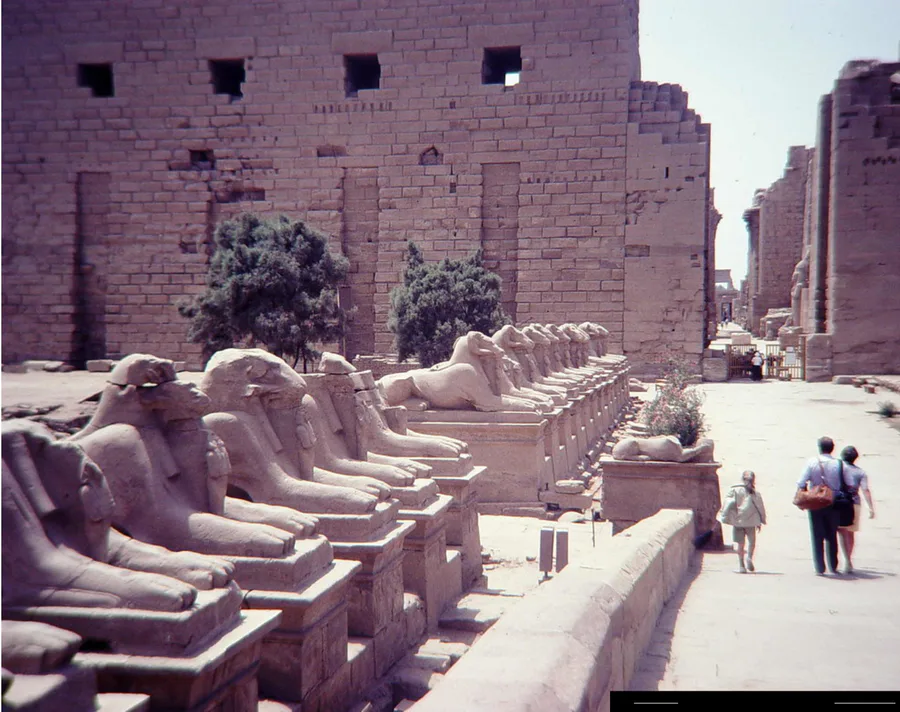
Karnak Temple
The Karnak Temple in
Egypt is another magnificent
wonder that was believed to be
a place of worship and
observation. The pyramid’s
placement and alignment of
columns cause for the
illumination of the statue of Ra during the winter solstice.
This Photo by Unknown author is licensed under CC BY-NC-ND.
10

The sun is the
center of physical existence
on Earth
Early civilizations around the world
positioned buildings to face south to
gather heat and light. They used windows
and skylights for the same reason, as well
as to allow for air circulation. These are
elements of solar architecture. Other
aspects include using selective shading
and choosing building materials
with thermal mass, meaning they store
heat, such as stone and concrete. Today,
computer programs make applications
easier and more precise.
11

The sun is
the center of physical
existence on Earth
The greenhouse is another early solar
development. By converting sunlight to
heat, greenhouses make it possible to
grow plants out of season and
in climates that may not be suited for
them. One of the earliest greenhouses
dates to 30 C.E., before glass was even
invented. Constructed
from translucentsheets of mica, a thin
mineral. The general technique is the
same today, although there have been
many improvements to increase the
variety and amount of crops grown.
This Photo by Unknown author is licensed under CC BY-SA.
12

Solar for Cooking
Solar cookers are used in many parts of
the world in growing numbers. It is
estimated that there are half a million
installed in India alone. India has the
world’s two largest solar cooking systems,
which can prepare food for 25,000 people
daily. According to Indian Prime
Minister Manmohan Singh, “Since
exhaustible energy sources in the country
are limited, there is an urgent need to
focus attention on development
of renewable energy sources and use of
energy efficient technologies.”
This Photo by Unknown author is licensed under CC BY-SA-NC.
13


Solar to Heat Water
Solar thermal energy can be
used to heat water. First
introduced in the late 1800s,
the solar water heater was a
big improvement over stoves
that burned wood
or coal because it was cleaner
and cost less to operate.
This Photo by Unknown author is licensed under CC BY-SA.
14

Solar Electricity
(Photovoltaics "PV")
Solar power—the conversion of sunlight into electricity—is yet another application of
solar technology. This can be done in a number of ways. The two most common
are photovoltaic (solar cells) and concentrating solar power.
This Photo by Unknown author is licensed under CC BY.
15

Photovoltaic
Effect
Transforming light directly into
sunlight without any moving parts
16

Concentrated
Solar
Making electricity using mirrors or
special lenses to magnify or
concentrate direct sunlight
This Photo by Unknown author is licensed under CC BY-SA.
17

Solar Fact
Solar Power
In 15 minutes, the sun radiates as much energy as
people use in all forms in an entire year.
18

The sun is the center of
physical existence on Earth
Plants need sunlight to grow. Animals,
including humans, need plants for food
and the oxygen they produce. Without
heat from the sun, Earth would freeze.
There would be no winds, ocean currents,
or clouds to transport water.
19

The sun is the center
of physical existence on Earth
Solar energy has existed as long as the
sun—about five billion years. While people
have not been around that long, they have
been using solar energy in a variety of
ways for thousands of years.
This Photo by Unknown author is licensed under CC BY.
20


The sun is the center of physical
existence on Earth
Solar energy is essential to agriculture—
cultivating land, producing crops, and
raising livestock. Developed about 10,000
years ago, agriculture had a key role in
the rise of civilization. Solar techniques,
such as crop rotation, increased harvests.
Drying food using sun and wind prevented
crops from spoiling. This surplus of food
allowed for denser populations and
structured societies.
21


2000 BC
The last remaining of the Seven Wonders of the
ancient world, the great pyramids of Giza are
perhaps the most famous and discussed
structures in history.
The three primary pyramids on the Giza plateau
were built over the span of three generations by
the rulers Khufu, Khafre, and Menkaure.
The shape of the pyramid was a solar reference,
perhaps intended as a solidified version of the
rays of the sun. Texts talk about the sun’s rays as a
ramp the pharaoh mounts to climb to the sky—
the earliest pyramids, such as the Step Pyramid of
Djoser at Saqqara—were actually designed as a
staircase.
22

7ᵗʰ Century BC
Magnifying glass used to concentrate sun’s
rays to make fire and to burn ants.
23


3ʳᵈ Century BC
Greeks and Romans use
burning mirrors to light torches
for religious purposes.
This Photo by Unknown Author is licensed under CC BY-NC-ND
24

2nd Century BC
As early as 212 BC, the Greek scientist,
Archimedes, used the reflective properties
of bronze shields to focus sunlight and to
set fire to wooden ships from the Roman
Empire which were besieging Syracuse.
(Although no proof of such a feat exists,
the Greek navy recreated the experiment
in 1973 and successfully set fire to a
wooden boat at a distance of 50 meters.)
This Photo by Unknown Author is licensed under CC BY-SA-NC
25


20 century AD
Chinese document use of
burning mirrors to light torches
for religious purposes.
26

1ˢᵗ to 4ᵗʰ Century AD
The famous Roman bathhouses in the
first to fourth centuries A.D. had large
south facing windows to let in the sun’s
warmth.
27

6th Century AD
Sunrooms on houses and public
buildings were so common that the
Justinian Code initiated “sun rights” to
ensure individual access to the sun.
28


1200s AD
Ancestors of Pueblo people called
Anasazi in North America live in south-
facing cliff dwellings that capture the
winter sun.
This Photo by Unknown Author is licensed under CC BY-NC
29


1767
Swiss scientist Horace de Saussure was credited with
building the world’s first solar collector, later used by
Sir John Herschel to cook food during his South Africa
expedition in the 1830s
This Photo by Unknown Author is licensed under CC BY
30


1861
On September 27, 1816, Robert Stirling applied
for a patent for his economiser at the Chancery in
Edinburgh, Scotland. By trade, Robert Stirling
was actually a minister in the Church of Scotland
and he continued to give services until he was
eighty-six years old! But, in his spare time, he
built heat engines in his home workshop. Lord
Kelvin used one of the working models during
some of his university classes. This engine was
later used in the dish/Stirling system, a solar
thermal electric technology that concentrates the
sun’s thermal energy in order to produce power.
This Photo by Unknown Author is licensed under CC BY-NC
31


1839
French scientist Edmond
Becquerel discovers the
photovoltaic effect while
experimenting with an
electrolytic cell made up of two
metal electrodes placed in an
electricity-conducting solution
—electricity-generation
increased when exposed to
light.
This Photo by Unknown Author is licensed under CC BY-SA
32

1860s
French mathematician August Mouchet
proposed an idea for solar-powered steam
engines. In the following two decades, he
and his assistant, Abel Pifre, constructed
the first solar powered engines and used
them for a variety of applications. These
engines became the predecessors of
modern parabolic dish collectors.
33


1873
Willoughby Smith discovered the
photoconductivity of selenium.
34

1876
1876 William Grylls
Adams and Richard
Evans Day discover that
selenium produces
electricity when exposed
to light. Although selenium
solar cells failed to convert
enough sunlight to power
electrical equipment, they
proved that a solid
material could change
light into electricity without
heat or moving parts.
35

1880
Samuel P. Langley, invents the bolometer,
which is used to measure light from the
faintest stars and the sun’s heat rays. It
consists of a fine wire connected to an
electric circuit. When radiation falls on the
wire, it becomes very slightly warmer. This
increases the electrical resistance of the
wire.
This Photo by Unknown Author is licensed under CC BY-SA
36

1883
Charles Fritts, an American
inventor, described the first
solar cells made from selenium
wafers.
37

1887
Heinrich Hertz discovered that ultraviolet light altered
the lowest voltage capable of causing a spark to jump
between two metal electrodes.
This Photo by Unknown Author is licensed under CC BY
38


1891
Baltimore inventor Clarence
Kemp patented the first
commercial solar water heater.
39


1904
Wilhelm Hallwachs discovered
that a combination of copper
and cuprous oxide is
photosensitive.
This Photo by Unknown Author is licensed under CC BY-SA
40

1905
Albert Einstein published his paper on the photoelectric
effect (along with a paper on his theory of relativity).
41

1908
1908 William J. Bailley of the Carnegie
Steel Company invents a solar collector
with copper coils and an insulated box—
roughly, it’s present design.
This Photo by Unknown Author is licensed under CC BY
42

1914
The existence of a barrier layer in
photovoltaic devices was noted.
43


1916
Robert Millikan provided experimental
proof of the photoelectric effect.
44


1918
Polish scientist Jan Czochralski
developed a way to grow single-crystal
silicon. For more information on
Czochralski, see the article
http://rekt.pol.lublin.pl/users/ptwk/art2.ht
m Professor Jan Czolchralski (1885-
1953) and His Contribution to the Art
and Science of Crystal Growth.
This Photo by Unknown Author is licensed under CC BY
45

1921
Albert Einstein wins the Nobel Prize for his
theories (1904 research and techni- cal
paper) explaining the photoelectric effect.
This Photo by Unknown Author is licensed under CC BY
46


1932
Audobert and Stora discover
the photovoltaic effect in
cadmium sulfide (CdS).
This Photo by Unknown Author is licensed under CC BY-NC
47

1947
1947 Passive solar buildings in the United States were in
such demand, as a result of scarce energy during the
prolonged W.W.II, that Libbey-Owens-Ford Glass Company
published a book entitled Your Solar House, which profiled
forty-nine of the nation’s greatest solar architects.
This Photo by Unknown Author is licensed under CC BY-NC-ND
This Photo by Unknown Author is licensed under CC BY-NC-ND
48

1953
Dr. Dan Trivich, Wayne State University,
makes the first theoretical calculations of
the efficiencies of various materials of
different band gap widths based on the
spectrum of the sun.
49


1954
1954 Photovoltaic technology is born in the
United States when Daryl Chapin, Calvin Fuller,
and Gerald Pearson develop the silicon
photovoltaic (PV) cell at Bell Labs—the first solar
cell capable of converting enough of the sun’s
energy into power to run everyday electrical
equipment. Bell Telephone Laboratories
produced a silicon solar cell with 4% efficiency
and later achieved 11% efficiency.
This Photo by Unknown Author is licensed under CC BY-SA
50


1955
Western Electric began to sell
commercial licenses for silicon
photovoltaic (PV) technologies. Early
successful products included PV-
powered dollar bill changers and
devices that decoded computer punch
cards and tape.
This Photo by Unknown Author is licensed under CC BY-NC-ND
51

1955
Architect Frank Bridgers designed the world’s first commercial office building using solar water
heating and passive design. This solar system has been continuously operating since that time
and the Bridgers-Paxton Building, is now in the National Historic Register as the world’s first
solar heated office building.
52

1956
William Cherry, U.S. Signal Corps Laboratories, approaches RCA Labs’ Paul Rappaport and
Joseph Loferski about developing photovoltaic cells for proposed orbiting Earth satellites.
53


Hoffman Electronics 1957-1960
Hoffman Electronics achieved 8% efficient photovoltaic cells.
Hoffman Electronics achieved 9 % efficient photovoltaic cells.
Hoffman Electronics achieves 10% efficient, commercially available
photovoltaic cells. Hoffman also learns to use a grid contact, reducing
the series resistance significantly.
Hoffman Electronics achieves 14% efficient photovoltaic cells.
This Photo by Unknown Author is licensed under CC BY-SA
This Photo by Unknown Author is licensed under CC BY-SA
54


1958
T. Mandelkorn, U.S. Signal
Corps Laboratories, fabricates
n-on-p silicon photovoltaic cells
(critically important for space
cells; more resistant to
radiation and better suited for
space).
This Photo by Unknown Author is licensed under CC BY
55

1958
The Vanguard I space satellite used a
small (less than one watt) array to
power its radios. Later that year,
Explorer III, Vanguard II, and Sputnik-3
were launched with PV-powered
systems on board. Despite faltering
attempts to commercialize the silicon
solar cell in the 1950s and 60s, it was
used successfully in powering satellites.
It became the accepted energy source
for space applications and remains so
today.
This Photo by Unknown Author is licensed under CC BY-NC-ND
56


1959
On August 7, the Explorer VI satellite is
launched with a photovoltaic array of
9600 cells (1 cm x 2 cm each). Then, on
October 13, the Explorer VII satellite is
launched.
This Photo by Unknown Author is licensed under CC BY-SA
57


1962
Silicon Sensors, Inc., of Dodgeville,
Wisconsin, is founded. It starts producing
selenium and silicon photovoltaic cells.
58


1963
Bell Telephone Laboratories launches the first
telecommunications satellite, the Telstar (initial
power 14 watts).
This Photo by Unknown Author is licensed under CC BY-SA-NC
This Photo by Unknown Author is licensed under CC
BY-SA
59

1962
Sharp Corporation succeeds in producing practical silicon
photovoltaic modules.
60

1963
Japan installs a 242-watt, photovoltaic
array on the Ogami lighthouse, the world’s
largest array at that time.
This Photo by Unknown Author is licensed under CC BY-SA
61

1964
NASA launches the first Nimbus
spacecraft—a satellite powered by a 470-
watt photovoltaic array. See NASA’s
http://nssdc.gsfc.nasa.gov/earth/nimbus.ht
ml “Nimbus Program” for more
information.
62

1965
Peter Glaser conceives the idea of the
satellite solar power station. For more
information, see DOE’s reference brief,
63

1966
NASA launches the first Orbiting
Astronomical Observatory, powered by a 1-
kilowatt photovoltaic array, to provide
astronomical data in the ultraviolet and X-ray
wavelengths filtered out by the earth’s
atmosphere.
64


1969
The Odeillo solar furnace,
located in Odeillo, France was
constructed. This featured an
8-story parabolic mirror.
65

1970
Dr. Elliot Berman, with help from Exxon Corporation, designs a significantly
less costly solar cell, bringing price down from $100 a watt to $20 a watt.
Solar cells begin to power navigation warning lights and horns on many
offshore gas and oil rigs, lighthouses, railroad crossings and domestic solar
applications began to be viewed as sensible applications in remote locations
where grid- connected utilities could not exist affordably.
This Photo by Unknown Author is licensed under CC BY-SA
66

1972
The French install a cadmium
sulfide (CdS) photovoltaic
system to operate an
educational television at a
village school in Niger.
This Photo by Unknown Author is licensed under CC BY-NC-ND
67


1972
The Institute of Energy Conversion is
established at the University of
Delaware to perform research and
development on thin-film photovoltaic
(PV) and solar thermal systems,
becoming the world’s first laboratory
dedicated to PV research and
development.
This Photo by Unknown Author is licensed under CC BY
68


1973
The University of Delaware builds “Solar
One,” one of the world’s first pho-
tovoltaic (PV) powered residences. The
system is a PV/thermal hybrid. The roof-
integrated arrays fed surplus power
through a special meter to the utility
during the day and purchased power
from the utility at night. In addition to
electricity, the arrays acted as flat-plate
thermal collectors, with fans blowing the
warm air from over the array to phase-
change heat-storage bins.
69


1976
The NASA Lewis Research Center starts
installing 83 photovoltaic power systems
on every continent except Australia.
These systems provide such diverse
applications as vaccine refrigeration,
room lighting, medical clinic lighting, tele-
communications, water pumping, grain
milling, and classroom television. The
Center completed the project in 1995,
working on it from 1976-1985 and then
again from 1992-1995.
This Photo by Unknown Author is licensed under CC BY
70


1976
David Carlson and Christopher
Wronski, RCA Laboratories,
fabricate first amorphous
silicon photovoltaic cells.
Princeton, New Jersey
71

1977
The U.S. Department of Energy launches
the Solar Energy Research Institute
http://www.nrel.gov/ “National Renewable
Energy Laboratory”, a federal facility
dedicated to harnessing power from the
sun.
72

1977
Total photovoltaic
manufacturing production
exceeds 500 kilowatts.
73
1978
1978 NASA’s Lewis Research Center
dedicates a 3.5-kilowatt photovoltaic
(PV) system it installed on the Papago
Indian Reservation located in southern
Arizona—the world’s first village PV
system. The system is used to provide
for water pumping and residential
electricity in 15 homes until 1983,
when grid power reached the village.
The PV system was then dedicated to
pumping water from a community well.
74

1980
ARCO Solar becomes the first company to produce more than 1 megawatt of photovoltaic
modules in one year.
75

1981
Paul MacCready builds the first solar-
powered aircraft—the Solar
Challenger—and flies it from France to
England across the English Channel.
The aircraft had over 16,000 solar
cells mounted on its wings, which
produced 3,000 watts of power. The
Smithsonian Institute National Air and
Space Museum has a photo of the
http://www.nasm.edu/nasm/aero/aircra
ft/maccread.htm “Solar Challenger” in
flight.
This Photo by Unknown Author is licensed under CC BY-SA
76

1981
The first, photovoltaic megawatt-scale power station goes on-line in Hisperia, California. It has a
1-megawatt capacity system, developed by ARCO Solar, with modules on 108 dual-axis
trackers.
Australian Hans Tholstrup drives the first solar-powered car—the Quiet Achiever—almost 2,800
miles between Sydney and Perth in 20 days—10 days faster than the first gasoline-powered car
to do so. Tholstrup is the founder of the http://www.wsc.org.au/2003/home.solar “World Solar
Challenge” in Australia, considered the world championship of solar car racing.
The U.S. Department of Energy, along with an industry consortium, begins operating Solar One,
a 10-megawatt central-receiver demonstration project. The project established the feasibility of
power-tower systems, a solar-thermal electric or concentrating solar power technology.
77

1982
Volkswagen of Germany begins testing
photovoltaic arrays mounted on the roofs of
Dasher station wagons, generating 160 watts for
the ignition system.
The Florida Solar Energy Center’s
http://www.fsec.ucf.edu/About/quals/index.htm#re
centcon “Southeast Residential Experiment
Station” begins supporting the U.S. Department of
Energy’s photovoltaics program in the application
of systems engineering.
Worldwide photovoltaic production exceeds 9.3
megawatts.
This Photo by Unknown Author is licensed under CC BY
78

1983
ARCO Solar dedicates a 6-megawatt photovoltaic substation in central California. The 120-acre,
unmanned facility supplies the Pacific Gas & Electric Company’s utility grid with enough power
for 2,000-2,500 homes.
ARCO Solar dedicates a 6-megawatt photovoltaic substation in central California. The 120-acre,
unmanned facility supplies the Pacific Gas & Electric Company’s utility grid with enough power
for 2,000-2,500 homes.
Solar Design Associates completes a stand-alone, 4-kilowatt powered home in the Hudson
River Valley.
Worldwide photovoltaic production exceeds 21.3 megawatts, with sales of more than $250
million.
79

1984
The Sacramento Municipal Utility District commissions its first 1-megawatt photovoltaic
electricity generating facility.
80

1985
The University of South Wales
breaks the 20% efficiency
barrier for silicon solar cells
under 1-sun conditions.
This Photo by Unknown Author is licensed under CC BY-NC-ND
81

1986
1986 The world’s largest solar thermal facility, located in Kramer Junction, California, was
commissioned. The solar field contained rows of mirrors that concentrated the sun’s energy
onto a system of pipes circulating a heat transfer fluid. The heat transfer fluid was used to
produce steam, which powered a conventional turbine to generate electricity.
ARCO Solar releases the G-4000—the world’s first commercial thin-film power module.
82

1988
Dr. Alvin Marks receives patents for two solar power technologies he developed: Lepcon and
Lumeloid. Lepcon consists of glass panels covered with a vast array of millions of aluminum or
copper strips, each less than a micron or thousandth of a millimeter wide. As sunlight hits the
metal strips, the energy in the light is transferred to electrons in the metal, which escape at one
end in the form of electricity. Lumeloid uses a similar approach but substitutes cheaper, film-like
sheets of plastic for the glass panels and covers the plastic with conductive polymers, long
chains of molecular plastic units.
83

1991
President George Bush
redesignates the U.S.
Department of Energy’s Solar
Energy Research Institute as
the National Renewable
Energy Laboratory.
This Photo by Unknown Author is licensed under CC BY-NC-ND
84

1992
1992 University of South Florida develops a 15.9% efficient thin-film photovoltaic cell made of
cadmium telluride, breaking the 15% barrier for the first time for this technology.
A 7.5-kilowatt prototype dish system using an advanced stretched-membrane concentrator
becomes operational.
85

1993
1993 Pacific Gas & Electric completes installation of the first grid-supported photovoltaic system
in Kerman, California. The 500-kilowatt system was the first “distributed power” effort.
86

1994
The National Renewable Energy Laboratory (formerly the Solar Energy Research Institute)
completes construction of its http://www.nrel.gov/buildings/highperformance/serf.html “Solar
Energy Research Facility”, which was recognized as the most energy-efficient of all U.S.
government buildings worldwide. It features not only solar electric system, but also a passive
solar design.
First solar dish generator using a free-piston Stirling engine is tied to a utility grid.
The National Renewable Energy Laboratory develops a solar cell—made from gallium indium
phosphide and gallium arsenide—that becomes the first one to exceed 30% conversion
efficiency.
87

1996
The world’s most advanced solar-powered airplane, the Icare, flew over Germany. The wings
and tail surfaces of the Icare are covered by 3,000 super-efficient solar cells, with a total area of
21 m2. See http://www.ifb.uni-stuttgart.de/icare/pictures/ica-fl2.jpg “Solar Aircraft of the
University of Stuttgart” for more information about Icare.
The U.S. Department of Energy, along with an industry consortium, begins operating Solar Two
—an upgrade of its Solar One concentrating solar power tower project. Operated until 1999,
Solar Two demonstrated how solar energy can be stored efficiently and economically so that
power can be produced even when the sun isn’t shining. It also fostered commercial interest in
power towers.
88

1998
The remote-controlled, solar-powered aircraft, “Pathfinder” sets an altitude record, 80,000 feet,
on its 39th consecutive flight on August 6, in Monrovia, California. This altitude is higher than
any prop-driven aircraft thus far.
Subhendu Guha, a noted scientist for his pioneering work in amorphous silicon, led the
invention of flexible solar shingles, a roofing material and state-of-the-art technology for
converting sunlight to electricity.
89

1999
1999 Construction was completed on 4 Times Square, the tallest skyscraper built in the 1990s
in New York City. It incorporates more energy-efficient building techniques than any other
commercial skyscraper and also includes building-inte- grated photovoltaic (BIPV) panels on the
37th through 43rd floors on the south- and west-facing facades that produce a portion of the
buildings power.
Spectrolab, Inc. and the National Renewable Energy Laboratory develop a photovoltaic solar
cell that converts 32.3 percent of the sunlight that hits it into electricity. The high conversion
efficiency was achieved by combining three layers of photovoltaic materials into a single solar
cell. The cell performed most efficiently when it received sunlight concentrated to 50 times
normal. To use such cells in practical applications, the cell is mounted in a device that uses
lenses or mirrors to concentrate sunlight onto the cell. Such “concentrator” systems are
mounted on tracking systems that keep them pointed toward the sun.
90

1999 cont.
The National Renewable Energy Laboratory achieves a new efficiency record for thin-film
photovoltaic solar cells. The measurement of 18.8 percent efficiency for the prototype solar cell
topped the previous record by more than 1 percent.
Cumulative worldwide installed photovoltaic capacity reaches 1000 megawatts.
91

2000
First Solar begins production in Perrysburg, Ohio, at the world’s largest photovoltaic
manufacturing plant with an estimated capacity of producing enough solar panels each year to
generate 100 megawatts of power.
At the International Space Station, astronauts begin installing solar panels on what will be the
largest solar power array deployed in space. Each “wing” of the array consists of 32,800 solar
cells.
Sandia National Laboratories develops a new inverter for solar electric systems that will
increase the safety of the systems during a power outage. Inverters convert the direct current
(DC) electrical output from solar systems into alternating current (AC), which is the standard
current for household wiring and for the power lines that supply electricity to homes.
92

2000
Two new thin-film solar modules, developed by BP Solarex, break previous performance
records. The company’s 0.5-square-meter module achieves 10.8 % conversion efficiency—the
highest in the world for thin-film modules of its kind. And its 0.9-square-meter module achieved
10.6% conversion efficiency and a power output of 91.5 watts — the highest power output for
any thin-film module in the world.
A family in Morrison, Colorado, installs a 12-kilowatt solar electric system on its home—the
largest residential installation in the United States to be registered with the U.S. Department of
Energy’s http://www.millionsolarroofs.com/ “Million Solar Roofs” program. The system provides
most of the electricity for the 6,000- square-foot home and family of eight.
93


2001
Home Depot begins selling residential solar power
systems in three of its stores in San Diego,
California. A year later it expands sales to include 61
stores nationwide.
NASA’s solar-powered aircraft—Helios sets a new
world record for non-rocket- powered aircraft: 96,863
feet, more than 18 miles high.
The National Space Development Agency of Japan,
or NASDA, announces plans to develop a satellite-
based solar power system that would beam energy
back to Earth. A satellite carrying large solar panels
would use a laser to transmit
the power to an airship at an altitude of about 12
miles, which would then transmit the power to Earth.
This Photo by Unknown Author is licensed under CC BY
94

2001
PowerLight Corporation places online in Hawaii the world’s largest hybrid system that combines
the power from both wind and solar energy. The grid- connected system is unusual in that its
solar energy capacity—175 kilowatts— is actually larger than its wind energy capacity of 50
kilowatts. Such hybrid power systems combine the strengths of both energy systems to
maximize the available power.
British Petroleum (BP) and BP Solar announce the opening of a service station in Indianapolis
that features a solar-electric canopy. The Indianapolis station is the first U.S. “BP Connect”
store, a model that BP intends to use for all new or significantly revamped BP service stations.
The canopy is built using translucent photovoltaic modules made of thin films of silicon
deposited onto glass.
95

2002
NASA successfully conducts two tests of a
solar-powered, remote-controlled aircraft
called Pathfinder Plus. In the first test in
July, researchers demonstrated the
aircraft’s use as a high-altitude platform
for tele- communications technologies.
Then, in September, a test demonstrated
its use as an aerial imaging system for
coffee growers.
This Photo by Unknown Author is licensed under CC BY
96

2002
TerraSun LLC develops a unique method of using holographic films to concentrate sunlight onto
a solar cell. Concentrating solar cells typically use Fresnel lenses or mirrors to concentrate
sunlight. TerraSun claims that the use
of holographic optics allows more selective use of the sunlight, allowing light not needed for
power production to pass through the transparent modules. This capability allows the modules
to be integrated into buildings as skylights.
PowerLight Corporation places online in Hawaii the world’s largest hybrid system that combines
the power from both wind and solar energy. The grid- connected system is unusual in that its
solar energy capacity—175 kilowatts— is actually larger than its wind energy capacity of 50
kilowatts. Such hybrid power systems combine the strengths of both energy systems to
maximize the available power.
97

2002
Union Pacific Railroad installs 350 blue-signal rail yard lanterns, which incorporate energy
saving light-emitting diode (LED) technology with solar cells, at its North Platt, Nebraska, rail
yard—the largest rail yard in the United States.
ATS Automation Tooling Systems Inc. in Canada starts to commercialize an innovative method
of producing solar cells, called Spheral Solar technology. The technology—based on tiny silicon
beads bonded between two sheets of aluminum foil—promises lower costs due to its greatly
reduced use of silicon relative to conventional multicrystalline silicon solar cells. The technology
is not new. It was championed by Texas Instruments (TI) in the early 1990s. But despite U.S.
Department of Energy (DOE) funding, TI dropped the initiative. See the DOE
http://www.nrel.gov/pvmat/ti.html “Photovoltaic Manufacturing Technology” Web site.
98

2002
The largest solar power facility in the Northwest—the 38.7-kilowatt White Bluffs Solar Station—
goes online in Richland, Washington.
99

2002
Powerlight Corporation installs the largest rooftop solar power system in the United States
—a 1.18 megawatt system—at the Santa Rita Jail in Dublin, California.
Acquired by Sun Power for $265 million with $75 million being paid upfront
100

2021
The 5MW Floating Solar plant is also part of the successful implementation of the Bui Hydro-Solar Hybrid (HSH) system, a
significant milestone for Ghana within the West African sub-region. This innovative system in addition to the already existing
50MWp land based solar farm is the largest farm so far in Ghana. The combined generation from 404MW hydro plant and
55MWp solar plants, further advances the region’s renewable energy capabilities
101


2023
The Shanghai-listed company Longi has led global shipments for nine consecutive years. In 2020, it became the first manufacturer to ship more than 20GW of modules in a year – and last year, produced 85.06 GW of monocrystalline silicon wafers. This year, it is expected to ship 130GW of wafers and 85GW of modules. With a market value of just over US$30 billion, Longi now boasts 60,000 workers, a research and development centre, 30
worldwide offices and 15 production bases across China, Malaysia and Vietnam – with
more to follow.
102

A Timeline in the development of Solar Photovoltaics
Edmund Becquerel
discovered the
photovoltaic effect
1839
Einstein described the
photoelectric effect and
how light (photons) can
excite electrons
1905
Einstein received Nobel
Prize for describing
photoelectric effect
1922
Bell Labs developed the
Bell Solar Battery (now
referred to as the solar
module)
1954
First Solar Powered
satellite sent into space
by the US Navy. The
Vanguard 1 is currently
the oldest man-made
object in space
1958
World total installed PV
capacity 1 GW (1000
MW)
1999
World total installed
capacity 100 GW, 31
GW of which was
installed in 2012
2012
Word total installed PV
capacity over 300 GW
2017
103

Solar Boom of 2012
Oversupply of solar modules
by Chinese manufacturers to
put pressure on foreign
competition ultimately set the
stage for financeable solar
markets all over the world.
This Photo by Unknown author is licensed under CC BY.
104

Solar for Space
The first American satellite was
launched in 1958, but Vanguard 1, the first
to be powered by solar
energy, represented a significant
innovation. Its solar cells meant that it
could transmit information for years, rather
than the days that a battery held power.
105

Jimmy Carter in the
1970s
Addressing both environmental
issues and over-reliance on
foreign fossil fuels President
Jimmy Carter began the
promotion of energy
conservation and renewable
energy.
This Photo by Unknown author is licensed under CC BY-NC-ND.
106

Vice President Al Gore in the 2000s
Al Gore was Vice President of United States. He is a noted environmental activist. Wrote
books and produced films on the effects of climate change on the Earth. Was a co-
recipient of the Nobel Peace Prize for Climate Change.
This Photo by Unknown author is licensed under CC BY-NC-ND.
107


Solar Market in California
California has historically been one of the best states
for solar. State has a large population and tons of
energy demand. It should come as no surprise that
California has had the most installed solar capacity out
of all 50 states. With pro-solar policies, plenty of
sunlight hours throughout the year, and favorable solar
incentives, the Golden State is an ideal area for
property owners who are considering installing solar
panels
108


Solar Stats in California Market
Solar Installed (MW): 43,244
National Ranking: 1st (1st in 2022)
Enough Solar Installed to Power: 12,679,182 homes
Percentage of State's Electricity from Solar: 27.76%
Solar Jobs: 78116
Solar Companies in State: 2,525 (432 Manufacturers, 1167 Installers/Developers, 926
Others)
Total Solar Investment in State: $96.7 billion
Prices have fallen: 42% over the last 10 years
Growth Projection and Ranking: 20,767 MW over the next 5 years (ranks 2nd)
Number Of Installations: 1,928,662
109


Solar Market in Massachusetts
The Massachusetts market is shaped by net metering
and a renewable portfolio standard with a solar goal,
along with an accompanying SREC market. The Solar
Massachusetts Renewable Target (SMART) program
was established in 2018 and has driven significant
solar deployment in the state, acting as a template for
other states to follow.
This Photo by Unknown author is licensed under CC BY-SA.
110


Solar Stats in Massachusetts
Solar Installed (MW): 4,376
National Ranking: 11th (15th in 2022)
Enough Solar Installed to Power: 777,005 homes
Percentage of State's Electricity from Solar: 24.48%
Solar Jobs: 11024
Solar Companies in State: 513 (92 Manufacturers, 197 Installers/Developers, 224 Others)
Total Solar Investment in State: $9.9 billion
Prices have fallen 42% over the last 10 years
Growth Projection and Ranking: 1,533 MW over the next 5 years (ranks 30th)
Number Of Installations: 147,364
111


Solar Market in
North Carolina
North Carolina’s solar industry grew
quickly thanks in part to the state’s
Renewable Energy and Energy
Efficiency Portfolio Standard (REPS)
and strong state policy and regulatory
support. Now a leader in utility-scale
solar, the future is bright for solar in
the Tar Heel state for many years to
come. A 2017 law authorized solar
leasing, giving a much-needed boost
to residential solar companies and
offering consumers more options to
control their energy use.
This Photo by Unknown author is licensed under CC BY-NC.
112


North Carolina Solar Market
Stats
Solar Installed (MW):8,648
National Ranking: 4th (16th in 2022)
Enough Solar Installed to Power:1,075,491 homes
Percentage of State's Electricity from Solar: 8.98%
Solar Jobs: 7072
Solar Companies in State: 252 (41 Manufacturers, 99 Installers/Developers, 112 Others)
Total Solar Investment in State: $11.7 billion
Prices have fallen: 42% over the last 10 years
Growth Projection and Ranking: 2,336 MW over the next 5 years (ranks 23rd)
Number Of Installations: 47,041
113

Illinois Solar Market
Facts
Illinois is a growing solar market that has
benefited from a strong renewable energy
portfolio standard that requires
they generate 25% of their energy from
renewable sources by 2025. The amount
of solar capacity installed in Illinois
is expected to grow by more than 1,700%
over the next five years.
Source: SEIA
114


Illinois Solar Market Stats
Solar Installed (MW): 2,347
National Ranking: 15th (8th in 2022)
Enough Solar Installed to Power: 375,593 homes
Percentage of State's Electricity from Solar: 1.88%
Solar Jobs: 5652
Solar Companies in State: 356 (75 Manufacturers, 110 Installers/Developers, 171 Others)
Total Solar Investment in State: $4.2 billion
Prices have fallen: 42% over the last 10 years
Growth Projection and Ranking: 7,688 MW over the next 5 years (ranks 8th)
Number Of Installations: 71,455
115

COP (Conference of Parties)
The first COP was held in 1995 in Berlin and since
then, COPs have been held in different cities in
Europe, America, Africa and Asia. Years after its
origin, in 1997, the Kyoto COP 3 agreed on the first
legally binding protocol to limit greenhouse gas
emissions
The COP meets every year, for a host of issues but
more notably these days is climate change and how to
finance initiatives around the same. They country
heads establish legally binding obligations for
developed countries to reduce their greenhouse gas
emissions.
COP 28 was held in Dubai, UAE
116


FEJA (Future Energy
Jobs Act)
The Future Energy Jobs Act (Senate Bill 2814) is one of the most significant pieces of energy legislation ever to pass the Illinois General
Assembly. It followed nearly two years of negotiations between energy companies, consumer advocates, and environmental groups.
This fact sheet is designed to show you how the new law will impact electric customers.
What are the main features of the Act?
Energy efficiency:
Requires Commonwealth Edison and Ameren Illinois—the state’s two biggest electric utilities—to dramatically expand their energy
efficiency programs and reduce electricity waste, lowering Illinois power bills by billions of dollars through 2030.
Expands the definition of “low income” beyond just people who qualify for state assistance, and it directs the utilities to engage with
economically disadvantaged communities in designing and delivering new programs for customers most challenged to pay bills.
Renewable energy:
Fixes Illinois’ renewable energy laws, which will spark billions of dollars in new investment to develop wind and solar power in Illinois.
Creates a community solar program that will allow entire neighborhoods to enjoy the benefits of solar energy, whether they can install
solar panels on their rooftops or not.
Job training and payment help:
Devotes $750 million to programs that provide training for new energy jobs and help consumers cut their utility bills.
Improves the state’s on-bill financing program, which helps people pay for efficiency upgrades through their utility bills.
117

CEJA (Clean Energy
Jobs Act)
The Climate & Equitable Jobs Act (CEJA) is historic legislation the Illinois
General Assembly passed in 2021. If implemented correctly, this 900-page law
could be a national model on how states can fight the most devastating and
expensive consequences of climate change while controlling costs for energy
customers.
What does CEJA do?
The Climate & Equitable Jobs Act…
Moves Illinois to 100 percent carbon-free power by 2045.
Expands energy efficiency and other cost-saving opportunities for consumers.
Implements the toughest utility ethics standards in state history.
Launches a major expansion of cleaner, more affordable modes of
transportation.
Implements equity programs that help bring benefits of the clean energy
economy to all communities.
History of
Solar Energy
Show answer
Auto Play
Slide 1 / 117
SLIDE
Similar Resources on Wayground

110 questions
Monetary Policy II
Presentation
•
12th Grade
117 questions
Carbohydrates
Presentation
•
University
113 questions
Enterprise Architecture Frameworks and Practices
Presentation
•
University
112 questions
BBoL weeks 1-4
Presentation
•
University
114 questions
Science (Group 5)
Presentation
•
University
112 questions
Work, Power, and Simple Machines
Presentation
•
12th Grade - University
116 questions
Race and Ethnicity
Presentation
•
KG - University
114 questions
Cognitive Psychology Chapter 2 Reviewer
Presentation
•
Professional Development
Popular Resources on Wayground
10 questions
Safety Day 2026 – Student Review

Quiz
•
9th Grade
21 questions
Continents and Oceans
Quiz
•
6th Grade
20 questions
Parts of Speech
Quiz
•
5th Grade
16 questions
Subject & Predicate
Quiz
•
5th Grade
25 questions
Multiplication Facts
Quiz
•
5th Grade
12 questions
Map Skills
Quiz
•
3rd Grade
22 questions
Continents and Oceans
Quiz
•
5th Grade
15 questions
Rounding Decimals
Quiz
•
5th Grade