
- Resource Library
- Science
- Biology
- Cardiovascular System
- Day 2 2.2 Cardiovascular System Pt. 3 (6th & 8th Pd)

DAY 2 - 2.2 Cardiovascular System Pt. 3 (6th & 8th pd)

Presentation
•
Science
•
12th Grade
•
Practice Problem
•
Easy

Maggie Welch
Used 12+ times
FREE Resource
14 Slides • 5 Questions
1
Categorize
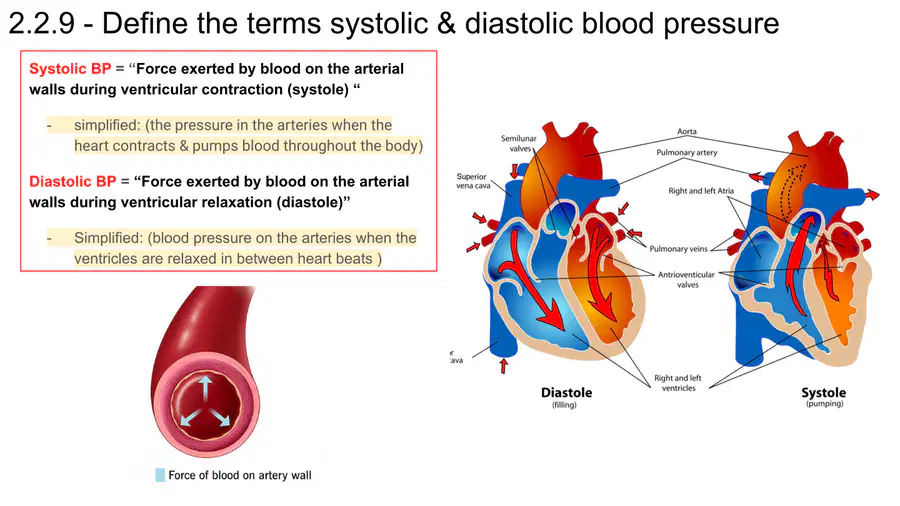
measure the pressure of blood in the arteries
pressure in the arteries during ventricular relaxaton
pressure in the arteries during ventricular contraction
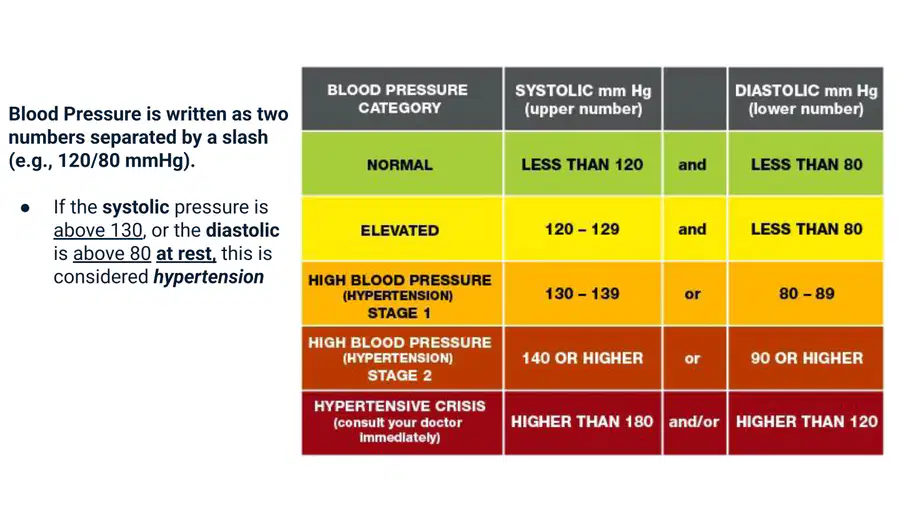
the top / higher number in a blood pressure reading
the bottom / lower number in a blood pressure reading
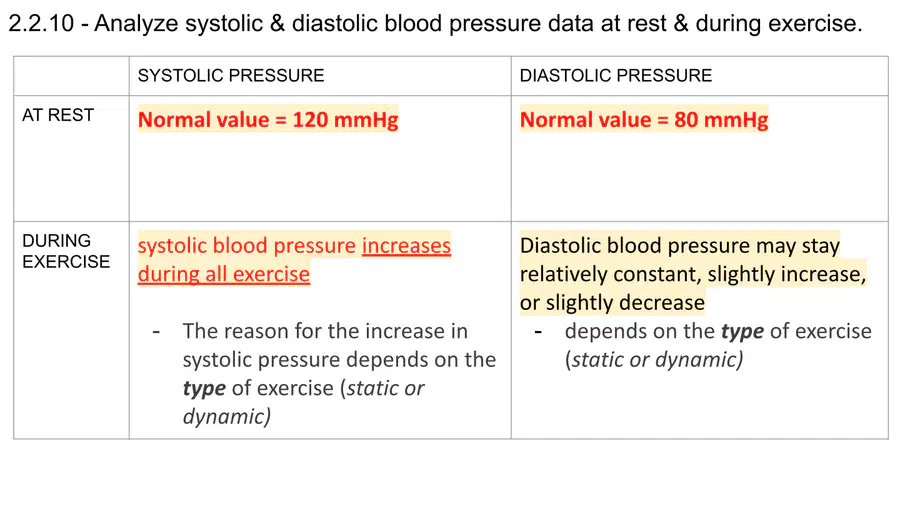
normal value at rest is 120 mmHg
normal value at rest is 80 mmHg
Distinguish between systolic & diasolic blood pressure
2
3
4
5
6
7
Categorize
Increases
Stays relatively constant
How does blood pressure respond during a warm-up (dynamic)?
8
Blood Pressure = Cardiac Output x Peripheral Resistance
Recall:
Cardiac output - how much blood is ejected from the ventricles in milliliters per minute (how much blood is going out to supply the lungs AND body)
Output increases during all exercise to deliver more oxygen to the muscles.
The type of exercise & the intensity of the exercise determine how much output increases.
higher during dynamic exercise
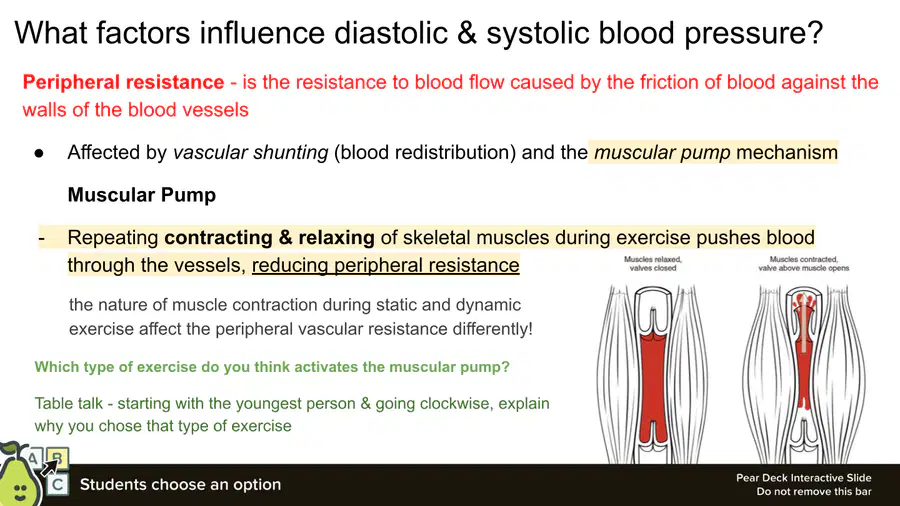
Peripheral resistance - is the resistance to blood flow caused by the friction of blood against the walls of the blood vessels
Affected by vasodilation and the muscular pump mechanism
Vasodilation - expanding blood vessels increases blood flow to the working muscles by reducing peripheral resistance
Muscular pump - repeating contracting & relaxing of muscles helps push blood through surrounding blood vessels (pump inhibited during static exercise)
9
Drag and Drop
10
Peripheral resistance is LOWERED by 2 things:
1. Vascular shunting / re-distribution of blood - when blood vessels dilate (vasodilation), leading to easier blood flow and reduced resistance.
2. muscular pump - during dynamic exercise where rhythmic contractions of muscles help enhance venous return by squeezing blood back towards the heart
- bigger effect on diastolic pressure because it is an overall improvement in blood flow to & from the muscles
increases due to increased oxygen demand in the muscles
- bigger effect on systolic pressure because it is when the heart contracts
different exercises (static vs dynamic) have different effects on output & resistance
Cardiac Output
Peripheral Resistance
11
Categorize
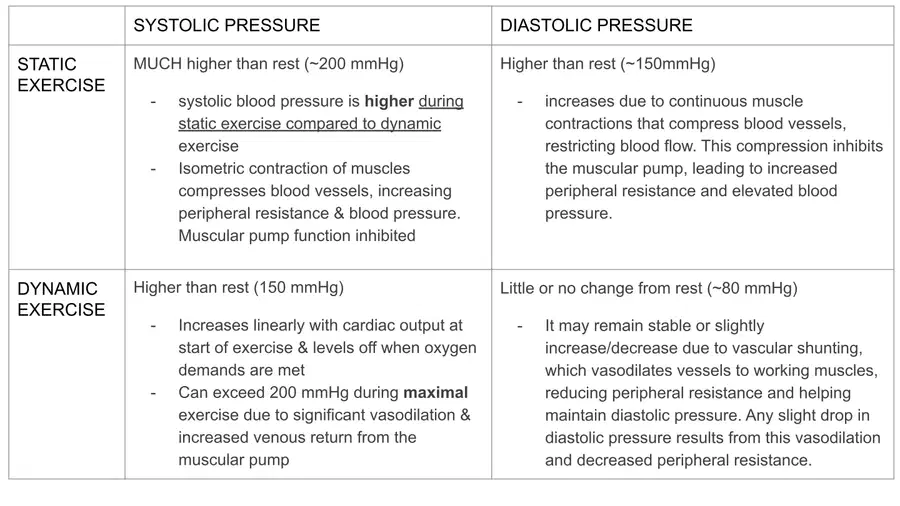
muscular pump inhibited (less venous return / more peripheral resistance)
increases as cardiac output increases at start of exercise until O2 demands are met
muscular pump increases venous return to the heart
vasodilation & muscular pump both reduce peripheral resistance to maintain diastolic pressure
increased peripheral resistance due to constant pressure on vessels
systolic pressure increases ALOT
diastolic pressure increases significantly
systolic pressure increases
diastolic pressure stays pretty constant
Sort the answers to explain the blood pressure changes during static & dynamic exercise
12
13
14
15
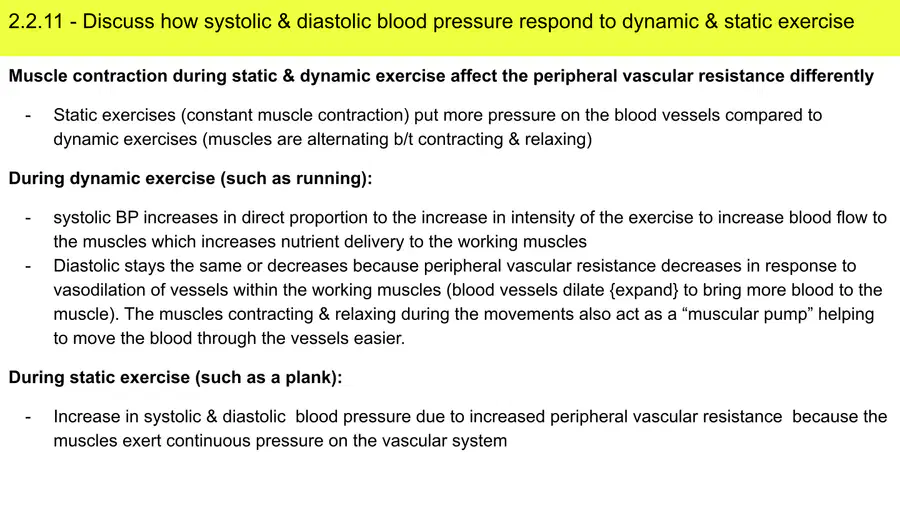
Explain how running versus static exercise (such as holding a plank position) affect systolic and diastolic blood pressure levels. [4]
With your group using 1 whiteboard, construct a 3 mark response to this question.
The person with the most pets will start by writing the 1st mark, then passing the board to their right. Each person must attempt to gain 1 mark on each turn & can not repeat the information already written by another group member.
If someone gets stuck, coach them through it with hints / reminders. DO NOT tell them word for word what to write. When you receive the board, check the answers already written. If you need to correct an answer, do so. This counts as your turn. Then pass it. Keep passing the board until your group feels confident you have all 4 marks.
16
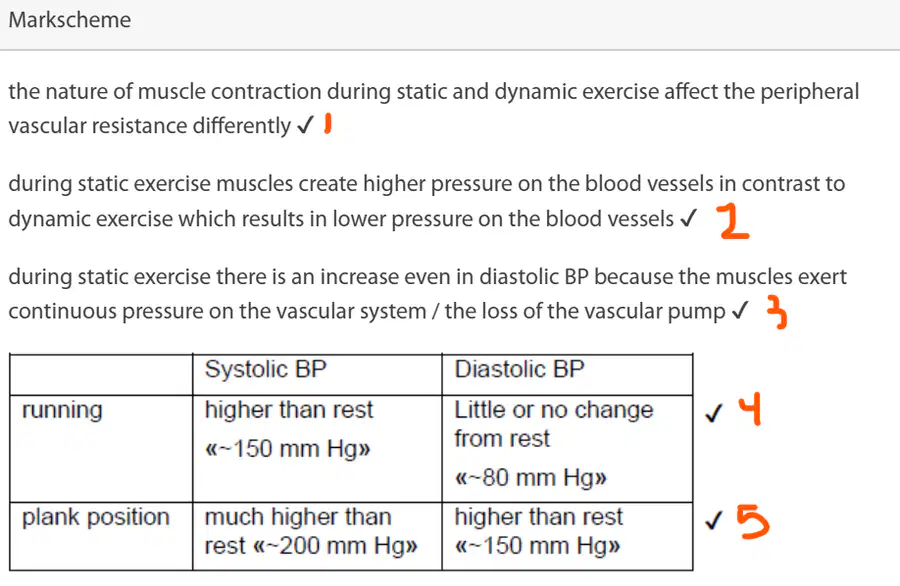
On your whiteboard, identify which marks your group got credit for.
17
Categorize
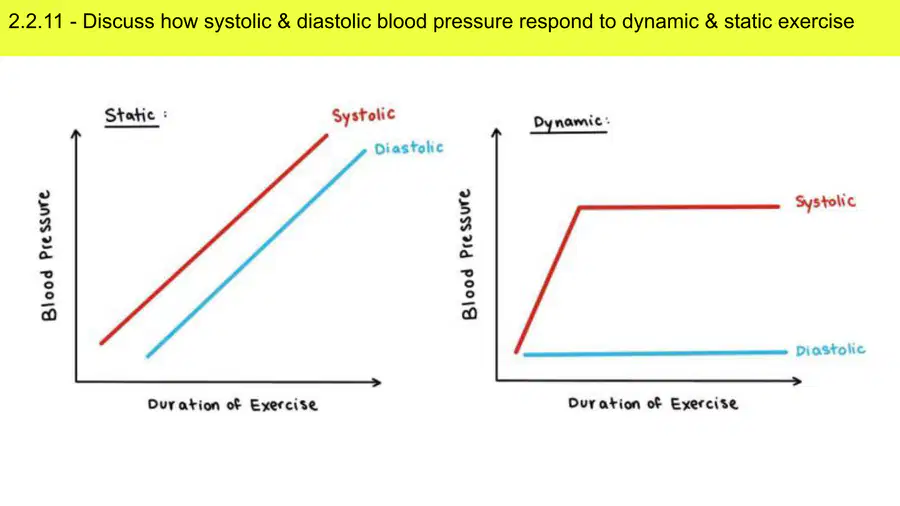
BOTH systolic and diastolic increase
Systolic increases
Diastolic stays relatively constant or slightly increases/decreases
Summarize the blood pressure responses to static and dynamic exercise
18
19
Note: Athletes (especially ones who are endurance / aerobically trained) likely have less drastic increases in blood pressure during exercise!
Athletes often have smaller blood pressure fluctuations during and after exercise due to a stronger heart and improved cardiovascular function, leading to more efficient blood circulation and reduced strain on blood vessels.
Stronger Heart: Regular exercise strengthens heart muscle, allowing it to pump more blood with less effort.
Improved Cardiovascular Function: Athletes have a more efficient cardiovascular system (heart and blood vessels work better together)
Lower Resting Blood Pressure: Athletes typically have lower resting blood pressure compared to sedentary individuals.
Reduced Sympathetic Nerve Activity: Exercise training can reduce sympathetic nerve activity, which helps regulate blood pressure.
Vasodilation: Athletes' blood vessels are more elastic and dilate (widen) more easily, which reduces blood pressure.
Faster Recovery: Athletes' blood pressure returns to normal more quickly after exercise compared to untrained individuals.
These cardiovascular improvements / adaptations are the focus of our next lesson :)
measure the pressure of blood in the arteries
pressure in the arteries during ventricular relaxaton
pressure in the arteries during ventricular contraction
the top / higher number in a blood pressure reading
the bottom / lower number in a blood pressure reading
normal value at rest is 120 mmHg
normal value at rest is 80 mmHg
Distinguish between systolic & diasolic blood pressure
Show answer
Auto Play
Slide 1 / 19
CATEGORIZE
Similar Resources on Wayground

14 questions
U 2 Unraveling the Crime Scene: Investigating Physical Evidence
Presentation
•
12th Grade
16 questions
Respiratory Control
Presentation
•
12th Grade
19 questions
2 - Virtual Autopsy (The Australian Museum)
Presentation
•
11th - 12th Grade
15 questions
APPLICATION LETTER
Presentation
•
12th Grade
16 questions
RECONSTRUCTION LESSON
Presentation
•
11th Grade
20 questions
Nervous System 6.1
Presentation
•
11th - 12th Grade
18 questions
A&P 2.1 Epithelial Tissue
Presentation
•
11th Grade
18 questions
Unit 4 Review AP Bio
Presentation
•
11th - 12th Grade
Popular Resources on Wayground
10 questions
How much do you know about our Portrait of an Eagle?

Quiz
•
10th Grade
10 questions
Fast Food Slogans
Quiz
•
6th - 8th Grade
21 questions
Continents and Oceans
Quiz
•
6th Grade
20 questions
Parts of Speech
Quiz
•
5th Grade
16 questions
Subject & Predicate
Quiz
•
5th Grade
25 questions
Multiplication Facts
Quiz
•
5th Grade
12 questions
Map Skills
Quiz
•
3rd Grade
22 questions
Continents and Oceans
Quiz
•
5th Grade
Discover more resources for Science
22 questions
Periodic Table Review
Quiz
•
9th - 12th Grade
7 questions
Newton's Laws Video Quiz

Interactive video
•
9th - 12th Grade
17 questions
Unit 3A: Cells Vocab
Quiz
•
9th - 12th Grade
89 questions
Unit 1 (Ch 2 & 3) Test Review - Water/Ocean Currents
Quiz
•
9th - 12th Grade
58 questions
Biomolecule Test Corrections
Quiz
•
9th - 12th Grade
20 questions
Unit 2: Cell Energy Review
Quiz
•
9th - 12th Grade
17 questions
Explore Newton's Laws of Motion
Quiz
•
8th - 12th Grade
35 questions
Directional Terms, Body Cavities, Body Planes
Quiz
•
11th - 12th Grade