
Ch. 11: Fundamental Skills in Diagnostic Services (Slides 1-11)

Presentation
•
Other
•
9th Grade
•
Practice Problem
•
Easy

Reagan Johnson
Used 8+ times
FREE Resource
12 Slides • 4 Questions
1
Ch. 11 - Fundamental Skills in Diagnostic Services
(Slides 1-11)
1. Communication Skills for Patient Diagnosis
- Communicating Observations
- Physical Exams/Assessments
- Reporting/Recording Observations
- Cultural Competence
- Dealing W/ Difficult People

2
Warm-Up
What basic, diagnostic-related skills do you already have?
Which diagnostic skills or procedures would you like to learn?
3
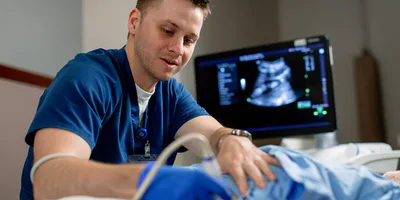
Communication Skills for Patient Diagnosis
Diagnostic workers must communicate observations about patients
Healthcare workers make observations using all their senses:
Sight (inspect for signs of injury)
Hearing (listen to patient describe symptoms and use auscultation to listen through a stethoscope)
Touch (use palpation and percussion)
Smell (odors may indicate disease)
4
Percussion
Process of tapping various body parts during examination and using resulting sounds to assess the condition of internal organs
Palpation
Medical examination that uses touch to detect growths, changes in the size of organs, or tissue reactions to pressure
Inspection
Visual examination used to assess parts of the body by looking for abnormal color, shape, size, or texture
Auscultation
Use of a stethoscope to listen to sounds made by a Pt's internal organs (heart, lungs, abdominal organs) to make a diagnosis
Communication Skills for Patient Diagnosis (Cont.)
5
Signs vs. Symptoms
Signs
Evidence of a health condition that can be seen or measured (bruising, swelling, rashes, cuts)
Symptoms
Indication of a disease or disorder experienced by the patient, such as pain or discomfort

6
Critical Thinking...
Describe the difference between subjective and objective observations and give examples of each.
Subjective: symptoms that cannot be seen or measured by healthcare workers (ex: back pain)
Objective: signs that can be seen and measured (ex: bruises, swelling, rashes)
Which are more useful in diagnosis, or are both types of observation valuable? Explain.
Objective observations are easier to measure, but subjective observations come straight from the patient. The patient must be willing to explain symptoms and the healthcare provider must listen.
7
Physical Exam & Assessment
A patient presents with signs of illness and the provider forms a differential diagnosis
Differential diagnosis = Determination made by a DR that distinguishes a disease/condition from others that have similar symptoms.
It’s like making a list of all the possible reasons someone might be feeling sick and then crossing them off one by one until the most likely one is found.
Physician then develops a medical diagnosis
Medical diagnosis = determination by a DR that identified the cause of the Pt's illness (final determination and diagnosis)
8
Physical Exam & Assessment (Cont.)
Nursing staff assess Pt's to determine a nursing diagnosis and care plan
Nursing Diagnosis = description of a Pt's health problem that a nurse is licensed and competent to treat
A minimum data set (MDS) is used for residents entering long-term care
Government requirement, provides comprehensive evaluation of each resident's functional capabilities and helps nursing home staff identify health problems.
9
Reporting & Recording Observations
Healthcare workers are responsible for reporting unusual events or changes in a patient’s behavior or physical condition
Changes in a person’s condition (vital signs, skin color, breathing, or behavior)
Reactions to a new treatment or therapy
Complaints of pain or discomfort
Refusal of treatment
Request for a clergy visit
A shift report is presented at the end of each shift
Record all observations in the patient record for documentation
10
Developing Cultural Competence
Use cultural competence to communicate with patients and coworkers
Be aware of cultural attitudes about eye contact, personal space, modesty, and expressing pain
Respect all religious and spiritual beliefs
Know your personal biases and prejudices

11
Think Further
Give examples of cultural differences that might affect patient care. Consider the following:
Eye contact
Body language and physical distance/touching
Sense of time
Expressing pain
Speech and communication (first names; formality)
Modesty (including gender differences)
What opinions do you have about these areas of cultural difference? How would you deal with a patient whose attitudes clashed with yours? What if the person was a coworker?
12
Think Further
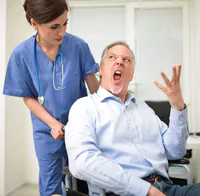
How can you deal with difficult patients, clients, or residents?
Do not label the person as “difficult”
Identify the patient’s unmet need
Remain calm and do not take it personally when a patient complains
Consider the patient’s emotional state
Use observation and listening skills
13
Multiple Choice
When a patient is complaining or upset, what is the most appropriate response from a healthcare worker?
Label the patient as “difficult” and limit interactions
Stay calm, listen actively, and try to identify any unmet needs
Tell the patient to calm down and stop complaining
Avoid the patient until they feel better
14
Match
Match the exam/assessment terms
listening to body sounds made by internal organs (heart, lungs, abdominal organs)
medical exam that uses to touch to detect growth, changes in the size or organs, tissue, or reactions to pressure
process of tapping body parts during exams and using resulting sounds to assess the condition of internal organs
auscultation
palpation
percussion
auscultation
palpation
percussion
15
Multiple Choice
Which of the following is a responsibility of healthcare workers regarding patient care and reporting?
Only document patient complaints if they are repeated frequently
Report and document changes in a patient's condition, reactions to treatments, and refusals of care
Wait until the end of the week to report any unusual behavior
Share patient information casually with other staff to save time
16
Multiple Choice
What is the difference between a differential diagnosis and a medical diagnosis?
A differential diagnosis is the final answer, and the medical diagnosis is a guess
A differential diagnosis is created by a nurse, while the medical diagnosis is made by a doctor
A differential diagnosis lists possible causes, while a medical diagnosis identifies the actual cause
There is no difference between the two
Ch. 11 - Fundamental Skills in Diagnostic Services
(Slides 1-11)
1. Communication Skills for Patient Diagnosis
- Communicating Observations
- Physical Exams/Assessments
- Reporting/Recording Observations
- Cultural Competence
- Dealing W/ Difficult People
Show answer
Auto Play
Slide 1 / 16
SLIDE
Similar Resources on Wayground

10 questions
Hospitality & Catering
Presentation
•
9th Grade
12 questions
TEX - AI
Presentation
•
9th Grade
11 questions
Realidades 2A Reflexive Verbs
Presentation
•
9th Grade
11 questions
Lesson: Solve Systems by Graphing
Presentation
•
9th Grade
11 questions
Christianity in the Roman Empire
Presentation
•
9th Grade
10 questions
Computer Disassembly and Assembly
Presentation
•
9th Grade
10 questions
Atomic Structure
Presentation
•
9th Grade
10 questions
non- mendelian inheritance
Presentation
•
9th Grade
Popular Resources on Wayground
24 questions
PBIS-HGMS Day 10

Quiz
•
6th - 8th Grade
10 questions
HCS SCI 03 Summer School Review 3
Quiz
•
3rd Grade
11 questions
Home Scope
Quiz
•
7th - 8th Grade
15 questions
HCS SCI 05 Summer School Assessment 3 Review
Quiz
•
5th Grade
35 questions
Lufkin Road Middle School Student Handbook & Policies Assessment
Quiz
•
7th Grade
18 questions
Geo 11.3 Area of Circles and Sectors
Quiz
•
9th - 11th Grade