
Unit 3 L1-3 Revision

Presentation
•
Science
•
4th Grade
•
Hard
Standards-aligned

Lina Alzamli
FREE Resource
38 Slides • 16 Questions
1
Unit 3 L1-3 Revision
By Lina Alzamli
2
Earthquakes
Map earthquakes, model earthquake movement, and reduce earthquake damage

3
Multiple Choice

4

5
Multiple Choice
6
Multiple Choice

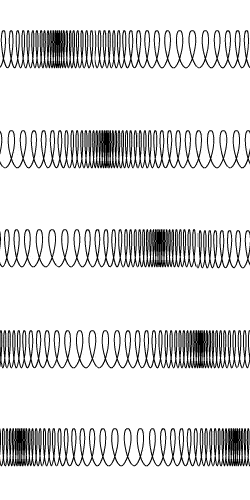
What type of wave is this?
Compressional
Transverse
Longitudinal
Sound
7

8
Multiple Choice
What type of wave causes earthquake damage?
Light waves
Water waves
Sound waves
Seismic Waves
9
Multiple Choice
10
Multiple Choice
11

12
Multiple Choice

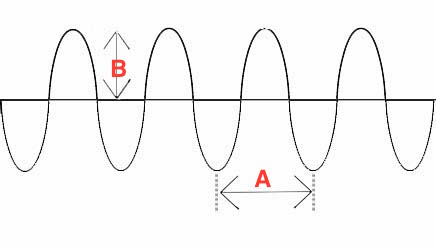
Which wave has more energy? Why?
Top wave because the amplitude is smaller
Bottom wave because the amplitude is larger
They are the same because the wavelengths are equal
Top because the rarefactions are closer together
13

14
Multiple Choice
This tells us how strong an earthquake is
Magnitude
Seismograph
Barometer
Metric Scale
15

16

17
Vocabulary
fault
seismologist
18
Multiple Choice
Do earthquake locations follow a pattern?
I think earthquake locations follow a pattern. They usually occur near certain land and ocean features.
I think there is no pattern to earthquake locations. They can happen anywhere in the world.
19
faults
breaks or cracks where plates come together
20
seismologist
a science that deals with earthquakes and with artificially produced vibrations of the earth
21

22
Multiple Select
Tick the correct statements:
Earth's plates are made up of huge slabs of solid rock.
Earth's crust is made up of huge slabs of solid rock.
Earth's plates can slide slowly past each other.
Earth's plates can also push together or move under or over each other.
23
Earthquakes
Movements in Earth's crust caused by a sudden shift of Earth's plates
Earth's plate movement puts stress on rock, and earthquakes occur when the crust shakes by the release of the accumulated energy.
24

25
Multiple Choice
Earthquakes
Earthquakes have the same strength and shake at the same speed.
Earthquakes have the same strength and shake at different speeds.
Earthquakes have different strengths and shake at the same speed.
Earthquakes have different strengths and shake at different speeds.
26
Vocabulary
amplitude
magnitude
seismic wave
seismograph
transverse wave
wavelength
27
amplitude
a measure that relates to the amount of energy of a wave
28
magnitude
the amount of energy released by an earthquake
29
seismic wave
a vibration caused by an earthquake
30
transverse wave
a wave that vibrates perpendicular to the direction that the energy moves
31
wavelength
the distance between wave crests or troughs
32

33

34

35
Multiple Select

Tick the correct statements:
Only certain waves transfer energy.
All waves transfer energy.
Only certain waves transfer energy without permanently moving the material through which they travel.
All waves transfer energy without permanently moving the material through which they travel.
36
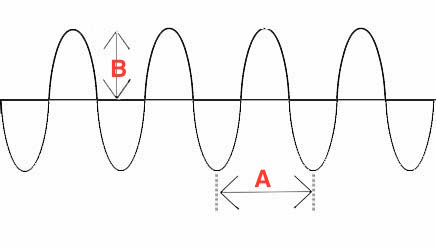
Answers:
1: __________
2: __________
3: __________
4: __________
5: __________
6: __________
7: __________

37
Answers:
1: Wavelength
2: compression
3: rarefaction
4: amplitude
5: crest
6: wavelength
7: trough

38
Record and measure earthquakes
Seismograph: mesuring seismic waves
Richter scale: measuring magnitude (the largest movement)
Mercalli scale: measuring what people felt and what happened during an earthquake (I to XII)

39

40

41

42
Mercalli scale

43
What do you think happens to the amplitude of an earthquake wave when its magnitude increases?
Answer: Increase or decrease

44
Multiple Choice
_____ move material back and forth.
Transverse waves
Longitudinal waves
Wavelengths
None of the above
45
Multiple Choice
Which earthquake releases more energy?
an earthquake of 6.0
an earthquake of 7.0
an earthquake of 5.0
46
Multiple Select
What can we do to reduce earthquake damage?
Building only in areas where there has been no record of earthquakes
Designing buildings that can resist forces from the side
Connecting beams and columns with diagonal pieces
Preparing for earthquakes by paying close attention to the weather
Raising the floor of houses above ground when building near coastlines
47

48

49
Safe Structures
Reinforced concrete, metal, and wood
short or tall buildings
Bridges: motion dampeners, rubber joints

50
Buildings need to resist LATERAL FORCES in earthquakes
bracing
shear wall
damper

51
bracing

52
shear wall

53
damper

54
Multiple Choice
____ is made of diagnoal pieces connecting beams and columns. It comes in several shapes.
A lateral wall
A damper
A shear wall
Bracing
Unit 3 L1-3 Revision
By Lina Alzamli
Show answer
Auto Play
Slide 1 / 54
SLIDE
Similar Resources on Wayground

49 questions
Thursday_04.31_4.11A
Presentation
•
4th Grade
49 questions
WED Lesson and Quiz
Presentation
•
4th Grade
49 questions
SC UDCH8L2
Presentation
•
4th Grade
47 questions
L-2. G 5 -LIVING THINGS
Presentation
•
5th Grade
52 questions
Y4C4 Magnet
Presentation
•
4th Grade
52 questions
Science 4 Quiz Oct 24 (Monday)
Presentation
•
4th Grade
46 questions
STREAM Project Piano Ask-Imagine-plan-create
Presentation
•
4th Grade
50 questions
Sedimentary Rock & Fossil Fuels
Presentation
•
5th Grade
Popular Resources on Wayground
6 questions
Secondary Safety Quiz
Presentation
•
9th - 12th Grade
10 questions
MyPath Diagnostic Overview
Presentation
•
6th - 8th Grade
20 questions
Lab Safety Quiz

Quiz
•
6th Grade
21 questions
Continents and Oceans
Quiz
•
6th Grade
20 questions
Adding and Subtracting Decimals
Quiz
•
5th Grade
20 questions
Parts of Speech
Quiz
•
5th Grade
16 questions
Subject & Predicate
Quiz
•
5th Grade
21 questions
Lab Safety
Quiz
•
10th Grade
Discover more resources for Science
17 questions
Science Tools and Safety
Quiz
•
4th Grade
10 questions
States and Properties of Matter

Interactive video
•
3rd - 5th Grade
14 questions
Scientific Method
Quiz
•
4th Grade
20 questions
Science Safety
Quiz
•
4th - 5th Grade
10 questions
What Type of Scientist Am I?
Quiz
•
3rd - 4th Grade
17 questions
Potential and Kinetic Energy
Quiz
•
4th Grade
16 questions
Chapt 1- Onward We Go
Quiz
•
4th Grade
51 questions
Earth, Moon, and Seasons
Quiz
•
3rd - 5th Grade