

Trait Variations

Presentation
•
Science
•
8th Grade
•
Practice Problem
•
Medium
+5
Standards-aligned

Barbara White
Used 77+ times
FREE Resource
13 Slides • 22 Questions
1

Middle School

2
Describe how mutations create genetic variations, leading to different traits in a species.
Model how genes on chromosomes code for proteins that determine an organism's traits.
Distinguish between harmful, beneficial, and neutral mutations based on their effects.
Explain how natural selection favors traits that help organisms survive and reproduce.
Analyze how environmental factors can cause mutations and affect how genes are expressed.


3
Key Vocabulary

Variation
Variation describes the differences between individuals of the same species, like various eye colors in humans.

Gene
A gene is a segment of DNA found on a chromosome that codes for a specific protein.

Protein
A protein is a complex molecule that carries out many jobs and is essential for determining traits.

Trait
A trait is a specific characteristic of an organism, which can include its appearance or behavior.
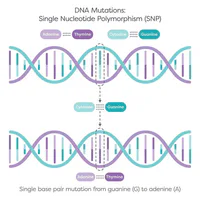
Mutation
A mutation refers to any change in the DNA sequence of a gene or an entire chromosome.

Natural Selection
Natural selection is the process that favors the survival and reproduction of the most fit individuals.
4
Key Vocabulary

Autosomal Chromosomes
In humans, there are 22 pairs of autosomal chromosomes, which are non-sex chromosomes.
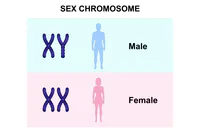
Sex Chromosomes
These are the X and Y chromosomes that are responsible for determining the biological sex.

Mutagen
A mutagen is an agent from the environment, like radiation, that can cause a mutation.

Genetic Disorder
A genetic disorder is an abnormal health condition that is inherited from parents through genes.

Camouflage
Camouflage is a special trait that helps an organism blend in with its surroundings.
5
The Basis of Trait Variation

Helpful Variation
This variation increases an organism's chances of survival and successful reproduction.
A butterfly mimicking a poisonous species is an example of helpful variation.
This adaptation helps the butterfly avoid attacks from its many predators.

Harmful Variation
This variation decreases an organism's chances of survival and successful reproduction.
Sickle-cell anemia in humans is an example of a harmful genetic variation.
It affects red blood cells, leading to low oxygen levels in blood.

Neutral Variation
This variation does not have any effect on an organism's survival chances.
Different eye colors in humans are considered a type of neutral variation.
Eye color does not provide any specific survival advantage or disadvantage.
6
Multiple Choice
What is the primary basis for classifying a trait variation as helpful, harmful, or neutral?
Its effect on an organism's chances of survival and reproduction.
The physical size or color of the specific trait.
How frequently the trait appears in a population.
Whether the organism is a plant or an animal.
7
Multiple Choice
What is the key difference between a harmful variation like sickle-cell anemia and a neutral variation like different eye colors?
A harmful variation decreases survival chances, while a neutral variation has no effect.
A harmful variation is always visible, while a neutral variation is not.
A neutral variation improves reproduction, while a harmful variation does not.
A neutral variation helps avoid predators, while a harmful variation affects blood cells.
8
Multiple Choice
A butterfly's coloration, which mimics a poisonous species, is a helpful variation that deters predators. If this butterfly population moves to an area where its main predators are blind, what would likely happen to the classification of this color trait?
The mimicry would change from a helpful to a neutral variation.
The mimicry would become a harmful variation.
The mimicry would remain a helpful variation.
The mimicry would change from a neutral to a helpful variation.
9
Autosomal Chromosomes
Human cells have 22 pairs of autosomal chromosomes, which do not determine an individual's biological sex.
You inherit one set of these 22 chromosomes from your mother and the other set from your father.
These pairs are homologous, carrying genes for the same traits at corresponding locations on each chromosome.

Sex Chromosomes

The final pair of chromosomes are the sex chromosomes, which determine the biological sex of an individual.
Females inherit one X chromosome from each parent, resulting in a genotype of XX for this final pair.
Males inherit an X chromosome from their mother and a Y chromosome from their father, having an XY genotype.
10
Multiple Choice
What is the primary function that distinguishes sex chromosomes from autosomal chromosomes?
Determining the biological sex of an individual.
Carrying genes for the same traits in homologous pairs.
Being inherited as a complete set from only one parent.
Existing in 22 homologous pairs in all human cells.
11
Multiple Choice
How is the inheritance of autosomal chromosomes the same for both males and females?
Both inherit one set of 22 autosomal chromosomes from their mother and another set from their father.
Both receive an X chromosome from the mother and a Y chromosome from the father.
Both receive two X chromosomes, one from each parent.
Both inherit a total of 22 homologous chromosomes that determine all traits.
12
Multiple Choice
Based on the inheritance patterns described, what is the determining factor for a child's biological sex?
The sex chromosome (X or Y) inherited from the father.
The sex chromosome (always X) inherited from the mother.
The number of autosomal chromosomes inherited from both parents.
Whether the autosomal chromosomes form an XX or XY pair.
13
From Genes to Proteins to Traits
Genes are DNA segments on chromosomes that have instructions for making proteins.
Proteins are molecules that perform a vast array of tasks in an organism.
An organism’s observable traits, like eye color, result from protein activity.
This creates a clear path: A gene codes for a protein, producing a trait.


14
Multiple Choice
What is the fundamental role of a gene within a cell?
To provide the instructions for making specific proteins.
To directly form the observable traits of an organism.
To store energy for the cell to use later.
To break down food molecules for digestion.
15
Multiple Choice
Which statement best describes the relationship between genes, proteins, and traits?
A protein contains the code for a trait, which then builds a gene.
A trait determines the structure of a protein, which then creates a gene.
A gene contains the code for a protein, which then determines a trait.
A protein is built by a trait, which then provides instructions for a gene.
16
Multiple Choice
If a specific gene has a mutation that changes its instructions, what is the most likely outcome?
The protein's function might change, leading to an alteration in the organism's trait.
The organism will immediately create a new, correct gene to replace the faulty one.
The trait will remain the same, but the gene will be deleted from the chromosome.
All other proteins in the organism will stop working correctly.
17
Understanding Mutations

A mutation is any change in the DNA of a gene or chromosome.
A base can be added, removed, or substituted in the genetic code.
This change can alter the protein produced, which can change an organism's trait.
18
Multiple Choice
What is a mutation?
A change in the DNA of a gene or chromosome
The process of a cell dividing into two
A specific type of beneficial protein
A structure that provides energy to a cell
19
Multiple Choice
What is the primary reason that a change in a gene's DNA can affect an organism's trait?
It can alter the type of protein that is produced.
It only happens when a base is substituted.
It always results in a visible change to the organism.
It prevents the organism from passing on any traits.
20
Multiple Choice
If a single base is removed from a DNA sequence in a gene, what is the most likely outcome?
The organism's trait may be altered because a different protein will be formed.
The organism will be stronger because the gene has been removed.
The protein produced by the gene will not be affected by the change.
The organism will create two different versions of the same trait.
21
Helpful Mutations
These DNA changes alter a protein's function to help an organism survive and thrive.
For example, a poison dart frog's camouflage helps it to hide from predators.
This camouflage is caused by a protein that produces the right skin color.

Harmful Mutations

These DNA changes alter a protein's function in a way that is harmful to survival.
Harmful mutations are often the cause of genetic disorders, such as cystic fibrosis.
They can also lead to the development of serious diseases, including cancer.
22
Multiple Choice
What is the fundamental way that a DNA mutation affects an organism?
It alters the function of a protein.
It only occurs in animals, not plants.
It always results in a genetic disorder.
It changes an organism's environment.
23
Multiple Choice
What is the primary difference between a helpful mutation and a harmful mutation?
Whether the protein's new function helps or harms the organism's survival.
Helpful mutations create camouflage, while harmful mutations cause diseases.
Helpful mutations are caused by the environment, while harmful ones are not.
Whether the mutation is passed on to the next generation.
24
Multiple Choice
A specific mutation changes the protein responsible for a poison dart frog's skin color, making the frog much less camouflaged in its environment. What is the most likely outcome of this mutation?
The frog would be less likely to survive because predators could spot it more easily.
The frog would develop a genetic disorder such as cystic fibrosis.
The frog would be more likely to develop a serious disease like cancer.
The frog's skin color protein would stop functioning completely.
25
Genetic Variation
Individuals within a population have a variety of different inheritable traits.
These traits can be passed down from parents to their offspring.
This variety of traits is the essential starting point for evolution.

Natural Selection

Some traits help individuals survive and reproduce in their specific environment.
For example, dark moths are better hidden from predators on dark trees.
These helpful traits become more common in the population over generations.
26
Multiple Choice
What is the role of genetic variation within a population?
It prevents offspring from inheriting traits from their parents.
It ensures all individuals in a population are identical.
It provides the necessary starting point for evolution to occur.
It is caused by individuals changing to suit their environment.
27
Multiple Choice
How does natural selection affect traits within a population?
An individual's traits are determined by the environment it lives in.
Helpful traits can increase an individual's chances of surviving and reproducing.
Traits are passed from the environment to the offspring.
Only individuals with identical traits can reproduce successfully.
28
Multiple Choice
A population of moths with both light and dark variations lives on dark-colored trees, where dark moths are better camouflaged. What is the most likely long-term outcome for this population?
The entire moth population will be eliminated by predators.
The frequency of the helpful dark trait will increase in the population.
Individual light-colored moths will change to become dark.
The dark moths will migrate to a new environment.
29
Mutagens Change DNA
The environment has agents called mutagens that can directly damage an organism's DNA, causing mutations.
Naturally occurring mutagens include ultraviolet (UV) radiation from the sun, as well as X-rays.
Synthetic mutagens include harmful chemicals found in certain pesticides or materials like asbestos.

Altered Gene Expression

The environment can also change how genes are expressed without altering the DNA sequence itself.
For example, identical twins are born with the exact same set of genetic instructions.
Different diets or lifestyles can cause their identical genes to be expressed in different ways.
30
Multiple Choice
What are the two primary ways that the environment can influence an organism's traits?
By causing DNA mutations and by altering how genes are expressed
Through natural factors like sunlight and synthetic factors like pesticides
By affecting physical traits but not an organism's genetic code
By ensuring that identical twins will have different traits
31
Multiple Choice
What is the fundamental difference between how a mutagen and a factor like diet can affect an organism's genes?
Mutagens are always harmful, while other environmental factors are always helpful.
Mutagens only come from synthetic sources, while other factors are always natural.
Mutagens change the DNA sequence itself, while other factors can change how that sequence is used.
Mutagens affect gene expression, while other factors cause direct damage to DNA.
32
Multiple Choice
If identical twins are born with the exact same DNA, but one develops a disease later in life due to a different diet, which statement best explains this outcome?
One of the twins must have had a mutation that the other did not.
Their different lifestyles led to different patterns of gene expression.
The information in their DNA was different from birth.
Only synthetic mutagens like asbestos could cause such a change.
33
Misconception | Correction |
|---|---|
All mutations are harmful. | Mutations can be harmful, helpful, or have no effect at all. |
Traits are determined only by genes. | Traits result from the interaction between genes and the environment. |
Mutations in body cells are inherited by offspring. | Only mutations in sex cells can be passed on to offspring. |
Individuals can choose to adapt. | Adaptation happens through natural selection in a population over time. |
34
Genes on chromosomes provide instructions for proteins that determine traits.
A mutation is a DNA change that can be helpful, harmful, or neutral.
Individuals with advantageous traits are more likely to survive and reproduce.
Environmental factors can cause mutations and alter gene expression over time.
35
Poll
On a scale of 1-4, how confident are you about the concepts covered in today's review?
1
2
3
4
Middle School
Show answer
Auto Play
Slide 1 / 35
SLIDE
Similar Resources on Wayground

31 questions
Life Cycle of a Star
Presentation
•
8th Grade
26 questions
Digital vs Analog Signals
Presentation
•
8th Grade
32 questions
Fossil Record
Presentation
•
8th Grade
26 questions
Exploring the Universe with Technology
Presentation
•
8th Grade
25 questions
8.5 D: Counting Atoms with Coefficients
Presentation
•
8th Grade
29 questions
Circuitos eléctricos
Presentation
•
KG
26 questions
Sound - Hearing
Presentation
•
7th - 8th Grade
29 questions
Newton's Laws of Motion
Presentation
•
8th Grade
Popular Resources on Wayground
21 questions
Continents and Oceans

Quiz
•
6th Grade
20 questions
Parts of Speech
Quiz
•
5th Grade
16 questions
Subject & Predicate
Quiz
•
5th Grade
25 questions
Multiplication Facts
Quiz
•
5th Grade
12 questions
Map Skills
Quiz
•
3rd Grade
22 questions
Continents and Oceans
Quiz
•
5th Grade
15 questions
Rounding Decimals
Quiz
•
5th Grade
20 questions
Brand Labels
Quiz
•
5th - 12th Grade
Discover more resources for Science
20 questions
Newton's Laws of Motion
Quiz
•
8th Grade
20 questions
Scientific Method and Variables
Quiz
•
8th Grade
20 questions
Scientific method and variables
Quiz
•
8th Grade
20 questions
Claim, Evidence and Reasoning (CER)
Quiz
•
6th - 8th Grade
21 questions
Newton's Laws of Motion
Quiz
•
8th Grade
20 questions
Elements, Compounds and Mixtures
Quiz
•
8th Grade
10 questions
Exploring Chemical and Physical Changes

Interactive video
•
6th - 10th Grade
26 questions
Force - Net Force, Balanced and Unbalanced Forces
Quiz
•
8th Grade