
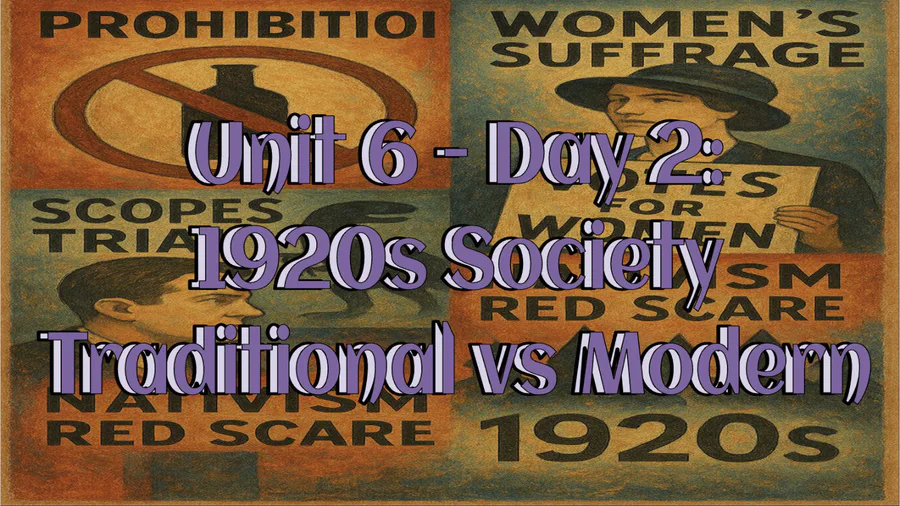
Unit 6 - Day 2: Social Change and Cultural Conflic 1920s

Presentation
•
History
•
11th Grade
•
Practice Problem
•
Easy

Rena Raines
Used 3+ times
FREE Resource
16 Slides • 14 Questions
1
2
3
4
Multiple Choice
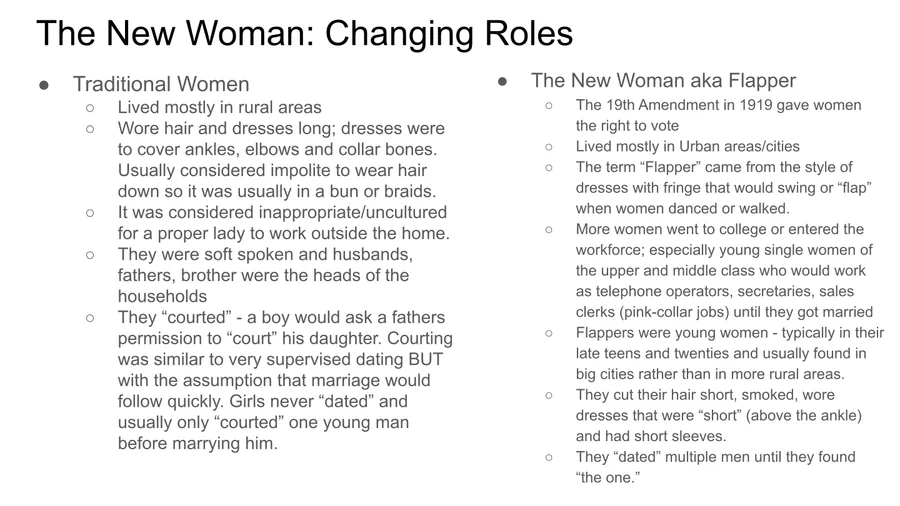
Which of the following best describes the main difference between traditional women and the "New Woman" (flapper) in the 1920s?
Traditional women lived mostly in rural areas and followed conservative dress codes, while flappers lived in cities and embraced new fashions and freedoms.
Traditional women were mostly found in cities, while flappers lived in rural areas.
Traditional women were known for short hair and smoking, while flappers wore long dresses and covered their hair.
Traditional women had the right to vote before flappers did.
5
6
Multiple Choice
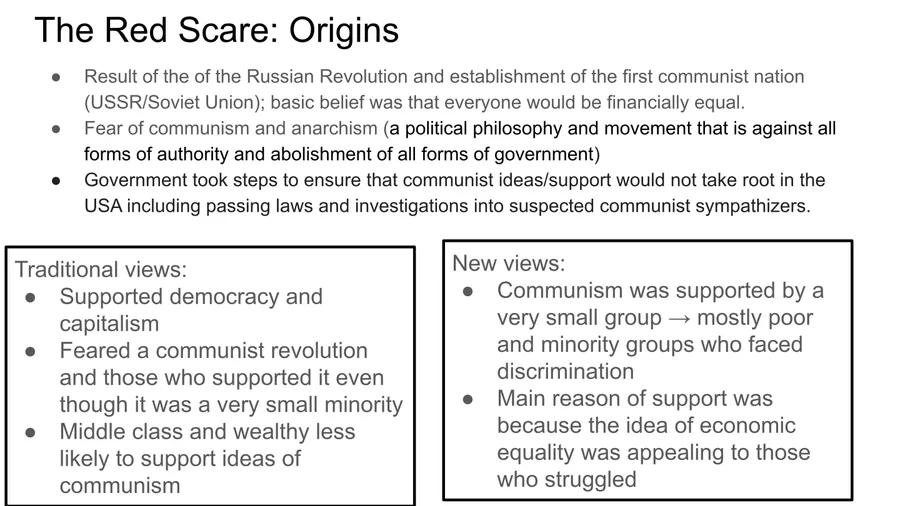
What was the main reason many poor and minority groups supported communism during the Red Scare?
They believed in abolishing all forms of government.
They wanted economic equality to help those who struggled.
They supported democracy and capitalism.
They wanted to support wealthy elites.
7
8
Multiple Select
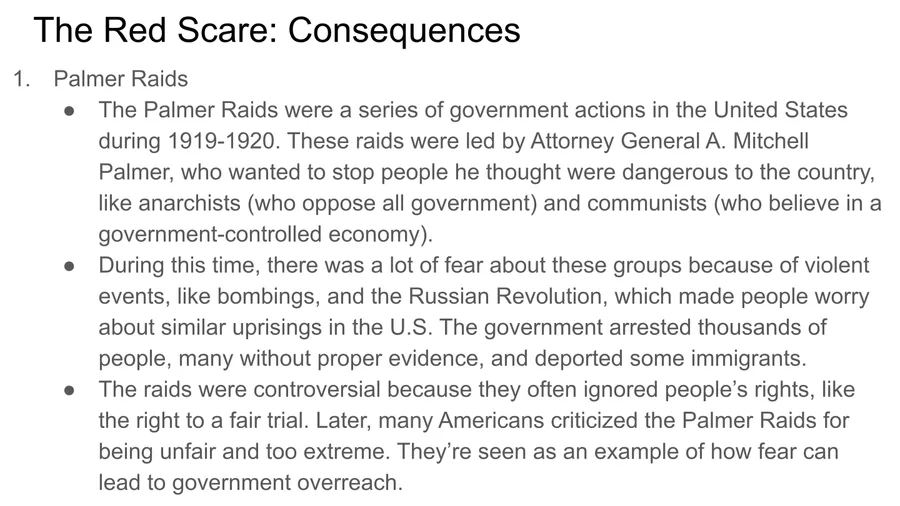
Which of the following were consequences of the Palmer Raids during the Red Scare?
Thousands of people were arrested, often without proper evidence.
The government ignored people's rights to a fair trial.
Many immigrants were deported.
The Palmer Raids were universally praised by Americans.
9
10
Multiple Choice
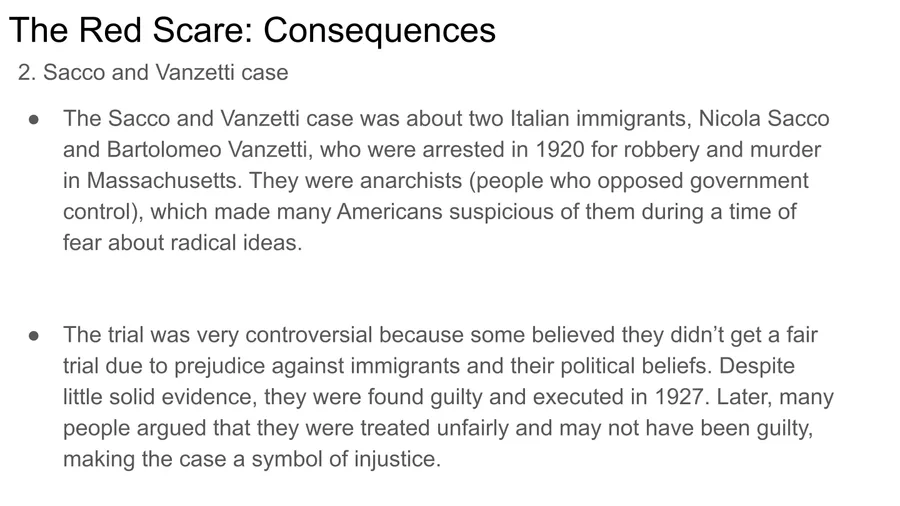
The Sacco and Vanzetti case became a symbol of ___ for many Americans.
11
12
Multiple Choice
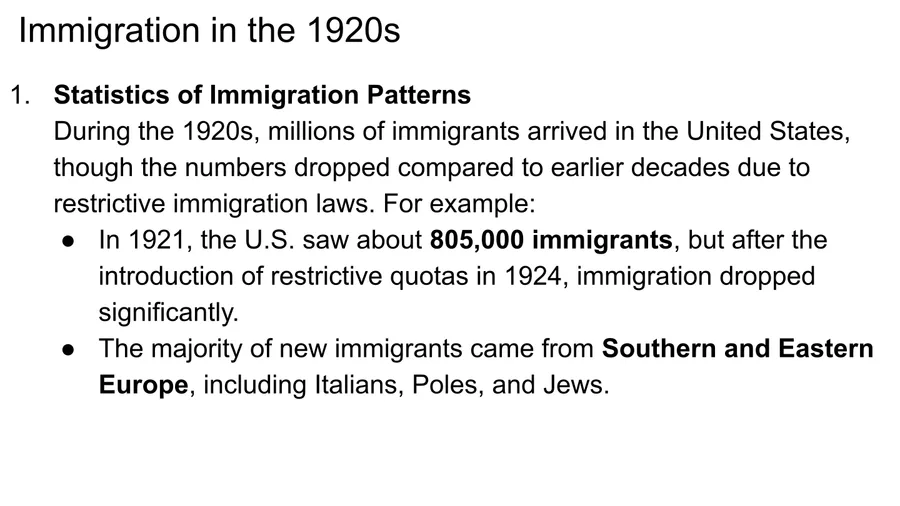
In 1921, the U.S. saw about ___ immigrants arrive, but this number dropped after restrictive quotas were introduced in 1924.
13
14
Multiple Choice
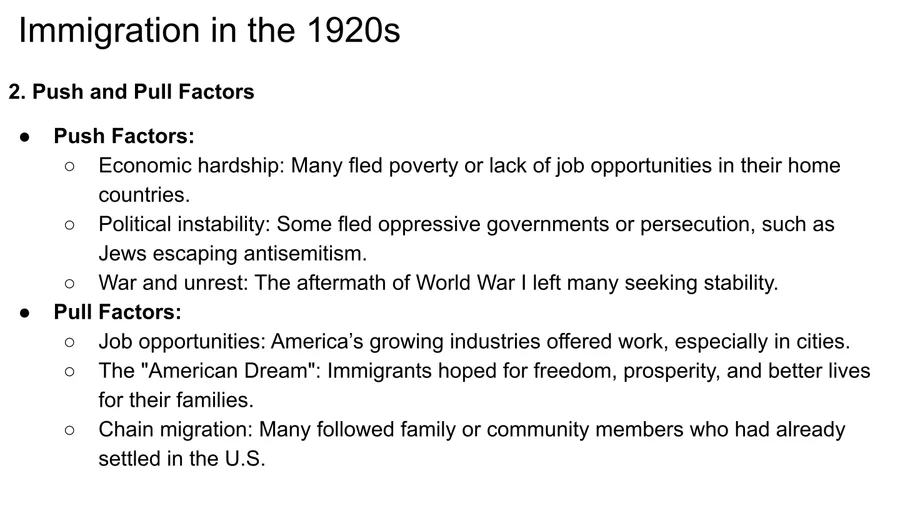
Which of the following was a pull factor that attracted immigrants to the United States in the 1920s?
Job opportunities in growing industries
Political instability in home countries
War and unrest after World War I
Poverty and lack of jobs in home countries
15
16
Multiple Select
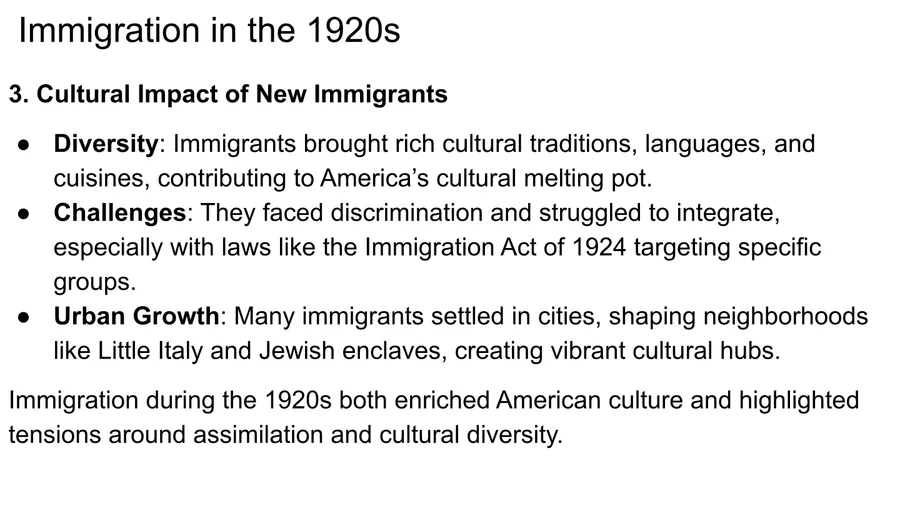
Which of the following were challenges faced by new immigrants in the 1920s?
Discrimination and difficulty integrating
Laws targeting specific groups like the Immigration Act of 1924
Immediate acceptance into American society
Urban growth and creation of cultural hubs
17
18
Multiple Choice
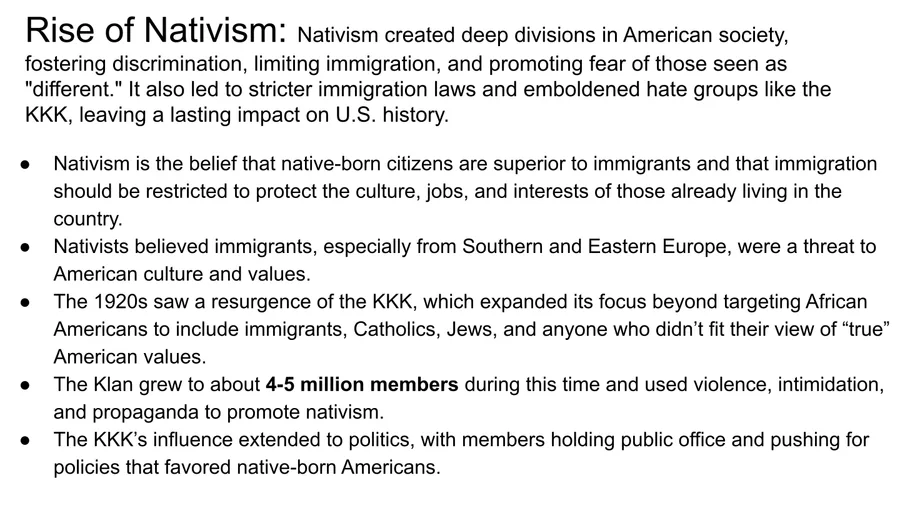
Which of the following best defines "Nativism"
native-born citizens are superior to immigrants
19
20
Multiple Choice
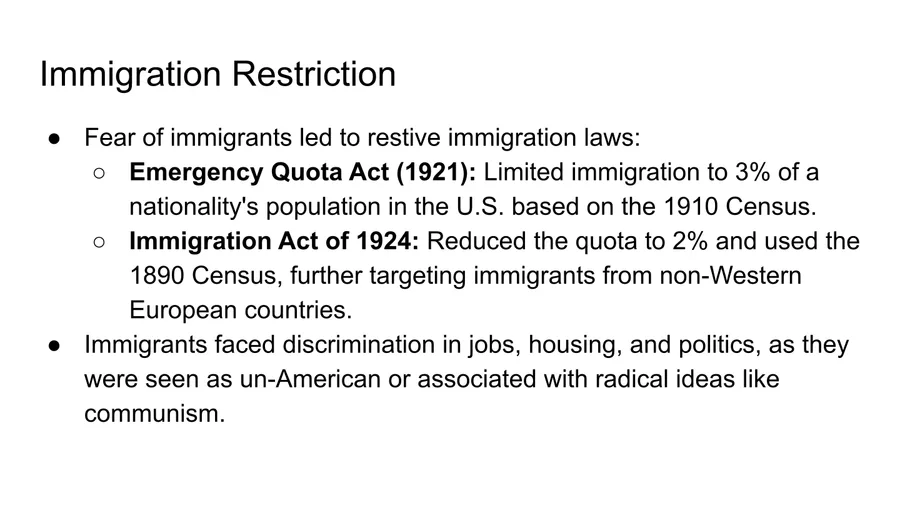
The Emergency Quota Act of 1921 limited immigration to ___ percent of a nationality's population in the U.S. based on the 1910 Census.
21
22
Multiple Choice
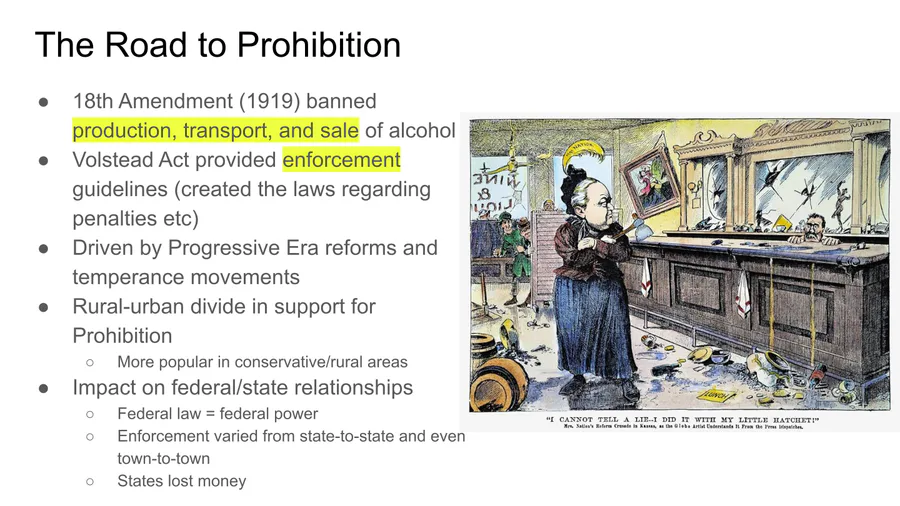
What did the 18th Amendment do?
23
24
Multiple Choice
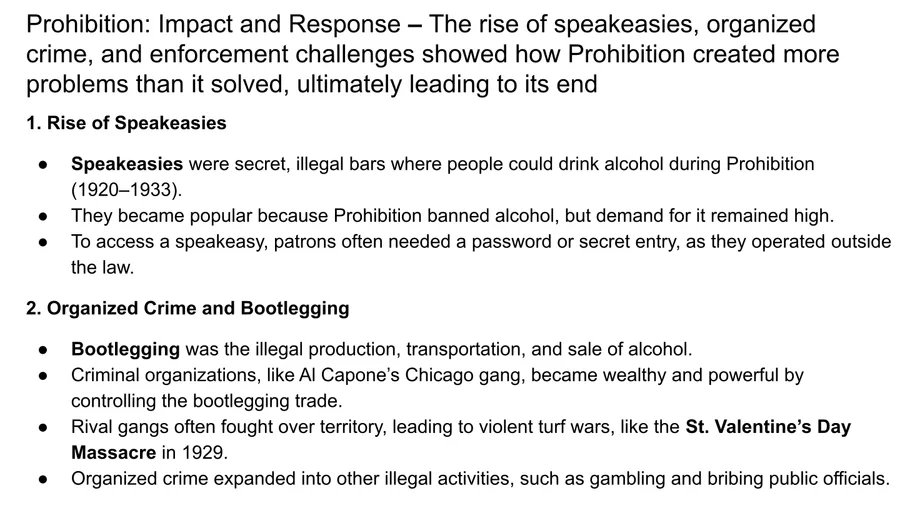
What was a speakeasy during Prohibition?
A legal bar that served alcohol
A secret, illegal bar where people could drink alcohol
A government office enforcing Prohibition laws
A type of church supporting the Temperance Movement
25
26
Multiple Choice
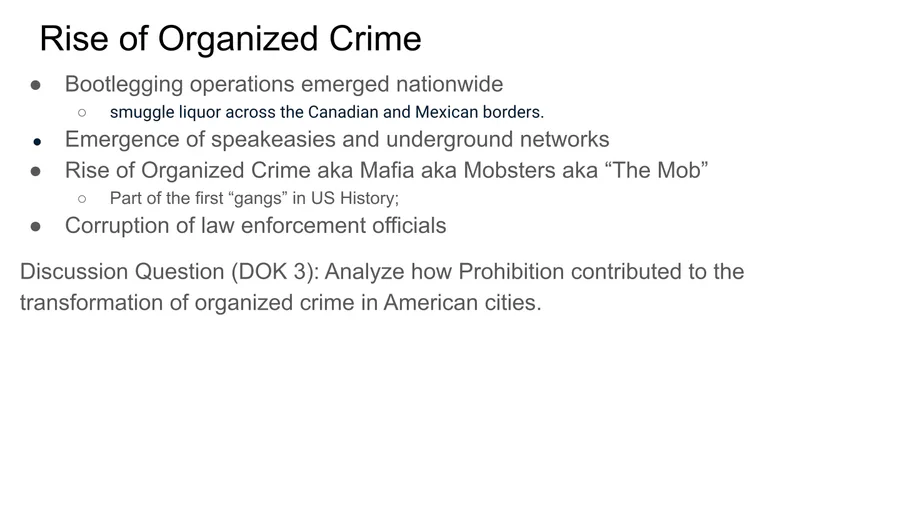
Which of the following was an impact of Prohibition?
27
28
Multiple Choice
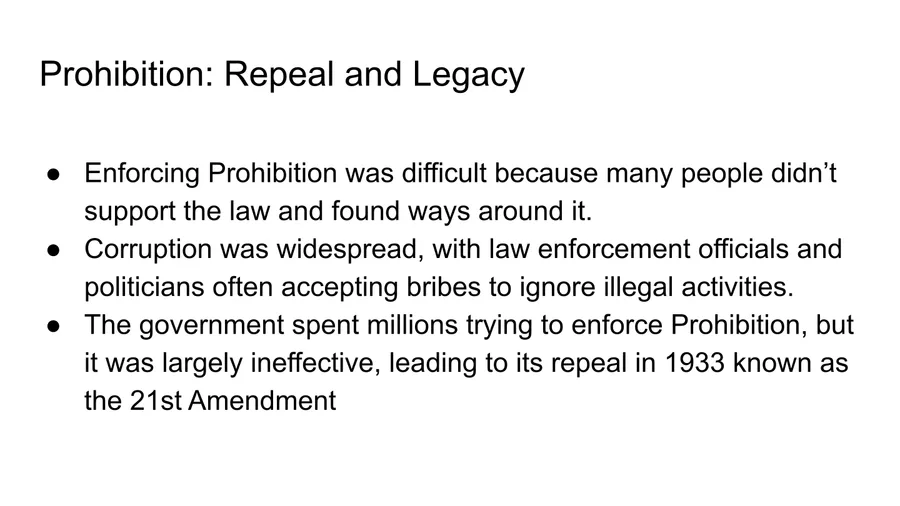
What was one major reason enforcing Prohibition was difficult in the United States?
Many people did not support the law and found ways around it.
There were not enough police officers.
Alcohol was not widely available.
The government did not spend money on enforcement.
29
30
Multiple Choice
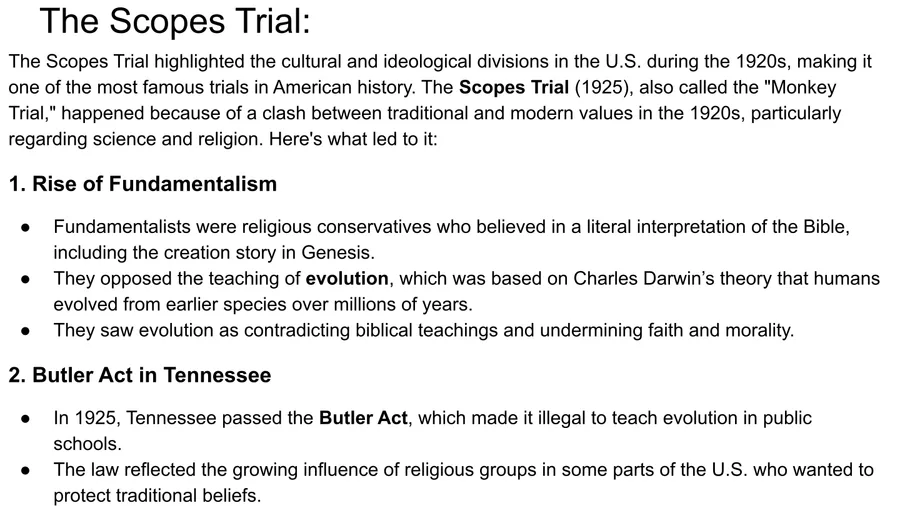
What was the basis of the Scopes Trial?
Show answer
Auto Play
Slide 1 / 30
SLIDE
Similar Resources on Wayground

21 questions
ยุคภูมิธรรม
Presentation
•
11th Grade
24 questions
Computer Networks
Presentation
•
11th Grade
21 questions
Theme in Literature
Presentation
•
11th Grade
24 questions
Beginning of the American Empire
Presentation
•
11th Grade
21 questions
Truman and Eisenhower Years
Presentation
•
11th Grade
24 questions
Module 4 Review
Presentation
•
11th Grade
27 questions
WWII European Theater
Presentation
•
11th Grade
22 questions
Review of the Renaissance
Presentation
•
10th Grade
Popular Resources on Wayground
10 questions
Safety Day 2026 – Student Review

Quiz
•
9th Grade
21 questions
Continents and Oceans
Quiz
•
6th Grade
20 questions
Parts of Speech
Quiz
•
5th Grade
16 questions
Subject & Predicate
Quiz
•
5th Grade
25 questions
Multiplication Facts
Quiz
•
5th Grade
12 questions
Map Skills
Quiz
•
3rd Grade
22 questions
Continents and Oceans
Quiz
•
5th Grade
15 questions
Rounding Decimals
Quiz
•
5th Grade
Discover more resources for History
15 questions
The Bill of Rights
Quiz
•
8th - 12th Grade
16 questions
Students of Civics Unit 2: The Constitution
Quiz
•
7th - 11th Grade
52 questions
Greece and Rome Review
Quiz
•
10th - 11th Grade
6 questions
Day 19 USH Do Now - US enters WWI
Quiz
•
11th Grade
21 questions
US History Unit 4 EOC Review
Quiz
•
11th Grade
50 questions
AP World Modern Unit 1: Global Tapestry
Quiz
•
10th - 12th Grade
12 questions
CE 2b Early Documents Review
Quiz
•
7th Grade - University