

Environmental Change and Trait Distribution

Presentation
•
Science
•
8th Grade
•
Practice Problem
•
Medium
+7
Standards-aligned

Barbara White
Used 42+ times
FREE Resource
12 Slides • 18 Questions
1
Environmental Change and Trait Distribution
Middle School

2
Learning Objectives
Describe how to measure variation and the distribution of traits in a population.
Explain how environment and mutations create variation and influence natural selection.
Explain how natural selection can change the proportion of traits in a population over time.


3
Key Vocabulary
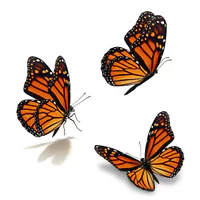
Population
A group of the same type of organism living in the same specific area.
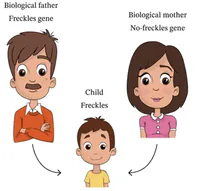
Trait
A specific characteristic of an individual organism, like its fur color, eye color, or height.
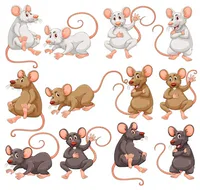
Variation
The differences in traits among individuals that are present within a single given population.
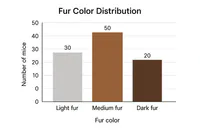
Distribution
How frequently each different trait appears across all of the members of a population.
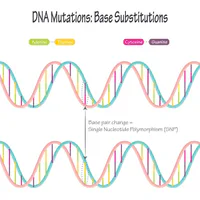
Mutation
A random change that occurs in an organism's genes that has the potential to create new traits.
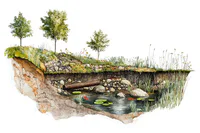
Environment
All of the living and nonliving factors that are found in a very specific area.
4
Key Vocabulary
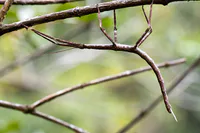
Adaptive Trait
A trait that helps an organism survive and reproduce in its environment.
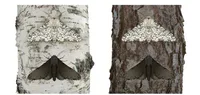
Natural Selection
The process where adaptive traits become more common over many generations.
5
What Are Populations and Traits?
Populations
A population is a group of organisms belonging to the same species.
These organisms live together in the same geographical area at the same time.
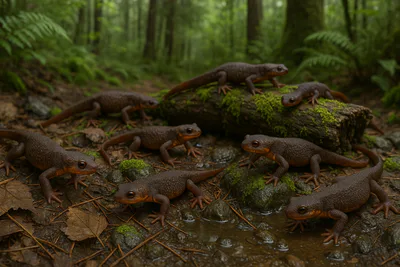
For example, all rough-skinned newts in a forest make up a population.
Traits
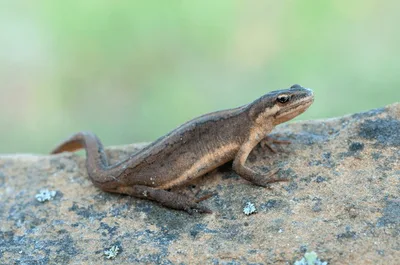
A trait is a specific characteristic of an organism, like its poison level or size.
Variation means individuals within a population have different versions of these traits.
This variation is the essential raw material for change in a population in the changing environment.
6
Multiple Choice
Which statement best defines a population?
A group of organisms of the same species living in the same geographical area.
A group of different species of organisms living together in an area.
All organisms that share a single specific characteristic.
Any organism that lives in a forest environment.
7
Multiple Choice
What is the relationship between a trait and variation in a population?
Variation describes the different forms of a trait, like size or poison level, found among individuals.
A trait is a specific type of variation that all individuals share equally.
Variation is the geographical area where a population's traits are found.
A trait is a group of organisms, while variation is a single organism.
8
Multiple Choice
Based on the information provided, what is the most likely consequence for a population if it lacks variation in its traits?
The population would be less equipped to handle future environmental changes.
The population would grow much faster because all individuals are the same.
The organisms would no longer be considered a single population.
All the newts would develop a new trait simultaneously.
9
Understanding Trait Distribution
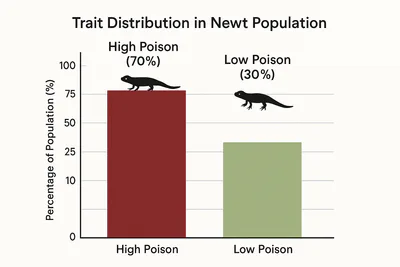
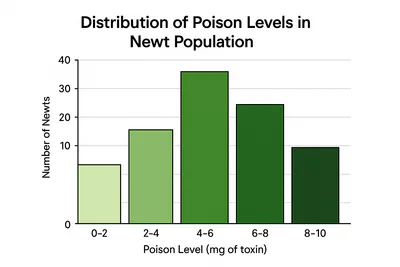
Trait distribution describes how common each version of a trait is within a population.
We can find this by calculating the percentage or average of a trait.
A histogram is a special bar graph that displays trait distribution for a population.
The bar’s height shows how many individuals fall into that specific trait range.
10
Multiple Choice
What does the concept of trait distribution describe?
How a single individual changes over its lifetime.
The total number of traits an individual possesses.
How common each version of a trait is within a population.
The average lifespan of individuals in a population.
11
Multiple Choice
How does a histogram visually represent trait distribution for a population?
It shows the genetic code for a specific trait.
It displays how many individuals fall into a specific trait range.
It calculates the average age of the population.
It lists all possible traits a population could have.
12
Multiple Choice
If a histogram of trait distribution has one bar that is significantly taller than all the others, what can be concluded about the population?
The trait shown by that bar is the most common in the population.
The trait shown by that bar is the least healthy for the population.
The trait shown by that bar is a new mutation in the population.
The trait shown by that bar is only found in female individuals.
13
The Environment Drives Change
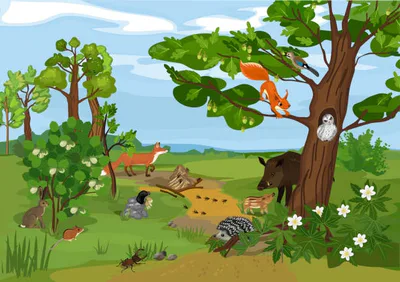
The environment includes all living and non-living factors an organism interacts with.
These factors include predators, food, climate, water availability, and shelter.
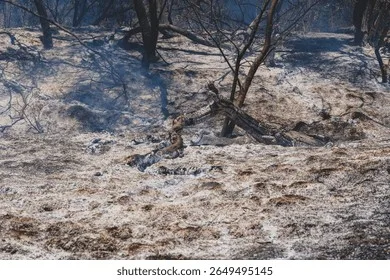
Disruptions like fires or new diseases can dramatically change an ecosystem.
These changes pressure populations to adapt for survival and reproduction.
14
Multiple Choice
Which statement best defines an organism's environment?
All the living and non-living factors it interacts with
Only the other animals and plants in its habitat
Only the non-living conditions like climate and water
The shelter an organism builds for itself
15
Multiple Choice
What is the primary effect of a major disruption, like a fire or disease, on the populations within an ecosystem?
They prevent any future changes from occurring in the ecosystem.
They only affect the non-living parts of the environment.
They create pressure on populations to adapt to new conditions.
They cause all organisms in the ecosystem to grow larger.
16
Multiple Choice
If a new, highly effective predator is introduced into an ecosystem, what is the most likely long-term consequence for its prey?
The ecosystem will not change because predators are not part of the environment.
The prey population will be pressured to develop traits that help them survive.
The new predator will have no effect on the existing food web.
The climate of the ecosystem will immediately become colder.
17
Mutations: The Source of New Traits
Beneficial Mutations
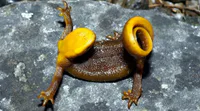
A beneficial mutation provides an organism with a survival advantage in its environment.
For example, a newt becomes much more poisonous to its predators.
These helpful traits are more likely to be passed to offspring.
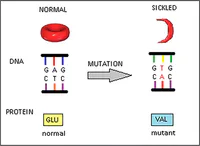
Harmful Mutations
These mutations reduce an organism's chances of survival and successful reproduction.
For example, a mutation can cause a severe or deadly genetic disease.
Harmful changes can make it very difficult for an organism to live.
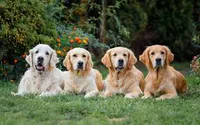
Neutral Mutations
This type of mutation has no observable effect on the organism's survival.
For instance, a minor change in fur color gives no real advantage.
The change doesn't make the organism more or less fit for survival.
18
Multiple Choice
What is the primary role of mutations as a source of new traits?
To introduce new characteristics into a population.
To prevent any changes from occurring in an organism.
To ensure all offspring are identical to their parents.
To eliminate all genetic diseases from a population.
19
Multiple Choice
What is the key difference between a beneficial mutation and a harmful mutation?
A beneficial mutation improves survival chances, while a harmful one reduces them.
A beneficial mutation only changes behavior, while a harmful one changes physical traits.
A beneficial mutation is always passed on, while a harmful one is never passed on.
A beneficial mutation has no effect, while a harmful one causes disease.
20
Multiple Choice
A rabbit population lives in a snowy, white environment. A mutation occurs that results in one rabbit having brown fur, making it easier for predators to spot. How will this mutation most likely affect the rabbit's future offspring?
The trait is unlikely to be passed on because it reduces the rabbit's chance of survival.
The trait will definitely be passed on because it provides a clear survival advantage.
The trait is neutral and will have no observable effect on the rabbit or its offspring.
The trait will become more common because all new traits are helpful.
21
Survival of the Fittest: Adaptive vs. Non-Adaptive Traits
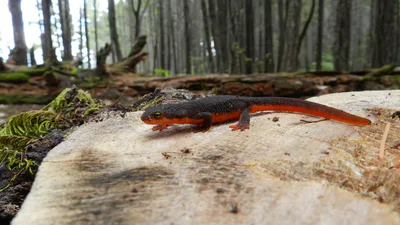
Adaptive Traits
An adaptive trait helps an organism survive and reproduce in its environment.
For example, a newt's high poison level is adaptive when predators are nearby.
A trait is only adaptive in relation to a specific environment.
Non-Adaptive Traits
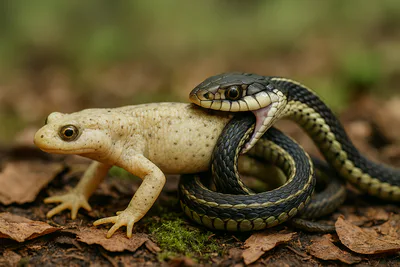
A non-adaptive trait makes it harder for an organism to survive and reproduce.
A newt with low poison levels has a non-adaptive trait when predators are present.
An adaptive trait can become non-adaptive if the environment changes.
22
Multiple Choice
What defines a trait as being adaptive?
To help an organism survive and reproduce in its environment.
To make an organism larger and stronger than others.
To allow an organism to change its environment to suit its needs.
To ensure an organism always has access to food.
23
Multiple Choice
What is the key factor that determines if a trait is adaptive or non-adaptive?
The specific environment the organism lives in.
The age of the organism when the trait appears.
How many other organisms have the same trait.
Whether the trait is visible to other organisms.
24
Multiple Choice
A population of newts has a high poison level, which protects them from local predators. If a change in the environment caused all of these predators to disappear, what could be the consequence for this trait?
The newts would find new predators to avoid.
The high poison level would become an even better adaptive trait.
The high poison level could become a non-adaptive trait.
The environment would change back to its original state.
25
The Process of Natural Selection

Variations in traits exist within a population facing environmental challenges.
Individuals with helpful adaptive traits are more likely to survive and reproduce.
Over time, these advantageous traits become more common in the population.
26
Multiple Choice
What is the primary outcome of the process of natural selection?
Advantageous traits become more common within the population over time.
All individual differences in a population disappear completely.
The environment changes to better suit the individuals in a population.
Individuals choose to develop new traits to survive better.
27
Multiple Choice
According to the principles of natural selection, what happens to individuals with helpful adaptive traits?
They are more likely to survive and pass those traits to their offspring.
They are guaranteed to live longer than all other individuals.
They can change their environment to eliminate challenges.
They will develop even more variations in their lifetime.
28
Multiple Choice
A population of rabbits with variations in fur color (brown and white) moves into a snowy, northern environment where predators are common. What is the most likely outcome for this population over many generations?
The trait for white fur will become more common in the population.
The trait for brown fur will become more common in the population.
The rabbits will quickly learn to change their fur color at will.
The predators will eventually stop hunting the rabbits.
29
Common Misconceptions
Misconception | Correction |
|---|---|
Organisms can choose to adapt to their environment. | Adaptation results from random, pre-existing variations in a population. |
Natural selection makes organisms 'perfect'. | It favors traits that are 'good enough' for survival and reproduction. |
All of an organism's traits are adaptations. | Some traits may be neutral or evolutionary leftovers with no adaptive value. |
30
Summary
Populations have natural variation, and new traits come from random mutations.
The environment determines which traits are adaptive for survival and reproduction.
Individuals with adaptive traits are more likely to pass them on through natural selection.
Over time, trait distribution in a population changes, tracked using tools like histograms.
Environmental Change and Trait Distribution
Middle School
Show answer
Auto Play
Slide 1 / 30
SLIDE
Similar Resources on Wayground

25 questions
States of Matter Review
Presentation
•
8th Grade
26 questions
Ecology Review
Presentation
•
8th Grade
23 questions
Energy
Presentation
•
8th Grade
24 questions
Ecosystems
Presentation
•
8th Grade
22 questions
Metals, Nonmetals and Metalloids
Presentation
•
8th Grade
25 questions
Elements, Compounds, Mixtures
Presentation
•
8th Grade
21 questions
Protons, Neutrons and Electrons
Presentation
•
8th Grade
21 questions
Mutations
Presentation
•
8th Grade
Popular Resources on Wayground
24 questions
PBIS-HGMS Day 10

Quiz
•
6th - 8th Grade
10 questions
HCS SCI 03 Summer School Review 3
Quiz
•
3rd Grade
11 questions
Home Scope
Quiz
•
7th - 8th Grade
15 questions
HCS SCI 05 Summer School Assessment 3 Review
Quiz
•
5th Grade
35 questions
Lufkin Road Middle School Student Handbook & Policies Assessment
Quiz
•
7th Grade
18 questions
Geo 11.3 Area of Circles and Sectors
Quiz
•
9th - 11th Grade