Search Header Logo
Chapter 15 new

Chapter 15 new

Assessment

Presentation

Science

10th Grade

Easy

NGSS
MS-PS1-4, MS-PS1-1, MS-PS1-2

+5

Standards-aligned

Created by

Patricia Malcolm

Used 7+ times

FREE Resource

136 Slides • 65 Questions

1

media

2

media

Have you ever seen something that looked so real that you had to touch it to see if it was really real?

Each material has its own properties.

The properties of materials can be used to classify them into general categories.

3

media

Matter is something that has mass and takes up space.

For example, you, candy, plants and planets are all matter.

Even some of the things that you can’t see, like air and other gasses are matter.

​What is Matter

4

media

5

media

6

media

7

media

8

media

9

media

10

media

11

media

12

media

13

media

14

media

15

media

16

media

•Table salt is a chemical compound that fits this description. Even though it looks like white crystals and adds flavor to food, its components—sodium and chlorine—are neither white nor salty.

17

media

18

media

19

media

20

media

•Are pizza and a soft drink one of your favorite meals?

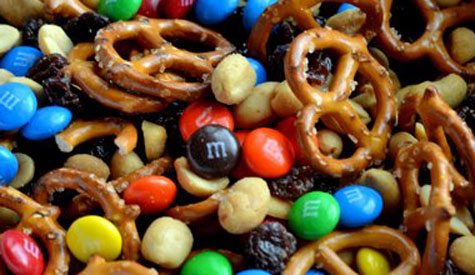
•If so, you enjoy two foods that are classified  as MIXTURES. 

•BUT two different kinds of mixtures

21

media

22

media

23

media

24

media

25

media

26

media

27

media

Most of the substances you come in contact with every day are heterogeneous mixtures.  Some components are easy to see, like the ingredients in pizza, but others are not.

28

media

29

media

30

media

Remember that soft drink you had with your pizza?

Soft drinks contain water, sugar, flavoring, coloring and carbon dioxide gas. 

Soft drinks in sealed bottles are examples of homogeneous mixtures

31

media

Another name for homogeneous mixtures like a cold soft drink is SOLUTION.

A SOLUTION is a homogeneous mixture of particles so small that they cannot be seen with a microscope and will never settle to the bottom of their container.

32

media

33

media
media

Paint is an example of a liquid with suspended colloid particles. 

Fogconsists of particles of water suspended in air.

Smokecontains solids suspended in air.

media

34

media

35

This scattering of light by colloidal particles is called the Tyndall effect.

light beam is invisible as it passes through a solution, but can be seen readily as it passes through a colloid.  This occurs because the particles in the colloid are large enough to scatter light, but those in the solution are not.

media

36

media

37

media

38

media

39

Multiple Choice

Question image
What type of mixture is this?
1
homogenous mixture
2
chemical
3
heterogeneous mixture 
4
solid mix

40

Multiple Choice

A substance with two or more elements that are combined in a fixed proportion
1
colloid
2
compound
3
element
4
solution

41

Multiple Choice

A substance in which all the atoms are the same
1
colloid
2
homogeneous mixture
3
solution
4
element

42

Multiple Choice

A mixture in which different materials can be identified easily
1
element
2
heterogeneous mixture
3
homogeneous mixture
4
solution

43

Multiple Choice

A mixture that contains two or more substances blended evenly throughout
1
heterogeneous mixture
2
homogeneous mixture
3
suspension
4
colloid

44

Multiple Choice

Which of the following is an element?
1
Sugar
2
Salt
3
Water
4
Oxygen

45

Multiple Choice

Question image
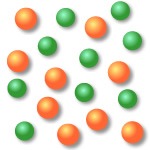
This picture represents which of the following?
1
element
2
compound
3
mixture

46

Multiple Choice

Which of the following is a colloid

1

smoke

2

oxygen

3

water

4

salt

47

Multiple Choice

Question image

How many elements are found on Earth?

1

5

2

10

3

30

4

90

48

Multiple Choice

A substance is ___________

1

always an element

2

always a compound

3

either an element or a compound

4

Mixture of compounds

49

Multiple Choice

Question image

What is water

1

Element

2

Compound

3

Heterogeneous

4

Homogeneous

50

Multiple Choice

Question image

What is pepperoni pizza

1

heterogeneous

2

homogeneous

51

Multiple Choice

Question image

what is air

1

element

2

compound

3

heterogeneous

4

homogeneous

52

Multiple Choice

Question image

Sand in Water

1

Solution

2

Suspension

3

Colloid

53

Multiple Choice

Question image

Kool-Aid

1

Solution

2

Suspension

3

Colloid

54

Multiple Choice

Water is a compound because it
1
can not be broken down into simpler substances
2
always has two hydrogen atoms for each oxygen atom
3
is made of water atoms joined together
4
is heterogeneous

55

Multiple Choice

If a material contains three elements joined in a fixed proportion, it is a(an)
1
mixture
2
solution
3
atom
4
compound

56

Multiple Choice

Compounds have properties different from the elements that make it up.

1

Agree

2

Disagree

57

Multiple Choice

Cannot be broken down into a simpler substance

1

Elements

2

Compounds

3

Both

58

Multiple Choice

Question image

This picture represents which of the following?

1

element

2

compound

59

Multiple Choice

Question image

This picture represents which of the following?

1

element

2

compound

60

media

•You can stretch a rubber band, but you can’t stretch a piece of string very much.

•You can bend a piece of wire, but you can’t easily bend a matchstick.

•In each case, the materials change shape, but the identity of the substances –rubber, string, wire and wood –does not change.

61

media

62

media

63

media

•How would you describe a tennis ball?  You could begin by describing its shape, color, and state of matter.

•You can measure some physical properties, too.  For instance, you could measure the diameter of the ball.

64

media

•How would you describe a soft drink in a cup?

•You could start with color.

•You could measure its volume and temperature.

•These are physical properties of the drink

65

media

66

media

67

media
media

68

media

69

media

70

media
media

71

media

•When a substance freezes, boils, evaporates, or condenses, it undergoes physical changes.

72

media

73

media

74

media

75

media

76

media

77

media

78

media
media

79

•Burning produces new substances during a chemical change.

•CHEMICAL PROPERTY -   is a characteristic of a substance that indicates whether it can undergo a certain chemical change.

media

80

media

81

media

82

media

83

media

A less dramatic chemical change can affect some medicines.

•Many medicine bottles are stored in dark bottles because they contain compounds that can change chemically if they are exposed to light.

84

media

85

media

86

media

87

media

88

media

89

media

90

media

91

media
media

92

media

93

media

94

media

95

media

96

Multiple Choice

Question image

When something burns?

1

Chemical change

2

Physical change

3

No change

97

Multiple Choice

Question image

When something melts?

1

No change

2

Physical change

3

Chemical change

98

Multiple Choice

When substances react with each other and new substances are formed?

1

Physical change

2

No change

3

Chemical change

99

Multiple Choice

When food spoils?

1

Physical change

2

Chemical change

3

No change

100

Multiple Choice

Question image

When something sparks or explodes?

1

Chemical change

2

Physical change

3

No change

101

Multiple Choice

Question image

When something is cooked or baked?

1

No change

2

Physical change

3

Chemical change

102

Multiple Choice

When metals rust due to oxidation?

1

Chemical change

2

Physical change

3

No change

103

Multiple Choice

When something bubbles or fizzes? (not the same as boiling)

1

Physical change

2

Chemical change

3

No change

104

Multiple Choice

Question image

When something is broken, cut, torn, or squeezed?

1

No change

2

Chemical change

3

Physical change

105

Multiple Choice

Question image

What is a physical property of these strawberries?

1

Red

2

Rotten

3

Flammable

106

Multiple Choice

Question image

What is a chemical property of paper?

1

Flammable

2

White

3

Light

107

Multiple Choice

Question image

Is toasting bread a physical or chemical change?

1

Physical

2

Chemical

108

Multiple Choice

Which one of these is a chemical property?
1
melting point
2
boiling point
3
color
4
flammability

109

Multiple Choice

Question image
Ability to rust is this type of property:
1
Physical property
2
Chemical property

110

Multiple Choice

When something is dissolved into a liquid?

1

Physical change

2

Chemical change

3

No change

111

Multiple Choice

When you break a cracker into pieces it is a...
1
Chemical change
2
Physical change

112

Multiple Choice

Question image

Food Digestion

1

Physical change

2

Chemical change

113

media
media

114

media
media

115

media

116

media
media

117

media
media

118

media

119

media

120

Particles of solids are tightly packed, vibrating about a fixed position.

Solids have a definite shapeand a definite volume.

Solid

media

121

media
media

122

media
media

123

media

124

media
media

125

media

126

media
media

127

media
media

128

media
media

129

media
media

130

media
media

131

media
media

132

media
media

133

media
media

134

media
media

135

media
media

136

media

137

media
media

138

media
media

139

media

140

media

141

media

142

media

143

media

144

media

145

media

146

media

147

media

148

media

149

media

150

media

A solution is a mixture that has the same composition, color, density, and even taste throughout.

151

media

•To describe a solution, you may say that one substance is dissolved in another.

Solutes and Solvents

152

•When a solid dissolves in a liquid, the solid is the solute and the liquid is the solvent.

•The substance being dissolved is the solute, and the substance doing the dissolving is the solvent.

153

media

•In salt water, salt is the solute and water is the solvent.

•In carbonated soft drinks, carbon dioxide gas is one of the solutes and water is the solvent.

•When a liquid dissolves in another liquid the substance present in the larger amount is usually called the solvent.

154

media

155

media

156

media

157

media

158

media

159

media

160

media

161

media

162

media

163

media

164

media

165

media

166

media

167

media

168

media

169

media

170

media

171

media

172

media

173

media

174

media

175

Multiple Choice

The amount of heat needed to change 1 gram of a substance from the liquid phase to the gas phase is ___

1

Heat of Vaporization

2

Boiling point

3

Heat Energy

4

Phase change

176

Multiple Choice

A solid

1

has particles that are far apart

2

has a size and shape of its own

3

takes the shape of its container

177

Multiple Choice

All _______ can move and flow.

1

liquids

2

solids

3

gases

178

Multiple Choice

In general, the particles of a liquid are __________ tightly packed than those in a solid.

1

more

2

less

179

Multiple Choice

The particles in a gas are ___________ apart than those of solids or liquids.

1

farther

2

never

180

Multiple Choice

Question image

The picture shows...

1

a solid

2

a liquid

3

a gas

181

Multiple Choice

Question image

The picture shows...

1

a solid

2

a liquid

3

a gas

182

Multiple Choice

Question image

The picture shows...

1

a solid

2

a liquid

3

a gas

183

Multiple Choice

The state of matter depends on its

1

volume

2

temperature

3

weight

4

mass

184

Multiple Choice

What must be done to change water from liquid to solid?

1

Raise the temperature.

2

Lower the temperature.

185

Multiple Choice

state of matter that can be poured; takes the shape of its container
1
solid
2
liquid
3
gas

186

Multiple Choice

state of matter that spreads out to completely fill its container
1
solid
2
liquid
3
gas
4
water

187

Multiple Choice

The Temperature when a liquid turns to a solid

1

freezing point

2

heat of fusion

3

thermal expansion

4

melting point

188

Multiple Choice

the temperature at which liquid water changes into solid ice
CHOOSE THE WRONG ANSWER
1
32o F
2
boiling point
3
freezing point
4
0o C

189

Multiple Choice

the temperature at which liquid water changes into water vapor (gas)
CHOOSE THE WRONG ANSWER
1
boiling point
2
freezing point
3
212o F
4
100o C

190

Multiple Choice

In a _______ the molecules are close together.

1

solid

2

liquid

3

gas

191

Multiple Choice

Question image

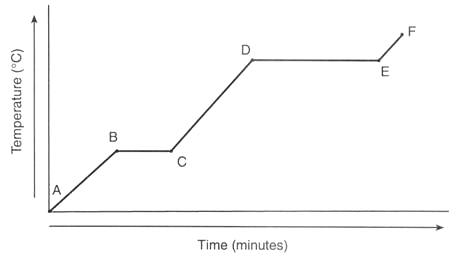
What phase of matter exists in part D of the graph?

1

Gas

2

Liquid

3

Solid

4

Plasma

192

Multiple Choice

a solution in which the maximum amount of solute has been dissolved in a solvent

1

saturated

2

unsaturated

3

supersaturated

193

Multiple Choice

The liquid in which the material is dissolved

1

solute

2

solution

3

solvent

4

solubility

194

Multiple Choice

The solid that is being dissolved

1

solute

2

solvent

3

solution

4

solubility

195

Multiple Choice

Anything that takes up space and has mass is

1

Matter

2

Volume

3

Liquid

4

Atom

196

Multiple Choice

the ability of a substance to dissolve in a solvent

1

solubility

2

conductivity

197

Multiple Choice

Temperature when a substance changes from a solid to a liquid

1

freezing point

2

heat of fusion

3

thermal expansion

4

melting point

198

Multiple Choice

Question image

What is happening to the particles in the substance between points D and E?

1

Melting

2

Freezing

3

Vaporizing

4

Sublimating

199

Multiple Choice

Question image

The melting point of the sample is

1

-60 ºC

2

-100 ºC

3

60 ºC

4

100 ºC

200

Multiple Choice

Which factor affects solubility?

1

Temperature

2

State of Matter

201

Multiple Choice

To increase the solubility of a solid, what should you do to the temperature of the solvent ?

1

Increase the temperature of the solvent.

2

Decrease the temperature of the solvent.

media

Show answer

Auto Play

Slide 1 / 201

SLIDE