

Cengage Chapter 3 - PPT. Sources of Bodily Effects of Drugs

Presentation
•
Health Sciences
•
11th Grade
•
Practice Problem
•
Medium

Trazie Durden
Used 2+ times
FREE Resource
19 Slides • 28 Questions
1

2

3
Multiple Choice
Which of the following is NOT one of the chapter objectives listed for 'Sources of Bodily Effects of Drugs'?
Identify the five sources of drugs
Define the pharmacokinetic processes
Describe the various routes of drug administration
Explain the history of pharmacology
4

5

6
Multiple Choice
Which of the following is NOT typically considered one of the five sources of drugs?
Plants
Minerals
Synthetic chemicals
Vitamins
7
Multiple Select
Which of the following are examples of drugs derived from plants?
Quinidine
Digitalis
Morphine
Auranofin
8
Multiple Choice
Which of the following is NOT a traditional source of drugs?
Plants
Minerals
Synthetic manufacturing
Substances found in nature
9
Open Ended
Why is it important for health professionals to understand the sources of bodily effects of drugs?
10
Multiple Choice
Vaccines are produced from which drug source?
Plants
Animals
Synthetic
Genetic engineered
11

12
Multiple Choice
Examples of a systemic drug effects versus local drug effects includes all of the following EXCEPT:
Limited to the area of the body where it was administered
Effects a widespread of the body
Carried through the body
Reaches the bloodstream
13
Fill in the Blanks
14

15
16
17
18
19
20
21
Multiple Choice
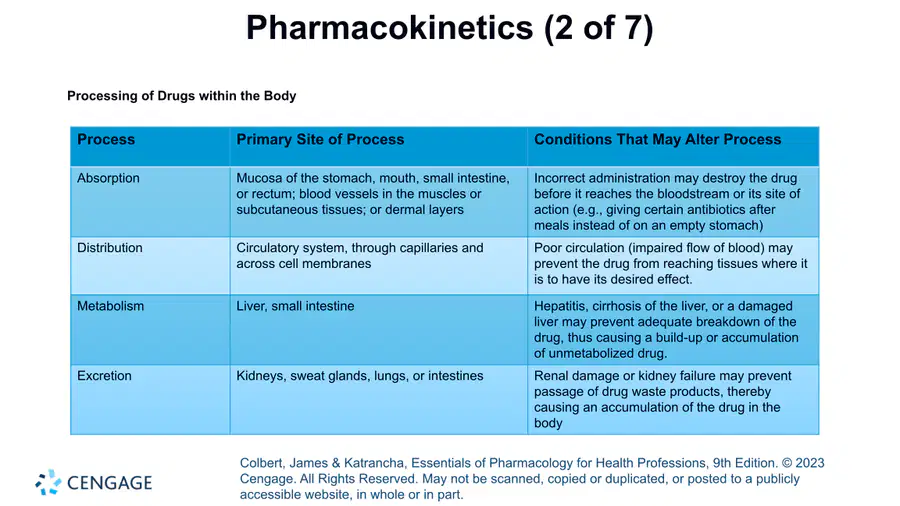
What is the correct process in which drugs pass through the body?
Absorption, metabolism, distribution, excretion
Absorption, distribution, excretion, metabolism
Absorption, excretion, distribution, metabolism
Absorption, distribution, metabolism, excretion
22
Fill in the Blanks
23
Multiple Choice
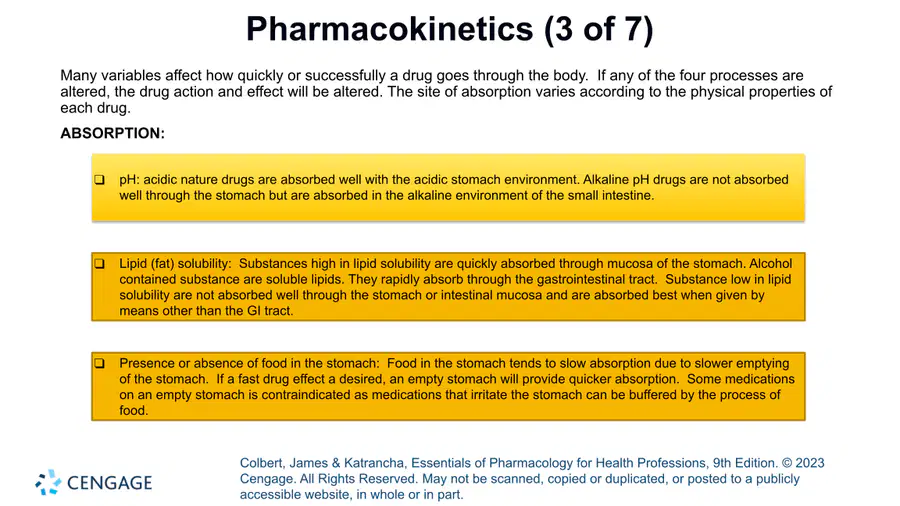
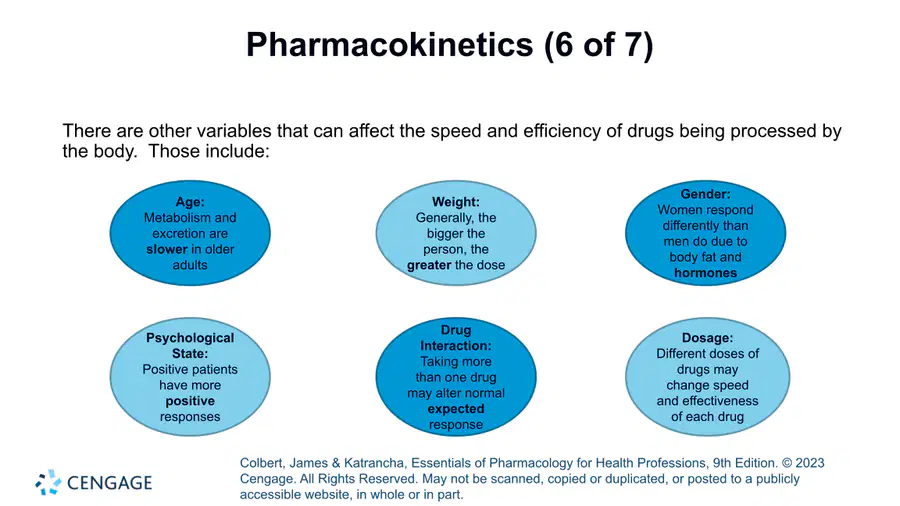
Which of the following variables can affect the speed and efficiency of drugs being processed by the body?
Age
Weight
Gender
All of the above
24
Multiple Choice
Which of the following is NOT one of the four main drug processes in pharmacokinetics?
Absorption
Distribution
Metabolism
Digestion
25
Multiple Select
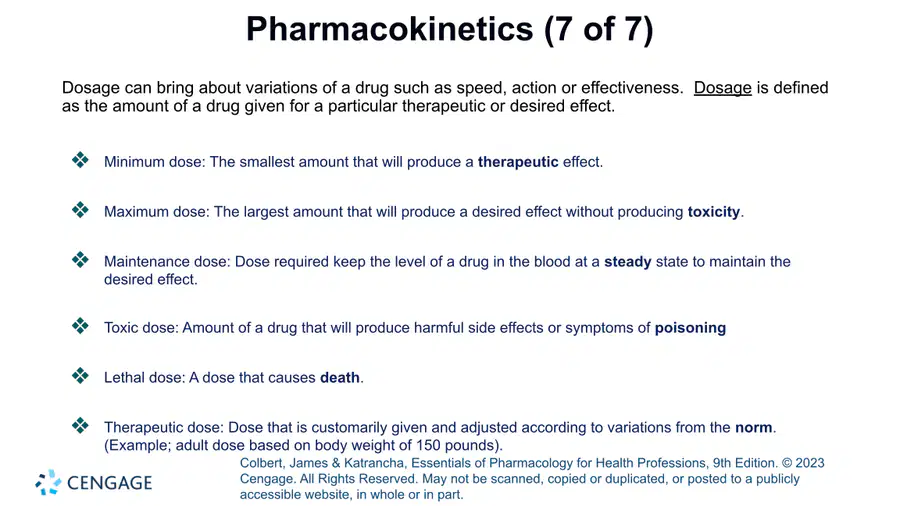
Select all the types of drug doses described in the pharmacokinetics lesson.
Minimum dose
Therapeutic dose
Toxic dose
Selective dose
26
Multiple Choice
Which of the following conditions may alter the process of drug absorption in the body?
Incorrect administration before reaching the bloodstream
Poor circulation
Hepatitis or cirrhosis of the liver
Renal damage or kidney failure
27
Multiple Choice
Which organ is primarily responsible for the metabolism of drugs in the body?
Kidneys
Liver
Lungs
Stomach
28
Open Ended
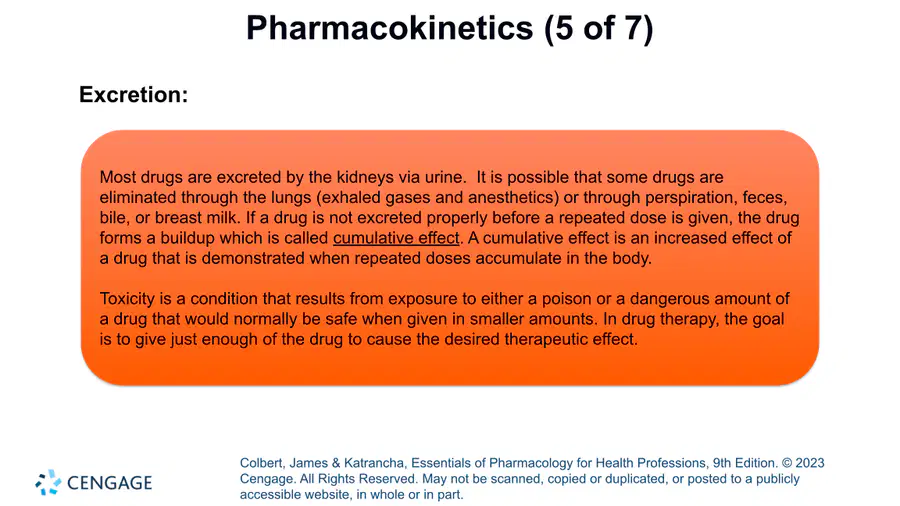
Describe what is meant by the cumulative effect of a drug and why it is important in drug therapy.
29
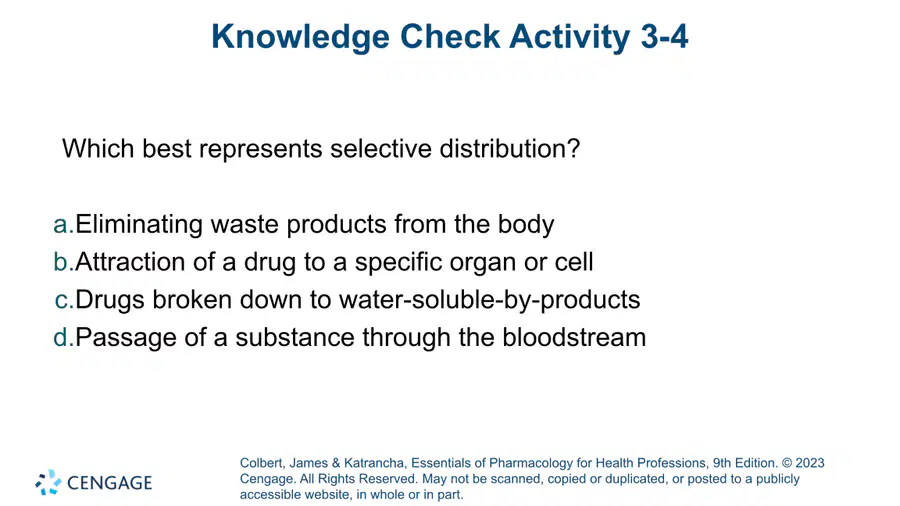
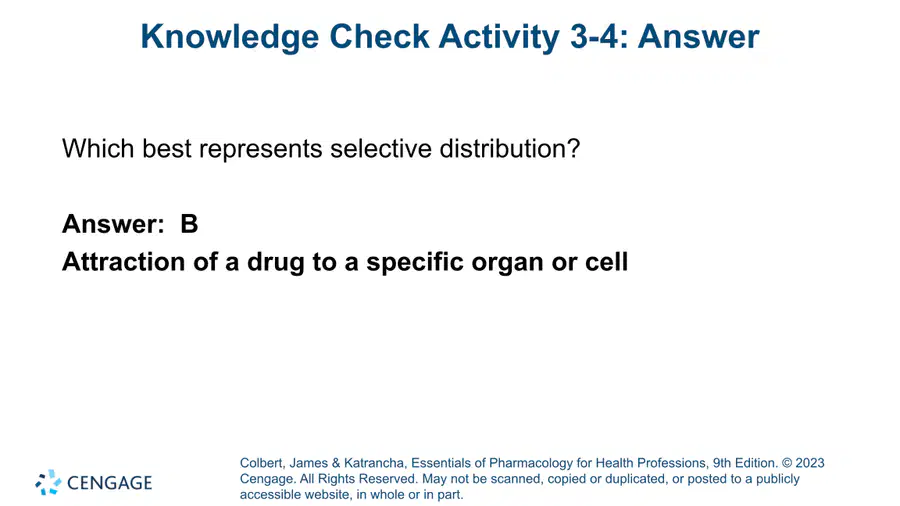
Multiple Choice
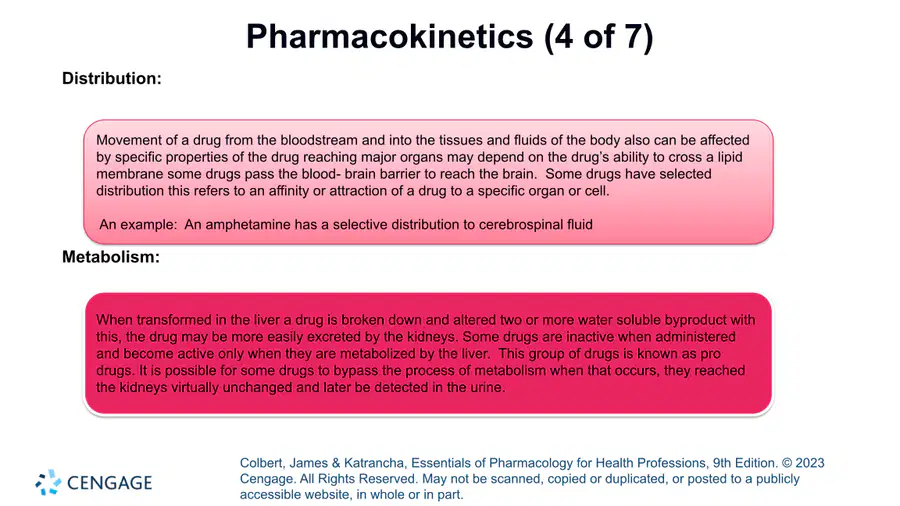
Which best represents selective distribution?
Attraction of a drug to a specific organ or cell
Eliminating waste products from the body
Drugs broken down to water-soluble-by-products
Passage of a substance through the bloodstream
30
Fill in the Blanks
31
Multiple Choice
Which is NOT a common factor that can affect drug action?
Hair color
Height
Weight
Psychological state
32
33
34
35
Multiple Choice
Which of the following best describes a maintenance dose?
The smallest amount that will produce a therapeutic effect
Dose required to keep the level of a drug in the blood at a steady state
The largest amount that will produce a desired effect without toxicity
A dose that causes death
36
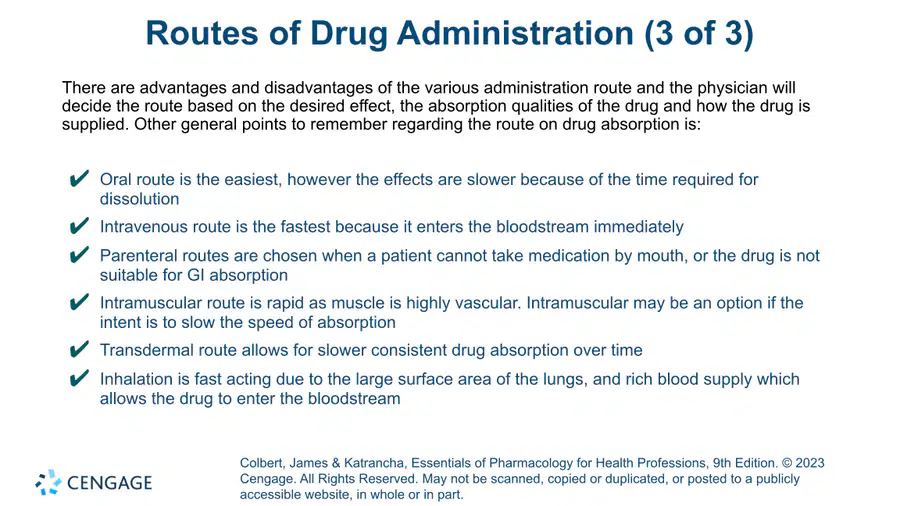
Multiple Choice
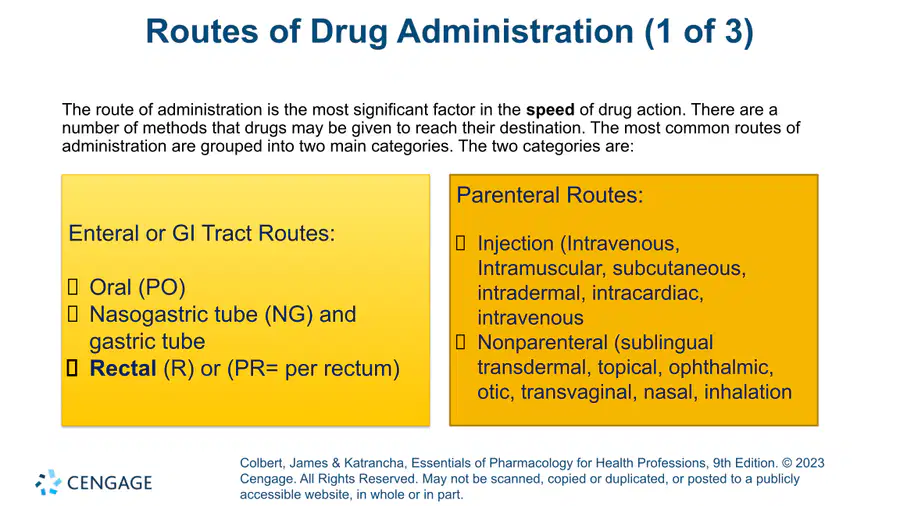
Which of the following statements about the oral route of drug administration is correct?
It is the fastest route for drug absorption.
It is the easiest route, but absorption is slower due to dissolution time.
It bypasses the gastrointestinal tract completely.
It is only used for emergency medications.
37
38
39
Multiple Select
Which of the following are considered enteral or GI tract routes of drug administration?
Oral (PO)
Injection (Intravenous)
Rectal (R)
Transdermal
40
Fill in the Blanks
41

42
Fill in the Blanks
43
44
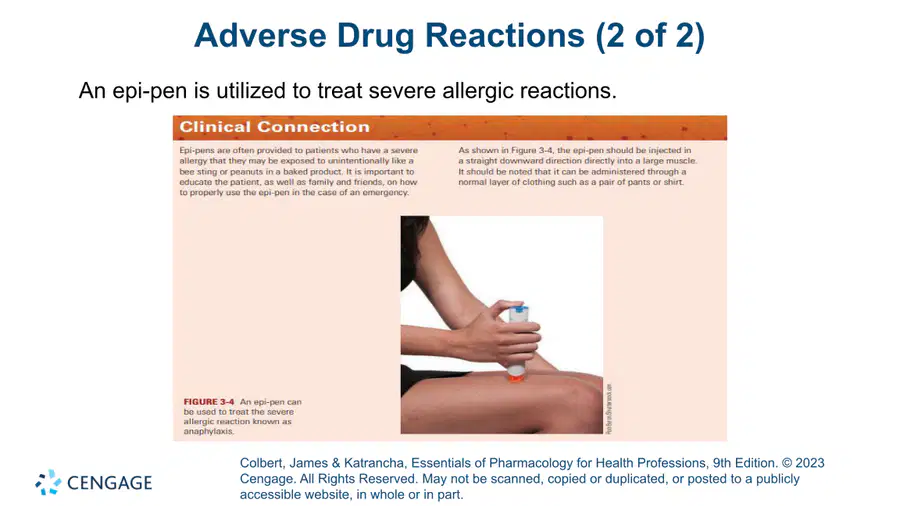
Multiple Choice
Cyanosis and dyspnea are associated with which adverse drug reaction?
Tolerance
Anaphylactic shock
Paradoxical reaction
Hypersensitivity
45
Open Ended
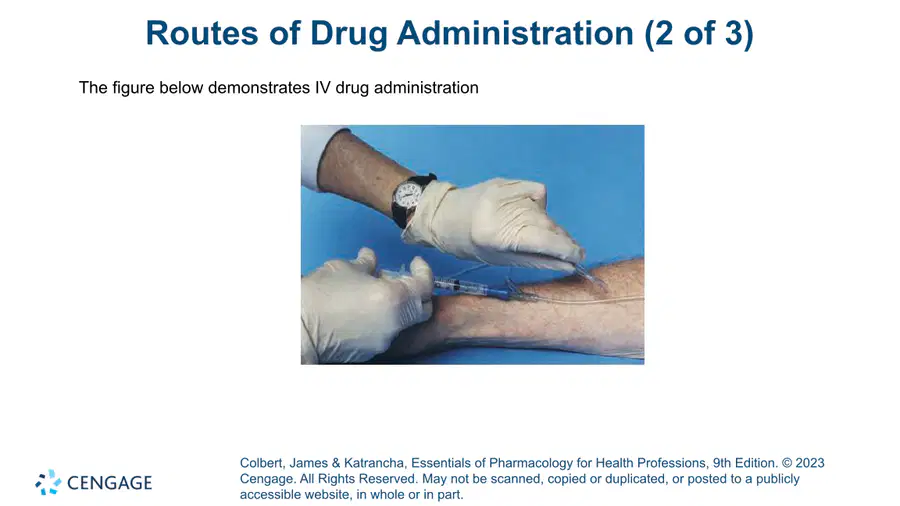
Can you explain the advantages and disadvantages of each drug administration route?
46
Open Ended
What are the variables that can affect the speed and efficiency of drugs processed through the body?
47
Open Ended
Can you describe the four processes related to the passage of drugs throughout the body?
Show answer
Auto Play
Slide 1 / 47
SLIDE
Similar Resources on Wayground

40 questions
Introduction to Polynomials
Presentation
•
11th Grade
43 questions
5.03 - Integumentary System and Accessory Organs
Presentation
•
11th Grade
42 questions
Muscle Contractions
Presentation
•
11th Grade
42 questions
"A & P" by John Updike
Presentation
•
11th Grade
46 questions
Principles of Effective Speech Writing
Presentation
•
11th Grade
42 questions
G11 IELTS Lesson 8 Speaking
Presentation
•
11th Grade
43 questions
5.1-2 Muscle Tissue Functions
Presentation
•
10th Grade
40 questions
Week 3 Oral Communication
Presentation
•
11th Grade
Popular Resources on Wayground
20 questions
Math Review

Quiz
•
3rd Grade
15 questions
Fast food
Quiz
•
7th Grade
20 questions
Context Clues
Quiz
•
6th Grade
20 questions
Inferences
Quiz
•
4th Grade
19 questions
Classifying Quadrilaterals
Quiz
•
3rd Grade
20 questions
Figurative Language Review
Quiz
•
6th Grade
20 questions
Equivalent Fractions
Quiz
•
3rd Grade
10 questions
Identify Fractions, Mixed Numbers & Improper Fractions
Quiz
•
3rd - 4th Grade
Discover more resources for Health Sciences
10 questions
Fact Check Ice Breaker: Two truths and a lie
Quiz
•
5th - 12th Grade
10 questions
Video Games
Quiz
•
6th - 12th Grade
15 questions
Memorial Day Trivia
Quiz
•
KG - 12th Grade
12 questions
Name that Candy
Quiz
•
KG - 12th Grade
20 questions
Guess The App
Quiz
•
KG - Professional Dev...
30 questions
K/H Final Review Part 1
Quiz
•
9th - 12th Grade
40 questions
NCFE Earth and Environmental Science Released Test
Quiz
•
9th - 12th Grade
22 questions
Revise and Edit Final Review 3
Quiz
•
8th - 12th Grade