
25 History of Floral

Presentation
•
Other
•
9th - 12th Grade
•
Practice Problem
•
Easy

Carissa Cline
Used 2+ times
FREE Resource
55 Slides • 29 Questions
1
2
3
Multiple Choice
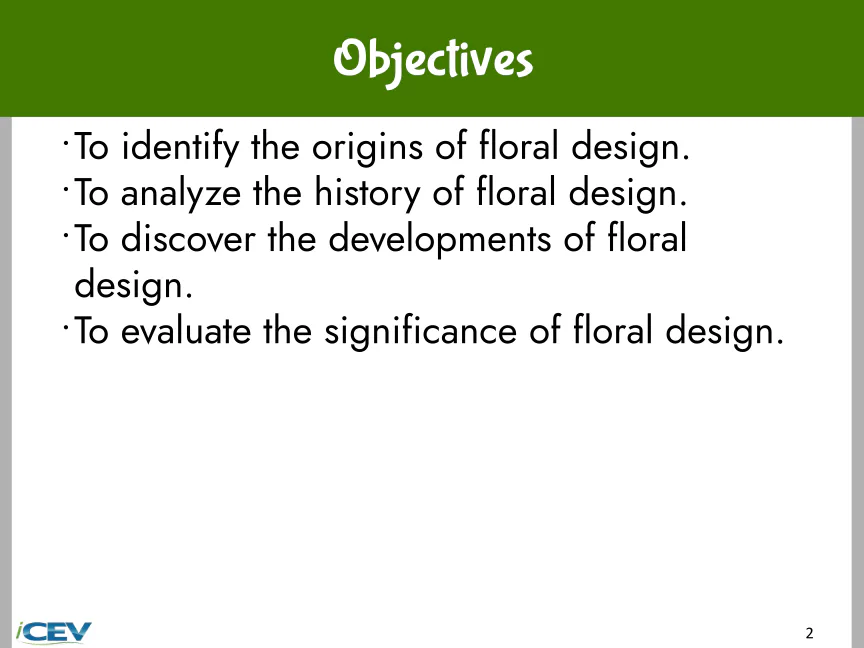
Which of the following is NOT one of the objectives for studying the history of floral design?
To identify the origins of floral design.
To analyze the history of floral design.
To discover the developments of floral design.
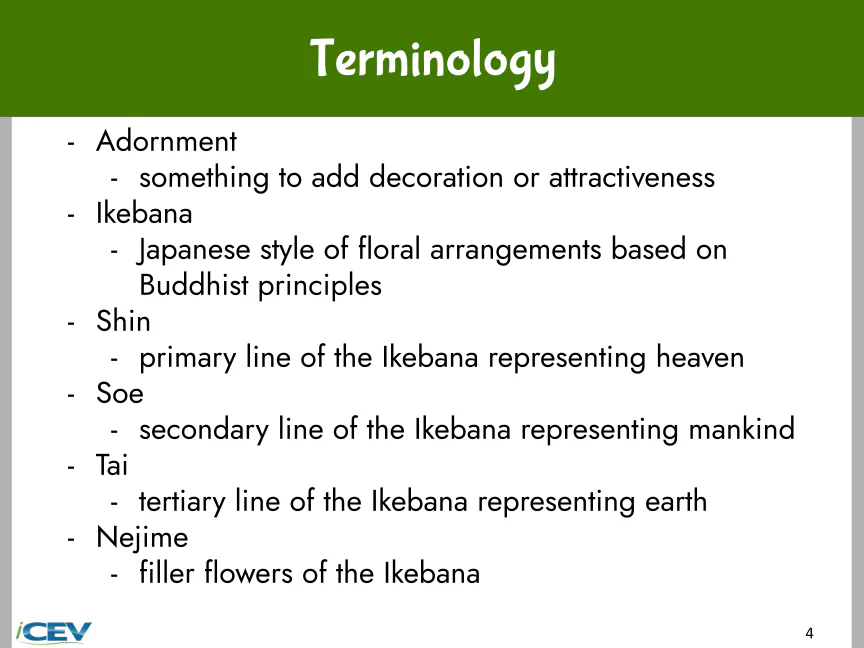
To memorize the names of all flowers.
4
Open Ended
Why do you think floral design has played an important role in different cultures throughout history?
5
6
7
8
9
10
Open Ended
Explain the significance of floral designs in different cultures and how they are used to convey meaning.
11
Multiple Choice
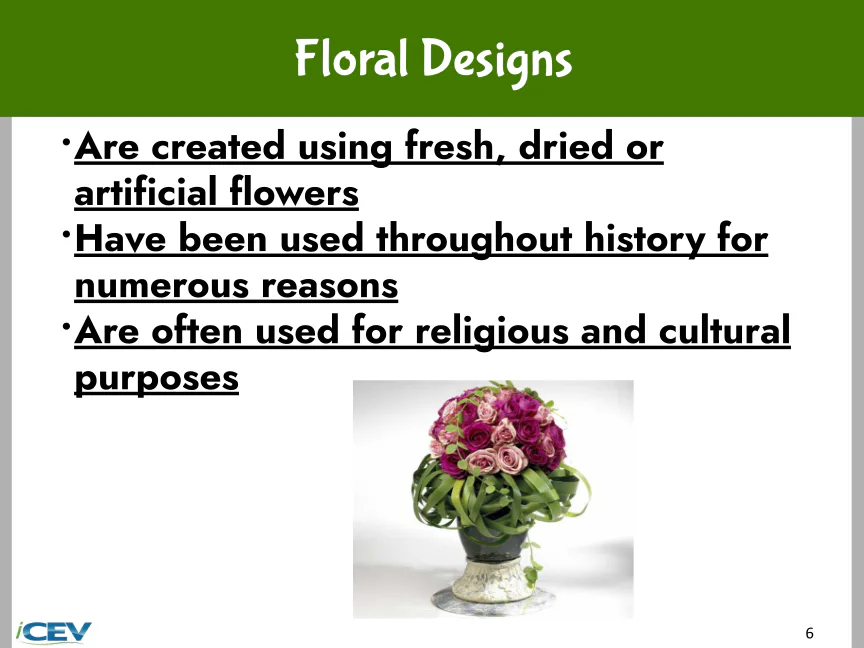
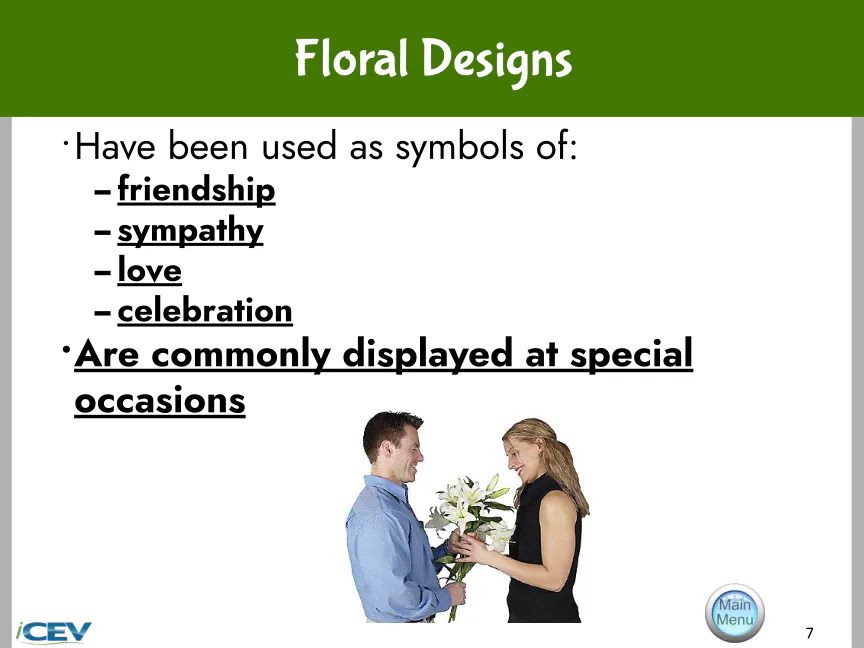
Which of the following is NOT a reason floral designs have been used throughout history?
For religious and cultural purposes
As a symbol of friendship
To improve air quality
For special occasions
12
13
Fill in the Blanks
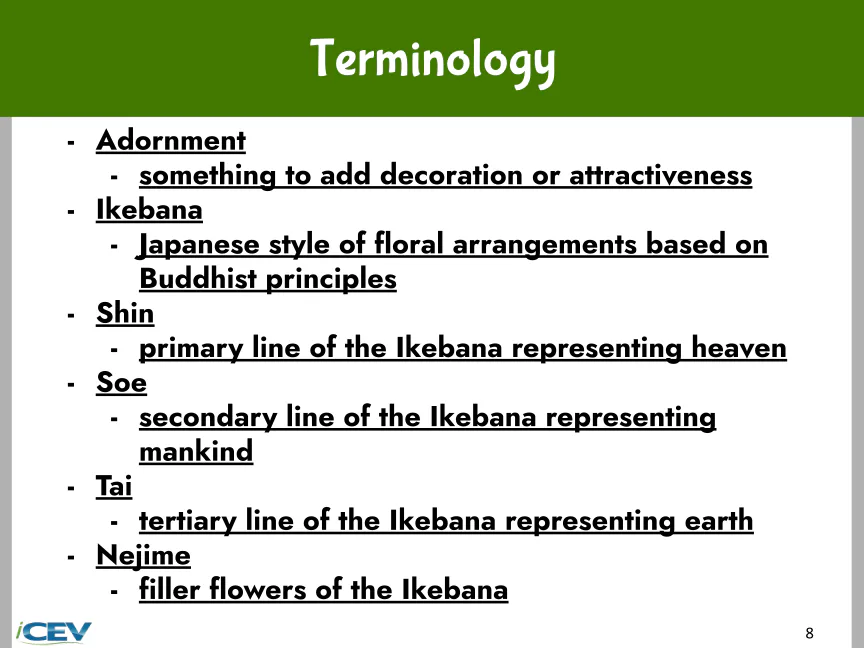
Adornment in floral design refers to something that adds
Type answer...
14
Fill in the Blanks
The Japanese style of floral arrangements based on Buddhist principles is called
Type answer...
15
Multiple Select
Which of the following are lines in Ikebana floral arrangements?
Shin
Soe
Tai
Nejime
16
17
Multiple Choice
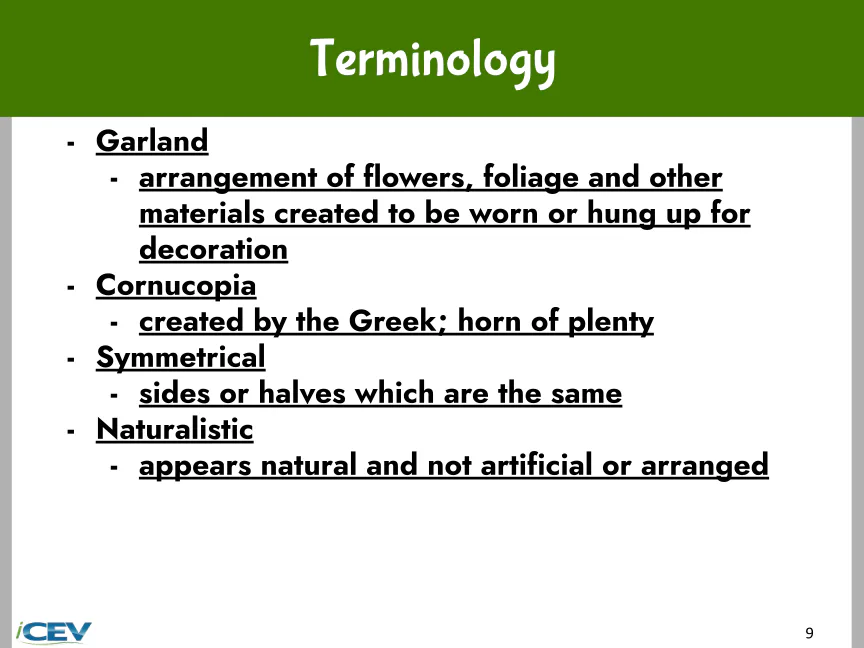
Which term describes an arrangement of flowers, foliage, and other materials created to be worn or hung up for decoration?
Garland
Cornucopia
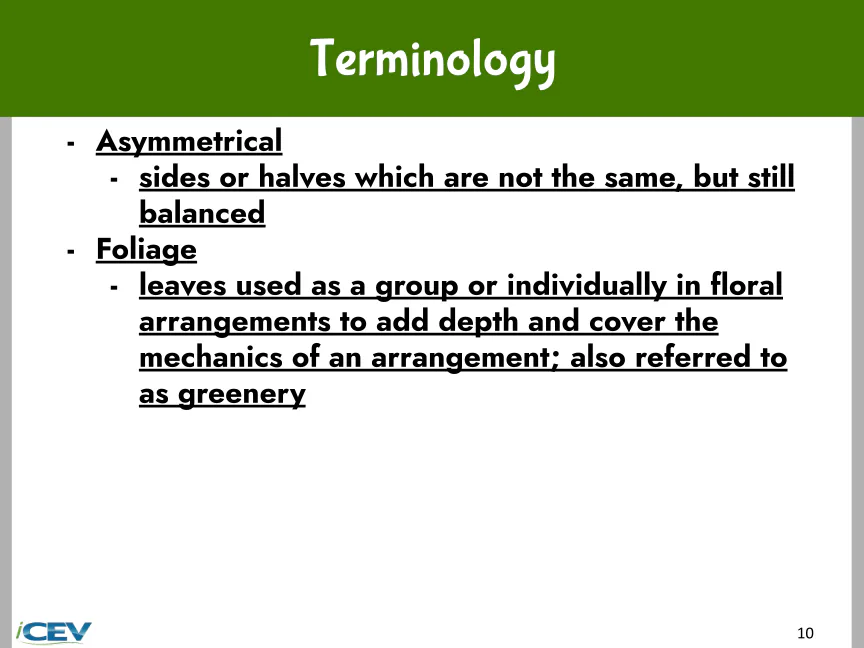
Foliage
Naturalistic
18
19
Fill in the Blanks
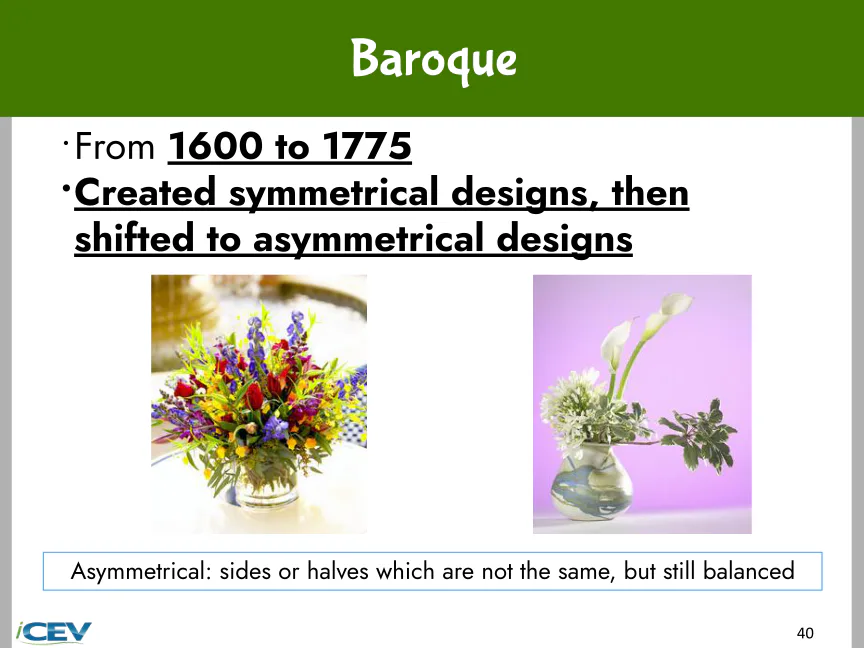
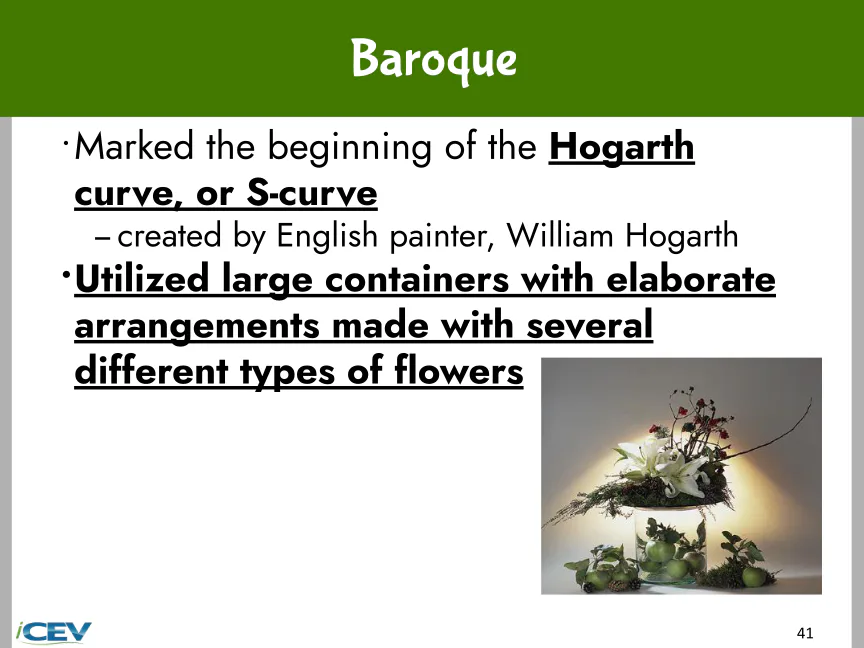
Sides or halves which are not the same, but still balanced are described as
Type answer...
20
21
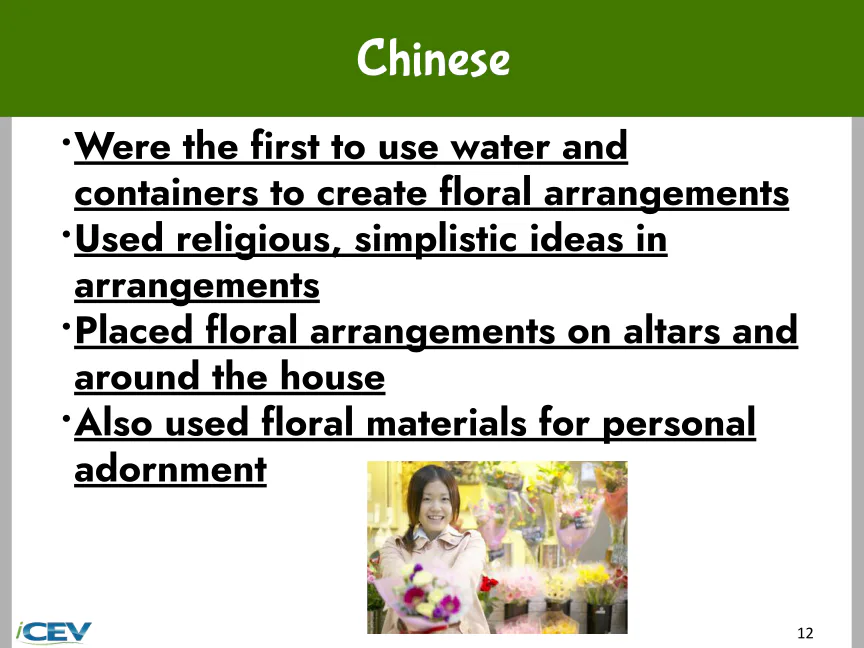
22
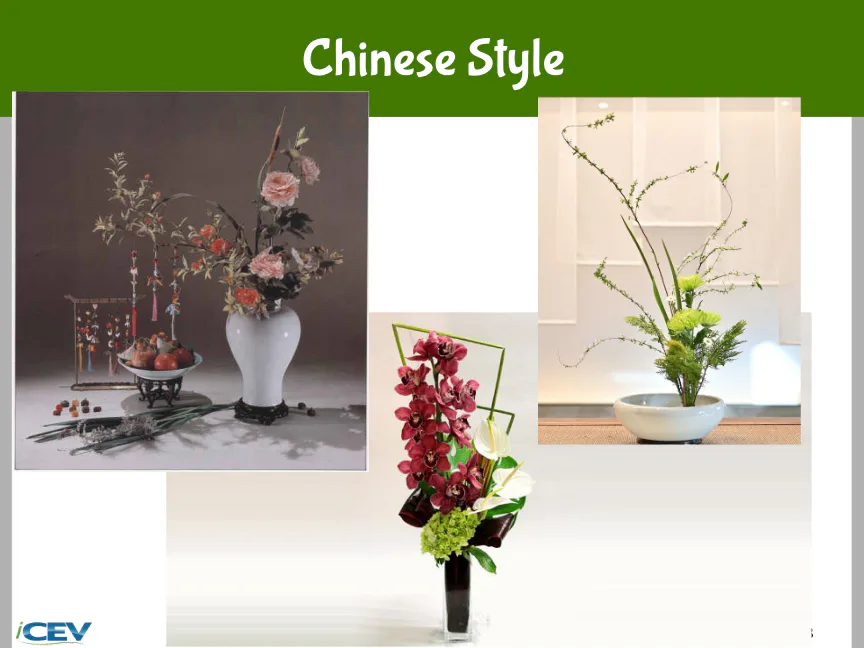
23
Multiple Select
Which of the following are characteristics of Chinese floral arrangements?
Use of water and containers
Religious and simplistic ideas
Use of floral materials for personal adornment
Application of six canons by Hsieh Ho
24
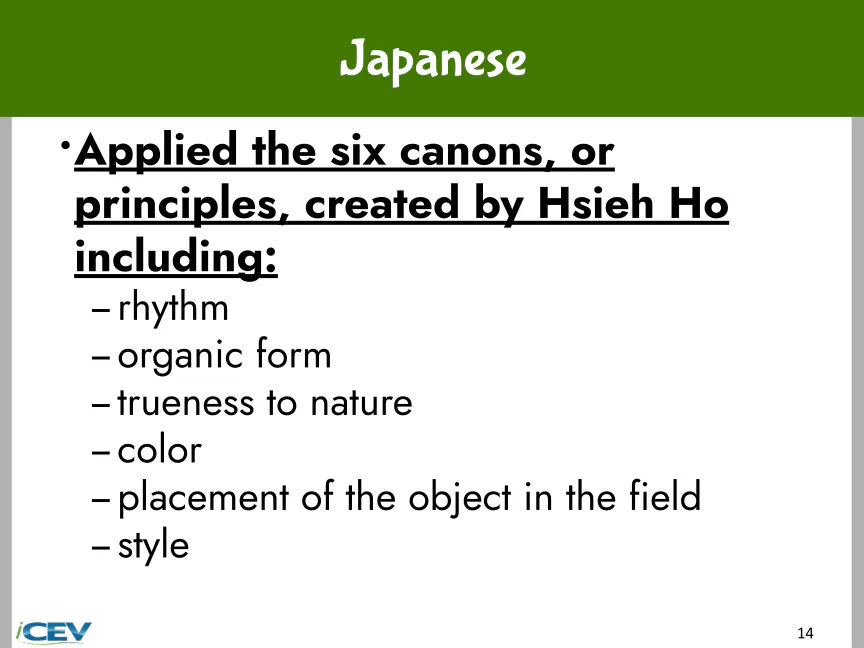
25
Multiple Choice
Which principle is NOT one of the six canons created by Hsieh Ho for Japanese floral design?
Balance
Rhythm
Organic form
Trueness to nature
26
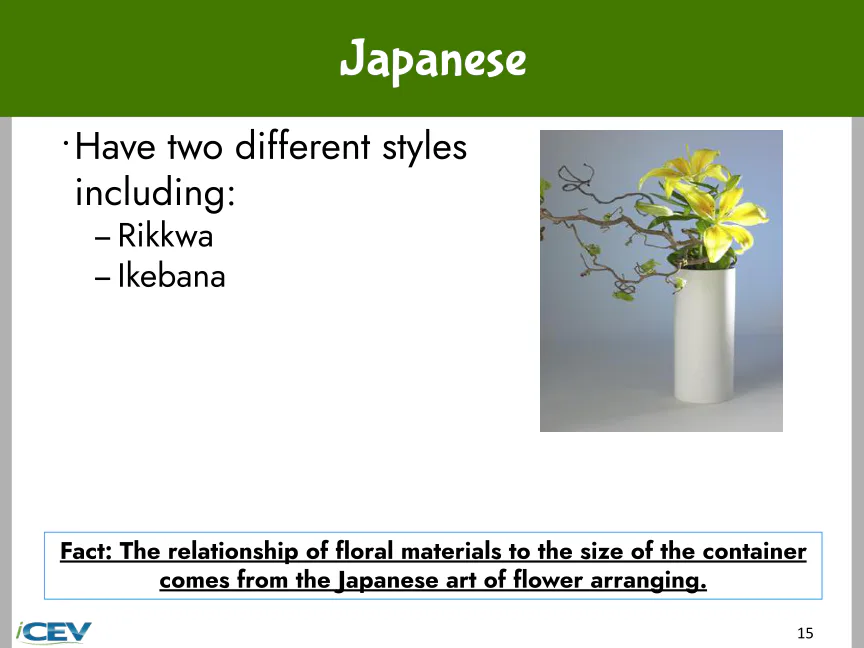
27
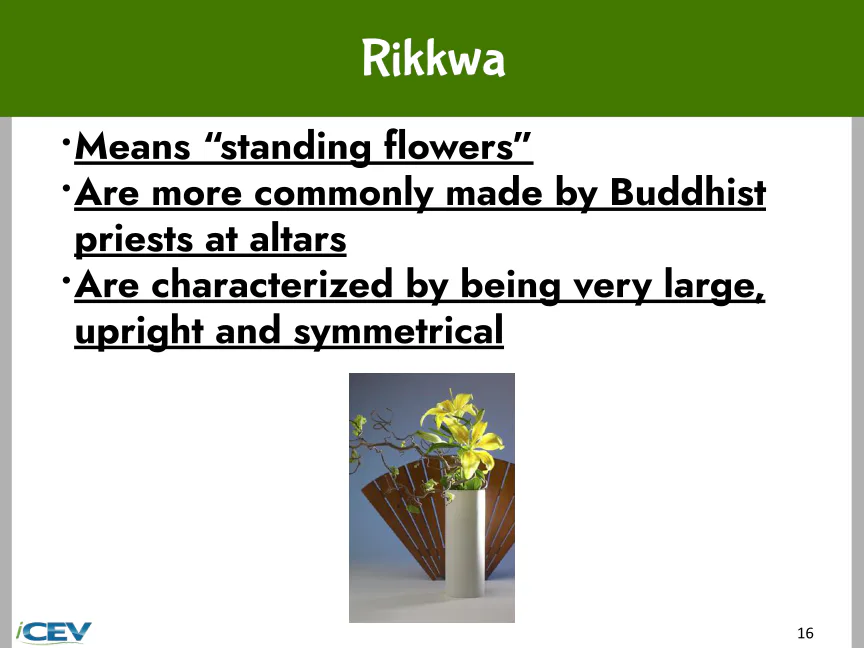
28
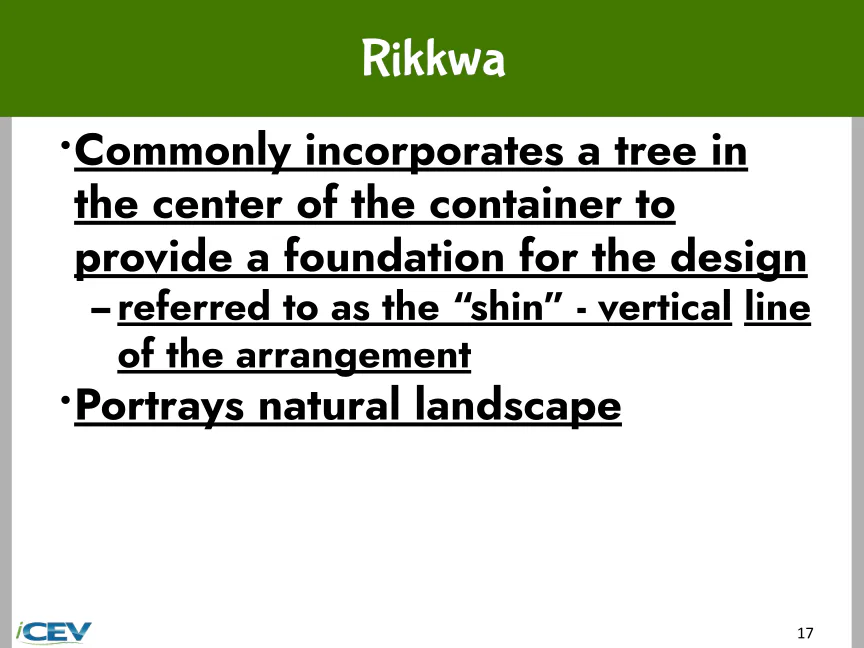
29
Fill in the Blanks
The vertical line in the center of a Rikkwa arrangement is referred to as the
Type answer...
30
Multiple Select
Which of the following are characteristics of the Rikkwa style of flower arranging?
Very large, upright, and symmetrical
Commonly made by Buddhist priests at altars
Emphasizes color over lines
Portrays natural landscape
31
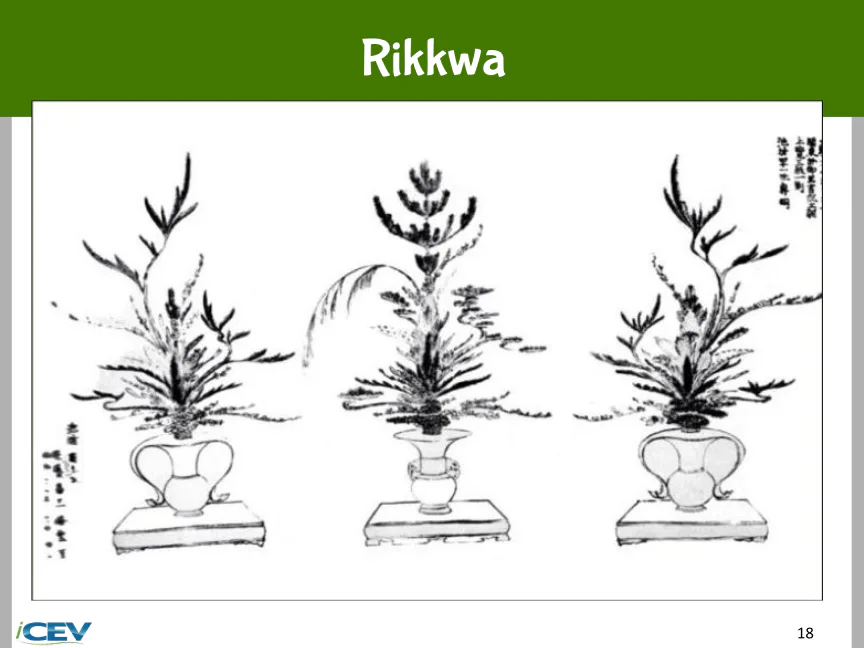
32
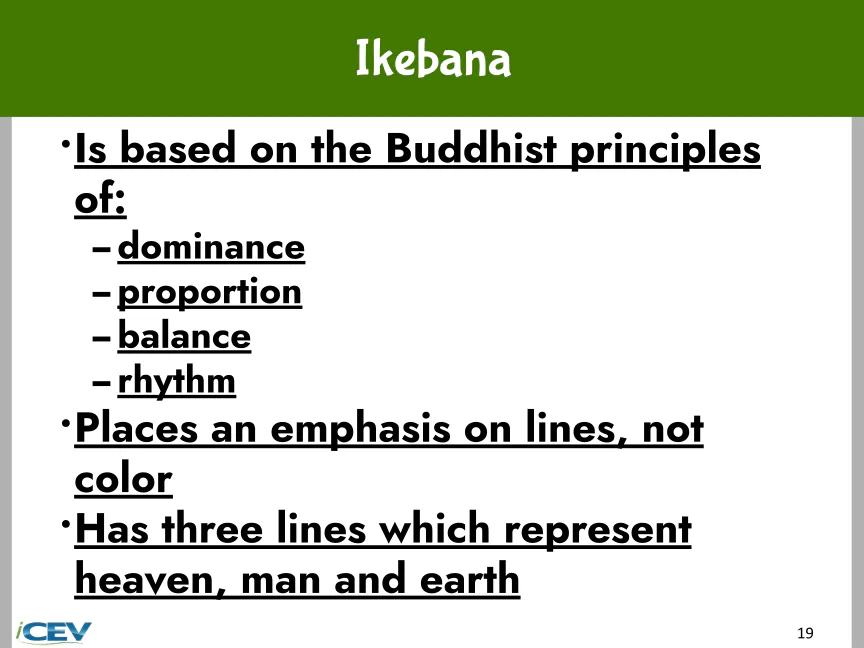
33
Multiple Choice
In Ikebana, what do the three lines represent?
Heaven, man, and earth
Past, present, and future
Sun, moon, and stars
Love, peace, and harmony
34
Open Ended
Explain how the principles of dominance, proportion, balance, and rhythm are applied in Ikebana flower arranging.
35
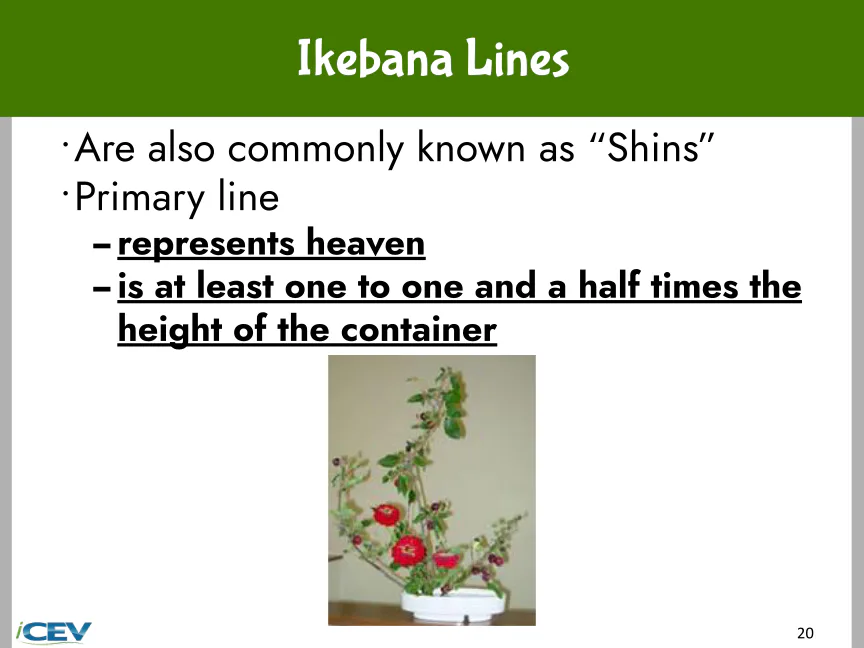
36
Fill in the Blanks
In Ikebana, the primary line, also known as the 'shin,' represents
Type answer...
37
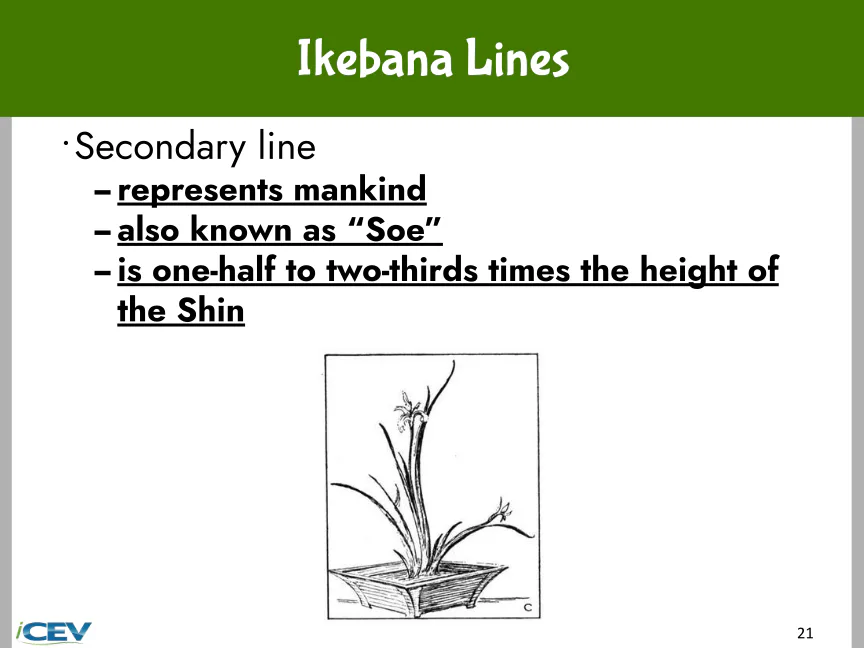
38
Multiple Choice
Which Ikebana line is also known as "Soe" and represents mankind?
Primary line
Secondary line
Tertiary line
Filler line
39
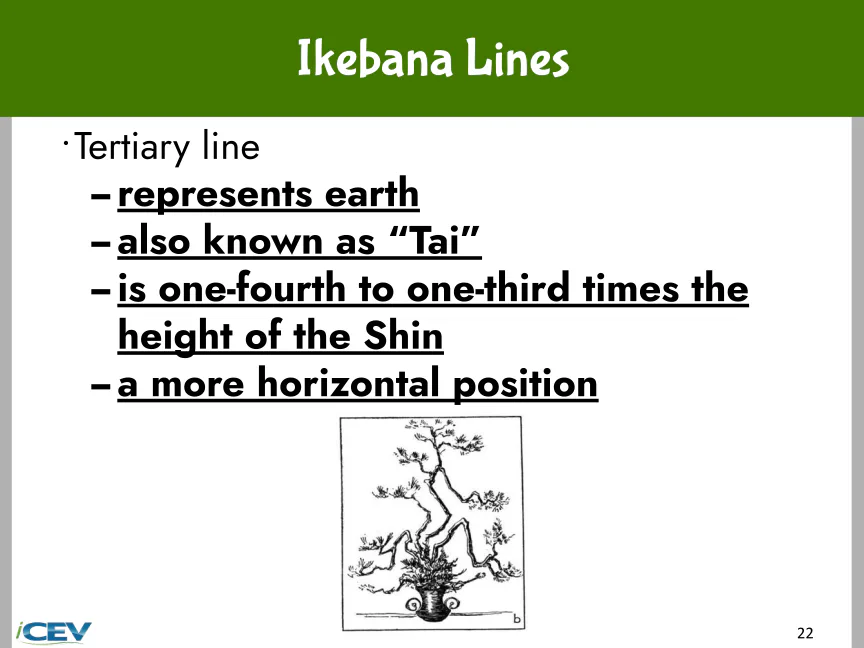
40
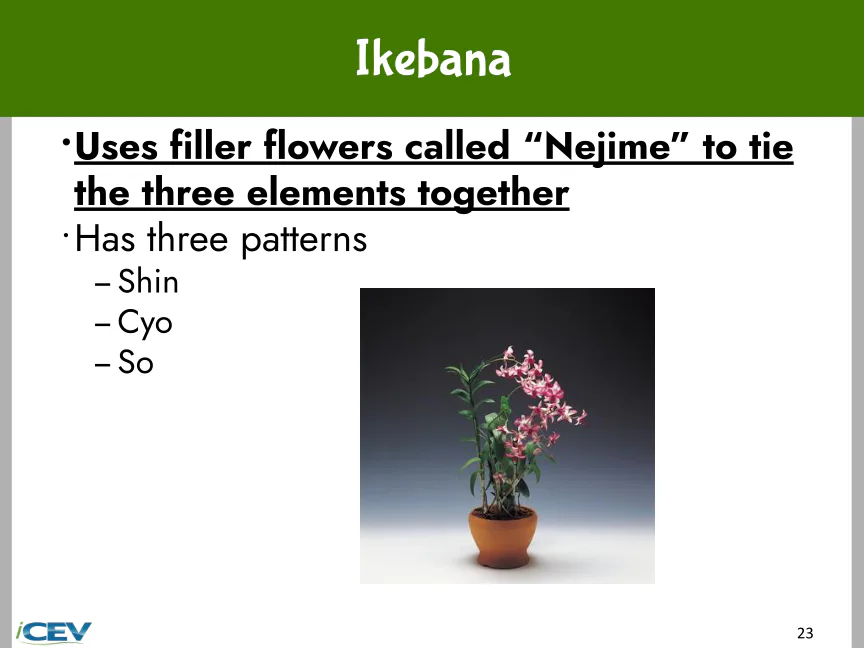
41
Multiple Choice
Which of the following is NOT one of the three patterns in Ikebana?
Shin
Cyo
So
Tai
42
Multiple Choice
In Ikebana, what is the purpose of using filler flowers called "Nejime"?
To add color to the arrangement
To provide fragrance
To tie the three elements together
To increase the height of the arrangement
43
44
Fill in the Blanks
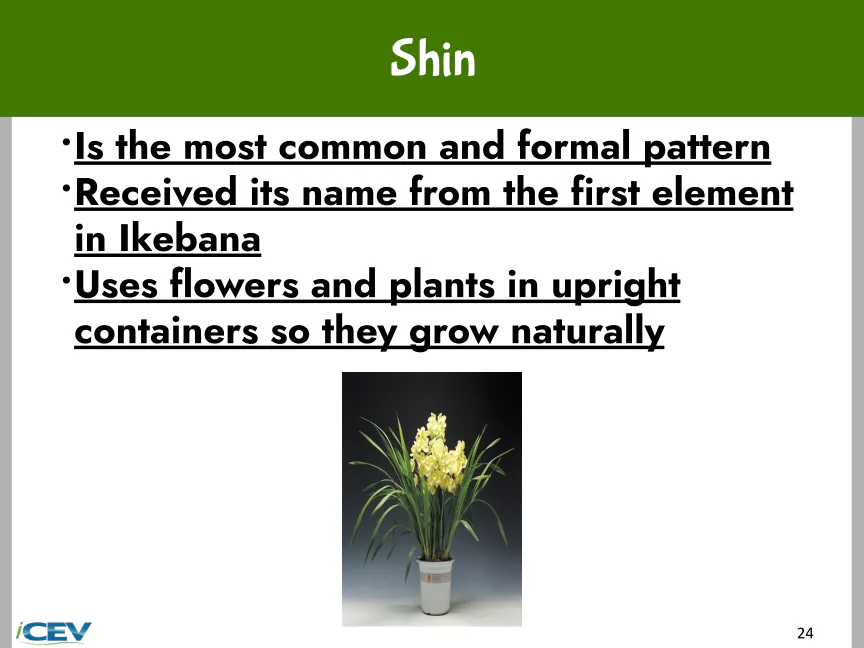
Fill in the blank: The Shin pattern in Ikebana uses flowers and plants in
Type answer...
45
46
47
Multiple Select
Select all the characteristics that describe the So pattern in Ikebana.
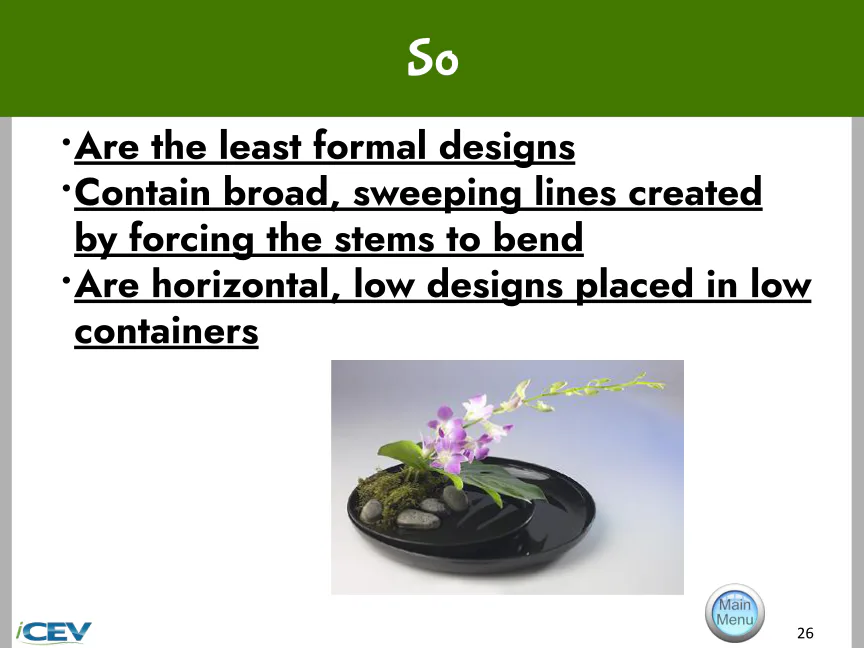
Are the least formal designs
Contain broad, sweeping lines created by forcing the stems to bend
Are horizontal, low designs placed in low containers
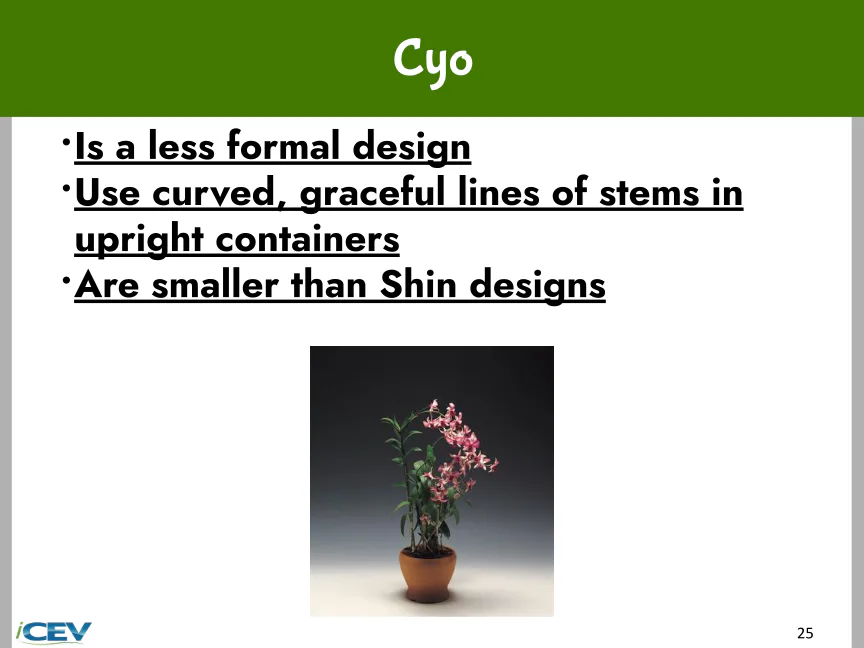
Use curved, graceful lines of stems in upright containers
48
49
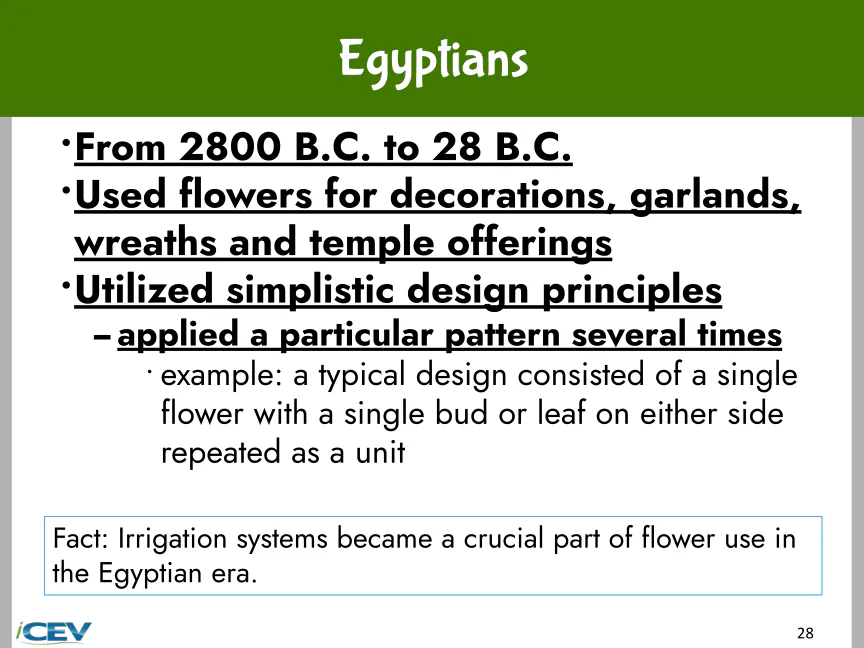
50
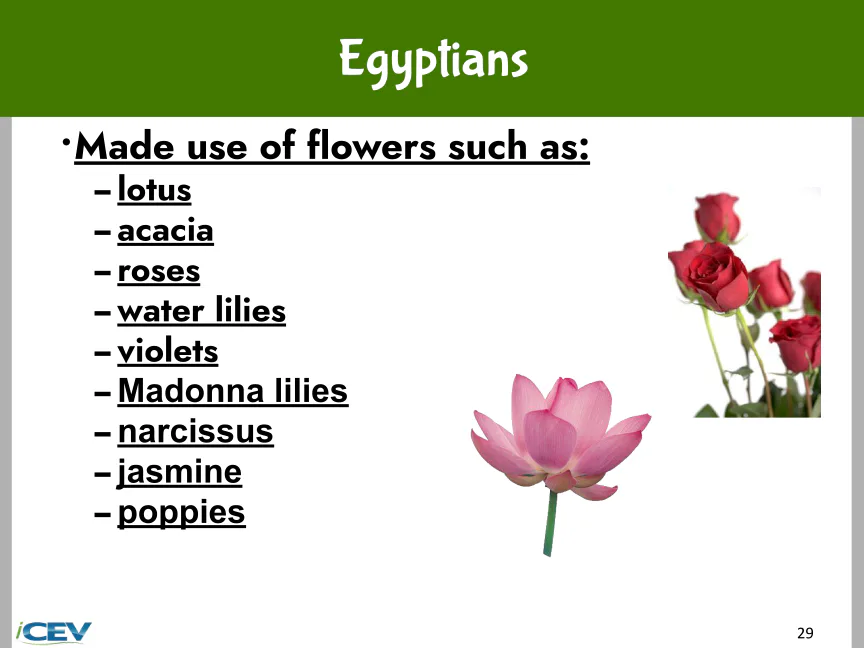
51
Open Ended
Name 1 type of flower that was commonly used in the Egyptian Era:
52
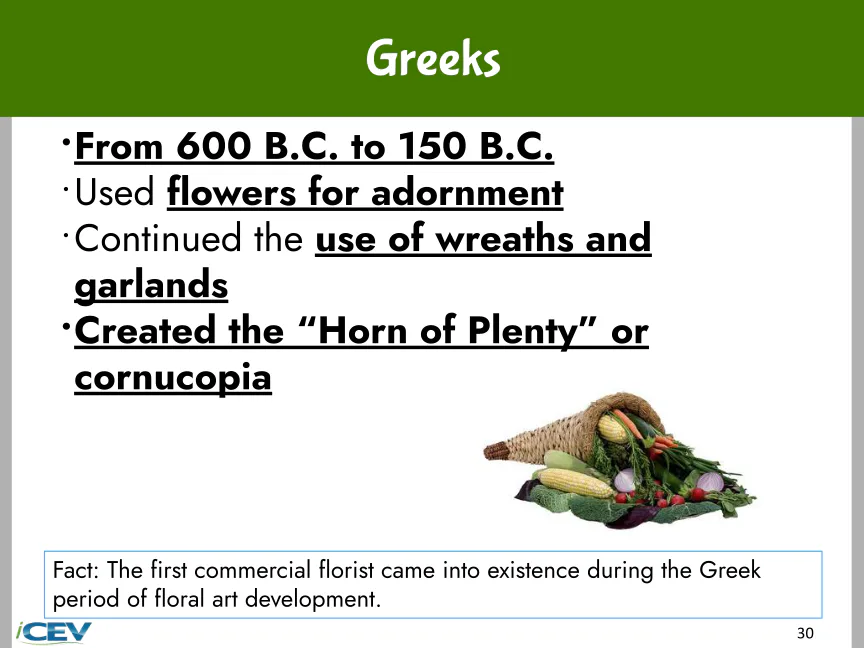
53
Fill in the Blanks
The Greeks created the "horn of plenty" or the
54
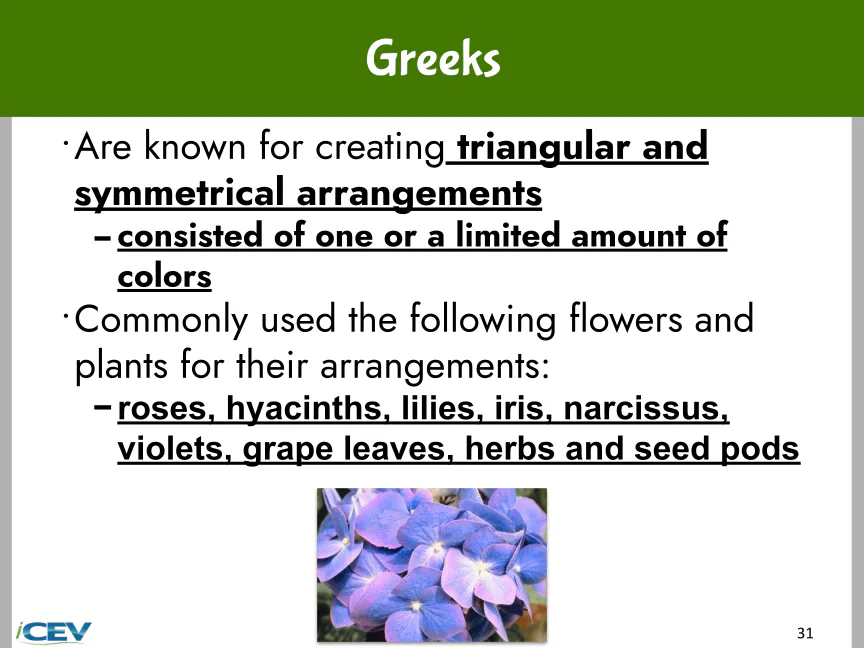
55
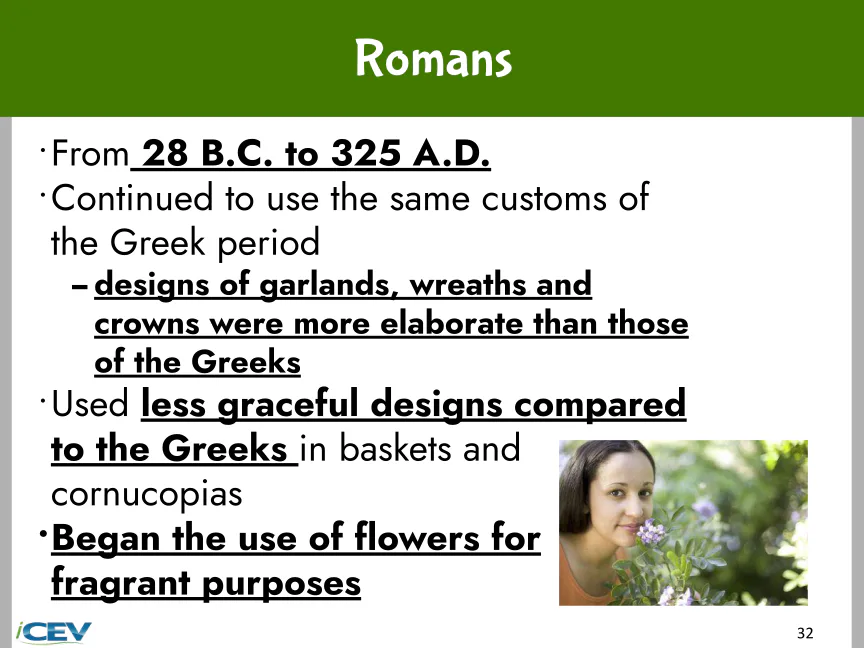
56
57
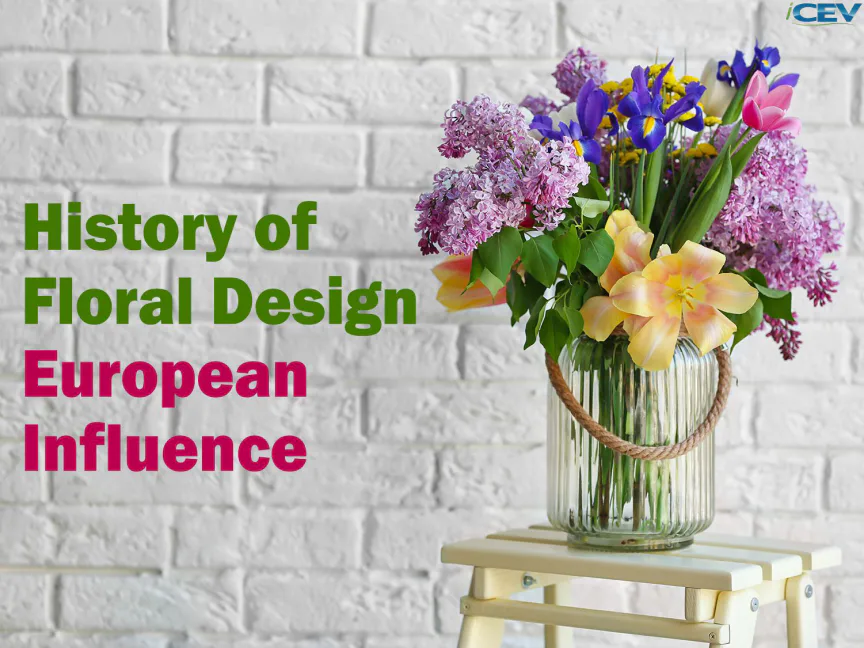
58
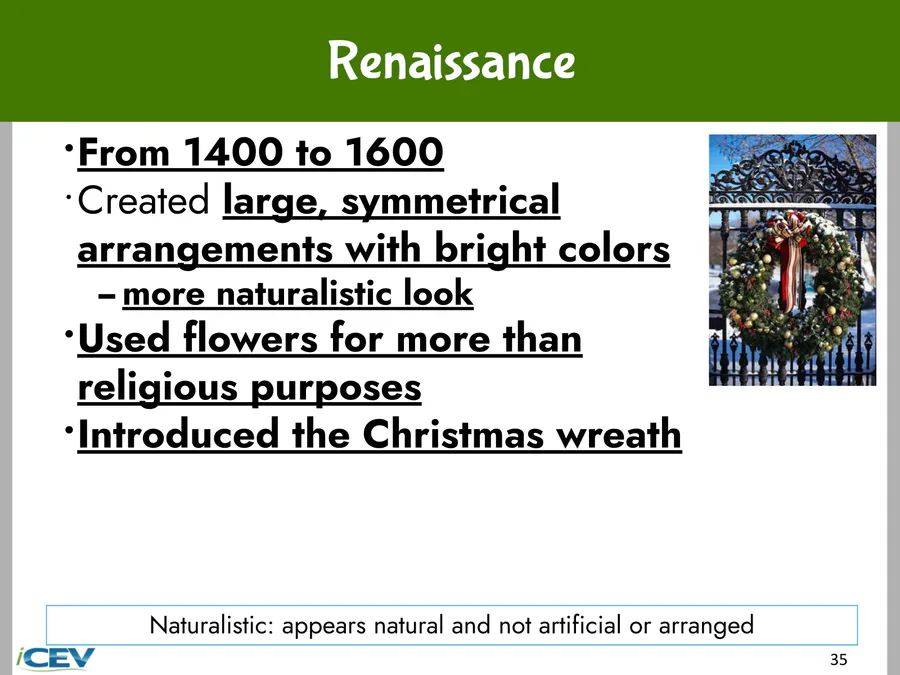
59
Fill in the Blanks
Created large, symmetrical arrangements with bright
60
61
62
63
64
Open Ended
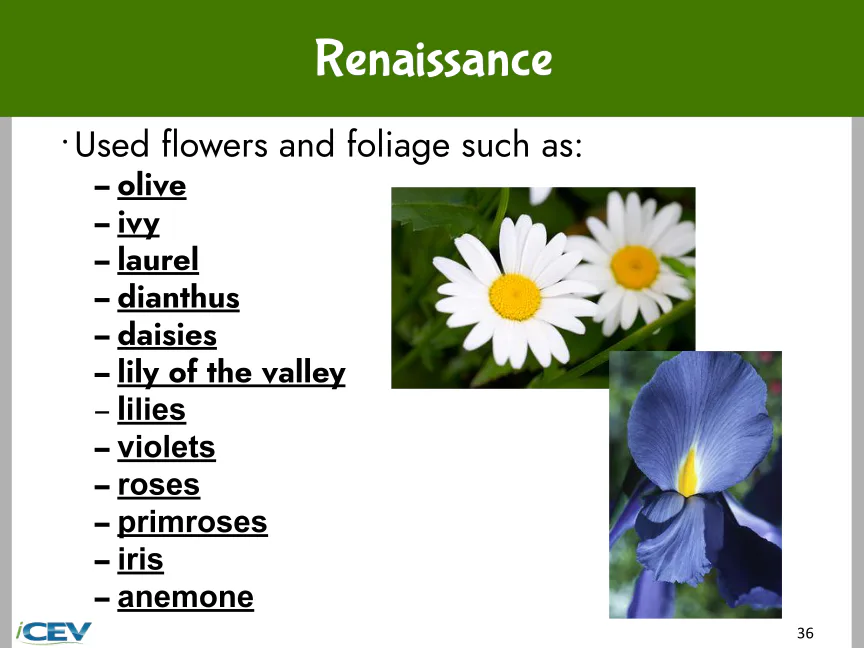
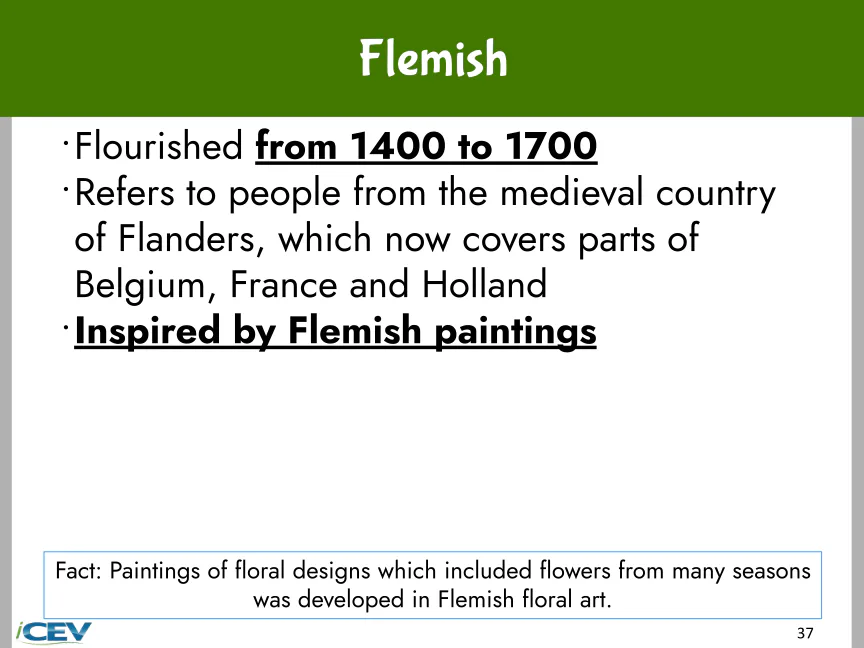
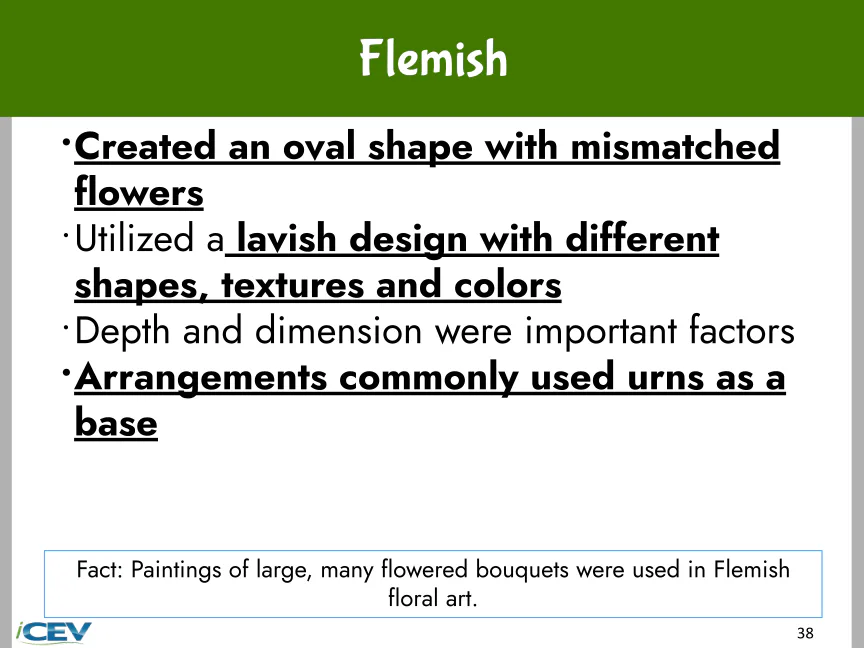
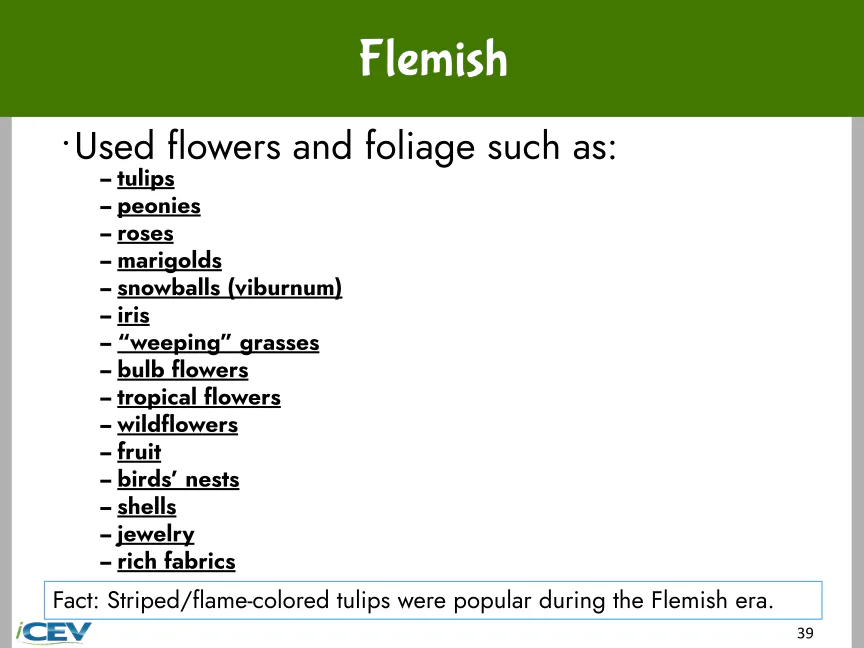
What is one flower or foliage used in the Flemish era?
65
66
67
Fill in the Blanks
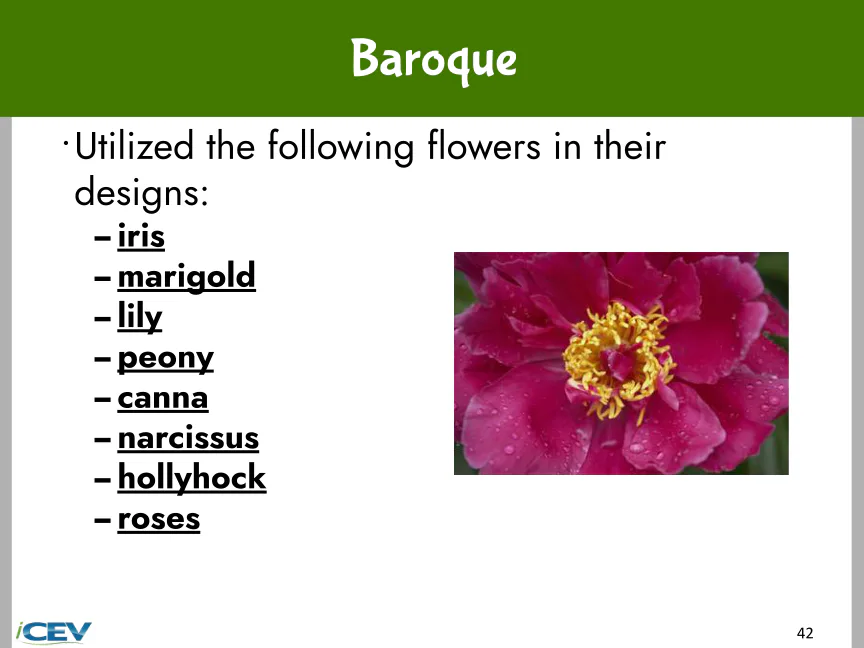
The Baroque era marked the beginning of the
68
69
70
71
72
73
74
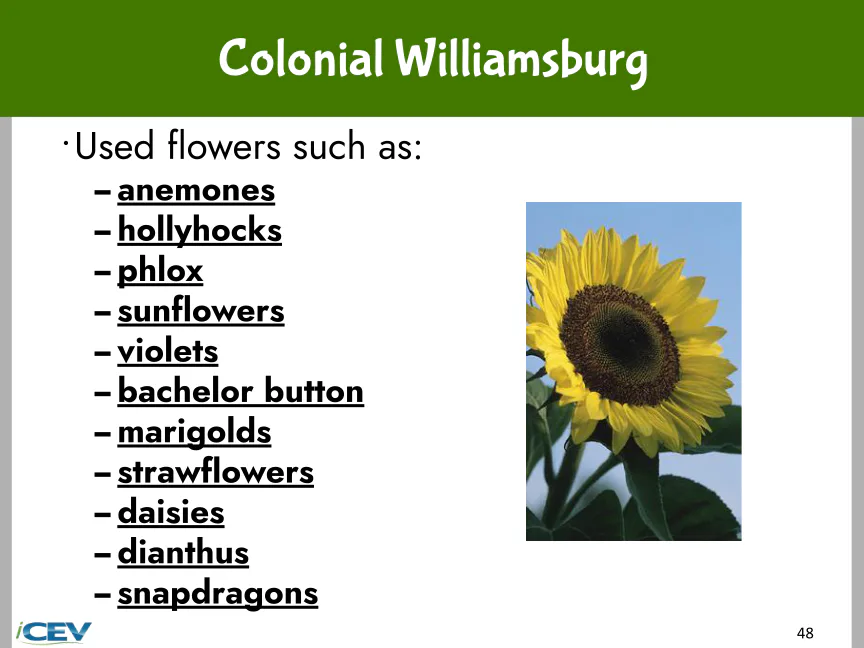
75
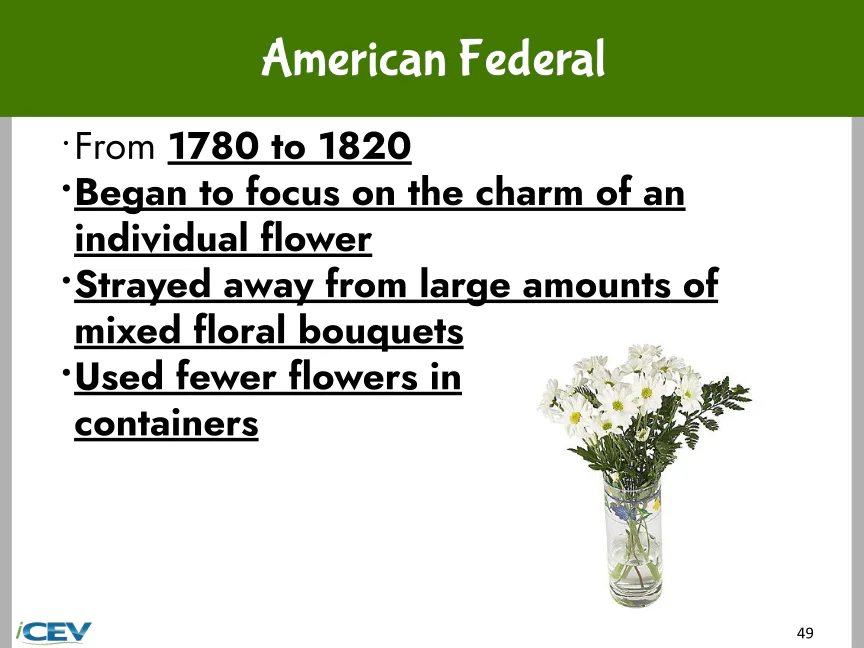
76
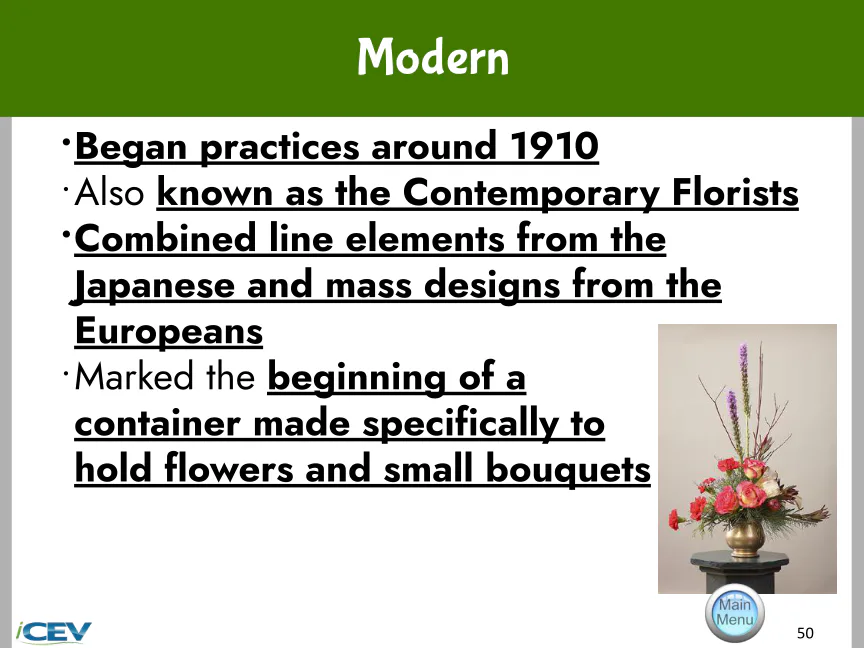
77
Categorize
Egyptian
Greek
Roman
Byzantine
Renaissance
Flemish
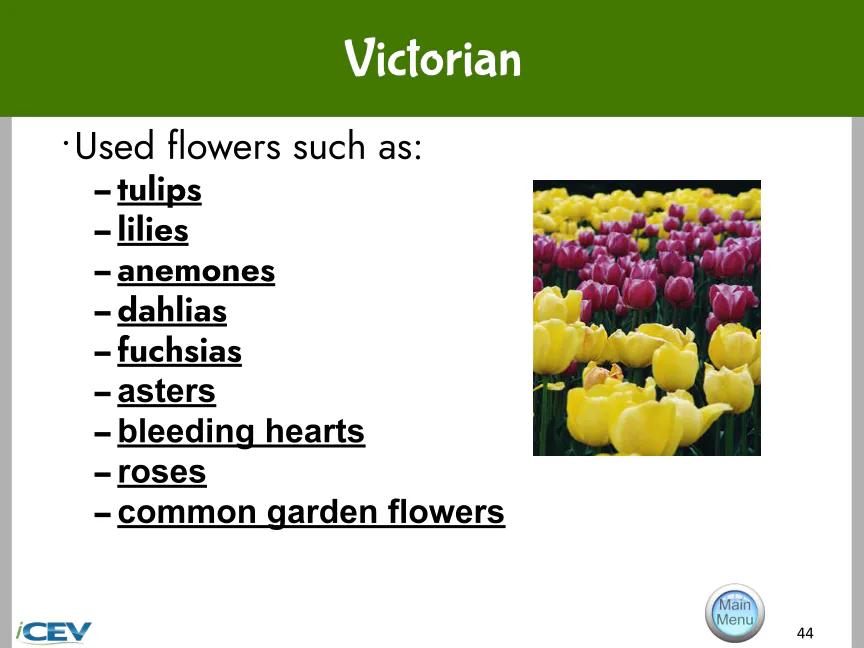
Victorian
Boroque
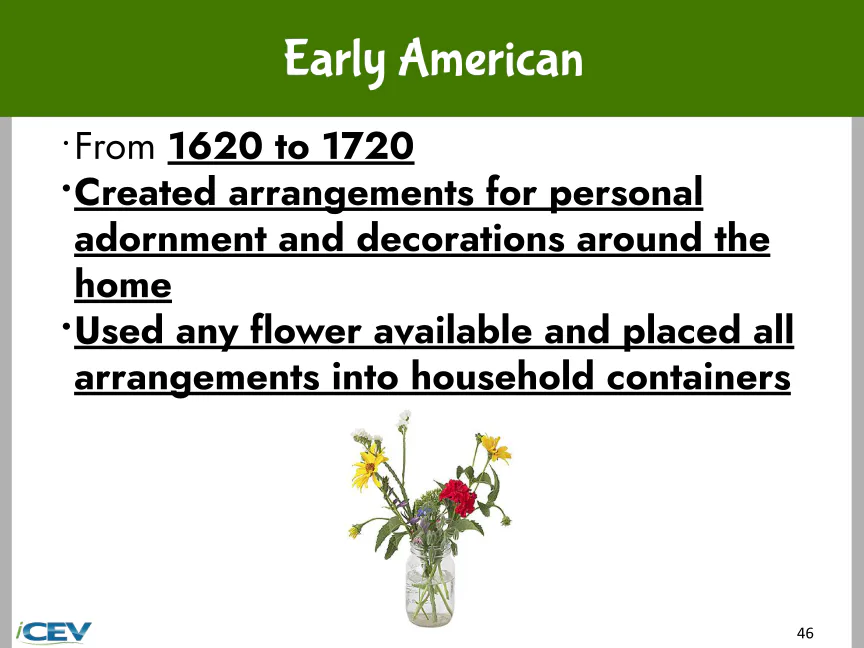
Early American
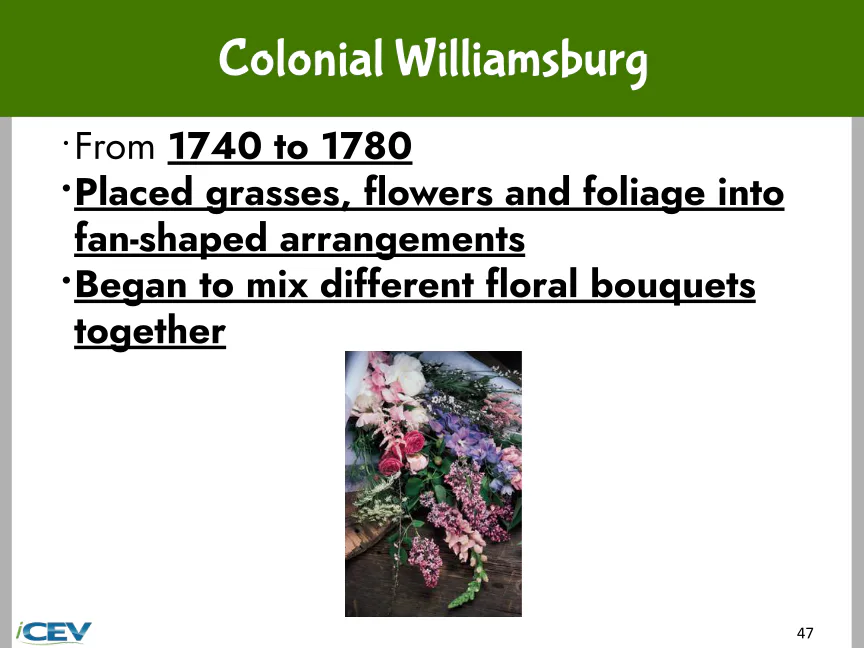
Colonial Williamsburg
American Federal
Moder
Sort each historical era into its influence category
78
79

80
81

82

83
Open Ended
How do you think understanding the history and origins of floral design can influence modern floral arrangements?
84
Multiple Choice
Which of the following is NOT one of the objectives of studying the history of floral design?
To identify the origins of floral design
To analyze the history of floral design
To discover the developments of floral design
To learn how to grow flowers
Show answer
Auto Play
Slide 1 / 84
SLIDE
Similar Resources on Wayground

80 questions
Classification & Phys/Chem Prop/Changes REVIEW LESSON
Presentation
•
9th - 12th Grade
78 questions
LEVEL 1f Resume and Cover Letter
Presentation
•
9th - 12th Grade
78 questions
Holt Ch 13 PPt
Presentation
•
9th - 12th Grade
77 questions
Midterm study guide
Presentation
•
9th - 12th Grade
77 questions
Applied Algebra Review Semester #1
Presentation
•
8th - 12th Grade
80 questions
Plants revision and anatomy
Presentation
•
9th Grade - University
81 questions
iCEV Animal ID PPT
Presentation
•
9th - 12th Grade
82 questions
Climate and Climate Change Lesson
Presentation
•
9th - 12th Grade
Popular Resources on Wayground
21 questions
Continents and Oceans

Quiz
•
6th Grade
20 questions
Parts of Speech
Quiz
•
5th Grade
16 questions
Subject & Predicate
Quiz
•
5th Grade
25 questions
Multiplication Facts
Quiz
•
5th Grade
12 questions
Map Skills
Quiz
•
3rd Grade
22 questions
Continents and Oceans
Quiz
•
5th Grade
15 questions
Rounding Decimals
Quiz
•
5th Grade
20 questions
Brand Labels
Quiz
•
5th - 12th Grade
Discover more resources for Other
20 questions
Brand Labels
Quiz
•
5th - 12th Grade
20 questions
REGULAR Present tense verbs
Quiz
•
8th - 9th Grade
20 questions
Graphing Inequalities on a Number Line
Quiz
•
6th - 9th Grade
10 questions
Exploring the 4 Major Macromolecules and Their Functions

Interactive video
•
9th - 12th Grade
20 questions
Cell organelles and functions
Quiz
•
10th Grade
20 questions
Exponent Rules
Quiz
•
8th - 9th Grade
12 questions
Absolute Value Equations
Quiz
•
9th Grade
20 questions
Position vs. Time Graphs
Quiz
•
9th Grade