

Biomes

Presentation
•
Science
•
6th - 8th Grade
•
Medium
+2
Standards-aligned

Barbara White
Used 33+ times
FREE Resource
11 Slides • 11 Questions
1

Middle School

2
Define a biome and explain how it differs from an ecosystem.
Distinguish between biotic and abiotic factors and give examples of each.
Describe the climate and organisms found in the world's major biomes.
Explain how plants and animals are adapted to survive in their biome.


3
Key Vocabulary
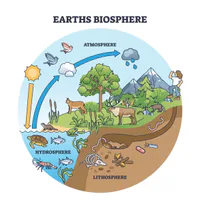
Biome
A large community of plants and animals that occupy a distinct region with a similar climate.
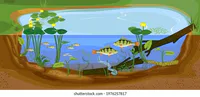
Ecosystem
A network of living organisms and non-living components interacting in a specific environment.
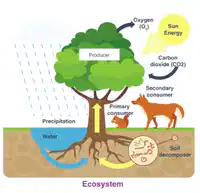
Abiotic Factor
A non-living chemical or physical part of the ecosystem that affects organisms and ecosystem functioning.
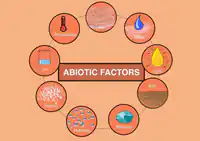
Biotic Factor
Any living component that affects another organism or shapes the ecosystem, including animals, plants, and bacteria.
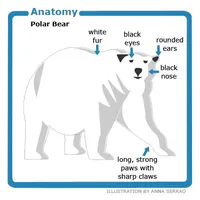
Adaptation
A trait that helps an organism survive and reproduce in its specific environment over time.
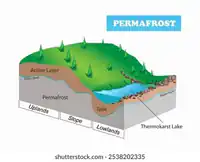
Permafrost
A thick subsurface layer of soil that remains frozen throughout the year, occurring chiefly in polar regions.
4
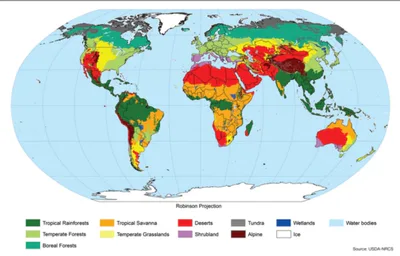
What is a Biome?
A biome is a large community of life adapted to a specific climate.
An ecosystem is how living and non-living things interact in an environment.
A single biome can contain many different ecosystems within it.
Biomes are classified as either terrestrial (land-based) or aquatic (water-based).
5
Multiple Choice
What is the primary difference between a biome and an ecosystem?
A biome is a large area with a specific climate and organisms, while an ecosystem is the interaction within it.
An ecosystem is the largest classification, containing multiple biomes.
A biome only includes the living things, while an ecosystem includes living and non-living things.
There is no difference; the terms are interchangeable.
6
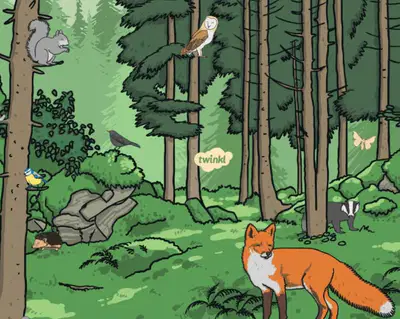
Biotic Factors
Biotic factors are all the living or once-living parts of an ecosystem.
This includes organisms like animals, plants, fungi, bacteria, and even protists.
These living things constantly interact with each other and their surrounding environment.
Abiotic Factors
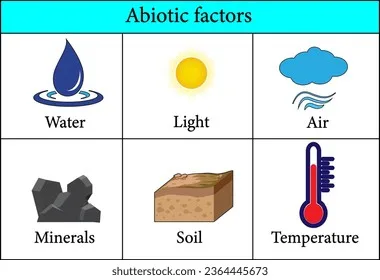
Abiotic factors are the non-living chemical and physical parts of an ecosystem.
Important examples include sunlight, water, air, and the surrounding temperature.
Other examples are soil composition, salinity, and the pH level of water.
7
Multiple Choice
Which of the following is considered an abiotic factor in an ecosystem?
Temperature
Plants
Animals
Bacteria
8
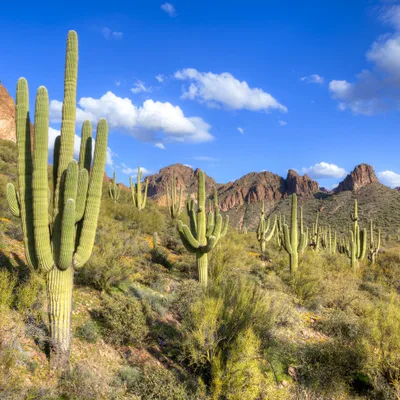
Desert
Receives extremely low rainfall, getting less than 10 inches annually.
Temperatures are very extreme, being hot during the day and cold at night.
Plants have waxy coatings, and many animals are nocturnal to conserve water.
Taiga
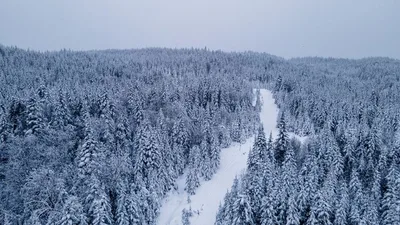
Features long, cold winters and short, wet summers in northern regions.
Dominated by coniferous trees like pines and firs, which have needles and cones.
The trees in this biome are evergreen, staying green all through the year.
9
Multiple Choice
Why is the Taiga biome also known as the Coniferous Forest?
It has many pine trees that have pine cones.
It is the coldest biome on Earth.
The trees lose their leaves every autumn.
It receives a very high amount of rainfall.
10
Tundra
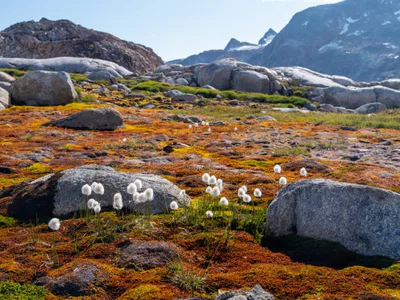
This biome is known for being extremely cold and dry, with long winters.
It features a layer of permanently frozen soil known as permafrost.
Vegetation is low to the ground and includes mosses and arctic willow.
Rainforest
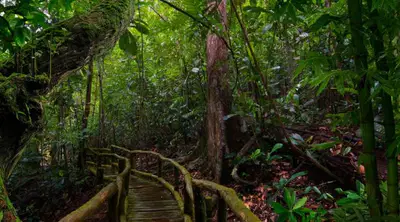
Located near the equator, this biome has stable, warm temperatures all year.
It is the most biodiverse biome, containing a huge variety of species.
The rainforest receives a large amount of rainfall, from 79 to 394 inches annually.
11
Multiple Choice
What is the most defining characteristic of the Tundra biome?
A layer of permanently frozen soil called permafrost.
The highest biodiversity of any biome.
Trees that lose their leaves in the fall.
Extremely hot and dry conditions year-round.
12
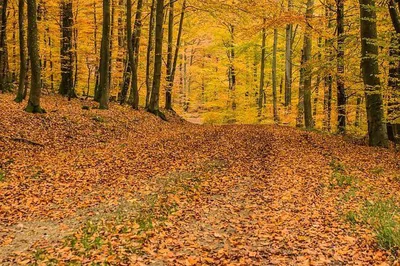
Deciduous Forest
This biome is known for having four distinct seasons throughout the year.
Its deciduous trees, like oak and maple, shed their leaves in autumn.
Annual rainfall is moderate, ranging from 30 to 59 inches total.
Grassland
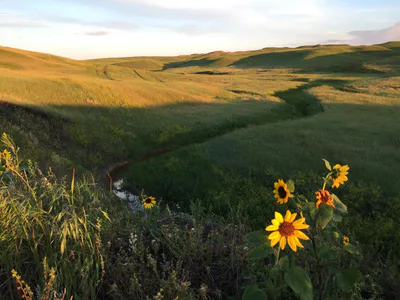
This biome is a large, open area dominated by grasses, not trees.
These regions are often called prairies, pampas, or savannas around the world.
It experiences a moderate amount of rainfall throughout the entire year.
13
Multiple Choice
What is the main type of vegetation that dominates the Grassland biome?
Grasses
Coniferous Trees
Deciduous Trees
Cacti
14
Aquatic Biomes
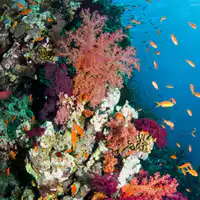
Marine
This is the largest biome, covering nearly 75% of the Earth.
It consists of saltwater ecosystems like the vast oceans and seas.
The average temperature of the Earth's oceans is about 39°F.
Freshwater
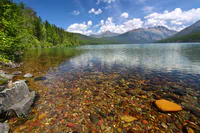
This biome includes bodies of water with very low salt concentration.
The salt content in these waters is typically less than 1%.
It is found in rivers, streams, ponds, and many lakes.
Estuary
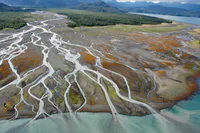
This is a transitional zone where freshwater and saltwater environments meet.
The mix of water creates a brackish habitat with high biodiversity.
Rivers and streams meet the ocean in these unique coastal areas.
15
Multiple Choice
In which aquatic biome does freshwater from a river mix with saltwater from the ocean?
Estuary
Marine
Freshwater
Tundra
16
Misconception | Correction |
|---|---|
A desert is always hot. | Deserts can get very cold at night, and some are cold deserts. |
Any area with trees is a forest biome. | Grasslands have dominant grasses, even if some trees are present. |
All forests are the same. | Forests vary by location, like taigas, rainforests, and deciduous forests. |
17
Multiple Choice
How does the climate of a taiga primarily differ from that of a temperate deciduous forest?
The taiga has long, cold winters and coniferous trees, while the deciduous forest has four distinct seasons and trees that shed leaves.
The taiga receives significantly more rainfall than the deciduous forest.
The deciduous forest is the most biodiverse biome, while the taiga has very few species.
The taiga is dominated by grasses, while the deciduous forest is dominated by trees.
18
Multiple Choice
Why would an animal in the desert biome be most active at night?
To conserve water and avoid the extreme heat of the day.
Because there is more food available at night.
To hide from predators that only hunt during the day.
Because the air pressure is lower at night.
19
Multiple Choice
A newly discovered plant has a thick, waxy coating, a shallow root system, and thrives in an environment with less than 10 inches of rain per year. In which biome would this plant most likely be found?
Desert
Rainforest
Tundra
Deciduous Forest
20
Multiple Choice
If a grassland area begins to experience significantly longer and colder winters with more snowfall, and coniferous trees start to become the dominant plant life, what biome is it likely transitioning into?
Taiga
Tundra
Deciduous Forest
Desert
21
A biome is a large region defined by its climate, plants, and animals.
Ecosystems are shaped by living (biotic) and non-living (abiotic) factors.
Terrestrial biomes include deserts, forests, and grasslands; aquatic biomes are water-based.
Organisms have special adaptations to survive in the unique conditions of their biome.
22
Poll
On a scale of 1-4, how confident are you about the concepts covered in today's review?
1
2
3
4
Middle School
Show answer
Auto Play
Slide 1 / 22
SLIDE
Similar Resources on Wayground

19 questions
Motion Graphs
Presentation
•
6th - 8th Grade
16 questions
Body Organization
Presentation
•
6th - 8th Grade
18 questions
Plants
Presentation
•
6th - 8th Grade
16 questions
Greenhouse Effect
Presentation
•
6th - 8th Grade
19 questions
Potential Energy
Presentation
•
6th - 8th Grade
19 questions
Periodic Table
Presentation
•
6th - 8th Grade
19 questions
Energy Transfer and Transformation
Presentation
•
6th - 8th Grade
19 questions
Photosynthesis and Cellular Respiration
Presentation
•
6th - 8th Grade
Popular Resources on Wayground
10 questions
How much do you know about our Portrait of an Eagle?

Quiz
•
10th Grade
10 questions
Fast Food Slogans
Quiz
•
6th - 8th Grade
21 questions
Continents and Oceans
Quiz
•
6th Grade
20 questions
Parts of Speech
Quiz
•
5th Grade
16 questions
Subject & Predicate
Quiz
•
5th Grade
25 questions
Multiplication Facts
Quiz
•
5th Grade
12 questions
Map Skills
Quiz
•
3rd Grade
22 questions
Continents and Oceans
Quiz
•
5th Grade
Discover more resources for Science
17 questions
7.6D Aqueous Solutions
Quiz
•
7th Grade
20 questions
Scientific Method and Variables
Quiz
•
8th Grade
20 questions
Scientific method and variables
Quiz
•
8th Grade
27 questions
Counting Atoms - Subscripts
Quiz
•
8th Grade
10 questions
6.6D - Relative Density Review
Quiz
•
6th Grade
20 questions
Claim, Evidence and Reasoning (CER)
Quiz
•
6th - 8th Grade
18 questions
Counting Atoms
Quiz
•
7th - 8th Grade
20 questions
Density
Quiz
•
6th Grade