

4765.52

Presentation
•
Other
•
Vocational training
•
Easy

Noah Rose
Used 4+ times
FREE Resource
32 Slides • 16 Questions
1
Ohio Revised Code 4765.52
By Noah Rose *Please note I am not an expert and this is not an official class*
Emergency Medical Attention for Cats and Dogs
2
Key points we will cover
What a veterinarian is
What defines a police K9
What to do if a police K9 is injured
Human vs animal care precedence
Hemorrhage control in animals
Fracture stabilization in animals
Which drugs we can administer
Animal airway maintenance
Animal oxygen delivery techniques
Mouth to snout vs BVM
Animal CPR
Legality possibilities
3
Who enjoys animals?
How many people have pets at home?
How many people have encountered animals on calls?
Animals in the fire service

4
Multiple Choice
If you provide emergency medical care to an animal that makes you a veterinarian
True
False
5

What defines a veterinarian?
6


A veterinarian can be defined as a person that is licensed and qualified to treat diseased or injured animals.
For further details and information, Ohio revised code 4741: Veterinarians, can be consulted for specifics at any time free of charge.
7
Open Ended
Where might we encounter animals in our day to day jobs as firefighter/medics/emt's?
8
Police K9's are officers too
Police dogs play a vital role in the working order of a police department and are exposed to major risks every shift. As a member of the police department, police K9's are considered an officer of that working department just like you and I and should be treated as such.
9

Drug detection
Bomb detection
Human detection
Non lethal means of subject control
Therapeutic and emotional support
Police K9 jobs get risky
10
Multiple Choice
Should you treat an injured animal or an injured patient first?
Injured Patient
Injured Animal
11
Multiple Choice
What if the animal is an injured police K9?
Injured Patient
Injured K9
12
Always treat the patient first!
A human life is always more important than an animal. If you are able to manage both then do so with caution but never leave your pt to care for an animal regardless if it is a K9 officer and their K9 partner.
If possible, keep an injured K9 and his handler close as it may comfort the animal or even the handler and result in a calmer interaction
13

Animal treatment is more similar to human treatment then you may realize.
Does anyone have any ideas what treatments we can offer working in the fire service?
How do we treat them?
14
Basic techniques covered will include:
CPR
Bleed
Control
Airway
Management
Splinting
Drug
Admin.
15

Please keep in mind we are not veterinarians!
Just do what you can, something is better than nothing.
16
Multiple Choice
What is the simplest form of bleeding control that can be performed for animals?
Pressure dressing
Combat guaze
Direct pressure
Tourniquet
17


Just like in a human trauma patients, direct pressure should be your first plan of attack to control any form of hemorrhage in an animal. Combine this method with some simple guaze or a kerlix wrap for better results.
Direct Pressure
If direct pressure does not stop the bleeding you can move on to a pressure dressing. Pressure dressings are more pliable and able to be stretched around wounds and tightened down, practically it combines gauze and direct pressure to a degree that you may not be able to obtain on your own with your hands.
Pressure Dressings
If neither direct pressure or a pressure dressing works, an other methoed that can be employed is a hemostatic agent such as quikclot or combat gauze. A hemostatic agent is typically packed in to a wound and causes clotting to occur in order to stop a bleed.
Hemostatic Agents
18
Tourniquets
Just like on humans, tourniquets should be seldom used unless bleeding cannot be controlled by any other methods. Tourniquets have a major drawback of only being able to be used on limbs but work incredibly well. A few things to remember when using a tourniquet that could save you time and potentially a life of a human or animal:
- High and tight will do you right
- If it's bright and spurting get to turning
19
Multiple Select
Where can you apply a tourniquet on an animal? Select all that apply:
Front Legs
Hind Legs
Snout
Tail
20
Don't forget the tail!

The tail on an animal is just as vital as an arm and a leg.
21
Splinting
Splinting is a crucial treatment option for stabilizing fractured/broken bones. Always keep pulse, motor and sensory function in mind however when it comes to animals that is not particularly possible, ensure a pulse is intact if you can, as a dog or cat can't really move an extremity on command or tell you if they can feel something.
22


One of two typical ways to secure a fractured bone is a moldable aluminum splint or SAM splint. Used the same way for both animals and humans, bend it to an appropriate shape, attempt to straighten out the broken extremity if need be then secure the fracture in the shaped splint and wrap it with coband or kerlix. One downside is this is only appropriate for arms, legs or tails when is comes to animals.
SAM Splint
Vacuum splints are another common place item when it comes to splinting fractured bones. The upside to these over the SAM splint is they come in multiple sizes and can be used ranging from extremity splints to full body rigid mattress immobilizers. Straighten your fracture if need be then place it in the splint and secured the attached buckles then begin to suck the air out and harden the splint.
Vacuum Splint
23
Fill in the Blanks
Type answer...
24
Fill in the Blanks
Type answer...
25
Can animals be administered drugs by a fire department?
What kind of drugs can we give?
Drugs for dogs!

26
Realistic drug administration
We aren't starting IV's on an animal
We aren't trained to start IV's on animals or administer most drugs, so in a real sense the list of drugs we can potentially administer is small but mighty, they can be given by any level:
Oxygen
Narcan
Charcoal
27


Oxygen
The first and most common drug we can administer for animals is oxygen. This can be done in a variety of ways that are mirrored to humans. First and most effective would be a pet oxygen mask which is pictured above. This device goes around the snout of an animal and comes in a variety of sizes to fit the smallest cats to the largest dogs. Connect the mask with your standard O2 tanks and run the small mask at 1-3 LPM, the medium mask at 3-5 LPM and the large mask at 5-7 LPM.
28


Just like an infant or child who wont tolerate any form of oxygen, blow by is an easy but effective method. This can be achieved by simply holding a NRB or simple mask in front of the animals snout and allowing them to passively get oxygen delivered to them.
Blow By
A nasal cannula is also another effective method at delivering oxygen to a pet. Just like your human patients, animals have noses with 2 holes that a NC can be placed in for oxygen delivery. If using this method you can secure it behind their head and with a little tape either on the sides of the head or above the snout like shown in the picture.
Nasal Canula
29
Poll
When using a pet designated oxygen mask, how many liters per minute should the large size mask use?
3-5 LPM
5-7 LPM
7-9 LPM
30
Dogs can overdose too!
Narcan
Unfortunately, overdosing amongst dogs is a sad reality that occurs most commonly with our police K9's. As described in an earlier slide, K9's are subject to dangerous jobs which include sniffing for harmful substances, possibly leading to overdose or even acts of violence involving dirty needles. no matter the method, overdosing is a serious concern that we can help fix.
To correct an overdose in an animal, do exactly what you do for humans. Administer narcan IN via an atomizer in the animals nostrils and follow up with oxygen if need be.
31
Overdoses continued
Contact your local vets office or an emergency vet
ASPCA poison control (888) 426-4435
available 24/7, 365 days a year
Helpful Tips
Animals often get in to things they aren't supposed to so another great tool we can use is activated charcoal in an attempt to neutralize whatever they ingested. Just like in humans, mix with some water and allow the animal to lap up what they can.
Activated Charcoal
32
Open Ended
What reasons are there for why we can only give so few drugs to animals that is injured?
33
Open Ended
What drugs are we able to give to injured animals as FF/medics/emt's?
34
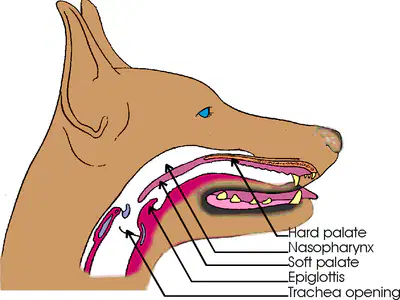
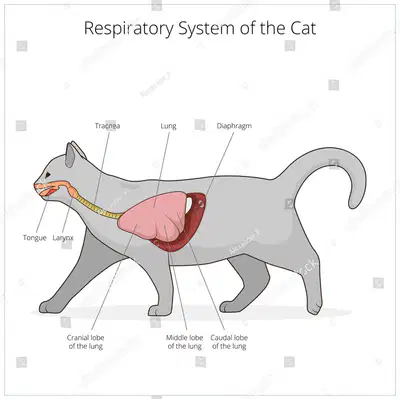
Just like in humans, airway management looks very similar and is crucial for almost any treatment process. When managing an airway, what normal thing in these pictures might pose an issue for airway management?
Airway Management
35
Head tilt, chin lift for animals
The natural position for animals is keeping their head at almost a 90 degree angle which can lead to difficulty breathing or using an airway device. To correct this, lay the animal on its side and slightly extend the neck up and toward the animals back, this will ensure an open and in line airway. At this point, if it is required, pull the tongue forward and/or off to the side to ensure it doesn't occlude the airway and cause snoring.
36
Airway management continued
Ensure to remove any collars or leashes if working with the airway of an animal, if you need to breath for an animal you can employ a BVM or use mouth to snout in an emergency situation.
37


A BVM is a good tool for humans bot not great for animals. You may have to use a pediatric mask to obtain a seal and even after that it still may not be a good one. This method is viable but not the most effective. The biggest benefit is you can attach oxygen. When ready, close the snout and secure the jowls then squeeze the bag. until you see slight chest rise in the animal. This method may require two people.
BVM
By far the most effective oxygen delivery method, mouth to snout can be employed with great success and a good seal. With this method, close the jowls and blow through the animals nose and watch for chest rise just like in a human. With this method a barrier device may be employed with whatever is on hand.
Mouth to snout
38
Key factors to remember
Remove any collars, leashes or restricted items
Lay the animal on its side, tilt the head up and pull the tongue forward
Hold the jowls like a hotdog or fully encompass them so air can't escape out the mouth
Blow through the nose and watch for chest rise
If using a BVM, use a pediatric size mask and do the best you can for an adequate seal
39
Poll
Which method is most effective for giving an animal rescue breaths
Mouth to snout
BVM
40
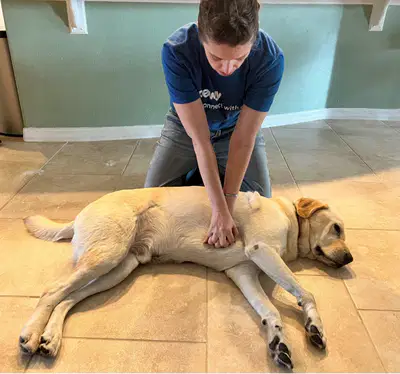
If an animal is found unconscious they may require CPR, but don't panic. It is still 30:2 and the airway methods described in previous slides should be used.
It's not rocket appliances people!
Animal CPR
41
REMEMBER!
Someone who knows more than me to show you CPR
It's just like a human:
- Place the animal on its RIGHT side
- 30 compressions to 2 breaths
- Compress at 100-120 BPM
- Compress about 1/3 but no more than 1/2 the depth of the chest
- Watch for chest rise and fall when delivering breaths
- Contact a veterinarian if possible
42
Fill in the Blanks
Type answer...
43
Most importantly!
An animal is always a wild animal
Animals are inherently dangerous and when injured they will be defensive whether you are helping them or not, they will be scared and not understand what is happening or why it is happening. TAKE CAUTION AND BE SAFE when approaching any animal, be mindful of their muzzle and body language.
44
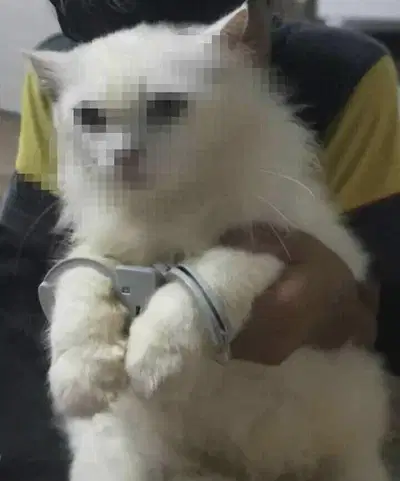
I'm sure there is a way, but generally no. Just like human care, as long as you are acting in good faith with appropriate care you are protected under law just like with a human patient. See Ohio revised code chapter 4729 for more details.
Can I be arrested for treating an animal?
45
Poll
Was this method of presentation enjoyable compared to a standard death by power point?
Yes
No
46
Open Ended
What did you like or not like? What would you change?
47
Poll
Would you like to see this style again with my 45 minute presentation?
Yes
No
48
Sources
Chapter 4741: Veterinarians. Chapter 4741 - Ohio Revised Code | Ohio Laws. (n.d.). https://codes.ohio.gov/ohio-revised-code/chapter-4741
Section 4765.52: Emergency medical attention to dog or cat. Section 4765.52 - Ohio Revised Code | Ohio Laws. (n.d.). https://codes.ohio.gov/ohio-revised-code/section-4765.52
Ohio Revised Code 4765.52
By Noah Rose *Please note I am not an expert and this is not an official class*
Emergency Medical Attention for Cats and Dogs
Show answer
Auto Play
Slide 1 / 48
SLIDE
Similar Resources on Wayground

40 questions
Kerala District - Kollam
Presentation
•
KG
40 questions
WELCOME TO DENMARK
Presentation
•
KG
44 questions
Copy of G2_K8_L6_22-23
Presentation
•
KG - Professional Dev...
46 questions
N1 - El ciervo, el manantial y el león + La cierva y la viña
Presentation
•
KG - Professional Dev...
42 questions
Belgium: Territorial and political organization
Presentation
•
Professional Development
44 questions
Uppercase & Lowercase: Aa - Jj
Presentation
•
KG
41 questions
Theme(Food) for Reception
Presentation
•
KG
43 questions
US 30616
Presentation
•
Professional Development
Popular Resources on Wayground
6 questions
Secondary Safety Quiz
Presentation
•
9th - 12th Grade
10 questions
MyPath Diagnostic Overview
Presentation
•
6th - 8th Grade
20 questions
Lab Safety Quiz

Quiz
•
6th Grade
21 questions
Continents and Oceans
Quiz
•
6th Grade
20 questions
Adding and Subtracting Decimals
Quiz
•
5th Grade
20 questions
Parts of Speech
Quiz
•
5th Grade
16 questions
Subject & Predicate
Quiz
•
5th Grade
21 questions
Lab Safety
Quiz
•
10th Grade