

SYMBIOTIC RELATIONSHIPS

Presentation
•
Science
•
6th Grade
•
Practice Problem
•
Hard

Annabelle Matat-en
FREE Resource
14 Slides • 12 Questions
1
Open Ended
Can you think of an example from nature where two different species interact in a way that benefits at least one of them? Describe the relationship and why it might be important.
2
Multiple Choice
Why are symbiotic relationships important in ecological systems?
They help maintain balance in ecosystems by enabling different species to interact and support each other.
They only benefit one species while harming the other.
They prevent any interaction between species.
They are rare and do not impact ecosystems significantly.
3
4
5
6
7
Multiple Choice
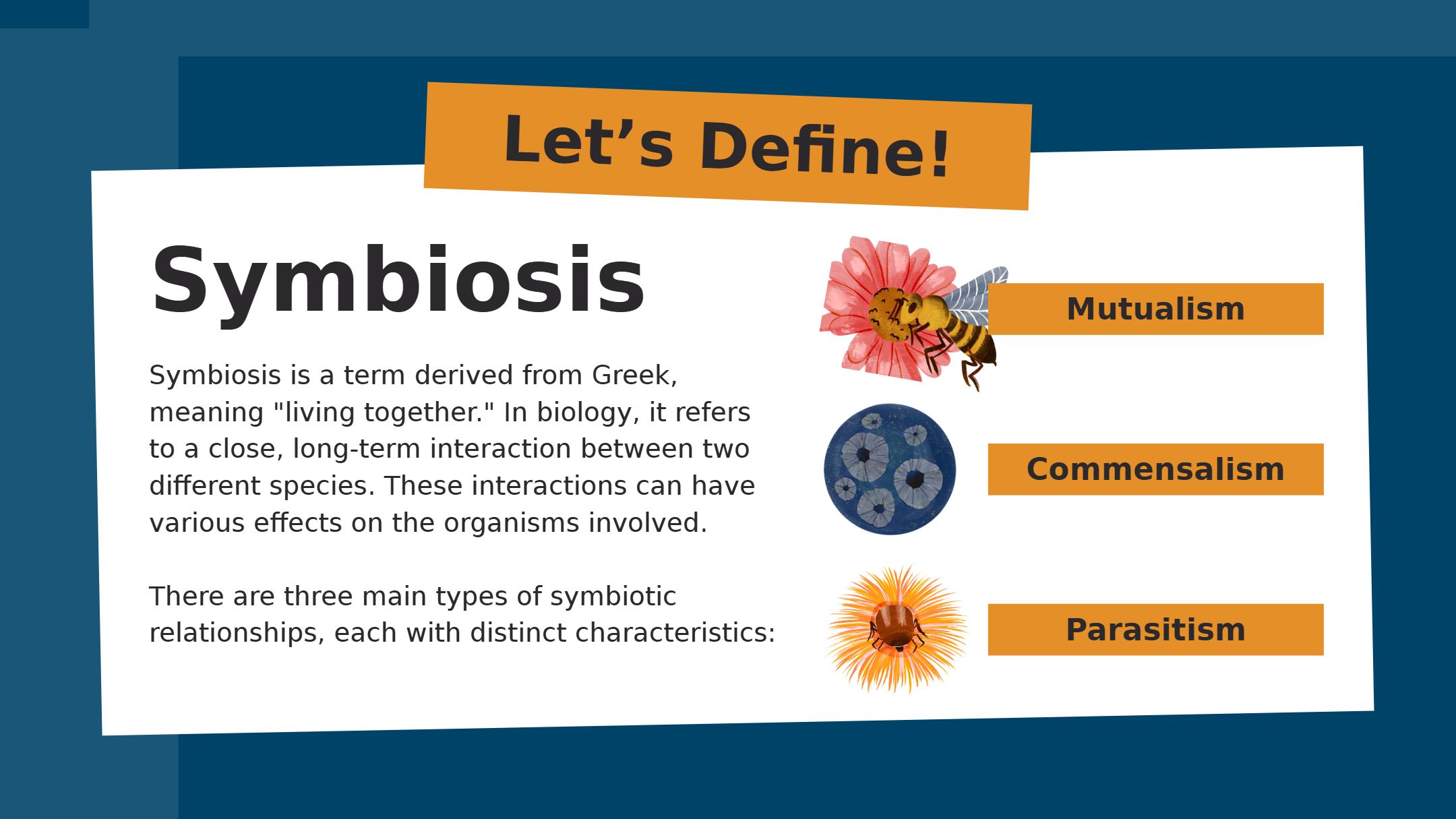
Which of the following best describes the main idea of symbiosis as introduced in the lesson?
A close, long-term interaction between two different species
A competition for resources between animals
A process where one organism always harms another
A short-term interaction between plants only
8
9
10
Open Ended
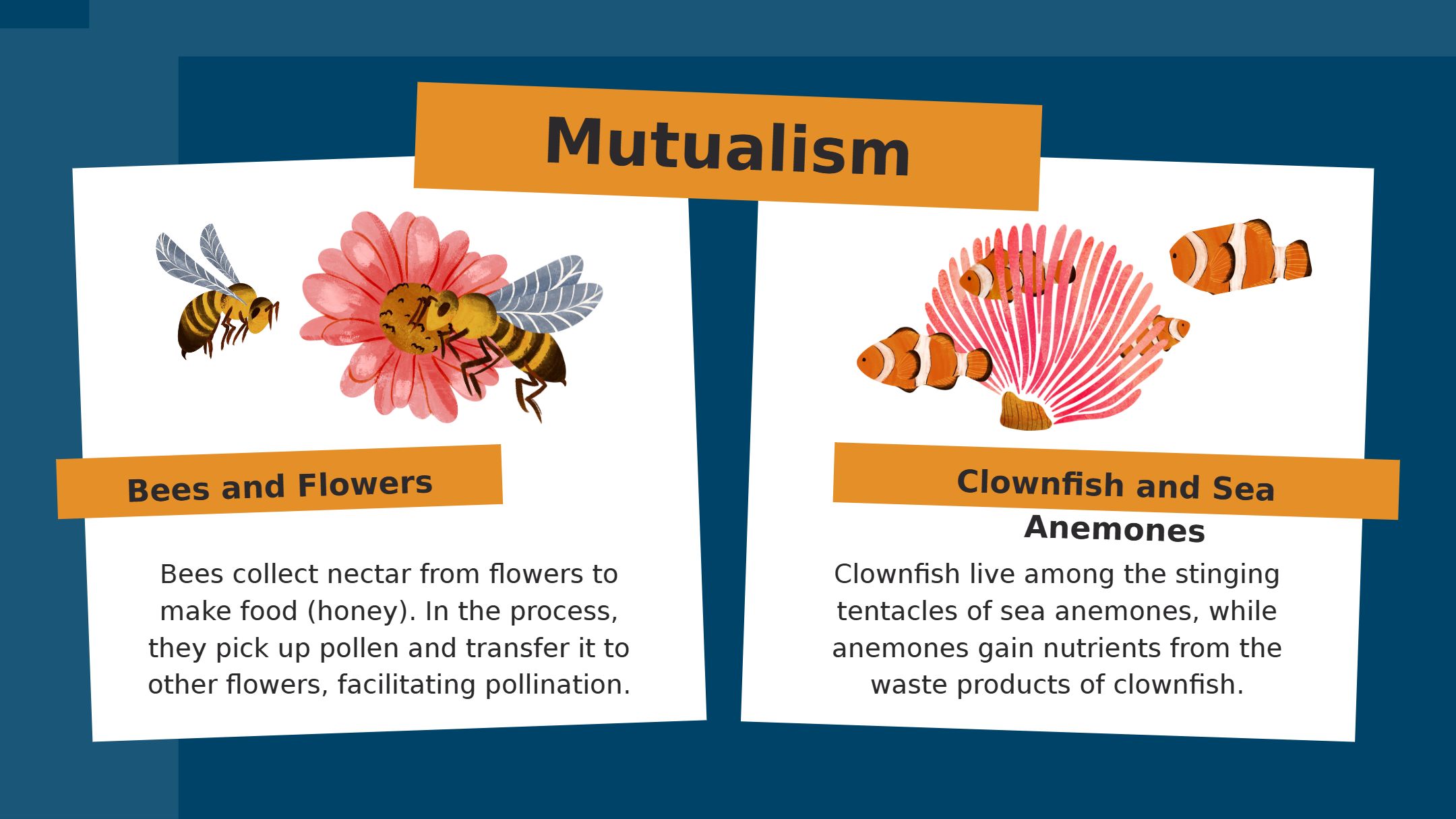
Describe the benefits each organism receives in the mutualistic relationship between clownfish and sea anemones.
11
Multiple Choice
Which of the following pairs represents a mutualistic relationship?
Bees and flowers
Barnacles on whales
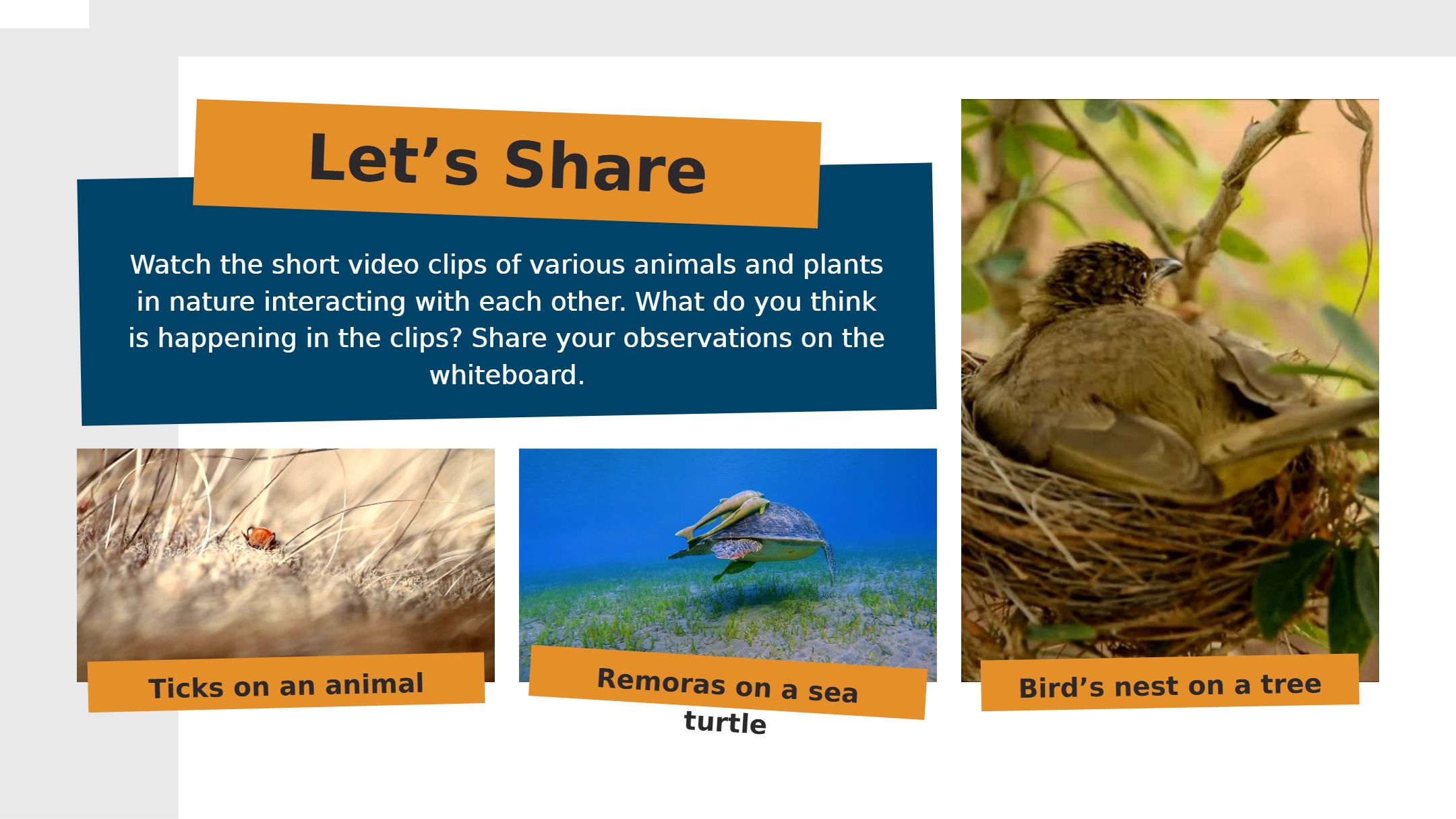
Ticks on an animal
Remoras on a sea turtle
12
13
Open Ended
Explain how mutualism differs from commensalism, using examples from the lesson.
14
15
Multiple Select
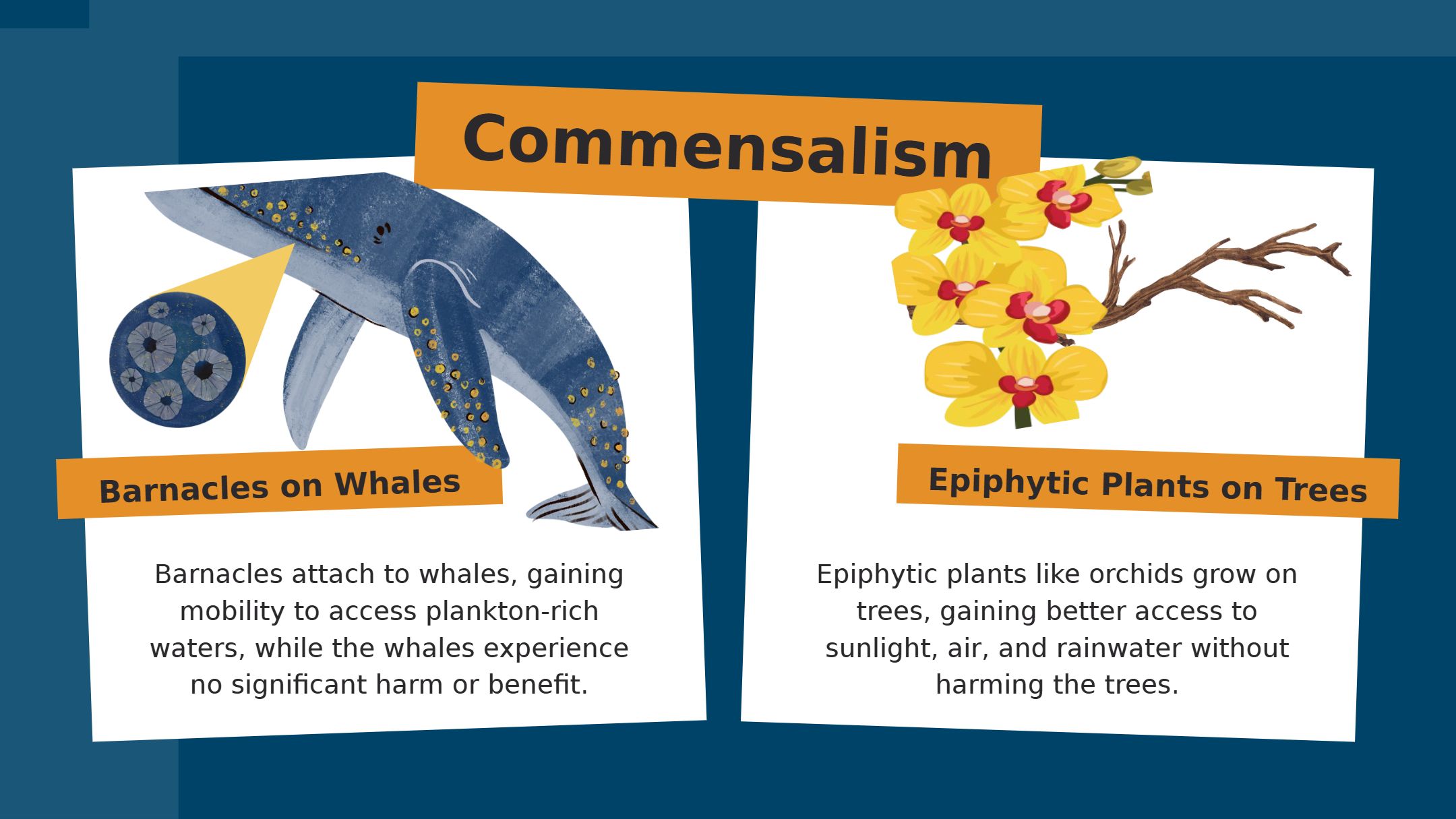
Select all examples of commensalism from the following:
Epiphytic plants on trees
Barnacles on whales
Bees and flowers
Ticks on an animal
16
Fill in the Blanks
Barnacles attach to whales to gain mobility, while the whales experience no significant harm or benefit. This is an example of
Type answer...
17
18
Multiple Choice
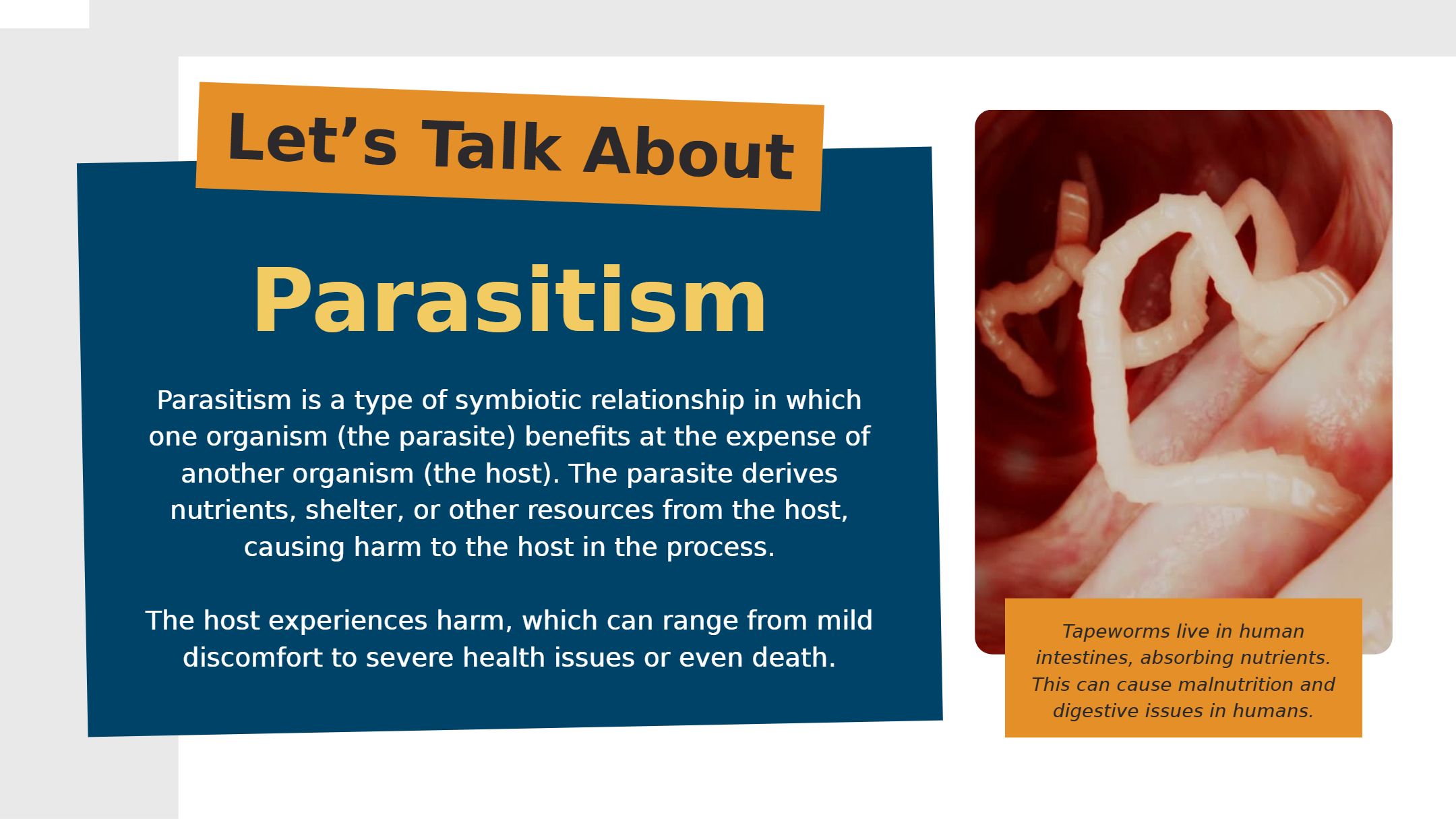
Which of the following best describes parasitism?
A relationship where both organisms benefit equally
A relationship where one organism benefits and the other is harmed
A relationship where both organisms are harmed
A relationship where one organism benefits and the other is unaffected
19
20
Fill in the Blanks
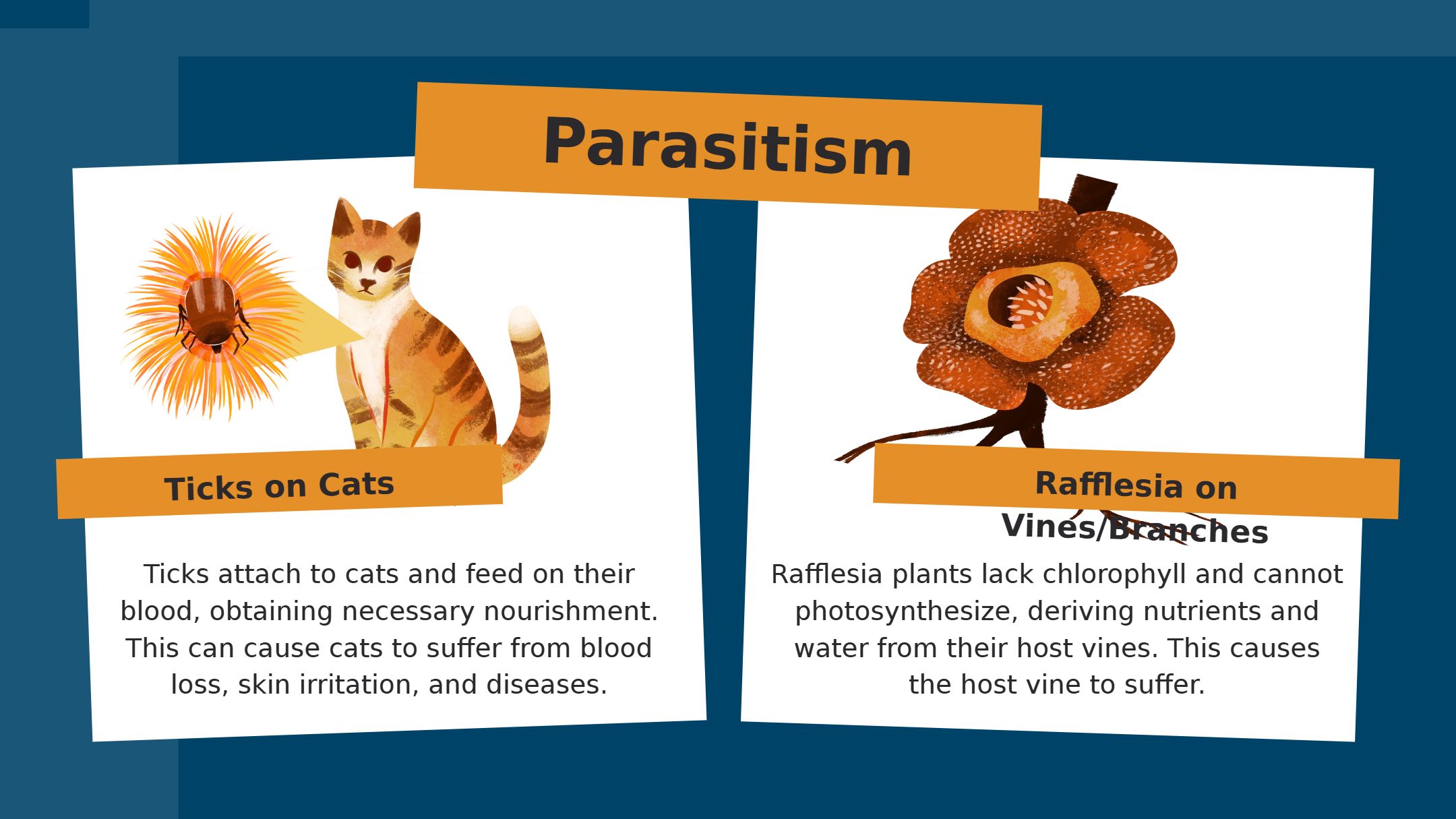
In the context of symbiotic relationships, fill in the blank: Rafflesia plants lack
Type answer...
21
Multiple Select
Based on the examples provided, what are two different ways in which parasites can affect their hosts?
By causing malnutrition and digestive issues
By providing nutrients to the host
By causing blood loss and skin irritation
By helping the host photosynthesize
22
23
Open Ended
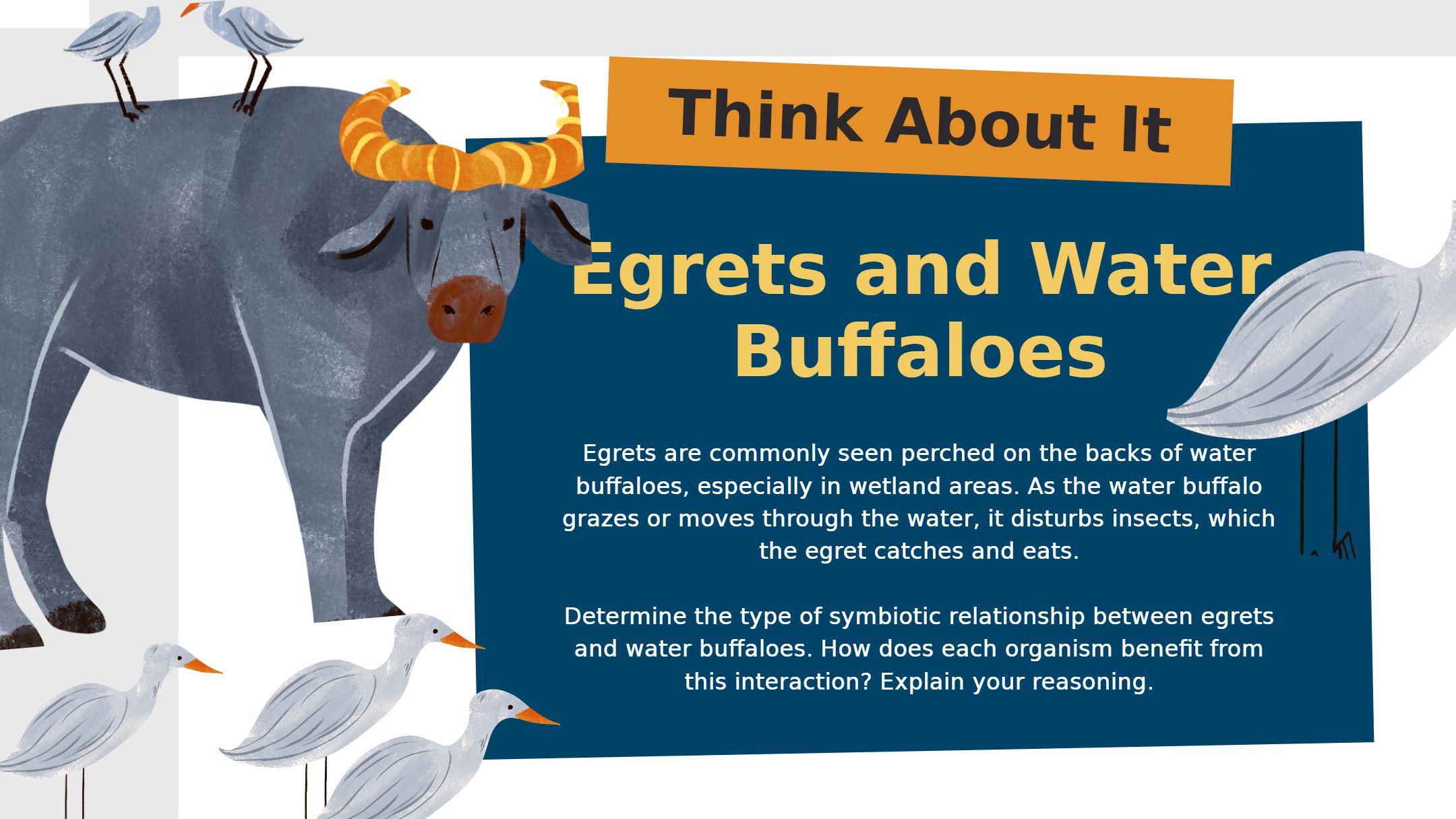
Explain how the relationship between egrets and water buffaloes is different from parasitism. What type of symbiotic relationship is this, and how do both organisms benefit?
24
25
26
Can you think of an example from nature where two different species interact in a way that benefits at least one of them? Describe the relationship and why it might be important.
Show answer
Auto Play
Slide 1 / 26
OPEN ENDED
Similar Resources on Wayground

20 questions
Earth's Changing Climate
Presentation
•
6th Grade
20 questions
Fossil Fuels
Presentation
•
6th Grade
19 questions
Energy Transfer and the Water Cycle
Presentation
•
6th Grade
22 questions
Physical and Chemical Weathering
Presentation
•
6th Grade
22 questions
Taxonomy - Domains and Kingdoms Notes
Presentation
•
6th Grade
18 questions
Variables Practice Problems
Presentation
•
6th Grade
20 questions
Force, Work and Energy
Presentation
•
5th - 6th Grade
20 questions
Nervous & Circulatory System
Presentation
•
5th - 6th Grade
Popular Resources on Wayground
10 questions
How much do you know about our Portrait of an Eagle?

Quiz
•
10th Grade
10 questions
Fast Food Slogans
Quiz
•
6th - 8th Grade
21 questions
Continents and Oceans
Quiz
•
6th Grade
20 questions
Parts of Speech
Quiz
•
5th Grade
16 questions
Subject & Predicate
Quiz
•
5th Grade
25 questions
Multiplication Facts
Quiz
•
5th Grade
12 questions
Map Skills
Quiz
•
3rd Grade
22 questions
Continents and Oceans
Quiz
•
5th Grade
Discover more resources for Science
10 questions
6.6D - Relative Density Review
Quiz
•
6th Grade
20 questions
Claim, Evidence and Reasoning (CER)
Quiz
•
6th - 8th Grade
20 questions
Density
Quiz
•
6th Grade
10 questions
Exploring Chemical and Physical Changes

Interactive video
•
6th - 10th Grade
20 questions
Food Chains & Food Webs
Quiz
•
5th - 7th Grade
18 questions
Interpreting Distance/Time Graphs
Quiz
•
6th Grade
10 questions
Decoding the Periodic Table of Elements
Interactive video
•
6th - 10th Grade
15 questions
Potential and Kinetic Energy
Quiz
•
6th Grade