

MTQXA

Presentation
•
Science
•
University
•
Practice Problem
•
Hard

Садоша Нишанова
FREE Resource
21 Slides • 23 Questions
1
2
Multiple Choice
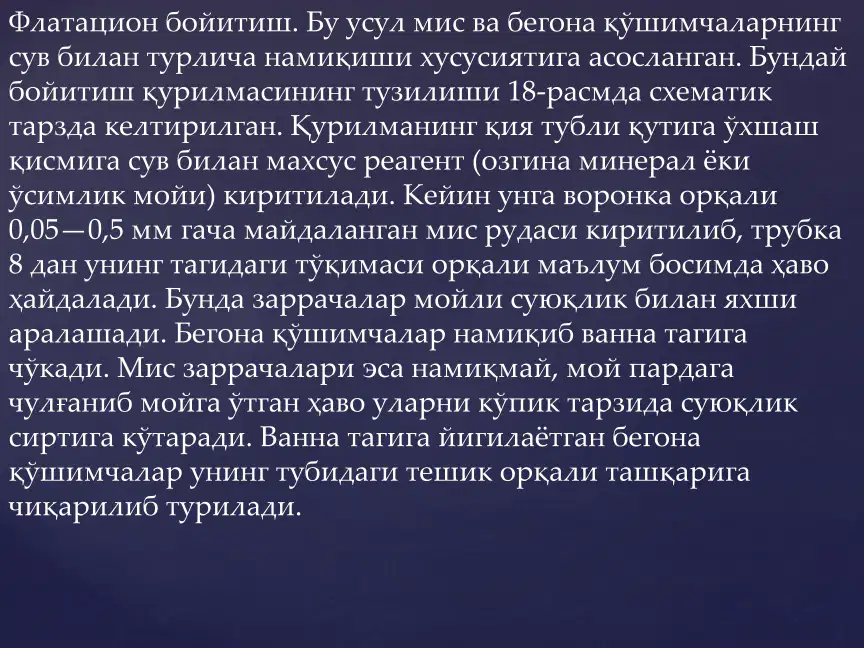
Which step in the flotation process involves the separation of copper particles from foreign impurities?
Adding water and reagent
Grinding the copper ore
Introducing air to create bubbles
Collecting foreign impurities at the bottom
3
4
Open Ended
What are some of the key differences between the production processes of copper, aluminum, magnesium, and titanium?
5
Multiple Choice
Why are non-ferrous metal alloys important in engineering and technology?
They are lightweight and resistant to corrosion
They are always magnetic
They are cheaper than all other metals
They are only used for decorative purposes
6
7
Open Ended
Explain why copper and its alloys are widely used in various industries despite their higher cost compared to black metals.
8
Multiple Choice
Which of the following properties is NOT typical for colored metals such as Cu, Al, Mg, Zn, and Pb?
High electrical conductivity
High plasticity
High corrosion resistance
Low price compared to black metals
9
10
11
Fill in the Blanks
Type answer...
12
Multiple Select
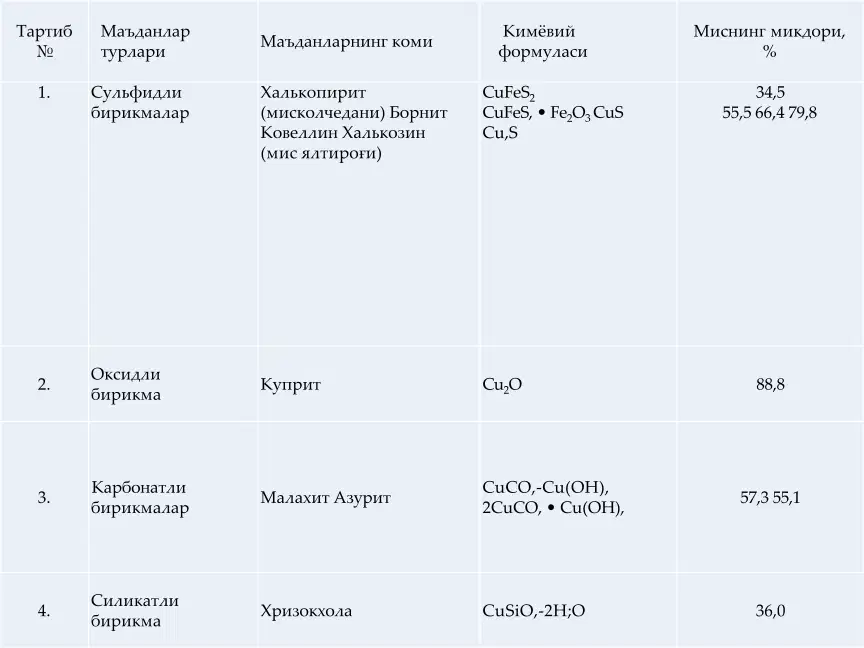
Based on the information provided, which minerals are classified as copper ores?
Chalcopyrite, Bornite, Covellite, Chalcocite
Cuprite, Malachite, Azurite, Chrysocolla
Pyrite, Galena, Sphalerite, Hematite
Both A and B
13
14

15
16
Open Ended
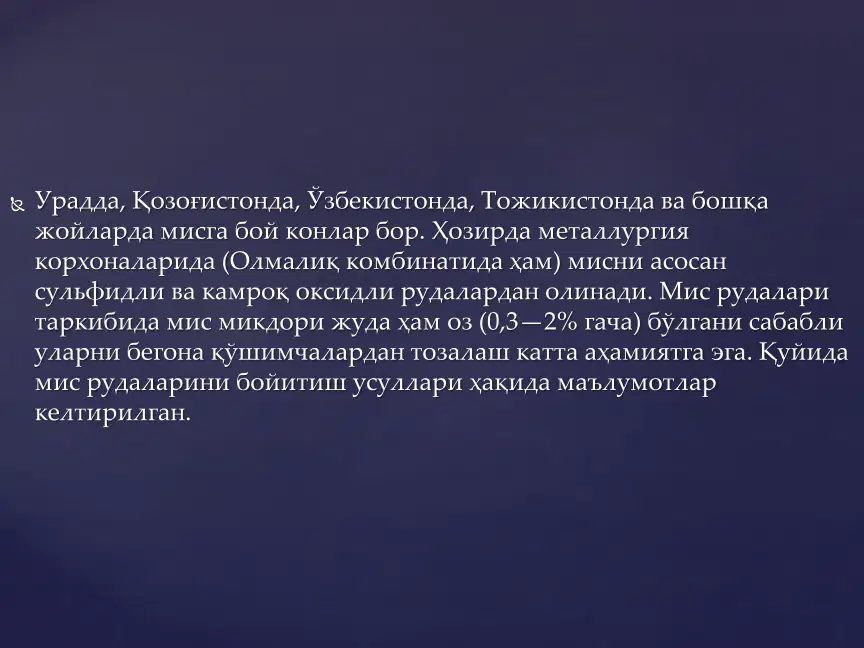
Describe the importance of removing foreign impurities from copper ores during the flotation process.
17
18
Multiple Choice
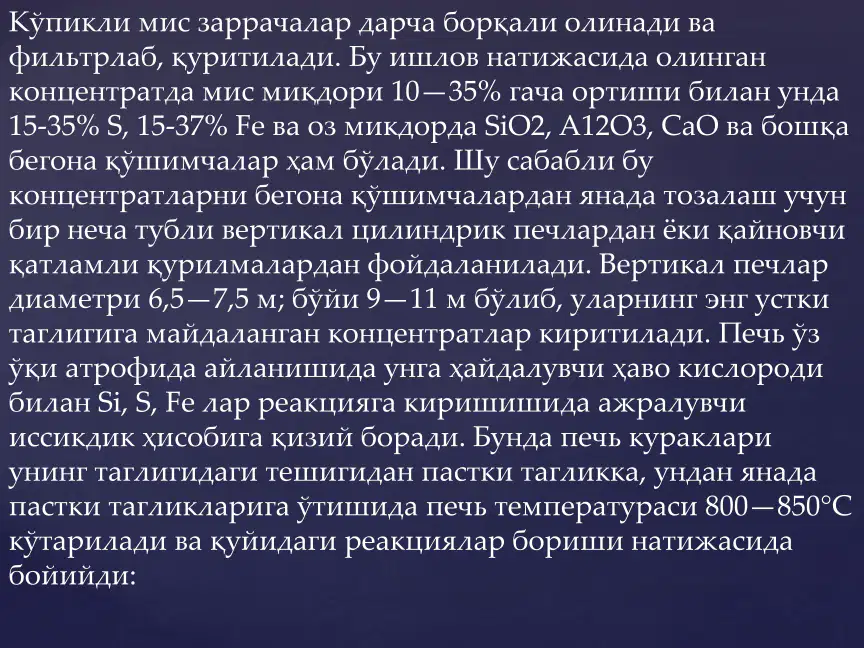
Which chemical elements are present in the copper concentrate after filtration and drying, according to the process described?
SiO2, Al2O3, CaO, S, Fe
Cu, Zn, Pb, Ag
NaCl, KCl, MgO, Fe
H2O, CO2, O2, S
19
20
Multiple Choice
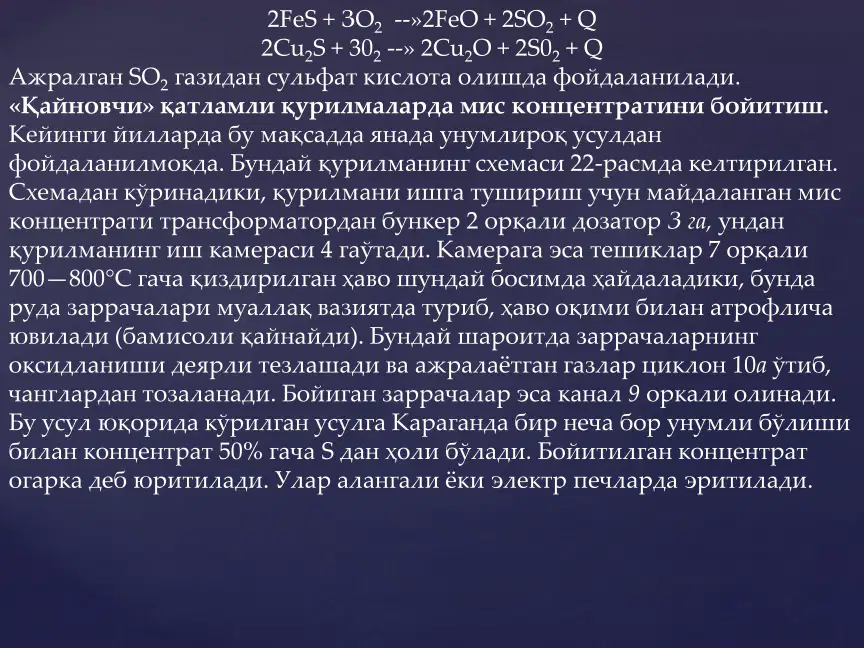
Which reactions occur in the vertical furnace during the roasting of copper concentrates?
2FeS + 3O2 --> 2FeO + 2SO2 + Q; 2Cu2S + 3O2 --> 2Cu2O + 2SO2 + Q
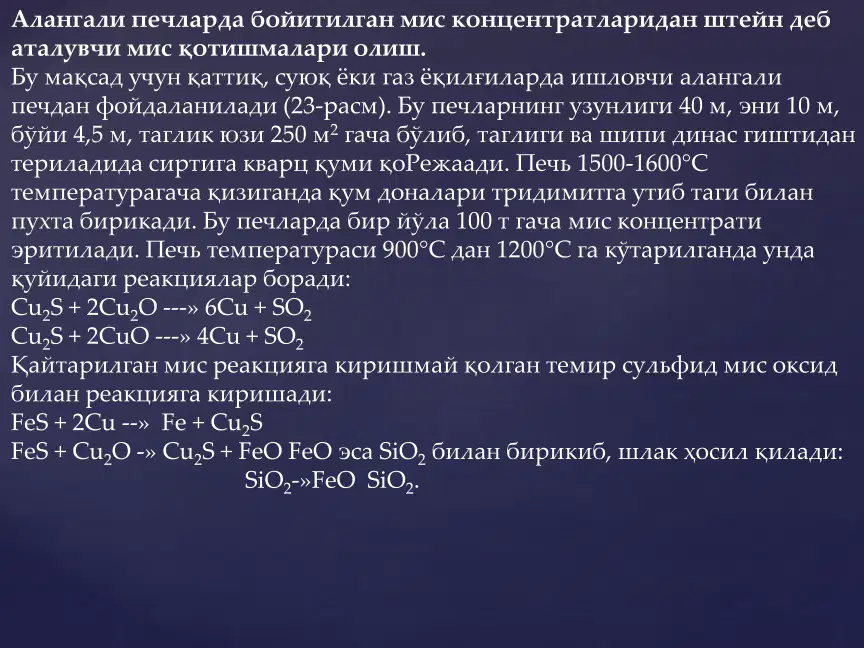
Cu2S + 2CuO --> 6Cu + SO2; FeS + 2Cu --> Fe + Cu2S
FeS + Cu2O --> Cu2S + FeO; SiO2 --> FeO SiO2
Cu + O2 --> CuO; Fe + O2 --> FeO
21
Open Ended
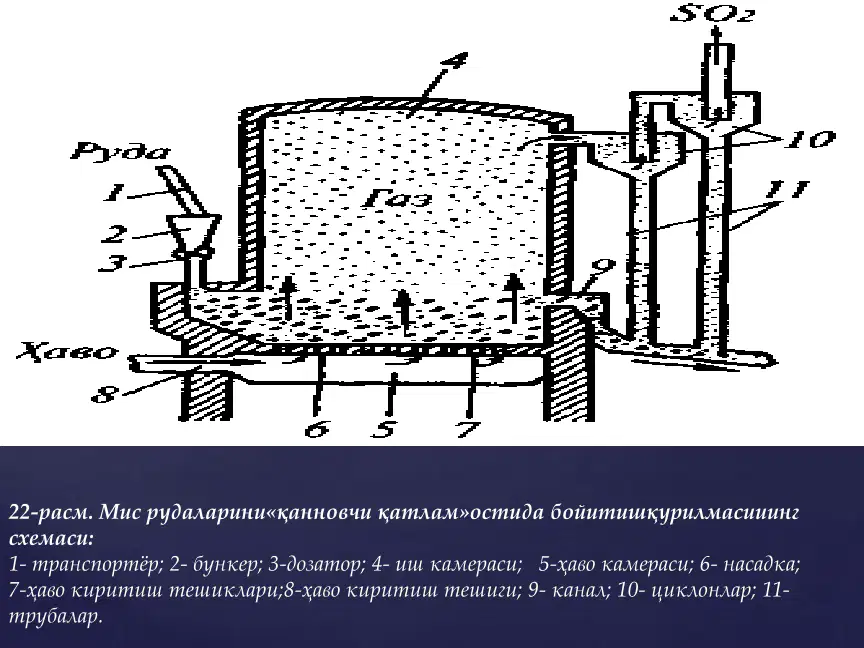
Explain the purpose of using vertical cylindrical furnaces or boiling layer furnaces in the purification of copper concentrates.
22
23
Fill in the Blanks
Type answer...
24
25
26
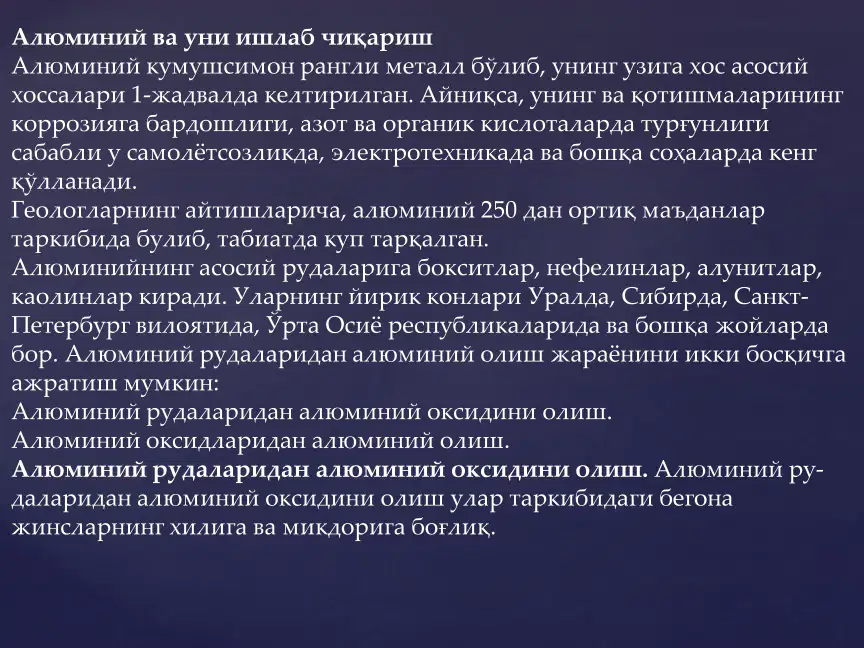
Open Ended
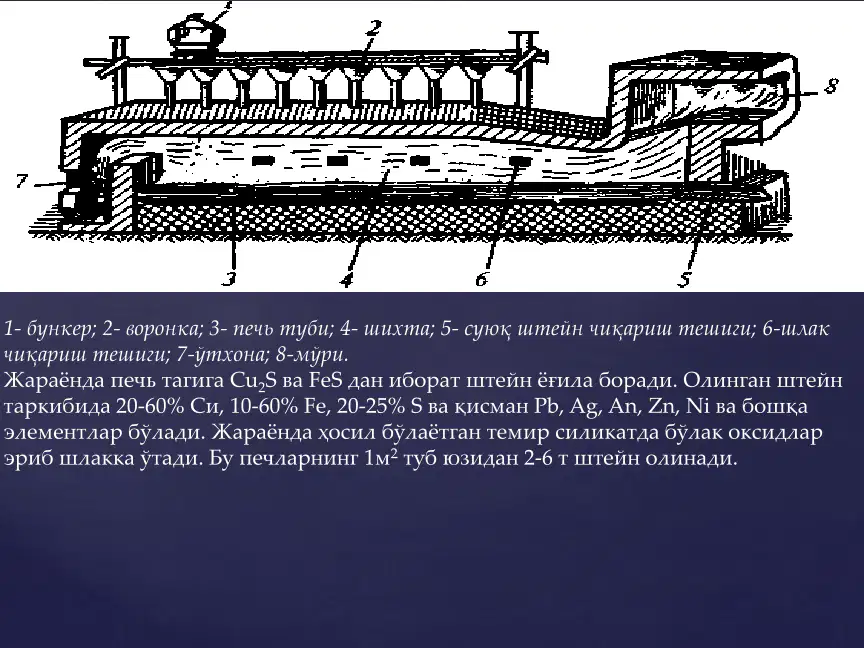
Describe the process and purpose of obtaining copper matte (штейн) from roasted copper concentrates in reverberatory furnaces.
27
28
Fill in the Blanks
Type answer...
29
30
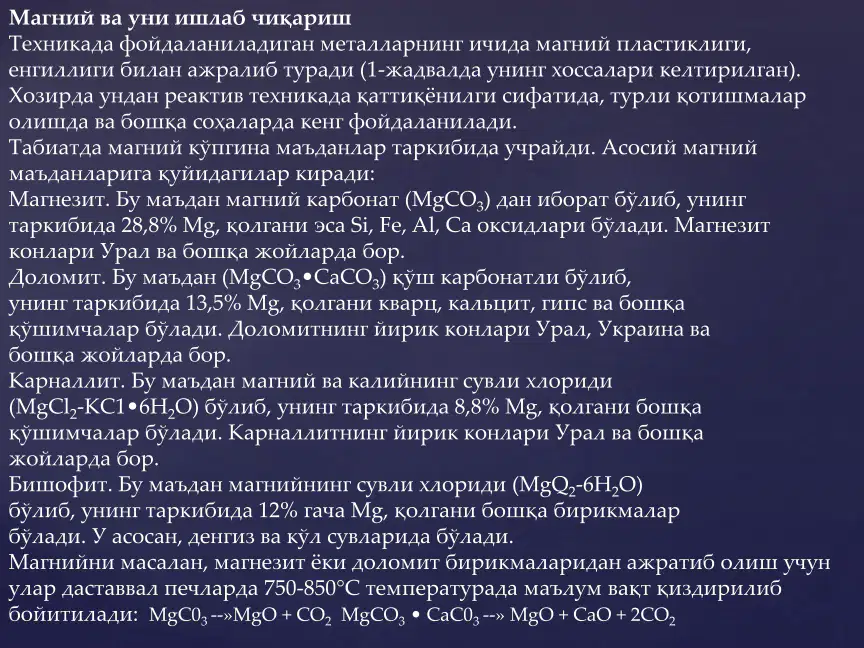
Multiple Choice
Which minerals are the main sources of magnesium in nature, and what are their chemical compositions?
Magnesite (MgCO3), Dolomite (MgCO3·CaCO3), Carnallite (MgCl2·KCl·6H2O), Bischofite (MgCl2·6H2O)
Hematite (Fe2O3), Calcite (CaCO3), Quartz (SiO2), Halite (NaCl)
Galena (PbS), Sphalerite (ZnS), Pyrite (FeS2), Chalcopyrite (CuFeS2)
Rutile (TiO2), Ilmenite (FeTiO3), Anatase (TiO2), Magnetite (Fe3O4)
31
32
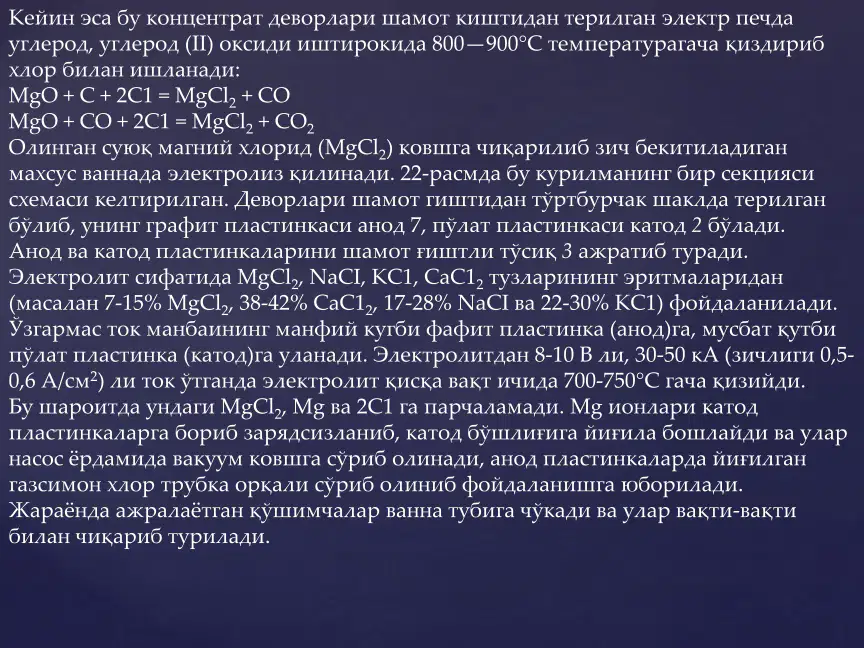
Multiple Select
Which of the following compounds is used as an electrolyte in the electrolysis process for magnesium extraction?
MgCl2
NaCl
CaCl2
KCl
33
Open Ended
Describe the main steps involved in the extraction of magnesium from its ores, highlighting the role of electrolysis.
34
35
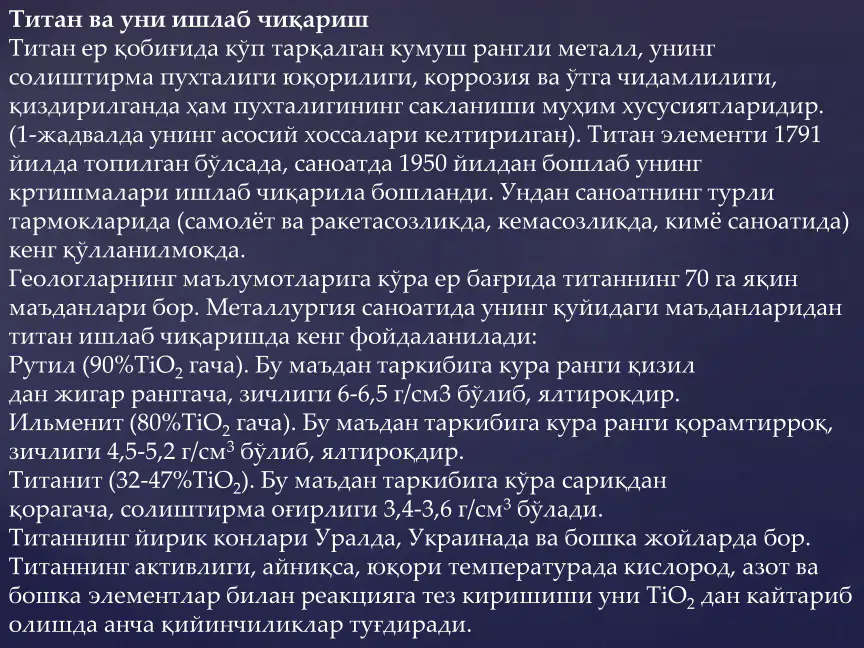
Multiple Choice
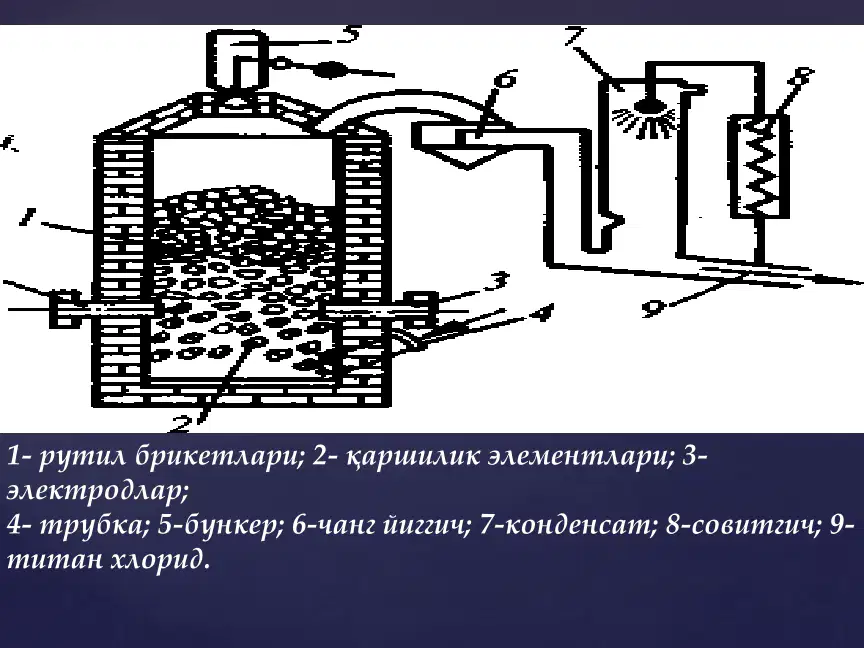
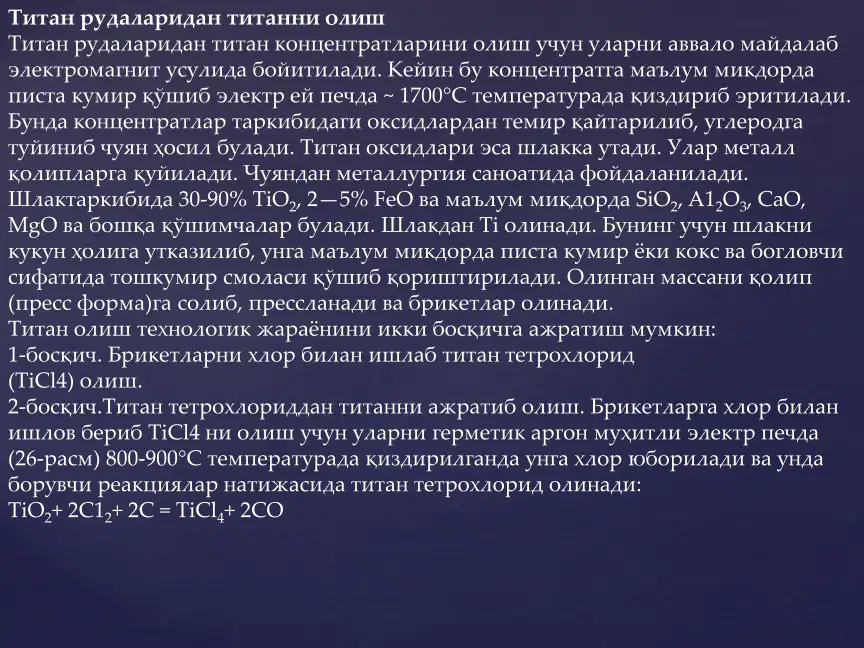
Titanium is mainly extracted from which minerals, and what are their approximate TiO2 contents?
Rutile (90%), Ilmenite (80%), Titanite (32-47%)
Magnesite (28%), Dolomite (13%), Carnallite (8%)
Hematite (70%), Magnetite (60%), Goethite (50%)
Galena (90%), Sphalerite (80%), Pyrite (70%)
36
37
38
Fill in the Blanks
Type answer...
39
40
Open Ended
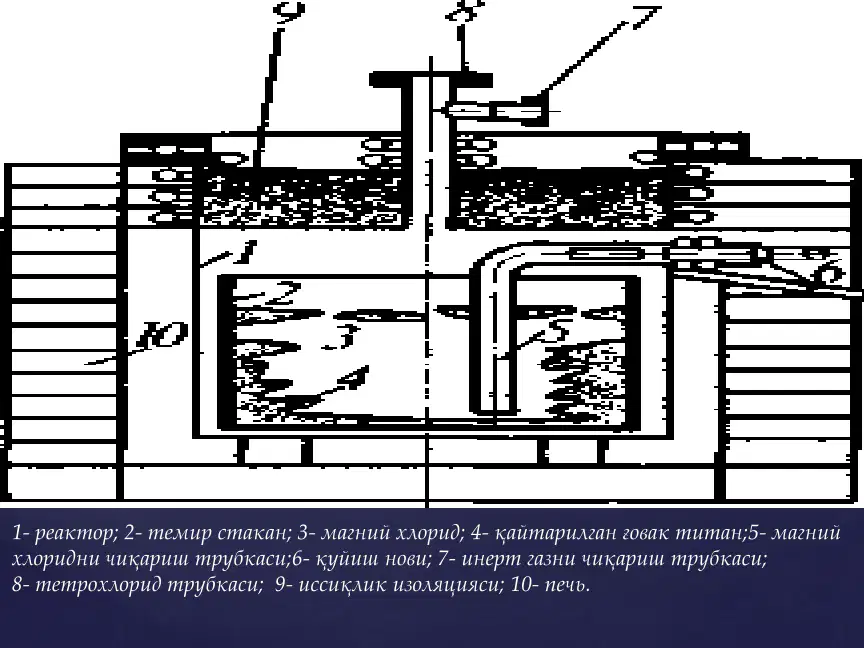
Explain the significance of using an inert gas atmosphere in the process of extracting titanium tetrachloride from titanium ores.
41
42
Multiple Choice
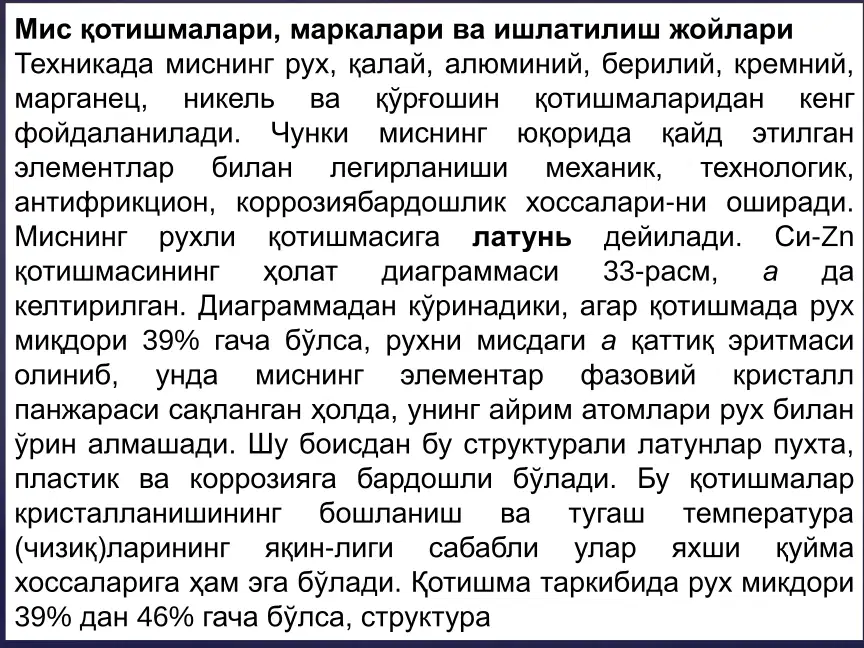
What is the main reason for using copper alloys with elements such as zinc, tin, aluminum, beryllium, silicon, manganese, nickel, and lead in technology?
To improve mechanical, technological, antifriction, and corrosion resistance properties
To reduce the cost of production
To make the alloy more colorful
To increase the melting point significantly
43
Open Ended
How do you think the production processes of copper, aluminum, magnesium, and titanium differ from each other, and why might these differences be important in engineering applications?
44
Multiple Choice
What are the main types of non-ferrous metal alloys discussed in this lesson?
Copper and its production, Aluminum and its production, Magnesium and its production, Titanium and its production
Iron and its production, Steel and its production, Zinc and its production, Lead and its production
Gold and its production, Silver and its production, Platinum and its production, Palladium and its production
Nickel and its production, Chromium and its production, Manganese and its production, Cobalt and its production
Show answer
Auto Play
Slide 1 / 44
SLIDE
Similar Resources on Wayground

35 questions
Untitled Lesson
Presentation
•
KG
40 questions
BASIC FINANCIAL PLAN FOR BUSINESS START-UP
Presentation
•
University
39 questions
Peds CH 21/22
Presentation
•
KG - University
41 questions
Nervous System (Final) - Group 2
Presentation
•
University
42 questions
ANAT2 Exam 2 Review
Presentation
•
University
40 questions
English 2 Taking transportation UNIT 4
Presentation
•
University
43 questions
How to Treat Diabetic Emergencies
Presentation
•
University
Popular Resources on Wayground
19 questions
Naming Polygons

Quiz
•
3rd Grade
10 questions
Prime Factorization
Quiz
•
6th Grade
20 questions
Math Review
Quiz
•
3rd Grade
15 questions
Fast food
Quiz
•
7th Grade
20 questions
Main Idea and Details
Quiz
•
5th Grade
20 questions
Context Clues
Quiz
•
6th Grade
20 questions
Inferences
Quiz
•
4th Grade
19 questions
Classifying Quadrilaterals
Quiz
•
3rd Grade