

Intro To Teaching 5.2

Presentation
•
Education
•
9th - 12th Grade
•
Practice Problem
•
Hard

Jessica Pugliano
Used 1+ times
FREE Resource
42 Slides • 6 Questions
1
Responsive Instruction
Intro to Teaching 5.2
2

Analyze how to pivot effectively in responsive instruction
Identify tools for responsive instruction
Describe responsive instruction
Vocabulary: pivot, responsive instruction, wait time
Learners Can:
3
Engage
4
In various fields, the ability to change direction to adapt to new circumstances can be the key to success. Whether in sports, business, technology, healthcare, entertainment, or education, making a strategic change in direction can significantly impact the outcome of a situation.
5

Change in Direction: In basketball, a player with the ball can pivot by keeping one foot stationary and moving the other to change direction. This maneuver allows the player to find a better passing lane or shooting position.
Impact: A well-timed change in direction can create space from a defender, leading to better shot opportunities or clearer passing lanes, which can turn the game in favor of the player's team.
Sports: Basketball
6

Change in Direction: A local bakery struggling with walk-in sales decides to start offering online orders and home delivery services.
Impact: This change in direction can attract a new customer base that prefers the convenience of online shopping, leading to increased sales and growth for the bakery.
Business: Local Bakery
7

Change in Direction: A software company initially develops a tool for professional use, but after observing market trends, changes direction by creating a user-friendly version for everyday consumers.
Impact: This change in direction can broaden the company's market reach, increasing overall profits.
Technology: Software Company
8
Change in Direction: A medical research team shifts its focus from developing treatments for a rare disease to researching a more common condition that affects a larger population.
Impact: This change in direction can lead to advancements in treatments that benefit more people, potentially improving public health outcomes on a larger scale.
Healthcare: Medical Research Team

9
Change in Direction: A recording artist known for their live performances changes direction to create and stream digital concerts.
Impact: This change in direction allows the recording artist to reach a wider audience. It also increases profits and connects the singer with their audience.
Entertainment: Recording Artist

10
These examples show how changing direction can lead to success for businesses or individuals. By being flexible and recognizing new opportunities, they achieved better results than if they had stayed with their original plan. A successful change requires good judgment, adaptability, and a willingness to take risks. This same principle of adapting to changing needs is also key in education.
11
Discover
12
-Eric Jensen - Educator, author, and human devolopment researcher
"Strong teachers don't teach content; Google has content. Strong teaching connects learning in ways that inspire kids to learn more and strive for greatness."
13
Eric Jensen's quote talks about how important instruction is. He says that education is not just about giving information but about making connections that motivate students to learn and reach their full potential. This idea fits perfectly with the idea of responsive teaching.
14
Responsive Instruction
In today's diverse classrooms, the ability to adapt teaching methods to meet the unique needs of each student is more important than ever. Responsive instruction is an approach that focuses on flexibility and student-centered learning. Responsive instruction is crucial for creating a dynamic and inclusive learning environment. It involves the following:
15
Teachers conduct informal assessments to gauge students' prior knowledge and skill levels.
They also utilize student interest surveys to tailor lessons to their interests and experiences.
Understanding Student Needs

16
Teachers employ various instructional methods such as group work, independent study, and hands-on activities to cater to different learning needs.
They also should be prepared to modify lesson plans based on real-time feedback and student performance.
Flexible Teaching Strategies

17
Teachers provide multiple means of representation (e.g., visual aids, audio materials, and text).
They also offer different ways for students to express their understanding (e.g., written assignments, presentations, and projects).
Differentiated Instruction

18
Teachers use formative assessments like quizzes, polls, and quick writes to gather immediate feedback.
They also adjust the pacing and reteach concepts as necessary to ensure all students are keeping up.
Real-Time Adaptation

19
Responsive instruction is an educational approach that dynamically adapts to the diverse needs of students in a classroom. It involves continuous assessment and modification of teaching strategies to ensure that all students can engage with and understand the material effectively. This method fosters a supportive and inclusive learning environment where every student has the opportunity to succeed.
20
The Pivot
Earlier in the lesson, you explored various fields using a pivot. While the concept of a pivot in education is similar, the pivot itself is completely different in action. A pivot in education refers to an unexpected change in instruction at a certain moment. This is a critical skill within responsive instruction. It involves being able to quickly shift gears and adapt the lesson plan based on immediate feedback, classroom dynamics, or arising student needs.
One of the most common instructional misunderstandings that lead to a teacher pivoting their plan is when a teacher is prepared to teach one thing and then realizes the lesson plan does not meet the needs of the learners.
21
Common Instructional Challenges | Teacher Response Options |
|---|---|
Struggling with Understanding the Content |
|
Struggling to Answer a Question |
|
Unexpected (but appropriate) Responses to Questions |
|
22
It is important to note that this list only covers three common areas for instructional pivoting; there are many reasons a teacher might pivot and multiple responses for each pivot. In the end, it is up to the teacher's knowledge of their students, the content, and the classroom structure to decide how and when to pivot.
23
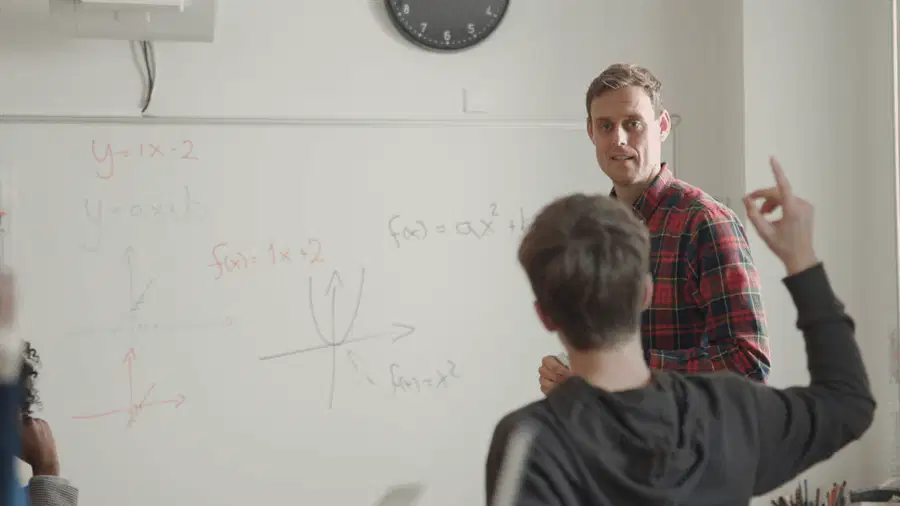
Since a pivot results from an unexpected moment in instruction, teachers do not have a lot of time to respond.
24
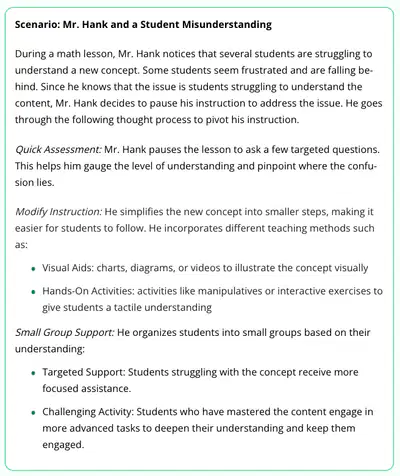
Scenario: Mr. Hank and a Student Misunderstanding
During a math lesson, Mr. Hank notices that several students are struggling to understand a new concept. Some students seem frustrated and are falling behind. Since he knows that the issue is students struggling to understand the content, Mr. Hank decides to pause his instruction to address the issue. He goes through the following thought process to pivot his instruction.
Quick Assessment: Mr. Hank pauses the lesson to ask a few targeted questions. This helps him gauge the level of understanding and pinpoint where the confusion lies.
Modify Instruction: He simplifies the new concept into smaller steps, making it easier for students to follow. He incorporates different teaching methods such as:
Visual Aids: charts, diagrams, or videos to illustrate the concept visually
Hands-On Activities: activities like manipulatives or interactive exercises to give students a tactile understanding
Small Group Support: He organizes students into small groups based on their understanding:
Targeted Support: Students struggling with the concept receive more focused assistance.
Challenging Activity: Students who have mastered the content engage in more advanced tasks to deepen their understanding and keep them engaged.
25
Mr. Hank's approach ensures that every student gets the support they need to grasp the new concept while keeping the classroom environment conducive to learning.
You may have noticed that Mr. Hank decided to use multiple pivot options to best meet the needs of the struggling learners in his class.You may have noticed that Mr. Hank decided to use multiple pivot options to best meet the needs of the struggling learners in his class.
26
27
Multiple Select
Which specific pivot methods did Mr. Hank use to change the direction of his lesson? Select all that apply.
modify the lesson content
provide manipulatives or vocabulary support
pull a small group
provide a digital review activity
28
Reorder
From the Mr. Hank scenario, drag to correctly order the steps Mr. Hank took to pivot his lesson.
recognized there is a learning concern
completed a quick assessment to identify which students need additional support
modified the instruction by simplifying and chunking the new content
provided small group targeted and challenge support
29
Open Ended
Do you think that Mr. Hank can change the order of his pivoting approach tasks? Why or why not?
You may begin your response with:
I think that Mr. Hank [can/cannot] change the order because . . .
30
Mr. Hank utilized a logical approach by first recognizing the issue. Then he used a quick assessment to identify what the issue is and who is impacted. Finally, Mr. Hank implemented response strategies by modifying the lesson content and pulling small groups. Through these intentional steps, Mr. Hank was able to properly implement an instructional pivot.
31
Additional Responsive Instruction Tools
Responsive instruction tools provide educators with invaluable resources to tailor their teaching methods to meet individual student needs. To explore various tools that teachers in both in-person and virtual classrooms may choose to utilize, read through the examples below.
32
Wait time refers to the practice of giving students enough time to think and respond after being asked a question. The benefits include:
Improved quality of student responses: They have time to form thoughtful answers.
Increased participation: More students feel confident to join the conversation.
Enhanced comprehension: It promotes deeper understanding and recall of the material.
Wait Time

For effective wait time practice, teachers need to wait for a minimum of three to five seconds.
33
The five Ws and one H (Who, What, When, Where, Why, and How) are foundational questions that can help students develop a complete understanding of a topic or event. Instead of giving students the answer to questions when they are struggling, ask them a guiding five Ws and one H question.
For example, if a student is struggling to understand the main idea of a text, ask them:
Who is involved?
What happened?
When did it happen?
Where did it take place?
Why did it happen?
How did it impact the story?
The Five Ws and One H
Instead of giving students answers, guide them with questions (using the five Ws and one H method).

34
A growth mindset is the belief that abilities and intelligence can be developed with effort, learning, and persistence. Encouraging a growth mindset in students involves:
Praising effort, not just results: Recognize the hard work, strategies, and progress.
Embracing challenges: Encourage students to see challenges as opportunities to grow.
Learning from feedback: Use constructive criticism as a tool for improvement.
Persistence: Teach students to keep going even when things are tough.
Growth Mindset
Growth mindset needs to be embraced by both the students and the teacher to be effective.
35
Student feedback is crucial for improving the learning experience and can be gathered through:
Surveys: Regularly ask students for their input on teaching methods and course content.
One-on-one meetings: Personal conversations can reveal individual concerns and suggestions.
Anonymous feedback: Ensures honest and candid responses
Exit tickets: Quick end-of-class reflections on what they have learned and what they still have questions about
Student Feedback
The benefit of receiving feedback virtually is that it can auto-generate a report that the teacher can use for formative assessment purposes.
36
Match
Match the instructional tool with its corresponding example.
After asking the class a question about the Civil War, Mrs. Johnson pauses for 10 seconds before calling on a student to answer, allowing them time to think and formulate their responses.
During a history lesson, Mr. Lee asks his students, “Who was involved in the Boston Tea Party? What happened? When did it occur? Where did it take place? Why did it happen? How did the event impact American history?”
When Maria struggles with a difficult math problem, Mr. Adams encourages her by saying, “Remember, learning takes time and effort. Mistakes are part of the process. Keep trying, and you will improve.”
After reviewing their essays, Ms. Green provides each student with specific comments highlighting their strengths and areas for improvement, ensuring her feedback is constructive and actionable.
wait time
the five Ws and one H questions
growth mindset
student feedback
wait time
the five Ws and one H questions
growth mindset
student feedback
37
There are some instructional tools that are used mostly in either in-person or online classrooms. All of these tools are still developed with the responsive instruction approach in mind but are more specific to the type of classroom.
In-Person vs. Online Instructional Tools
In-person classroom instruction vs. online classroom instruction

38
Additional tools for in-person teaching | Additional tools for online teaching |
|---|---|
In-person engagement tools:
| Virtual engagement tools:
|
Manipulatives and hands-on materials
| Digital content creation and sharing
|
39
These tools and strategies can enhance the in-person learning experience and create a dynamic and engaging classroom environment. You have learned the various elements that make up responsive instruction and explored various tools and resources. Now, continue on to learn about how to develop a mindset for responsive teachers.
40
Responsive Teacher Mindset
Teachers need more than strategies and conceptual understanding to succeed. The following practices encourage a responsive mindset, making it easier to carry out responsive instruction:
building relationships
continuously improving
staying flexible
41
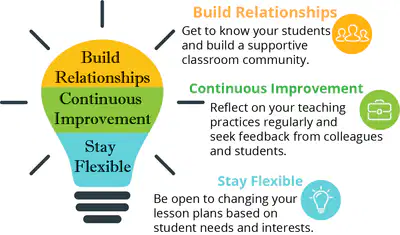
Build Relationships
Get to know your students and build a supportive classroom community.
Show empathy and understanding toward students' diverse backgrounds and experiences.
Continuous Improvement
Reflect on your teaching practices regularly and seek feedback from colleagues and students.
Stay up-to-date on the latest educational research and strategies.
Stay Flexible
Be open to changing your lesson plans based on student needs and interests in the moment.
Embrace the unexpected and view it as an opportunity for growth and learning.
42
43
Categorize
build relationships
take acting classes
continuous improvement
stay flexible
be okay with not always being liked
always be correct
be an expert in everything
need to be liked
Which teacher's actions illustrate responsive instruction and which do not?
44
Responsive instruction includes building strong relationships with students, continuously improving teaching methods, staying flexible, and accepting that not all students will like them. It may even involve taking acting classes to help teachers respond better to students! Overall, responsive instruction is all about making learning accessible for all students, and these practices help teachers make this a reality.
45
Show
46
Open Ended
Exit Ticket: Teach Someone
This exit ticket involves students explaining complicated concepts to someone who does not have the background knowledge. Asking students to explain what they learned in simple terms ensures they truly understand the material. If they can break down complex concepts into easy-to-understand language, it demonstrates a solid grasp of the subject.
If you had to describe what you learned today to a family member or friend, how would you describe it?
You can start your response with:
Today's lesson focused on responsive instruction . . .
47
Summary
48
analyzed how to pivot effectively in responsive instruction;
identified tools for responsive instruction; and
described responsive instruction.
In an upcoming lesson, you will learn how data plays a role in instruction.
In Today's Lesson, You:
Responsive Instruction
Intro to Teaching 5.2
Show answer
Auto Play
Slide 1 / 48
SLIDE
Similar Resources on Wayground

41 questions
Covalent Bonding
Presentation
•
8th - 12th Grade
44 questions
Lesson 10 - Expressing Emotions and Managing Stress
Presentation
•
9th - 12th Grade
44 questions
Introduction to Moles
Presentation
•
9th - 12th Grade
45 questions
(Full Lesson) Biology EOC Reporting Category 5 Review
Presentation
•
9th - 12th Grade
43 questions
Virus, plant and animal terms
Presentation
•
9th - 11th Grade
44 questions
Central Dogma
Presentation
•
8th - 12th Grade
44 questions
Lesson 7.1 : Plant Structures
Presentation
•
9th - 12th Grade
Popular Resources on Wayground
10 questions
HCS SCI 03 Summer School Review 4

Quiz
•
3rd Grade
11 questions
HSMS - Standard Response Protocol
Quiz
•
6th - 8th Grade
16 questions
1.1-1.2 Quiz Review
Quiz
•
9th - 12th Grade
12 questions
Exponent Expressions
Quiz
•
6th Grade
20 questions
Adding and Subtracting Integers
Quiz
•
6th - 7th Grade
11 questions
Northeast States
Quiz
•
3rd - 4th Grade
10 questions
Characterization
Quiz
•
3rd - 7th Grade
10 questions
Common Denominators
Quiz
•
5th Grade