
- Resource Library
- Social Studies
- World History
- World War I Vocabulary
- World War I Vocabulary Learning Lab

World War I Vocabulary-Learning Lab

Presentation
•
Social Studies
•
9th - 12th Grade
•
Practice Problem
•
Medium

STEPHANIE HAMMEL
Used 13+ times
FREE Resource
24 Slides • 14 Questions
1
2
3
Multiple Choice
Why is it important to understand key vocabulary terms when studying World War I?
It helps in understanding the causes and effects of the war.
It allows you to communicate better with historians.
It makes the subject more interesting.
It helps you memorize dates.
4
5
6
Multiple Choice
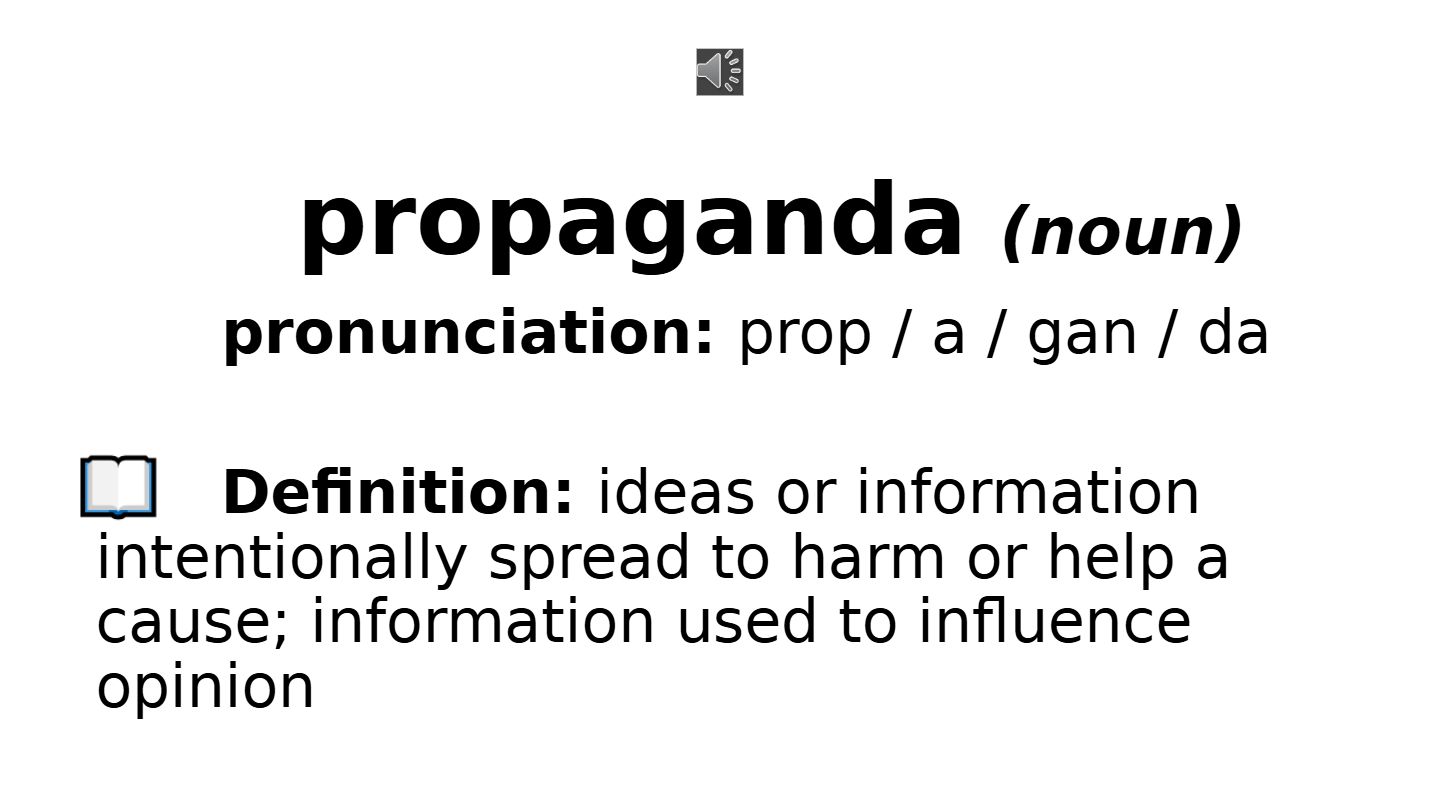
Which of the following terms refers to ideas or information intentionally spread to harm or help a cause, especially to influence opinion?
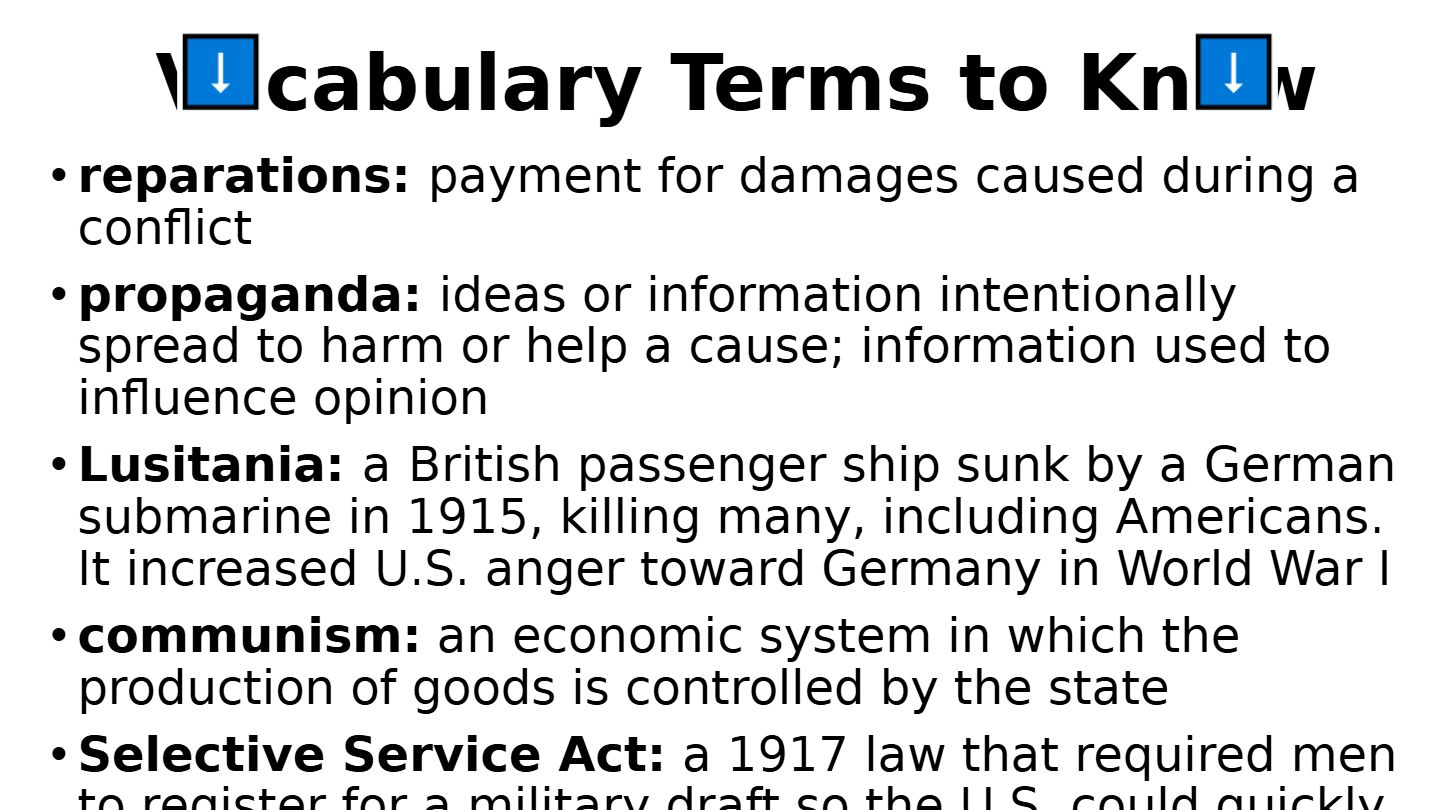
propaganda
reparations
communism
Lusitania
7
8
9
Multiple Choice
Which of the following best describes the term 'reparations' as used in the context of World War I?
Payment for damages caused during a conflict
A law requiring men to register for a military draft
A British passenger ship sunk by a German submarine
An economic system in which the production of goods is controlled by the state
10
11
12
Multiple Select
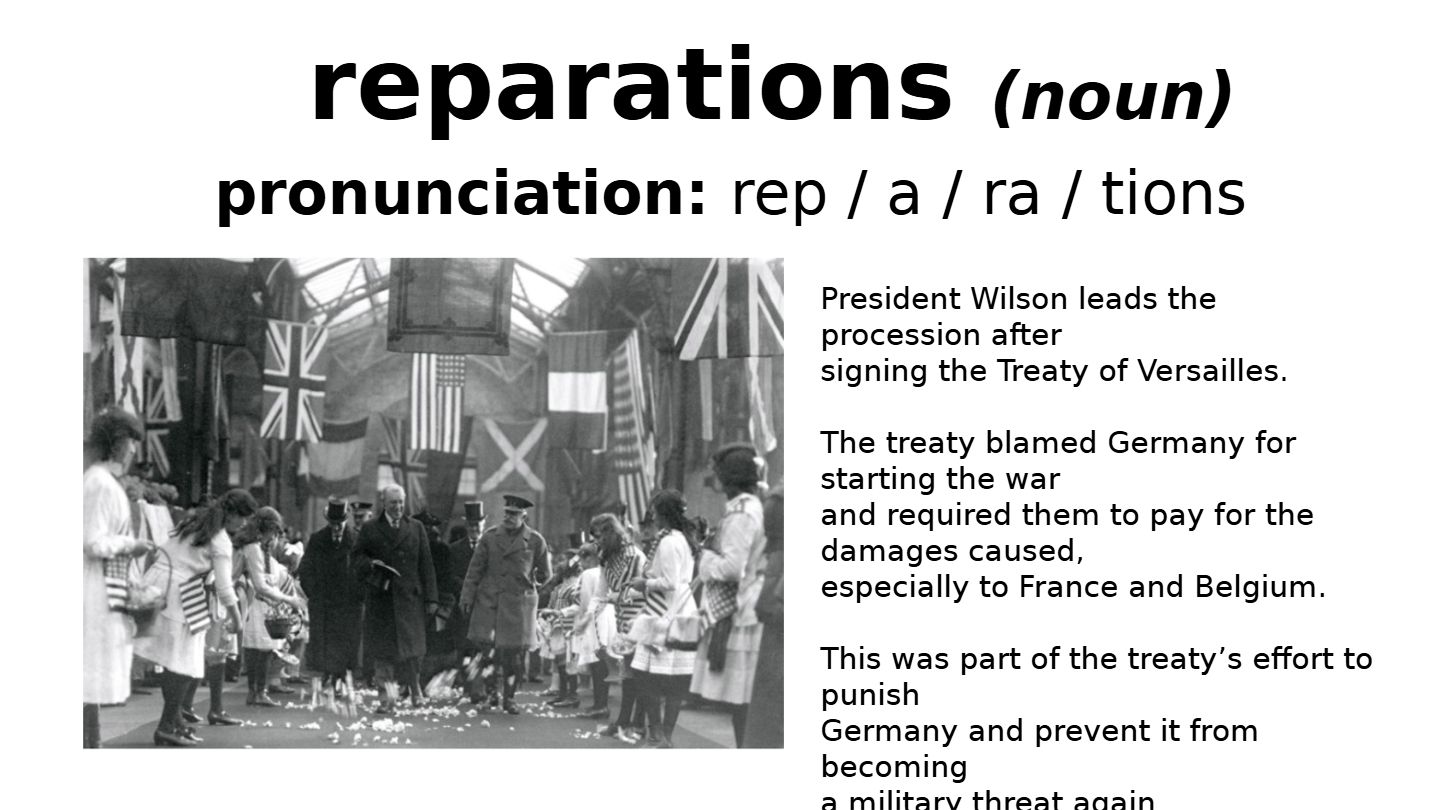
Select all the correct statements about 'reparations' based on the lesson.
Reparations are payments for damages caused during a conflict.
Germany was required to pay reparations after World War I.
Reparations mean rebuilding another country's cities after a war.
Reparations were part of the Treaty of Versailles' effort to punish Germany.
13
14
15
Multiple Choice
Which of the following best defines the term 'propaganda' as used in the lesson?
Ideas or information intentionally spread to influence opinion
A government law passed to help citizens
A type of commercial advertisement
A historical event that changed society
16
17
18
Multiple Choice
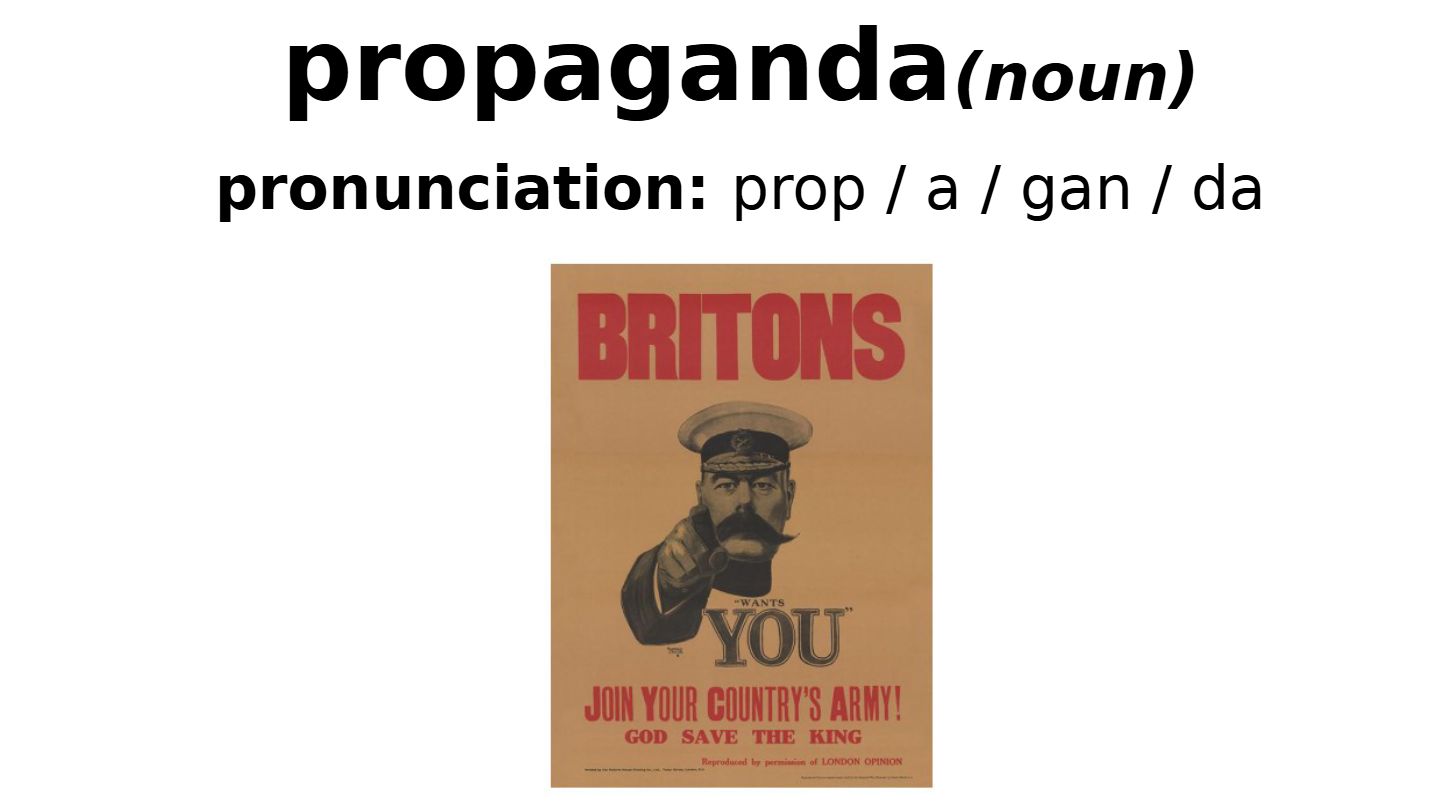
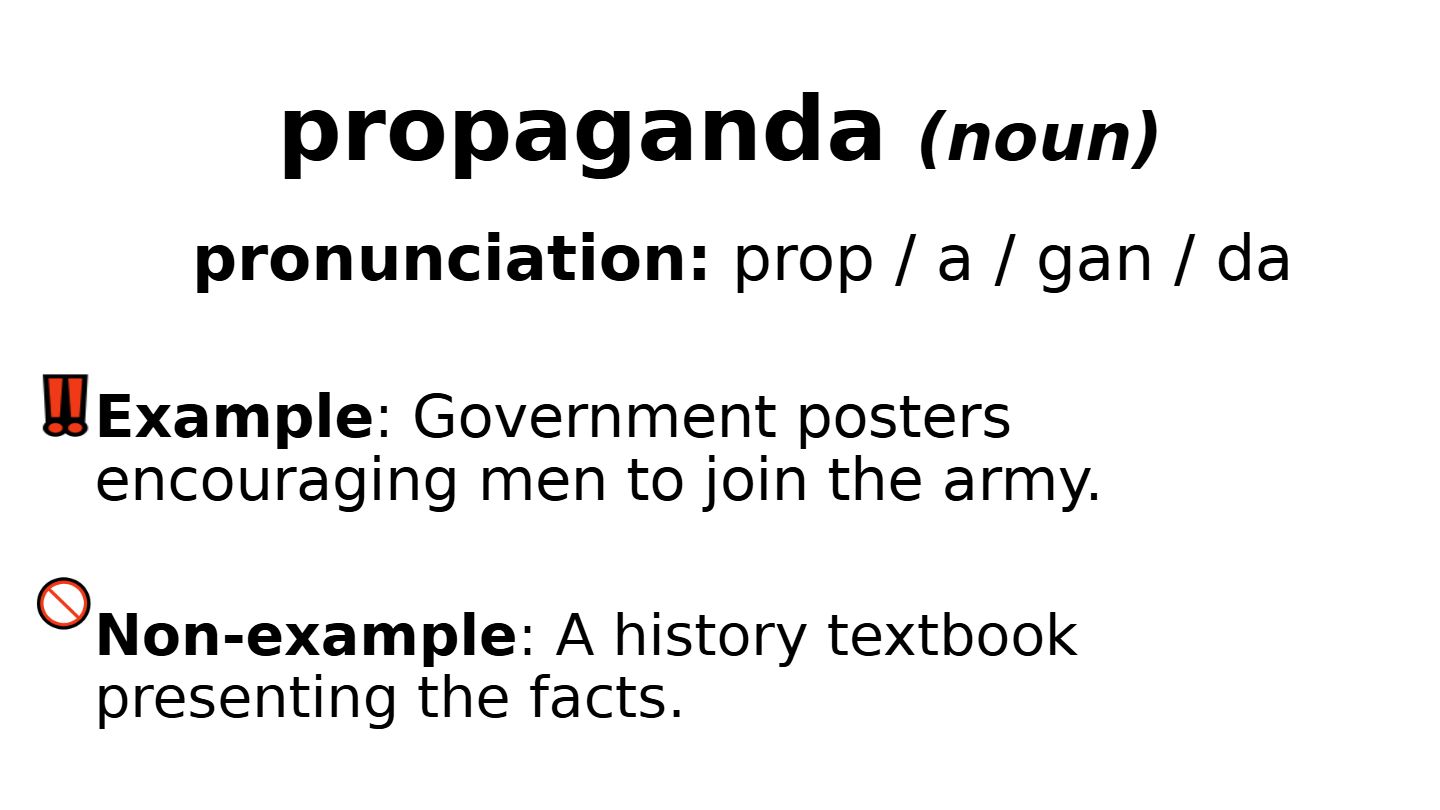
Based on the example and non-example provided, which of the following are examples of propaganda?
A government poster encouraging men to join the army
A history textbook presenting the facts
A news report listing weather conditions
A scientific article explaining a discovery
19
Multiple Choice
Which of the following commercials could be considered propaganda?
A commercial that encourages people to vote for a specific candidate using emotional appeals
A commercial that lists the nutritional facts of a cereal
A commercial that shows a family enjoying a meal together
A commercial that explains how to use a new phone
20
21
22
Multiple Choice
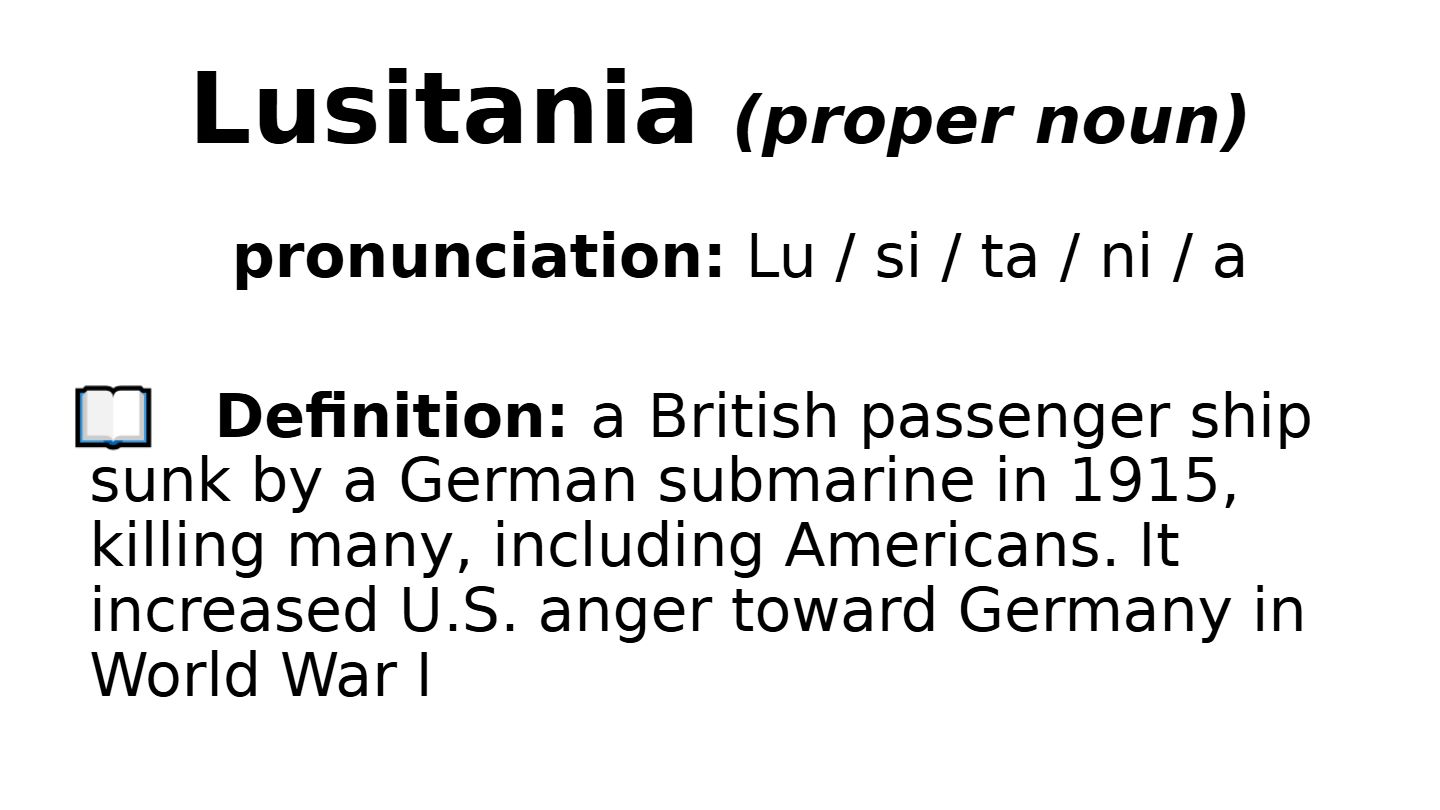
Why did the sinking of the Lusitania increase U.S. anger toward Germany during World War I?
Because many Americans were killed on board
Because it was a German ship
Because it was carrying weapons
Because it was the first ship sunk in the war
23
24
Multiple Choice
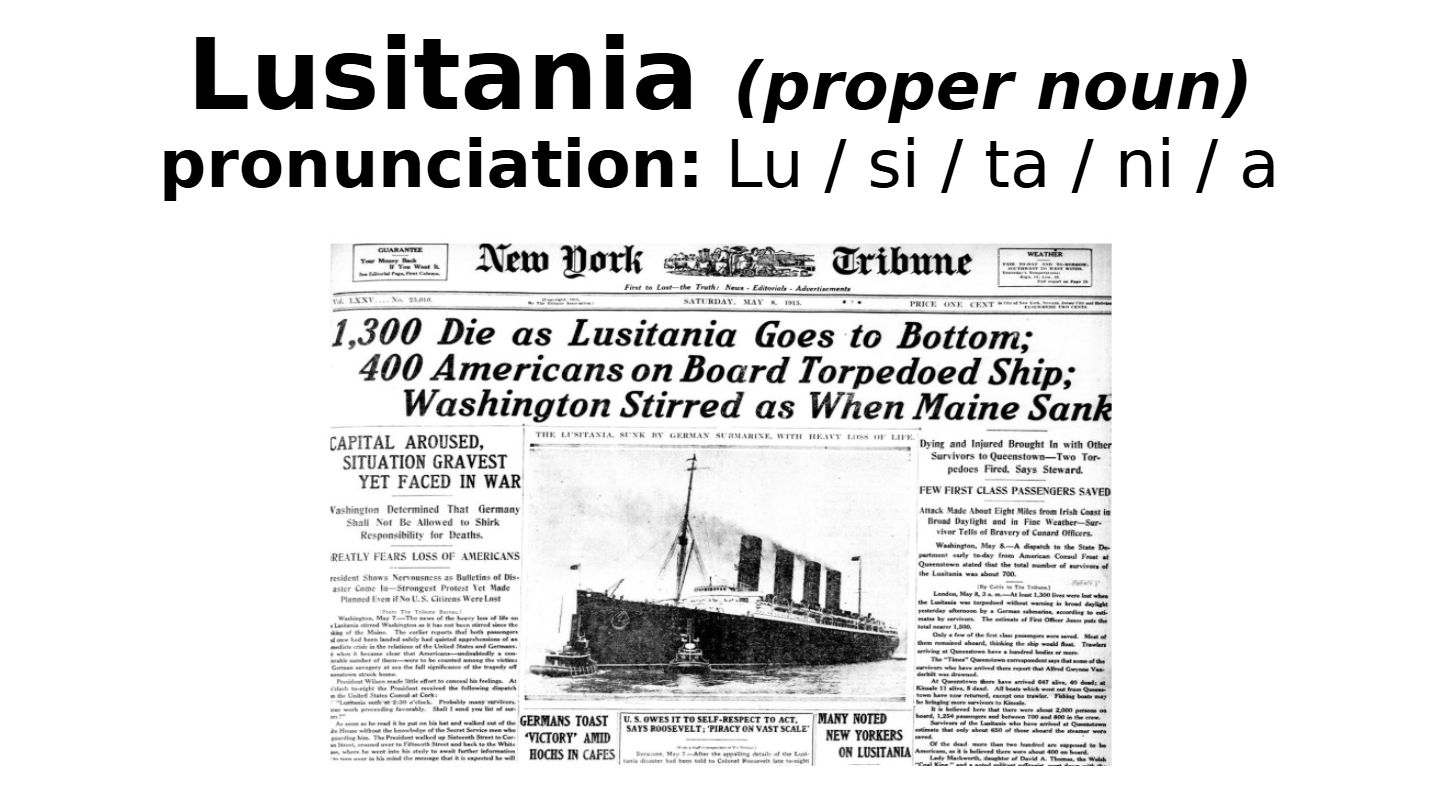
How did the news of the Lusitania's sinking impact public opinion in the United States?
It stirred anger and increased calls for action against Germany
It made people support Germany
It had no effect on public opinion
It led to immediate U.S. entry into World War I
25
26
27
28
Fill in the Blanks
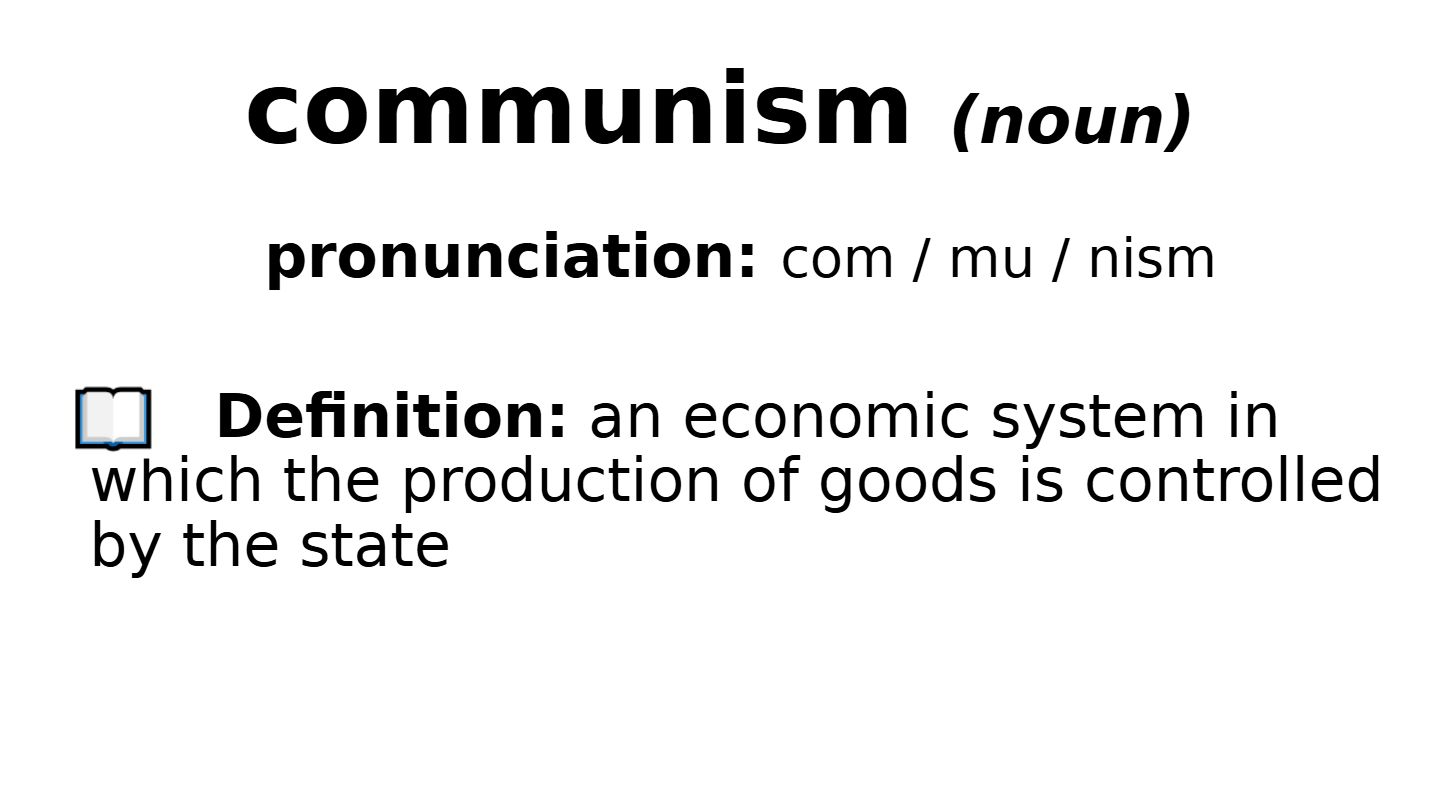
Fill in the blank: In communism, the production of goods is controlled by the
Type answer...
29
Multiple Choice
Which of the following best describes communism based on the definition provided?
An economic system in which the production of goods is controlled by the state
A political system where leaders are elected by the people
An economic system based on private ownership
A social system where everyone is equal
30
31
32
Multiple Select
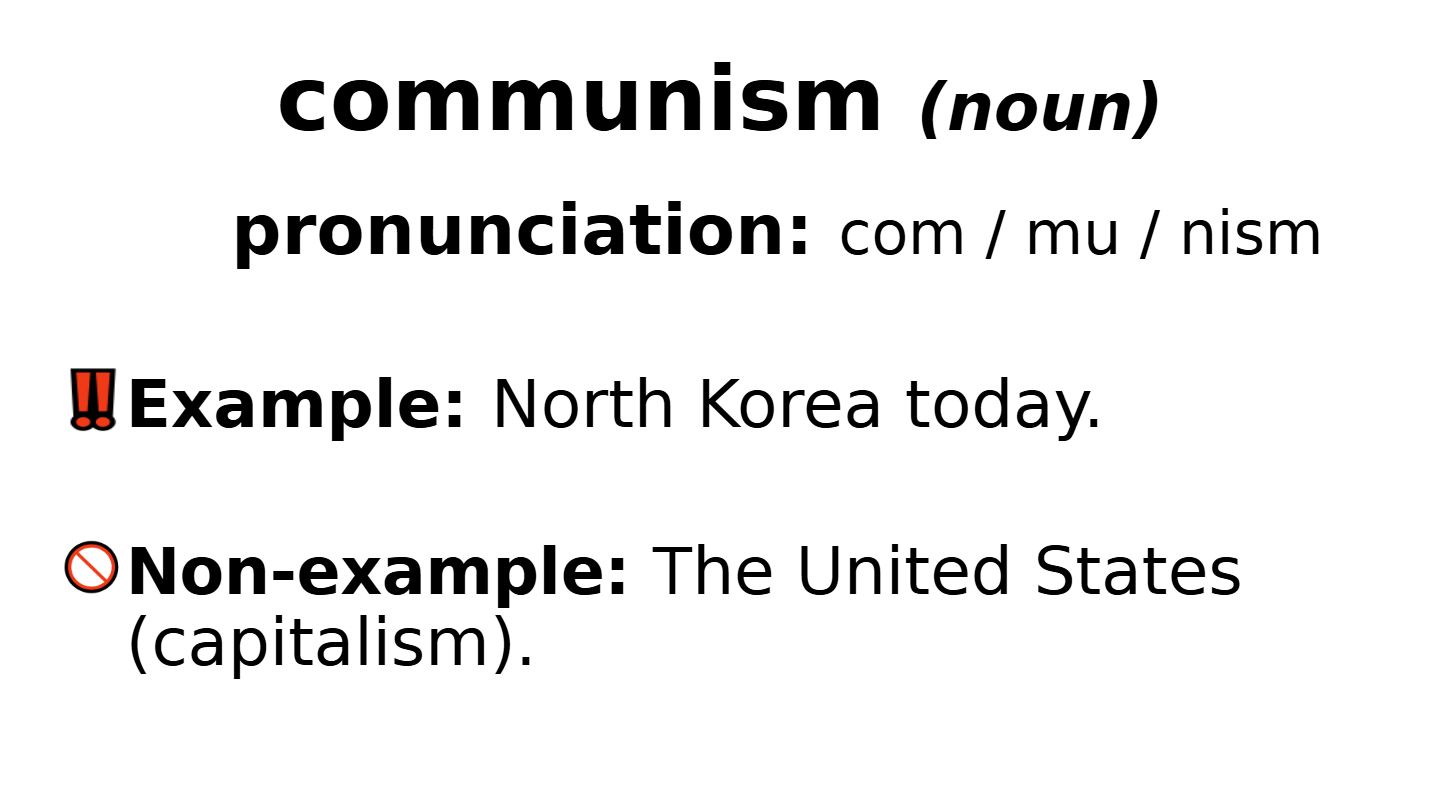
Based on the definition and example provided, which of the following statements are true about communism?
It is an economic system.
The United States is an example of communism.
North Korea is an example of communism.
Production of goods is controlled by private individuals.
33
Multiple Choice
Which of the following is an example of a country practicing communism today, according to the images?
North Korea
United States
France
Japan
34
35
36
Multiple Choice
What was the main purpose of the Selective Service Act of 1917?
To require men to register for a military draft
To establish communism in the United States
To promote capitalism
To end World War I
37
38
Show answer
Auto Play
Slide 1 / 38
SLIDE
Similar Resources on Wayground

30 questions
Raționamente
Presentation
•
9th - 12th Grade
37 questions
Colonialism
Presentation
•
9th - 12th Grade
32 questions
1.1 Scarcity
Presentation
•
9th - 12th Grade
35 questions
Scientific Revolution
Presentation
•
9th - 12th Grade
32 questions
Imperialism in Africa
Presentation
•
9th - 12th Grade
33 questions
Rotational Symmetry
Presentation
•
9th - 12th Grade
33 questions
Exponential Functions Intro/Review
Presentation
•
9th - 12th Grade
32 questions
Quadratic Equations by Graphing
Presentation
•
9th - 12th Grade
Popular Resources on Wayground
6 questions
PRIDE Always and Everywhere
Presentation
•
12th Grade
20 questions
Lab Safety Quiz

Quiz
•
6th Grade
26 questions
KOR Review Kahoot Questions
Quiz
•
8th Grade
21 questions
Continents and Oceans
Quiz
•
6th Grade
12 questions
Unit Zero lesson 2 cafeteria
Presentation
•
9th - 12th Grade
20 questions
Parts of Speech
Quiz
•
5th Grade
10 questions
Riddles Riddles fun Riddles
Quiz
•
6th - 12th Grade
16 questions
Subject & Predicate
Quiz
•
5th Grade
Discover more resources for Social Studies
6 questions
PRIDE Always and Everywhere
Presentation
•
12th Grade
6 questions
PRIDE in the Hallways and Bathrooms
Presentation
•
12th Grade
10 questions
Exploring the Age of Exploration: Key Events and Figures

Interactive video
•
6th - 10th Grade
8 questions
Pre Civil Formative
Quiz
•
11th Grade
30 questions
AP Human Geography Unit 1
Quiz
•
9th - 12th Grade
42 questions
Unit 3 Key Terms
Quiz
•
11th Grade
8 questions
Source Analysis Formative
Quiz
•
10th Grade
64 questions
USHC 4 Key Terms 22-23
Quiz
•
11th Grade - University