Genetics
Presentation
•
Science
•
10th Grade
•
Practice Problem
•
Medium
+3
Standards-aligned
Vernequa Taylor
Used 4+ times
FREE Resource
23 Slides • 32 Questions
1
2
Multiple Choice
Why is genetic diversity important in sexual reproduction?
It allows organisms to adapt to changing environments.
It produces identical offspring quickly.
It prevents cell division.
It reduces the number of chromosomes in offspring.
3
4
Open Ended
Explain how meiosis contributes to genetic diversity in organisms.
5
6
Multiple Choice
Which of the following best describes the difference between diploid and haploid cells?
Diploid cells have chromosomes in pairs, while haploid cells have single copies of each chromosome.
Diploid cells are reproductive cells, while haploid cells are somatic cells.
Diploid cells are found only in plants, while haploid cells are found only in animals.
Diploid cells have more genetic variation than haploid cells.
7
8
Fill in the Blanks
Fill in the blank: The process of exchanging genetic material resulting in the production of a new combination of DNA is called
9
Open Ended
Explain how crossing over and random assortment contribute to genetic diversity during meiosis.
10
11
Multiple Select
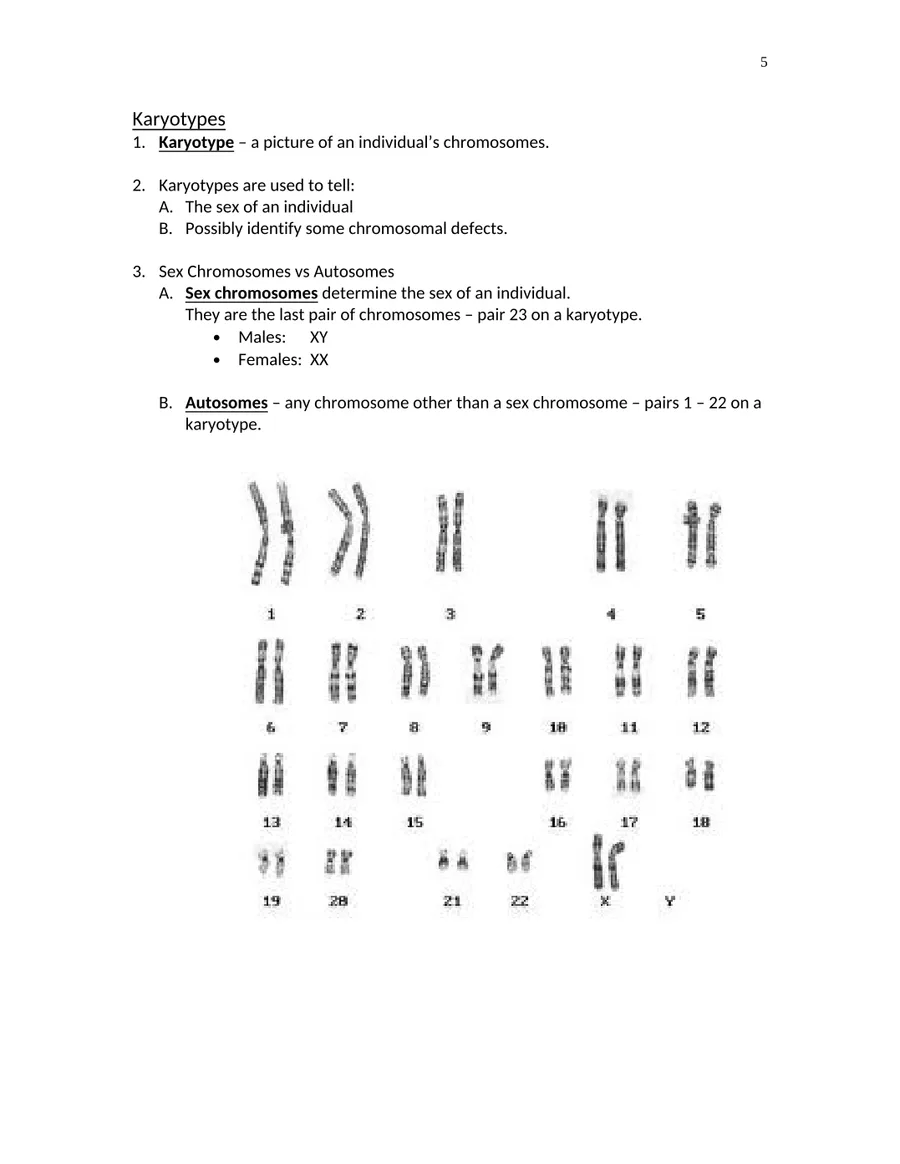
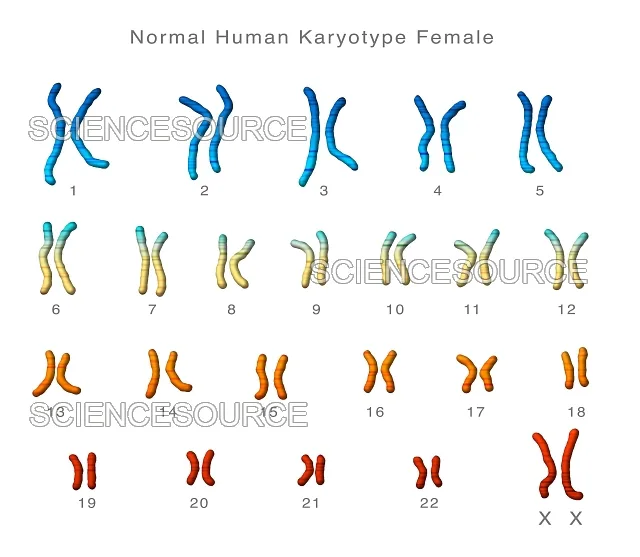
Which of the following can be determined by analyzing a karyotype?
The sex of an individual
The presence of chromosomal defects
The number of autosomes
All of the above
12
13
Multiple Choice
Is this individual male or female?
Male
Female
14
Multiple Choice
Is this individual male or female?
Male
Female
15
Open Ended
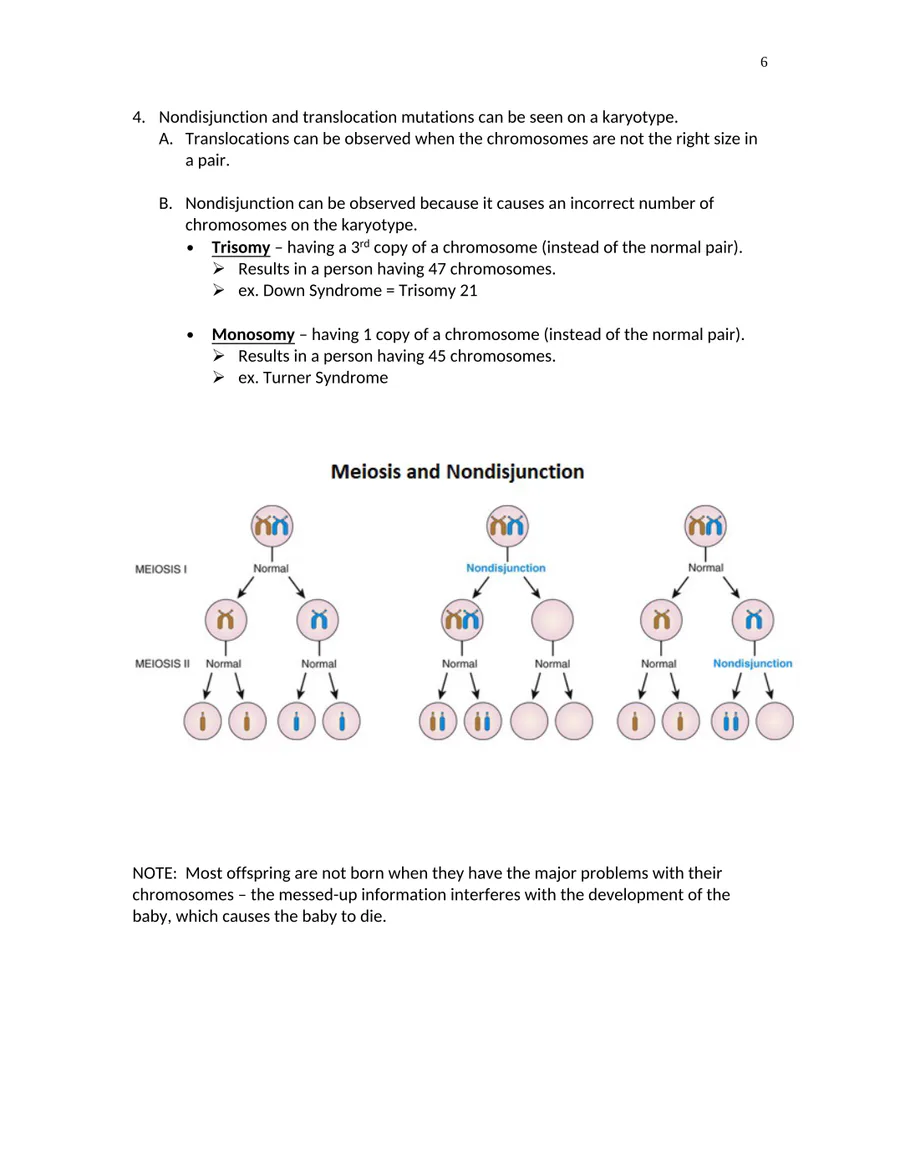
What is the difference between trisomy and monosomy, and what are examples of each?
16
17
Multiple Choice
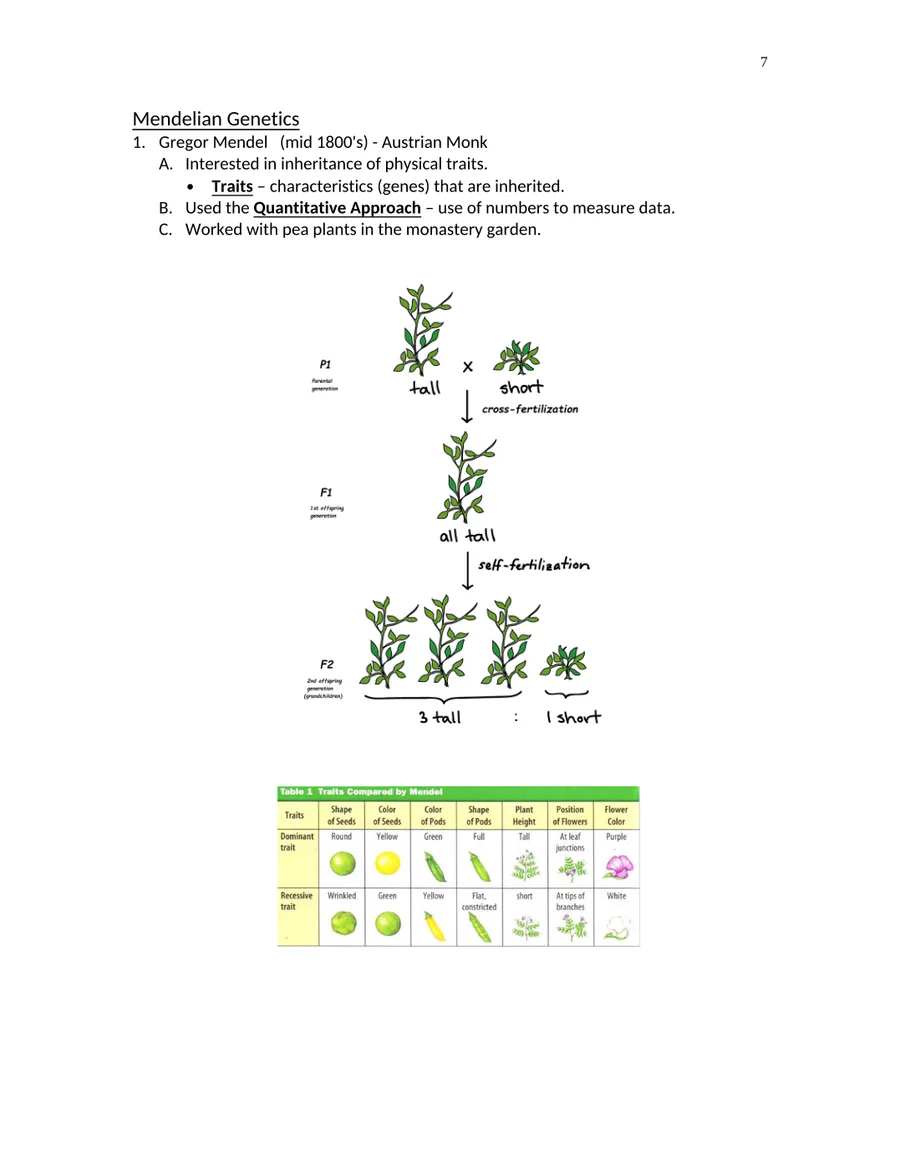
Which of the following is a dominant trait observed by Mendel in pea plants?
Purple flower color
White flower color
Wrinkled seeds
Green pods
18
19
20
Multiple Select
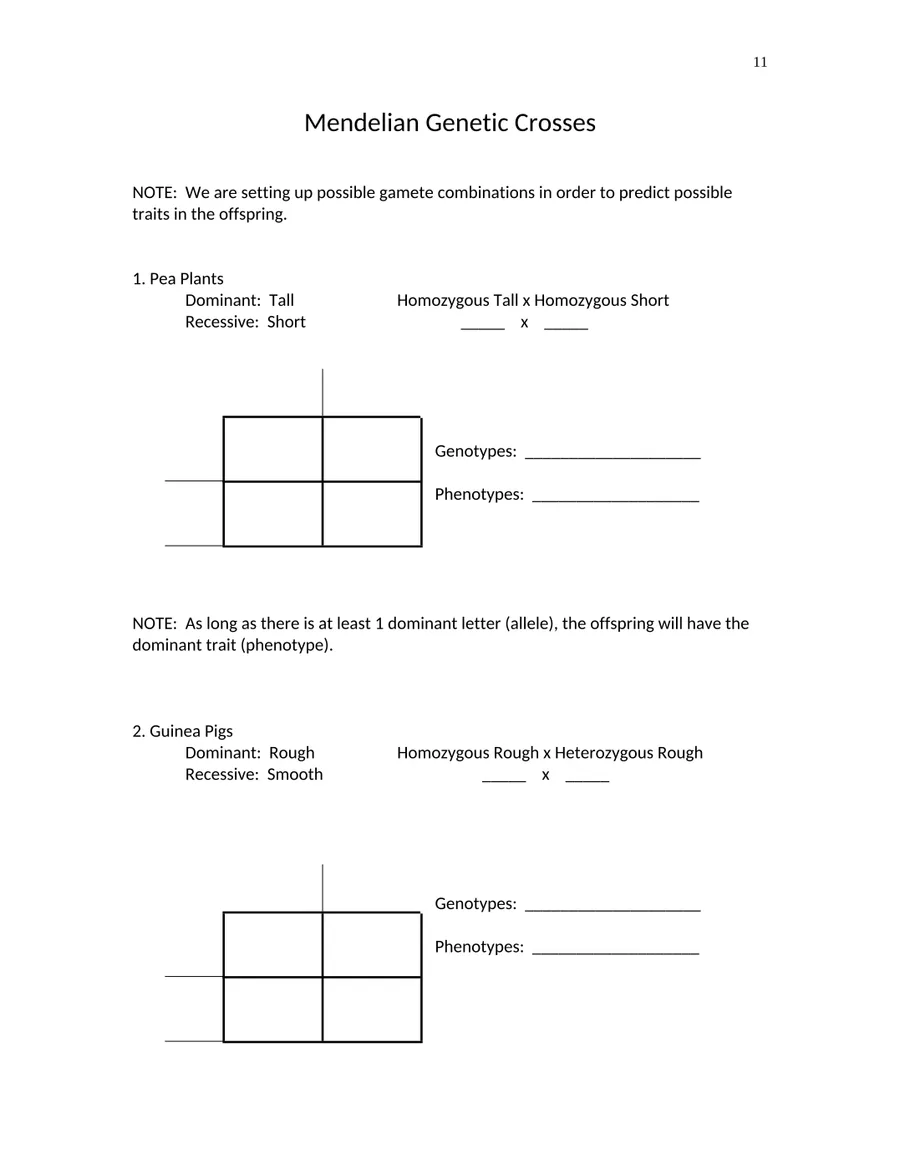
Which of the following are true about genotypes and phenotypes?
Genotype refers to the physical appearance of an organism.
Phenotype is determined by the observable features of alleles.
Genotype is represented by letters such as TT, Tt, or tt.
Phenotype is always the same as genotype.
21
Multiple Choice
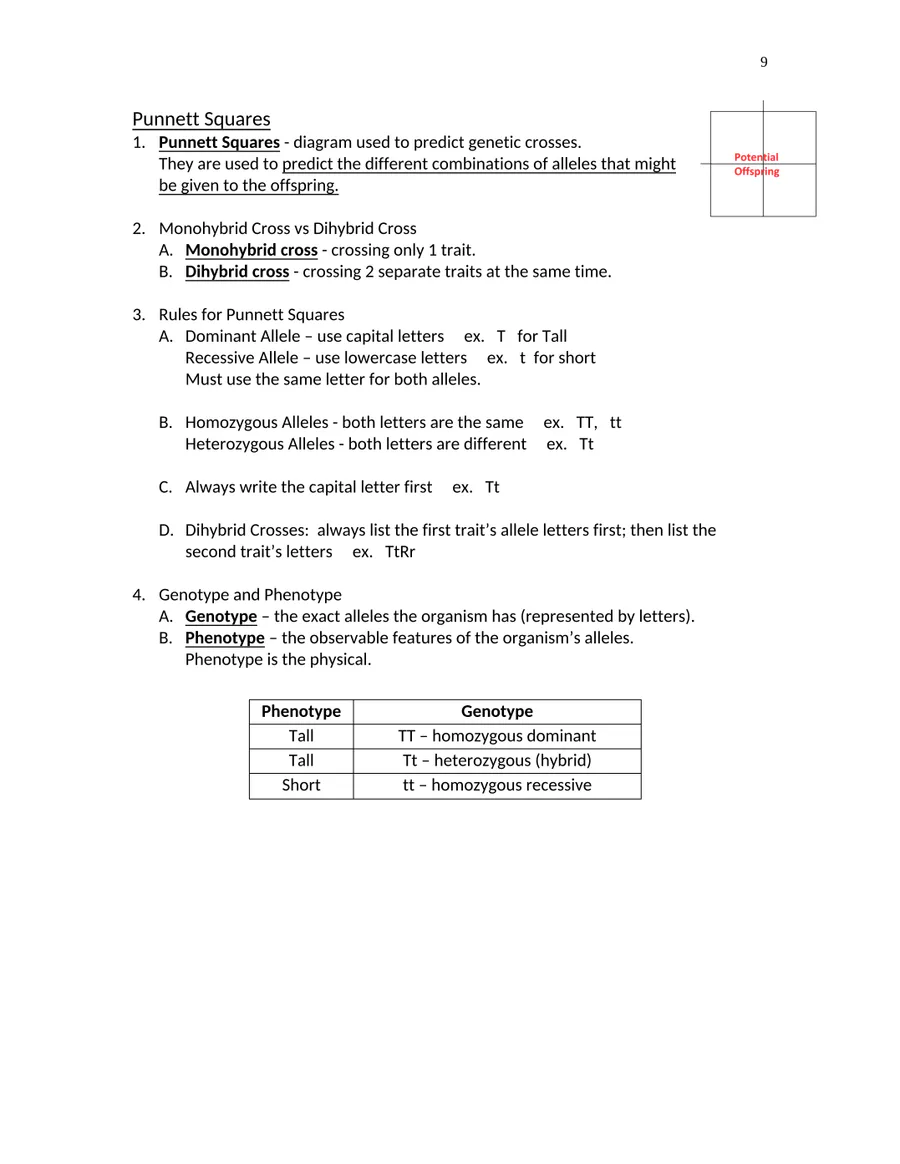
Which of the following best describes the difference between a monohybrid cross and a dihybrid cross?
A monohybrid cross involves crossing two traits, while a dihybrid cross involves only one trait.
A monohybrid cross involves crossing one trait, while a dihybrid cross involves two separate traits at the same time.
A monohybrid cross uses lowercase letters for alleles, while a dihybrid cross uses capital letters.
A monohybrid cross predicts phenotype, while a dihybrid cross predicts genotype.
22
23
Open Ended
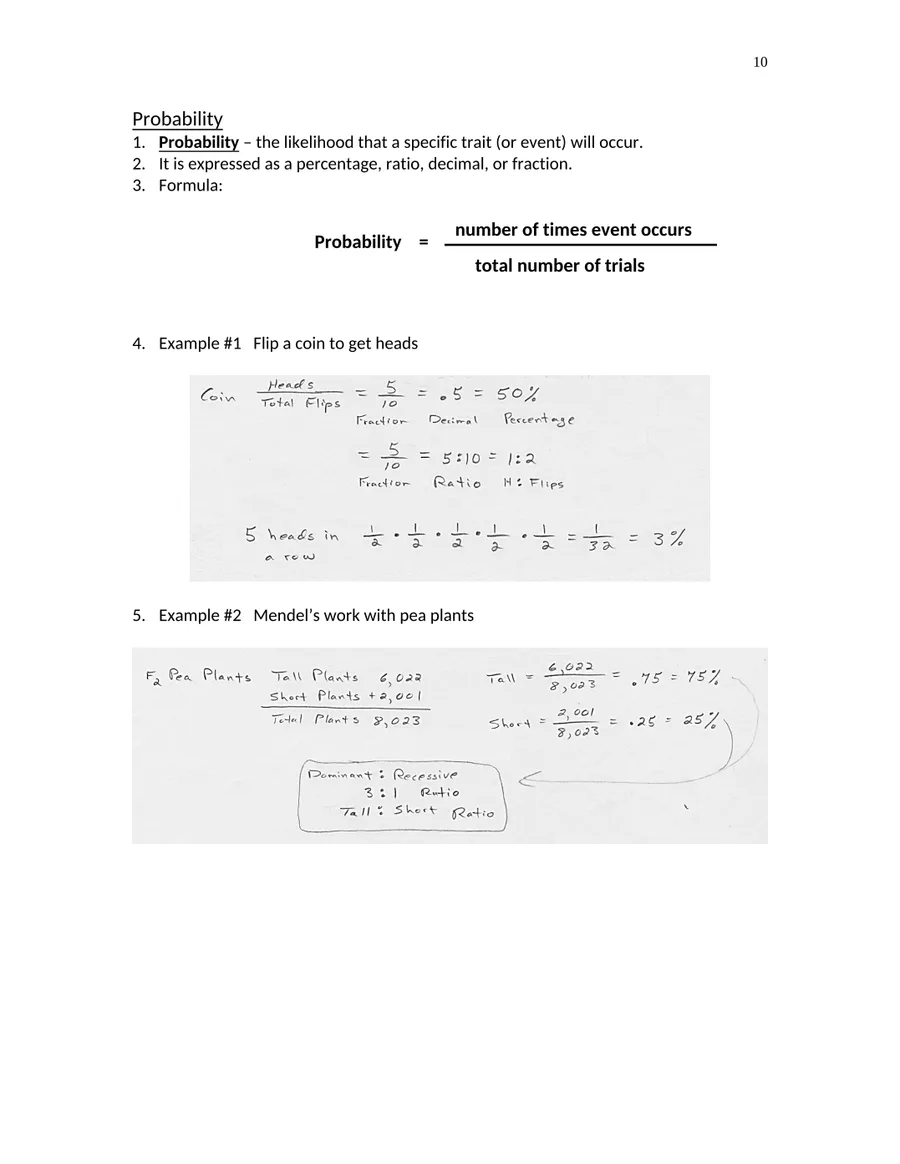
Explain how probability is used to predict the outcome of genetic crosses, referencing both the formula and Mendel’s pea plant experiment.
24
25
26
Multiple Choice
27
Multiple Choice
28
Multiple Choice
29
Multiple Choice
In humans, the haploid number of chromosomes is ____.
23
46
69
92
30
Multiple Choice
In which stage of MEIOSIS does crossing over occur? (The exchange of genetic material between chromosomes in a tetrad.)
Anaphase I
Metaphase I
Prophase I
Telophase I
31
Open Ended
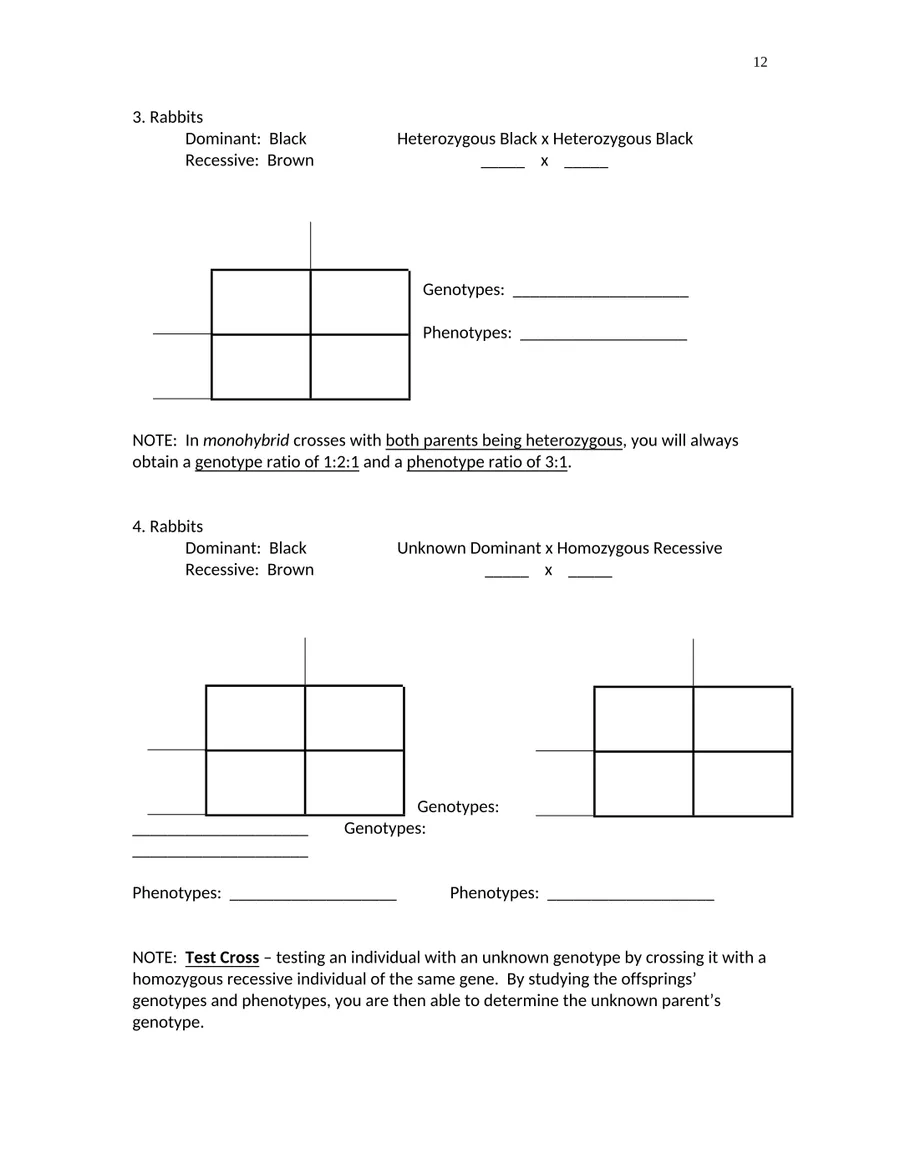
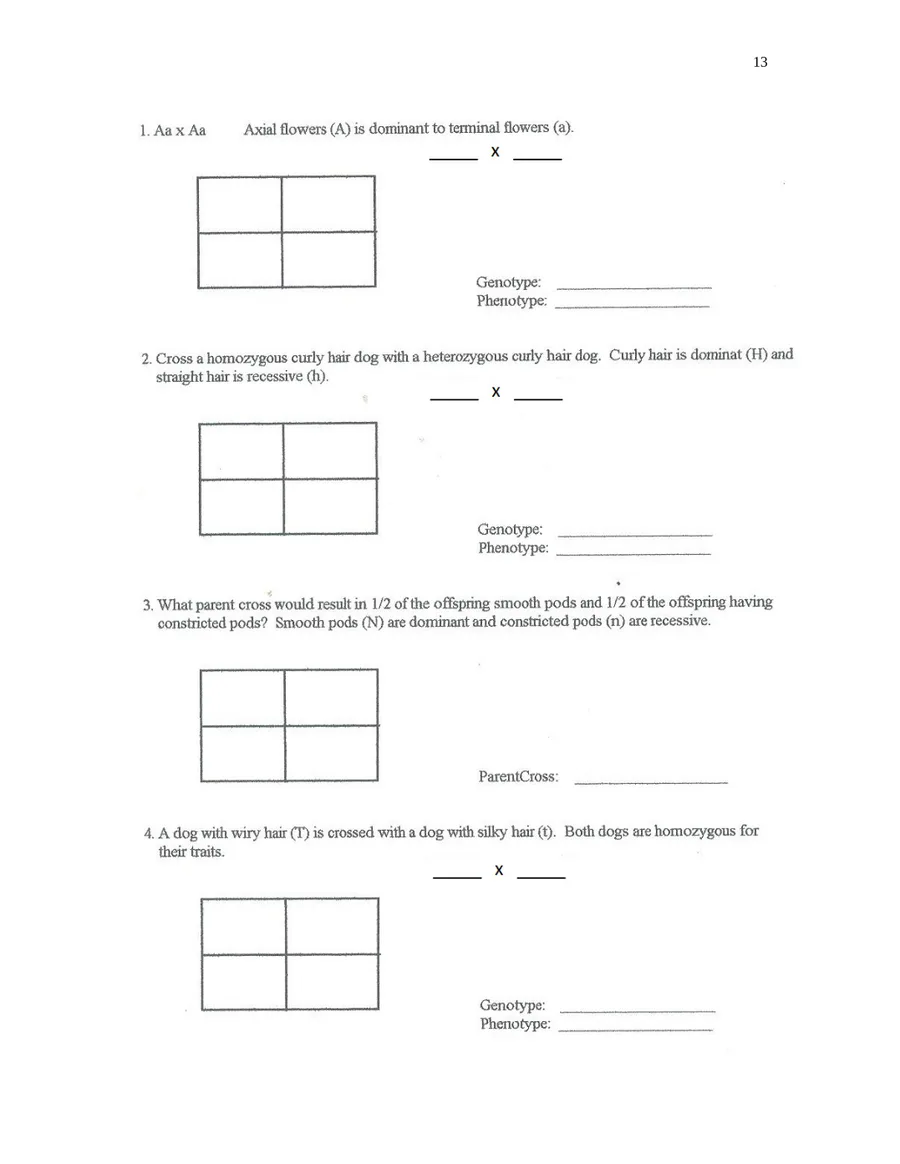
Describe the process and purpose of a test cross in genetics. Why is it important for determining unknown genotypes?
32
Multiple Choice
In a monohybrid cross where both parents are heterozygous, what is the expected phenotype ratio among the offspring?
1:1
3:1
2:1
1:2:1
33
34
35
Fill in the Blanks
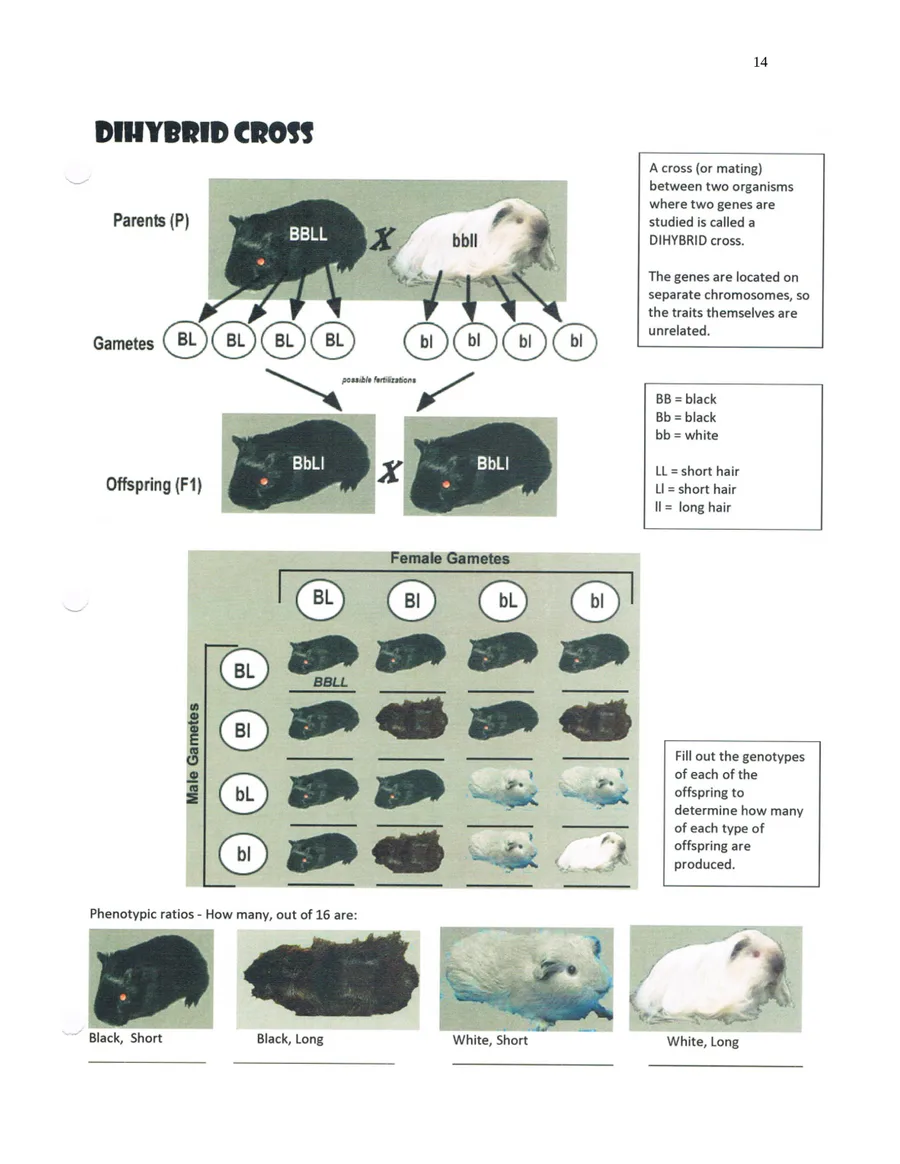
A cross between BBLL and bbll guinea pigs is an example of a
Type answer...
36
37
Open Ended
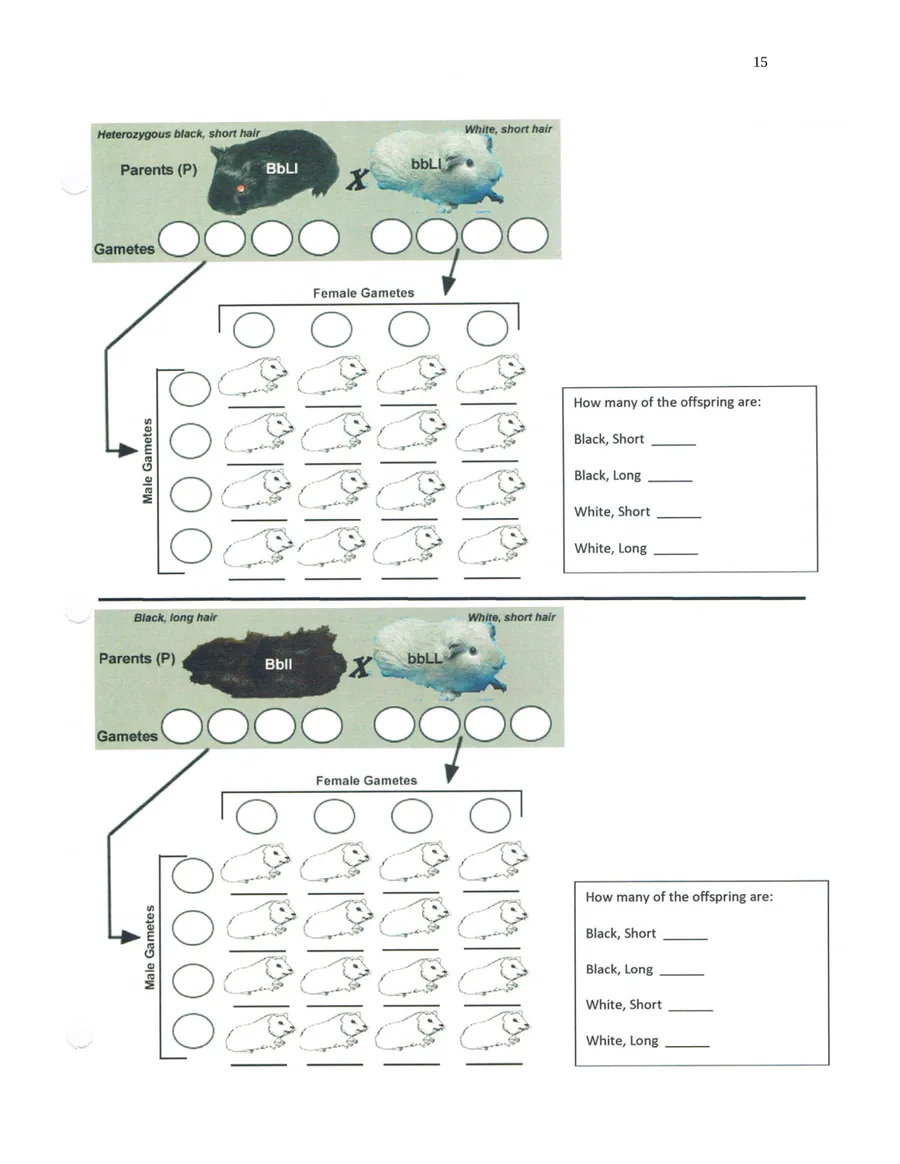
How many of the offspring are: Black, Short ___ Black, Long ___ White, Short ___ White, Long ___
38
39
Fill in the Blanks
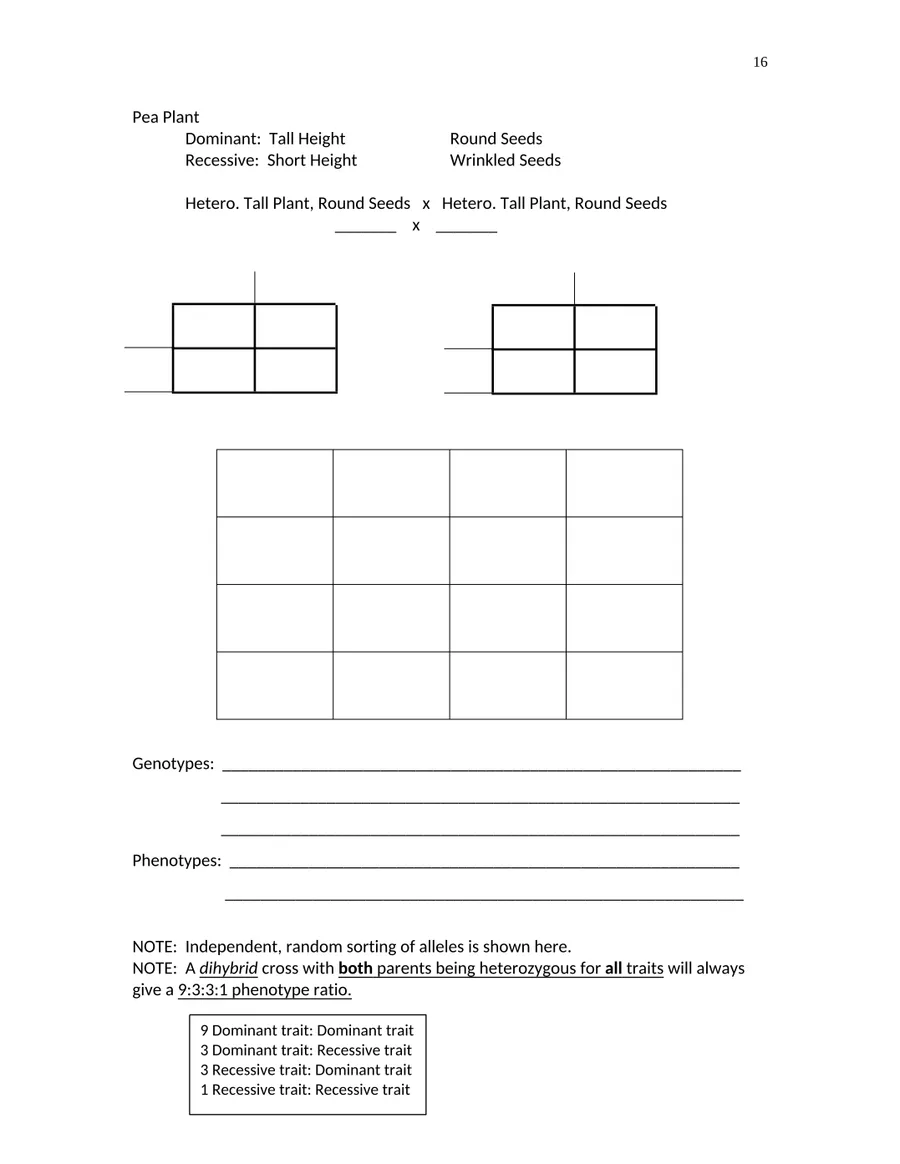
A dihybrid cross with both parents being heterozygous for all traits will always give a
Type answer...
40
41
42
Multiple Select
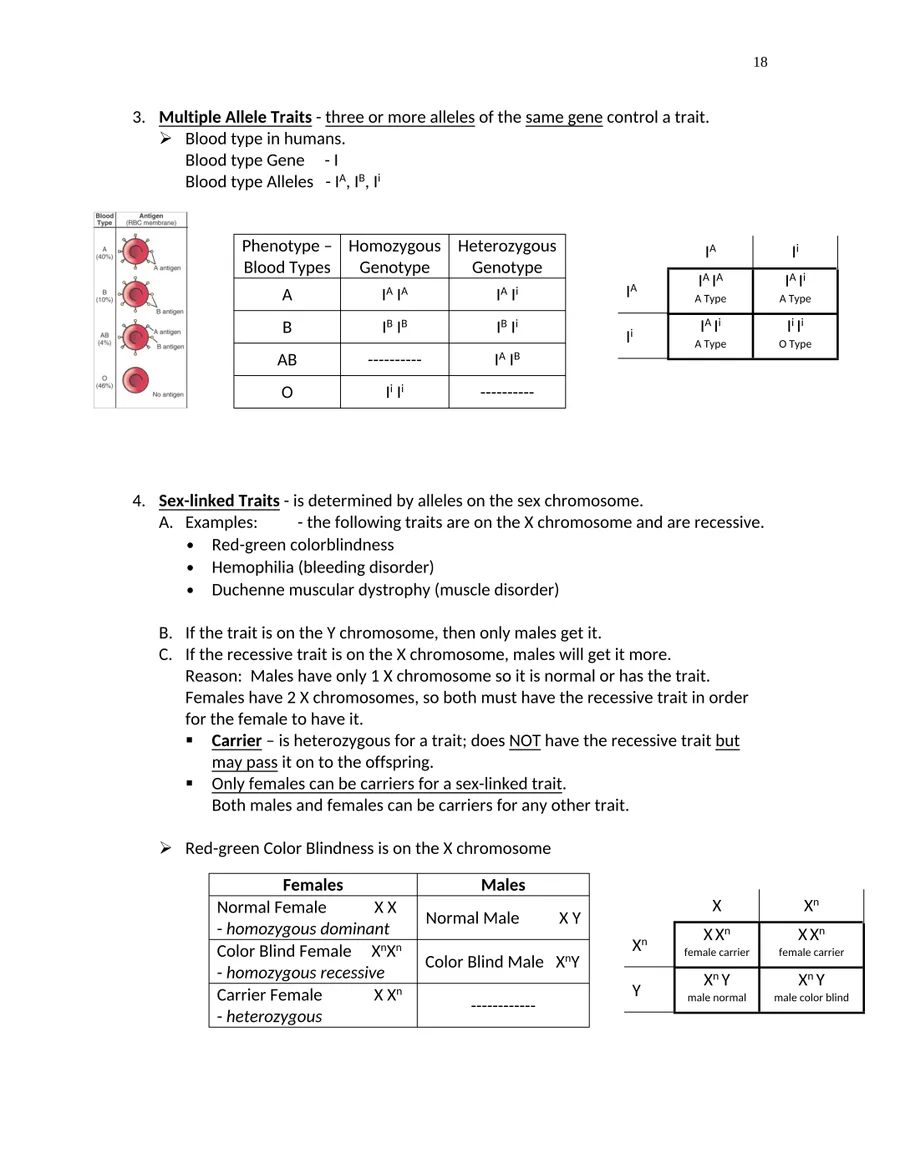
What are the possible genotypes for blood type A in humans?
I^A I^A
I^A I^B
I^A i
I^B i
43
Multiple Choice
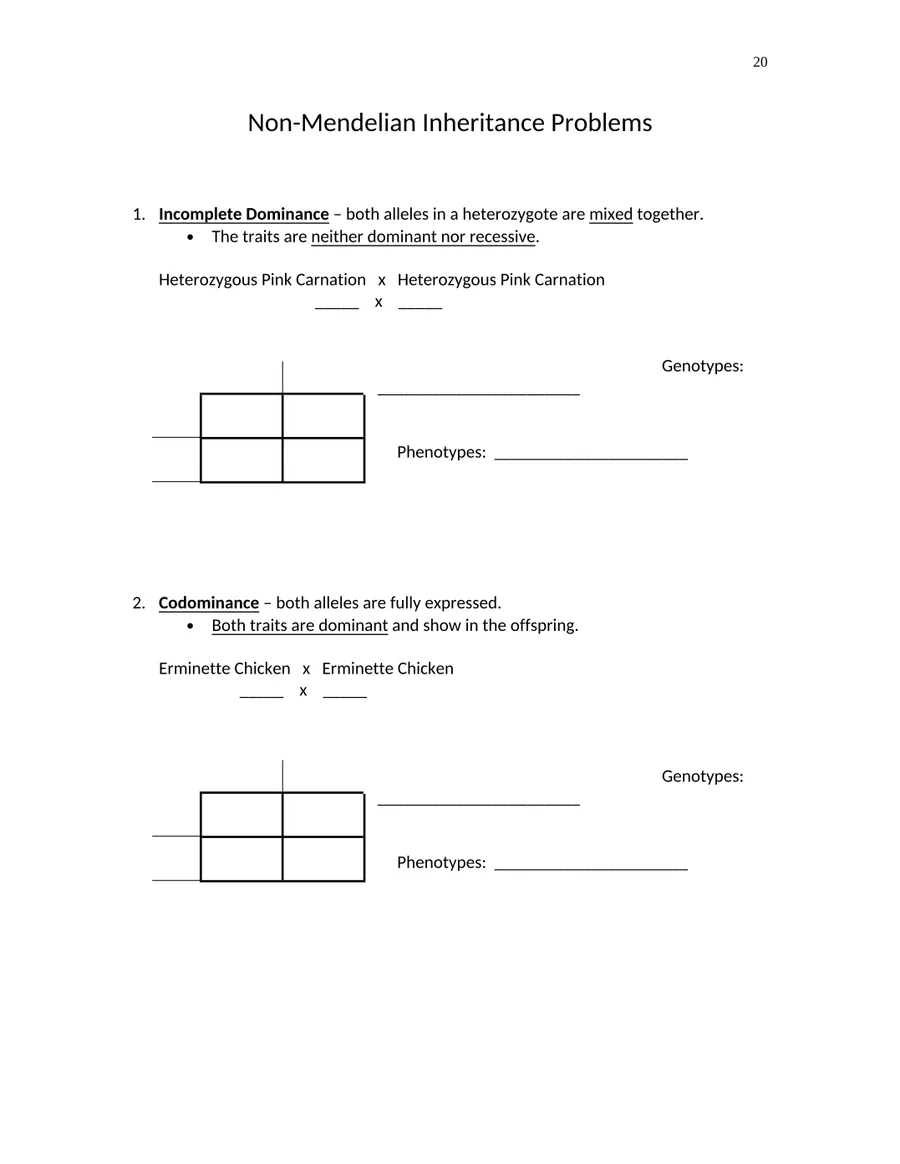
Which of the following are examples of sex-linked traits?
Red-green colorblindness
Tall height in pea plants
Blood type AB
Short hair in guinea pigs
44
Open Ended
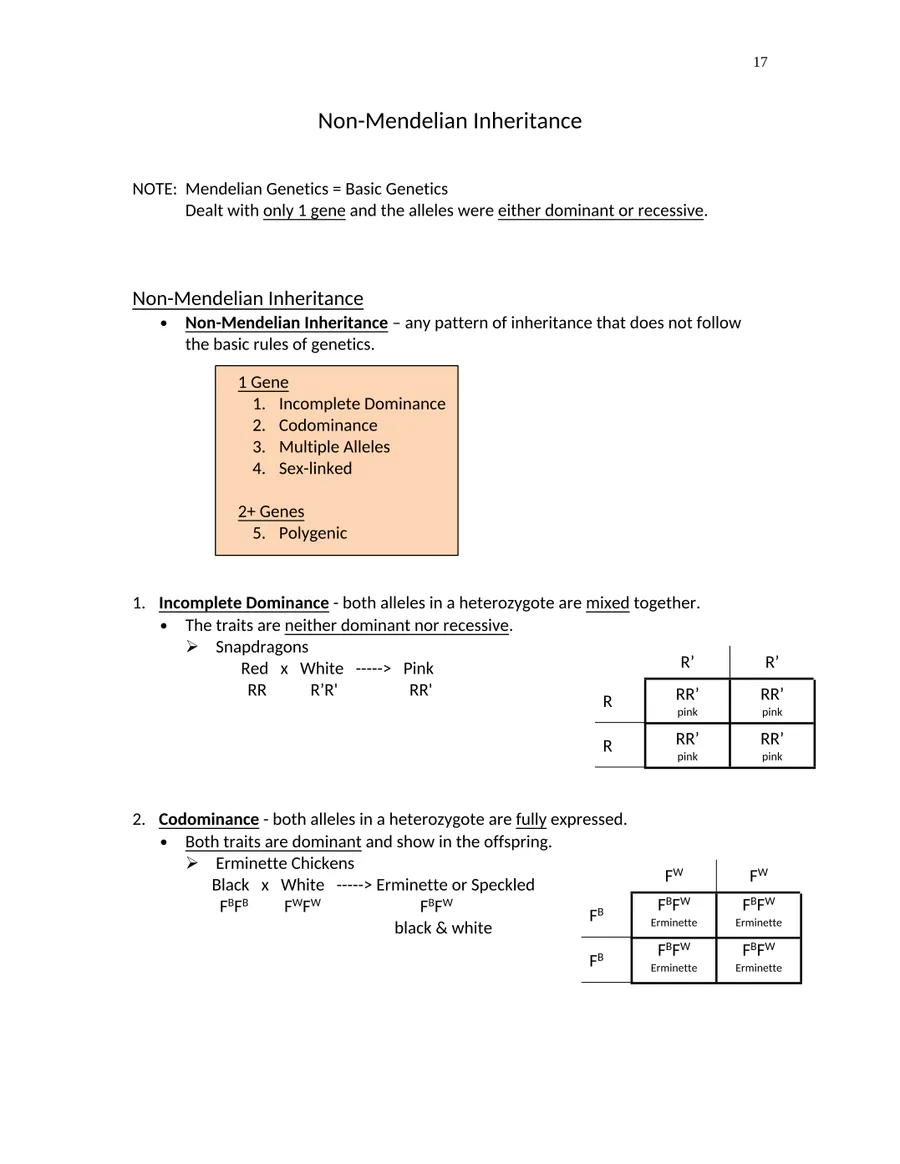
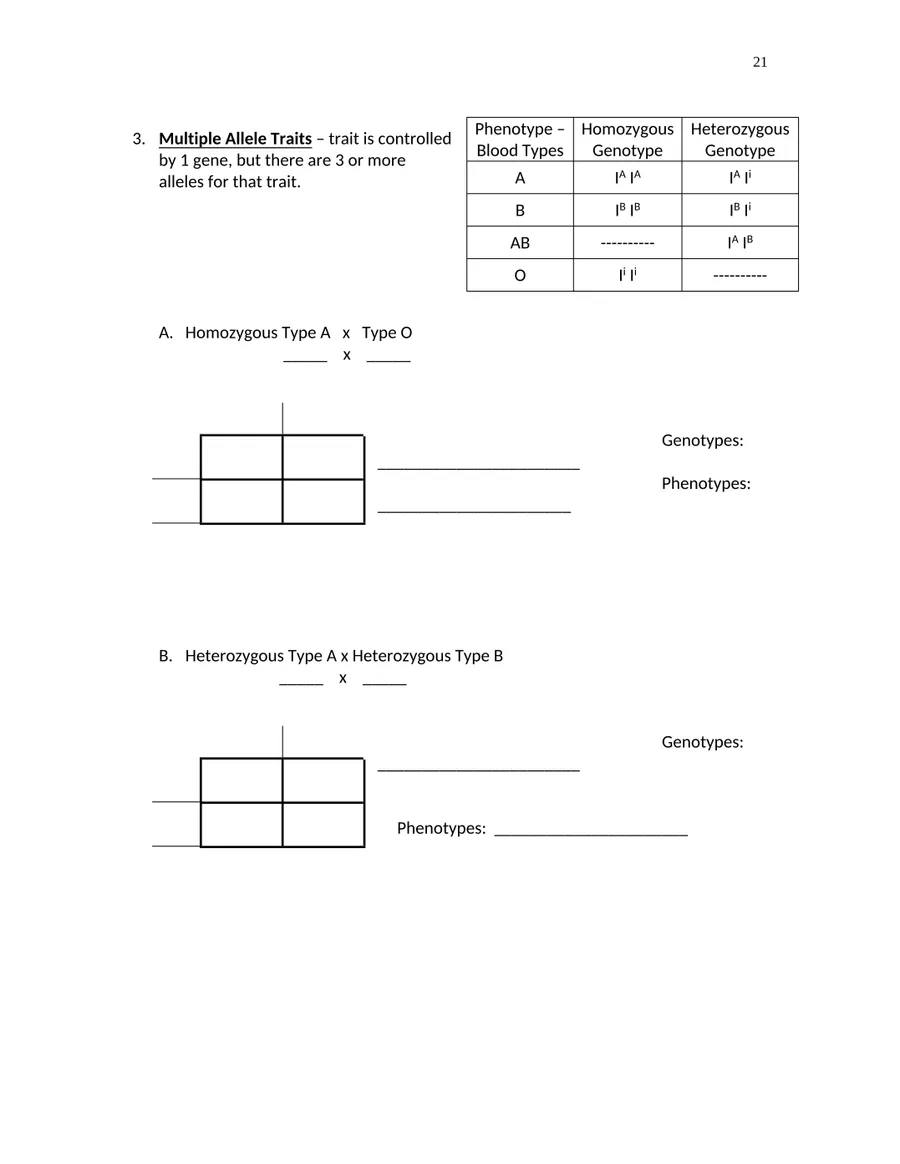
Explain how codominance differs from incomplete dominance, using examples from the images.
45
46
Multiple Choice
Which type of inheritance involves traits that are determined by two or more genes working together?
Incomplete dominance
Codominance
Polygenic traits
Sex-linked traits
47
48
49
Multiple Choice
Which blood type is determined by the genotype I^A I^B?
Type A
Type B
Type AB
Type O
50
51
52
Fill in the Blanks
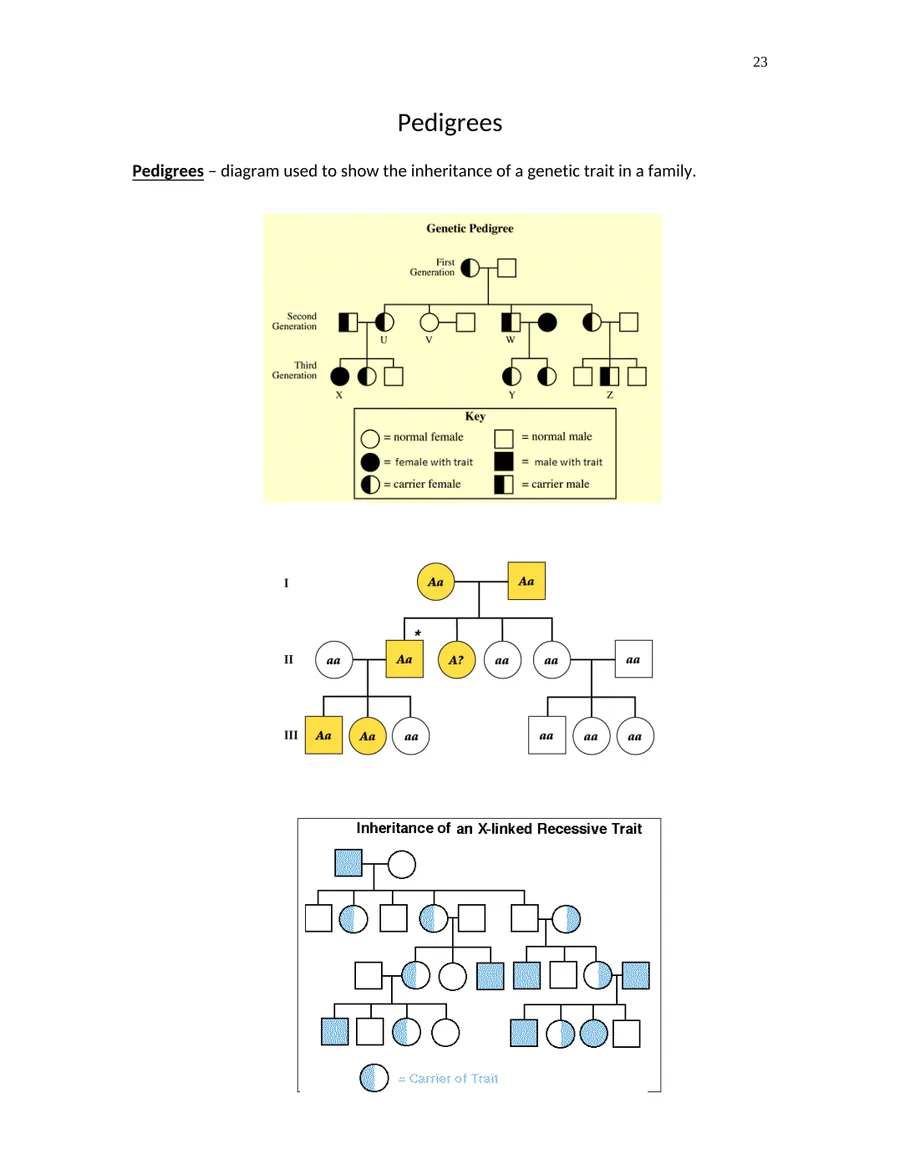
Pedigrees are used to show the inheritance of a genetic
Type answer...
53
Open Ended
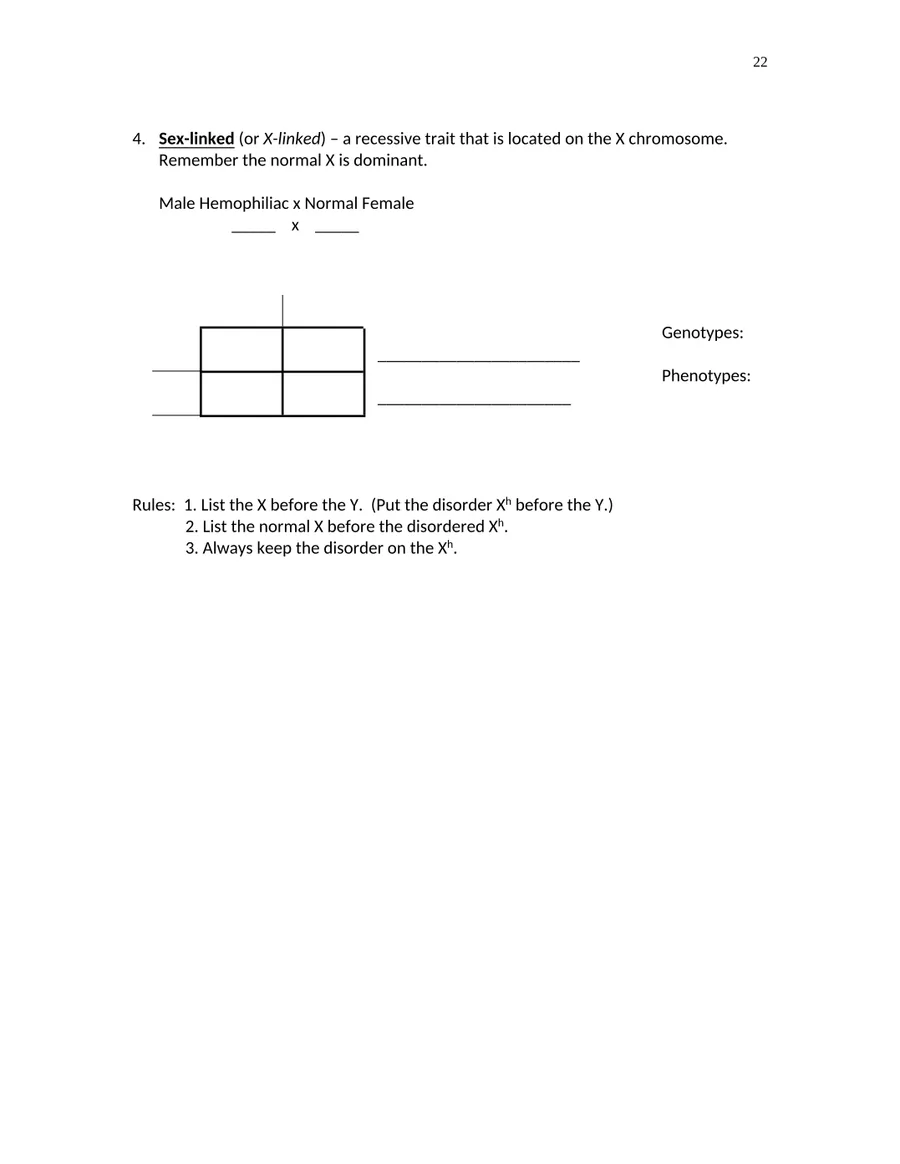
Explain how a sex-linked recessive trait is inherited and how it differs from autosomal inheritance.
54
Fill in the Blanks
Fill in the blank: In meiosis, the chromosome number is reduced by half to create
Type answer...
55
Open Ended
Reflecting on what you learned today about genetics, how would you explain the main differences between asexual and sexual reproduction to someone who has never studied biology before?
Show answer
Auto Play
Slide 1 / 55
SLIDE

Similar Resources on Wayground
45 questions
Names and Formulas of Chemical Compounds
Presentation
•
9th - 10th Grade
47 questions
Celsius, Fahrenheit, and Kelvin
Presentation
•
10th Grade
48 questions
matter
Presentation
•
11th Grade
53 questions
Food Tests
Presentation
•
9th - 10th Grade
52 questions
SSS, SAS, ASA, AAS, HL
Presentation
•
10th Grade
46 questions
Newtons Laws - 1 & 2
Presentation
•
10th Grade
53 questions
Computer Hardware and Software
Presentation
•
10th Grade
47 questions
Temperature Scales
Presentation
•
10th Grade
Popular Resources on Wayground
10 questions
Impact of 9/11 and the War on Terror
Interactive video
•
10th - 12th Grade
21 questions
Continents and Oceans
Quiz
•
6th Grade
5 questions
9/11
Interactive video
•
9th Grade
20 questions
Parts of Speech
Quiz
•
5th Grade
16 questions
Subject & Predicate
Quiz
•
5th Grade
10 questions
Riddles Riddles fun Riddles
Quiz
•
6th - 12th Grade
21 questions
Lab Safety
Quiz
•
10th Grade
6 questions
PRIDE in the Hallways and Bathrooms
Presentation
•
12th Grade
Discover more resources for Science
10 questions
Exploring Chemical and Physical Changes
Interactive video
•
6th - 10th Grade
30 questions
Atomic Structure and Periodic Table Review
Quiz
•
10th Grade
10 questions
Physical and Chemical Changes
Quiz
•
5th - 10th Grade
10 questions
Distance, Displacement, Speed, and Velocity Explained
Interactive video
•
6th - 10th Grade
20 questions
Reading Graphs in Science
Quiz
•
9th - 12th Grade
30 questions
Identifying Artificially Generated Images
Quiz
•
9th - 12th Grade
12 questions
Cell Membrane
Presentation
•
9th - 12th Grade
38 questions
Water Cycle and Groundwater
Quiz
•
9th - 12th Grade