RESPIRTORY DISEASES
Presentation
•
Biology
•
Professional Development
•
Easy
Standards-aligned

Antoinette T
Used 1+ times
FREE Resource
30 Slides • 60 Questions
1
2
Hotspot
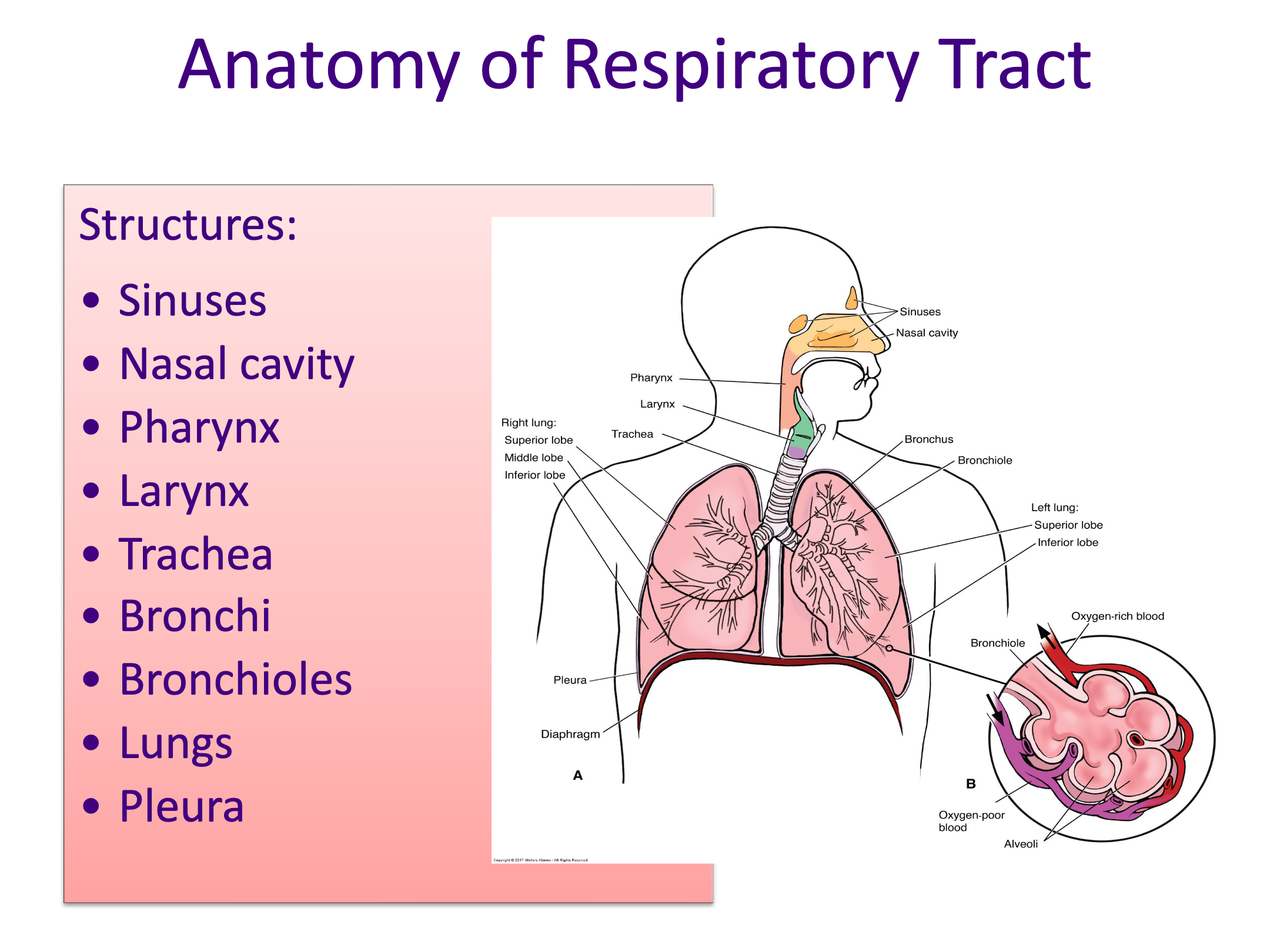
Identify the trachea
3
Hotspot
Identify the Bronchi.
4
Hotspot
Select the diaphragm
5
Hotspot
Identify the Left Lung.
6
Hotspot
Identify the Right Lung.
7
Labelling
What is # 5
bronchi
mouth
lungs
nose
8
Labelling
Label the parts of the respiratory system
diaphragm
lungs
bronchioles
alveoli
bronchi
trachea
9
Labelling
What is # 9
nose
mouth
bronchi
lung
10
Hotspot
Identify the Nasal Cavity.
11
Hotspot
Identify the nose and mouth.
12
Hotspot
Identify the Trachea.
13
Labelling
Label the parts of the respiratory system
diaphragm
trachea
lungs
14
Labelling
Match the following
trachea
Alveoli
larynx
R Lung
Nasal cavity
bronchioles
Diaphragm
pharynx
L Lung
15
Labelling
Label the parts of the respiratory system
diaphragm
bronchi
lungs
trachea
16
Hotspot
Select the alveoli.
17
Hotspot
Identify the Bronchi.
18
19
Open Ended
Why is it important to understand the anatomy of the respiratory tract when studying respiratory diseases?
20
21
Multiple Choice
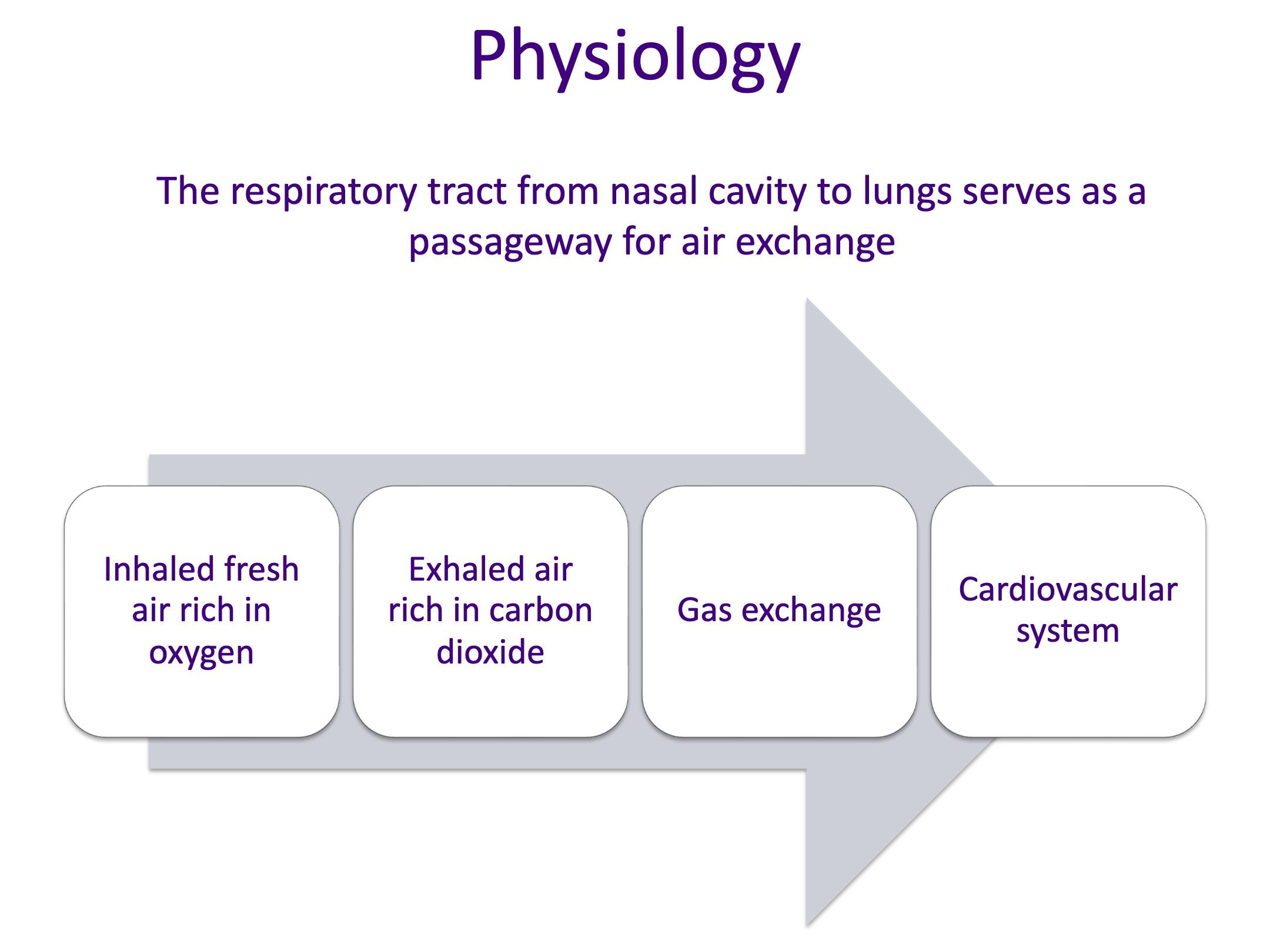
Which of the following is not a function of the respiratory system?
Ventilation
Speech production
Leukocyte production
Gas exchange
22
Multiple Choice
Which of the following is not a function of the respiratory system?
Ventilation
Speech production
Leukocyte production
Gas exchange
23
Multiple Choice
Which of the following is not a function of the respiratory system?
Ventilation
Speech production
Leukocyte production
Gas exchange
24
Multiple Choice
Which of the following is not a function of the respiratory system?
Ventilation
Speech production
Leukocyte production
Gas exchange
25
Multiple Choice
Which of the following is not a function of the respiratory system?
Ventilation
Speech production
Leukocyte production
Gas exchange
26
Multiple Choice
Which portion of the respiratory system is held open by a series of C-shaped cartilages?
Pharynx
Bronchi
Trachea
Lungs
27
Multiple Choice
Which lung contains two lobes?
Right lung
Left lung
Neither answers are correct
Both answers are correct
28
Multiple Choice
_______ is the process of breathing.
Inspiration
Expiration
Ventilation
Oxygenation
29
Multiple Choice
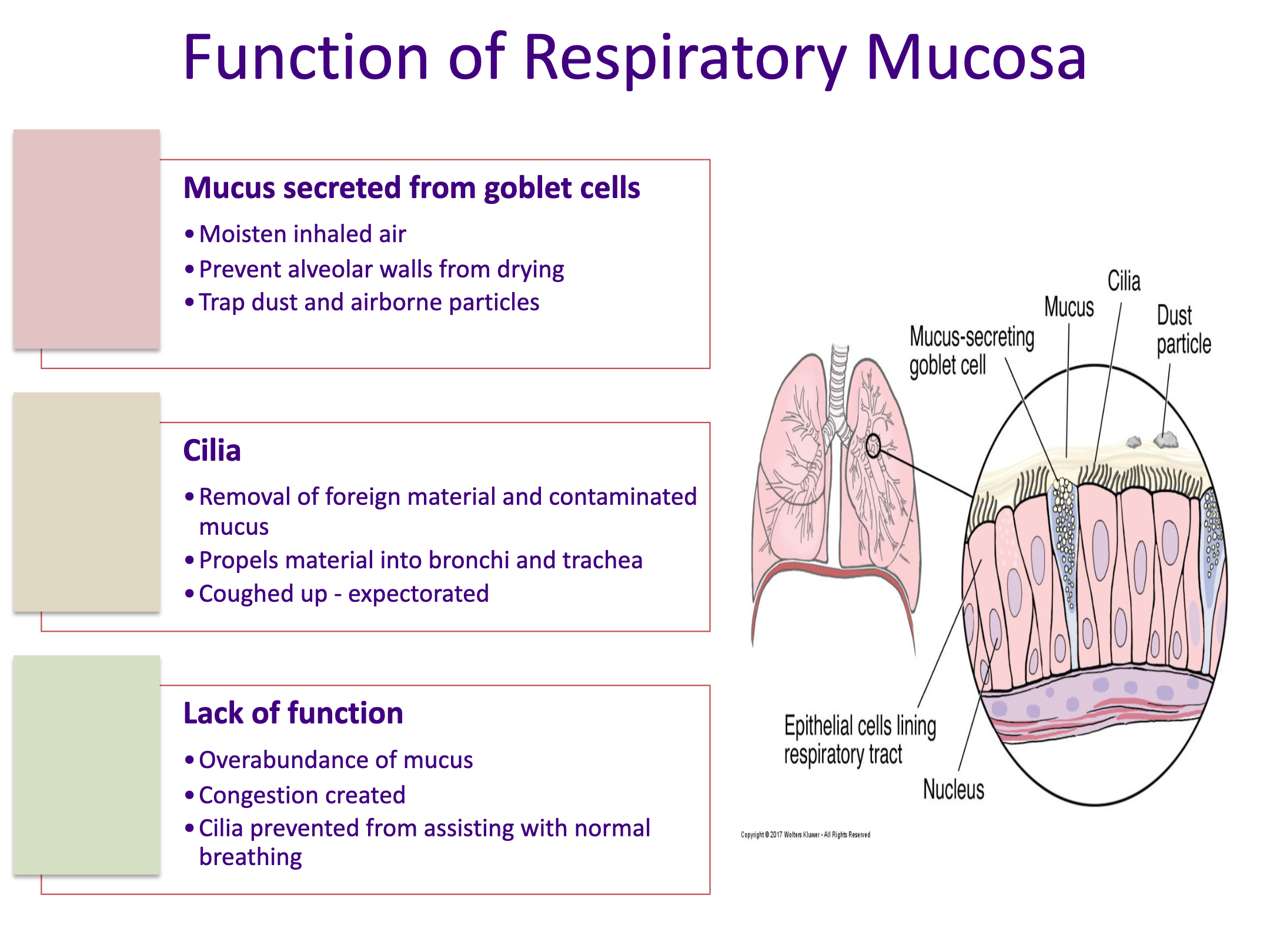
What is the function of cilia?
to move microbes, mucus and debris upwards
to warm and moisten the air
to trap dust and irritating particles
to create the sneezing reflex
30
Multiple Choice
Where does gas exchange occur?
left lung
Alveoli
Bronchi
Bronchioles
31
Multiple Choice
Where are the vocal cords located?
Sinuses
Oropharynx
Pharynx
Larynx
32
Multiple Choice
The epiglottis covers the _______ during swallowing to prevent food/liquids from entering into the lungs.
bronchi
larynx
lungs
mouth
33
Multiple Choice
Alveoli are covered in ________, fatty substance that helps them from collapsing.
cilia
surfactant
mucus
capillaries
34
Multiple Choice
What is number one?
Bronchi
Alveoli
Trachea
Bronchioles
35
Multiple Choice
What is illustrated with #2?
Bronchi
Bronchioles
Trachea
Alveoli
36
Multiple Choice
Which portion of the pharynx is illustrated in green (#2)?
Oropharynx
Nasopharynx
Laryngopharynx
Voice box
37
Multiple Choice
What muscle is located under the lungs and assists with lung expansion?
Arrector pili muscles
Diaphragm
External obliques
Rectus abdomnis
38
Multiple Choice
Which of the following breaths per minute is a normal respiratory rate?
6
14
22
30
39
Multiple Choice
During _______ the diaphragm contracts to enlarge the thoracic cavity to create a vacuum.
breathing
expiration
ventilation
inspiration
40
41
Open Ended
Explain how the lack of function of cilia in the respiratory tract can affect breathing and overall respiratory health.
42
Multiple Choice
Which function is performed by mucus secreted from goblet cells in the respiratory mucosa?
Moisten inhaled air
Remove foreign material
Cause congestion
Assist with normal breathing
43
44
Multiple Select
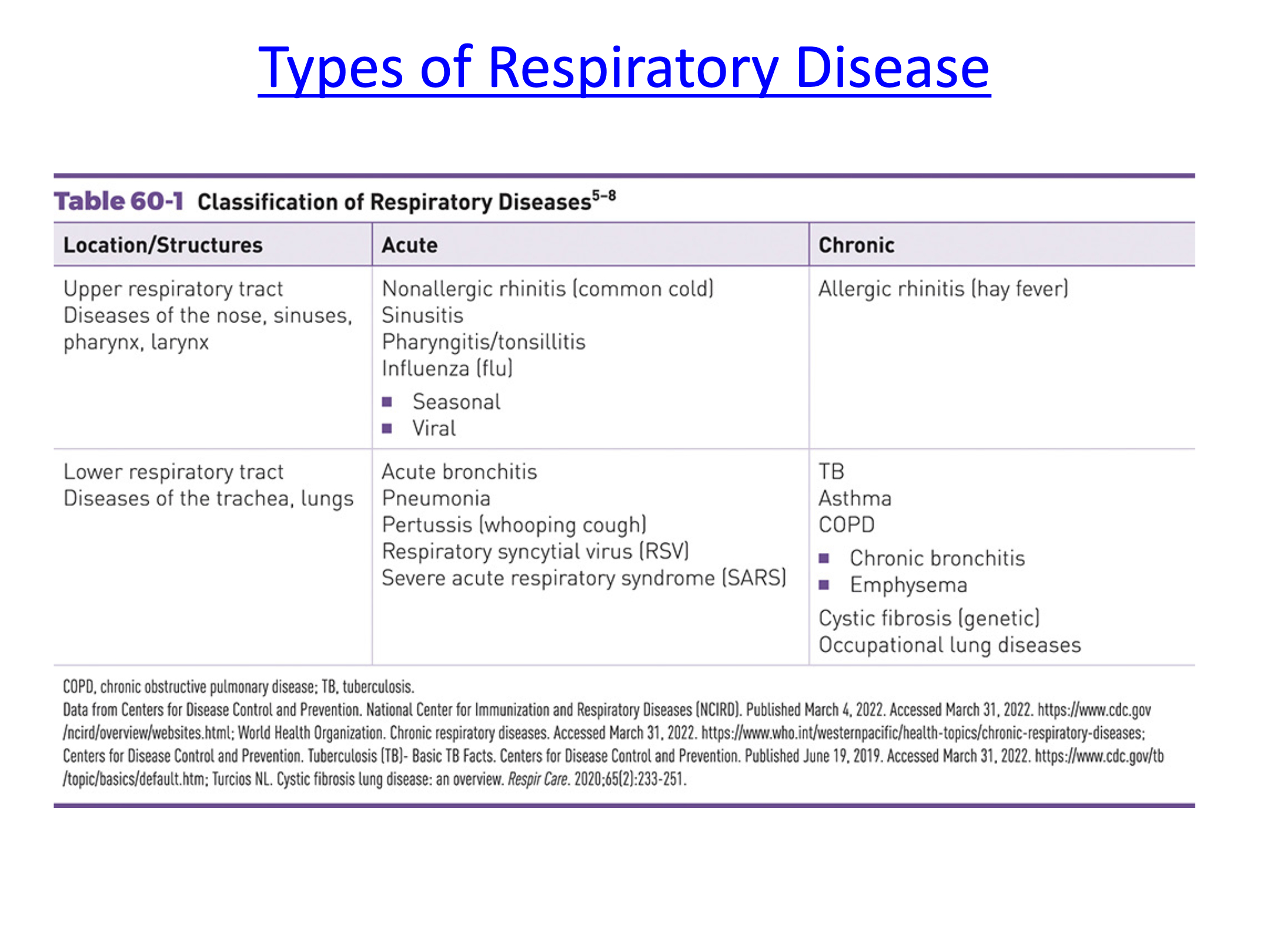
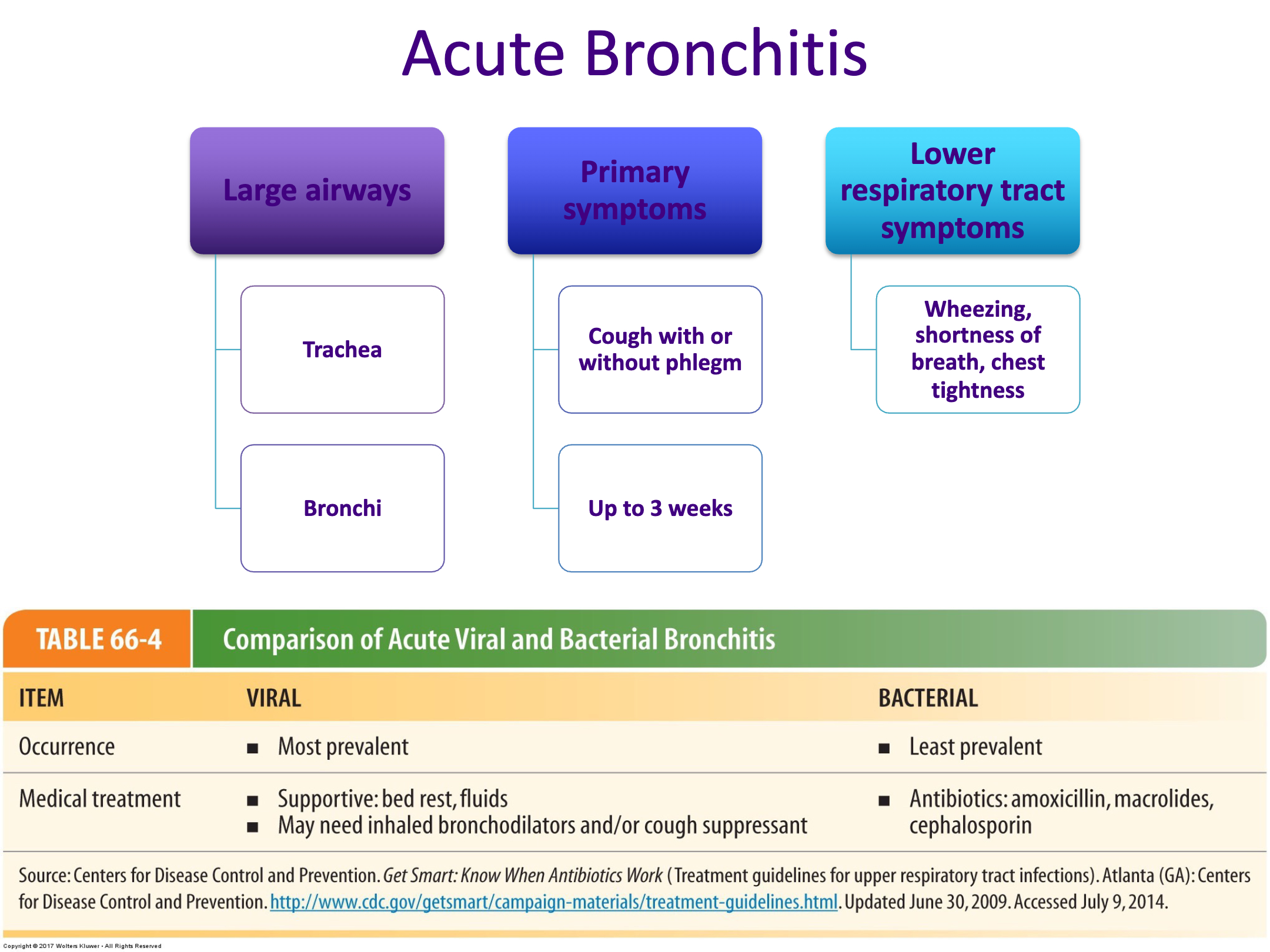
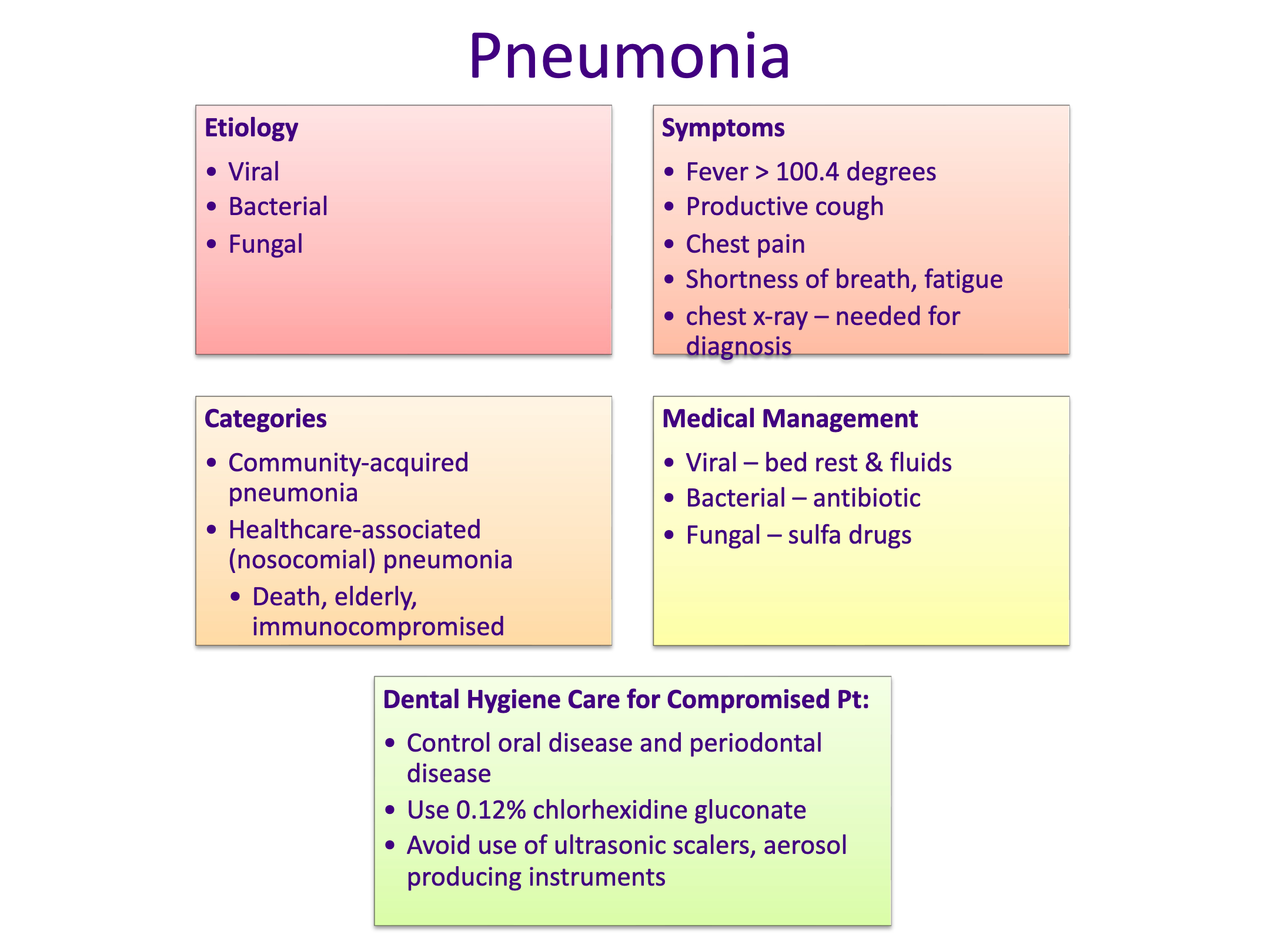
Which of the following are considered acute diseases of the lower respiratory tract?
Pneumonia
Asthma
Acute bronchitis
COPD
45
46
Fill in the Blanks
Type answer...
47
48
Multiple Choice
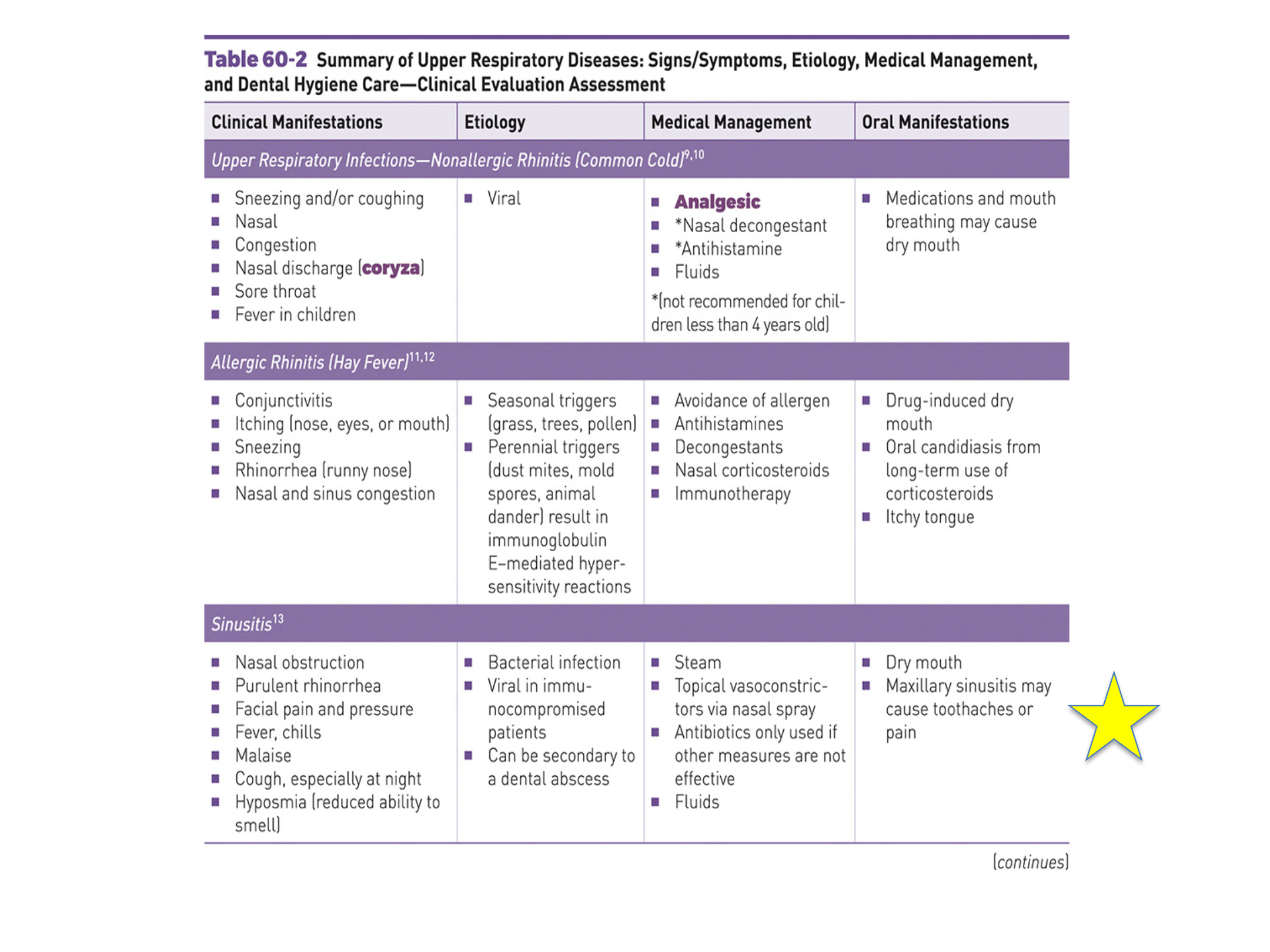
Which oral manifestation is commonly associated with allergic rhinitis (hay fever)?
Dry mouth
Palatal petechiae
Enlarged tonsils
Toothaches
49
50
Multiple Choice
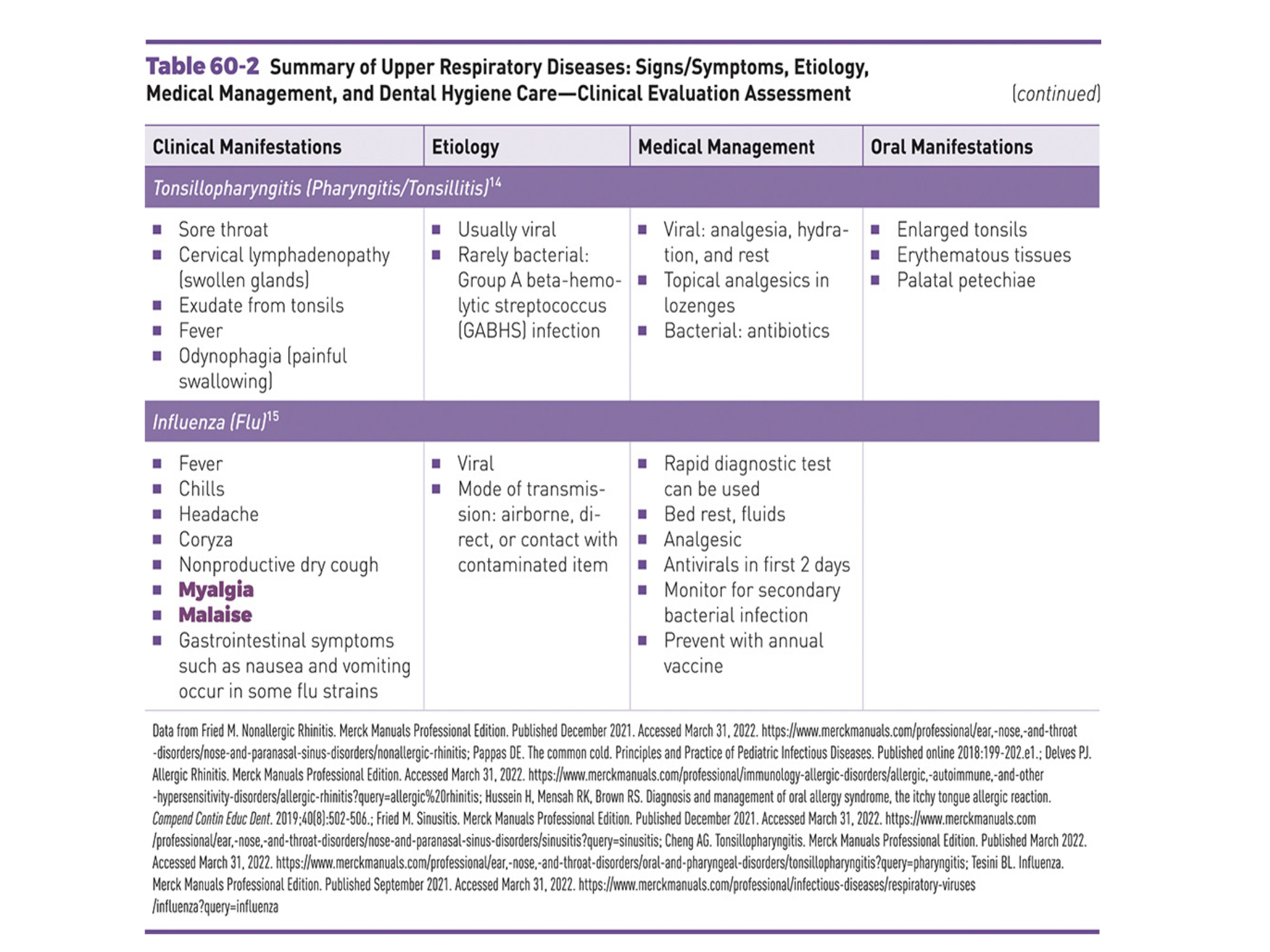
What is the recommended medical management for viral tonsillopharyngitis?
Antibiotics
Topical analgesics
Hydration and rest
Antivirals
51
52
Fill in the Blanks
Type answer...
53
Multiple Choice
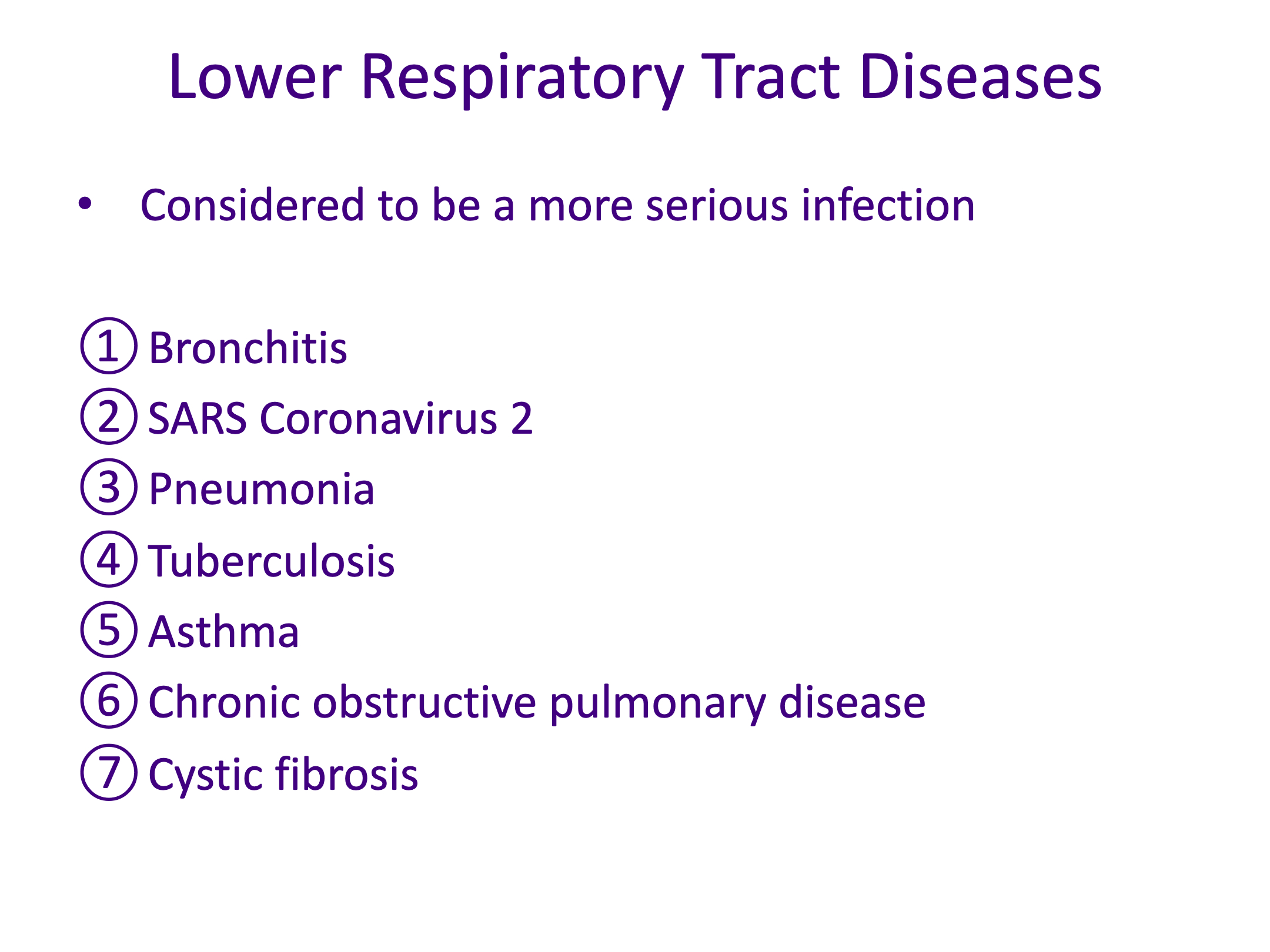
Which of the following lower respiratory tract diseases is considered to be a more serious infection?
Bronchitis
Asthma
Cystic fibrosis
Tuberculosis
54
55
56
Fill in the Blanks
57
58
Multiple Choice
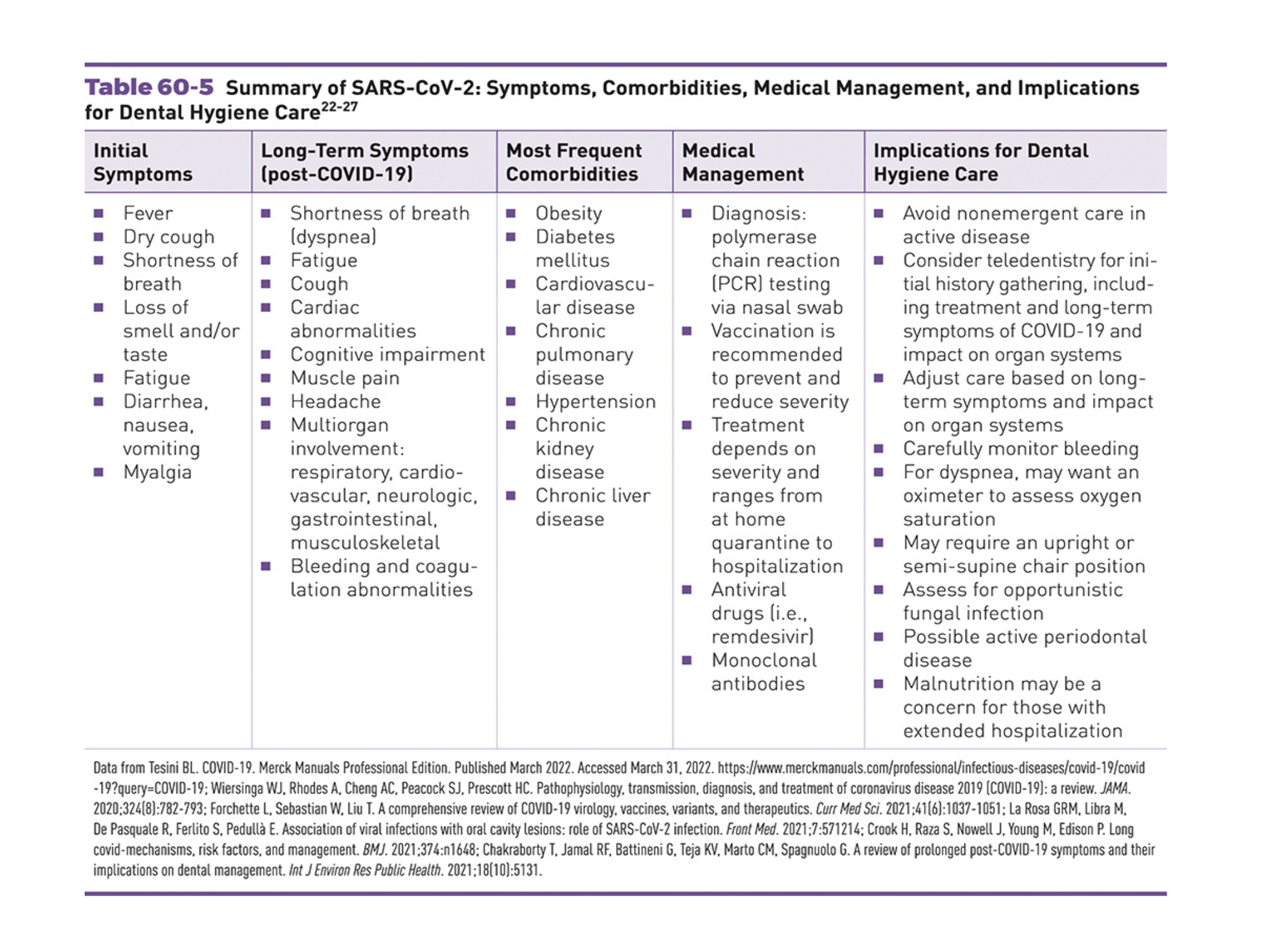
Which of the following is NOT a long-term symptom of post-COVID-19 according to the summary table?
Shortness of breath
Fatigue
Diabetes mellitus
Headache
59
60
61
Open Ended
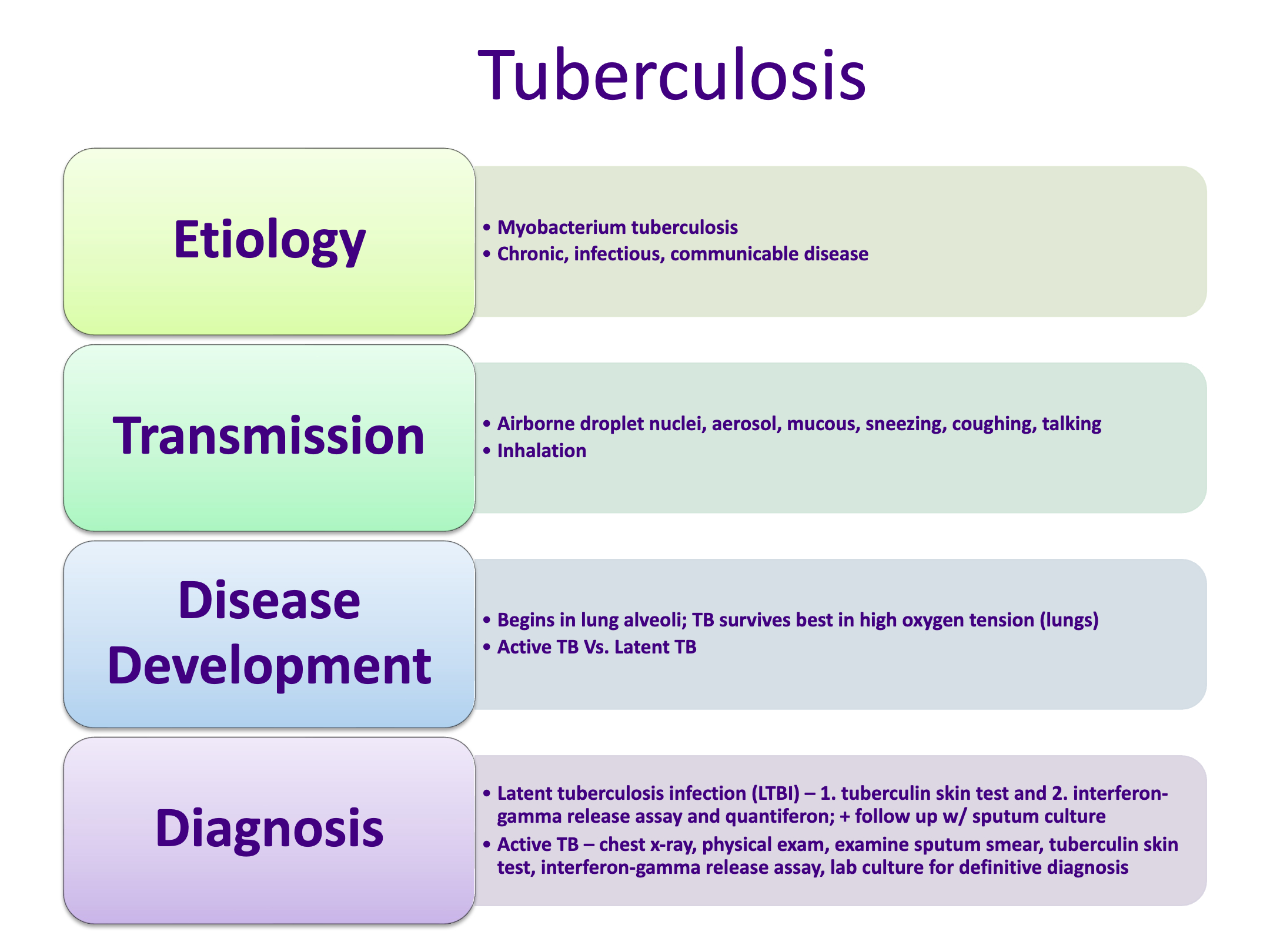
Explain the transmission and diagnosis process for tuberculosis.
62
63
Multiple Choice
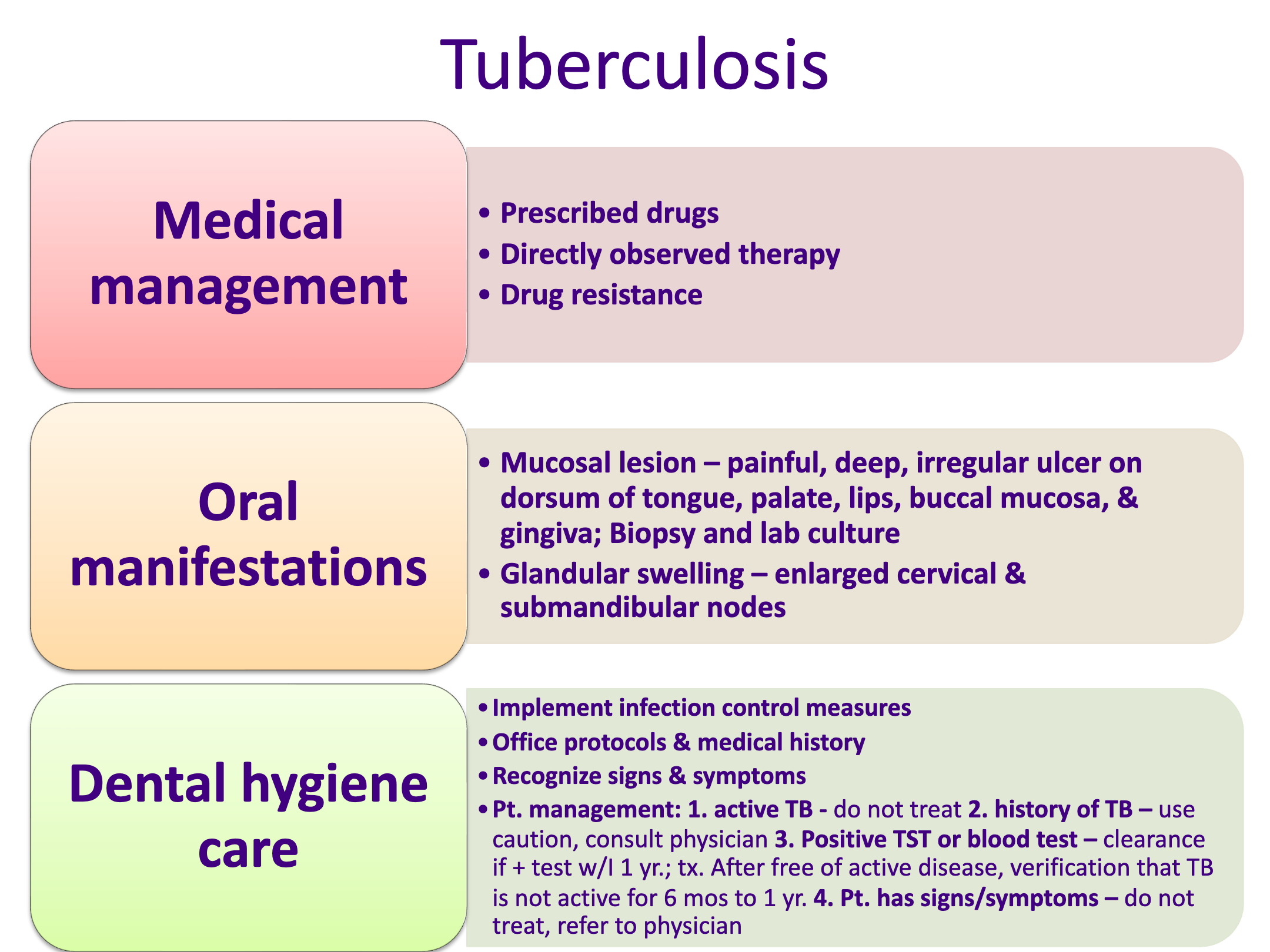
Which of the following is NOT a recommended dental hygiene care protocol for a patient with tuberculosis?
Implement infection control measures
Treat active TB without precautions
Recognize signs & symptoms
Consult physician if patient has history of TB
64
65
Multiple Select
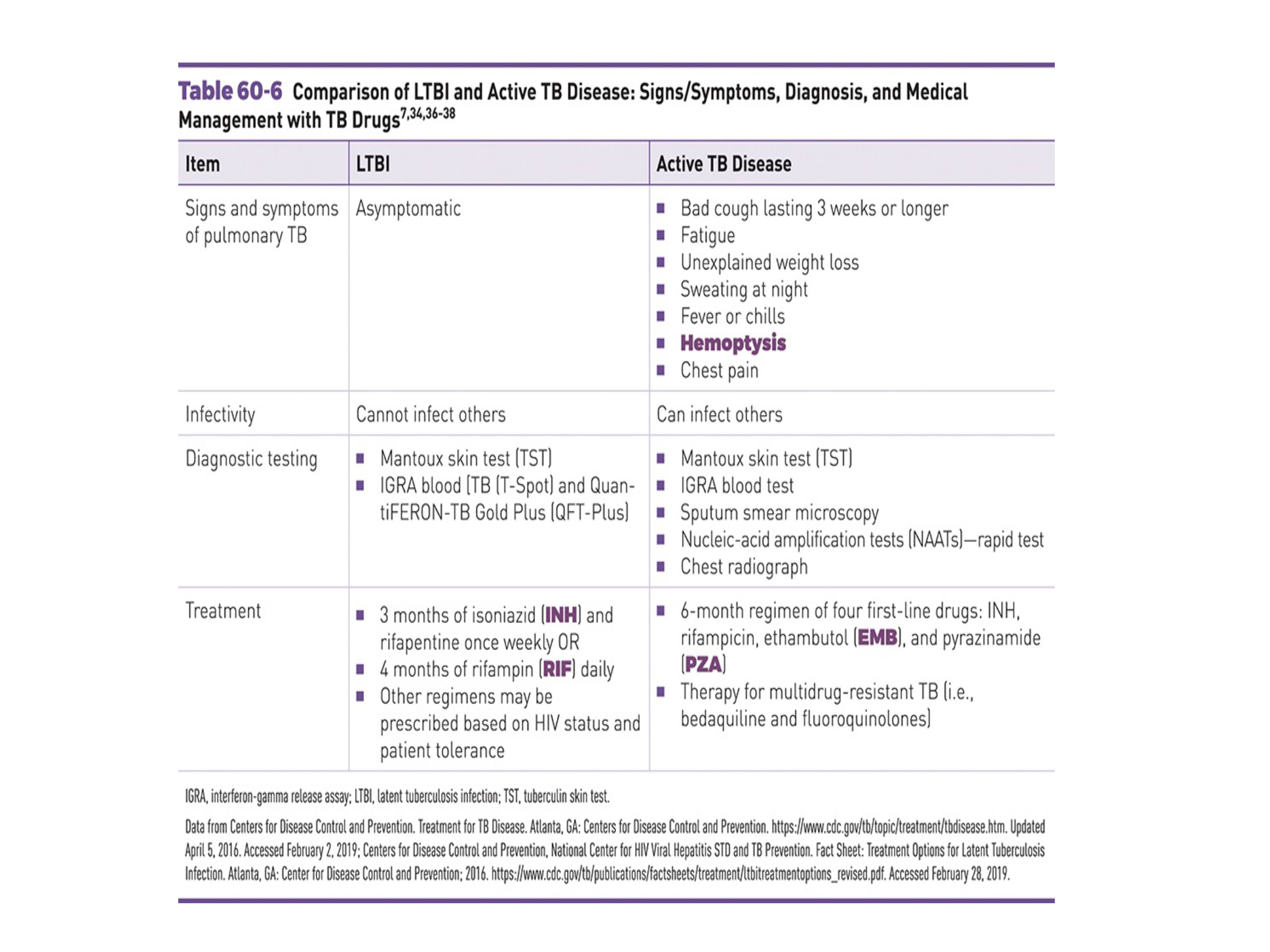
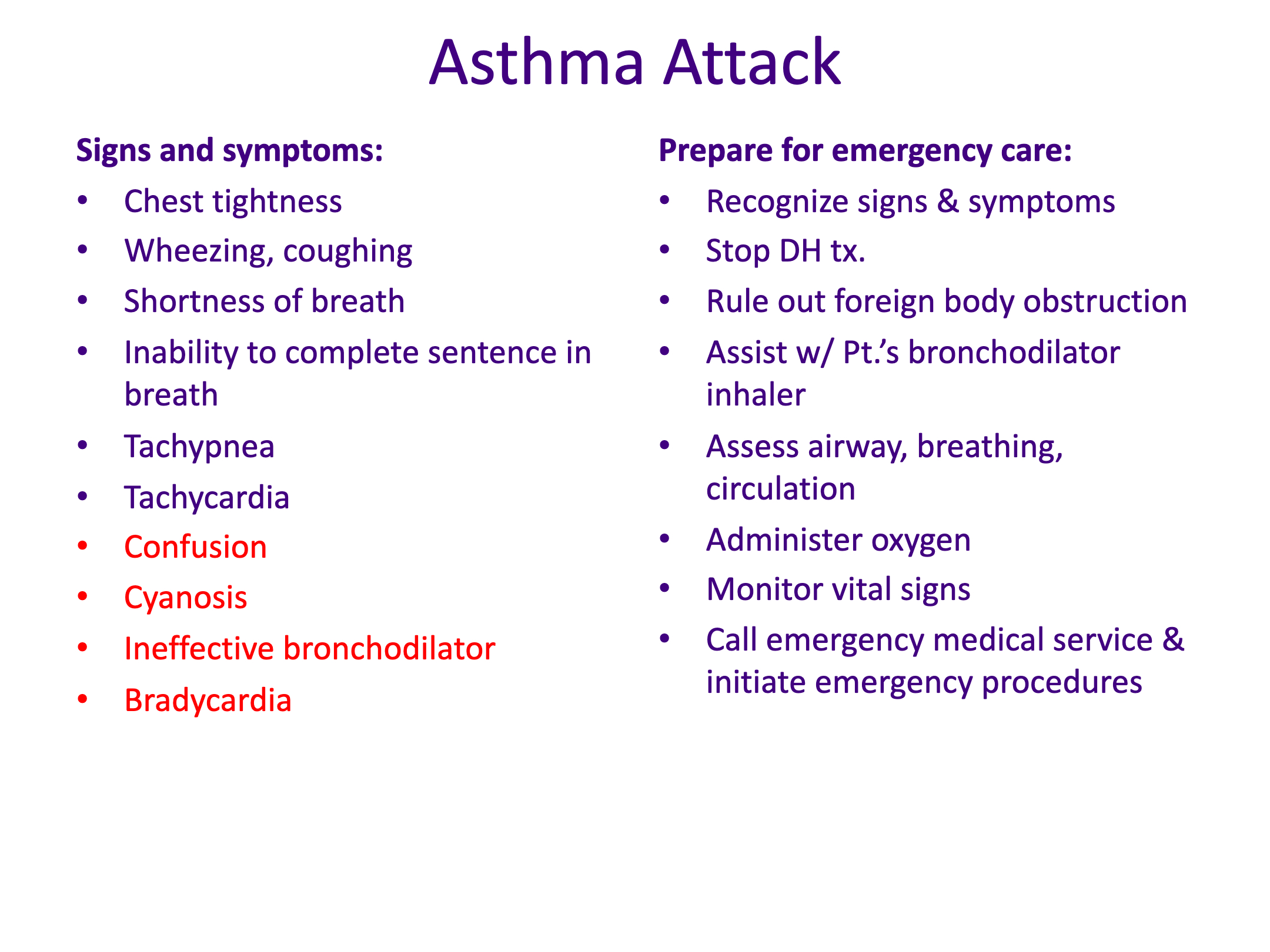
Which of the following are signs and symptoms of active TB disease?
Bad cough lasting 3 weeks or longer
Asymptomatic
Unexplained weight loss
Hemoptysis
66
Open Ended
Compare the diagnostic testing methods for latent tuberculosis infection (LTBI) and active TB disease.
67
68
Fill in the Blanks
69
70
Multiple Choice
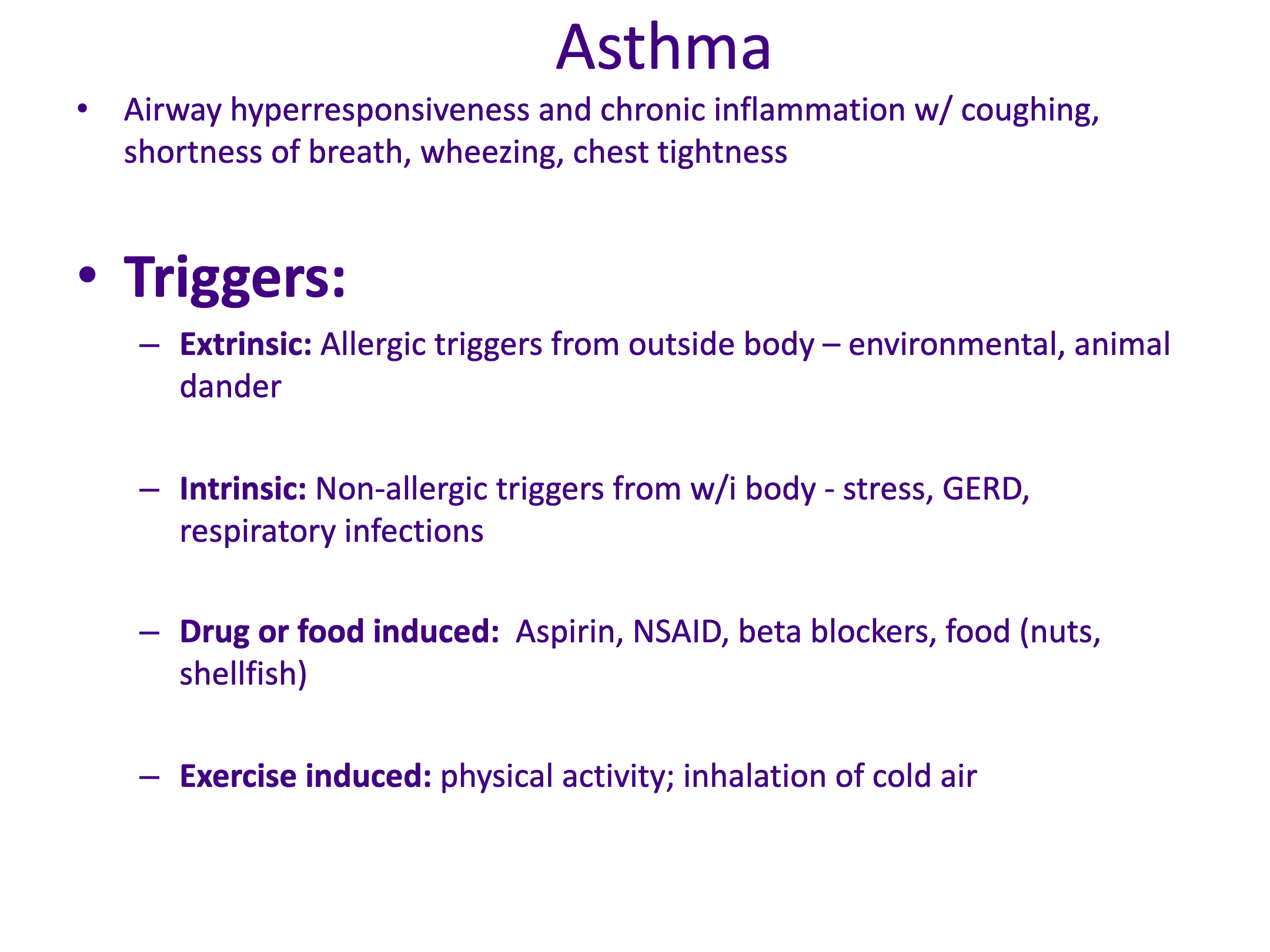
Which of the following are considered extrinsic triggers for asthma?
Animal dander
Stress
GERD
Physical activity
71
72
73
Open Ended
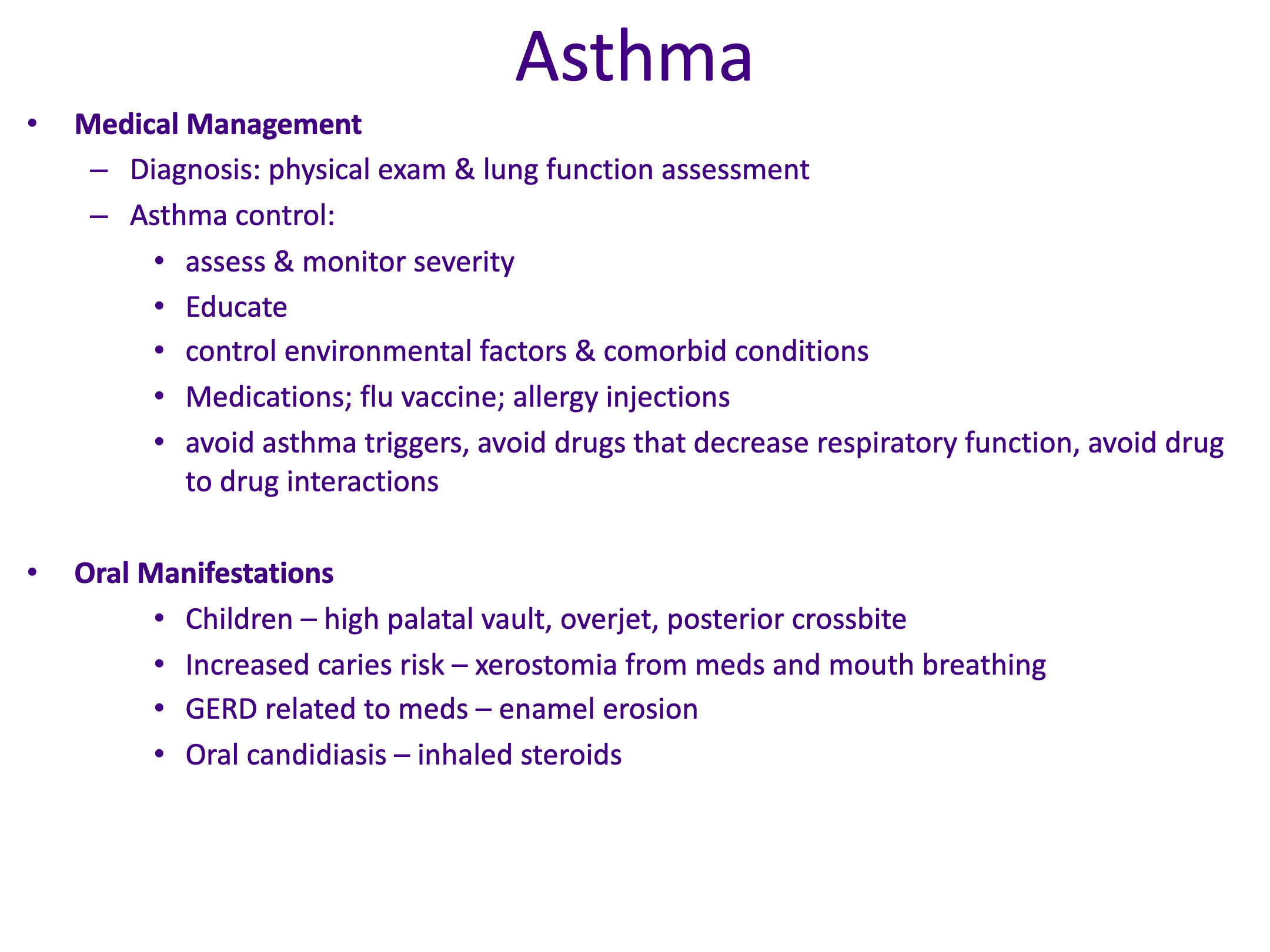
Describe the oral manifestations that may be observed in children with asthma.
74
75
Multiple Choice
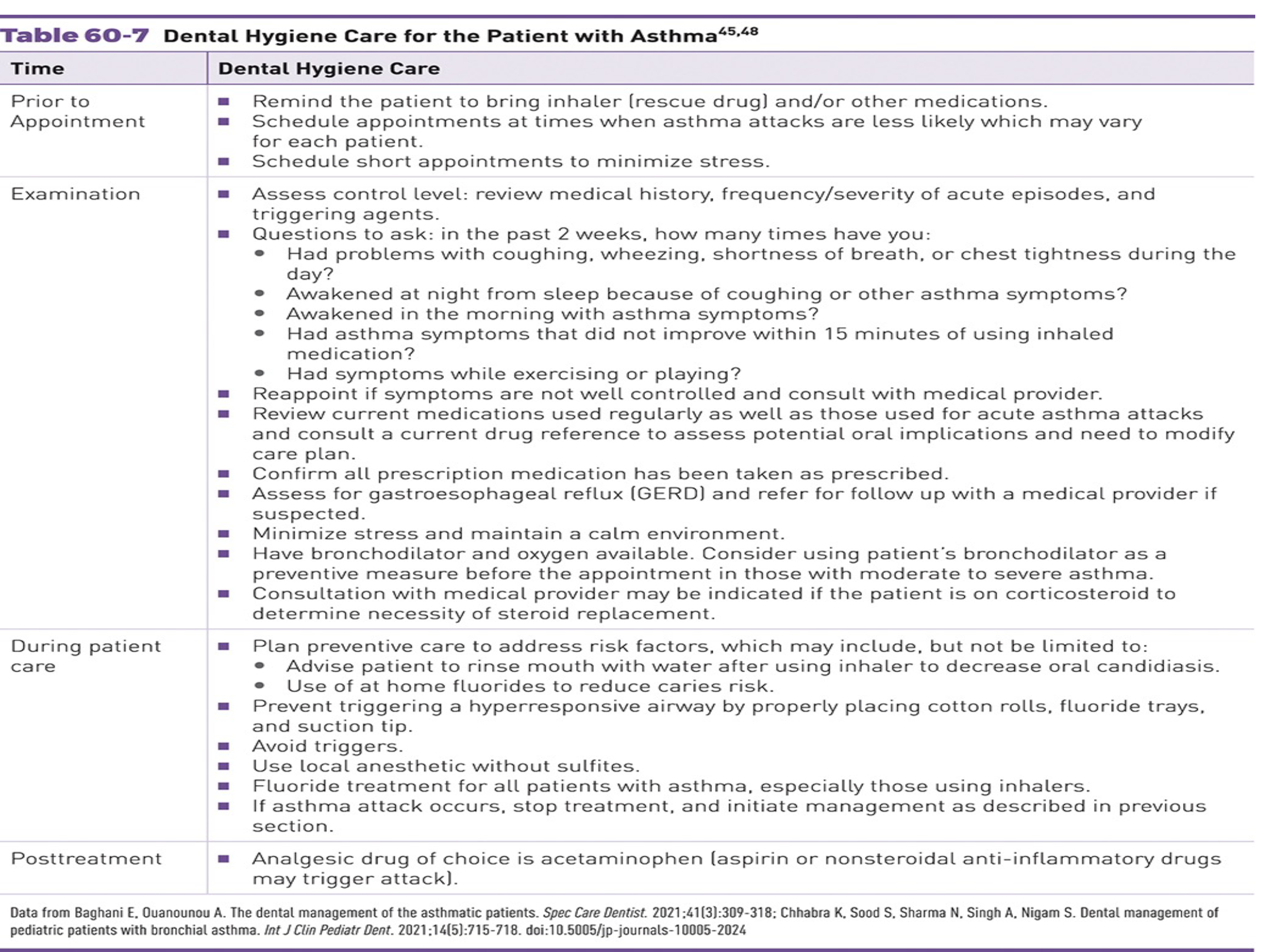
Which of the following is NOT a recommended step in dental hygiene care for a patient with asthma prior to their appointment?
Remind the patient to bring inhaler and/or medications
Schedule appointments at times when asthma attacks are less likely
Schedule long appointments to maximize care
Schedule short appointments to minimize stress
76
77
78
Multiple Select
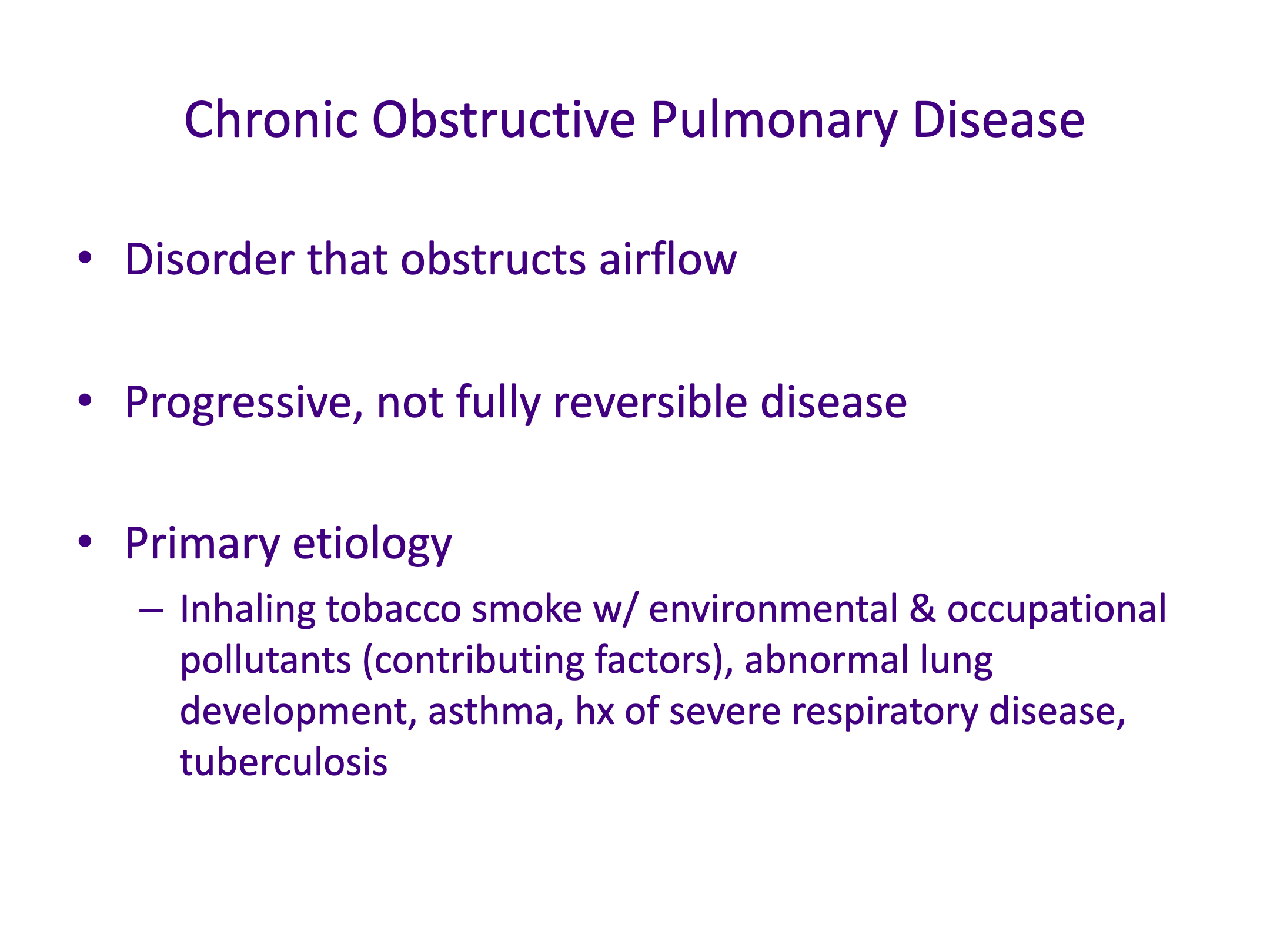
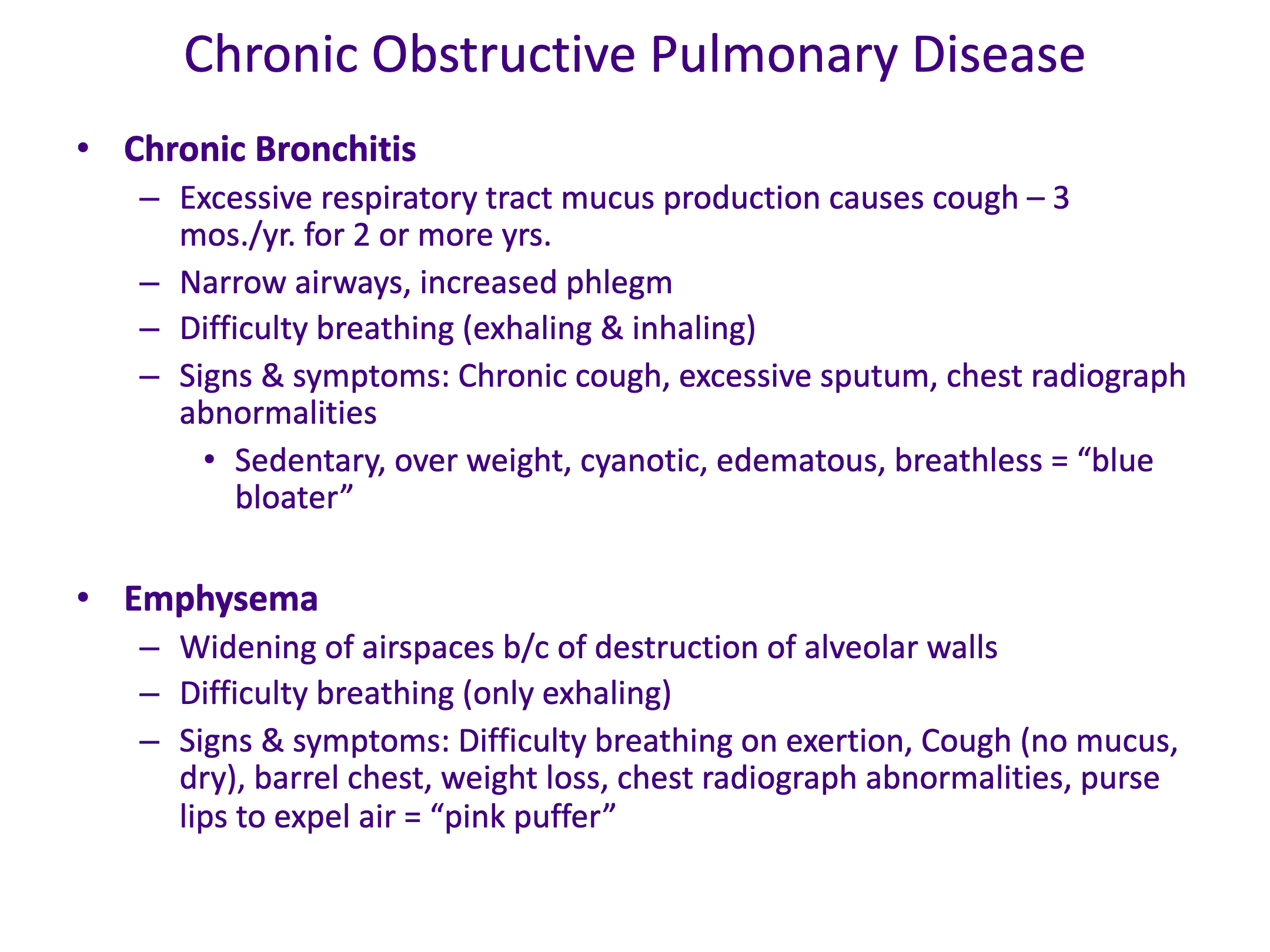
Which of the following are signs and symptoms of chronic bronchitis?
Chronic cough
Excessive sputum
Chest radiograph abnormalities
Barrel chest
79
80
Multiple Select
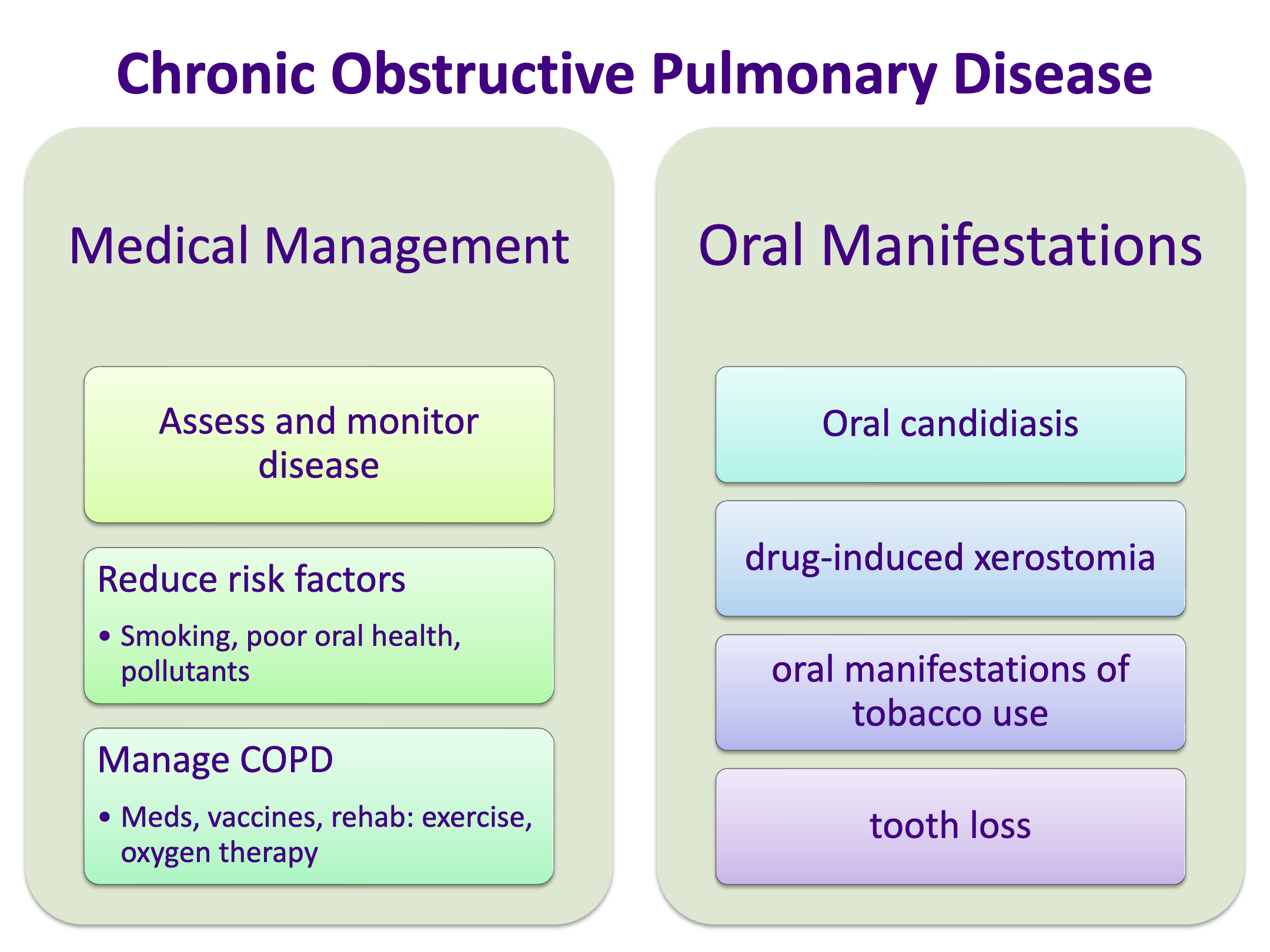
What are the oral manifestations commonly associated with Chronic Obstructive Pulmonary Disease (COPD)?
Oral candidiasis
Drug-induced xerostomia
Oral manifestations of tobacco use
Tooth loss
81
Fill in the Blanks
Type answer...
82
83
84
Open Ended
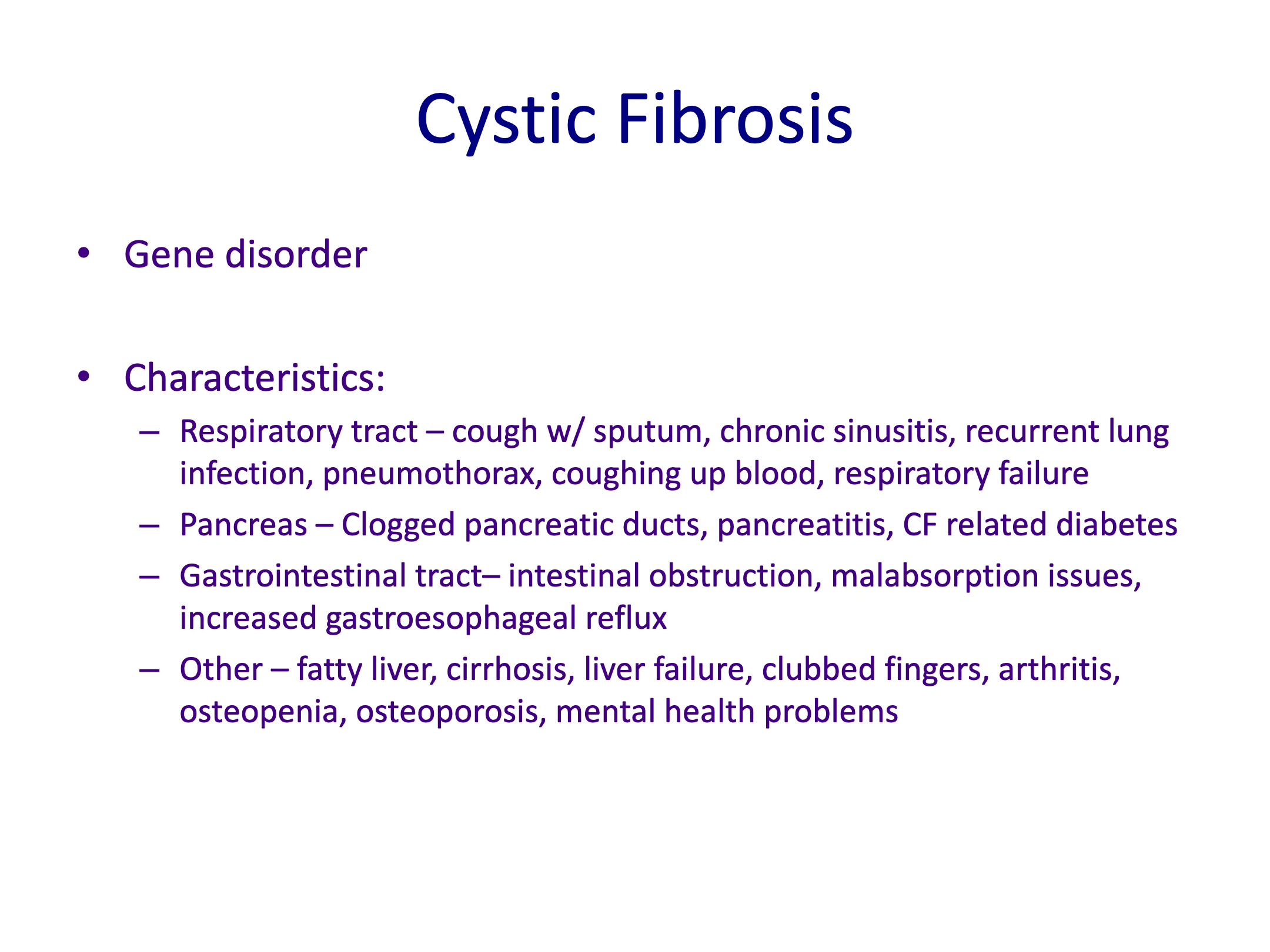
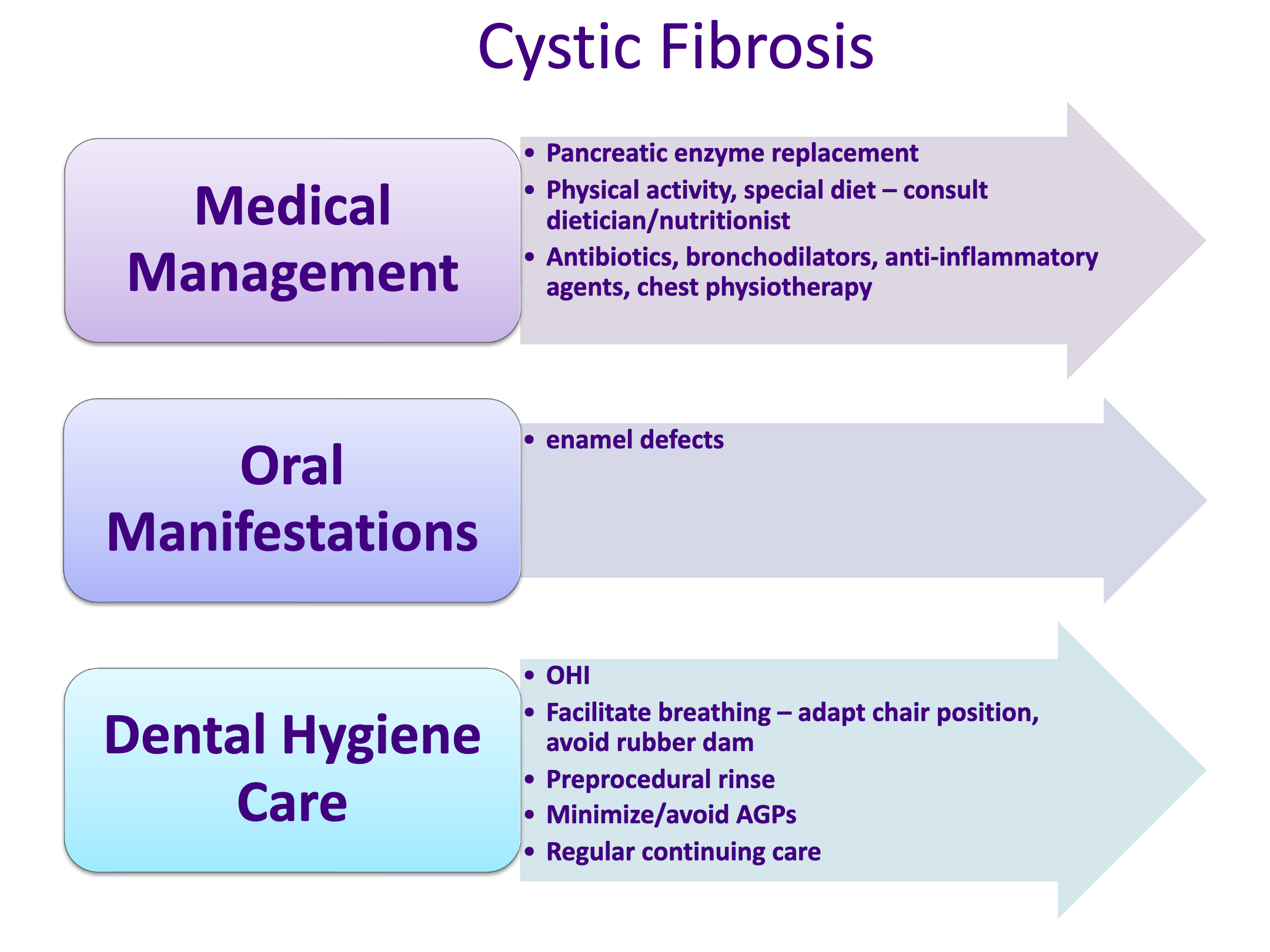
Describe the characteristics of cystic fibrosis affecting the respiratory tract, pancreas, and gastrointestinal tract.
85
86
87
88
89
Open Ended
Reflecting on today's lesson about the anatomy of the respiratory tract, what questions do you still have or what would you like to learn more about?
90
Multiple Choice
Which of the following is NOT a structure of the respiratory tract?
Sinuses
Nasal cavity
Pharynx
Esophagus
Show answer
Auto Play
Slide 1 / 90
SLIDE

Similar Resources on Wayground
84 questions
Chapter 8 Advanced Theories of Covalent Bonding
Presentation
•
University
85 questions
Present Tenses
Presentation
•
University
83 questions
Probability Lesson 1
Presentation
•
University
88 questions
Lo Basico - Spanish Final
Presentation
•
University
82 questions
Tema 1: Financiera
Presentation
•
University
91 questions
ASSESSMENT IN WAYGROUND
Presentation
•
Professional Development
79 questions
Plan in Seconds, Not Weekends : Almond Tree Middle School
Presentation
•
Professional Development
91 questions
I'm Positive! Program
Presentation
•
Professional Development
Popular Resources on Wayground
16 questions
Grade 3 Simulation Assessment 2
Quiz
•
3rd Grade
19 questions
HCS Grade 5 Simulation Assessment_1 2526sy
Quiz
•
5th Grade
10 questions
Cinco de Mayo Trivia Questions
Interactive video
•
3rd - 5th Grade
17 questions
HCS Grade 4 Simulation Assessment_2 2526sy
Quiz
•
4th Grade
24 questions
HCS Grade 5 Simulation Assessment_2 2526sy
Quiz
•
5th Grade
13 questions
Cinco de mayo
Interactive video
•
6th - 8th Grade
20 questions
Math Review
Quiz
•
3rd Grade
30 questions
GVMS House Trivia 2026
Quiz
•
6th - 8th Grade