

Abdominal Vessels

Presentation
•
Health Sciences
•
University
•
Practice Problem
•
Hard

Megan Mullins
Used 1+ times
FREE Resource
30 Slides • 23 Questions
1
2
3
4
5
6
Multiple Choice
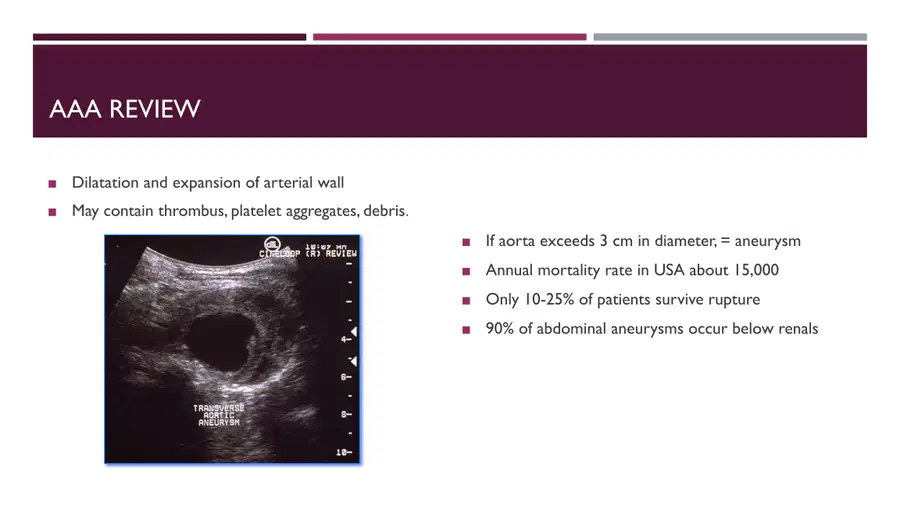
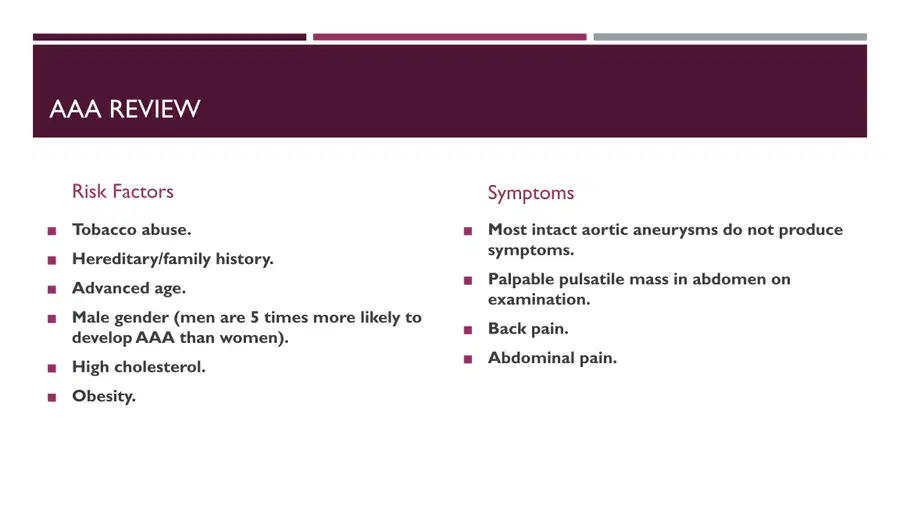
Which of the following is a risk factor for developing abdominal aortic aneurysm (AAA)?
Obesity
Low blood pressure
Female gender
Young age
7
8
Fill in the Blanks
9
Multiple Select
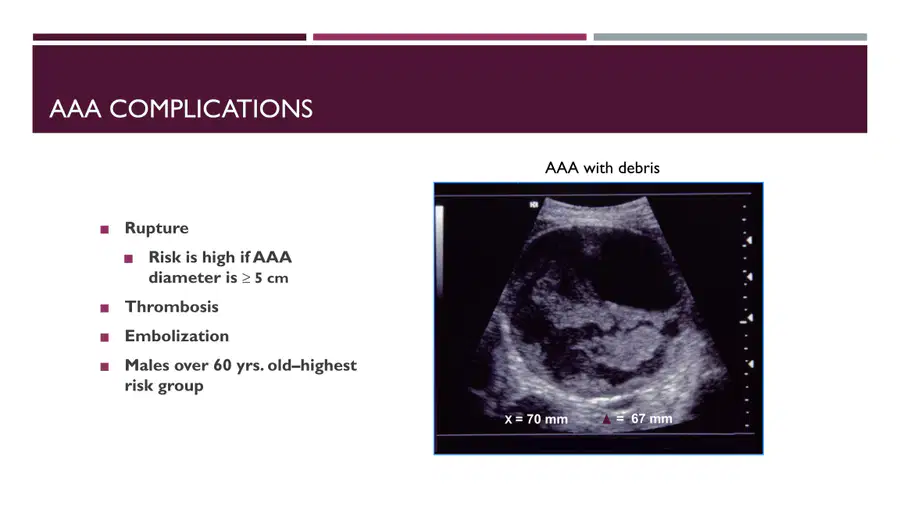
Which of the following are possible complications of abdominal aortic aneurysm (AAA)?
Rupture
Thrombosis
Embolization
Hypertension
10
11
12
Multiple Choice
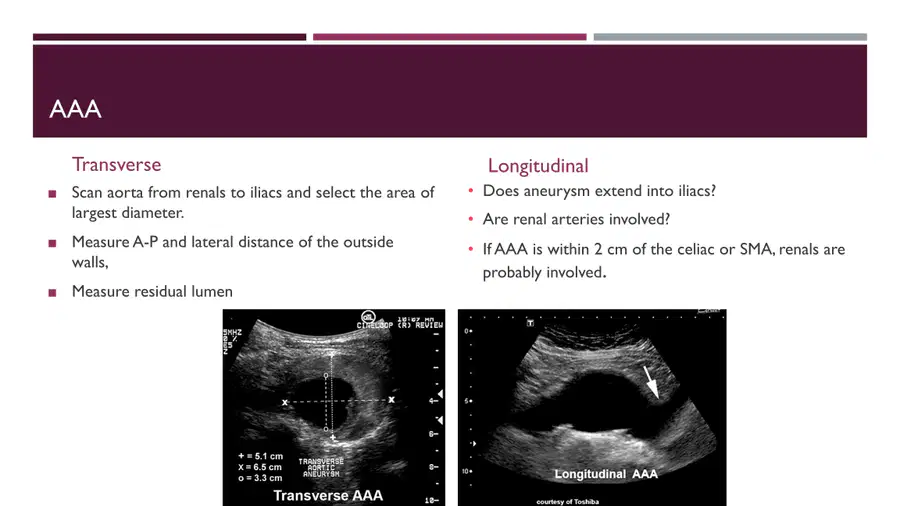
Which measurements are important when scanning the aorta in the transverse plane for AAA assessment?
A-P and lateral distance of the outside walls
Length of the femoral artery
Diameter of the pulmonary artery
Thickness of the myocardium
13
14
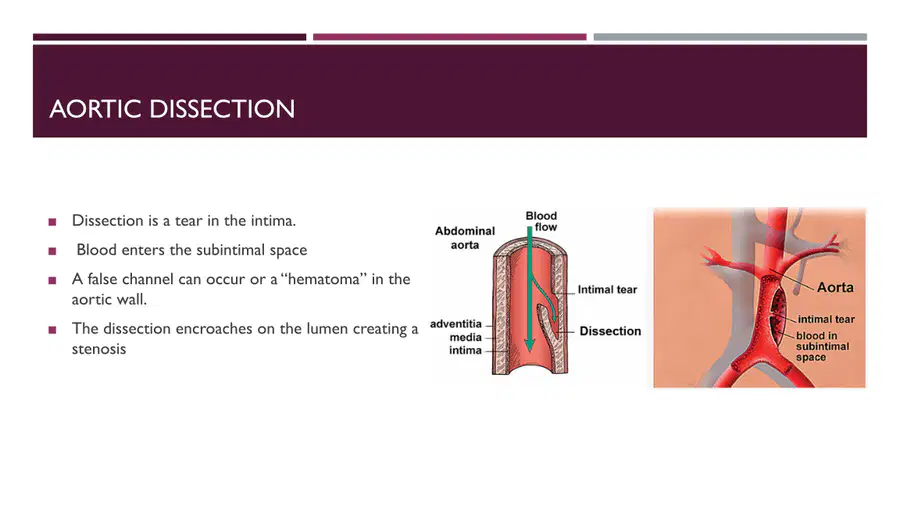
Multiple Choice
Which layer of the aortic wall is affected in an aortic dissection?
Intima
Adventitia
Media
Endothelium
15
16
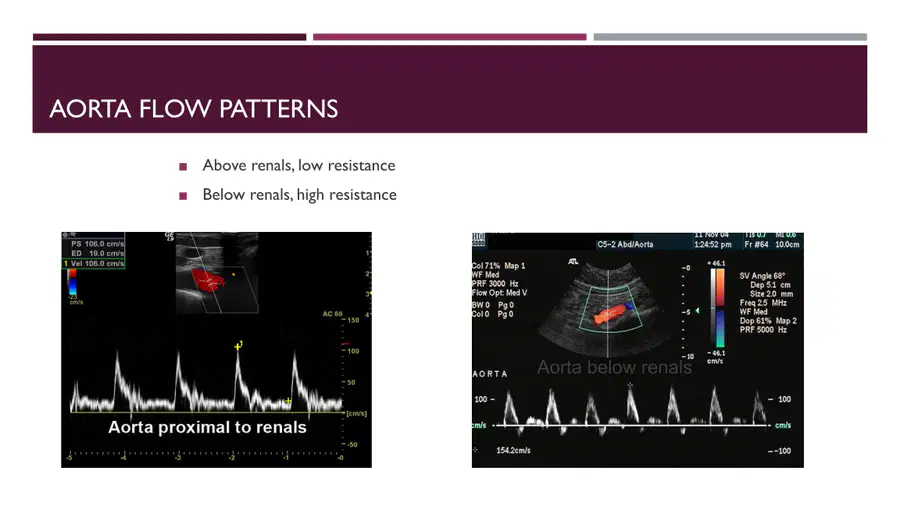
Open Ended
Explain how blood flow patterns differ above and below the renal arteries in the aorta.
17

18
Fill in the Blanks
19
20
21
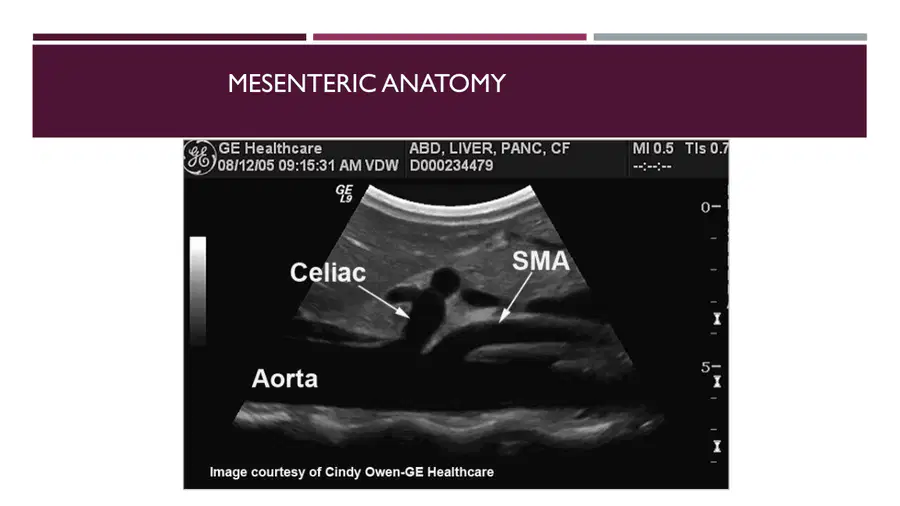
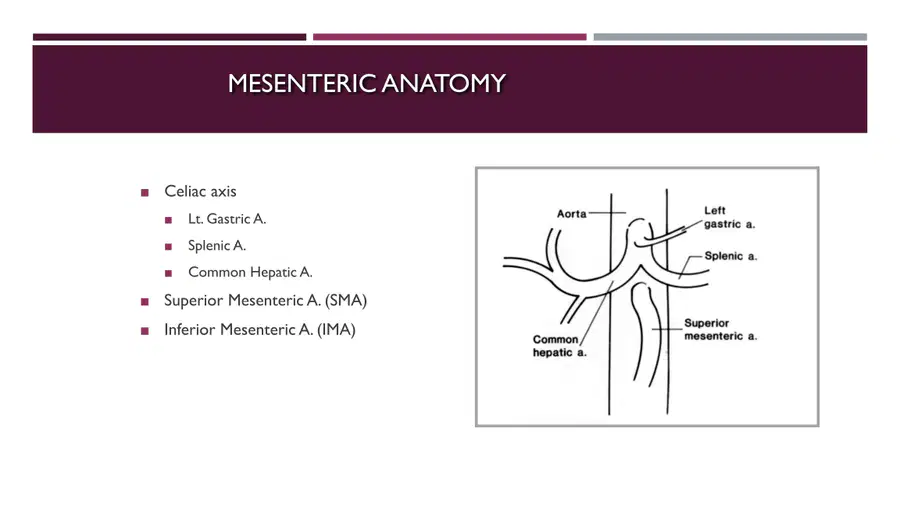
Multiple Choice
Which arteries arise from the celiac axis?
Left gastric artery, splenic artery, common hepatic artery
Superior mesenteric artery, inferior mesenteric artery
Renal artery, iliac artery
Right gastric artery, pancreaticoduodenal artery
22
23
Multiple Choice
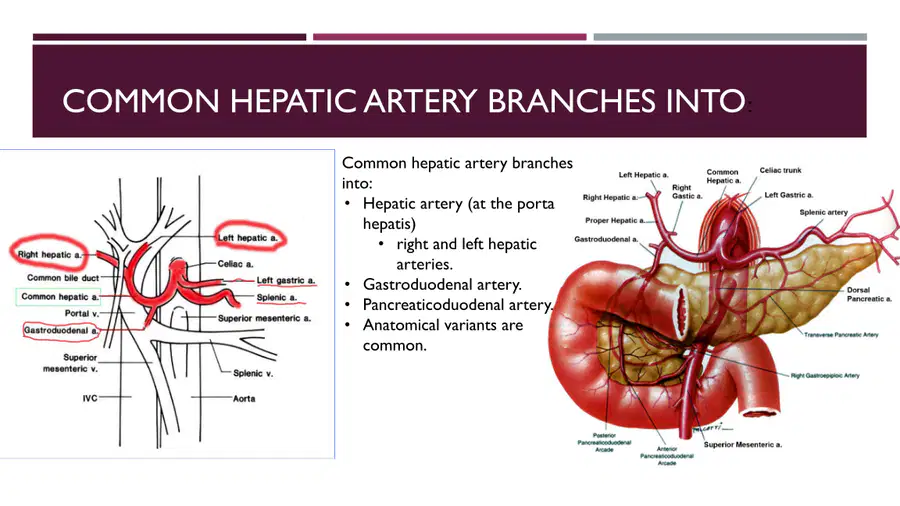
What are the main branches of the common hepatic artery?
Right and left hepatic arteries, gastroduodenal artery, pancreaticoduodenal artery
Splenic artery, left gastric artery, superior mesenteric artery
Inferior mesenteric artery, renal artery, celiac trunk
Portal vein, bile duct, dorsal pancreatic artery
24
25
Multiple Choice
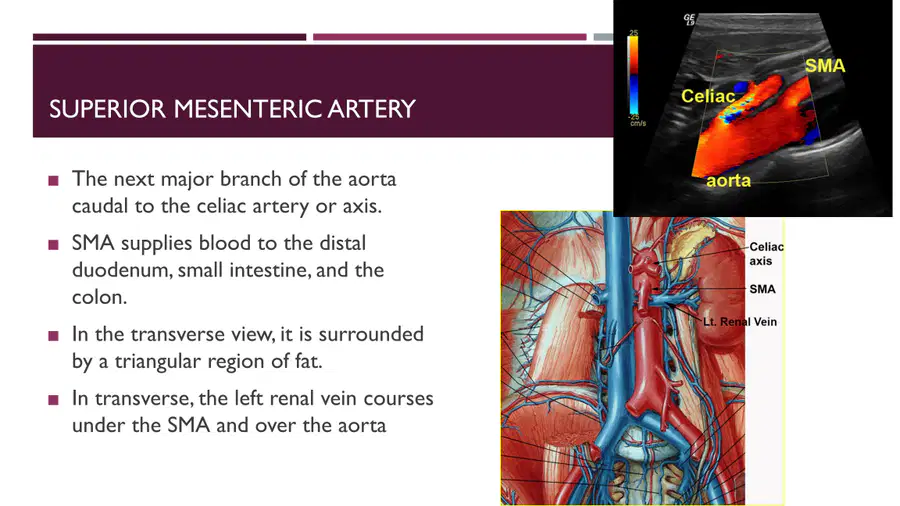
Which of the following organs is NOT supplied by the superior mesenteric artery (SMA)?
Distal duodenum
Small intestine
Colon
Stomach
26
27
28
Multiple Choice
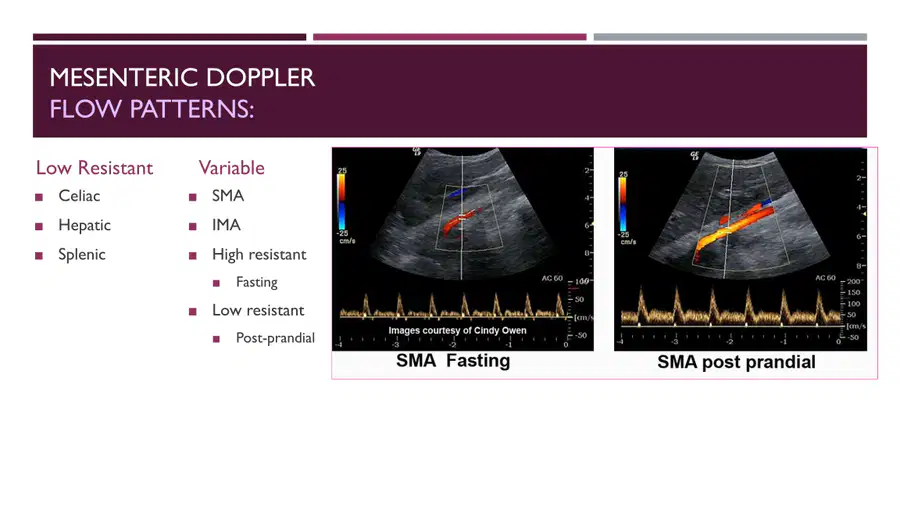
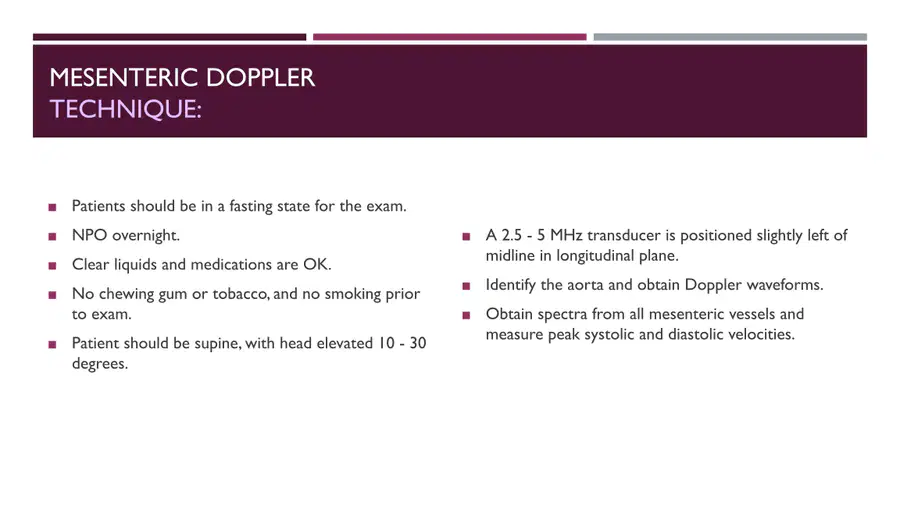
Which arteries are classified as low resistant in mesenteric Doppler flow patterns?
Celiac, hepatic, splenic
SMA, IMA
Renal, celiac, hepatic
Splenic, SMA, IMA
29
30
Fill in the Blanks
31
32
Multiple Choice
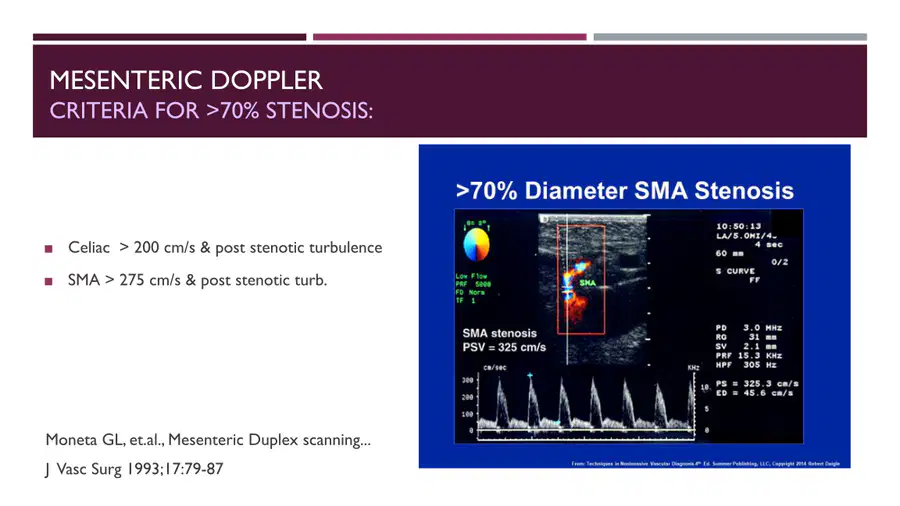
What is the Doppler velocity threshold for diagnosing >70% stenosis in the superior mesenteric artery (SMA)?
200 cm/s
250 cm/s
275 cm/s
325 cm/s
33
34
35
Multiple Choice
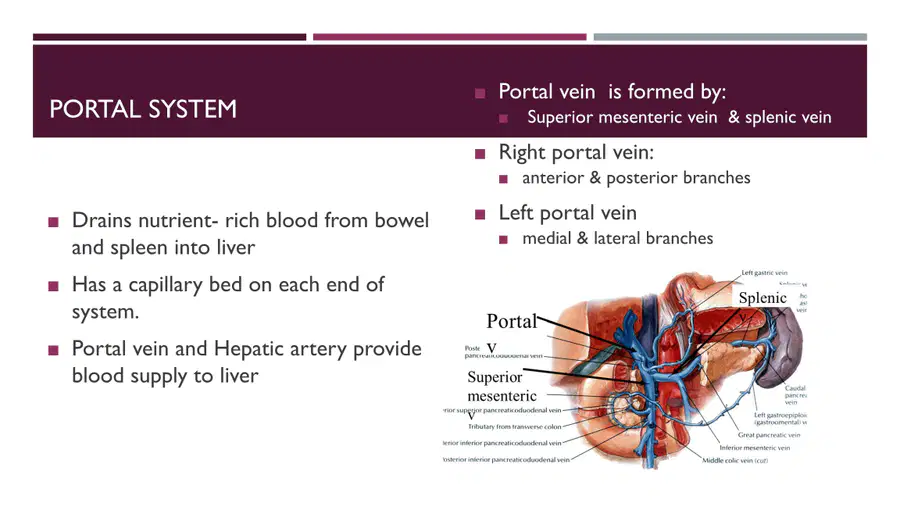
Which veins form the portal vein?
Superior mesenteric vein and splenic vein
Inferior mesenteric vein and hepatic vein
Renal vein and splenic vein
Inferior vena cava and hepatic vein
36
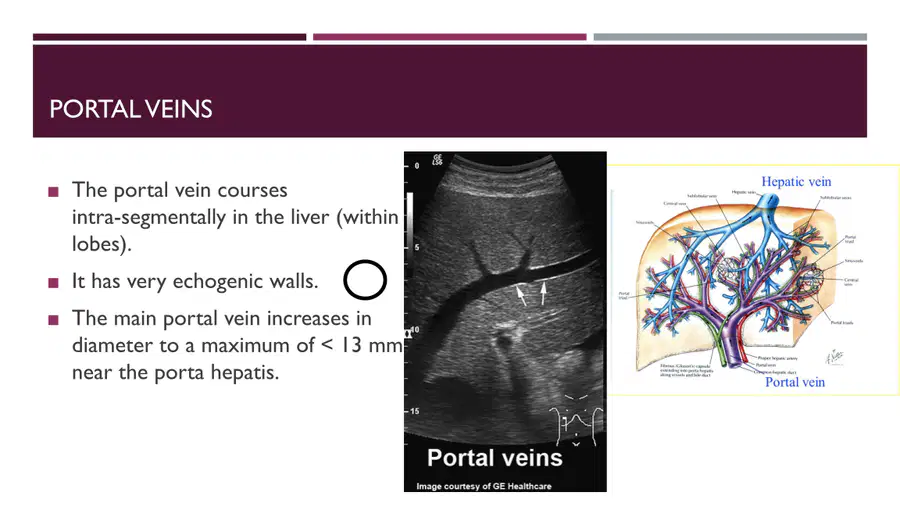
37
Fill in the Blanks
38
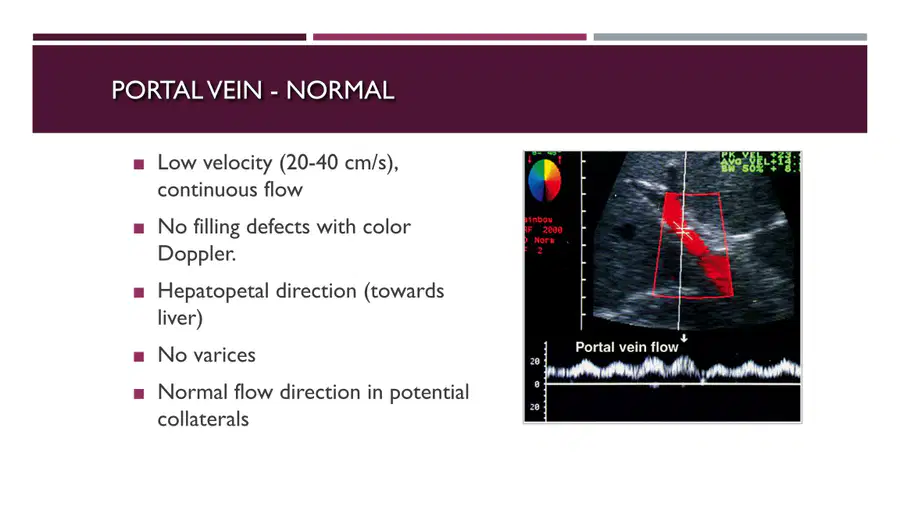
39
Multiple Select
Which of the following are features of a normal portal vein as seen on Doppler ultrasound?
Low velocity (20-40 cm/s)
No filling defects
Hepatopetal direction
Presence of varices
40
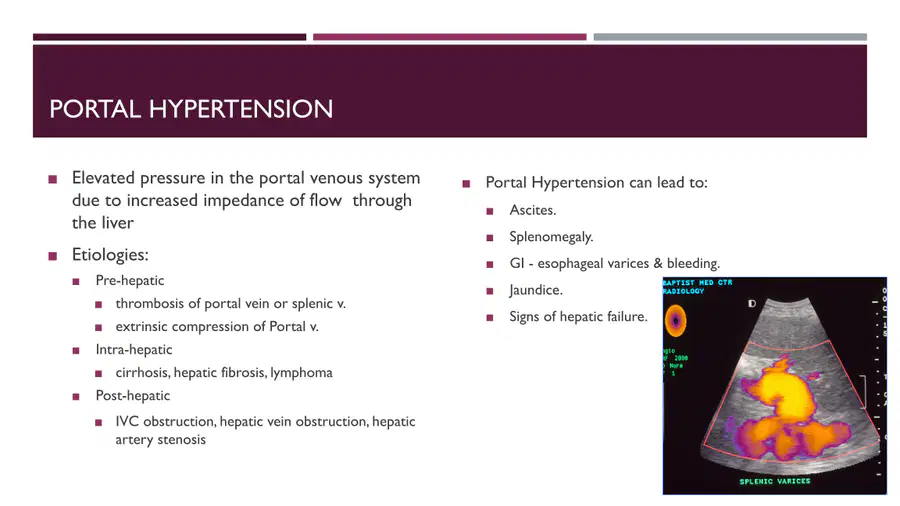
41

42
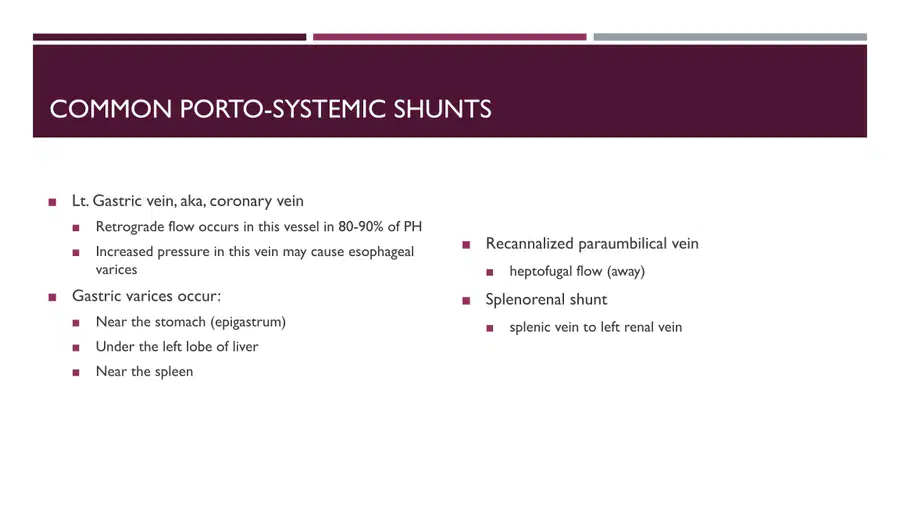
43
Multiple Select
Which of the following are common sites for gastric varices in portal hypertension?
Near the stomach (epigastrum)
Under the left lobe of liver
Near the spleen
In the right atrium
44
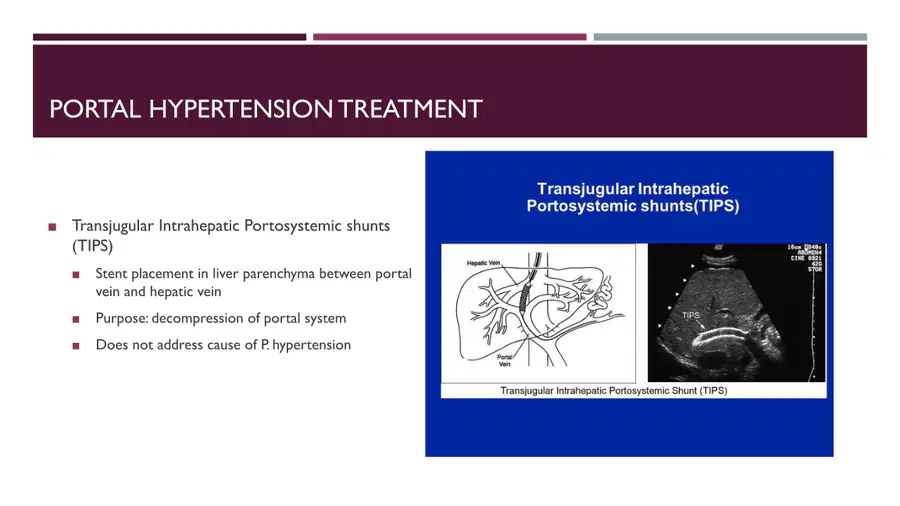
45
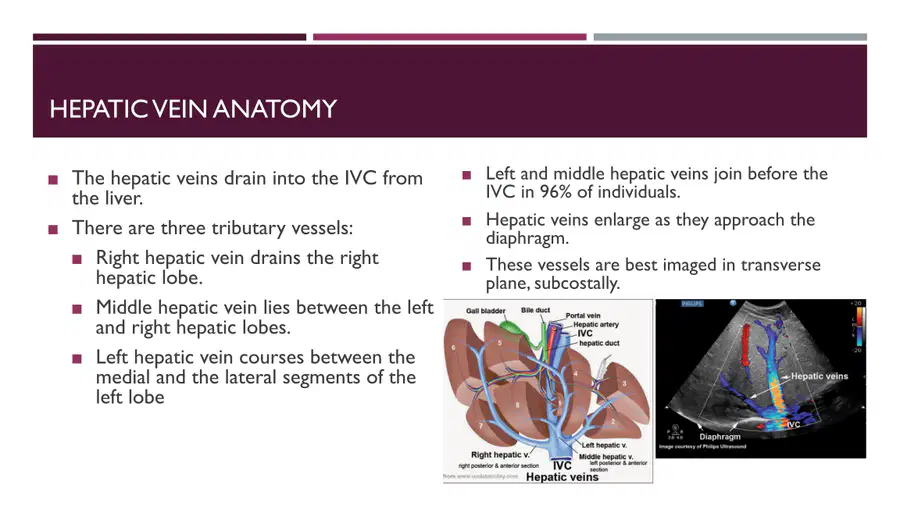
46
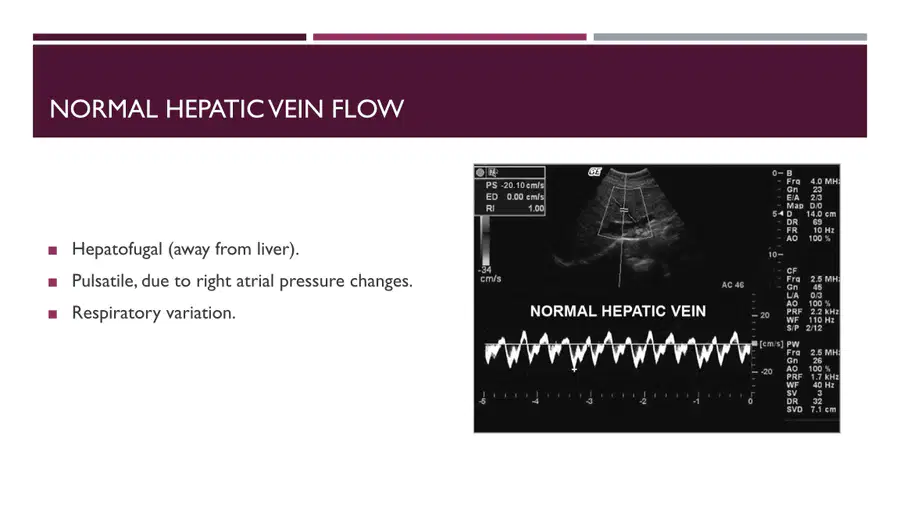
47
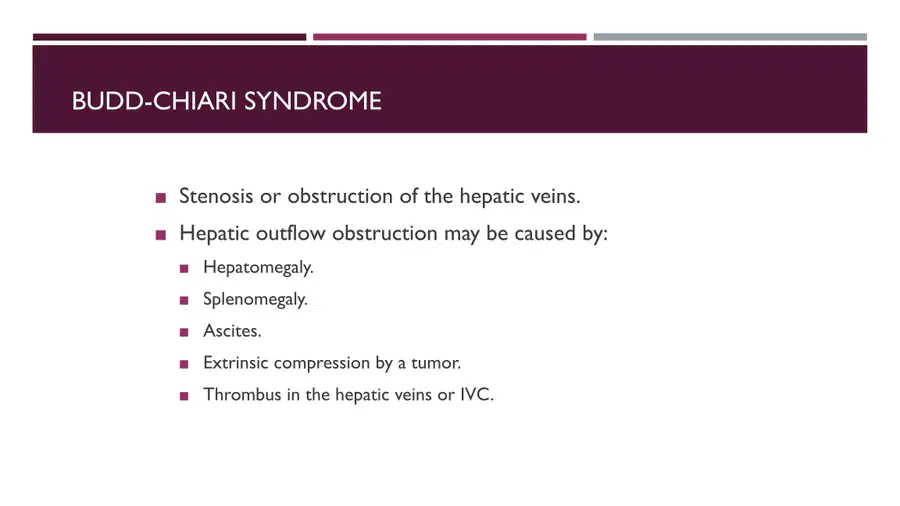
48
Multiple Choice
Where does the left renal vein course?
anterior to the aorta and posterior to the SMA
posterior to the aorta and anterior to the SMA
posterior to the IVC and lateral to the aorta
anterior to the IVC and posterior to the aorta
wherever it wants.
49
Multiple Select
Normally, flow patterns in the portal vein are characterized by: (multiple answers)
Continuous or minimally phasic flow
High mean velocities
Pulsatile biphasic flow
Triphasic flow
low peak and mean velocities
50
Multiple Select
What are the three structures visualized at the porta hepatis that make up the portal triad? (multiple answers)
Main portal vein
Common bile duct
Left portal vein
Hepatic vein
Proper hepatic artery
51
Multiple Select
Which statements is are true about the main portal vein: (multiple answers)
It is retroperitoneal
It supplies approximately 75% of the blood to the liver
It is formed by the splenic and superior mesenteric veins at the portal-splenic confluence
Blood flow is hepatopedal
Blood flow is hepatofugal
52
Multiple Choice
Which of the following descriptions could represent a normal blood flow pattern in the superior mesenteric artery after ingestion of a meal?
Peak systolic velocity greater than 200 cm/sec with high diastolic flow
Peak systolic velocity greater than 200 cm/sec with low diastolic flow and systolic flow reversal
Peak systolic velocity of 135 cm/sec with high diastolic flow
Peak systolic velocity of 135 cm/sec, systolic flow reversal, and low diastolic flow
53
Multiple Choice
Normal renal artery blood flow patterns can be described as:
Low resistive with high diastolic flow
High resistive with low diastolic flow
High resistive with high diastolic flow
Low resistive with low diastolic flow
Annoying
Show answer
Auto Play
Slide 1 / 53
SLIDE
Similar Resources on Wayground

50 questions
Thermodynamics
Presentation
•
KG - Professional Dev...
53 questions
Review for Major: Biology
Presentation
•
University
43 questions
Reflexology
Presentation
•
University
43 questions
APST CH23 OxyAcetylene
Presentation
•
KG - 12th Grade
43 questions
AZ900
Presentation
•
12th Grade
47 questions
AP Cell Membranes (7)
Presentation
•
11th - 12th Grade
46 questions
Upper Extremity Testing
Presentation
•
University
48 questions
10.2 Properties of Liquids
Presentation
•
University
Popular Resources on Wayground
10 questions
GPA Lesson
Presentation
•
9th - 12th Grade
7 questions
Albert Einstein

Quiz
•
3rd Grade
31 questions
Bridge A Review
Quiz
•
3rd Grade
6 questions
Blue Sue and Red Ruth
Quiz
•
3rd Grade
8 questions
(Day12 HW) Inverse Trig Ratios
Quiz
•
9th Grade
20 questions
Summer Geometry QUIZ (Week3)
Quiz
•
9th Grade
16 questions
Theme Practice
Quiz
•
7th Grade
20 questions
Taxes
Quiz
•
9th - 12th Grade