Search Header Logo
  1. Resource Library
  2. Science
  3. Life Science
  4. Natural Selection And Adaptations
  5. Plant And Animal Adaptations
PLant and animal adaptations

PLant and animal adaptations

Assessment

Presentation

Science

9th - 12th Grade

Practice Problem

Easy

NGSS
MS-LS4-4, MS-LS2-1, MS-LS1-5

+4

Standards-aligned

Created by

LaKoda Sparks

Used 6+ times

FREE Resource

15 Slides • 14 Questions

1
media

2

media

3

Multiple Choice

What is the significance of adaptations in an organism's ability to survive and reproduce?

1

They are inherited traits that increase survival

2

They are random characteristics

3

They have no impact on reproduction

4

They are only found in certain species

4

media

5

Multiple Choice

Question image

An example of a structual adaptation is...

1

a turtle hiding inside its shell

2

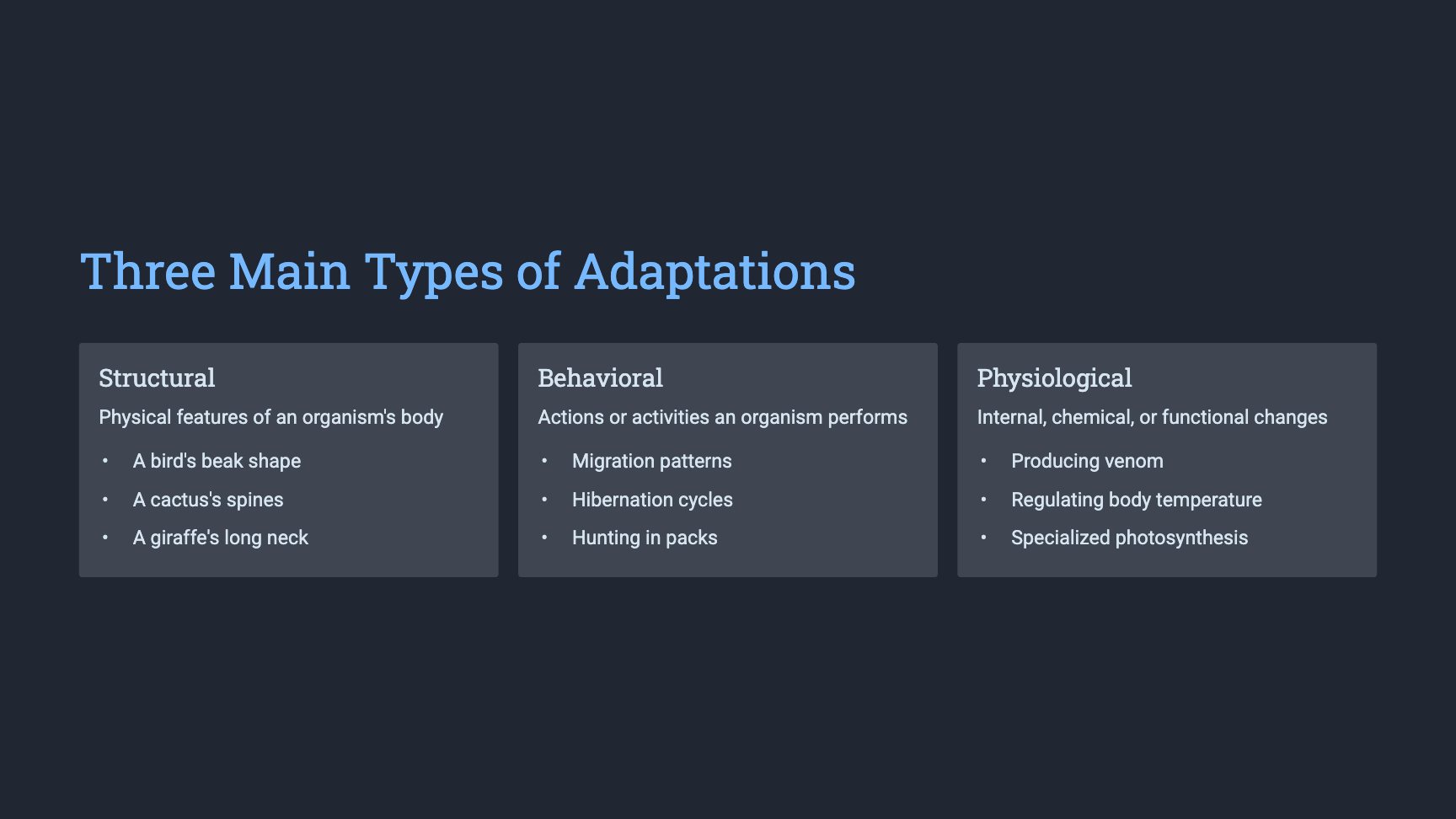
The spikes on a porcupine fish

3

a rabbit burrowing underground

4

a viper biting when threatened

6

media

7

Open Ended

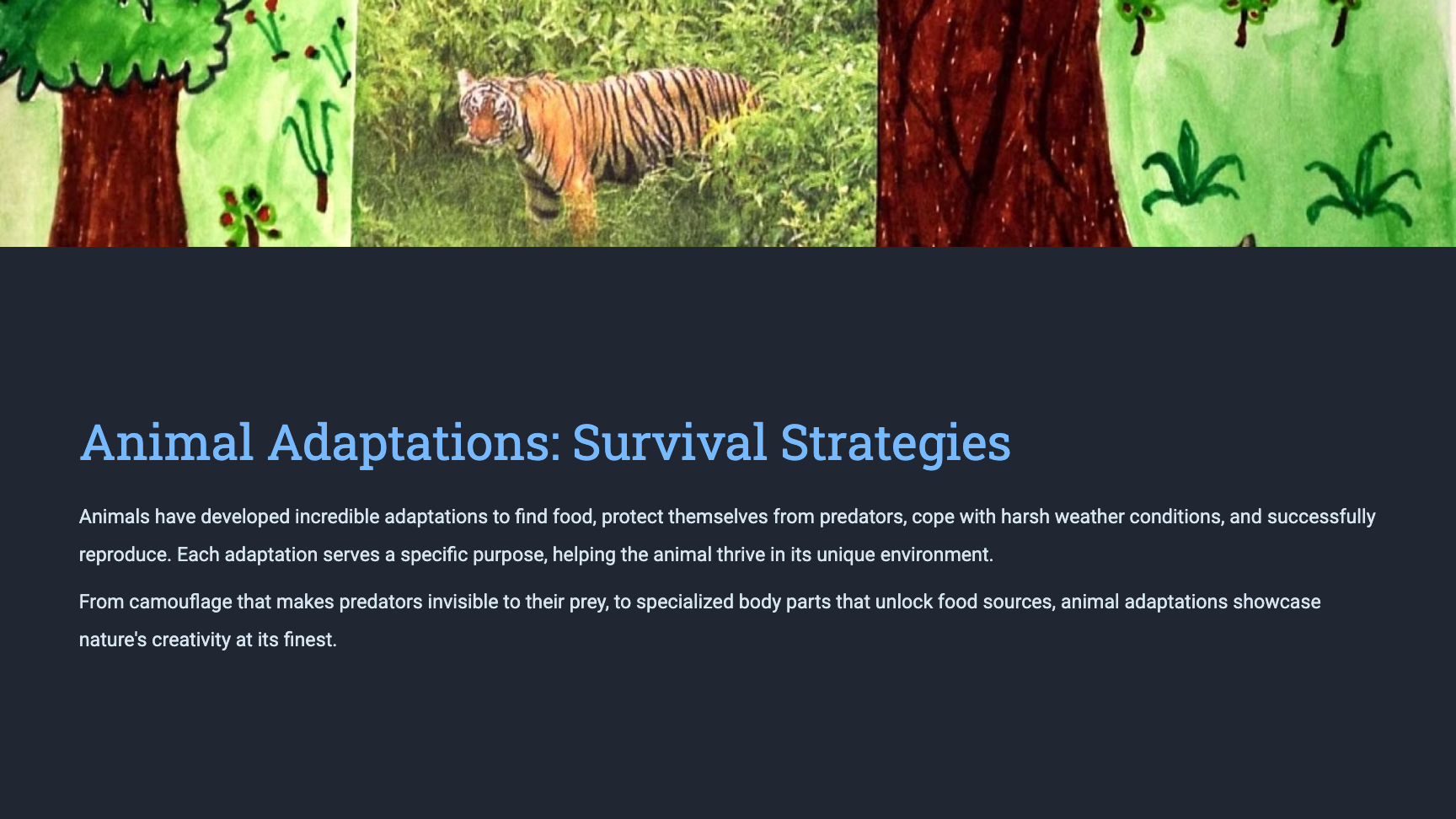
A tiger spotted its prey. It hunted it down and pounced on it. What structure(s) allowed the tiger to find and catch its prey?

8

media

9

Multiple Choice

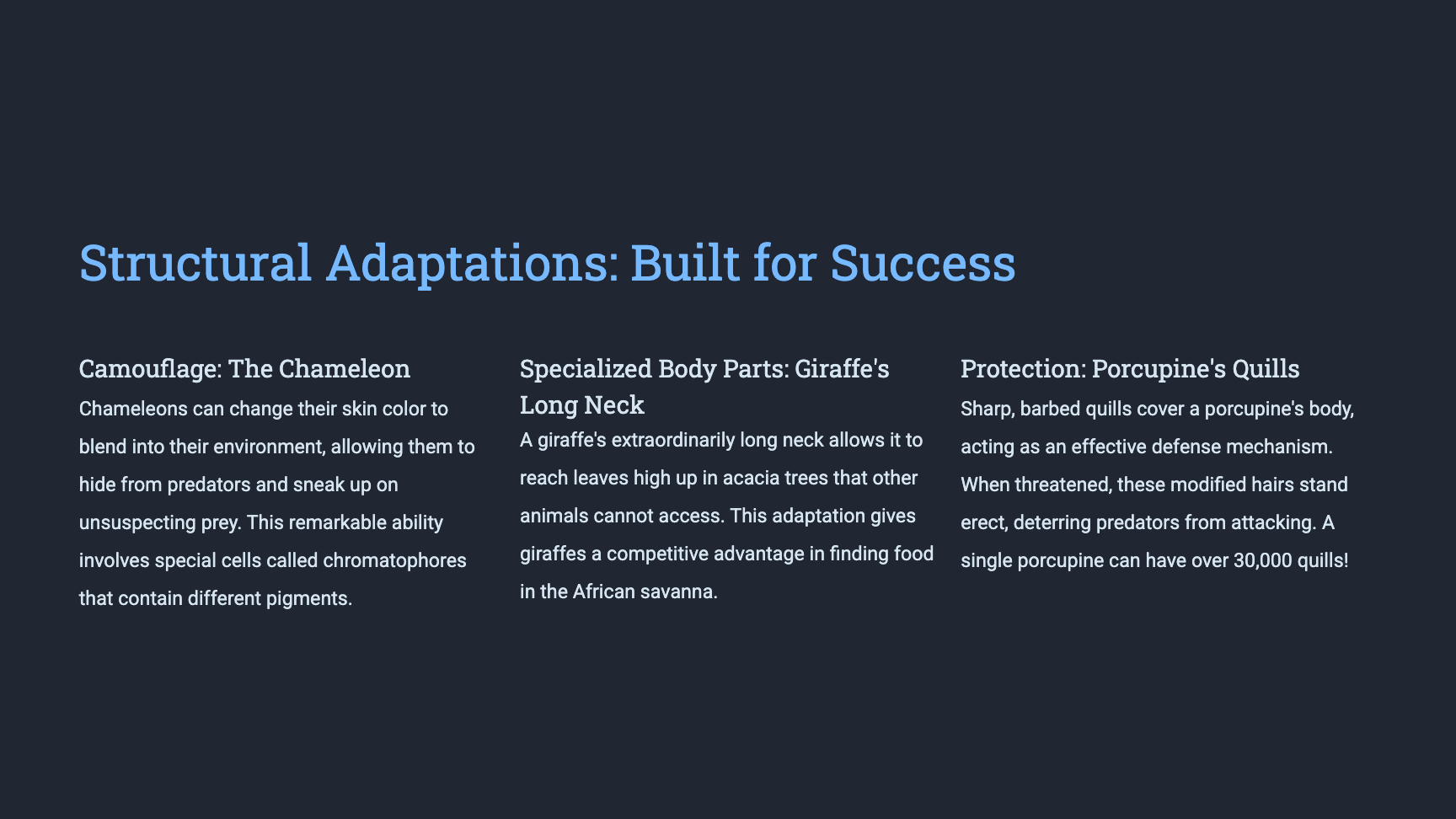
How does a giraffe's long neck provide it with a competitive advantage?

1

It helps them run faster

2

It allows them to reach high leaves

3

It makes them look more attractive

4

It helps them find water easily

10

media

11

Multiple Choice

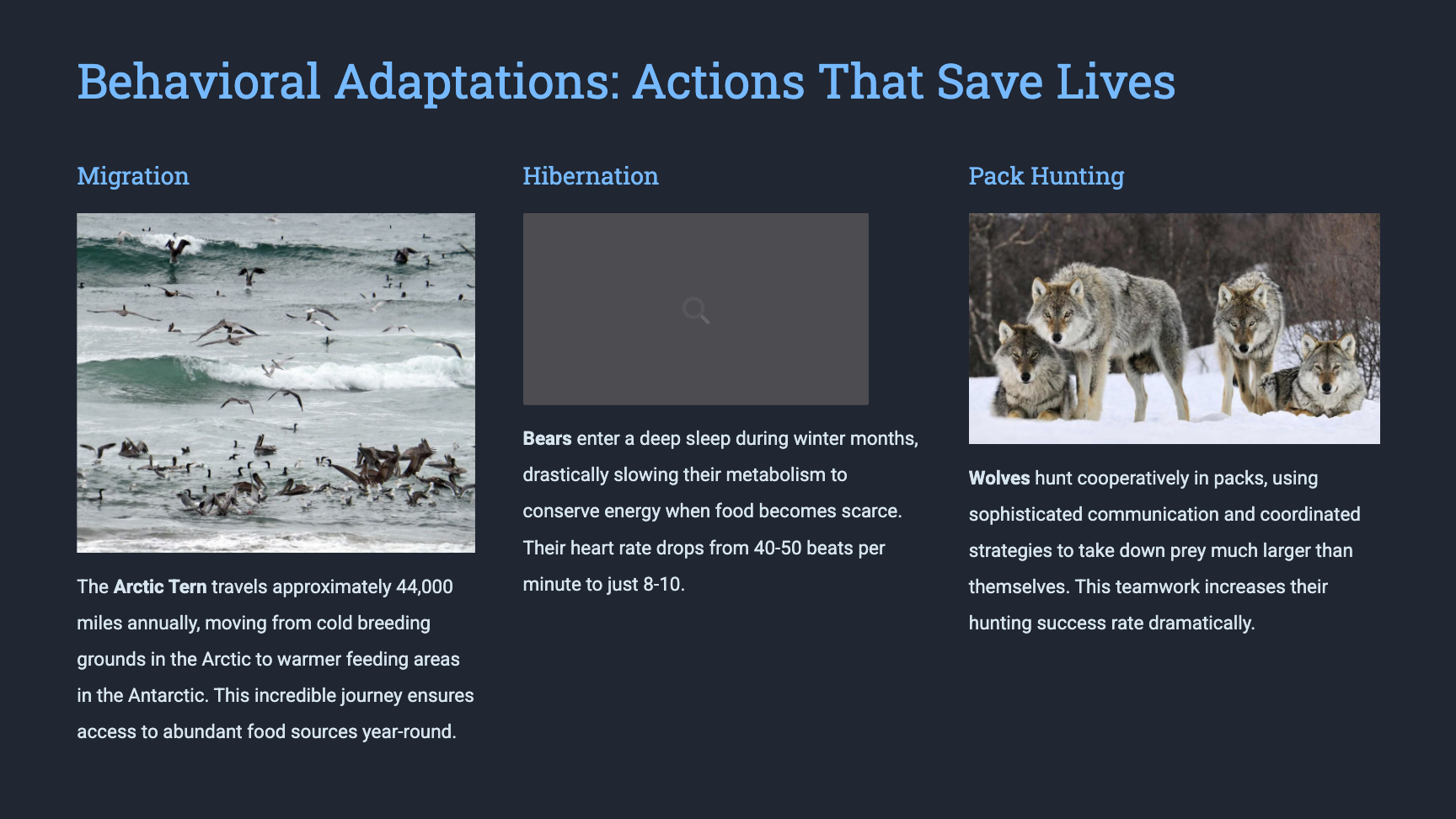
What is the significance of the Arctic Tern's migration?

1

To find warmer climates

2

To escape predators

3

To access abundant food sources

4

To reproduce

12

media

13

Multiple Choice

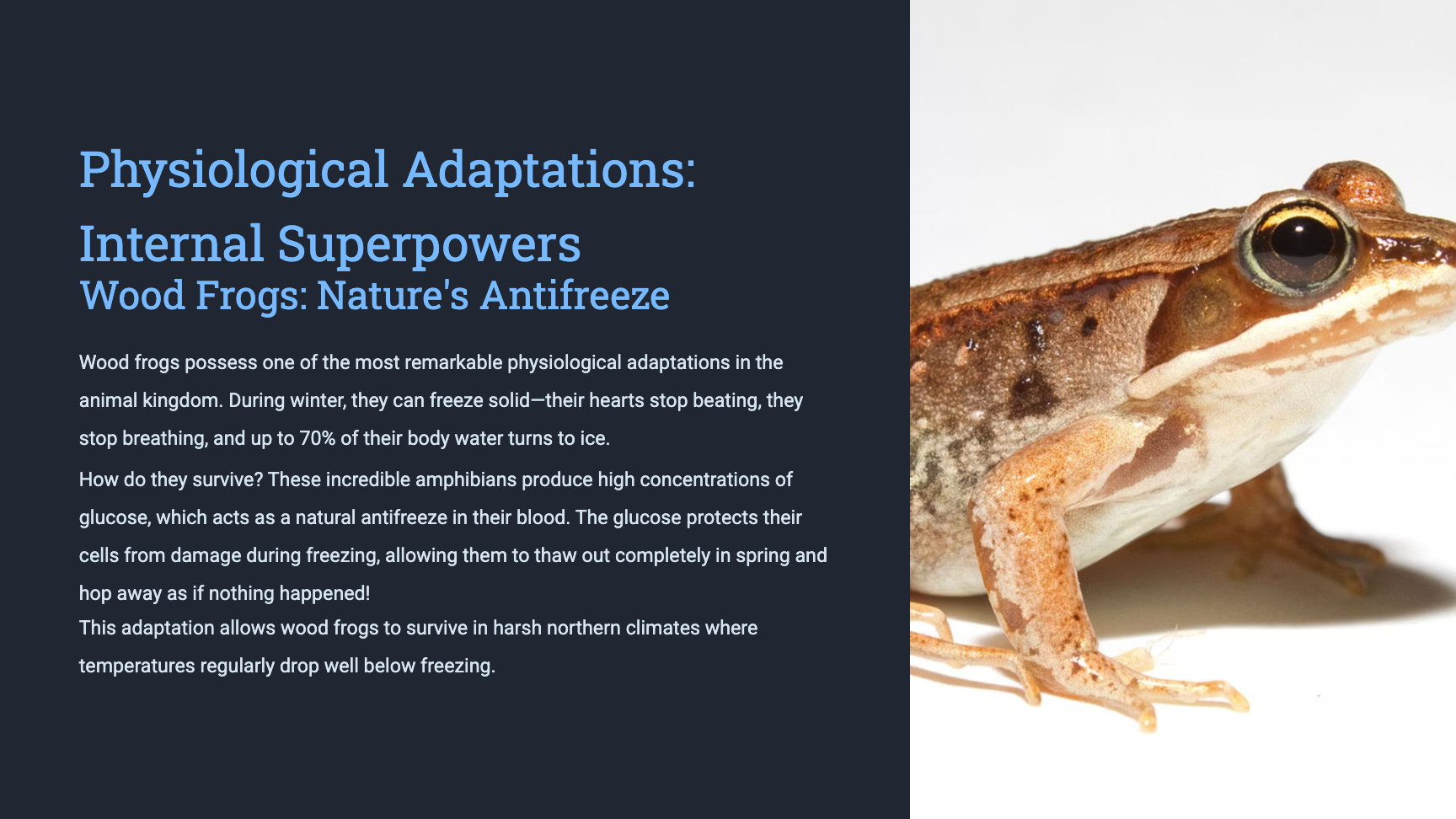
What physiological adaptation allows wood frogs to survive freezing temperatures?

1

High concentrations of glucose

2

Thick skin

3

Hibernation

4

Migration

14

media

15

Multiple Choice

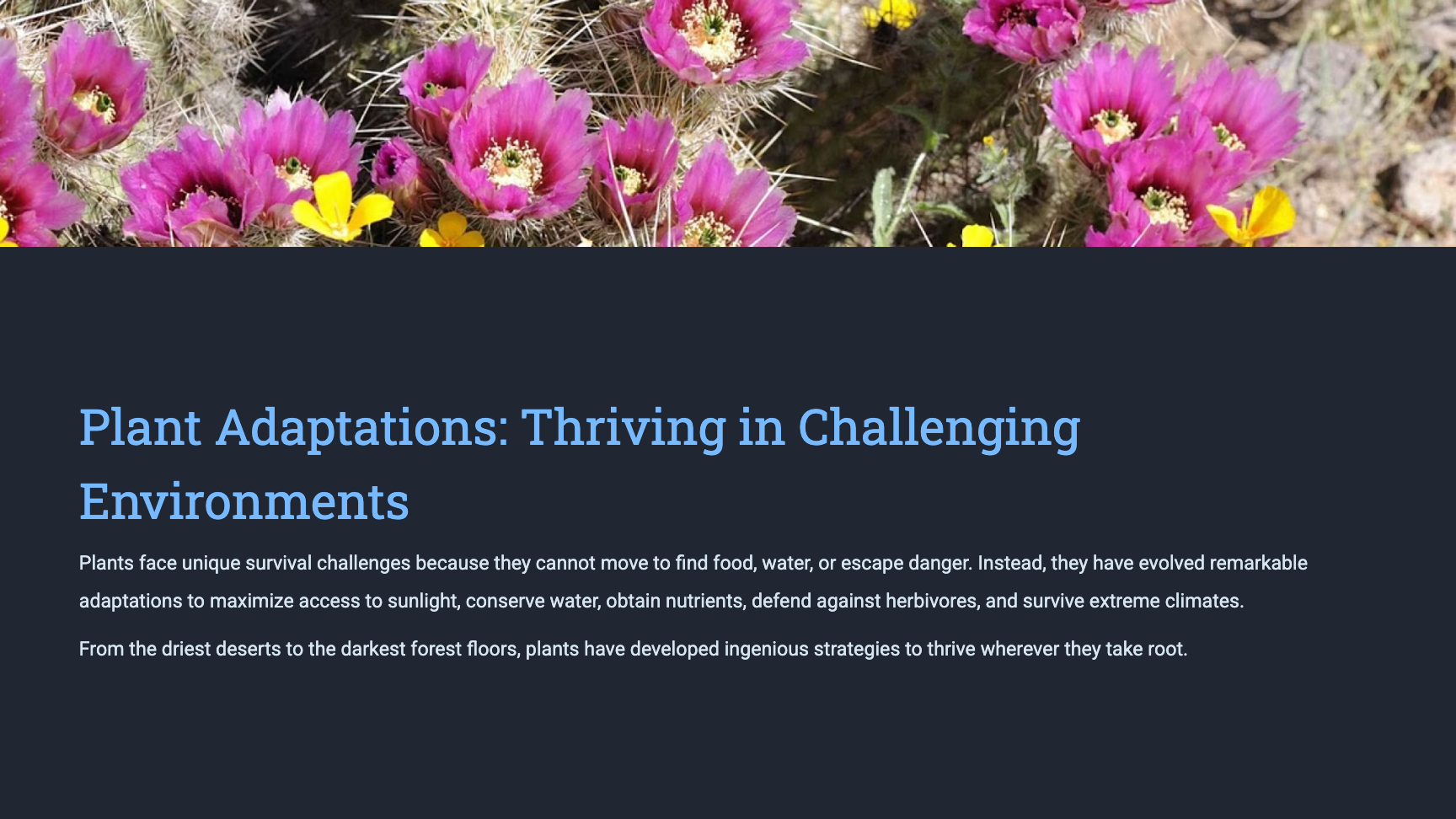
What are some adaptations that plants have developed to thrive in challenging environments?

1

Maximizing sunlight access

2

Conserving water

3

Defending against herbivores

4

All of the above

16

media

17

Multiple Choice

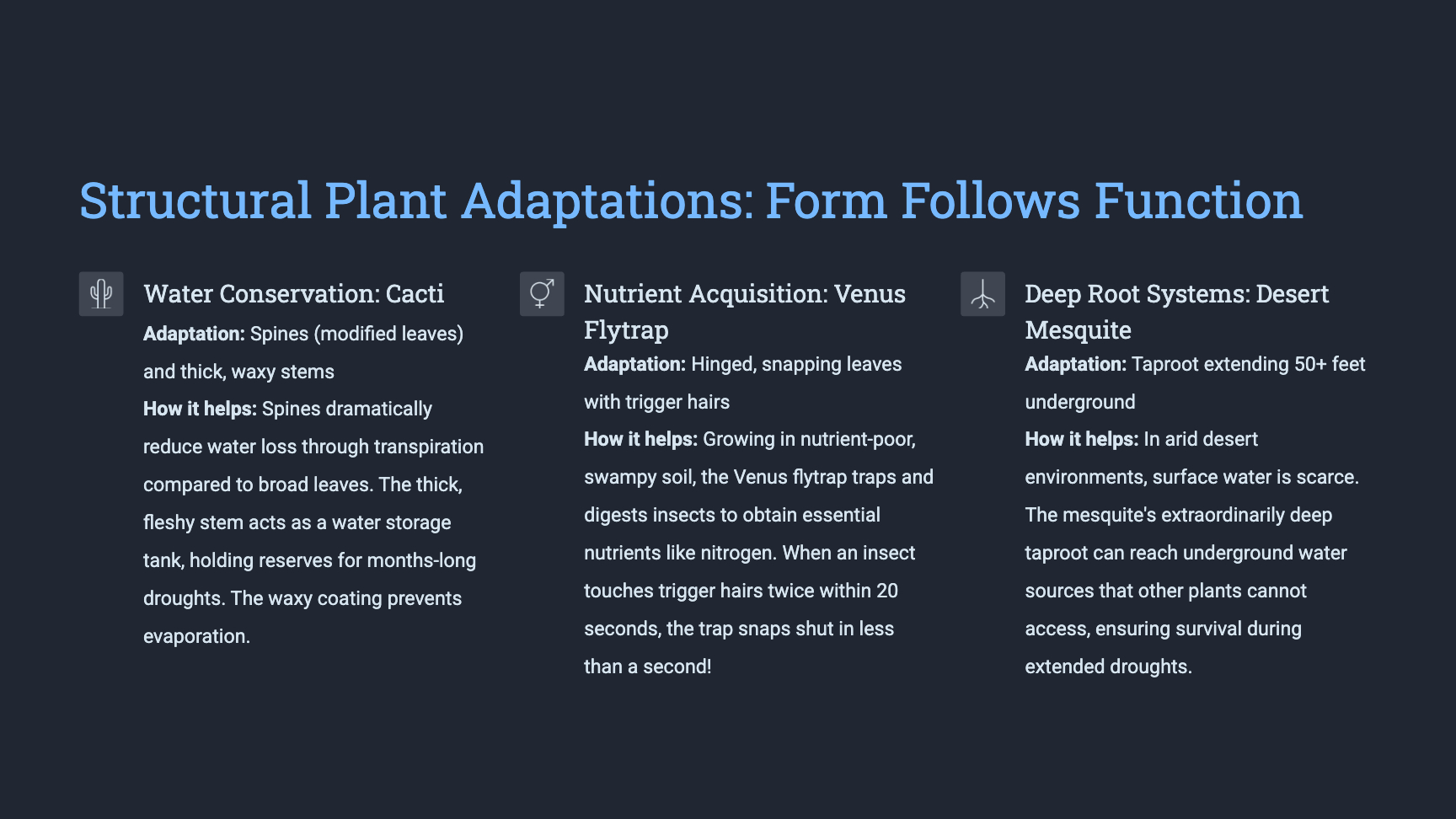
How does the Venus flytrap acquire nutrients?

1

By photosynthesis

2

By trapping insects

3

Through deep roots

4

By absorbing water

18

media

19

Multiple Choice

Question image

Students observed a plant left by a window over several days. The plant was watered daily. After three days, the plant began to grow towards the window as shown in the picture.


Which of the following best explains the student’s observations?

1

Heat from the Sun caused the plant to grow towards the window.

2

The plant is leaning towards the window to get fresh air.

3

The plant is responding to the stimulus of sunlight.

4

The plant is responding to water in the air and growing towards it.

20

media

21

Multiple Choice

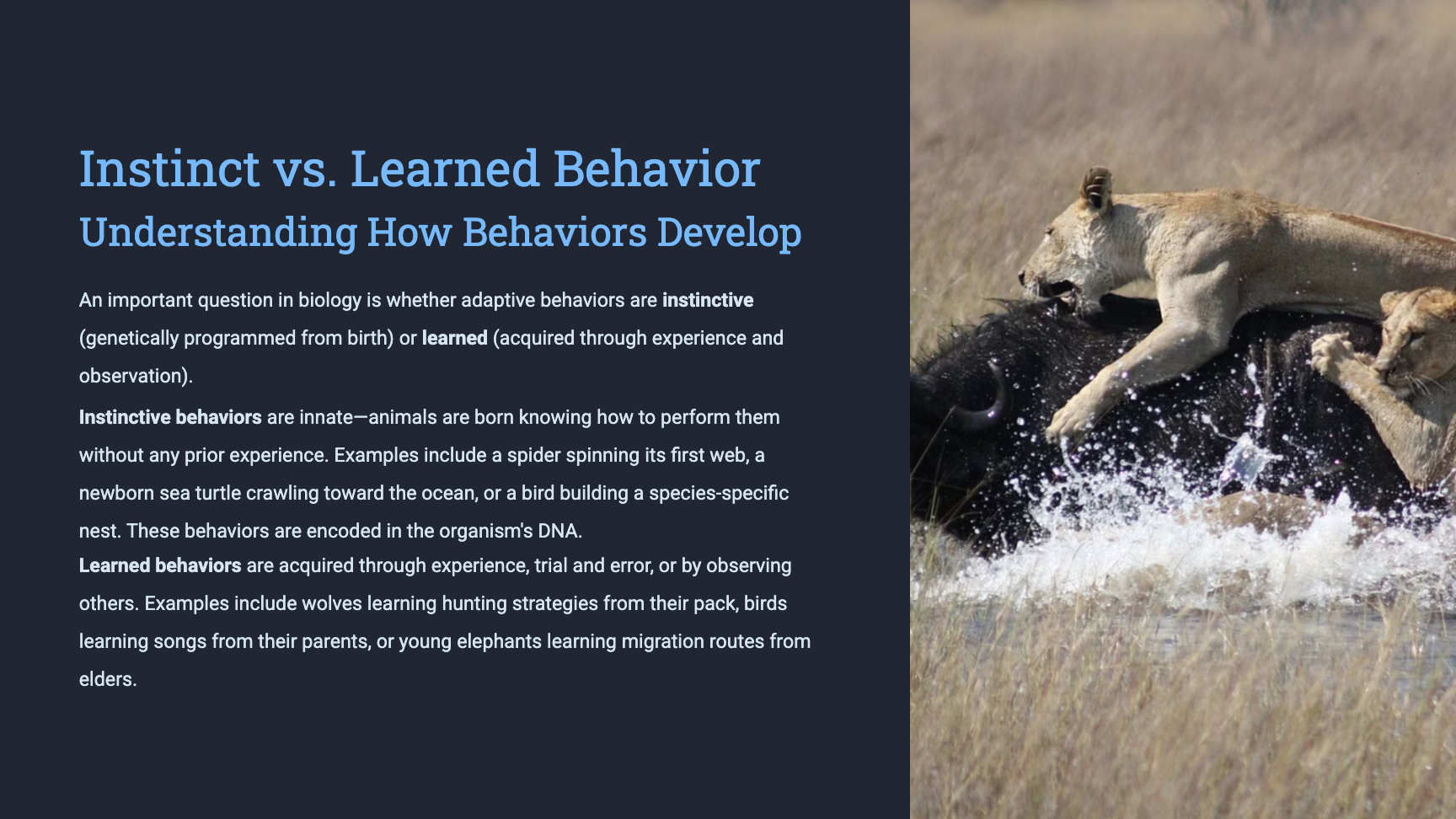
What is the difference between instinctive and learned behaviors in animals?

1

Instinctive behaviors are learned through experience

2

Learned behaviors are innate

3

Instinctive behaviors are genetically programmed

4

Learned behaviors are performed without prior experience

22

media

23

Multiple Choice

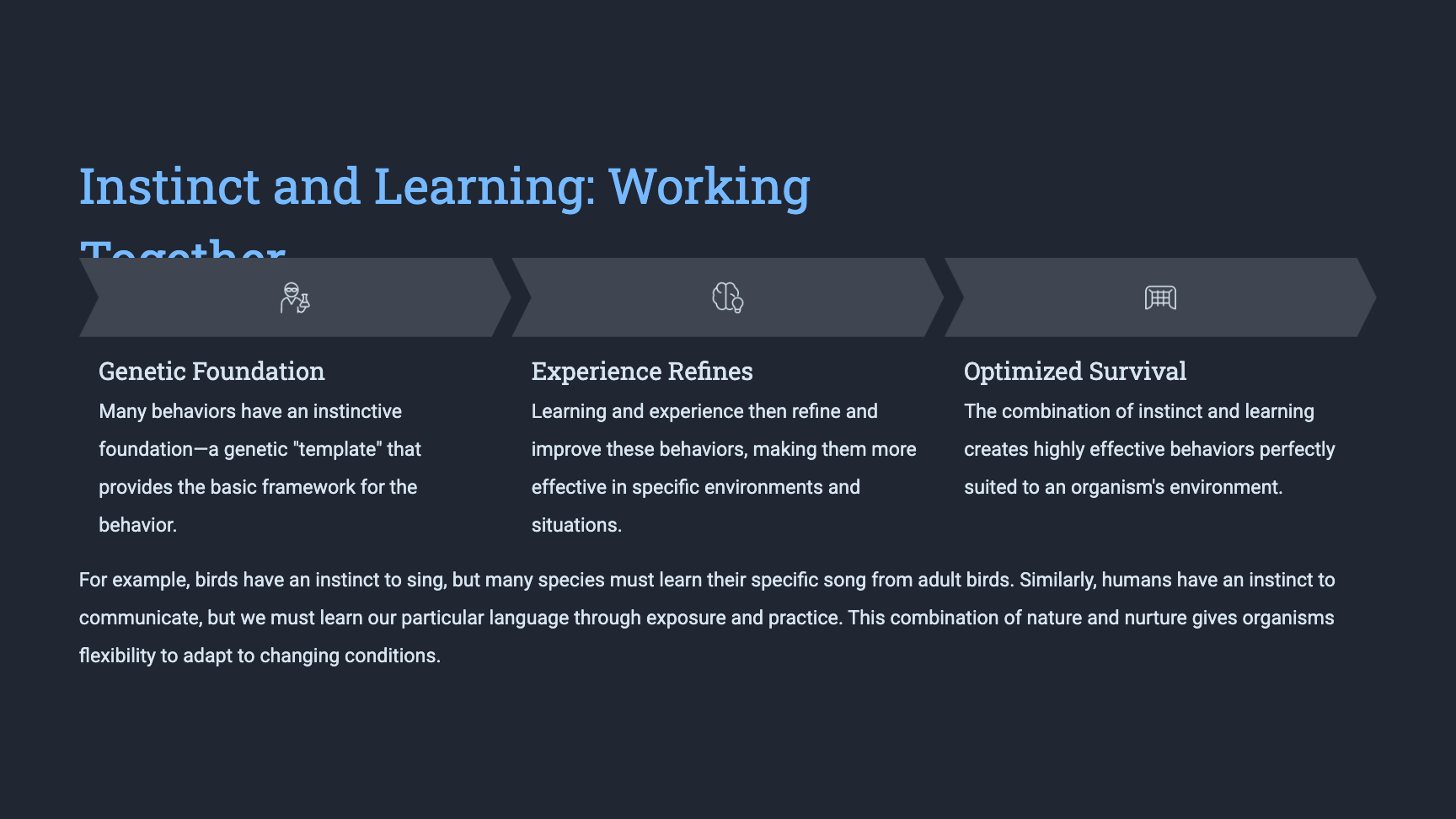
What is the significance of the combination of instinct and learning?

1

It leads to ineffective behaviors

2

It is irrelevant to survival

3

It creates effective behaviors suited to the environment

4

It only applies to animals

24

media

25

Multiple Choice

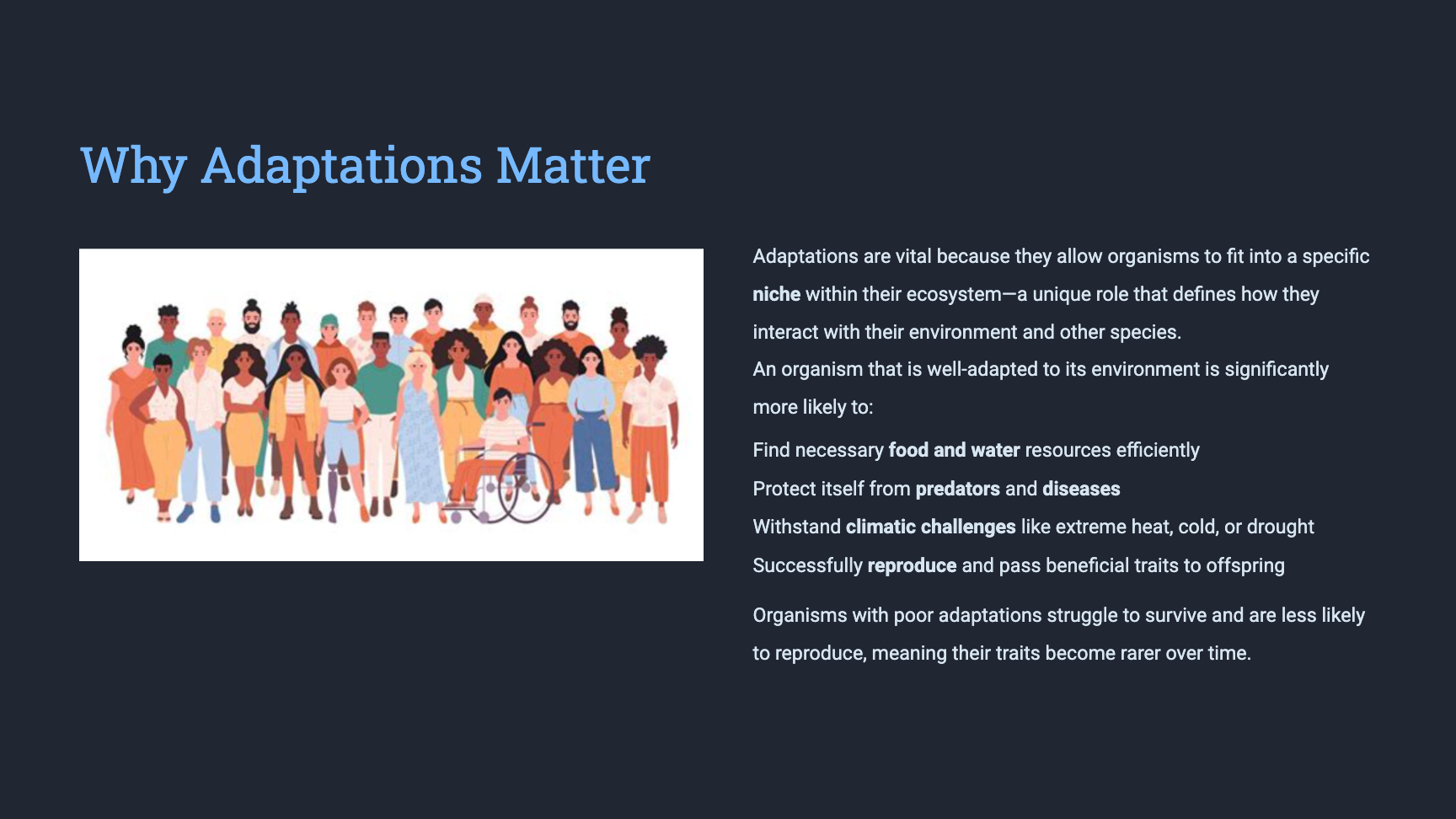
What are the key reasons why adaptations are vital for organisms in their ecosystems?

1

To find food and water resources efficiently

2

To protect from predators and diseases

3

To withstand climatic challenges

4

To reproduce and pass beneficial traits

26

media

27

Multiple Choice

What is the significance of adaptations in creating biodiversity?

1

They help species survive in their environment

2

They reduce the number of species

3

They have no impact on ecosystems

4

They only affect plants

28

media

29

Open Ended

Question image

The graph shows the frequency of two traits, 1 and 2, in a population.

Part A: Use information from the circle graph to infer which trait is most likely favored by natural selection.

Part B: Explain how natural selection could lead to the trait distribution shown in the circle graph.

Part C: Scientists predict that over time 0% of the population will have trait 2. Explain why this change in trait distribution could result in negative consequences for the population.

media

Show answer

Auto Play

Slide 1 / 29

SLIDE