
WWI & TREATY OF VERSAILLES

Presentation
•
Social Studies
•
6th Grade
•
Practice Problem
•
Hard

Harmony Harts
FREE Resource
37 Slides • 42 Questions
1
2
3
Multiple Choice
Which of the following statements best describes the complexity of the causes of World War I?
The causes were simple and easy to identify.
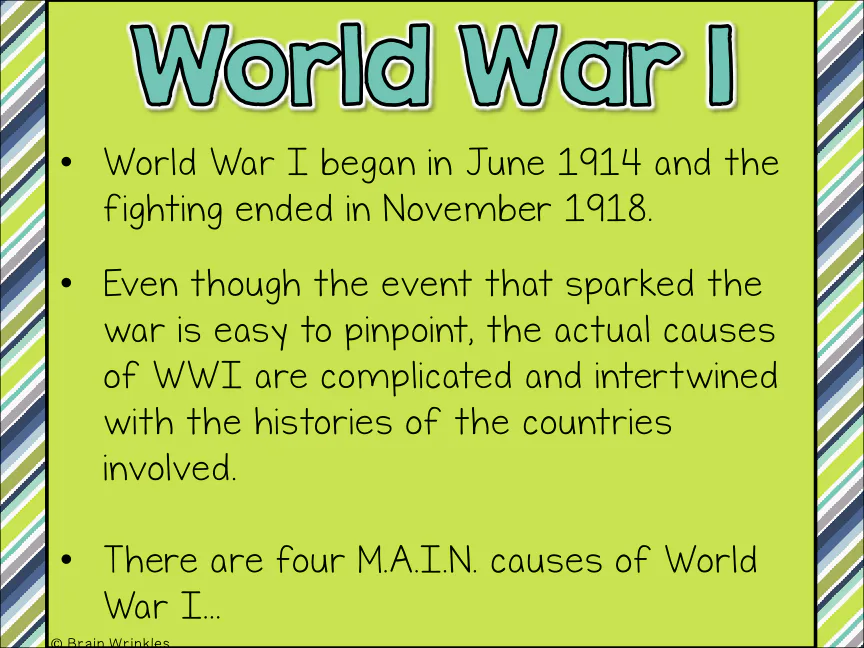
The causes were complicated and intertwined with the histories of the countries involved.
The war started suddenly without any prior tensions.
Only one event led to the outbreak of World War I.
4
Dropdown

5
Match

Militarism
Alliances
Imperialism
Nationalism
belief in strong military
Two or more countries agree to defend each other
Belief that taking new territory increases your power
Strong love for one’s country.
assassination
and started WWI
belief in strong military
Two or more countries agree to defend each other
Belief that taking new territory increases your power
Strong love for one’s country.
assassination
and started WWI
6
Match

Match the following cause for WWI with its definition
The policy of building up the tools of war, such as ships, weapons, and soldiers
Agreements to come to the aid of another nation if they attack or are attacked by a rival nation.
Countries/Empires used their power to secure raw resources, land, and labor in less industrialized nations/territories
The belief that one's nation should take priority over the interests of foreign countries or minority groups.
Militarism
Alliances
Imperialism
Nationalism
Militarism
Alliances
Imperialism
Nationalism
7
Labeling
Place the cause of WWI under the correct heading.
Assassination
Militarism
Alliances
Imperialism
July Crisis
Nationalism
8
Match
Militarism
Alliances
Imperialism
Nationalism
belief in strong military
Two or more countries agree to defend each other
Belief that taking new territory increases your power
Strong love for one’s country.
belief in strong military
Two or more countries agree to defend each other
Belief that taking new territory increases your power
Strong love for one’s country.
9
Dropdown

10
Drag and Drop
Causes of World War I
World War I, also known as the Great War, occurred from 1914 to 1918. It involved many countries around the world. The war started due to several reasons, such as 11
Match
Match the causes with their effects.
Britain and the U.S. read the Zimmerman telegraph
German U-Boats sink the R.M.S. Lusitania
The U.S. declares war on Germany and enters WWI
Germany and the Allied Powers agreed to an armistice in November of 1918
The Treaty of Versailles harshly punished Germany
U.S. government is angered and close to declaring war on Germany
President Woodrow Wilson warns Germany to stop sinking passenger ships
Industry and factory production significantly increases, causing unemployment to decrease
The Treaty of Versailles was signed in 1919
Germany was forced to pay money to Allied countries, have weapons taken away, and lose land.
U.S. government is angered and close to declaring war on Germany
President Woodrow Wilson warns Germany to stop sinking passenger ships
Industry and factory production significantly increases, causing unemployment to decrease
The Treaty of Versailles was signed in 1919
Germany was forced to pay money to Allied countries, have weapons taken away, and lose land.
12
Drag and Drop
M stood for
A stood for
I stood for
N stood for
13
Drag and Drop
14
Drag and Drop
15
Match
Match the following causes of World War I:
The spark that ignited the "tinderbox"
Nationalism
Imperialism
Militarism
Alliances
Assassination of Franz Ferdinand
Belief that one's country was better than others
Expanding empires
Build up of armed forces
Agreements between countries
Assassination of Franz Ferdinand
Belief that one's country was better than others
Expanding empires
Build up of armed forces
Agreements between countries
16
Drag and Drop
17
Drag and Drop
18
Match
Match the causes of the WW1 to their definitions.
the belief that one’s country should maintain a strong military
an agreement based on mutual interest, such as trade or defense
a country extends its power into other territories for economic or political gain
an intense feeling of pride for one’s own country
Militarism
Alliance
Imperialism
Nationalism
Militarism
Alliance
Imperialism
Nationalism
19
20
21
Multiple Choice
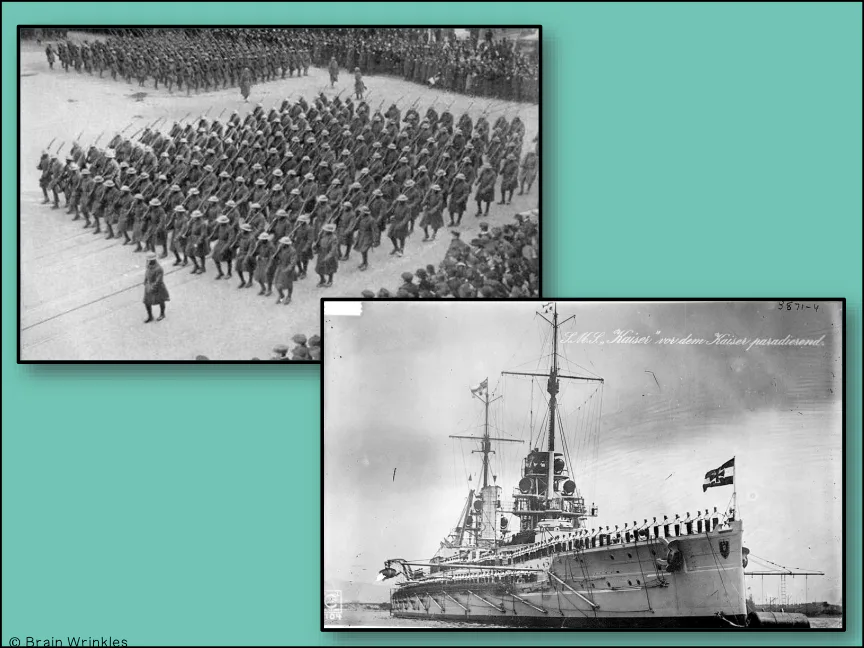
Which of the following were reasons for increased militarism in Europe between 1870 and 1914?
Competition to build up armies and navies
Desire for peace and diplomacy
Reduction in military spending
Disarmament agreements
22
Open Ended
Explain how militarism contributed to the tensions leading up to World War I.
23
24
25
Fill in the Blanks
European countries made agreements called
Type answer...
26
Multiple Choice
Which countries were part of the Central Powers during World War I?
Germany, Austria-Hungary, Bulgaria, Ottoman Empire
Great Britain, France, Russia, Serbia
Italy, Spain, Portugal, Greece
United States, Canada, Australia, New Zealand
27
28
Multiple Choice
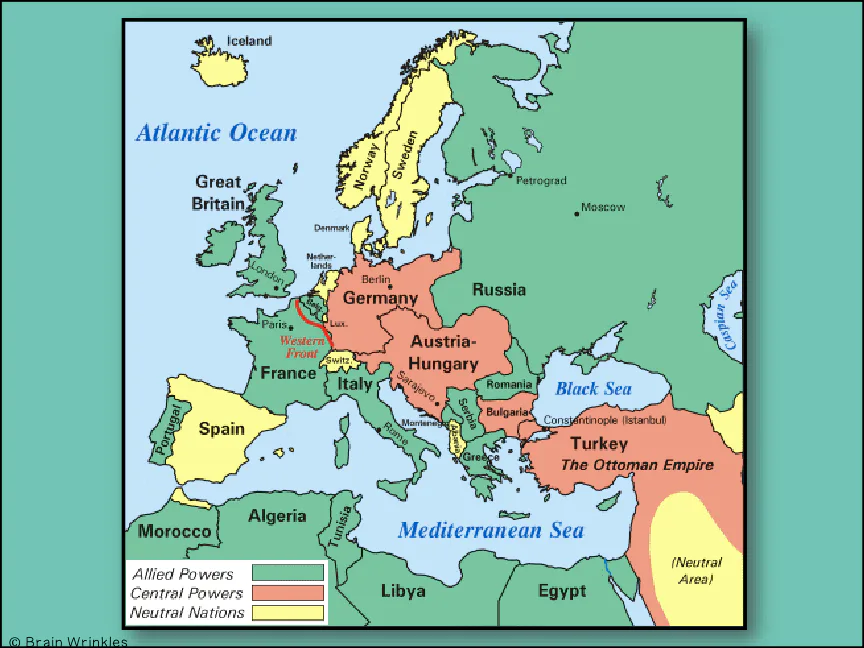
Based on the map, which countries were considered neutral during World War I?
Spain, Switzerland, Norway, Sweden
Germany, Austria-Hungary, Bulgaria
Great Britain, France, Russia
Turkey, Ottoman Empire, Italy
29
30
Open Ended
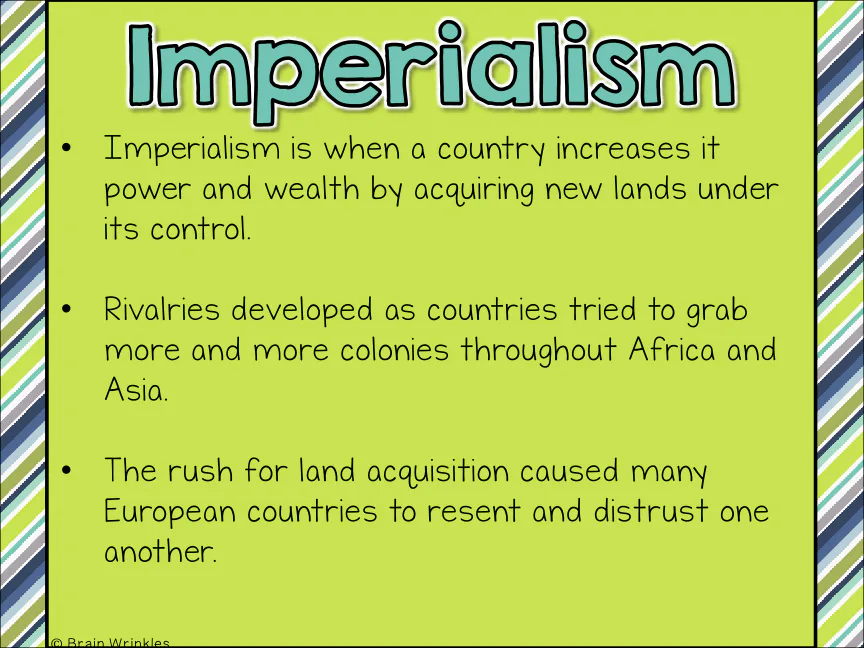
How did imperialism contribute to distrust among European countries before World War I?
31
32
Multiple Choice
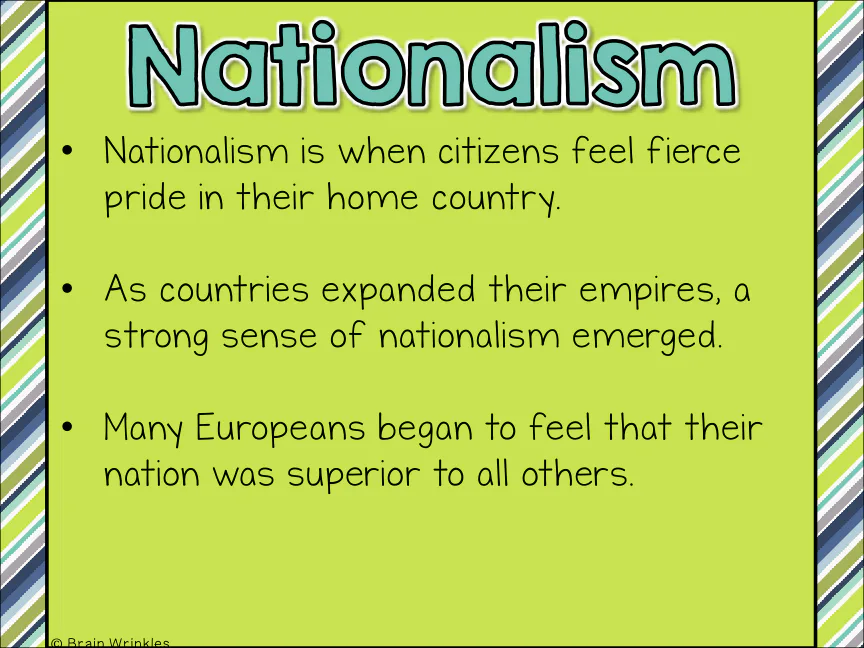
What was one major effect of nationalism in Europe before World War I?
It led to a strong sense of pride and superiority among nations.
It encouraged countries to avoid expanding their empires.
It promoted peace and cooperation among European nations.
It reduced the desire for independence among ethnic groups.
33
34
Multiple Select
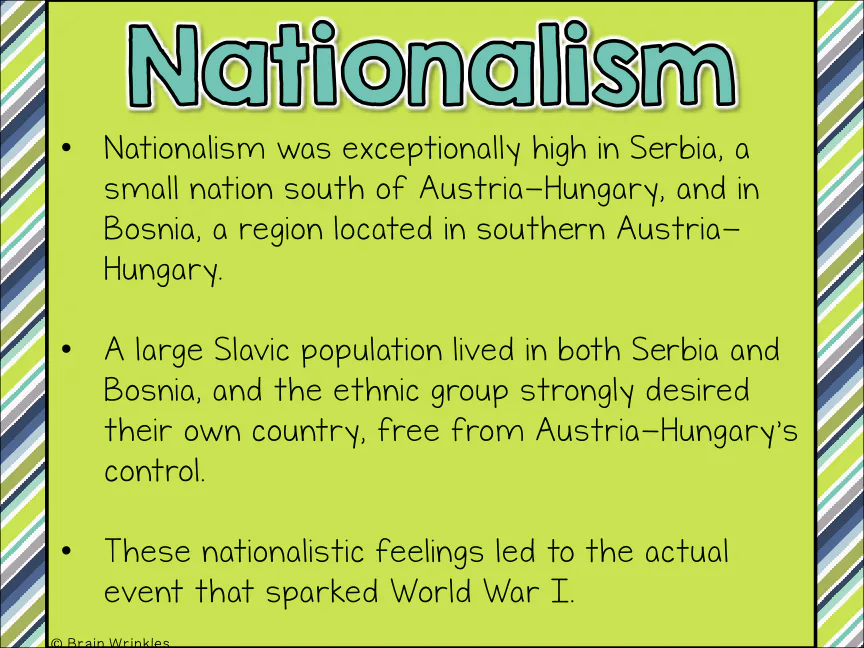
Which of the following statements about nationalism in Serbia and Bosnia before World War I are correct?
Nationalism was especially high in Serbia and Bosnia.
The Slavic population in these regions wanted independence from Austria-Hungary.
Nationalistic feelings in these areas had no impact on the start of World War I.
The desire for independence contributed to tensions in the region.
35
36
Open Ended
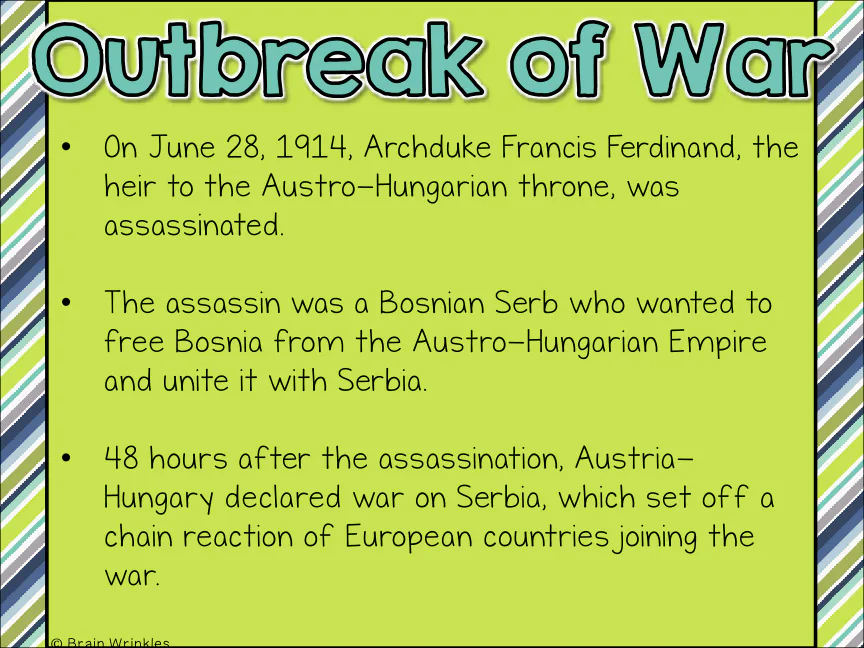
Explain how the assassination of Archduke Francis Ferdinand led to the outbreak of World War I.
37
Fill in the Blanks
The assassination of Archduke Francis Ferdinand occurred on June 28,
Type answer...
38
39
Multiple Choice
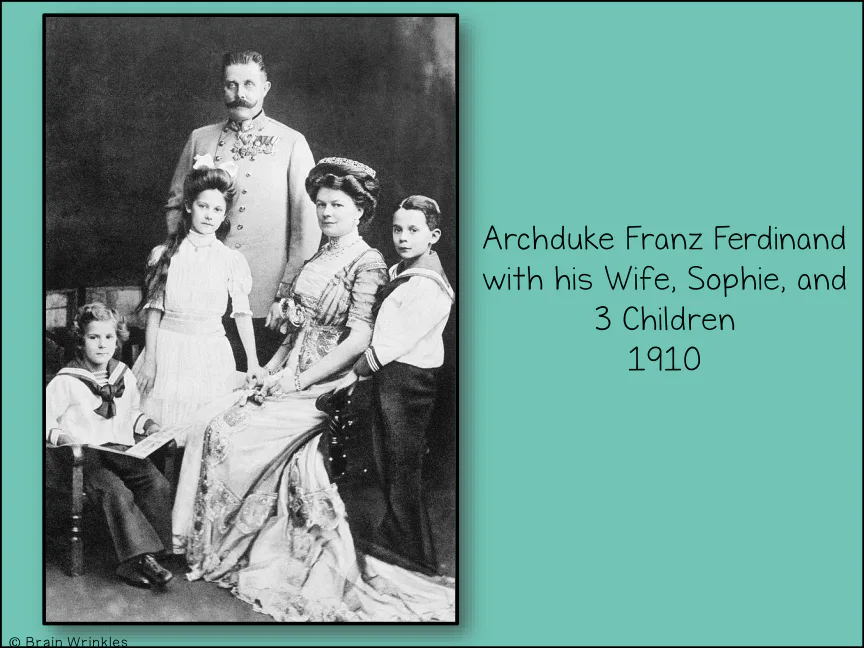
Who was Archduke Franz Ferdinand accompanied by in the 1910 photograph?
His wife, Sophie, and three children
His military advisors
His parents and siblings
His political allies
40
41
Multiple Choice
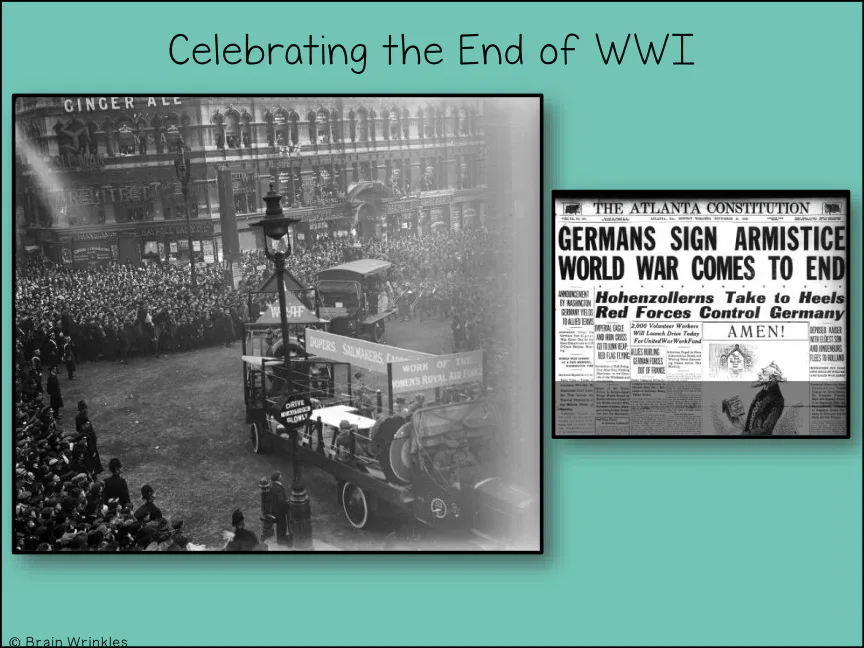
What was one significant result of America's entry into World War I?
It gave the Allies the extra power needed to defeat the Central Powers.
It caused the Central Powers to win the war.
It led to the immediate end of the war.
It resulted in fewer casualties in Europe.
42
43
44
Multiple Choice
Which of the following was NOT a reason why European empire building in Asia and Africa helped lead to World War I?
Europeans felt fierce pride in their countries.
They had developed strong militaries to protect their colonies.
European countries had built up resentments towards one another and had joined alliances to protect themselves.
European countries sought peaceful resolutions to conflicts.
45
46
47
Fill in the Blanks
The Treaty of Versailles was signed in
Type answer...
48
49
50
Open Ended
Describe the concerns of Woodrow Wilson and David Lloyd George regarding the punishment of Germany after World War I.
51
Multiple Select
Which of the following statements about the Treaty of Versailles is/are correct?
It was signed in Versailles, France on June 28, 1919.
It officially ended World War I.
It was mainly negotiated and written by the leaders of the Allies.
Germany had significant input in writing the treaty.
52
Open Ended
Explain how the Treaty of Versailles contributed to the end of World War I and its impact on Germany.
53
54
Multiple Choice
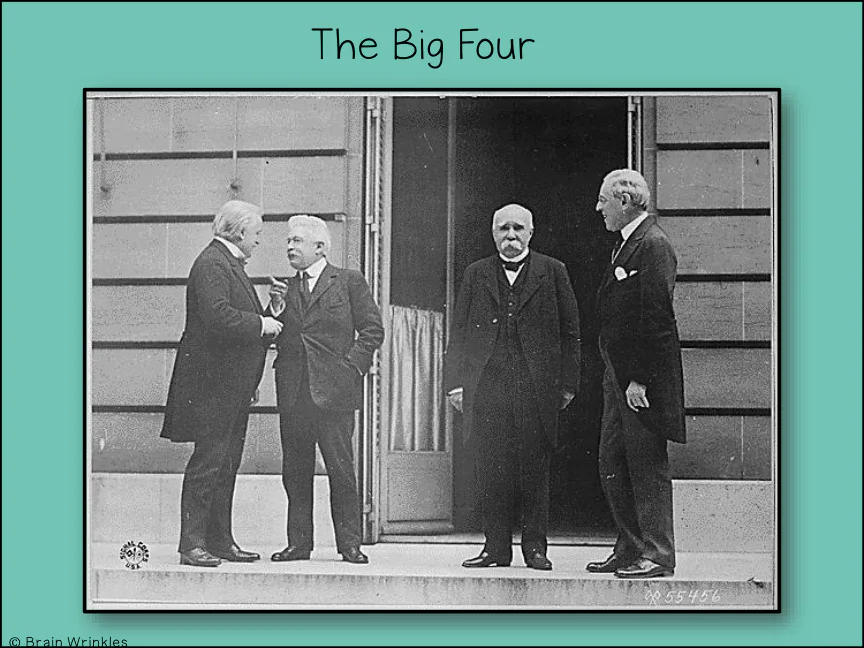
Who were the 'Big Four' leaders involved in the Treaty of Versailles negotiations?
Woodrow Wilson, David Lloyd George, Georges Clemenceau, Vittorio Orlando
Woodrow Wilson, Winston Churchill, Georges Clemenceau, Vittorio Orlando
David Lloyd George, Franklin D. Roosevelt, Georges Clemenceau, Vittorio Orlando
Woodrow Wilson, David Lloyd George, Georges Clemenceau, Benito Mussolini
55
56
Multiple Choice
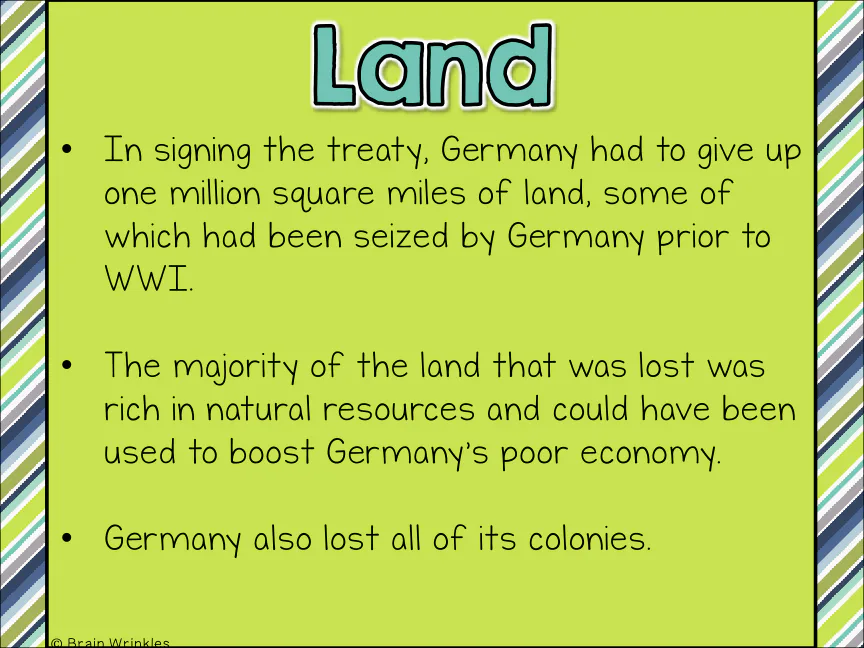
Which consequence of the Treaty of Versailles had the greatest impact on Germany's economy?
Loss of land rich in natural resources
Limitation of military
Payment of reparations
Loss of colonies
57
58
Multiple Choice
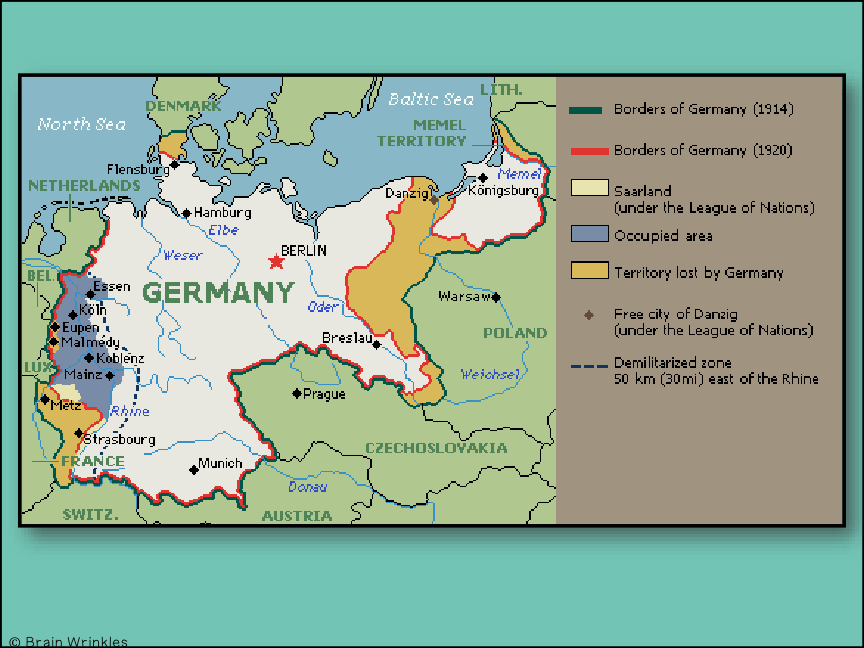
Based on the map, which territories did Germany lose after World War I according to the Treaty of Versailles?
Saarland, Danzig, and Eupen-Malmedy
Berlin, Munich, and Hamburg
Warsaw, Prague, and Vienna
Netherlands, Denmark, and Switzerland
59
60
Multiple Choice
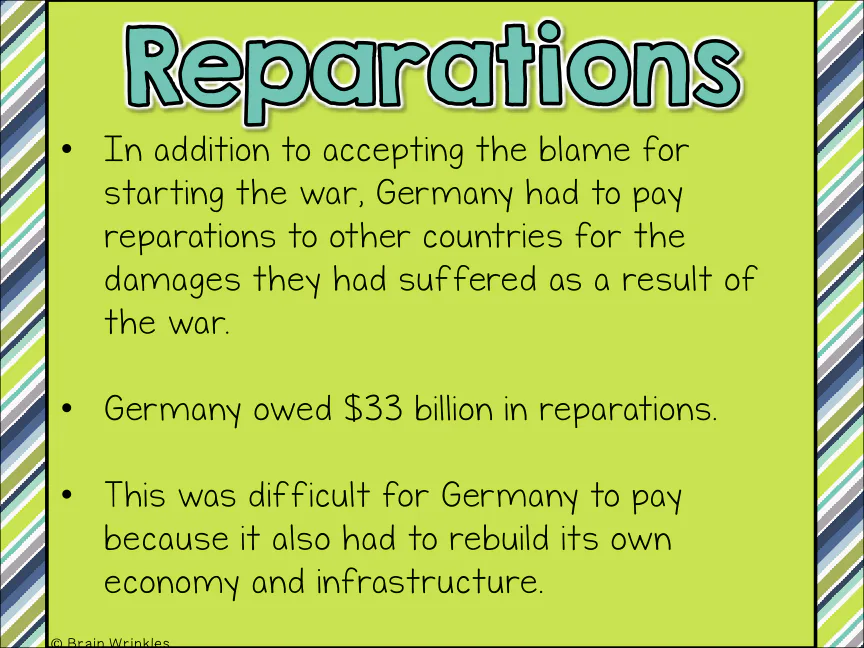
Why was it difficult for Germany to pay the $33 billion in reparations imposed by the Treaty of Versailles?
Germany had to rebuild its own economy and infrastructure
Germany refused to pay reparations
Germany was not affected by the war
Germany had a surplus of resources
61
62
Fill in the Blanks
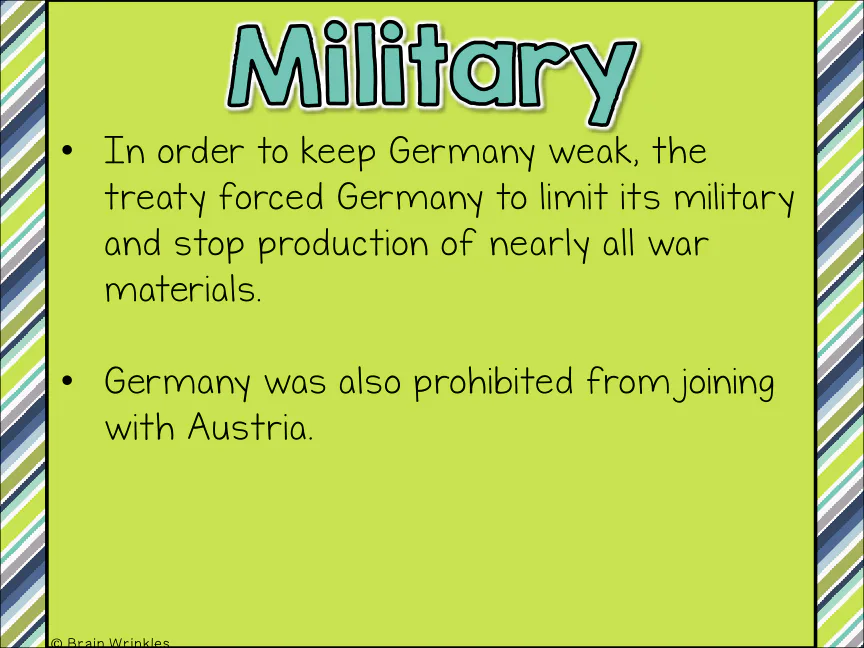
In order to keep Germany weak, the Treaty of Versailles forced Germany to limit its
Type answer...
63
64
Open Ended
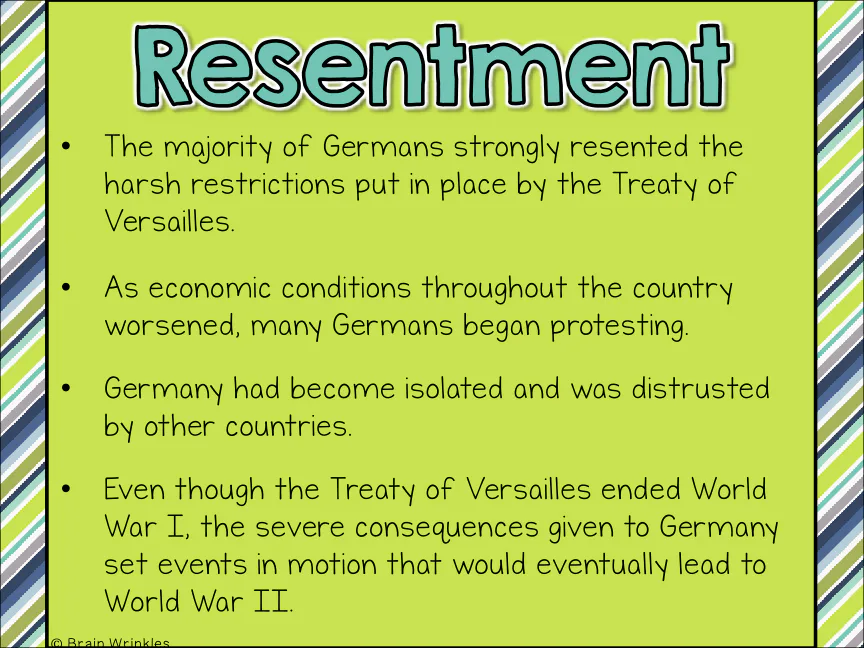
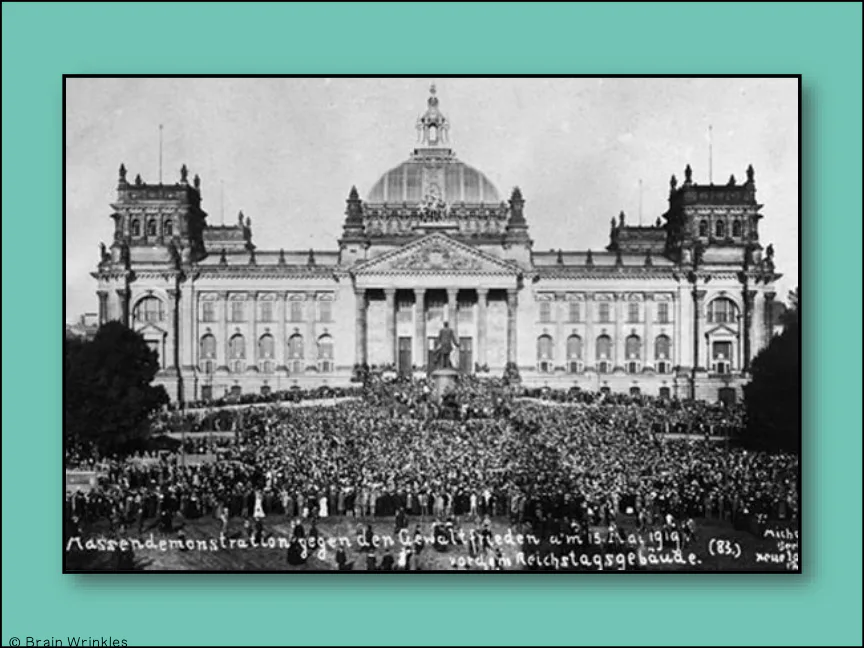
How did the Treaty of Versailles contribute to resentment among Germans and set the stage for future conflict?
65
66
Open Ended
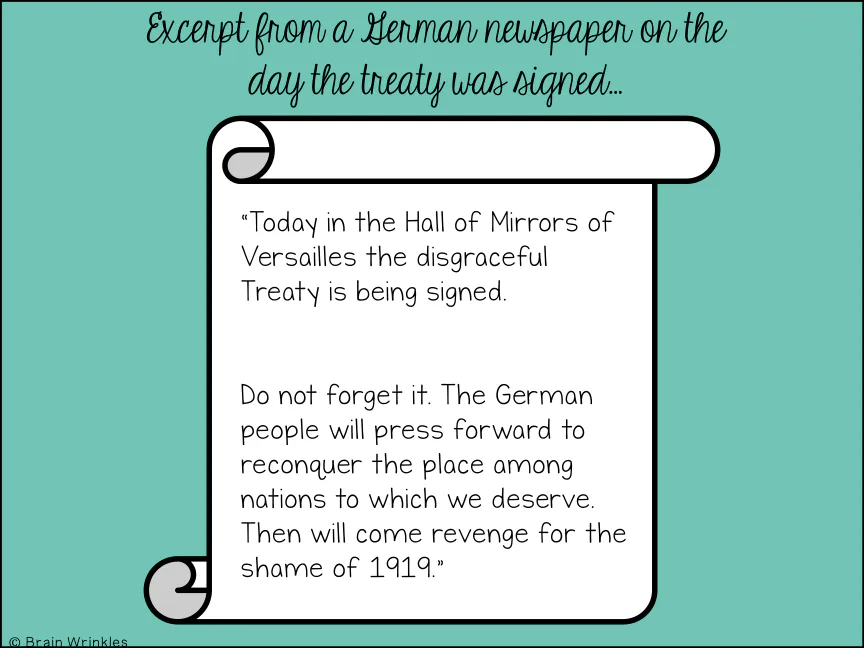
What does the excerpt from the German newspaper reveal about German attitudes toward the Treaty of Versailles on the day it was signed?
67
68
69
70
71
72
73
74
75
76
77
78
Fill in the Blanks
World War I began in
Type answer...
79
Open Ended
Reflecting on today's lesson, what do you think was the most significant cause of World War I and why?
Show answer
Auto Play
Slide 1 / 79
SLIDE
Similar Resources on Wayground

71 questions
E6 1st Grading Period Final Assessment Reviewer
Presentation
•
6th Grade
71 questions
T1 SCI6 - REVIEW 1
Presentation
•
6th Grade
75 questions
G5 Final Exam Review ST
Presentation
•
5th Grade
79 questions
Southern and Eastern Asia Belief Systems
Presentation
•
7th Grade
77 questions
Ancient China GRAPES Review
Presentation
•
6th Grade
71 questions
Human Geography: Introduction to Maps
Presentation
•
7th Grade
74 questions
Geography 6: Conservation
Presentation
•
6th Grade
70 questions
Integers
Presentation
•
6th Grade
Popular Resources on Wayground
10 questions
How much do you know about our Portrait of an Eagle?

Quiz
•
10th Grade
10 questions
Fast Food Slogans
Quiz
•
6th - 8th Grade
21 questions
Continents and Oceans
Quiz
•
6th Grade
20 questions
Parts of Speech
Quiz
•
5th Grade
16 questions
Subject & Predicate
Quiz
•
5th Grade
25 questions
Multiplication Facts
Quiz
•
5th Grade
12 questions
Map Skills
Quiz
•
3rd Grade
22 questions
Continents and Oceans
Quiz
•
5th Grade
Discover more resources for Social Studies
10 questions
Exploring the Age of Exploration: Key Events and Figures

Interactive video
•
6th - 10th Grade
13 questions
13 Colonies Map Quiz
Quiz
•
6th - 8th Grade
12 questions
7 Continents and 5 Major Oceans
Quiz
•
6th Grade
10 questions
Pillars of Free Enterprise
Quiz
•
6th - 8th Grade
26 questions
QA 1 Review
Quiz
•
6th - 8th Grade
8 questions
Geography of Mesopotamia
Presentation
•
6th Grade
10 questions
Exploring the 13 Colonies Regions
Interactive video
•
6th - 10th Grade
20 questions
Latitude and Longitude Practice
Quiz
•
6th Grade