Search Header Logo
  1. Resource Library
  2. Science
  3. Biology
  4. Passive Transport
  5. 7.ls.1.2 Day 2: Passive Transport — Diffusion And Osmosis
7.LS.1.2-DAY 2: Passive Transport — Diffusion and Osmosis

7.LS.1.2-DAY 2: Passive Transport — Diffusion and Osmosis

Assessment

Presentation

Science

7th Grade

Hard

NGSS
MS-LS1-2, MS-ESS2-4, MS-LS2-3

+6

Standards-aligned

Created by

Jessica Freeman

FREE Resource

21 Slides • 57 Questions

1

7.LS.1-2​
📘 DAY 2: Passive Transport — Diffusion and Osmosis

By Jessica Freeman

2

media

3

media

4

media

5

media

6

media

7

Multiple Choice

Question image

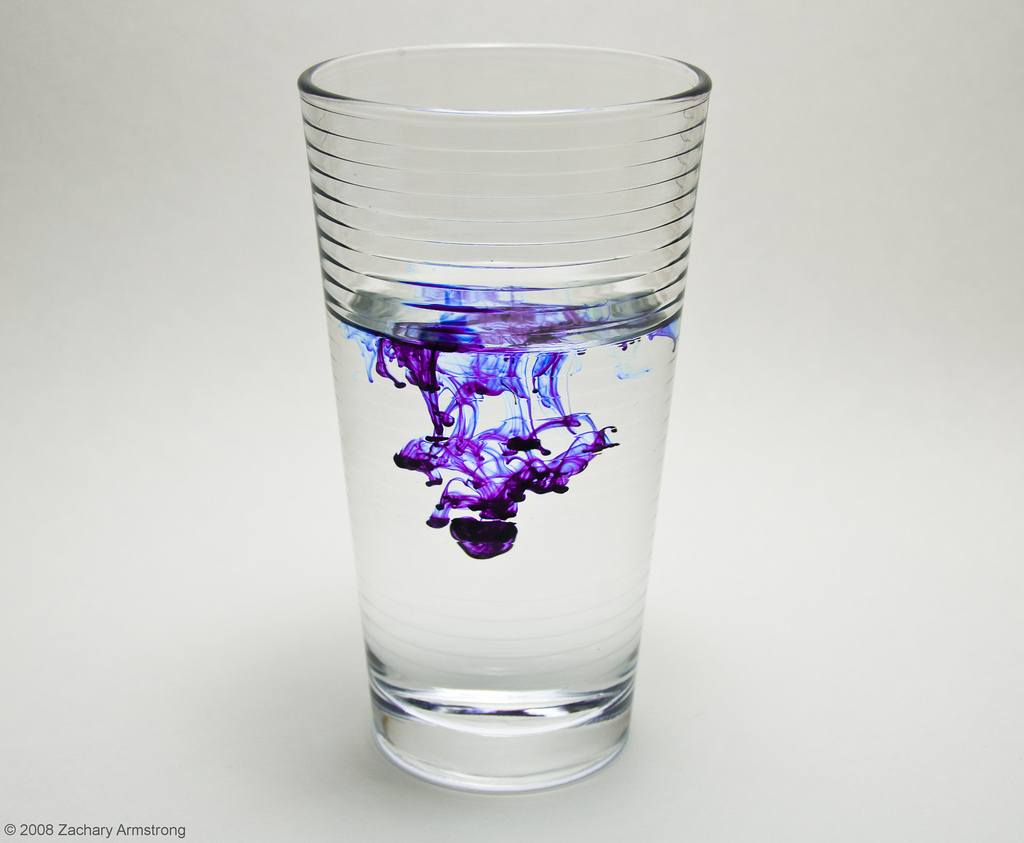
Which statement best describes what will occur?

1

The dye molecules will diffuse throughout the beaker from low to high concentration.

2

The dye molecules will diffuse throughout the beaker from high to low concentration.

3

The dye molecules will not move.

8

Answer

  • Observe the image. As you can see, the dye molecules slowly diffuse throughout the beaker from a high to low concentration.

media

9

Multiple Choice

Question image

Observe the cell in the picture. Which statement best describes the concentration of O2?

1

There is a higher O2 concentration inside the cell

2

There is a higher O2 concentration outside the cell

3

The O2 concentration is in equilibrium - equal amounts on each side of the cell

10

Multiple Choice

Question image

In which direction will the majority of O2 molecules diffuse (move)?

1

Most O2 will diffuse out of the cell

2

Most O2 will diffuse into the cell

3

O2 will move equally in both directions

4

O2 will not move

11

Multiple Choice

Question image

In which direction will the majority of O2 molecules diffuse (move)?

1

Most O2 will diffuse out of the cell

2

Most O2 will diffuse into the cell

3

O2 will move equally in both directions

4

O2 will not move

12

Answer

Because there is a higher concentration of O2 outside the cell, there will be an overall movement of O2 that will flow into the cell.


Example: This happens with the cells of your lungs when you breathe in!

media

13

media

14

media

15

Multiple Choice

Question image

If you place a ball at the top of a slope (hill), do you need to spend energy to push the ball down the hill?

1

Yes, I need to spend energy

2

No, I do not need to spend energy

16

media

17

media

18

Multiple Choice

Cell membranes are described as selectively permeable.

Four students were asked to explain what this means. Which one is correct?

1

Student 1: Cell membranes prevent all materials from entering the cell.

2

Student 2: Cell membranes only provide structural support for the cell.

3

Student 3: Cell membranes regulate which substances can enter and exit the cell.

4

Student 4: Cell membranes allow water and water-soluble substances to enter the cell.

19

Multiple Choice

Which part of the cell controls the movement of substances?

1

mitochondria

2

cell membrane

3

chloroplast

4

nucleus

20

Multiple Choice

Question image
_______ regulates what enters and leaves a cell.  
1
Cell Membrane
2
Nucleus
3
Mitochondria
4
Cytoplasm

21

Multiple Choice

Question image
Equilibrium?
1
a large  amount of substance on  side of the cell and a small amount on the other side
2
a small  amount of substance on  side of the cell and a large amount on the otherside
3
equal amount of substance on either side of the membrane  
4
no particles on either side of the a cell membrane

22

Multiple Choice

Passive Transport means

1

Energy is used

2

No energy is used

3

Energy is created

23

Multiple Choice

The process by which living things try to keep their internal conditions relatively stable (or balanced) is called - 

1

homeostasis.

2

cellular respiration.

3

osmosis.

4

diffusion.

24

Multiple Choice

Question image

The plasma membrane of a cell consists of - 

1

a phospholipid bilayer

2

lipid molecules that are between two carbohydrate layers.

3

protein molecules arranged in two layers.

4

protein molecules that have polar and nonpolar tails.

25

Multiple Choice

Passive Transport

1

Does require cell energy

2

Does NOT require cell energy

26

Multiple Choice

Permeable means
1
things can pass through
2
the concentration levels are different
3
it is permanent
4
things are stuck

27

Multiple Choice

In passive transport, the concentration gradient goes from..

1

Low to low

2

High to low

3

Low to high

4

High to high

28

media

29

Passive Transport

  • No energy required

  • Molecules move due to a gradient differences in concentration, pressure, charge

  • Move to equalize gradient

    From a region (or area) of high concentration toward a region of low concentration

30

Diffusion

  • A way that  cells maintain homeostasis is by controlling what substances moves into or out of their cell membrane.

  • Cells have to use energy to transport some substances across the cell membrane.

  • Other substances move across the cell membrane without any use of energy by the cell.

31

Multiple Select

True or False? Passive transport does not require energy

1

True

2

False

32

Diffusion cont.

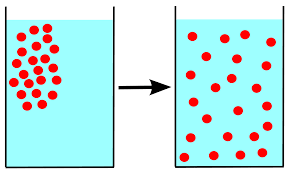
Molecules move to equalize concentration

media

33

Multiple Choice

Question image

Which beaker represents diffusion that has occurred over a long period of time?

1

Beaker 1 (left)

2

Beaker 2 (middle)

3

Beaker 3 (right)

34

Definition of Diffusion


The movement of a substance from an area of high concentration to an area of lower concentration that is caused by the random motion of particles of the substance.

35

Multiple Choice

What is diffusion?

1

when molecules move

2

when molecules move from a high concentration to a low.

3

no movement

4

molecules move everywhere

36

Multiple Choice

Question image

Where is there a low concentration of dye?

1

at the bottom of cup

2

in the color

3

at the top of cup

4

no concenteraion gradient

37

Multiple Choice

Question image
Where is there a low concentration of perfume?
1
in the bottle
2
on the hand
3
in the room
4
in the top

38

Multiple Choice

When both inside and outside of a cell have the same amount of water it is said that the cell has reached a state of
1
Osmosis
2
Diffusion
3
Equilibrium

39

Multiple Choice

How do the particles move in diffusion?

1

From a region of low concentration to a region of high concentration

2

From a region of high concentration to a region of low concentration

3

From a region of low concentration to a region of low concentration

4

From a region of high concentration to a region of high concentration

40

Multiple Choice

Question image

The picture below is an example of _________________.

1

osmosis

2

isotonic

3

diffusion

4

active transport

41

Multiple Choice

How long does diffusion last?

1

Until the concentration of particles in the system is equal

2

Until a region in the system has a smaller concentration of particles than the other

3

Until a region in the system has a greater concentration of particles than the other

4

Until the particles disappear from the system

42

Multiple Choice

Question image
_______ regulates what enters and leaves a cell.  
1
Cell Membrane
2
Nucleus
3
Mitochondria
4
Cytoplasm

43

Multiple Choice

All organisms are made of

1

organs

2

tissues

3

cells

44

Multiple Choice

Our cells get rid of carbon dioxide multiple times a minute. Which body process takes in oxygen and puts out carbon dioxide?

1
2
3
4

45

media

46

Osmosis


  • Special type of diffusion

  • Often involves movement of water into the cell OR out of cell

47

Definition of Osmosis

  • The diffusion of only water molecules through a cell membrane

48

media

49

Multiple Choice

Osmosis is the movement of _____ across a membrane.
1
food
2
energy
3
oxygen
4
water

50

Multiple Choice

During osmosis
1
water moves from high to low concentration
2
large or oddly shaped molecules move across a cell membrane
3
water moves when energy is used
4
proteins are built

51

Multiple Choice

The cell membrane is semipermeable, which means...

1
All materials can enter and leave the cell
2
Certain things can enter while others cannot
3
The cell manually sorts through all materials
4
Only certain cells can interact with the cell.

52

Multiple Choice

"Water Loving"
1
Hydrophobic
2
Hydrophilic 
3
Hydroelectric 
4
Hydroloric

53

Multiple Choice

"Water Fearing"

1
Hydrophobic
2
Hydrophilic 
3
Hydroelectric 
4
Hydroloric

54

Multiple Choice

Most of the cell membrane is made of...
1
Lipids
2
Carbohydrates
3
Proteins
4
Nucleic acids

55

Multiple Choice

What does "bilayer" mean?
1
one layer
2
two layers
3
laminated
4
bilateral

56

Multiple Choice

True or false:  Some things are not allowed to enter the cell at all. 
1
True
2
False

57

Multiple Choice

What is the outer boundary called on ALL cells that controls what goes in and out of that cell?

1

Cell Wall

2

Nucleus

3

Cell Membrane

58

Multiple Choice

Question image

This is a

1

cell

2

cholesterol

3

lipid

4

phospholipid

59

Multiple Choice

Question image

The arrow is pointing to the

1

hydrophobic head

2

hydrophilic head

3

hydrophobic tail

4

hydrophilic tail

60

Multiple Choice

Question image

The arrow is pointing to the

1

hydrophilic head

2

hydrophobic head

3

hydrophilic tail

4

hydrophobic tail

61

Multiple Choice

During osmosis
1
water moves from high to low concentration
2
large or oddly shaped molecules move across a cell membrane
3
water moves when energy is used
4
proteins are built

62

Multiple Choice

Why can't you drink only salt water?

1

Your cells will shrivel and you'll die.

2

Your cells will swell and you'll die.

63

Multiple Choice

If animal cells take in too much water they can...

1

become bigger and control and organism.

2

burst!

3

shrink!

64

Multiple Choice

When water molecules are equal on both sides (equilibrium), the cell size....

1

increases

2

decreases

3

stays the same

65

Multiple Choice

When there are FEWER water molecules on the OUTSIDE of the cell than inside, the cell....

1

gains water and increases in size.

2

loses water and decreases in size.

3

maintains equilibrium and stays the same size.

66

Multiple Choice

When there are MORE water molecules on the OUTSIDE of the cell than inside, the cell....

1

gains water and increases in size.

2

loses water and decreases in size.

3

maintains equilibrium and stays the same size.

67

Multiple Choice

Question image

The diffusion of water across the cell membrane is called....

1

water concentration

2

permeation

3

osmosis

4

passosis

68

Multiple Choice

Question image

Like other molecules, water molecules move from an area of....

1

greater concentration to lower concentration.

2

equal concentration.

3

lower concentration to greater concentration.

4

up and down concentration.

69

Multiple Choice

Depending on the amount of water in a solution, cells will

1

take in water

2

stay the same

3

lose water

4

all choices (depends on the amount of water)

70

Multiple Choice

Question image

If a solution on the outside of a cell has more water molecules than inside of the cell the cell....

1

loses water

2

maintains water (equilibrium)

3

gains water

71

Multiple Choice

Question image

Water molecules can pass through a cell membrane in which direction?

1

only going in

2

only going out

3

in either direction

72

Multiple Choice

Question image

If there are more water molecules outside the cell membrane then....

1

water will LEAVE the cell and the cell shrinks.

2

water will ENTER the cell and the cell swells up.

73

Multiple Choice

Question image

If the solution outside the cell has the same amount of water molecules as inside the cell, then the amount of water molecules....

1

increases on the inside.

2

decreases on the inside and flows to the outside.

3

stays the same (equal on inside and outside).

74

Multiple Choice

Water crosses the cell membrane in both directions so...

1

the amount going in is the SAME as the amount going OUT

2

the amount going in is MORE than the amount going OUT.

3

the amount going in is LESS than the amount going OUT.

75

Multiple Choice

When water molecules are equal on both sides (equilibrium), the cell size....

1

increases

2

decreases

3

stays the same

76

Multiple Choice

When there are FEWER water molecules on the OUTSIDE of the cell than inside, the cell....

1

gains water and increases in size.

2

loses water and decreases in size.

3

maintains equilibrium and stays the same size.

77

Multiple Choice

When there are MORE water molecules on the OUTSIDE of the cell than inside, the cell....

1

gains water and increases in size.

2

loses water and decreases in size.

3

maintains equilibrium and stays the same size.

78

Multiple Choice

Animal cells are surrounded by a solution that has the same amount of as water inside the cell so....

1

they are balanced and don't explode.

2

they can explode and make new cells.

3

they can become organisms.

7.LS.1-2​
📘 DAY 2: Passive Transport — Diffusion and Osmosis

By Jessica Freeman

Show answer

Auto Play

Slide 1 / 78

SLIDE