7.3.1-Solids, Liquids, & Gases
Presentation
•
Science
•
7th Grade
•
Easy
+13
Standards-aligned
Jessica Freeman
Used 3+ times
FREE Resource
44 Slides • 27 Questions
1
2
3
4
5
6
7
8
Multiple Choice
What are the states of matter?
solid
liquid
gas
all of these
9
Multiple Choice
What is matter made of?
particles
big blocks
only solids
10
11
12
13
14
15
16
17
18
19
20
Particle motion in a solid
21
22
Multiple Choice
What type of solid contains particles that are jumbled and form no particular pattern?
Crystalline
Amorphous
High-density
Low-volume
23
24
25
26
Particle motion in a liquid
27
28
29
30
31
Multiple Choice
Water is polar. What does that mean?
it is a molecule with opposite charges on opposite ends
it is a molecule with no charge
it is a molecule with identical charges on opposite ends
it is a molecule with too many protons
32
Multiple Choice
Water sticks well to many materials. What term relates to this property of water?
cohesion
adhesion
density
surface tension
33
Multiple Choice
Which of the following is an example of COHESION?
water sticking to water
water sticking to glass
oil sticking to plastic
hydrogen sticking to oxygen
34
Multiple Choice
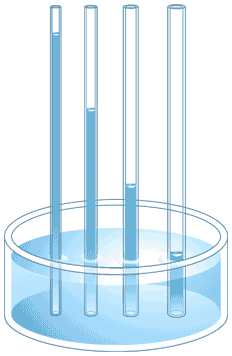
What is the term for water's ability to defy gravity and climb up a tube?
Capillary Action
Specific Heat
Universal Solvent
Magic
35
Multiple Choice
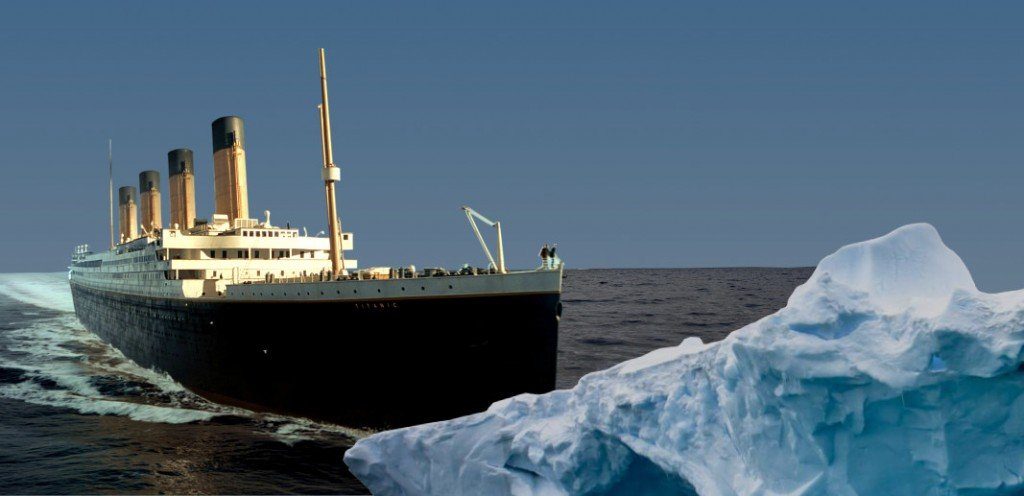
Why does ice float?
water expands when it freezes, making ice less dense than water
water compacts when it freezes, making ice more dense than water
hydrogen bonds in water push the ice to the surface
ice is afraid of water, and avoids it
36
Multiple Choice
37
Multiple Choice
38
Multiple Choice
A water molecule is a _______ since the negative end of one water molecule is attracted to the positive end of another water molecule.
polar molecule
sustain life
surface tension
specific heat
39
Multiple Choice
An attraction between molecules of different substances is called...
adhesion
cohesion
40
Multiple Choice
A measure of how difficult it is to stretch or break the surface of a liquid is called...
specific heat
polar molecule
capillary action
surface tension
41
Multiple Choice
An attraction between molecules of the same substance is called...
adhesion
cohesion
42
Multiple Choice
Water molecules ________ since the slightly positive portion of a water molecule is attracted to the slightly negative portion of the next water molecule.
stick together
spread out
43
44
Low-viscosity: water
45
High-viscosity: Honey
46
Multiple Choice
Notice how the liquid on the left forms round drops while the one on the right spreads out.
Which phrase describes the difference between the liquids?
Fixed volume vs changing volume
Different particle arrangement
Low-viscosity vs high-viscosity
Low-surface tension vs High-surface tension
47
48
49
50
Particle motion in a gas.
51
52
Multiple Choice
What is the best way to describe particles in a gas?
Very energetic
Vibrating in place
Completely still
Closely packed
53
54
55
56
Multiple Choice
Which of the following depicts particles in a solid?
57
Properties of matter
Solids- particles are tightly packed, vibrate in place and have a definite volume and shape.
Liquids- Particles are loose and can move, they have a definite volume, but not a definite shape.
Gases- Particles are spread far and move easily, they have no definite shape or volume
Plasma- particles are loose and can move like water, but have no definite shape or volume like gas and are electrically charged.
58
Other properties of liquid
surface tension- the pulling of molecules toward each other.
viscosity- the resistance of flowing
59
Draw
Draw the particle organization of each of the 4 states of matter.
60
61
62
63
64
Multiple Choice
What effect does heat have on atomic motion?
It causes them to vibrate slower
It causes them to vibrate faster
65
Multiple Choice
What effect does the loss of heat have on atomic motion?
It causes them to vibrate faster
It causes them to vibrate slower
66
Multiple Choice
Why does a liquid become less dense when heat is added?
Heat causes the atoms to vibrate slower and move closer together, making the liquid less dense.
Heat causes the atoms to vibrate faster and move further apart, making the liquid less dense.
67
Multiple Choice
a
b
c
d
68
Multiple Choice
a
b
c
d
69
Multiple Choice
70
Multiple Choice
a
b
c
d
71
Multiple Choice
a
b
c
d
Show answer
Auto Play
Slide 1 / 71
SLIDE

Similar Resources on Wayground
69 questions
Cells & Classification Review
Lesson
•
6th Grade
64 questions
PC Review Ch.1 + 2
Lesson
•
7th Grade
69 questions
Newton's First Law
Lesson
•
7th Grade
64 questions
Forms of Energy
Lesson
•
7th Grade
66 questions
METRIC CONVERSIONS LADDER REVIEW
Lesson
•
6th - 8th Grade
70 questions
1.4 The elements of group 7
Lesson
•
7th Grade
68 questions
Compounds or mixtures(2020)
Lesson
•
6th Grade
Popular Resources on Wayground
15 questions
Fractions on a Number Line
Quiz
•
3rd Grade
14 questions
Boundaries & Healthy Relationships
Lesson
•
6th - 8th Grade
13 questions
SMS Cafeteria Expectations Quiz
Quiz
•
6th - 8th Grade
20 questions
Equivalent Fractions
Quiz
•
3rd Grade
25 questions
Multiplication Facts
Quiz
•
5th Grade
12 questions
SMS Restroom Expectations Quiz
Quiz
•
6th - 8th Grade
20 questions
Main Idea and Details
Quiz
•
5th Grade
10 questions
Pi Day Trivia!
Quiz
•
6th - 9th Grade
Discover more resources for Science
20 questions
Cell Organelles and Functions
Quiz
•
6th - 8th Grade
10 questions
Exploring the Layers of the Earth
Interactive video
•
6th - 10th Grade
21 questions
Waves and Wave Properties
Quiz
•
6th - 8th Grade
16 questions
Photosynthesis and Cellular Respiration Review
Quiz
•
7th Grade
13 questions
Plate Tectonics and Earth's Structure
Lesson
•
6th - 8th Grade
10 questions
Exploring Heat Transfer: Conduction, Convection, and Radiation
Interactive video
•
6th - 8th Grade
25 questions
Cell Structure
Lesson
•
7th Grade
20 questions
Food Webs + Energy Pyramids
Quiz
•
7th Grade