

Peardeck Muscular System: Chapter4

Presentation
•
Health Sciences
•
11th Grade
•
Practice Problem
•
Hard

Pamela Canlas
Used 1+ times
FREE Resource
27 Slides • 18 Questions
1
2
Multiple Choice
Why is muscle coordination important for voluntary movement?
It helps maintain balance and posture
It prevents muscle fatigue
It allows precise and controlled actions
It increases muscle strength
3
4
5
Multiple Choice
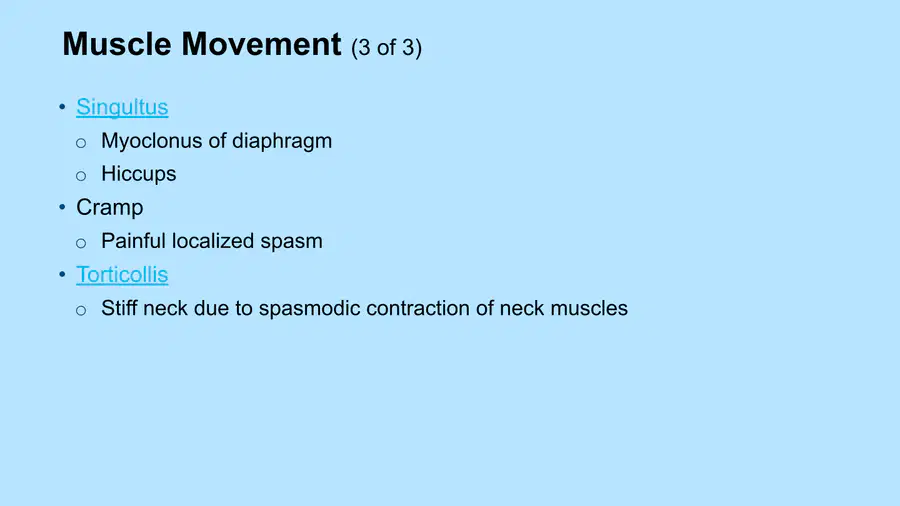
Which of the following best describes the condition known as torticollis?
Stiff neck due to spasmodic contraction of neck muscles
Painful localized spasm in the leg
Myoclonus of diaphragm causing hiccups
Extreme slowness in movement
6
7
Open Ended
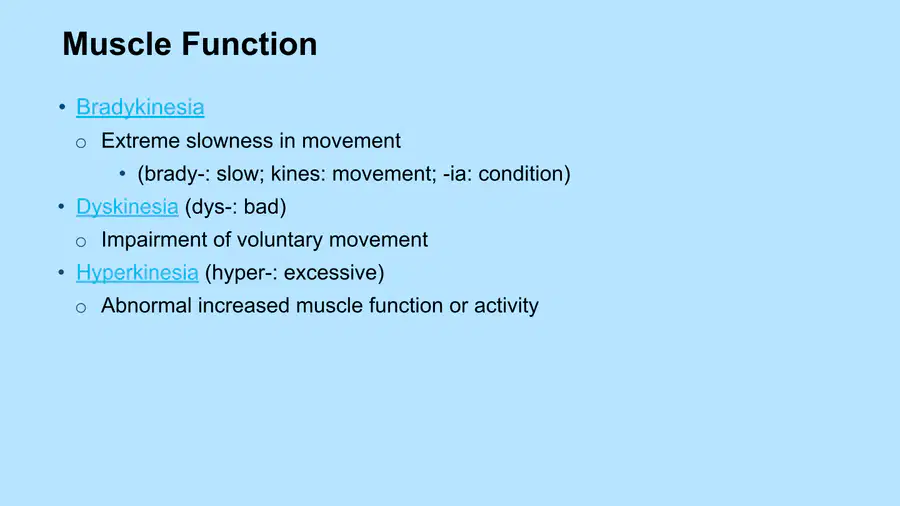
Compare and contrast the terms 'bradykinesia' and 'dyskinesia' in relation to muscle function.
8
9
Multiple Select
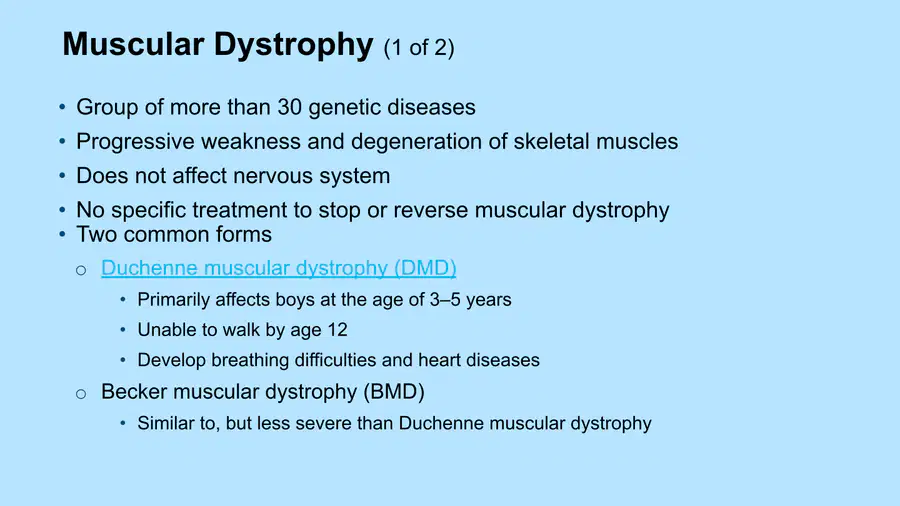
Which of the following are symptoms or characteristics of Duchenne muscular dystrophy (DMD)?
Primarily affects boys at the age of 3–5 years
Unable to walk by age 12
Develop breathing difficulties and heart diseases
Similar to, but less severe than Becker muscular dystrophy
10
11
Open Ended
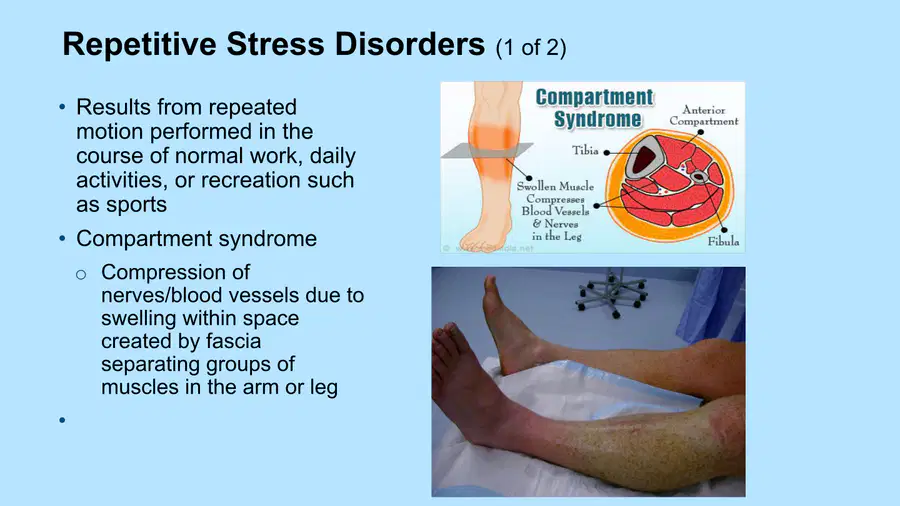
Explain how compartment syndrome can develop as a result of repetitive stress disorders.
12
13
Multiple Choice
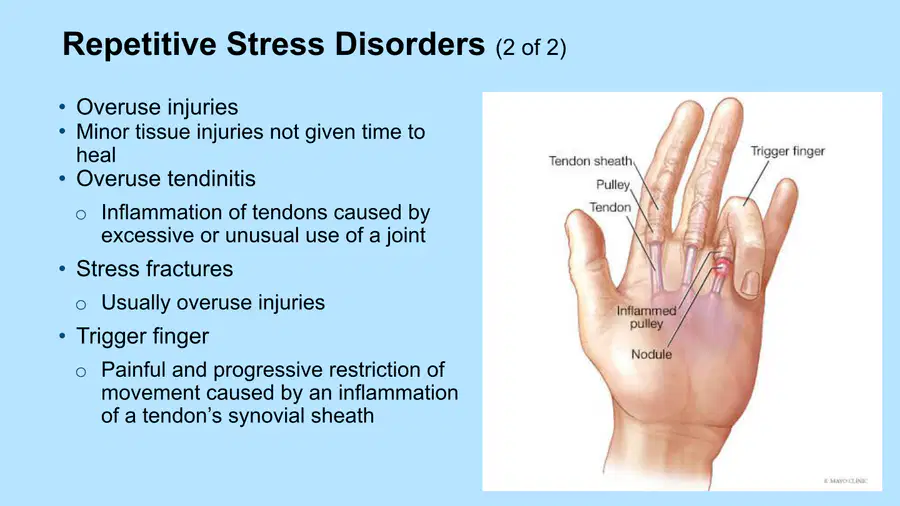
Which of the following statements about trigger finger is correct?
It is caused by inflammation of a tendon’s synovial sheath
It is a type of stress fracture
It is a form of muscular dystrophy
It is associated with abnormal increased muscle function
14
15

16
Multiple Choice
Which of the following sports is most commonly associated with rotator cuff injuries?
Swimming
Soccer
Cycling
Running
17
18
Fill in the Blanks
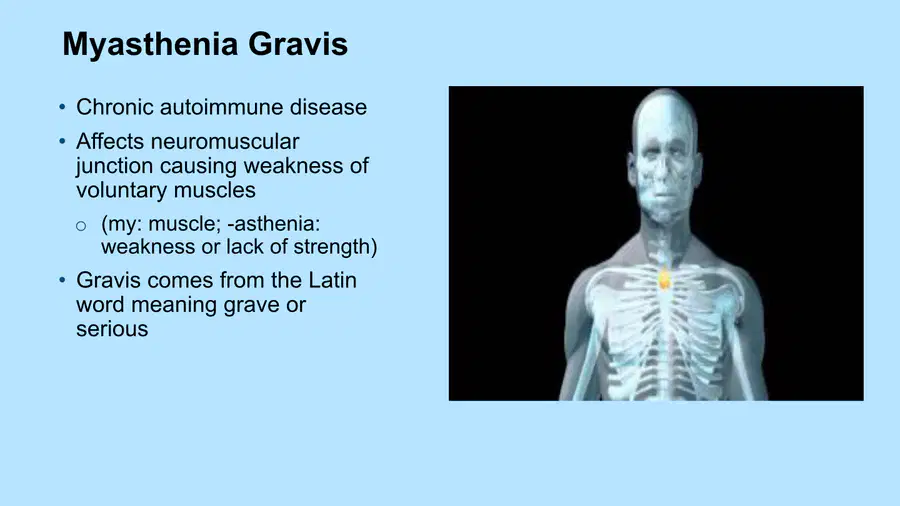
Myasthenia gravis is a chronic autoimmune disease that affects the neuromuscular junction, causing weakness of voluntary muscles. The term 'gravis' comes from the Latin word meaning
Type answer...
19
20
Open Ended
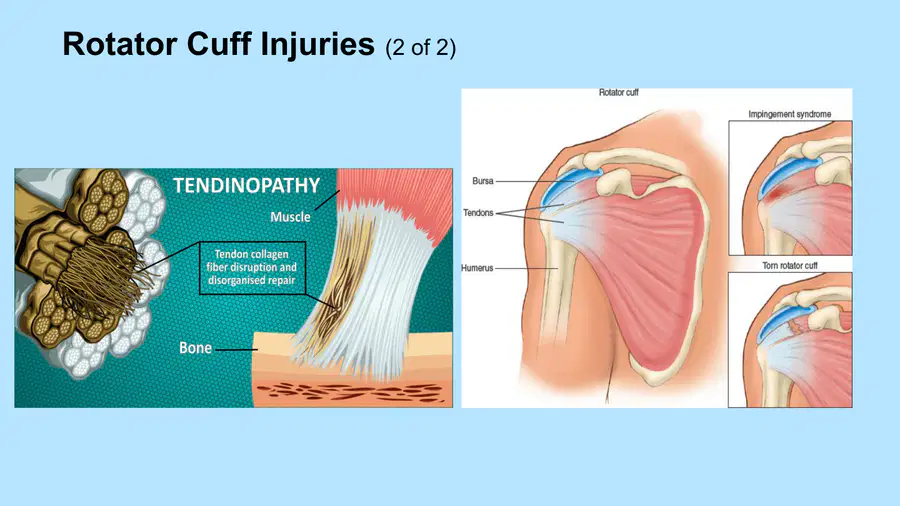
Explain the difference between tendinopathy and impingement syndrome in the context of rotator cuff injuries.
21

22
Multiple Choice
Which of the following are possible symptoms or consequences of carpal tunnel syndrome?
Swelling causes pressure on median nerve
Benign fluid-filled lump on wrist
Weakness of voluntary muscles
Inflammation of tissues surrounding the elbow
23

24
25
Multiple Choice
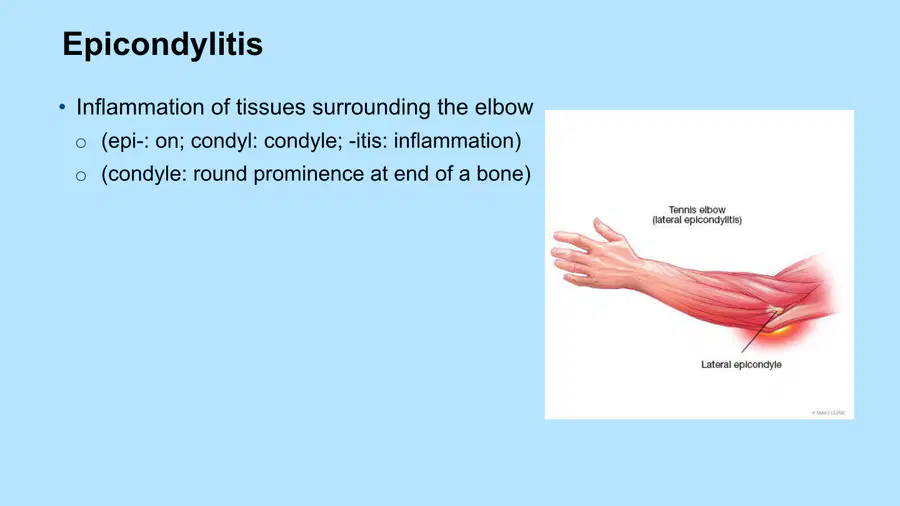
Epicondylitis refers to inflammation of tissues surrounding which part of the body?
Elbow
Knee
Shoulder
Wrist
26
27
28
29
30

31
32
33
Multiple Choice
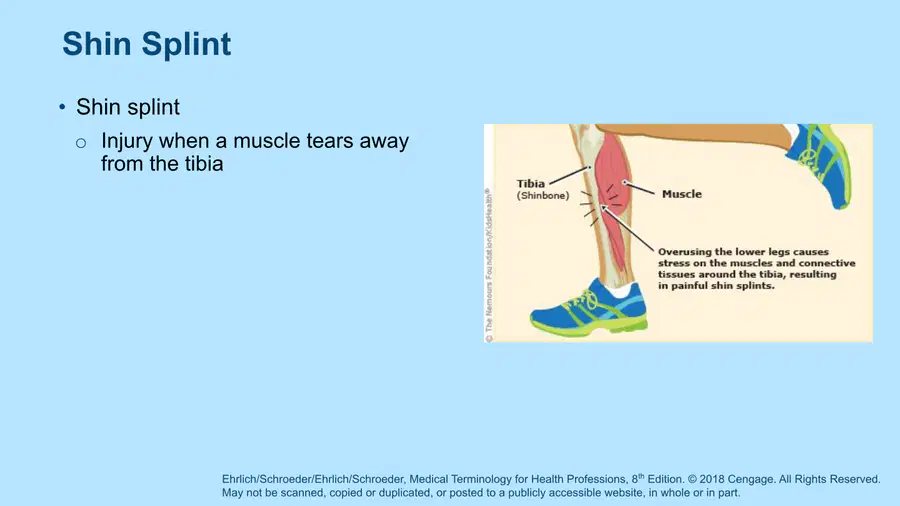
Which injury is caused by overusing the lower legs, resulting in stress on the muscles and connective tissues around the tibia?
Shin splint
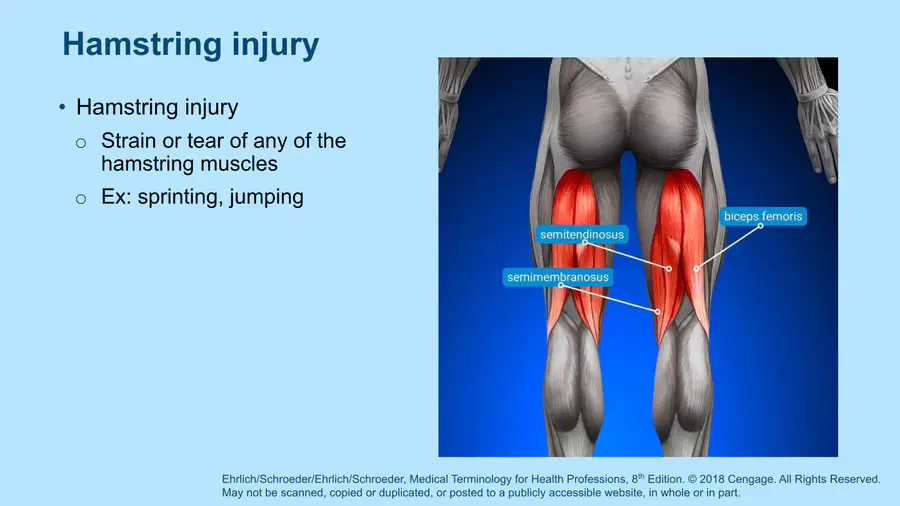
Hamstring injury
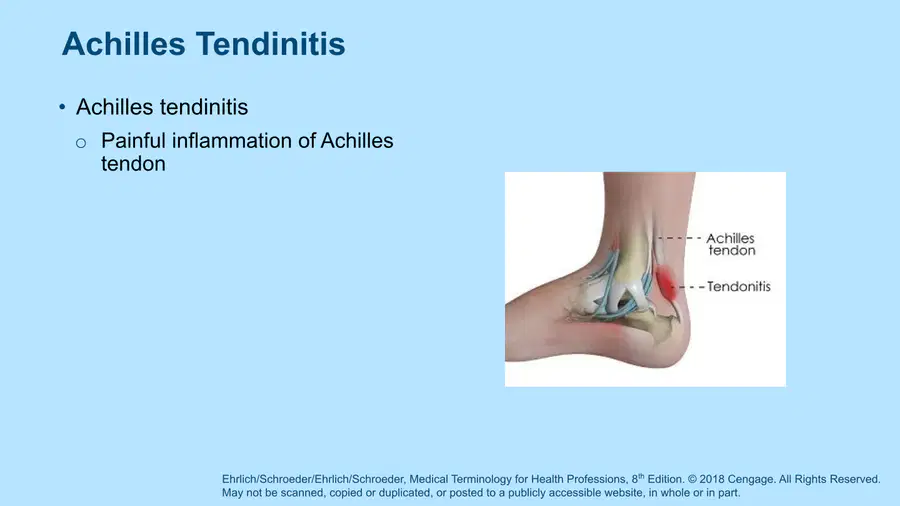
Achilles tendinitis
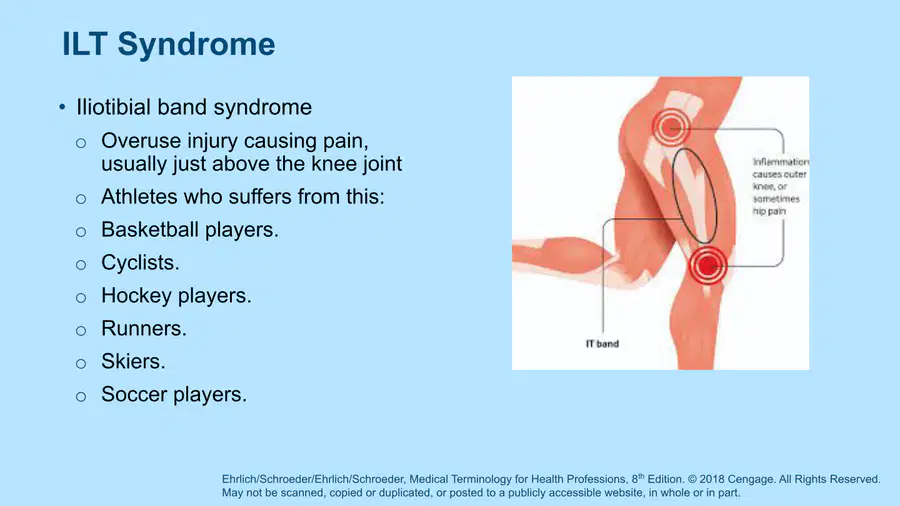
ILT syndrome
34
35
36
Fill in the Blanks
Painful inflammation of the
Type answer...
37
38
Multiple Select
Which of the following are symptoms or characteristics of iliotibial band syndrome (ILT syndrome)?
Pain just above the knee joint
Affects basketball players
Inflammation of Achilles tendon
Weakness affecting one side of the body
39
40
Open Ended
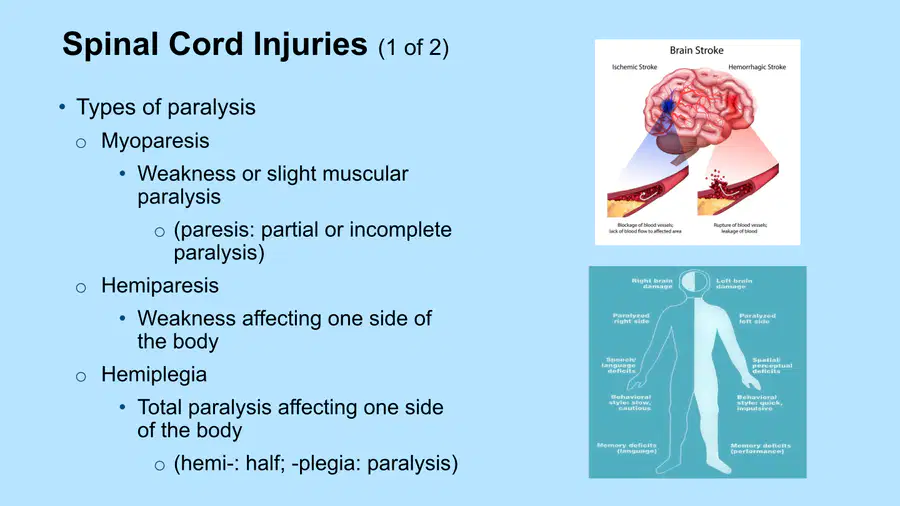
Explain the difference between hemiparesis and hemiplegia in spinal cord injuries.
41

42
Fill in the Blanks
Paralysis of all four extremities is called
Type answer...
43
44
Multiple Choice
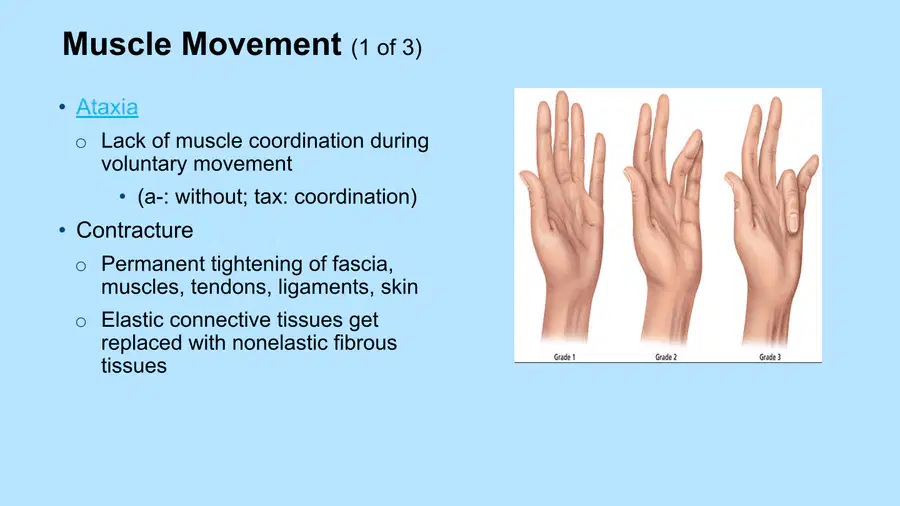
Which of the following best describes contracture?
Permanent tightening of fascia, muscles, tendons, ligaments, skin
Lack of muscle coordination during voluntary movement
Pain in leg muscles occurring during exercise and relieved by rest
Sudden, involuntary contraction of muscle(s)
45
Open Ended
What type of paralysis is quadriplegia?
Show answer
Auto Play
Slide 1 / 45
SLIDE
Similar Resources on Wayground

43 questions
Biogeochemical Cycles Lesson
Presentation
•
10th Grade
38 questions
Q1L1: Evolution of Web 4.0
Presentation
•
11th Grade
40 questions
Reviewing TPCASTT Method
Presentation
•
11th Grade
39 questions
Cell terms part 3 2023
Presentation
•
10th Grade
40 questions
Respiratory System
Presentation
•
11th Grade
38 questions
Scientific Notation (PreAP)
Presentation
•
10th - 12th Grade
41 questions
Application of Colligative Properties
Presentation
•
12th Grade
36 questions
Levels of Organization - Cells to Biome
Presentation
•
KG
Popular Resources on Wayground
10 questions
Safety Day 2026 – Student Review

Quiz
•
9th Grade
21 questions
Continents and Oceans
Quiz
•
6th Grade
20 questions
Parts of Speech
Quiz
•
5th Grade
16 questions
Subject & Predicate
Quiz
•
5th Grade
25 questions
Multiplication Facts
Quiz
•
5th Grade
12 questions
Map Skills
Quiz
•
3rd Grade
22 questions
Continents and Oceans
Quiz
•
5th Grade
15 questions
Rounding Decimals
Quiz
•
5th Grade
Discover more resources for Health Sciences
26 questions
SLIME!!!!!
Quiz
•
KG - 12th Grade
20 questions
Cell Transport
Quiz
•
9th - 12th Grade
20 questions
Budgeting
Quiz
•
9th - 12th Grade
20 questions
Investing
Quiz
•
9th - 12th Grade
8 questions
DNA vs. RNA
Presentation
•
9th - 12th Grade
12 questions
Identify Rigid Transformations
Quiz
•
8th - 12th Grade
10 questions
Complementary, Supplementary, Vertical, and Linear Pairs
Quiz
•
9th - 12th Grade
20 questions
Managing Credit
Quiz
•
9th - 12th Grade