Search Header Logo
  1. Resource Library
  2. Science
  3. Biology
  4. Cellular Transport
  5. Copy Of Twc Cellular Transport 1_2025
Copy of TWC - Cellular Transport 1_2025

Copy of TWC - Cellular Transport 1_2025

Assessment

Presentation

Science

9th Grade

Practice Problem

Easy

NGSS
HS-LS1-3

Standards-aligned

Created by

Donielle Alexander-Blake

Used 4+ times

FREE Resource

19 Slides • 16 Questions

1

media

2

media

3

media

4

Multiple Choice

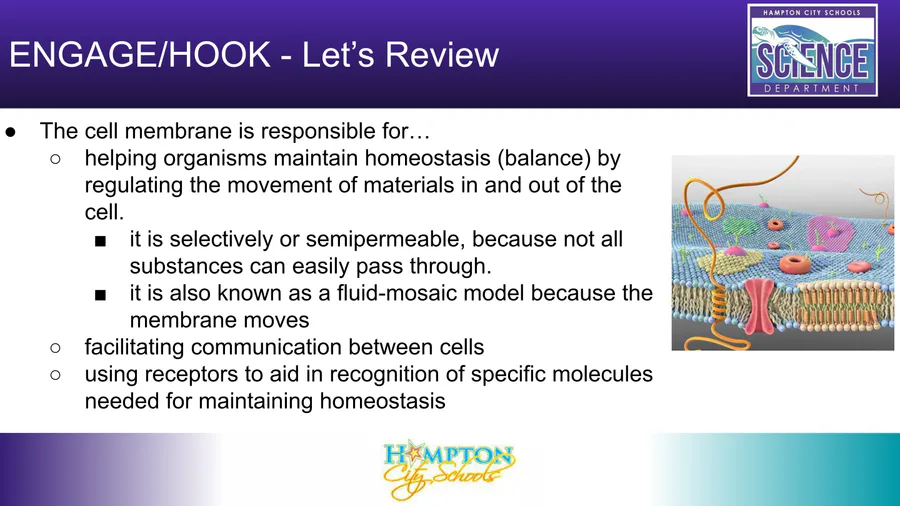
Which of the following is NOT a function of the cell membrane?

1

Facilitating communication between cells

2

Regulating movement of materials in and out of the cell

3

Producing energy for the cell

4

Using receptors to recognize specific molecules

5

media

6

media

7

media

8

media

9

Multiple Choice

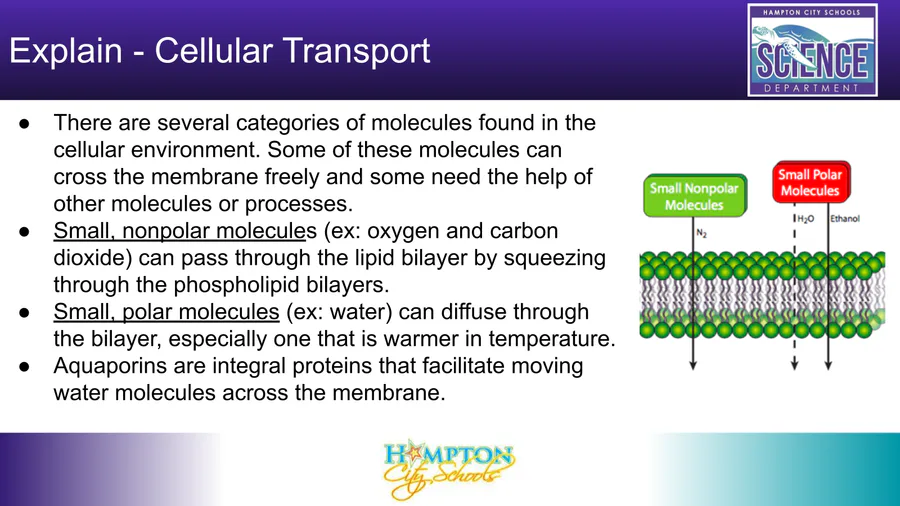
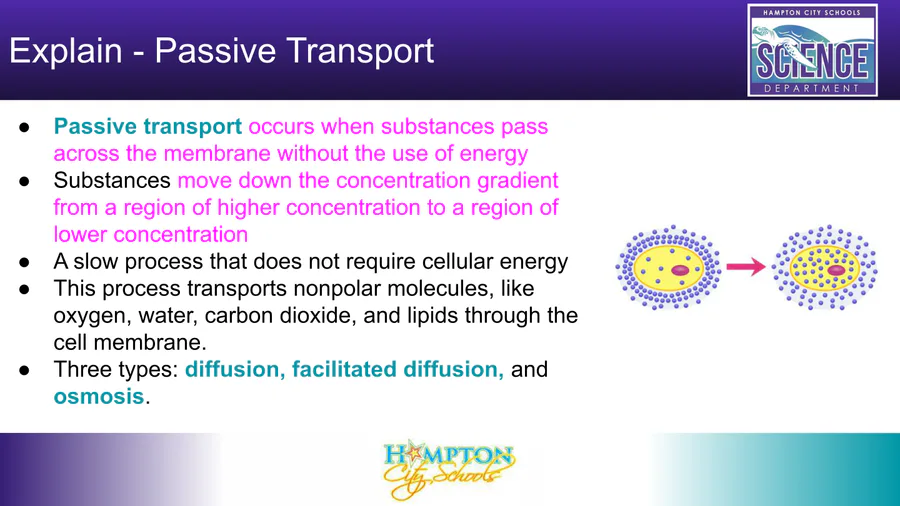
Which molecules can pass freely through the lipid bilayer of the cell membrane?

1

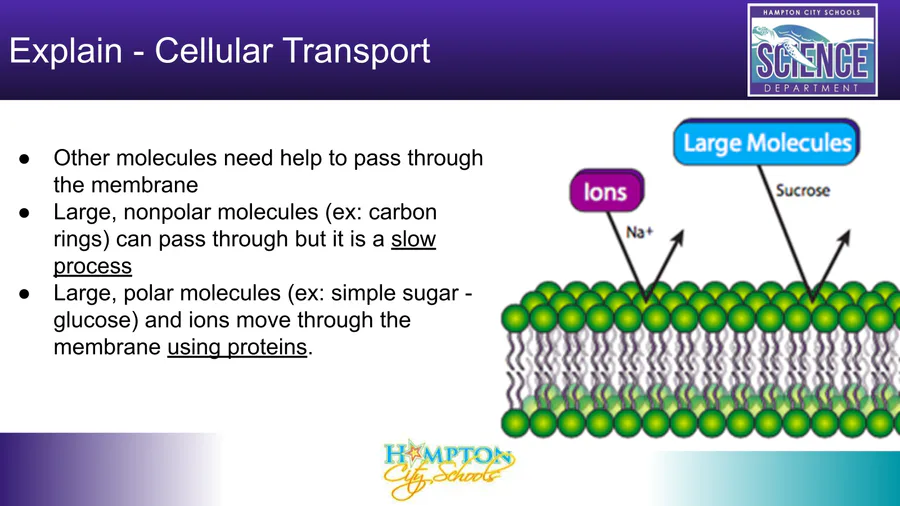
Large polar molecules

2

Small nonpolar molecules

3

Ions

4

Proteins

10

media

11

Multiple Select

Select all statements that correctly describe how molecules move across the cell membrane. (pick 3)

1

Small nonpolar molecules can pass freely through the lipid bilayer.

2

Large polar molecules require proteins to move through the membrane.

3

Aquaporins help move water molecules across the membrane.

4

Ions can pass through the membrane without any help.

12

Fill in the Blanks

13

media

14

Multiple Choice

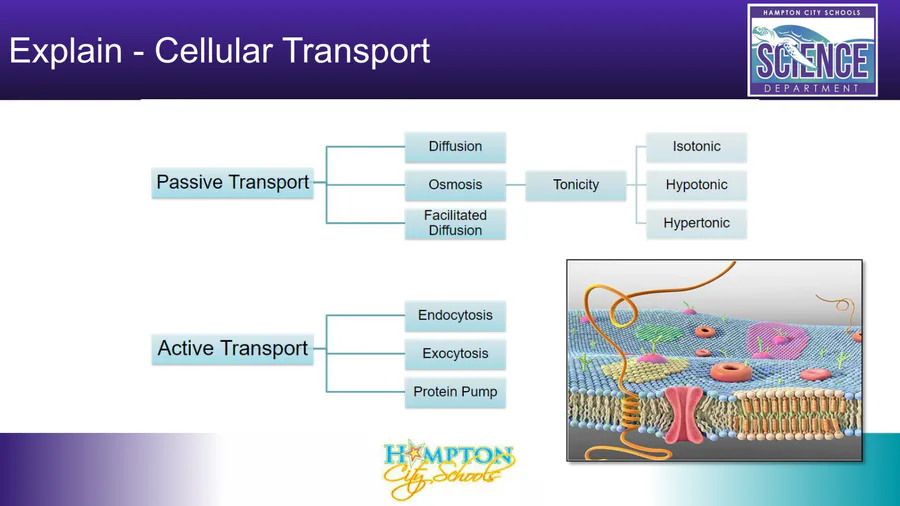
Which of the following is NOT a type of passive transport?

1

Diffusion

2

Osmosis

3

Facilitated diffusion

4

Endocytosis

15

media

16

Multiple Select

Which of the following molecules can be transported by passive transport? (pick 3)

1

Oxygen

2

Glucose

3

Water

4

Carbon dioxide

17

Open Ended

Explain how passive transport differs from active transport in terms of energy usage and direction of molecule movement.

18

media
media

19

Fill in the Blanks

20

media

21

Open Ended

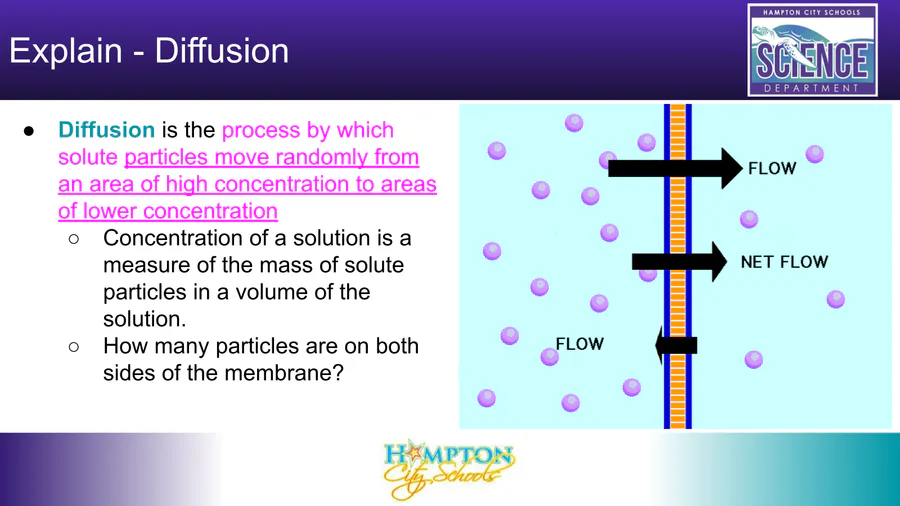
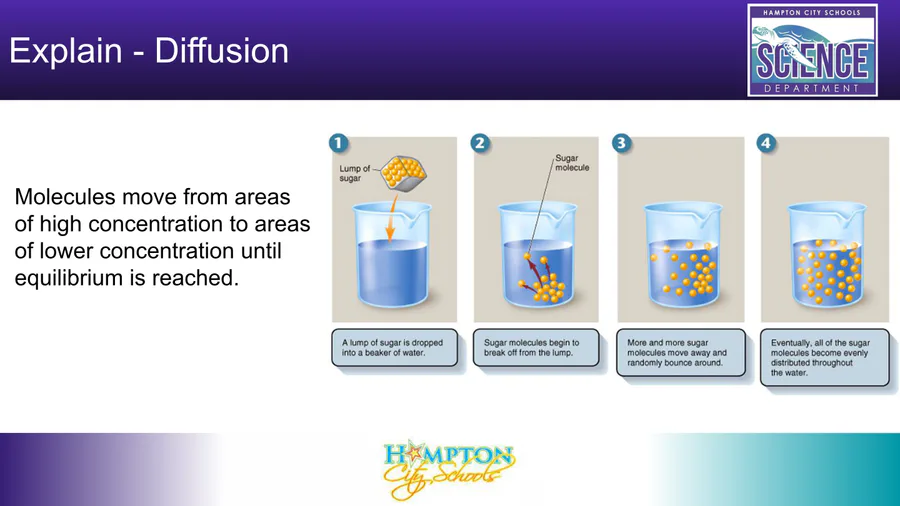
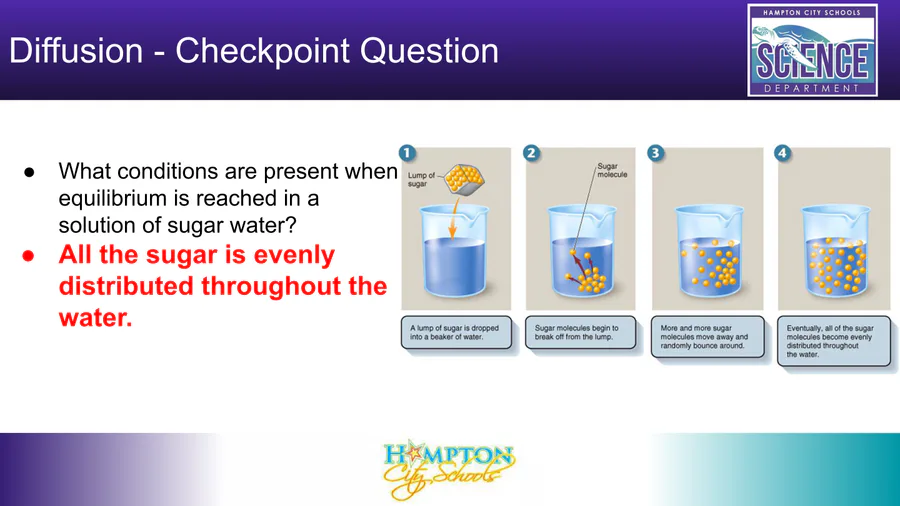
Describe what happens to sugar molecules when a lump of sugar is dropped into water, according to the process of diffusion.

22

media

23

media

24

Multiple Choice

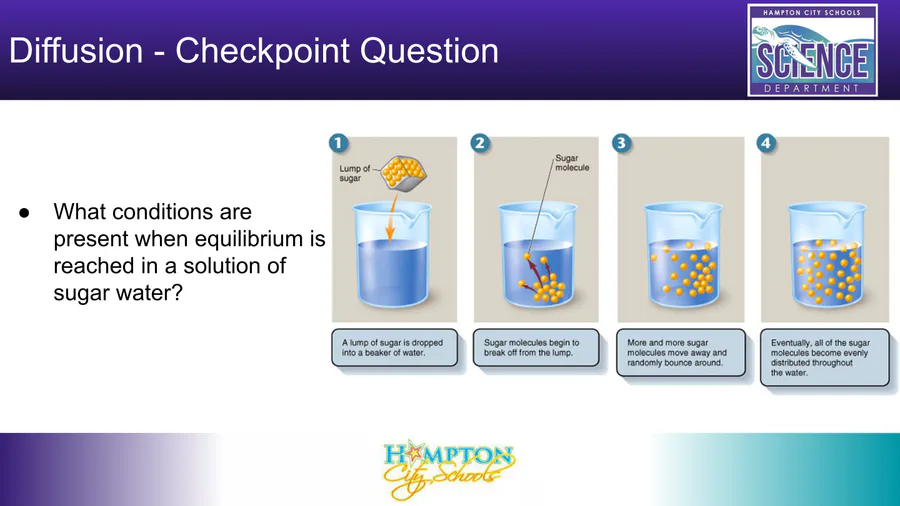
What conditions are present when equilibrium is reached in a solution of sugar water?

1

All sugar is evenly distributed throughout the water

2
The sugar completely dissolves in water.
3
The temperature of the solution increases significantly.
4
The solution becomes saturated with sugar.

25

media

26

Multiple Choice

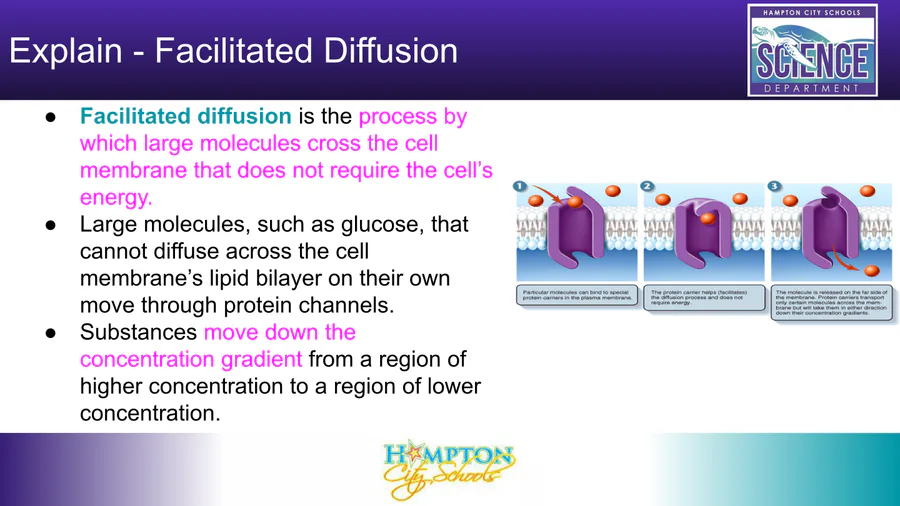
Which process allows large molecules like glucose to cross the cell membrane without using the cell's energy?

1

Active transport

2

Facilitated diffusion

3

Osmosis

4

Simple diffusion

27

media

28

Fill in the Blanks

29

Open Ended

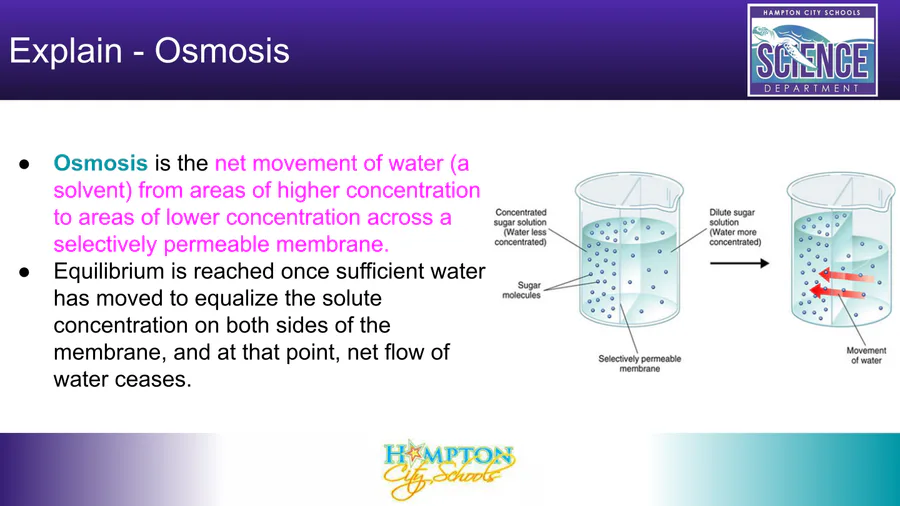
Explain how osmosis helps achieve equilibrium in a cell. What role does the selectively permeable membrane play in this process?

30

media

31

Multiple Select

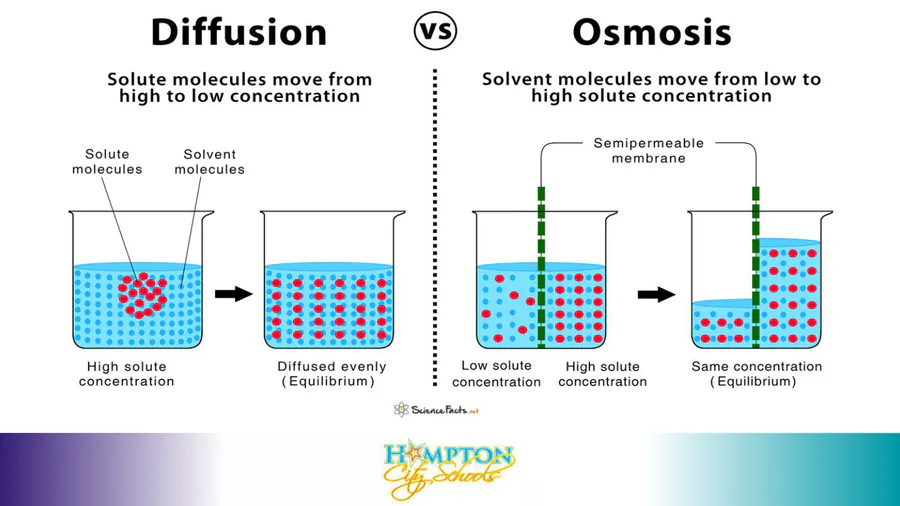
Which of the following statements are true about the movement of molecules in diffusion and osmosis? (pick 3)

1

Diffusion involves solute molecules moving from high to low concentration.

2

Osmosis involves solvent molecules moving from low to high solute concentration.

3

Both processes reach equilibrium.

4

Osmosis requires a semipermeable membrane.

32

media

33

Fill in the Blanks

34

Open Ended

What questions do you still have about cellular transport after today's lesson?

35

media
media

Show answer

Auto Play

Slide 1 / 35

SLIDE