

Cell Transport Notes -Part 1

Presentation
•
Science
•
9th - 12th Grade
•
Practice Problem
•
Medium
Standards-aligned

Eboni Powell
Used 1+ times
FREE Resource
15 Slides • 16 Questions
1
2
3
Multiple Choice
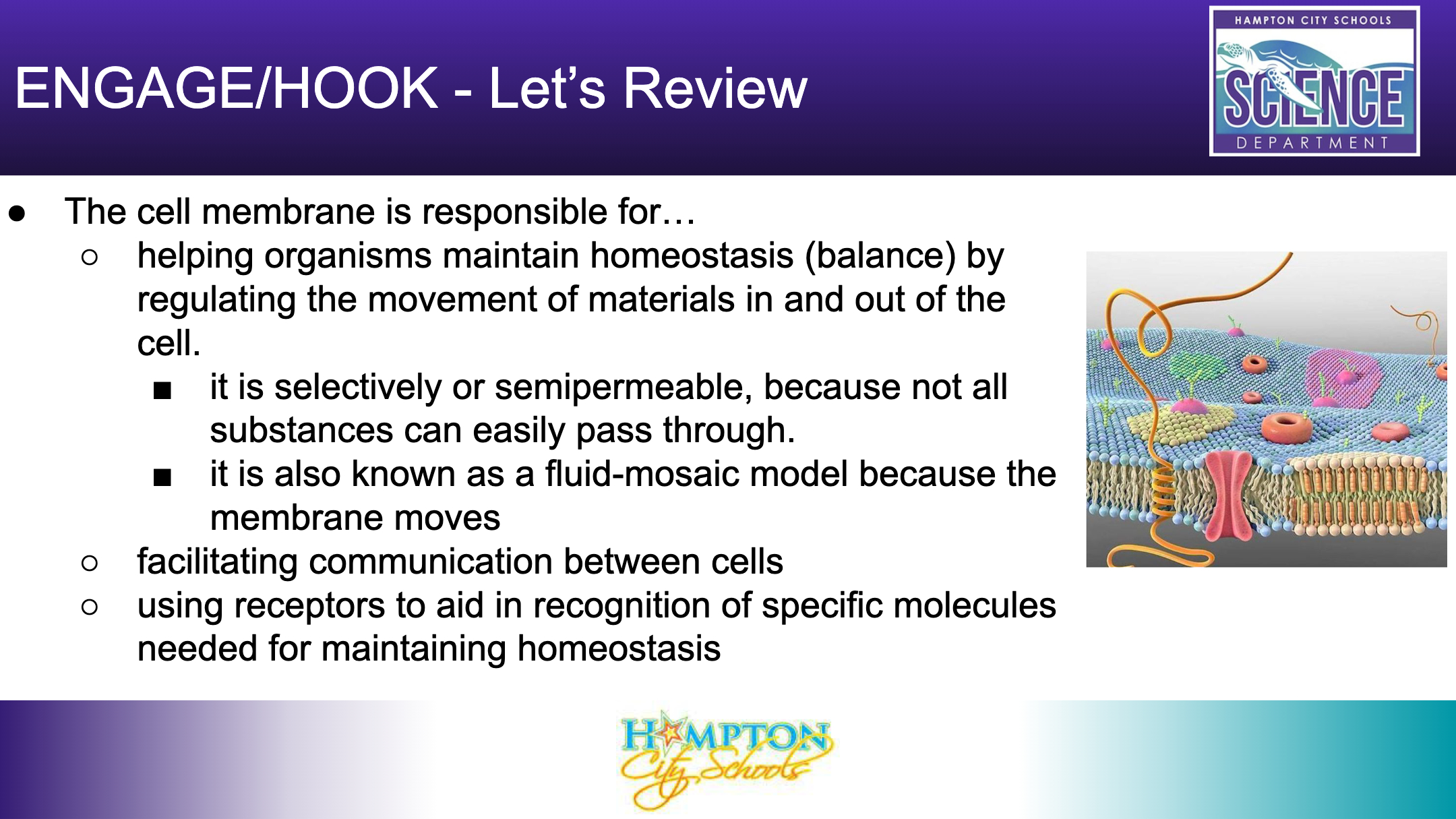
Why is the cell membrane considered essential for maintaining homeostasis in living organisms?
Because it provides structural support to the cell
Because it regulates the movement of materials in and out of the cell
Because it produces energy for the cell
Because it stores genetic information
4
5
6
7
Fill in the Blanks
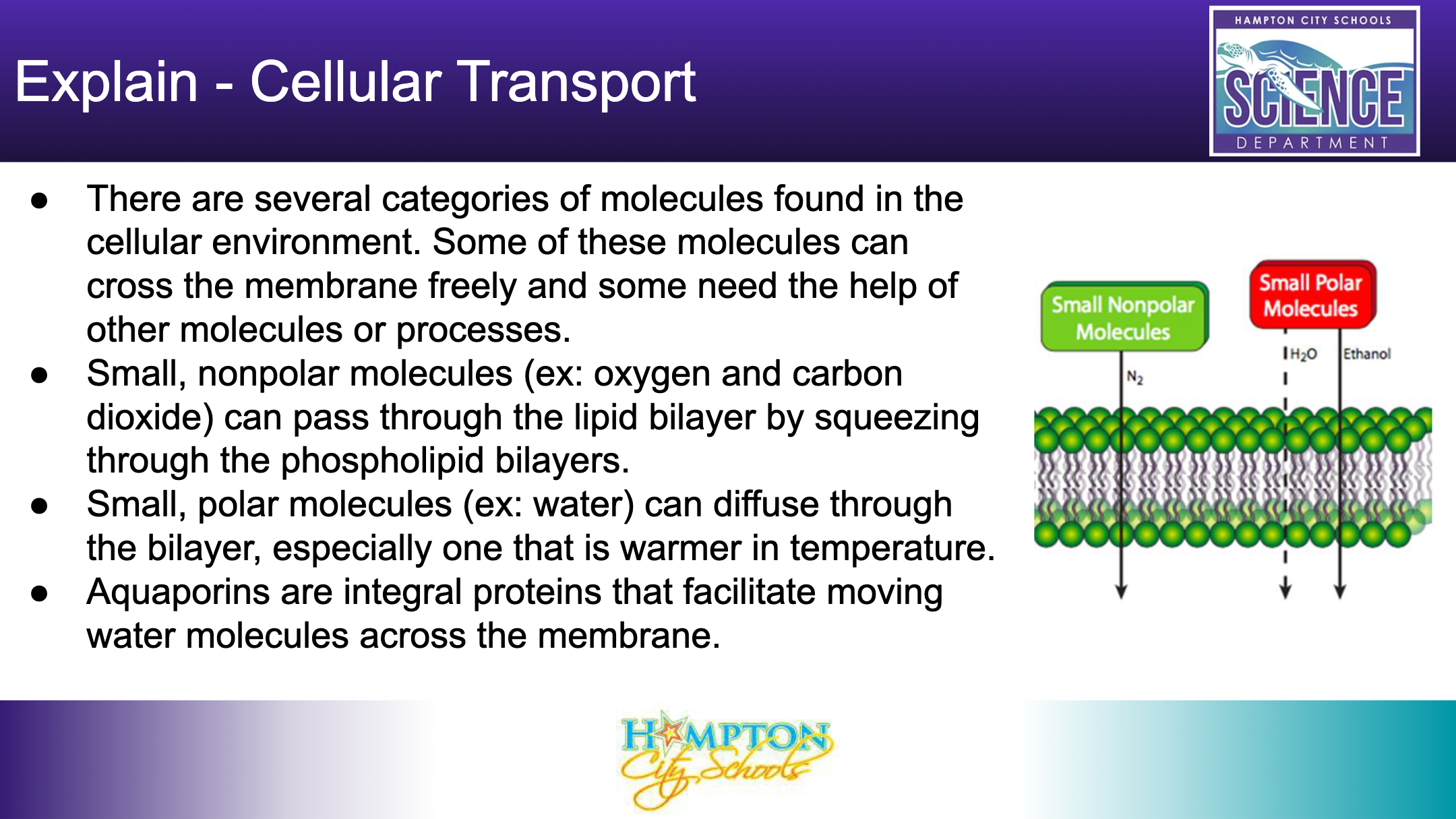
Aquaporins are integral proteins that facilitate the movement of
8
Open Ended
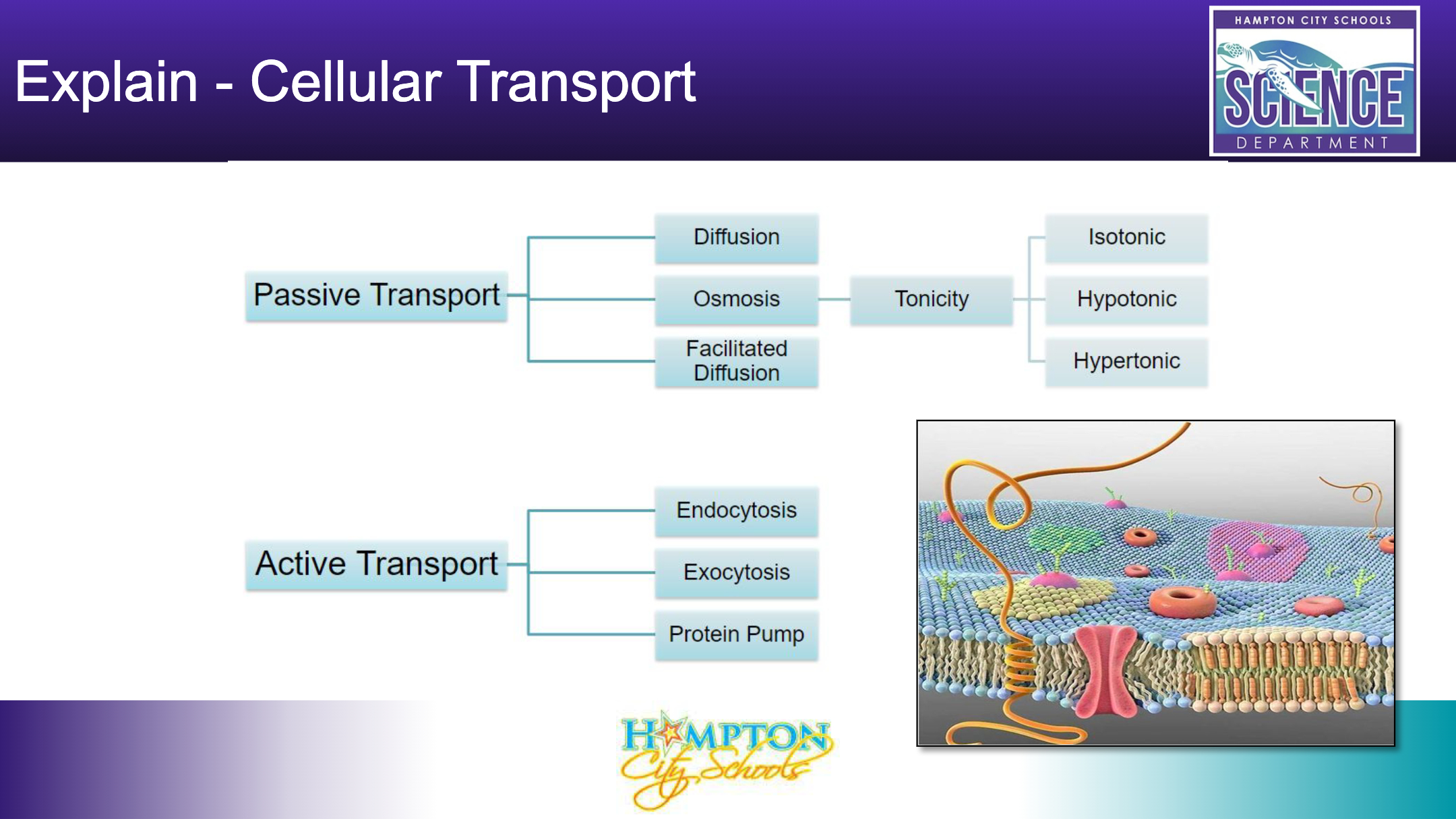
Explain how the structure of the cell membrane supports the transport of molecules in and out of the cell.
9

10
Multiple Choice
Which of the following molecules can pass freely through the phospholipid bilayer of the cell membrane?
Oxygen
Glucose
Sodium ions
Sucrose
11
12
Multiple Choice
What are the main differences between passive and active transport in cells?
Passive transport requires energy, while active transport does not.
Active transport moves substances down the concentration gradient, while passive transport moves substances against the gradient.
Passive transport does not require cellular energy, while active transport does.
Active transport only transports nonpolar molecules, while passive transport transports polar molecules.
13
14
Multiple Select
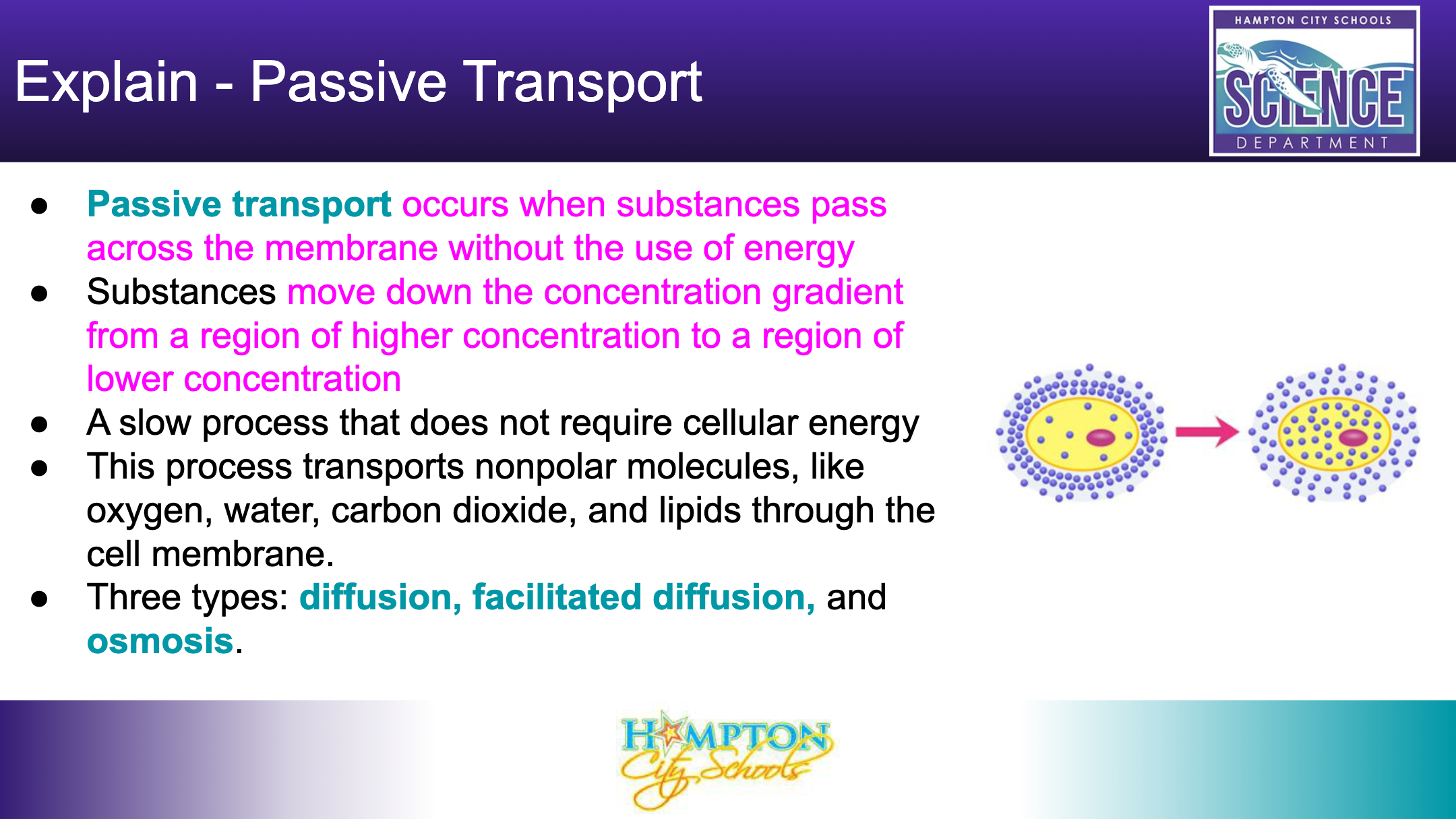
Which of the following are types of passive transport?
Diffusion
Endocytosis
Facilitated diffusion
Osmosis
15
Open Ended
Describe the process by which substances move down the concentration gradient without the use of cellular energy.
16
17
Multiple Choice
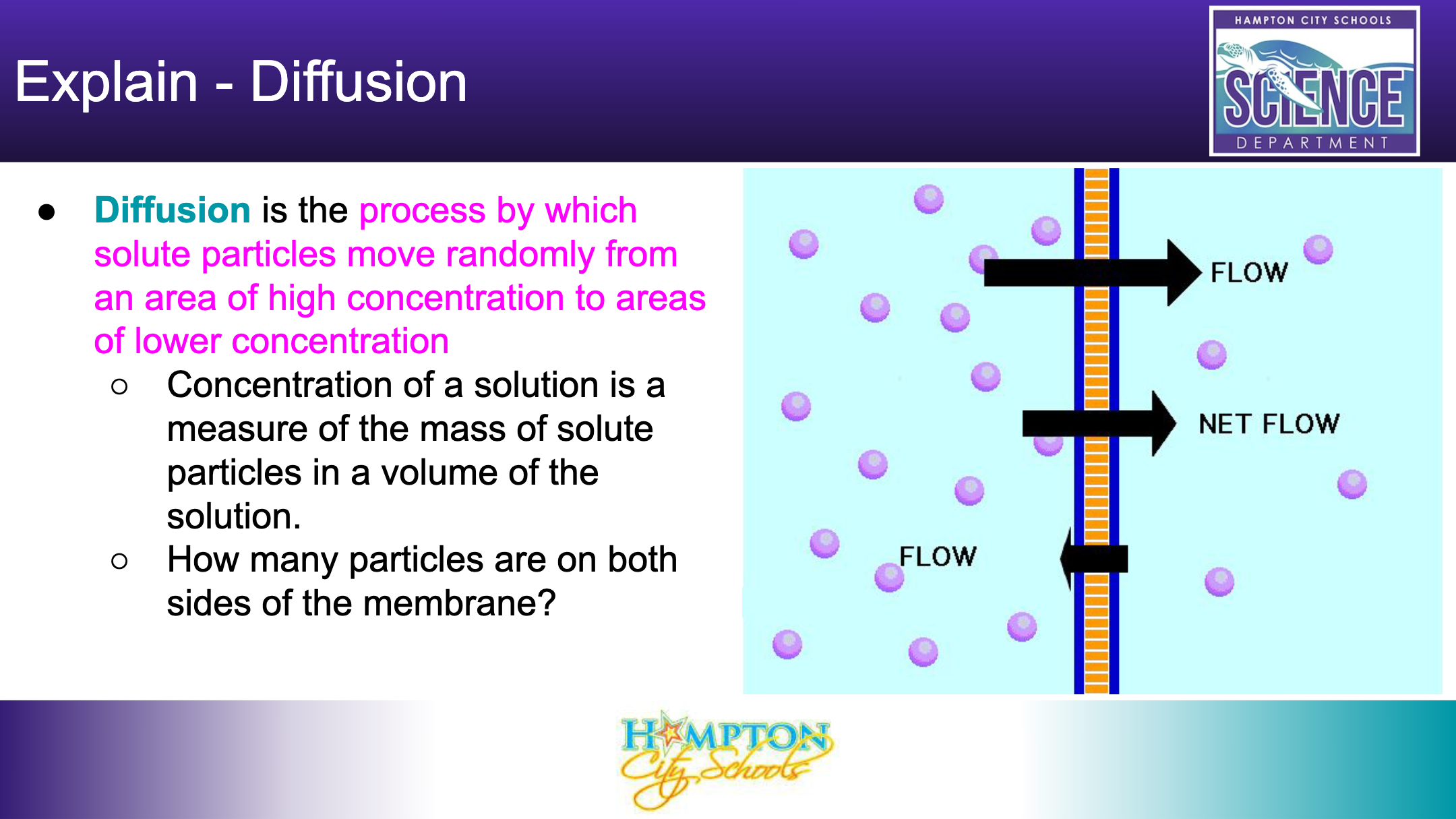
Which statement best describes the process of diffusion?
Solute particles move randomly from an area of high concentration to areas of lower concentration.
Solute particles move from low concentration to high concentration.
Solute particles move only with the use of energy.
Solute particles do not move across membranes.
18
19
Multiple Choice
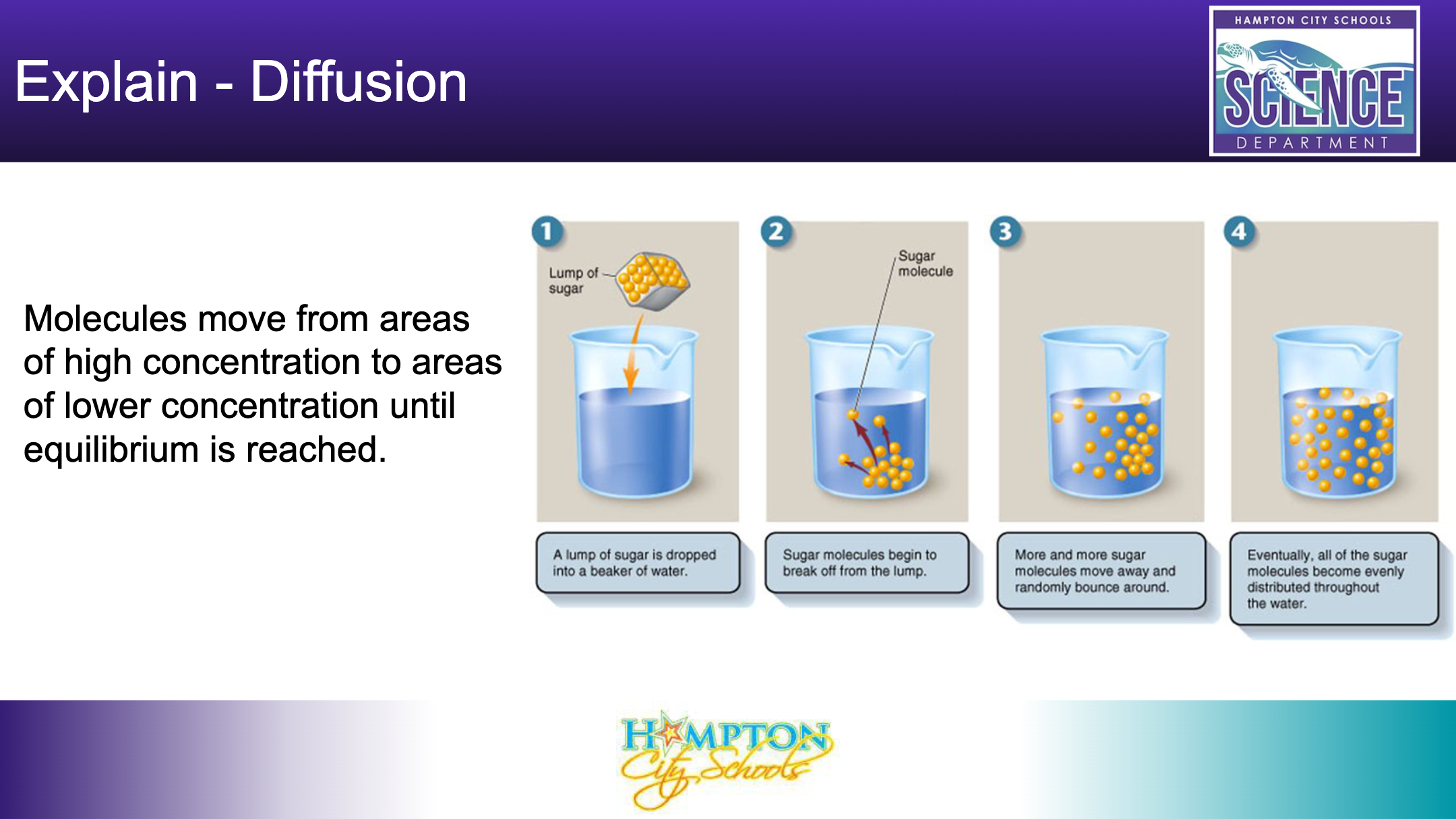
How does the concentration of solute particles change over time in a beaker of water when a lump of sugar is added?
The concentration increases near the lump and decreases elsewhere.
The concentration remains the same throughout the beaker.
The concentration becomes evenly distributed throughout the water.
The concentration decreases near the lump and increases elsewhere.
20
21
Open Ended
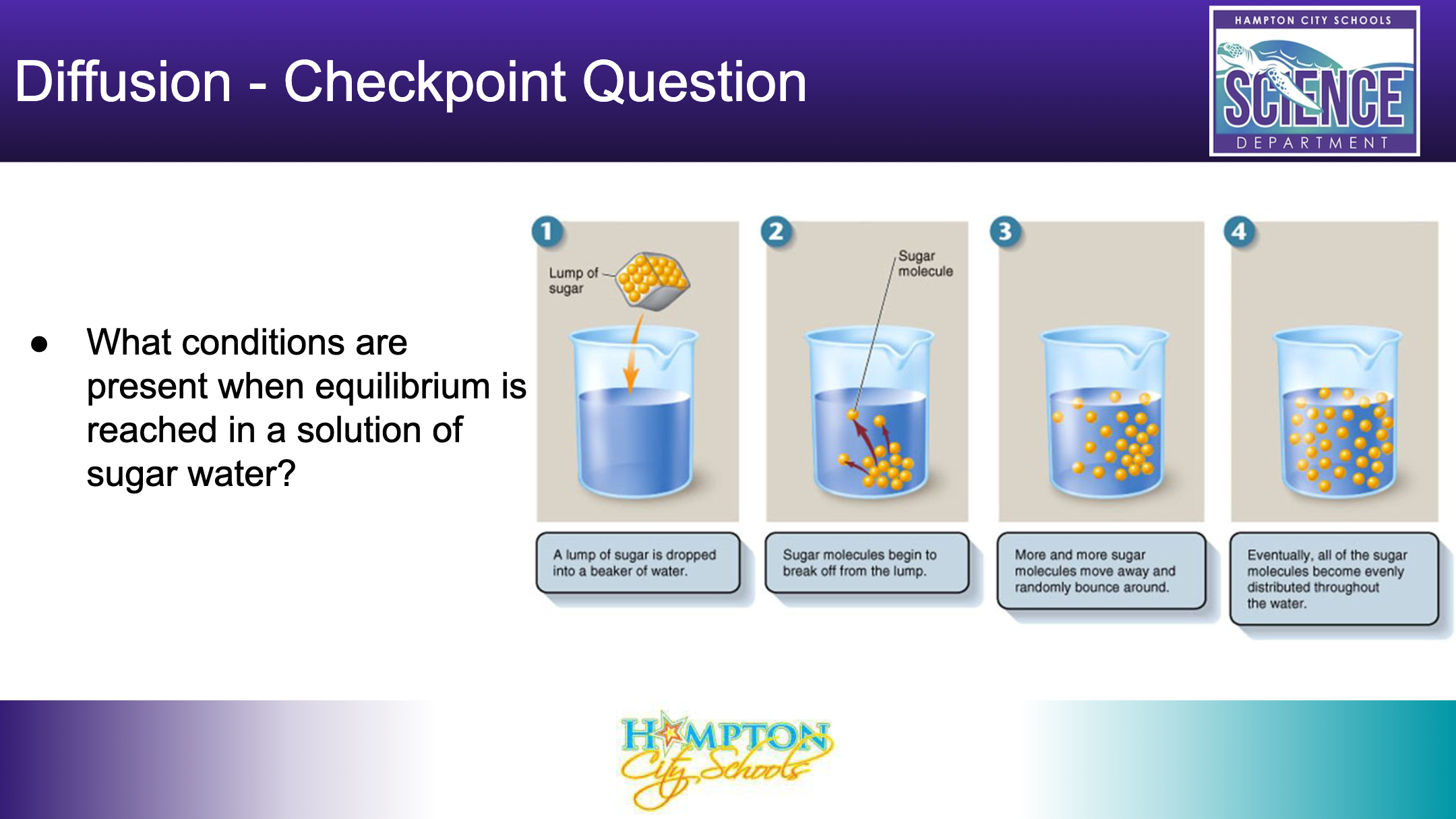
Explain how the process of diffusion leads to equilibrium in a solution. Use the example of sugar dissolving in water.
22
23
Fill in the Blanks
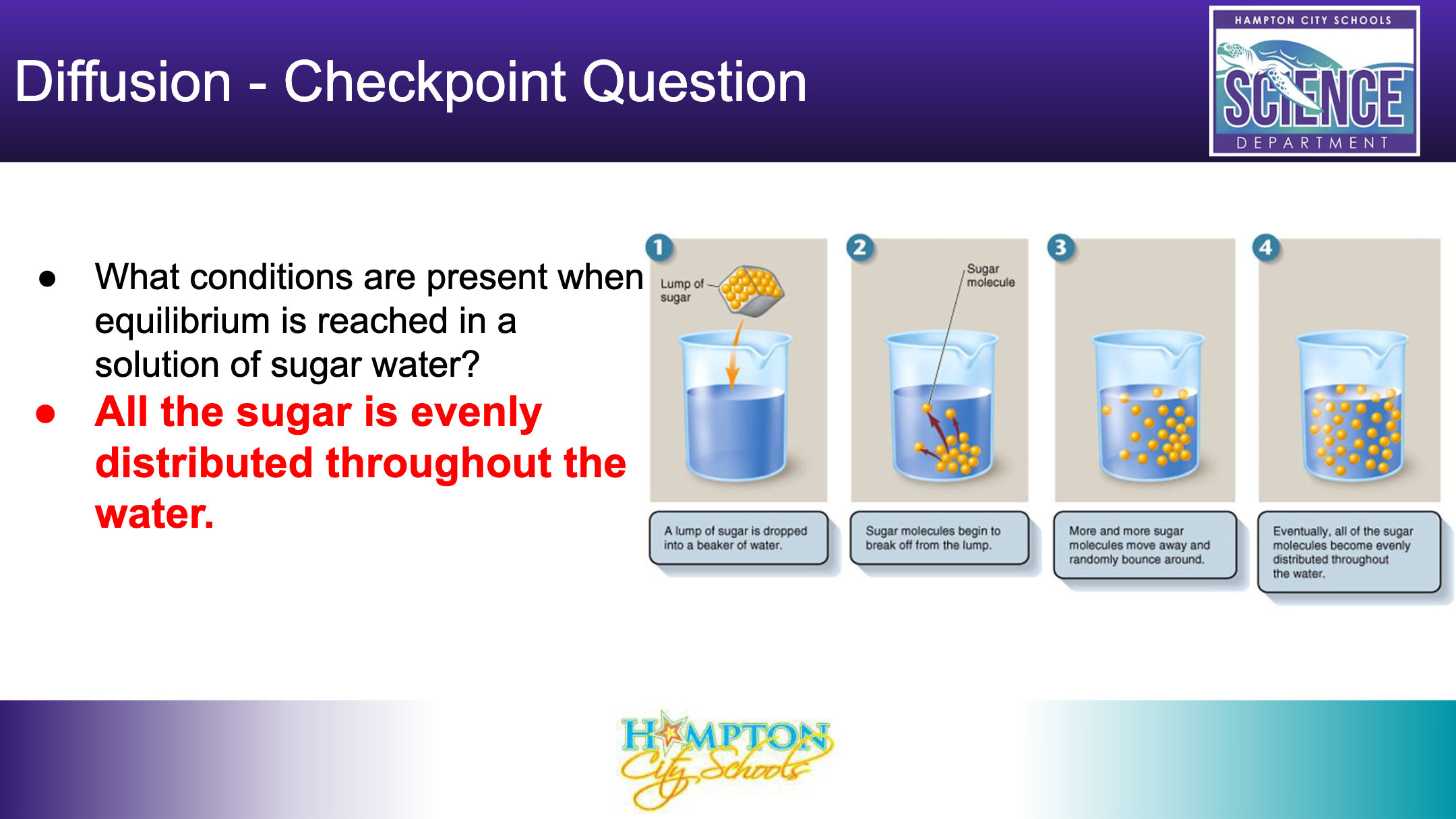
What conditions are present when equilibrium is reached in a solution of sugar water?
Type answer...
24
25
Multiple Select
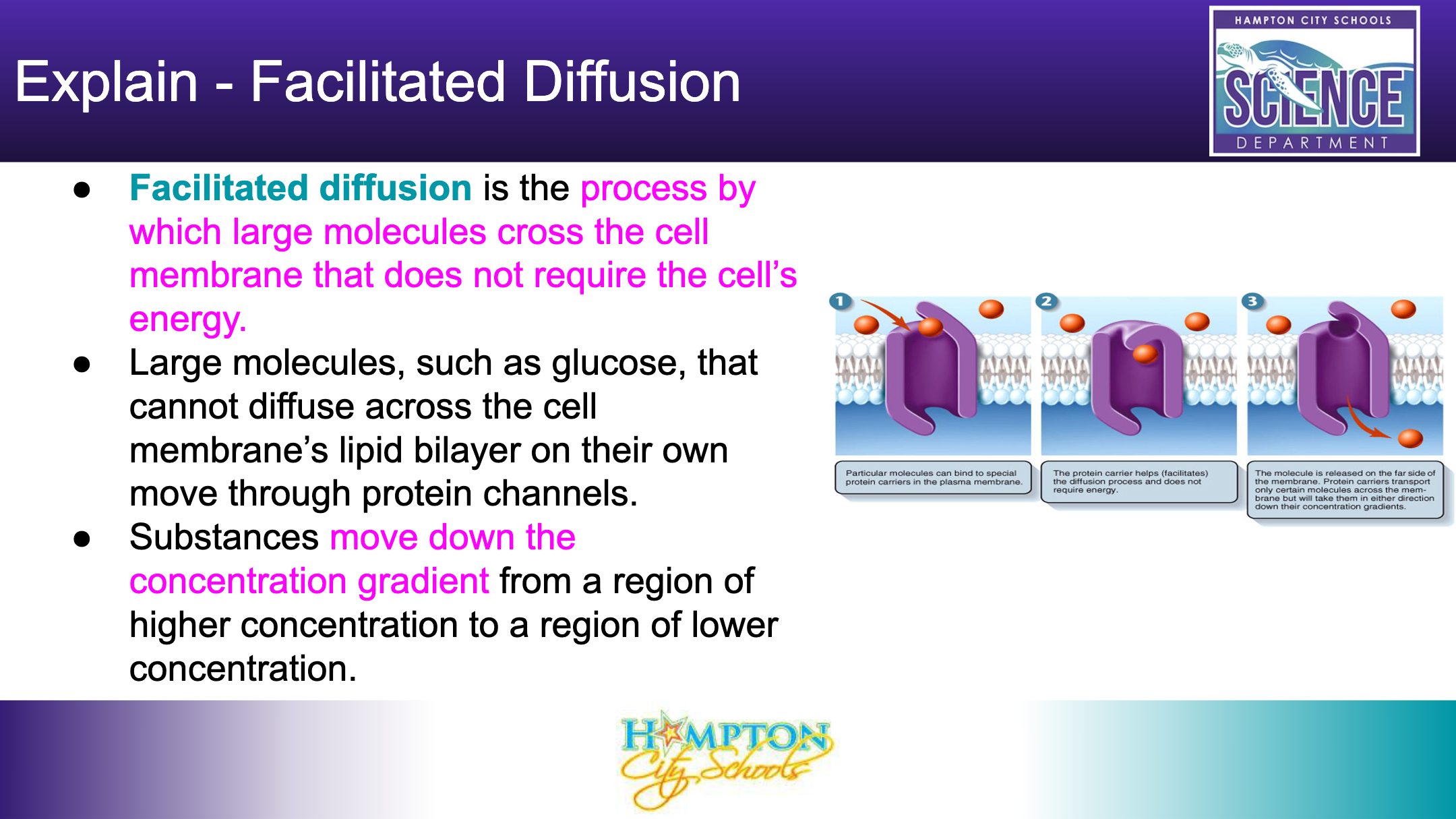
Which of the following statements about facilitated diffusion is correct? Select all that apply.
Facilitated diffusion does not require cellular energy.
Large molecules cross the cell membrane through protein channels.
Facilitated diffusion moves substances against the concentration gradient.
Only small molecules can use facilitated diffusion.
26
27
Fill in the Blanks
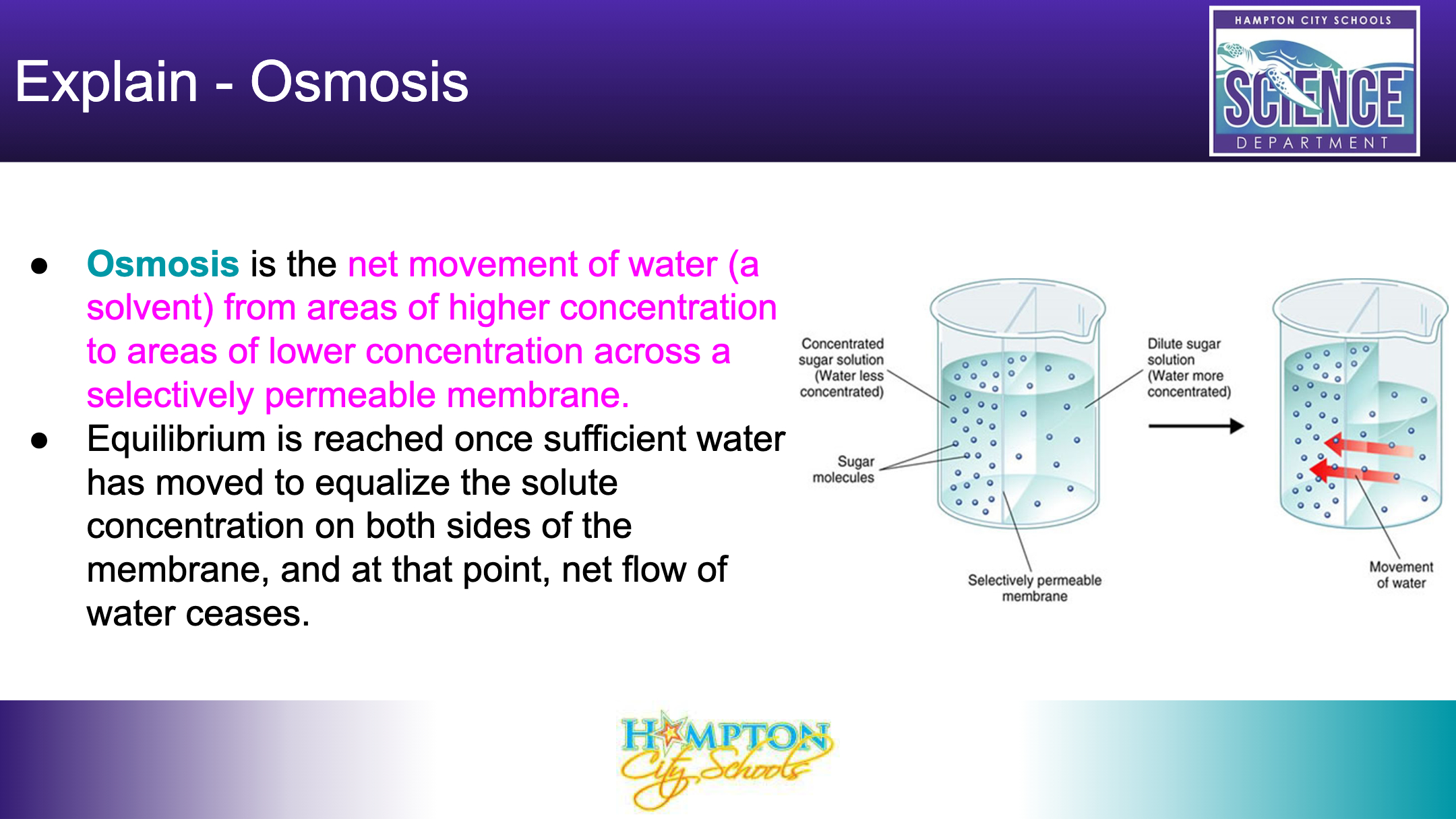
Osmosis is the net movement of water from areas of
28
29
Multiple Choice
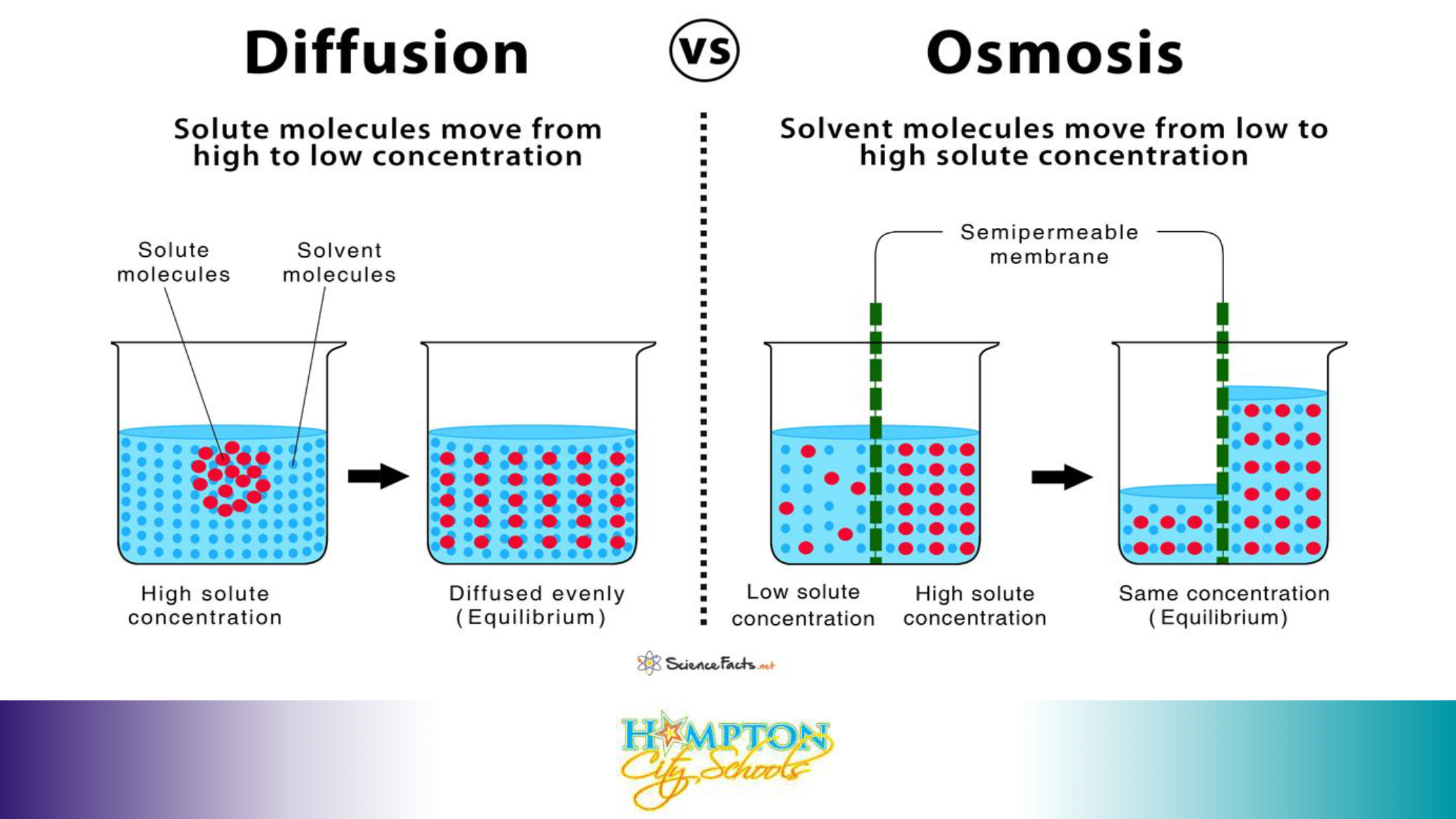
Which of the following best describes the main difference between diffusion and osmosis as shown in the diagram?
Diffusion involves the movement of solute molecules, while osmosis involves the movement of solvent molecules across a semipermeable membrane.
Diffusion requires a semipermeable membrane, while osmosis does not.
Osmosis moves solute molecules from high to low concentration, while diffusion moves solvent molecules from low to high concentration.
Both diffusion and osmosis require energy input from the cell.
30
Multiple Choice
How does the cell membrane contribute to maintaining homeostasis in organisms?
By allowing all substances to freely enter and exit the cell
By selectively regulating the movement of materials in and out of the cell
By preventing any communication between cells
By storing genetic information
31
Open Ended
Reflecting on today's lesson about cellular transport and the cell membrane, what is one question you still have or one concept you would like to explore further?
Show answer
Auto Play
Slide 1 / 31
SLIDE
Similar Resources on Wayground

23 questions
Chemical Reactions - Chemical Changes and Conservation
Presentation
•
9th - 12th Grade
27 questions
DE_Chem_1.2_Thermochemistry
Presentation
•
9th - 12th Grade
28 questions
Food Chains and Webs
Presentation
•
9th - 12th Grade
24 questions
Experimental Variables
Presentation
•
9th - 12th Grade
24 questions
Nuclear Decay
Presentation
•
9th - 12th Grade
23 questions
Acids and Bases
Presentation
•
9th - 12th Grade
25 questions
SI Units of Measurement Lesson
Presentation
•
9th - 12th Grade
21 questions
Naming Ionic Compounds
Presentation
•
9th - 12th Grade
Popular Resources on Wayground
10 questions
How much do you know about our Portrait of an Eagle?

Quiz
•
10th Grade
10 questions
Fast Food Slogans
Quiz
•
6th - 8th Grade
21 questions
Continents and Oceans
Quiz
•
6th Grade
20 questions
Parts of Speech
Quiz
•
5th Grade
16 questions
Subject & Predicate
Quiz
•
5th Grade
25 questions
Multiplication Facts
Quiz
•
5th Grade
12 questions
Map Skills
Quiz
•
3rd Grade
22 questions
Continents and Oceans
Quiz
•
5th Grade
Discover more resources for Science
10 questions
Exploring Chemical and Physical Changes

Interactive video
•
6th - 10th Grade
20 questions
Atomic Structure
Quiz
•
9th Grade
10 questions
Decoding the Periodic Table of Elements
Interactive video
•
6th - 10th Grade
10 questions
Exploring the Periodic Table
Interactive video
•
6th - 10th Grade
14 questions
Physical and Chemical Changes
Quiz
•
10th Grade
22 questions
Periodic Table Review
Quiz
•
9th - 12th Grade
20 questions
Observation vs. Inference
Quiz
•
7th - 9th Grade
14 questions
Periodic Trends
Interactive video
•
11th Grade