Mid-term Science Review
Presentation
•
Science
•
6th - 8th Grade
•
Medium
+13
Standards-aligned
Wendi Slone
Used 2+ times
FREE Resource
1 Slide • 54 Questions
1
Let's Review for Midterm!
By Wendi Slone
2
Labelling
Label the parts of an atom.
Proton
Electron Orbit
Electron
Nucleus
Neutron
3
Multiple Choice
4
Multiple Choice
5
Multiple Choice
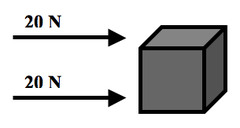
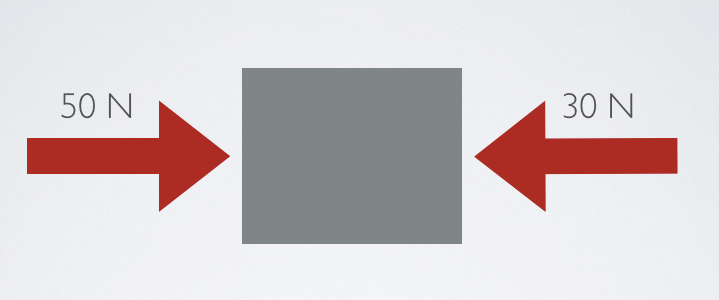
Which of the following is an example of an unbalanced force?
6
Multiple Choice
7
Multiple Choice
Evidence of an animal or plant that lived a long time ago on Earth is called a ________.
fossil
tiger
extinct
endangered
8
Multiple Choice
9
Multiple Choice
What might be a good candidate for planned extinction?
A plant
An animal
A fungus
A virus
10
Multiple Choice
A person is bitten by a venomous snake, and there is no antivenin for this species. What do you do?
Give them a random antivenin and hope for the best.
Give them the antivenin of the closest relative.
Suck out the poison--it works in movies, right?
Develop a new antivenin on the spot. You have time...
11
Multiple Choice
12
Multiple Choice
13
Multiple Choice
14
Multiple Choice
15
Multiple Choice
16
Multiple Choice
17
Multiple Choice
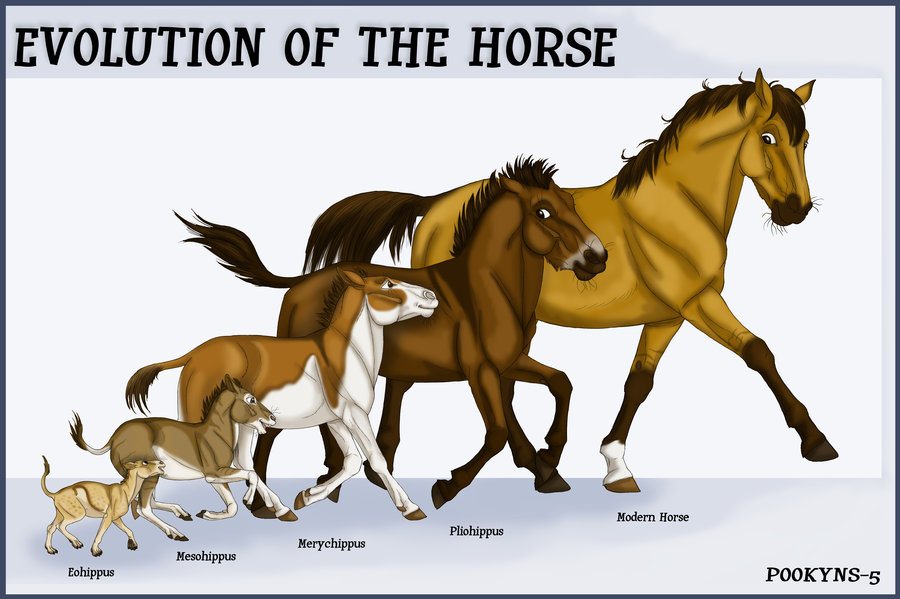
Do you think these organisms share a common ancestor?
Yes, they share a common ancestor.
No, they do not share a common ancestor.
It is not possible to determine from the given information.
18
Multiple Choice
Explain the difference between Homologous Structures and Analogous Structures. Look up the difference between Homologous Structures and Analogous Structures. Then state what examples on the previous pages represent Analogous structures and Homologous structures below.
Homologous structures have a common evolutionary origin, whereas analogous structures have a similar function but different evolutionary origins.
Analogous structures have a common evolutionary origin, whereas homologous structures have a similar function but different evolutionary origins.
Both homologous and analogous structures have a common evolutionary origin.
Neither homologous nor analogous structures have a common evolutionary origin.
19
Multiple Choice
This is a signal that fluctuates exactly like the original signal.
Analog
Digital
High Definition
Binary
20
Multiple Choice
This is a signal where the data is represented by binary digits.
Digital
Analog
NTSC
CRT
21
Multiple Choice
22
Multiple Choice
23
Multiple Choice
The picture shows an example of what kind of signal?
Analog
Digital
24
Multiple Choice
25
Multiple Choice
26
Multiple Choice
27
Multiple Choice
Identify a disadvantage of an analog signal:
Requires low power
Doesn't get interference
When copied, quality goes down
Hardware is usually small
28
Multiple Choice
29
Multiple Choice
Which of the following is an advantage of analog signals
Less prone to interference
Requires less power
Travels Farther
Can carry more detailed information
30
Multiple Choice
The oldest layer of rock is layer _________________, and the youngest layer of rock is layer ____________________.
1; 5
2;4
3;2
4;3
31
Multiple Choice
Which letter shows the youngest layer
A
B
C
D
E
32
Multiple Choice
Which letter shows the oldest layer?
C
D
E
F
G
33
Multiple Choice
Which layer is the intrusion layer?
A
B
C
D
E
34
Multiple Choice
Which letter shows the cross-section fault line?
C
D
E
F
G
35
Multiple Choice
Which layer shows a trace fossil?
Layer D
Layer F
Layer B
36
Multiple Choice
The diagram shows layers of sedimentary rock. Assuming that this rock formation is undisturbed, What is the relative age of layer C?
It is the youngest rock layer.
It is the oldest rock layer.
It is older than B and younger than D.
It is younger than B and older than D.
37
Multiple Choice
How do scientist know when a mass extinction took place?
They find more fossils of plants.
They find fossils of animals that died suddenly.
They find a sudden disappearance of many fossil species.
They find evidence of changes in Earth’s atmosphere.
38
Multiple Choice
39
Multiple Choice
40
Multiple Choice
Where does fusion occur?
On the Sun and stars
underwater
all around us
nuclear power plant
41
Multiple Choice
How do stars generate energy?
Fusion of hydrogen and helium atoms in the core
Energetic explosions on the surface of the star
Subduction of lithospheric plates
Convection currents within the star
42
Multiple Choice
43
Multiple Choice
The bigger the amplitude, the ________ energy carried by the wave.
more
less
44
Multiple Choice
45
Multiple Choice
46
Multiple Choice
Which subatomic particle has a negative charge?
proton
neutron
electron
47
Multiple Choice
48
Multiple Choice
49
Multiple Choice
Particles in an atom that are neutral and have no charge are
negatrons
electrons
neutrons
protons
50
Multiple Choice
51
Multiple Choice
What types of forces are responsible for revolution of electrons around the nucleus of an atom?
Gravitational forces of attraction
Contact forces
Electrostatic forces of attraction
Magnetic forces
52
Multiple Choice
What is the net charge on the nucleus of an atom?
Negative
Positive
Neutral
53
Multiple Choice
What is the reason of positive charge on the nucleus of an atom?
presence of neutrons
pressence of protons
54
Multiple Choice
What is building block of Matter?
Bricks
Cells
Atoms
55
Multiple Choice
In a neutral atom, what is the number of protons equal to?
Let's Review for Midterm!
By Wendi Slone
Show answer
Auto Play
Slide 1 / 55
SLIDE

Similar Resources on Wayground
48 questions
Traits and Reproduction Test Review
Presentation
•
6th - 8th Grade
51 questions
7.4.2-Types of Chemical Reactions
Presentation
•
6th - 8th Grade
49 questions
Ecosystems - Biodiversity & Resilience
Presentation
•
6th - 8th Grade
45 questions
Life Cycle of a Star
Presentation
•
KG - 8th Grade
50 questions
Earth Internal
Presentation
•
6th - 8th Grade
50 questions
Layers of the Earth Convection
Presentation
•
6th - 8th Grade
49 questions
Energy Pyramid Doodle Notes
Presentation
•
6th - 8th Grade
Popular Resources on Wayground
10 questions
5.P.1.3 Distance/Time Graphs
Quiz
•
5th Grade
10 questions
Fire Drill
Quiz
•
2nd - 5th Grade
20 questions
Equivalent Fractions
Quiz
•
3rd Grade
22 questions
School Wide Vocab Group 1 Master
Quiz
•
6th - 8th Grade
20 questions
Main Idea and Details
Quiz
•
5th Grade
20 questions
Context Clues
Quiz
•
6th Grade
20 questions
Inferences
Quiz
•
4th Grade
12 questions
What makes Nebraska's government unique?
Quiz
•
4th - 5th Grade
Discover more resources for Science
8 questions
Amoeba Sister Asexual vs Sexual Reproduction
Interactive video
•
8th Grade
19 questions
Introduction to Properties of Waves
Presentation
•
6th - 8th Grade
16 questions
Interactions within Ecosystems
Presentation
•
6th - 8th Grade
10 questions
Exploring the Layers of the Earth
Interactive video
•
6th - 10th Grade
16 questions
Photosynthesis and Cellular Respiration Review
Quiz
•
7th Grade
20 questions
Abiotic & Biotic Factors
Quiz
•
7th Grade
15 questions
Punnett Squares
Quiz
•
6th Grade
10 questions
Exploring the Evolution of Cell Theory
Interactive video
•
7th Grade