

Naming Ionic and Covalent Compounds

Presentation
•
Science
•
9th - 12th Grade
•
Medium
+1
Standards-aligned

Barbara White
Used 20+ times
FREE Resource
23 Slides • 11 Questions
1

Naming Ionic and Covalent Compounds
High School
2
Learning Objectives
Distinguish between ionic and covalent compounds based on their composition and properties.
Write chemical formulas for ionic compounds with polyatomic ions and transition metals.
Correctly name ionic and covalent compounds from their chemical formulas.
Write chemical formulas for covalent compounds using the appropriate Greek prefixes.


3
Key Vocabulary
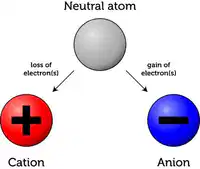
Cation
A positively charged ion formed when a metal atom loses one or more of its electrons.

Anion
A negatively charged ion that is formed when a non-metal atom gains one or more electrons.
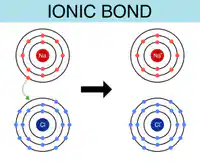
Ionic Bonds
A chemical bond formed between a metal and a nonmetal through the transfer of electrons.
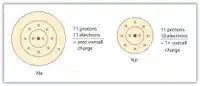
Oxidation Numbers
The charge on an ion, representing the number of electrons an atom has gained or lost.
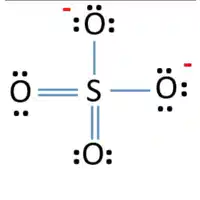
Polyatomic Ion
A group of bonded atoms that acts as a single unit with an overall ionic charge.
4
Ionic vs. Covalent Compounds
Ionic Compounds
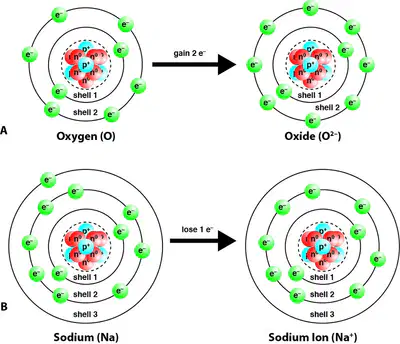
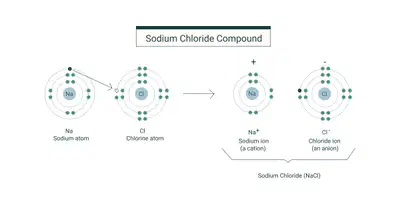
Ionic compounds form between metal and nonmetal atoms.
Electrons are completely transferred from the metal to the nonmetal.
They have high melting points and are typically solids.
Covalent Compounds
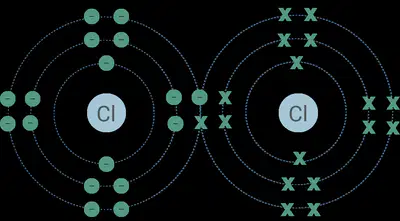
Covalent compounds form when two nonmetal atoms bond together.
Electrons are shared between atoms, resulting in no charges.
They have low melting points and exist as solids, liquids, or gases.
5
Solved Example 1
What is the correct chemical formula for an ionic compound formed between aluminum, which forms a +3 ion, and oxygen, which forms a -2 ion?
Step 1: Analyze and Sketch the Problem
Goal: To write the neutral chemical formula for a compound made of aluminum and oxygen.
Knowns: The aluminum ion has a charge of +3 (Al3+). The oxygen ion (oxide) has a charge of -2 (O2-).
Unknown: The subscripts for each element in the chemical formula.
Formula: The total positive charge must balance the total negative charge to equal zero.
6
Solved Example 1
What is the correct chemical formula for an ionic compound formed between aluminum, which forms a +3 ion, and oxygen, which forms a -2 ion?
Step 2: Solve for the Unknown
Use the criss-cross method, where the magnitude of the charge of each ion becomes the subscript for the other ion.
The '3' from Al3+ crosses over to become the subscript for O.
The '2' from O2- crosses over to become the subscript for Al.
This gives the formula: Al2O3.
7
Solved Example 1
What is the correct chemical formula for an ionic compound formed between aluminum, which forms a +3 ion, and oxygen, which forms a -2 ion?
Step 3: Evaluate the Answer
The total positive charge from two Al3+ ions is 2 × (+3) = +6, and the total negative charge from three O2- ions is 3 × (-2) = -6.
The sum of the charges is (+6) + (-6) = 0, which means the compound is neutral and the formula Al2O3 is correct.
8
Multiple Choice
A newly discovered solid substance has a very high melting point and is formed between a metal and a nonmetal. What type of compound is it most likely to be?
Polar
Ionic
Covalent
Metallic
9
Fundamentals of Ionic Compounds
Forming Ions
Cations are positive ions that form when metal atoms lose one or more of their electrons.
Anions are negative ions that form when nonmetal atoms gain one or more electrons from other atoms.
An ionic bond is the strong electrostatic attraction that occurs between a cation and an anion.
Predicting Ion Charge
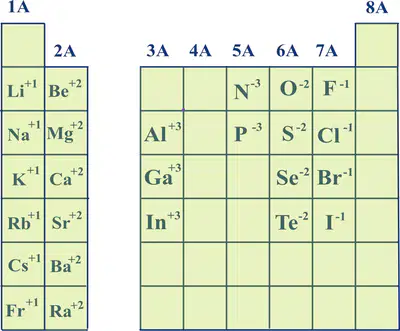
The oxidation number is the charge on an ion after it has gained or lost electrons.
Elements in Group 1 have a +1 charge, while elements in Group 2 have a +2 charge.
Elements in Group 15 have a -3 charge, while elements in Group 17 have a -1 charge.
10
Solved Example 2
What is the correct chemical formula for an ionic compound formed between magnesium (Mg), a group 2 element, and nitrogen (N), a group 15 element?
Step 1: Analyze and Sketch the Problem
Goal: To find the chemical formula for the ionic compound made of magnesium and nitrogen.
Knowns: Magnesium (Mg) is in Group 2 and forms a cation with a +2 charge (Mg2+). Nitrogen (N) is in Group 15 and forms an anion with a -3 charge (N3-).
Unknown: The subscripts for Mg and N in the chemical formula.
Formula: The total charge of an ionic compound must be zero. The criss-cross method can be used to find the subscripts.
11
Solved Example 2
What is the correct chemical formula for an ionic compound formed between magnesium (Mg), a group 2 element, and nitrogen (N), a group 15 element?
Step 2: Solve for the Unknown
Using the criss-cross method, the numerical value of the charge of the cation (Mg2+) becomes the subscript for the anion (N).
The numerical value of the charge of the anion (N3-) becomes the subscript for the cation (Mg), resulting in the final formula Mg3N2.
12
Solved Example 2
What is the correct chemical formula for an ionic compound formed between magnesium (Mg), a group 2 element, and nitrogen (N), a group 15 element?
Step 3: Evaluate the Answer
13
Multiple Choice
Based on its position in the periodic table, what is the oxidation number for an element in Group 2?
+1
+2
-2
-1
14
Writing Formulas for Ionic Compounds
Balancing Charges Method
The goal is to write a formula that results in a net charge of zero.
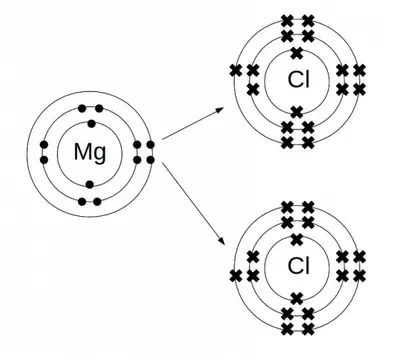
For Mg2+ and Cl-, you need two Cl- ions to balance the +2 charge.
This gives the final formula MgCl2, where the charges are perfectly balanced.
Criss-Cross Rule
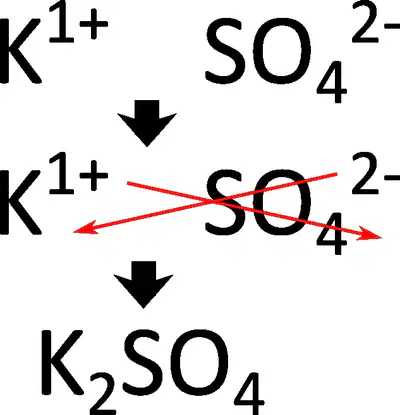
The charge of each ion becomes the subscript for the other, like Xm+ and Yn- gives XnYm.
Always reduce the subscripts to the simplest whole-number ratio for the correct final formula.
Use parentheses for polyatomic ions with a subscript greater than 1, like in Ca(OH)2.
15
Multiple Choice
Using the criss-cross rule, what is the correct formula for a compound formed between Calcium (Ca2+) and the Nitrate ion (NO3-)?
Ca(NO3)2
Ca(NO3)3
CaNO3
Ca2(NO3)
16
Naming Ionic Compounds
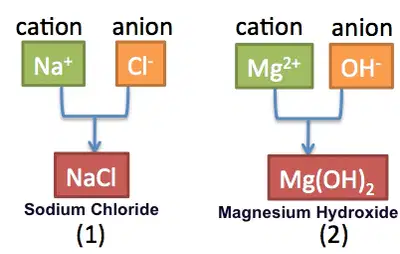
Follow this three-step process for naming simple ionic compounds.
First, always name the cation (positive ion) by its full element name.
Next, name the anion, changing the ending to –ide for single elements.
For polyatomic anions like SO42-, use the ion’s specific name, such as sulfate.
17
Multiple Choice
What is the correct name for the ionic compound with the formula Na2S?
Sodium sulfide
Disodium sulfide
Sodium(II) sulfide
Sodium sulfate
18
Ionic Compounds with Transition Metals
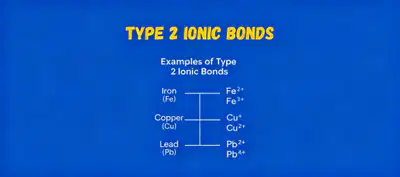
Transition metals can form ions with different charges, like Fe2+ and Fe3+.
A Roman numeral in the name is used to specify the charge.
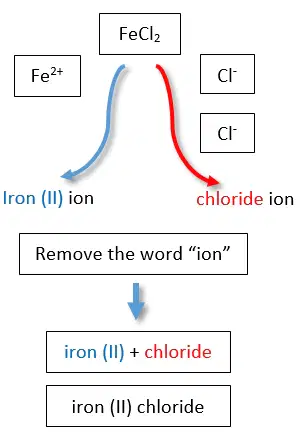
Iron (II) chloride indicates an Fe2+ ion, giving the formula FeCl2.
From FeCl2, two Cl- ions mean the iron must be Fe2+.
19
Solved Example 5
The compound CuO consists of copper and oxygen. Given that the charge of an oxide ion (O) is -2, what is the chemical name for CuO?
Step 1: Analyze and Sketch the Problem
Goal: Determine the correct chemical name for the ionic compound CuO.
Knowns: The compound contains one copper (Cu) ion and one oxide (O) ion. The charge of the oxide ion is -2. The overall charge of the compound is 0.
Unknown: The charge of the copper ion.
20
Solved Example 5
The compound CuO consists of copper and oxygen. Given that the charge of an oxide ion (O) is -2, what is the chemical name for CuO?
Step 2: Solve for the Unknown
21
Solved Example 5
The compound CuO consists of copper and oxygen. Given that the charge of an oxide ion (O) is -2, what is the chemical name for CuO?
Step 3: Evaluate the Answer
22
Multiple Choice
What is the correct name for the compound CuO, given that Copper (Cu) is a transition metal and Oxide (O) has a -2 charge?
Copper (II) Oxide
Monocopper Monoxide
Copper (I) Oxide
Copper Oxide
23
Rules for Naming Covalent Compounds
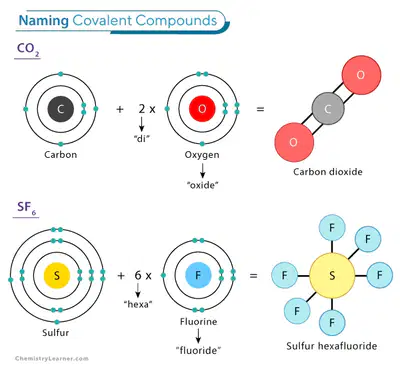
Use Greek prefixes like mono-, di-, and tri- for the number of atoms.
Name the first element; use a prefix only if there is more than one atom.
Name the second element with a prefix and change its ending to -ide.
For example, N2O5 is dinitrogen pentoxide and SiF4 is silicon tetrafluoride.

24
Solved Example 6
What is the chemical formula for the covalent compound sulfur hexafluoride?
Step 1: Analyze and Sketch the Problem
Goal: Write the chemical formula for sulfur hexafluoride.
Knowns: The compound is covalent, containing sulfur (S) and fluoride (F). The prefix "hexa-" means 6.
Unknown: The subscripts for S and F in the chemical formula.
25
Solved Example 6
What is the chemical formula for the covalent compound sulfur hexafluoride?
Step 2: Solve for the Unknown
Identify the symbol for each element: Sulfur is S, and fluoride refers to fluorine (F).
Determine the subscript for each element from the prefixes. "Sulfur" has no prefix, so its subscript is 1. "Hexafluoride" means there are 6 fluorine atoms, so its subscript is 6.
Combine the symbols and subscripts to write the formula: SF6.
26
Solved Example 6
What is the chemical formula for the covalent compound sulfur hexafluoride?
Step 3: Evaluate the Answer
The name "sulfur hexafluoride" indicates one sulfur atom and six fluorine atoms, and the formula SF6 correctly represents this.
The answer is reasonable and correctly follows the naming rules for covalent compounds.
27
Multiple Choice
What is the correct name for the covalent compound PBr5?
Phosphorus bromide
Phosphorus(V) bromide
Monophosphorus pentabromide
Phosphorus pentabromide
28
Common Misconceptions
Misconception | Correction |
|---|---|
All compounds are named using prefixes. | Prefixes are only for covalent compounds, not ionic ones. |
The charge of a transition metal is always the same. | Transition metals can have multiple charges, shown by a Roman numeral. |
Polyatomic ion names are changed to end in ‘-ide’. | The names of polyatomic ions are kept the same. |
29
Multiple Choice
Based on the rules for ionic compounds, what would be the correct chemical formula for the compound formed between Aluminum (Al3+) and the Sulfate ion (SO42-)?
Al3(SO4)2
AlSO4
Al(SO4)
Al2(SO4)3
30
Multiple Choice
Explain why the compound CO2 is named carbon dioxide, while the compound CaCl2 is named calcium chloride, focusing on the differences in their bonding and naming conventions.
CO2 is ionic and uses prefixes; CaCl2 is covalent and balances charges.
Both are covalent, but CaCl2 is a special exception.
CO2 is covalent and uses prefixes; CaCl2 is ionic and balances charges.
Both are ionic, but CO2 uses prefixes for clarity.
31
Multiple Choice
A compound has the formula XF2, where X is an unknown metal. Given that Fluoride (F) has a -1 charge, what would be the predicted chemical formula for the compound formed between metal X and the Carbonate ion (CO32-)?
XCO3
X2CO3
X(CO3)2
X2(CO3)3
32
Multiple Choice
Analyze the name 'Iron (III) Oxide'. From this name, determine the type of bonding, the charge of the iron ion, the charge of the oxide ion, and deduce the correct chemical formula.
Covalent, Fe3+, O2-, Formula: Fe2O3
Ionic, Fe2+, O2-, Formula: FeO
Ionic, Fe3+, O2-, Formula: FeO
Ionic, Fe3+, O2-, Formula: Fe2O3
33
Summary
Ionic compounds are a metal and nonmetal; use the criss-cross rule for formulas.
Covalent compounds are two nonmetals; use Greek prefixes to show atom counts.
Use Roman numerals for transition metal charges; polyatomic ions act as single units.
For binary compounds, change the second element's ending to -ide.
34
Poll
On a scale of 1-4, how confident are you with naming and writing formulas for ionic and covalent compounds?
1
2
3
4
Naming Ionic and Covalent Compounds
High School
Show answer
Auto Play
Slide 1 / 34
SLIDE
Similar Resources on Wayground

25 questions
Newtons 3 laws
Presentation
•
KG - University
27 questions
DNA RNA
Presentation
•
9th - 12th Grade
27 questions
Evidence of Evolution Notes
Presentation
•
9th - 12th Grade
24 questions
Unit 5 - Gas Laws
Presentation
•
9th - 12th Grade
27 questions
Natural Selection EOC Review
Presentation
•
9th - 12th Grade
28 questions
Atoms and the Periodic Table
Presentation
•
9th - 12th Grade
26 questions
Gas Laws
Presentation
•
9th - 12th Grade
25 questions
Photosynthesis
Presentation
•
9th - 11th Grade
Popular Resources on Wayground
20 questions
Math Review

Quiz
•
3rd Grade
15 questions
Fast food
Quiz
•
7th Grade
20 questions
Context Clues
Quiz
•
6th Grade
20 questions
Inferences
Quiz
•
4th Grade
19 questions
Classifying Quadrilaterals
Quiz
•
3rd Grade
20 questions
Figurative Language Review
Quiz
•
6th Grade
20 questions
Equivalent Fractions
Quiz
•
3rd Grade
10 questions
Identify Fractions, Mixed Numbers & Improper Fractions
Quiz
•
3rd - 4th Grade
Discover more resources for Science
25 questions
Naming Ionic and Covalent Compounds
Quiz
•
9th Grade
40 questions
NCFE Earth and Environmental Science Released Test
Quiz
•
9th - 12th Grade
10 questions
Exploring Weather Influences and Map Reading

Interactive video
•
6th - 10th Grade
20 questions
Human Impact on the Environment Review #2
Quiz
•
9th Grade
20 questions
Balancing Chemical Equations
Quiz
•
9th Grade
61 questions
End of the Year Trivia Fun
Quiz
•
9th Grade
15 questions
Protein synthesis
Quiz
•
9th Grade
30 questions
Environmental Science Final Exam REVIEW
Quiz
•
9th - 12th Grade