

Ocean Zones and Marine Habitats

Presentation
•
Science
•
9th - 12th Grade
•
Hard
+2
Standards-aligned

Barbara White
Used 5+ times
FREE Resource
17 Slides • 11 Questions
1

Ocean Zones and Marine Habitats
High School
2
Learning Objectives
Differentiate between the pelagic and benthic zones of the ocean.
Describe the ocean's vertical and horizontal subdivisions based on light and depth.
Categorize marine organisms like plankton, nekton, and benthos by their lifestyles.
Identify various marine ecosystems and their most important key characteristics.
Explain the basis of unique deep-sea ecosystems like hydrothermal vents.


3
Key Vocabulary

Pelagic Zone
This zone comprises all open ocean water, from the surface to the bottom, separate from the seafloor.

Benthic Zone
The benthic zone is the entire ocean floor, including diverse geographical features like mountains and deep trenches.
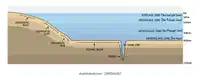
Photic Zone
The upper layer of the ocean that receives sunlight, allowing for the process of photosynthesis to occur.

Aphotic Zone
The vast, deep ocean area with a complete absence of sunlight, starting just below the photic zone.
Nekton
Marine organisms that are strong swimmers and can move independently of ocean currents, like fish and whales.

Benthos
These are organisms that live on or in the ocean floor, including creatures that are either attached or can move.
4
Major Ocean Divisions
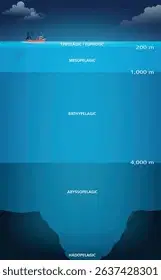
Pelagic Zone
This zone is made up of all the open waters found in the ocean.
It is the entire water column itself, vast and stretching in three dimensions.
It extends from the sunlit surface all the way down to the deepest ocean parts.
Benthic Zone
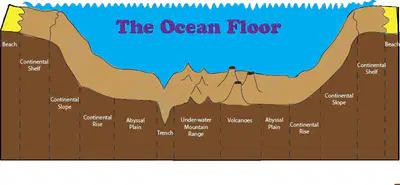
This zone refers to the entire ocean floor, also known as the substrate.
It has diverse geography like mountains, deep trenches, volcanoes, and expansive plains.
The bottom surface consists of materials like mud, sand, or solid rock.
5
Solved Example 1
A remotely operated vehicle (ROV) descends from the surface. Calculate the total pressure it experiences at a depth of 2,500 meters in the abyssal zone, assuming the pressure increases by 1 atmosphere for every 10 meters of depth.
Step 1: Analyze and Sketch the Problem
6
Solved Example 1
A remotely operated vehicle (ROV) descends from the surface. Calculate the total pressure it experiences at a depth of 2,500 meters in the abyssal zone, assuming the pressure increases by 1 atmosphere for every 10 meters of depth.
Step 2: Solve for the Unknown
7
Solved Example 1
A remotely operated vehicle (ROV) descends from the surface. Calculate the total pressure it experiences at a depth of 2,500 meters in the abyssal zone, assuming the pressure increases by 1 atmosphere for every 10 meters of depth.
Step 3: Evaluate the Answer
The pressure from the water at 2,500 m is 250 times the surface pressure, which is a significant increase, as expected for such a great depth.
The final answer of 251 atm reasonably combines the surface pressure and the immense pressure of the deep ocean.
8
Multiple Choice
Which statement accurately distinguishes between the Pelagic and Benthic zones?
The Pelagic zone is the ocean floor, and the Benthic zone is the open water.
Both zones refer to the same area but are classified by temperature.
The Pelagic zone is the open water of the ocean, and the Benthic zone is the entire ocean floor.
The Pelagic zone is the coastline, and the Benthic zone is the deep sea.
9
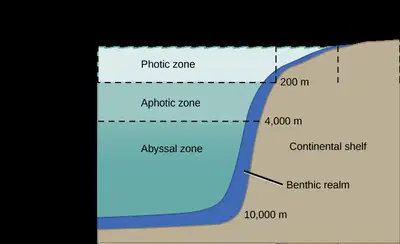
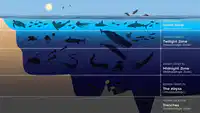
Vertical Subdivisions of the Pelagic Zone
The pelagic zone is vertically divided into layers based on sunlight penetration.
The sunlit Euphotic Zone allows photosynthesis, while the dim Dysphotic Zone lies below.
A rapid temperature change, the thermocline, occurs in the dimly lit Dysphotic Zone.
The dark Aphotic Zone (e.g., Hadalpelagic) depends on nutrients from falling 'marine snow'.
10
Solved Example 2
A diver descends from the surface, through the Epipelagic zone, into the Mesopelagic zone. If the Epipelagic zone extends to 200m and the diver stops at a depth of 550m, how many meters did she travel within the Mesopelagic zone?
Step 1: Analyze and Sketch the Problem
Goal: Calculate the distance traveled within the Mesopelagic zone.
Knowns: The Epipelagic zone ends at 200 m. The diver's final depth is 550 m.
Unknown: The distance traveled in the Mesopelagic zone.
Formula: Distance = Total Depth - Epipelagic Depth
11
Solved Example 2
A diver descends from the surface, through the Epipelagic zone, into the Mesopelagic zone. If the Epipelagic zone extends to 200m and the diver stops at a depth of 550m, how many meters did she travel within the Mesopelagic zone?
Step 2: Solve for the Unknown
12
Solved Example 2
A diver descends from the surface, through the Epipelagic zone, into the Mesopelagic zone. If the Epipelagic zone extends to 200m and the diver stops at a depth of 550m, how many meters did she travel within the Mesopelagic zone?
Step 3: Evaluate the Answer
13
Multiple Choice
In which subdivision of the Pelagic zone does photosynthesis occur?
Euphotic zone
Dysphotic zone
Aphotic zone
Hadalpelagic zone
14
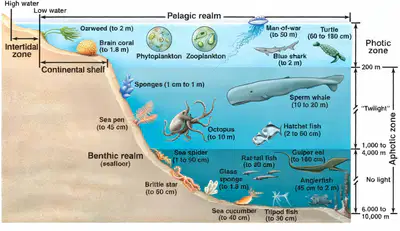
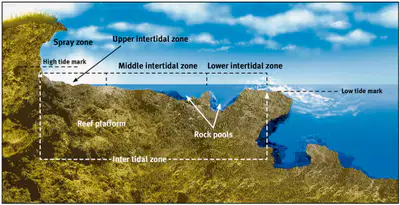
Benthic Zone: Subdivisions by Depth
The supralittoral, or splash zone, is the area above the high tide line.
The harsh littoral zone is between tides; its lower area has high biodiversity.
The sublittoral zone is the remainder of the continental shelf up to 200m.
Deep zones include the bathyal (slope), abyssal (bottom), and hadal (trenches) zones.
15
Multiple Choice
Which benthic zone is characterized by being located between the high and low tide marks, presenting a harsh environment for organisms?
Abyssal Zone
Sublittoral Zone
Littoral Zone
Supralittoral Zone
16
Lifestyles of Marine Life
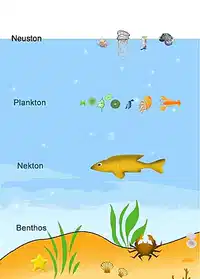
Plankton
These organisms are known as the floaters or drifters of the ocean.
Phytoplankton are producers, while zooplankton are consumers in the marine food web.
Holoplankton are lifelong plankton; meroplankton are plankton only in their larval stage.
Nekton
Nekton are strong swimmers that can actively move against powerful ocean currents.
This diverse group includes most fish, marine mammals, and various reptile species.
They are found in shallow or deep waters, constantly searching for food.
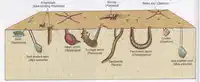
Benthos
These are the many organisms that live on or in the ocean floor.
Epifauna live on the seafloor, while infauna live within the sediments below.
Sessile organisms are attached, while mobile organisms can move around freely.
17
Multiple Choice
An organism that spends only its larval stage drifting and later becomes a strong swimmer would be classified as what?
Phytoplankton and then Epifauna
Zooplankton and then Benthos
Meroplankton and then Nekton
Holoplankton and then Nekton
18
Types of Marine Ecosystems
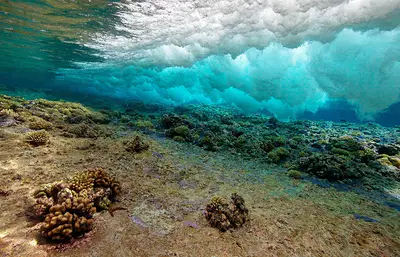
Coral Reefs
Coral reefs are highly diverse ecosystems needing light and low-nutrient water.
They are built by tiny animals known as coral polyps.
Reefs are often called the "rainforests of the sea" for their biodiversity.
Kelp Forests
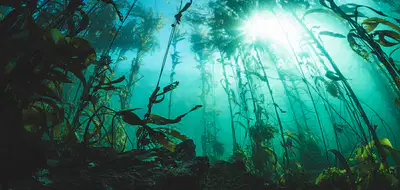
Kelp forests thrive in cooler, nutrient-rich waters along coastlines.
They are formed by large brown algae, which can grow very tall.
These forests provide essential food and shelter for many marine species.
19
Multiple Choice
Which ecosystem is described as being highly diverse and needing light and low-nutrient water to thrive?
Arctic regions
Coral Reefs
Kelp Forests
Estuaries
20
Unique Deep-Sea Ecosystems
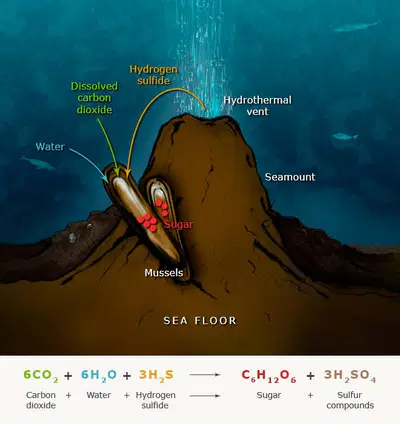
Hydrothermal Vents
These ecosystems are found in the deep ocean, thriving without any sunlight at all.
Energy is supplied by chemosynthetic bacteria, which convert sulfides and other chemicals from vents into food.
These bacteria form the base of a unique food web for animals like tubeworms.
Whale Falls
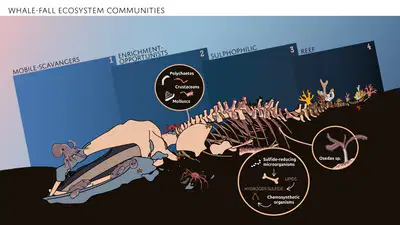
When a whale dies, its sunken carcass creates a new, long-lasting ecosystem on the seafloor.
The body provides a massive source of nutrients for scavengers like worms and other organisms.
Eventually, chemosynthetic bacteria will break down the bones, providing energy for many more decades to come.
21
Multiple Choice
What is the primary source of energy for the food web at a hydrothermal vent?
Sunlight via photosynthesis
Decomposing organic matter from the surface
Heat from the Earth's core
Chemicals from the vent converted by bacteria
22
Common Misconceptions About the Ocean
Misconception | Correction |
|---|---|
The deep ocean is lifeless. | It hosts uniquely adapted organisms that thrive in extreme conditions. |
All plankton are microscopic plants. | Plankton includes plant-like phytoplankton and animal-like zooplankton of various sizes. |
The ocean is a uniform body of water. | It is structured into distinct zones and layers with unique characteristics. |
23
Multiple Choice
How does the availability of light primarily differentiate the lifestyles of organisms in the Euphotic zone versus the Aphotic zone?
The Euphotic zone has only sessile organisms, while the Aphotic zone has only mobile organisms.
The Euphotic zone supports producers that photosynthesize, while Aphotic zone organisms are consumers or rely on chemosynthesis.
Organisms in the Euphotic zone are mostly swimmers, while organisms in the Aphotic zone are floaters.
Temperature, not light, is the primary factor differentiating lifestyles between these zones.
24
Multiple Choice
A marine biologist discovers a new species of crab that lives on the continental slope at a depth of 1,500m. How would this organism be classified based on its lifestyle and habitat?
Sessile epifauna in the Sublittoral zone.
Nekton living in the Mesopelagic zone.
Infauna in the Abyssal zone.
Mobile benthos in the Bathyal zone.
25
Multiple Choice
What is the most likely consequence of a significant, long-term decrease in 'marine snow' reaching the Abyssal and Hadal zones?
A significant decline in the population density of life in these zones due to nutrient loss.
A rise in the deep-ocean thermocline.
A shift in deep-sea organisms from chemosynthesis to photosynthesis.
An increase in photosynthesis in the deep ocean.
26
Multiple Choice
Estuaries and salt marshes are known for being highly productive ecosystems. What is the main reason for this high productivity?
They receive a constant high level of sunlight and are located in the deepest parts of the ocean.
The meeting of river and sea water, along with tidal flows, traps and circulates a high level of nutrients.
They have extremely stable salinity and temperature, which is ideal for all organisms.
They are primarily based on chemosynthesis, which is more efficient than photosynthesis.
27
Summary
The ocean is divided into pelagic (open water) and benthic (seafloor) zones.
Vertical zones are shaped by light and depth, creating distinct layers.
Marine life is grouped by lifestyle into plankton, nekton, and benthos.
Ocean ecosystems are diverse, including estuaries, coral reefs, and polar seas.
Deep-sea vents and whale falls rely on chemosynthesis for energy.
Physical factors like light and nutrients determine where marine life exists.
28
Poll
On a scale of 1-4, how confident are you about the concepts covered in today's review?
1
2
3
4
Ocean Zones and Marine Habitats
High School
Show answer
Auto Play
Slide 1 / 28
SLIDE
Similar Resources on Wayground

19 questions
Structure of Atom
Presentation
•
9th - 12th Grade
20 questions
Skeletal System: Joints
Presentation
•
9th - 12th Grade
20 questions
Momentum
Presentation
•
9th - 11th Grade
20 questions
Open SciEd Biology Lesson 4 Clover Genetics and Environment
Presentation
•
9th - 12th Grade
23 questions
Scientific Method
Presentation
•
9th - 12th Grade
18 questions
Cell Structures/Organelles
Presentation
•
9th - 12th Grade
21 questions
The Great Pacific Garbage Patch
Presentation
•
9th - 12th Grade
23 questions
Earths Movements
Presentation
•
9th - 12th Grade
Popular Resources on Wayground
20 questions
Math Review

Quiz
•
3rd Grade
15 questions
Fast food
Quiz
•
7th Grade
20 questions
Context Clues
Quiz
•
6th Grade
20 questions
Inferences
Quiz
•
4th Grade
19 questions
Classifying Quadrilaterals
Quiz
•
3rd Grade
20 questions
Figurative Language Review
Quiz
•
6th Grade
20 questions
Equivalent Fractions
Quiz
•
3rd Grade
10 questions
Identify Fractions, Mixed Numbers & Improper Fractions
Quiz
•
3rd - 4th Grade
Discover more resources for Science
25 questions
Naming Ionic and Covalent Compounds
Quiz
•
9th Grade
40 questions
NCFE Earth and Environmental Science Released Test
Quiz
•
9th - 12th Grade
10 questions
Exploring Weather Influences and Map Reading

Interactive video
•
6th - 10th Grade
20 questions
Human Impact on the Environment Review #2
Quiz
•
9th Grade
20 questions
Balancing Chemical Equations
Quiz
•
9th Grade
61 questions
End of the Year Trivia Fun
Quiz
•
9th Grade
15 questions
Protein synthesis
Quiz
•
9th Grade
30 questions
Environmental Science Final Exam REVIEW
Quiz
•
9th - 12th Grade