

The Periodic Table

Presentation
•
Science
•
6th - 8th Grade
•
Medium

Tracy Reina
Used 2+ times
FREE Resource
26 Slides • 24 Questions
1

2
Open Ended
Why do you think organizing elements in a table is important for scientists and chemists?
3
4
Multiple Choice
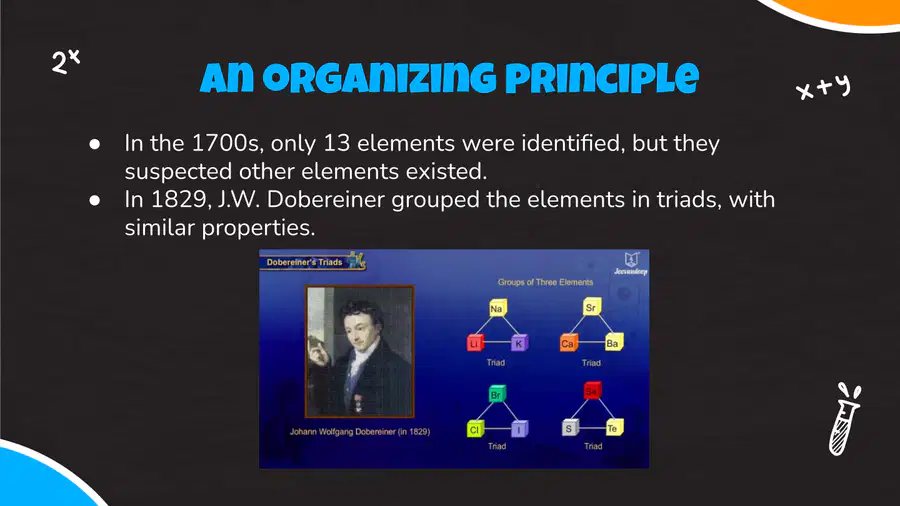
Who grouped elements into triads based on their similar properties in 1829?
John Dalton
J.W. Dobereiner
Dmitri Mendeleev
Marie Curie
5
6
Multiple Choice
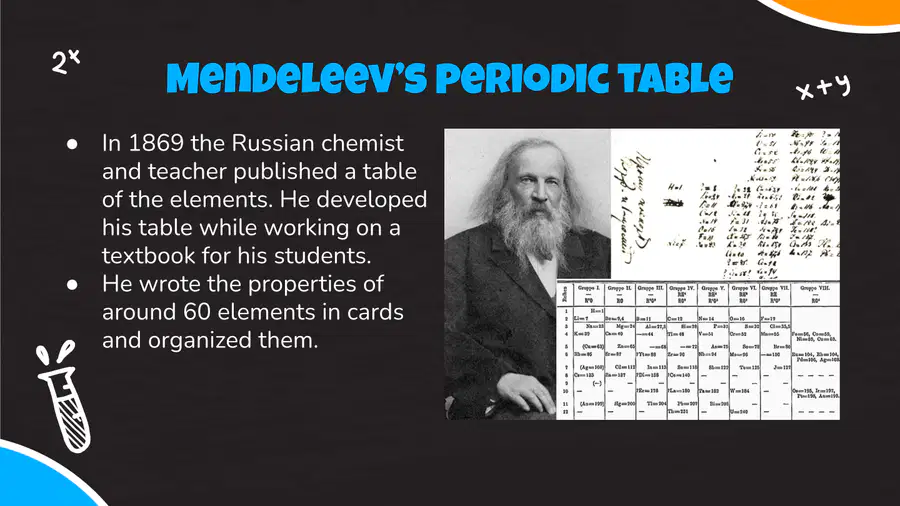
Who published the first widely recognized periodic table of elements in 1869?
Dmitri Mendeleev
John Dalton
Henry Moseley
Marie Curie
7

8
9
Open Ended
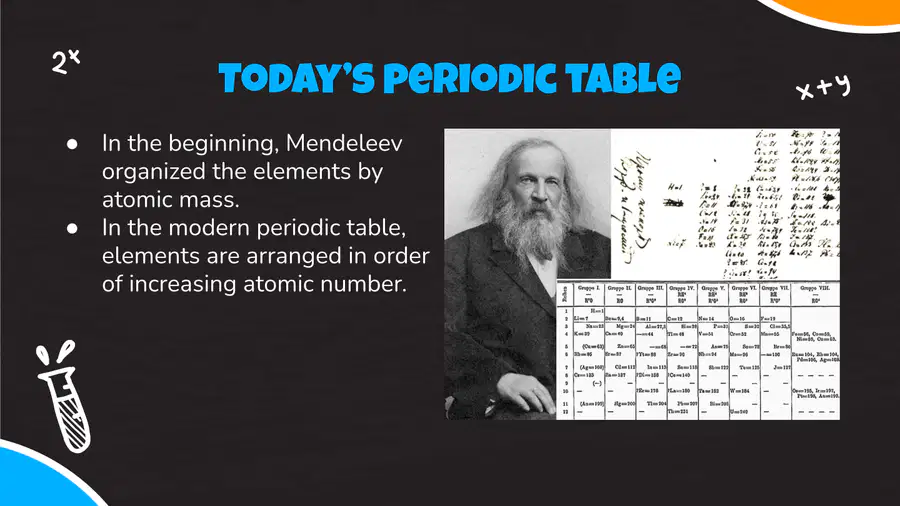
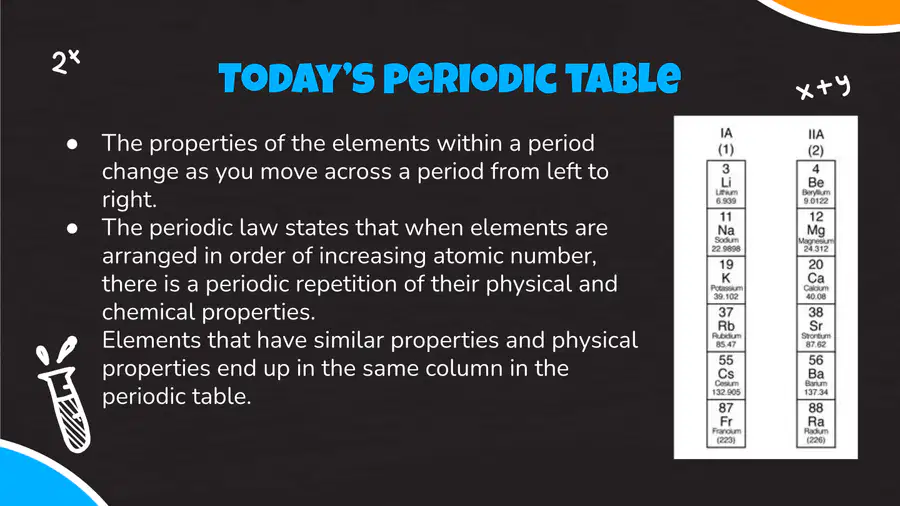
Compare how elements were organized in Mendeleev's periodic table and in the modern periodic table.
10
11
Fill in the Blanks
Type answer...
12
13
Open Ended
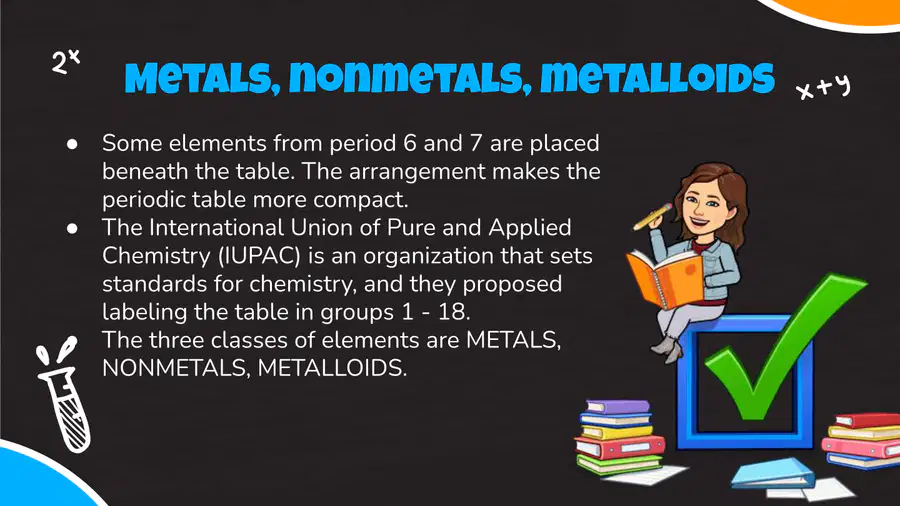
Explain why some elements from period 6 and 7 are placed beneath the periodic table.
14
Multiple Choice
What are the three classes of elements according to the periodic table?
Metals, Nonmetals, Metalloids
Metals, Gases, Liquids
Solids, Liquids, Gases
Metals, Noble Gases, Halogens
15
16
Multiple Select
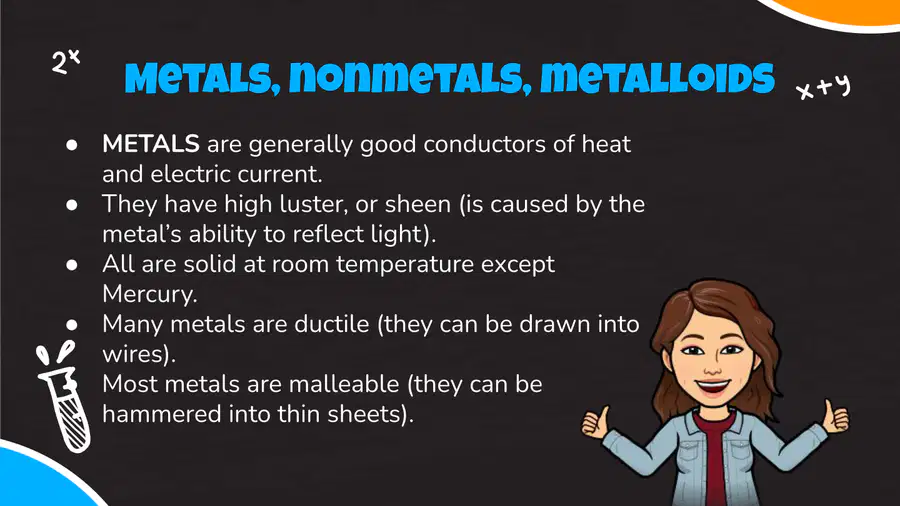
Which of the following are properties of metals?
Good conductors of heat and electricity
High luster or sheen
All are gases at room temperature
Most are malleable and many are ductile
17
18
Multiple Choice
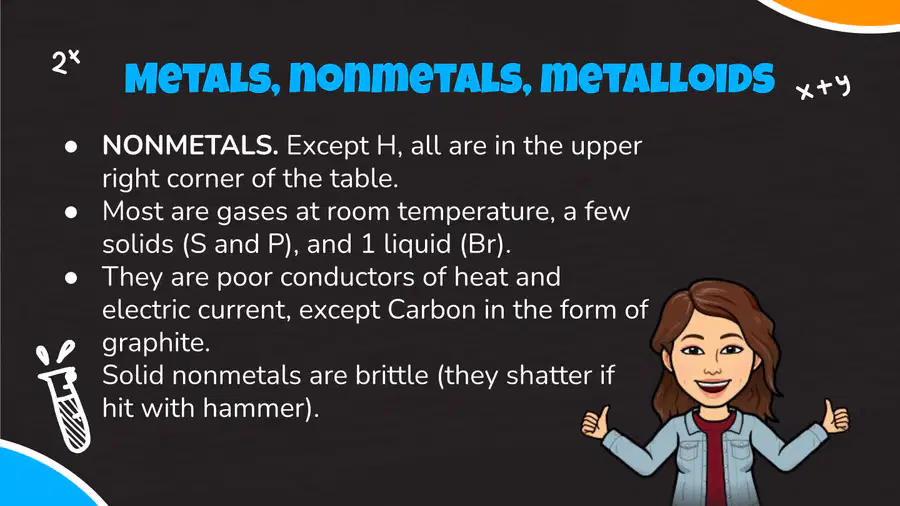
Which of the following statements about nonmetals is correct?
Most nonmetals are good conductors of electricity.
All nonmetals are solids at room temperature.
Most nonmetals are gases at room temperature.
Nonmetals are usually found in the lower left corner of the periodic table.
19
20
Open Ended
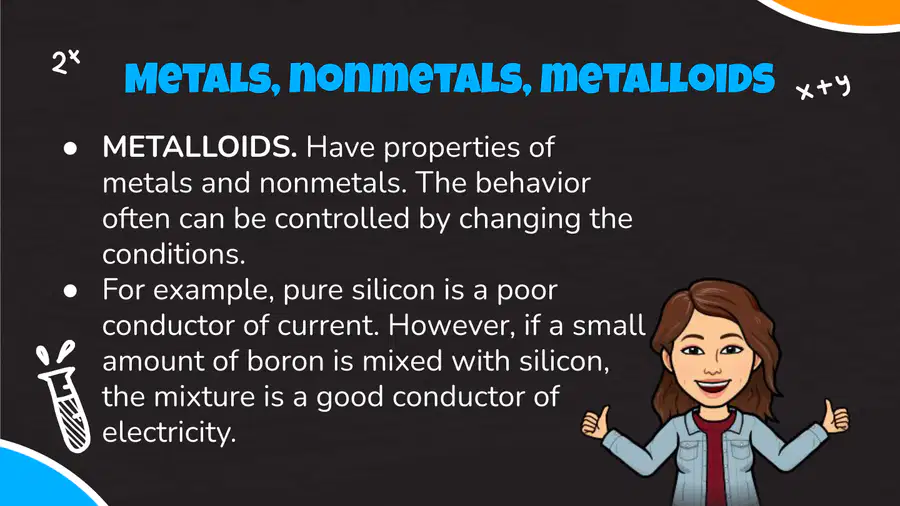
Explain how the properties of metalloids can be controlled and provide an example based on the images.
21
Multiple Choice
How do metalloids differ from metals and nonmetals in terms of their electrical conductivity?
Metalloids are always good conductors of electricity.
Metalloids never conduct electricity.
Metalloids can conduct electricity under certain conditions.
Metalloids are always insulators.
22
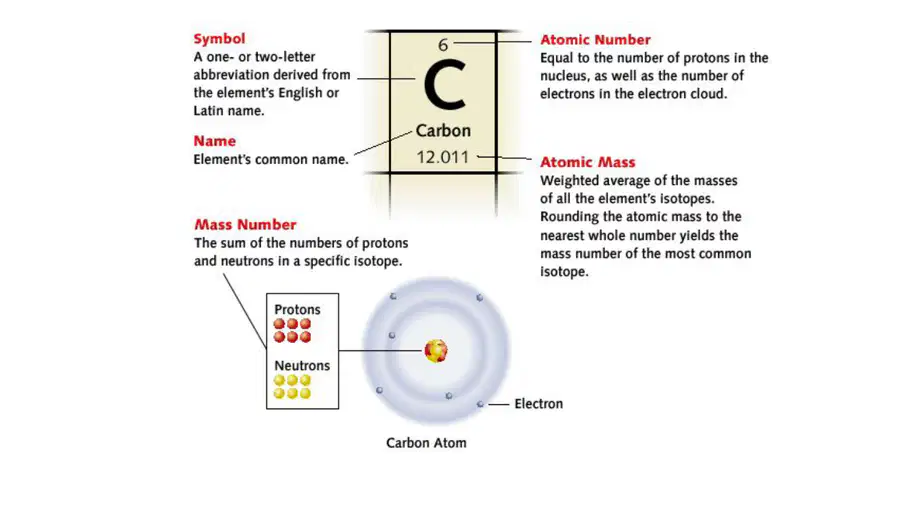

23
Fill in the Blanks
Type answer...
24
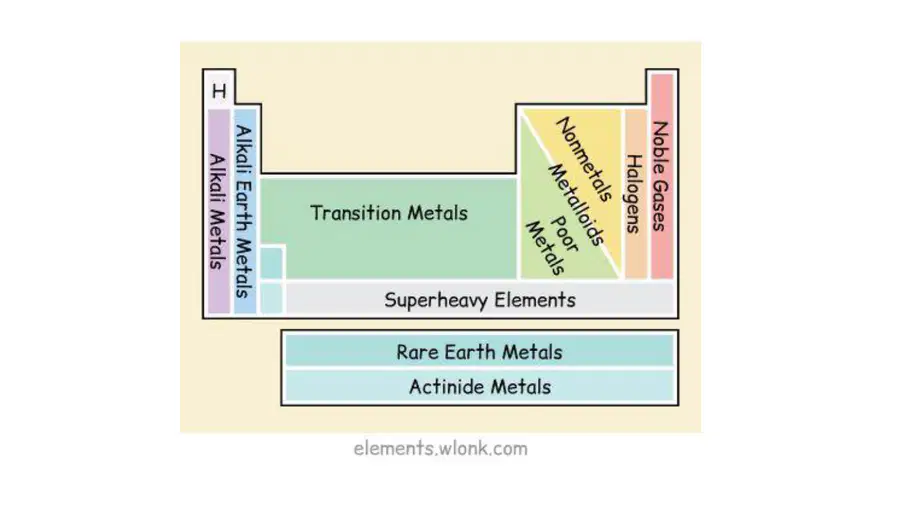
25
Multiple Choice
Based on the periodic table diagram, which section contains the metalloids?
Transition Metals
Noble Gases
Between Nonmetals and Metals
Rare Earth Metals
26
27
28
29

30
Multiple Choice
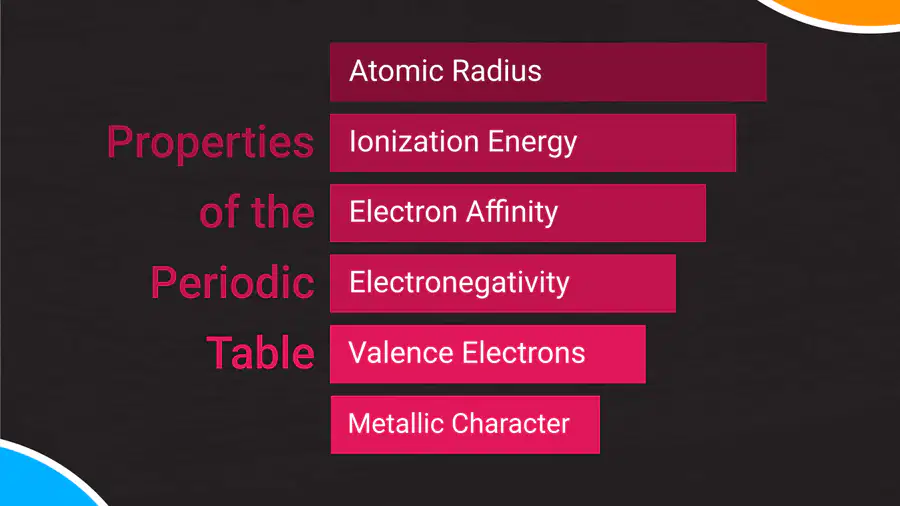
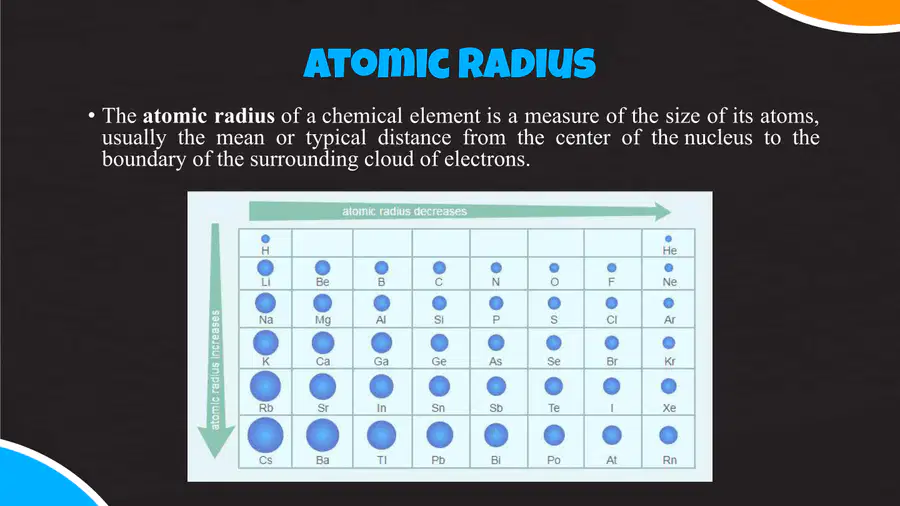
Which direction on the periodic table does atomic radius increase, and which direction does it decrease?
Increases down a group, decreases across a period
Increases across a period, decreases down a group
Increases diagonally, decreases vertically
Increases only for noble gases
31
32
Fill in the Blanks
Type answer...
33
34
Multiple Choice
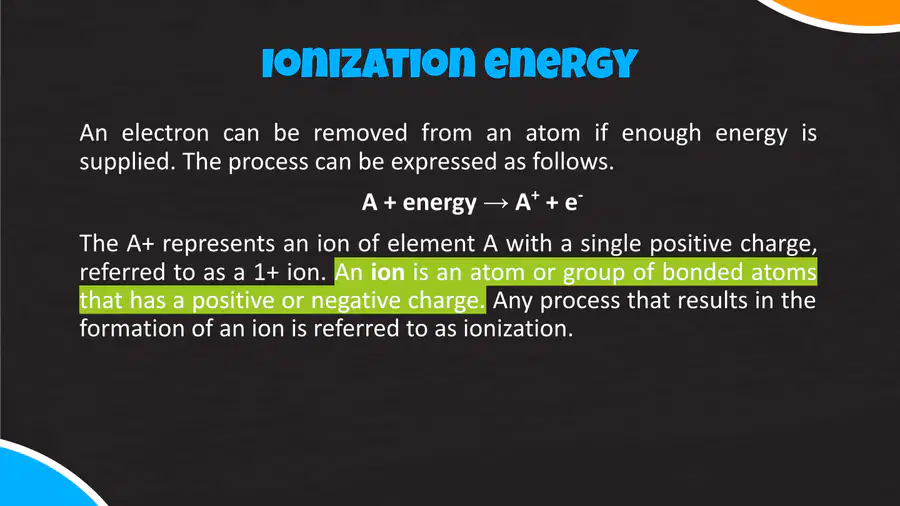
Which of the following statements best describes an ion?
An atom or group of bonded atoms with a positive or negative charge
A neutral atom
An atom that only loses electrons
A molecule with no charge
35
36
Multiple Select
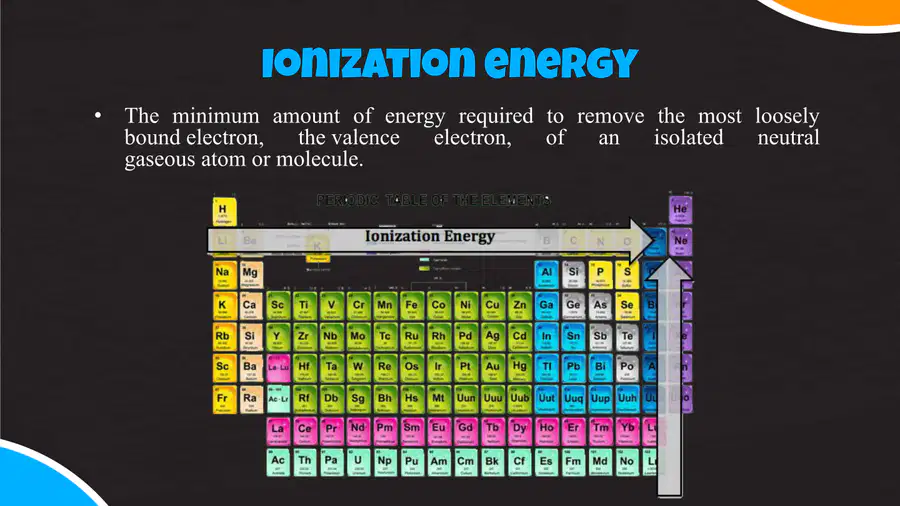
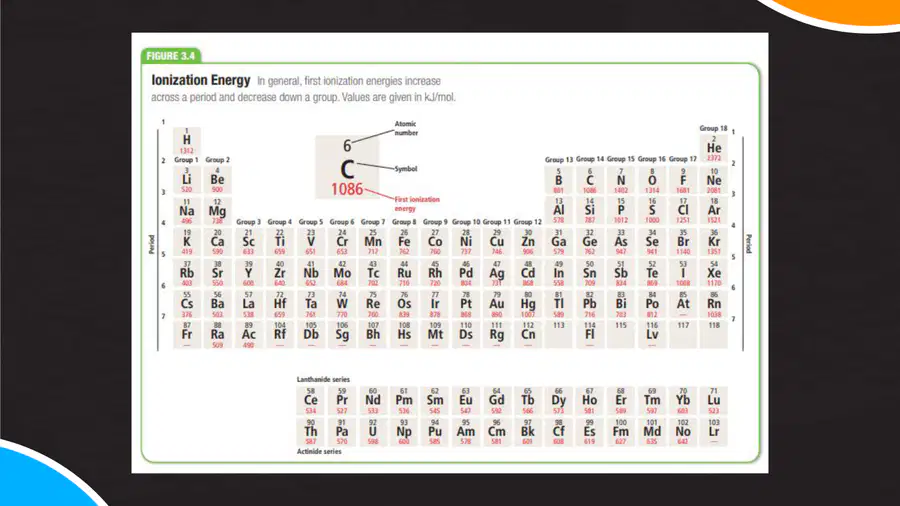
Select all the correct trends for ionization energy in the periodic table.
Increases across a period
Decreases down a group
Decreases across a period
Increases down a group
37
38
Open Ended
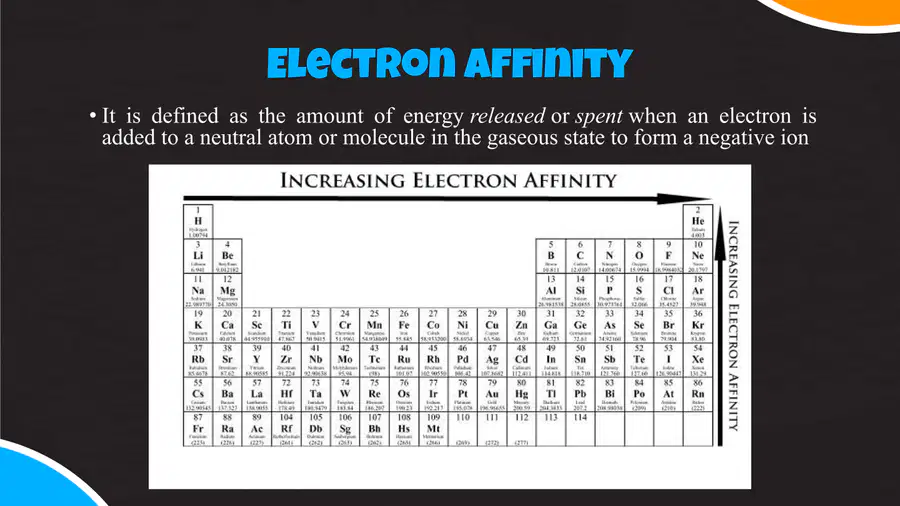
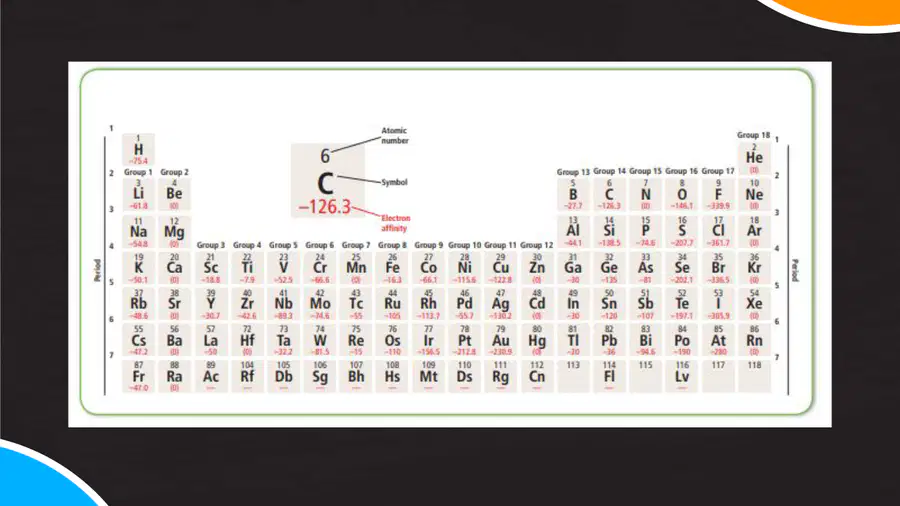
How does electron affinity generally change as you move across a period and down a group in the periodic table?
39
40
Multiple Choice
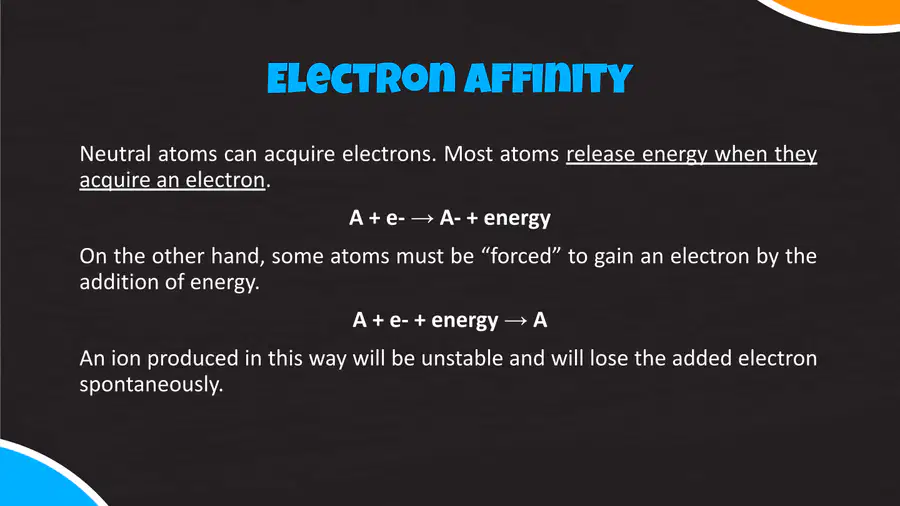
Which of the following statements best describes electron affinity?
It is the energy released when a neutral atom acquires an electron.
It is the energy required to remove an electron from an atom.
It is the energy required to split a molecule into atoms.
It is the energy released when two atoms bond together.
41
42
43
Fill in the Blanks
Type answer...
44
45
Open Ended
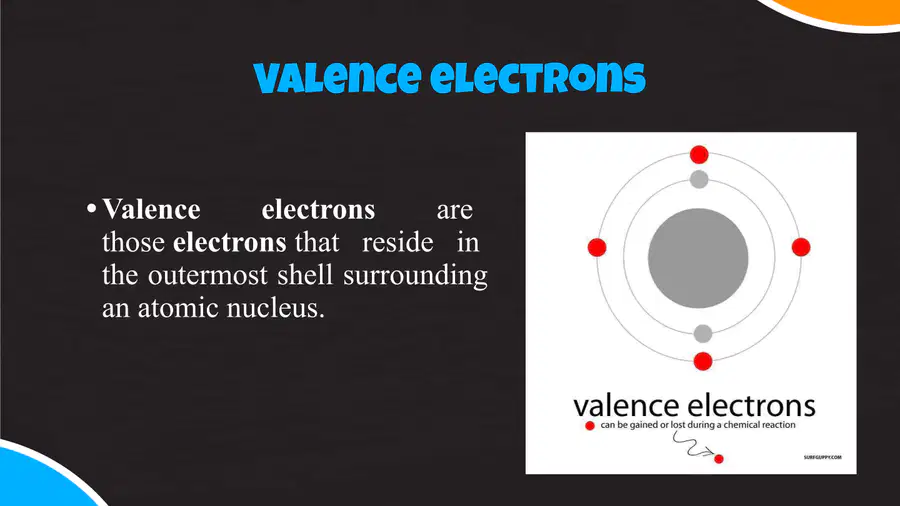
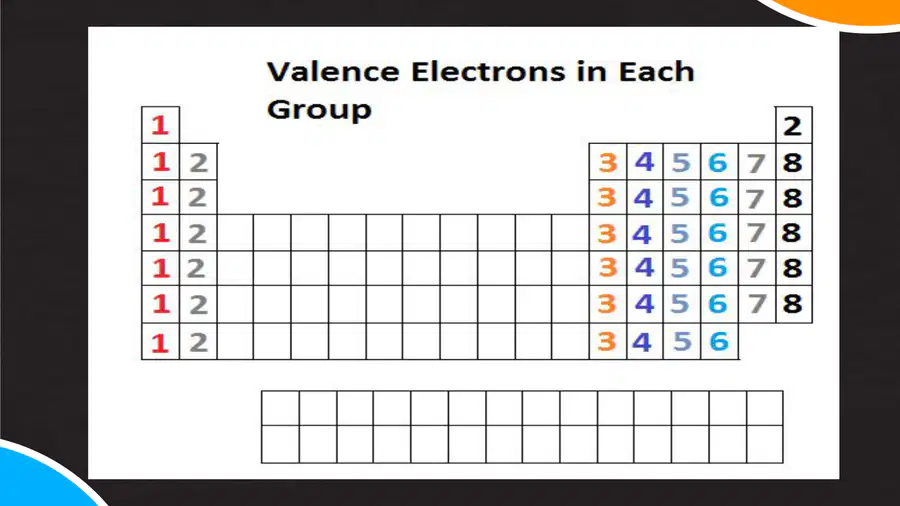
Explain how the number of valence electrons in an element's group relates to its chemical reactivity.
46
47
Multiple Choice
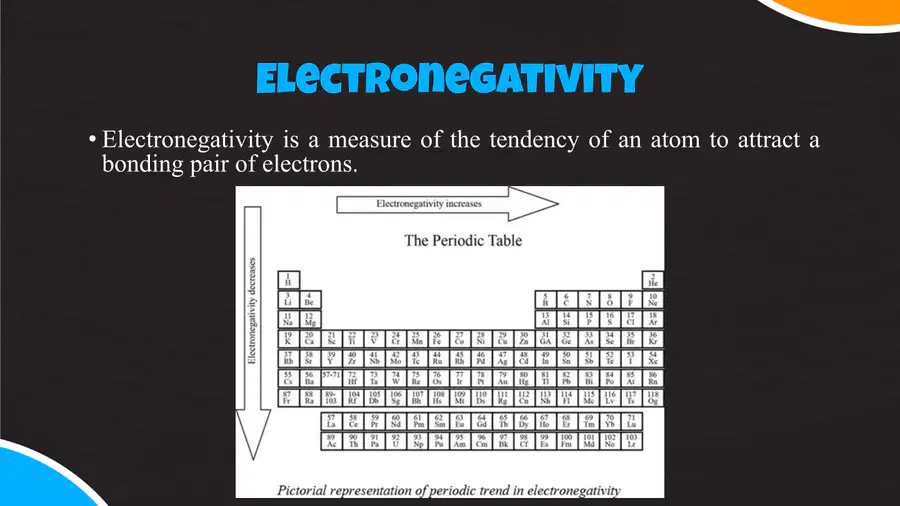
Which property listed is a measure of how strongly an atom attracts electrons in a chemical bond?
Atomic Radius
Electronegativity
Valence Electrons
Metallic Character
48
Multiple Choice
What trend in electronegativity is observed as you move from left to right across a period in the periodic table?
Electronegativity increases
Electronegativity decreases
Electronegativity remains constant
Electronegativity first increases then decreases
49
50
Multiple Choice
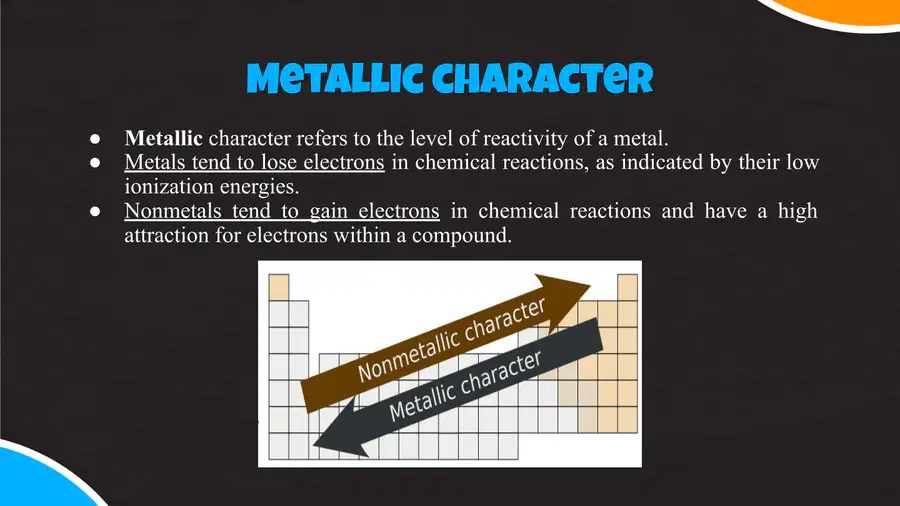
Which statement best explains why metals tend to lose electrons in chemical reactions?
They have low ionization energies.
They have high electronegativity.
They have a full outer shell.
They have high electron affinity.
Show answer
Auto Play
Slide 1 / 50
SLIDE
Similar Resources on Wayground

44 questions
Clouds
Presentation
•
6th - 8th Grade
44 questions
Earths Layers Review
Presentation
•
6th - 8th Grade
48 questions
8.5A Atomic Structure Reteach
Presentation
•
7th - 8th Grade
44 questions
Heat Transfer and Temperature
Presentation
•
6th - 9th Grade
42 questions
Mitosis and Meiosis Review
Presentation
•
7th - 8th Grade
43 questions
Earth in Space
Presentation
•
7th - 8th Grade
44 questions
Unit 1 - Matter and Chemistry Review
Presentation
•
7th - 9th Grade
44 questions
Rock Transformations Mini Review
Presentation
•
6th - 8th Grade
Popular Resources on Wayground
10 questions
HCS SCI 03 Summer School Assessment 1

Quiz
•
3rd Grade
15 questions
HCS SCI 05 Summer School Assessment 1 Review
Quiz
•
5th Grade
22 questions
Day 9 Equations and Inequalities Review
Quiz
•
9th Grade
10 questions
Writing and Identifying Ratios Practice
Quiz
•
5th - 6th Grade
7 questions
PYRAMID PERSPECTIVES part 1
Presentation
•
9th - 12th Grade
12 questions
Understanding the Fourth of July
Quiz
•
9th Grade
15 questions
Soccer World Cup Quiz Questions
Quiz
•
7th Grade