

AP Bio-Chapter 11

Presentation
•
Biology
•
9th - 12th Grade
•
Hard
Standards-aligned

Emily Samuelson
Used 3+ times
FREE Resource
73 Slides • 16 Questions
1

2
3
4
Multiple Choice
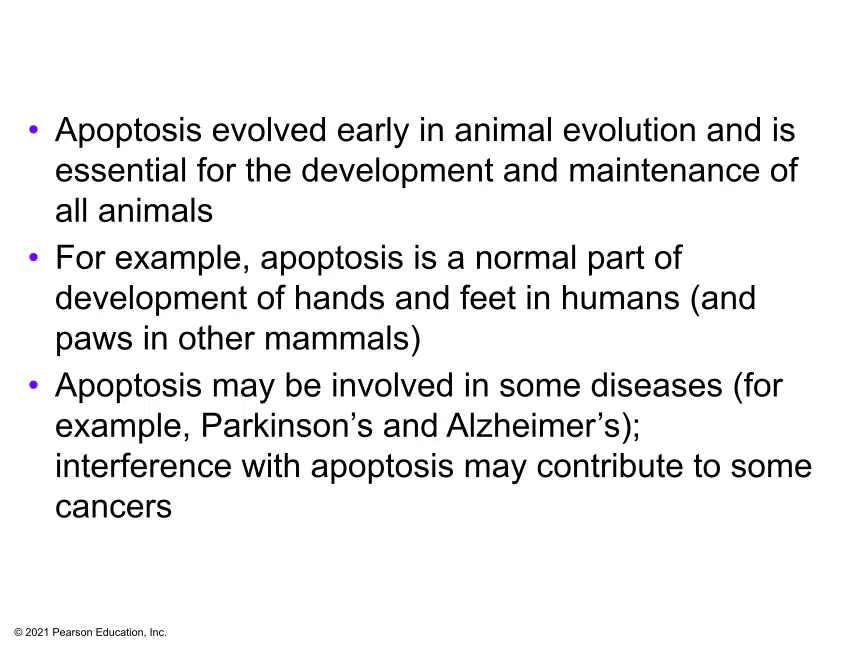
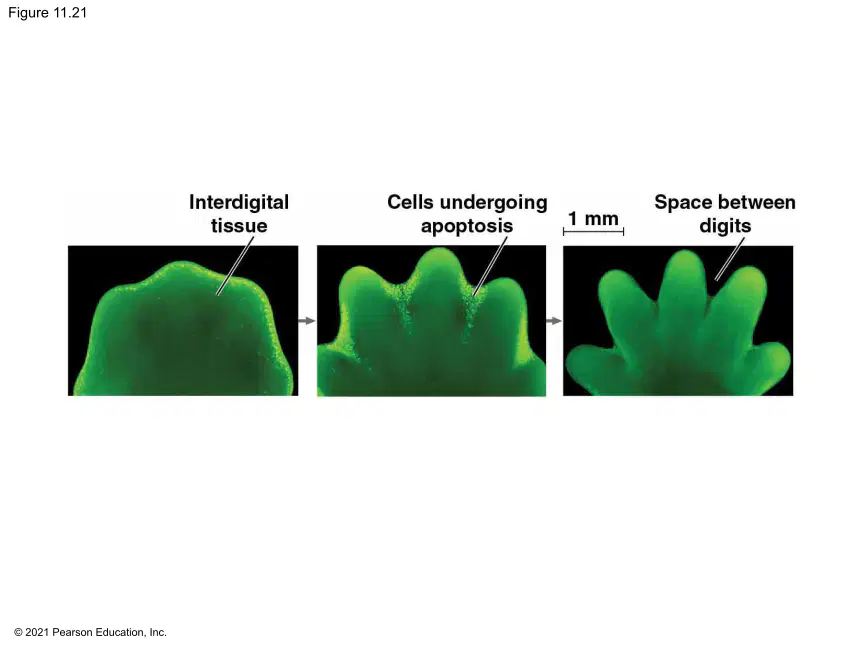
What is the best explanation for the disappearance of cells between segments of a palm leaf?
action of a G protein
amplification
apoptosis
a steroid receptor
none of the above
5
6

7
8
9

10
11
12
13
14
15
16
17
18
19
20
21
22
Multiple Choice
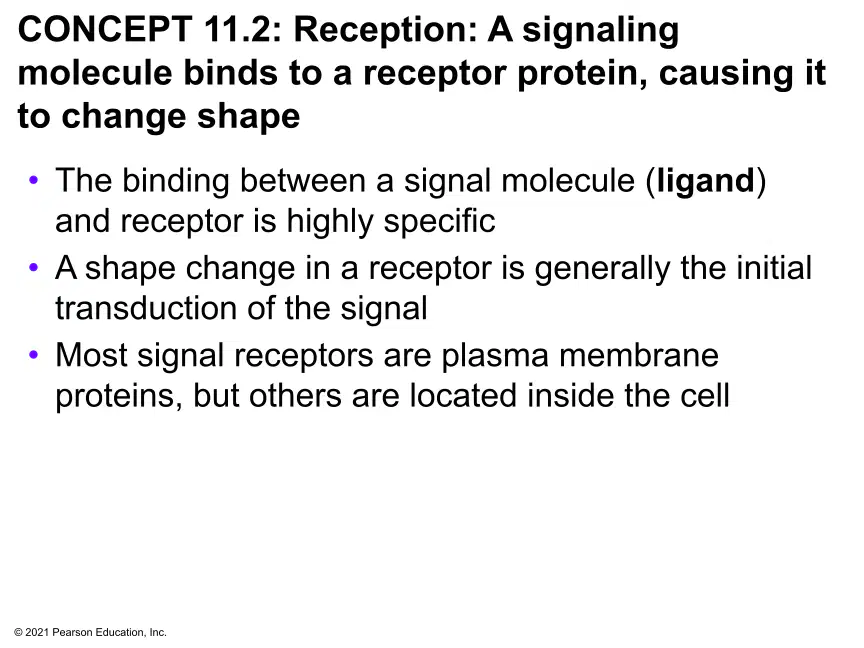
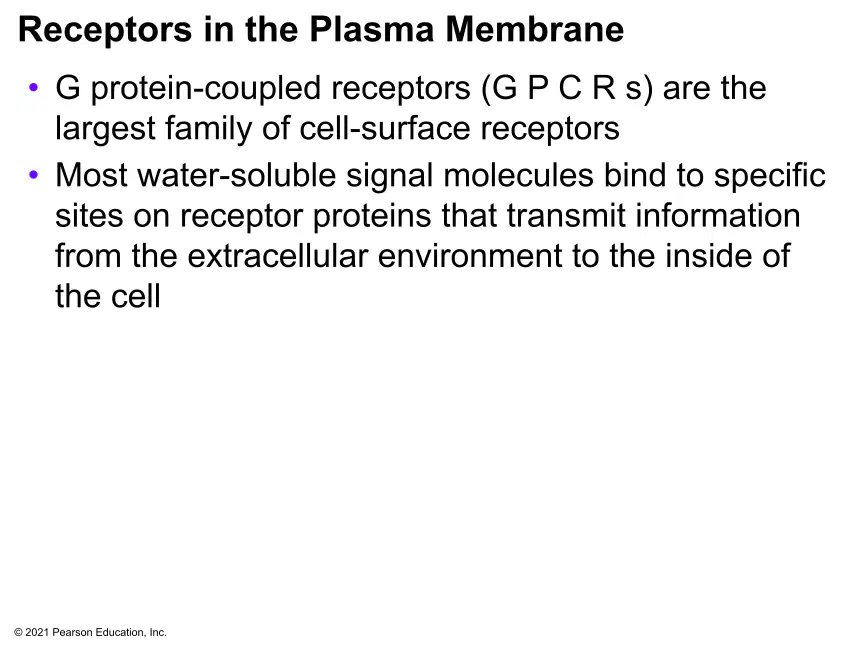
Which best describes what a plasma membrane-spanning receptor does when it binds a signal?
The receptor binds an extracellular signal molecule and passes it into the cell.
Activated receptors directly produce a response to the signal.
It uses the energy from the signal to power its transduction.
Binding of the signal molecule alters the receptor's other binding sites and activities.
It amplifies the signal, increasing its influence in the cell.
23
24
25
26
27
Multiple Choice
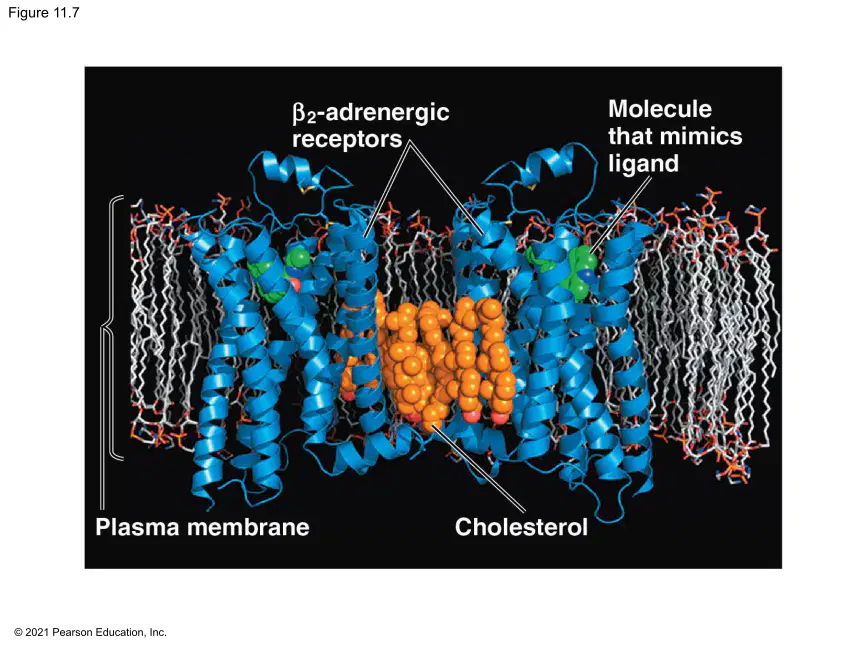
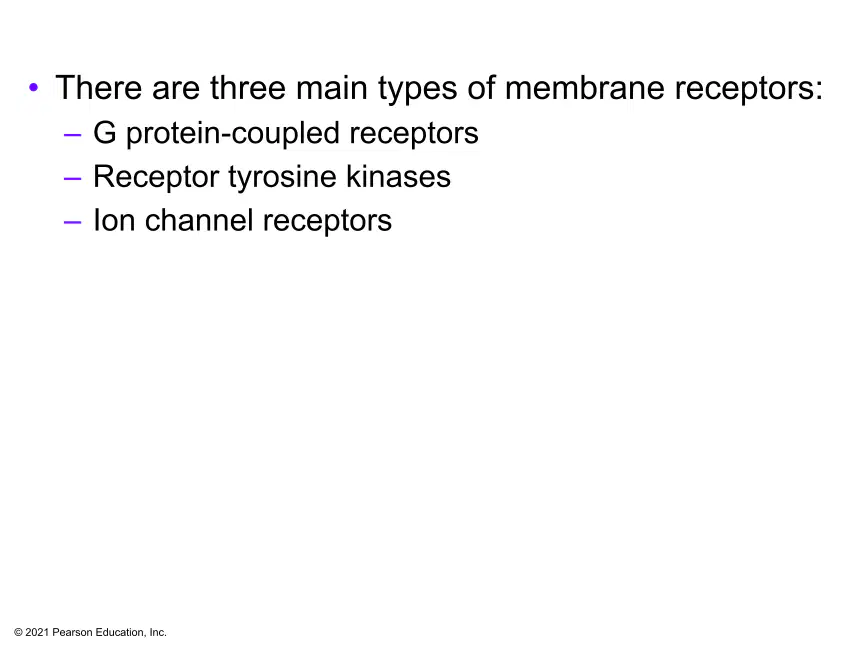
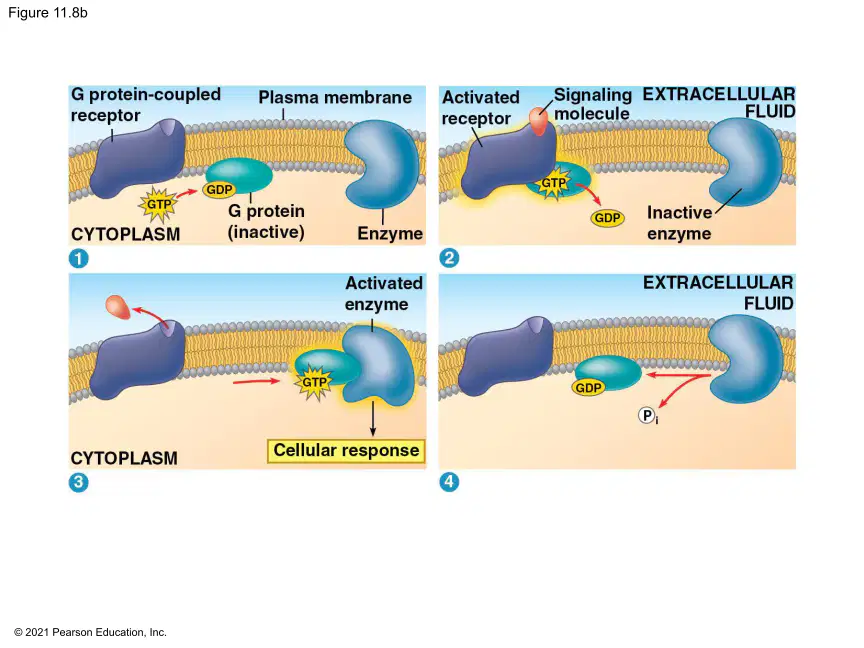
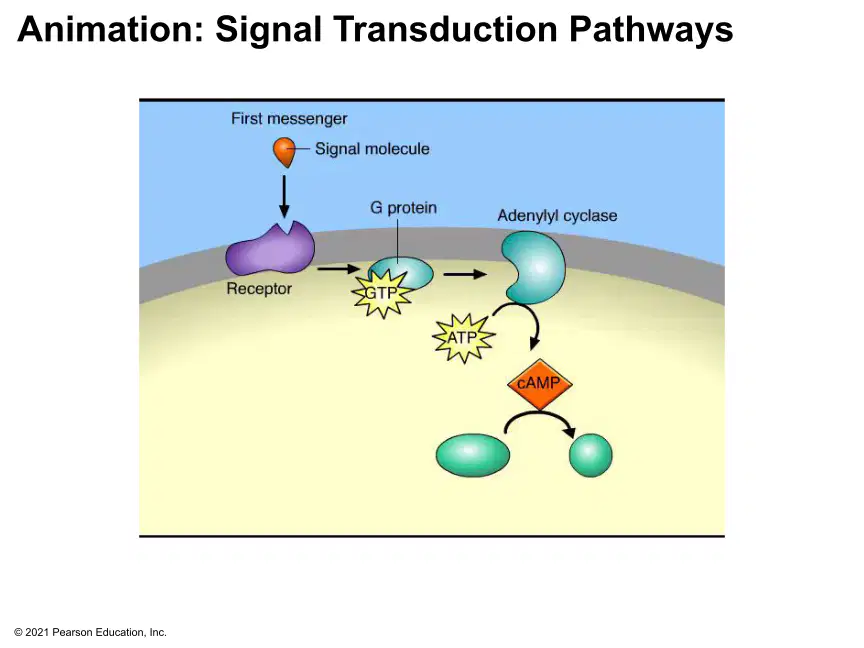
Which would cause the most problems for a cell-signaling pathway involving a G protein-coupled receptor?
very low cytoplasmic pH
lack of Ca2+
not enough GTP in the cell
excess DAG
28
29
30
31
32
33
34
Multiple Choice
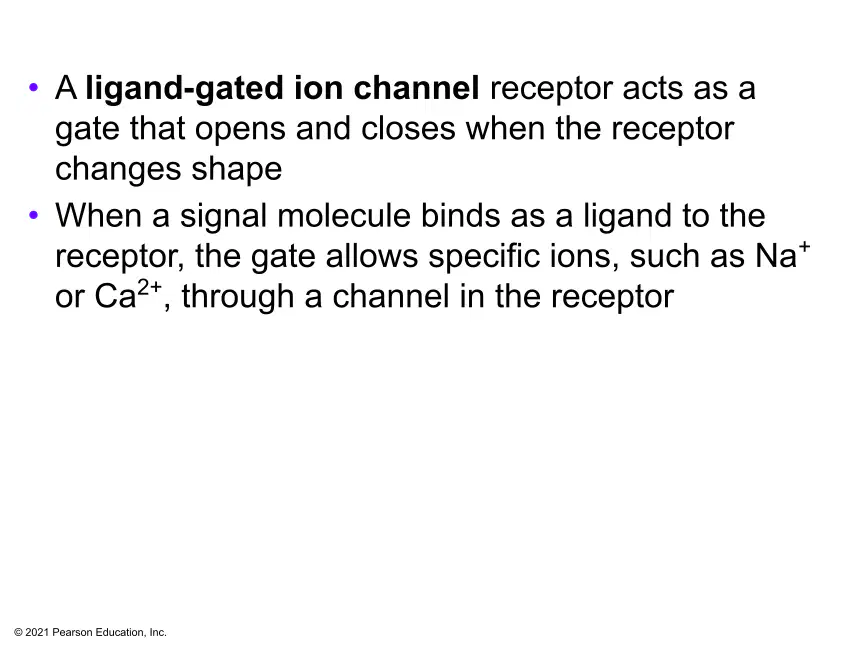
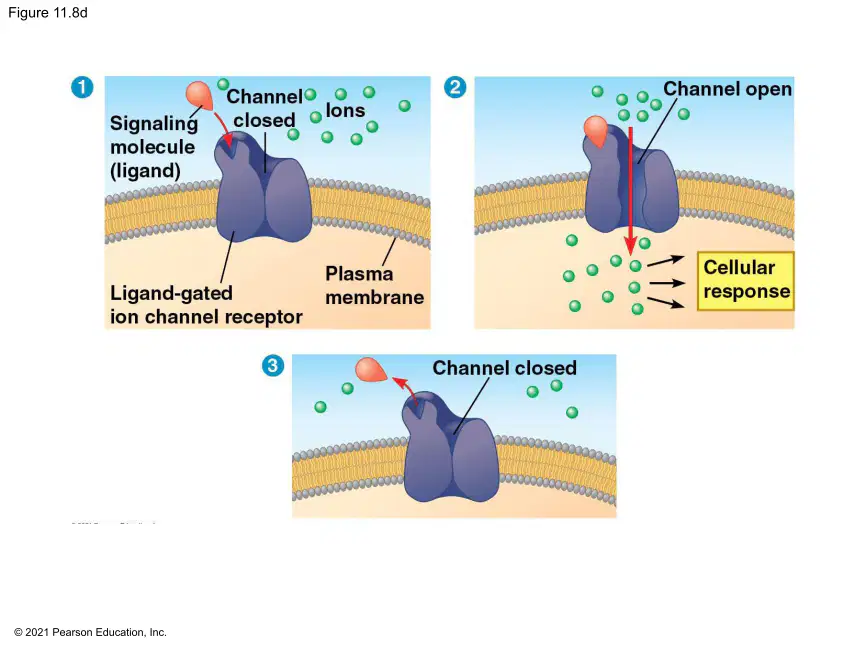
Which correctly describes the use of ligand-gated ion channel receptors?
Ligand binding is irreversible, resulting in a permanent change in this ion channel's activity.
The binding site of this type of receptor is most often in the middle of the membrane.
Once activated, this receptor will cause G proteins to bind with GTP.
Once the ligand is bound, the ion channel activity can alter the local membrane potential and cytostolic concentration of the ion.
The ligand involved is often a phosphate group that is covalently added to the cytostolic side of this ion channel.
35
36
Multiple Choice
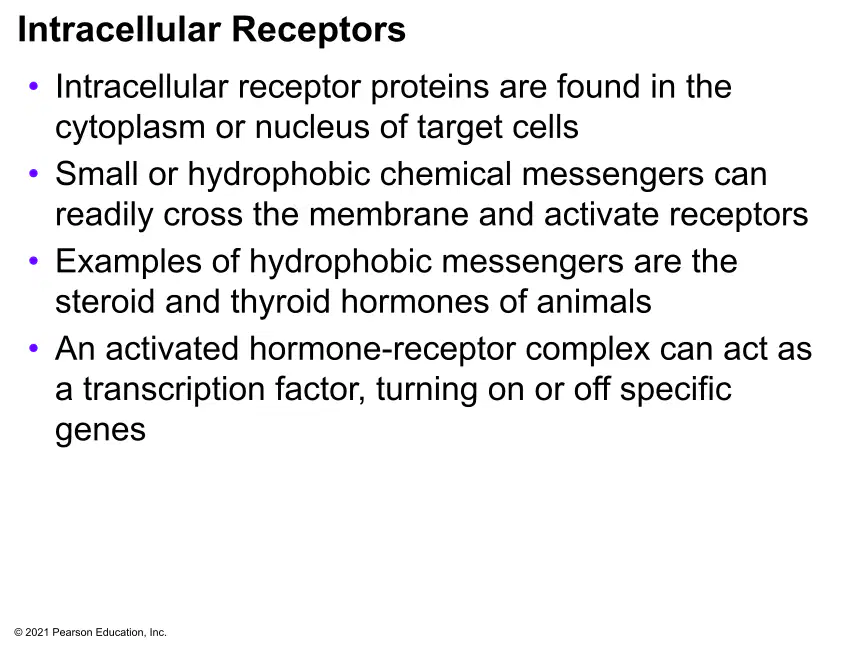
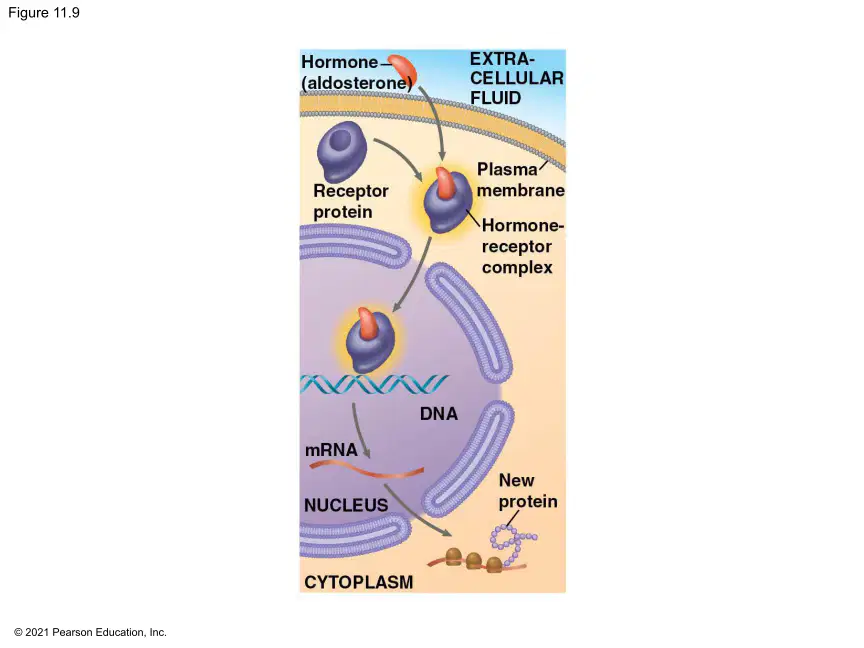
A steriod hormone is bound by an intracellular receptor. The resulting complex is most likely to do what?
open channels in the membrane for other substances to enter
open channels in the nuclear envelope for cytoplasmic molecules to enter
mediate the transfer of phosphate groups to/from ATP
act as a transcription factor in the nucleus
enable water-soluble molecules to diffuse across membranes
37
38
39
Multiple Choice
Which would cause the most problems for a cell-signaling pathway involving a steroid molecule?
very low cytoplasmic pH
lack of Ca2+
not enough phosphate in the cell
excess DAG
40
41
Multiple Choice
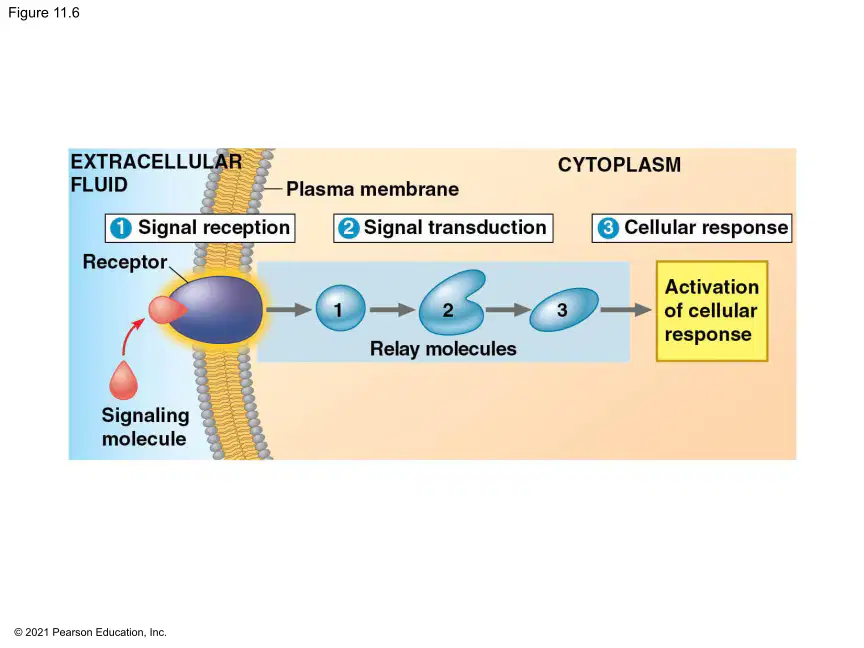
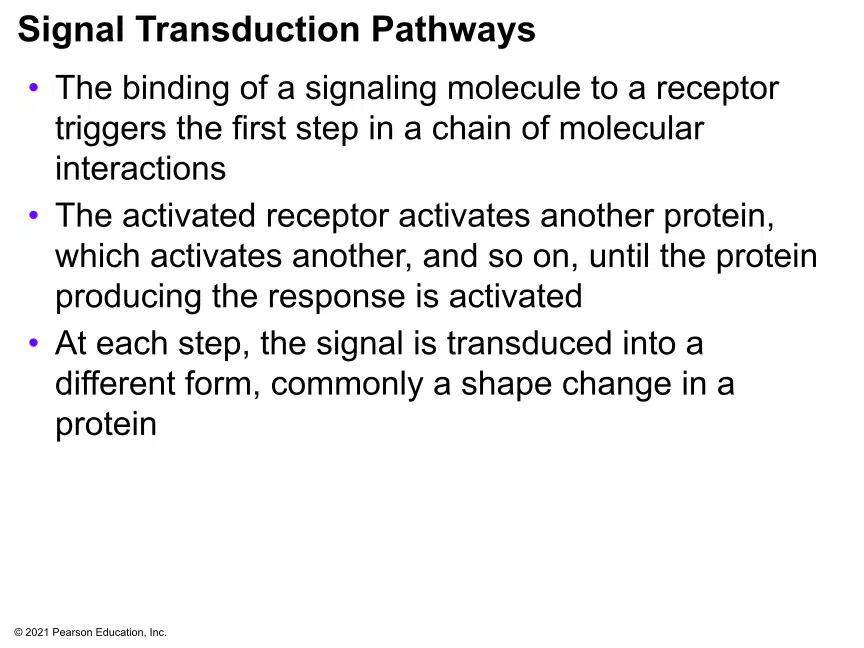
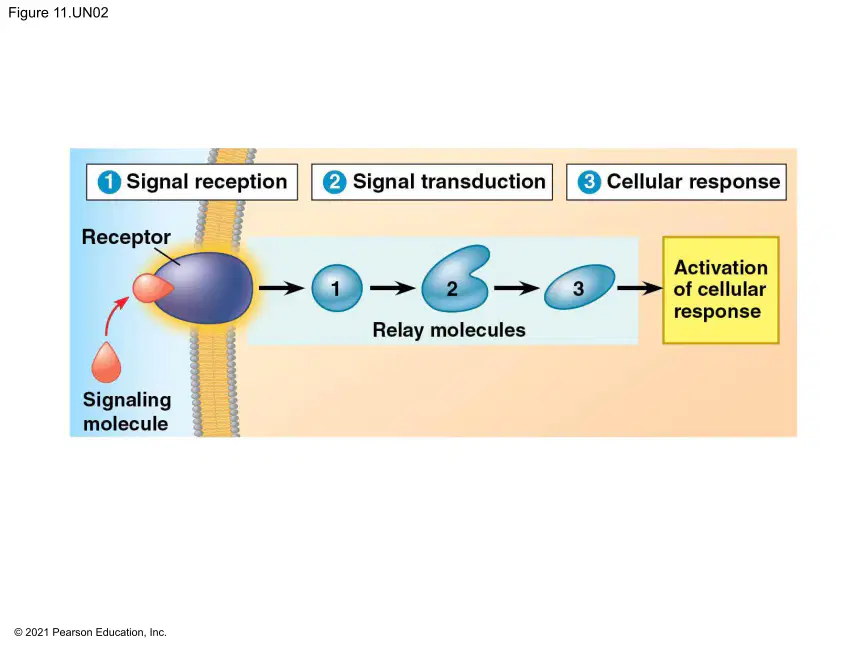
Which gives the most complete and correct description of a signal transduction pathway?
binding of a signal molecule to a cell protein
catalysis mediated by an enzyme
sequence of changes in a series of molecules resulting in a response
binding of a ligand on one side of a membrane that results in a change on the other side
the cell's detection of a chemical or mechanical stimulus
42
43
Multiple Choice
Which correctly describes what happens during signal transduction inside a cell?
Some fraction of the original signal is converted into something else and passed through the cell.
Changes in protein activies and in other items in the cell are induced by an activated receptor.
The original signal is amplified as it is passed through the cell.
Energy from the signal is used to power the changes needed in the cell for a response.
Some phenotypic feature of the cell is altered.
44
45
46
Multiple Choice
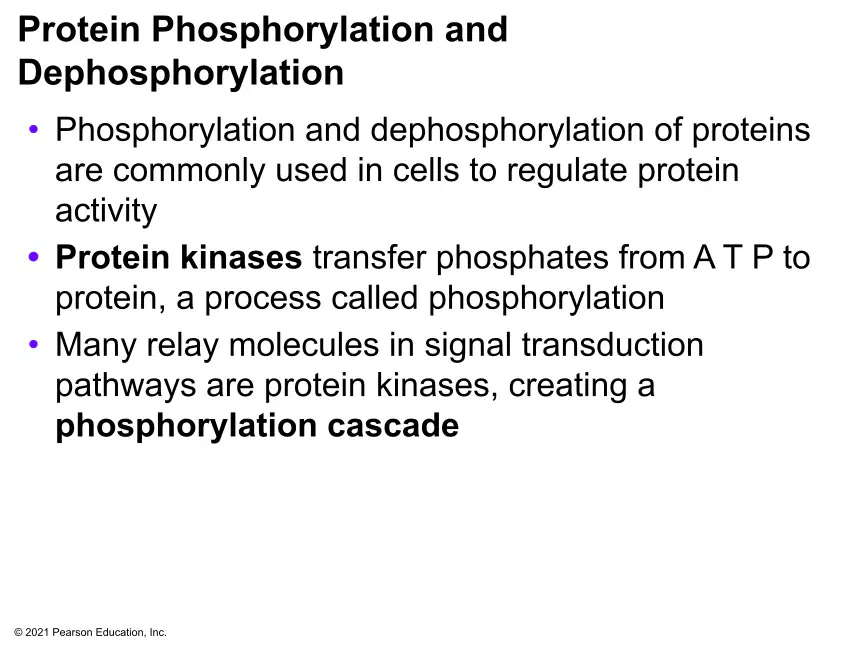
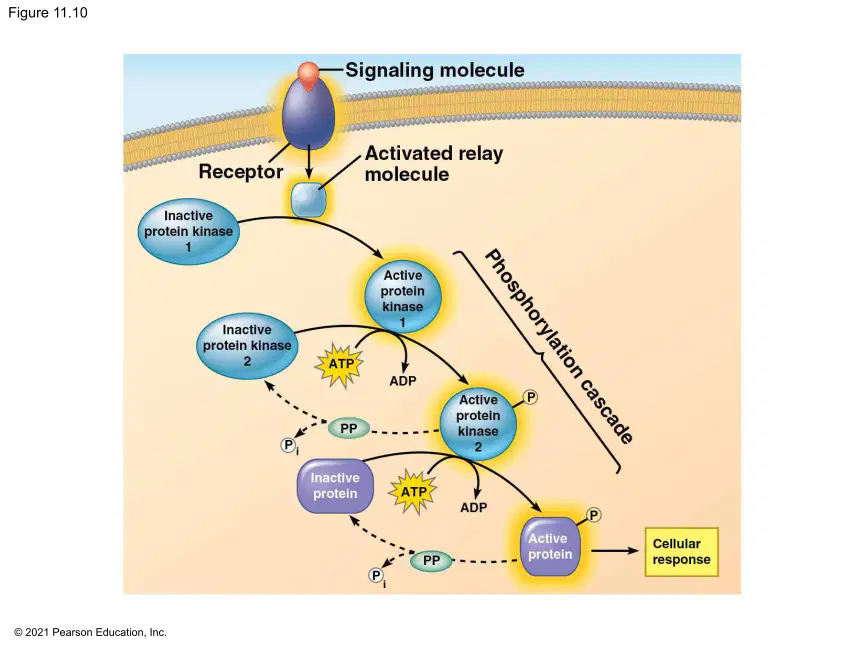
Phosphorylation of proteins in a kinase cascade does what?
makes functional ATP
distorts a protein from one functional state to another
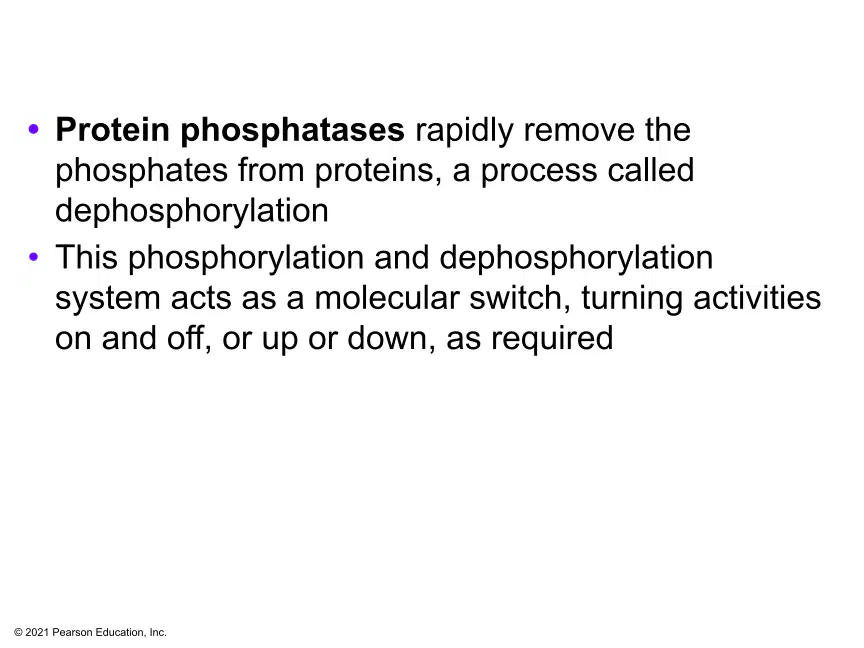
activates phosphatases to remove the phosphate group
alters the permeability of the cell's membrane
produces an increase in the cell's store of inorganic phosphates
47
48
49
Multiple Choice
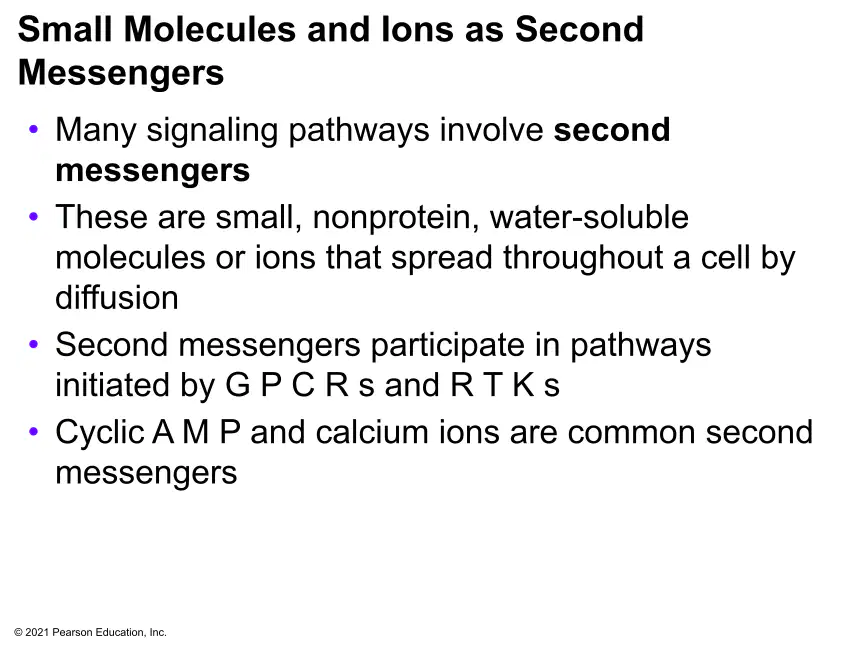
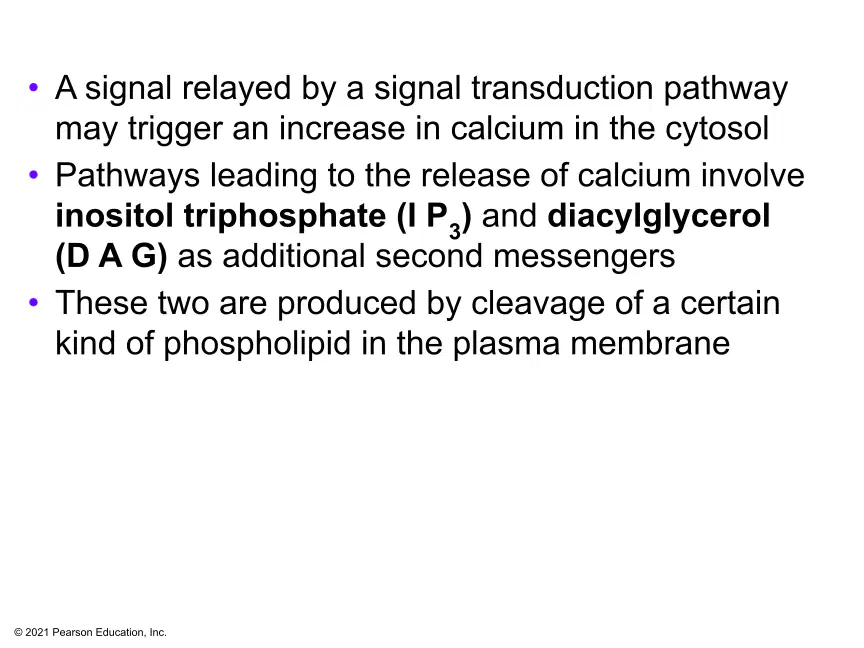
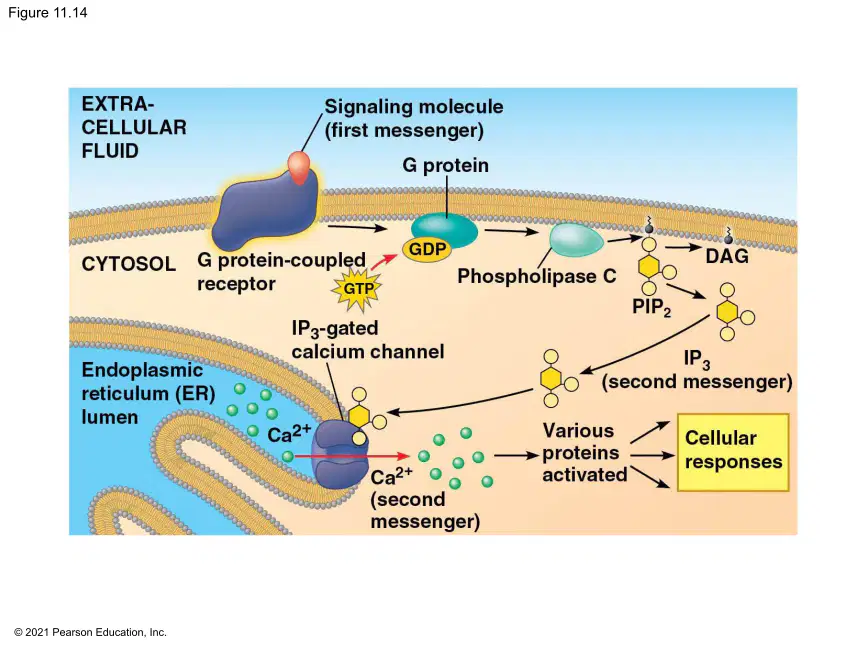
Which can be second messengers?
Ca2+
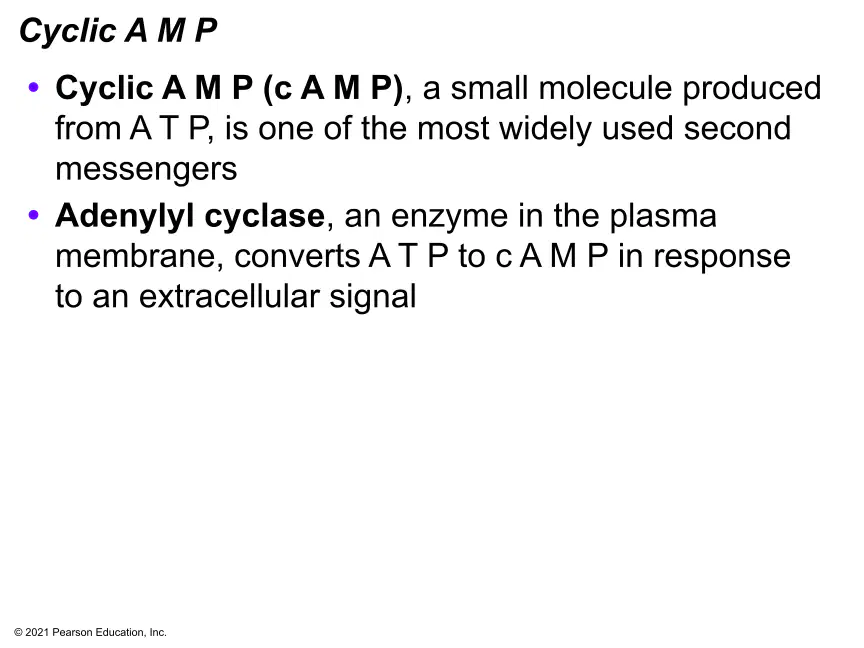
cAMP
DAG
Ca2+ and cAMP
Ca2+, cAMP, & DAG
50
51
52
53
54
55
Multiple Choice
Of the following events, which might typically occur third as a cell receives and responds to a signal?
An enzyme cascade occurs, increasing the number of activated proteins.
A signal molecule is bound by a transmembrane tyrosine kinase receptor protein.
The receptor protein complex phosphorylates other proteins.
A reconfigured protein binds to DNA, altering gene expression.
Tyrosine kinase receptor subunits dimerize.
56
57
58
59
60
Multiple Choice
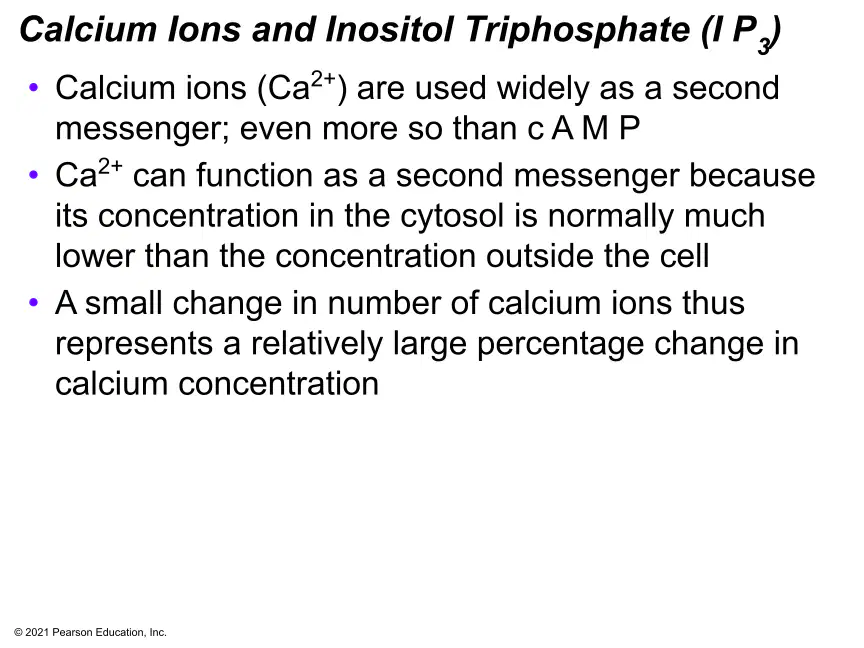
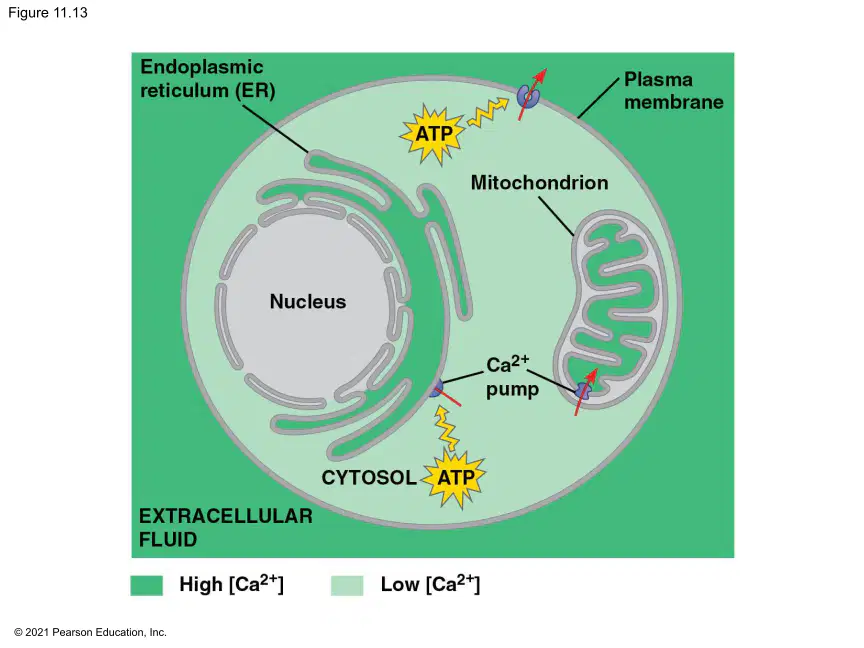
You have discoverd a drug that will prevent Ca2+ from acting as a second messenger. Your drug is targeted to the
plasma membrane
nuclear membrane
endoplasmic reticulum
plasma membrane and ER
plasma/nuclear membrane and ER
61
62
63
Multiple Choice
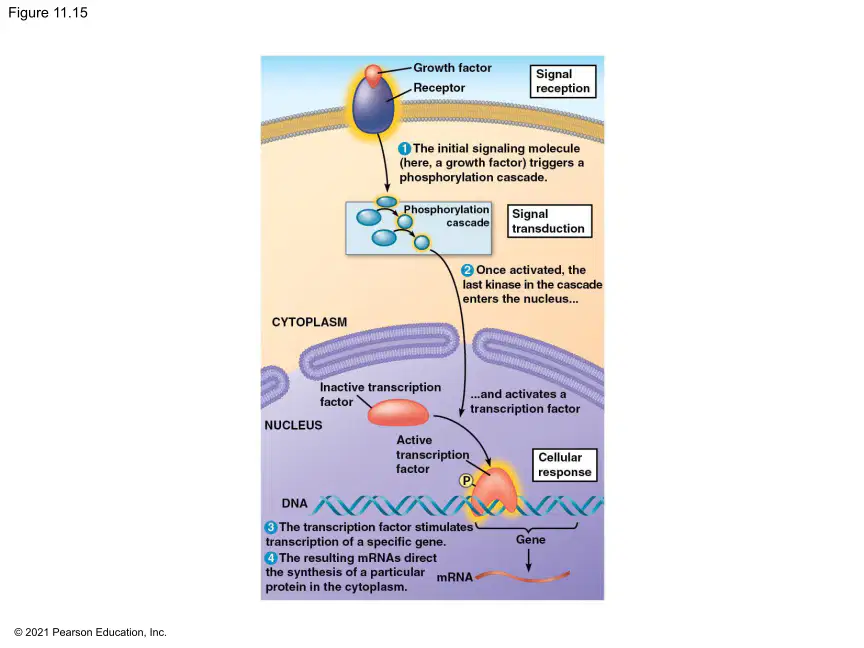
If you wanted to block signaling involving a steroid molecule, which should you destroy?
plasma membrane
nuclear pores
endoplasmic reticulum
ribosomes
none of the above
64
65
66
67
68
69
Multiple Choice
Which incorrectly describes a step in a signal transduction pathway?
The second messenger can diffuse rapidly through the cytosol.
After the rise in the concentration of the second messenger, it is often removed quickly by degradation or export from the cytosol.
The proteins that will bind the second messenger are already present before there is a rise in its concentration.
Synthesis of the enzyme that creates the second messenger occurs right after the signal is received.
When the cell does not receive the signal, the second messenger is kept at a low concentration.
70
71
72
Multiple Choice
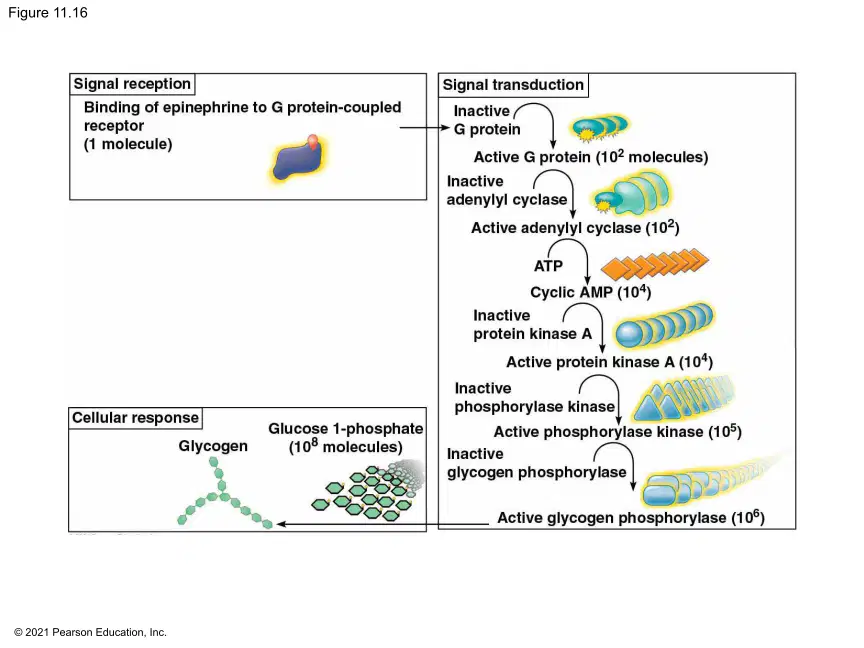
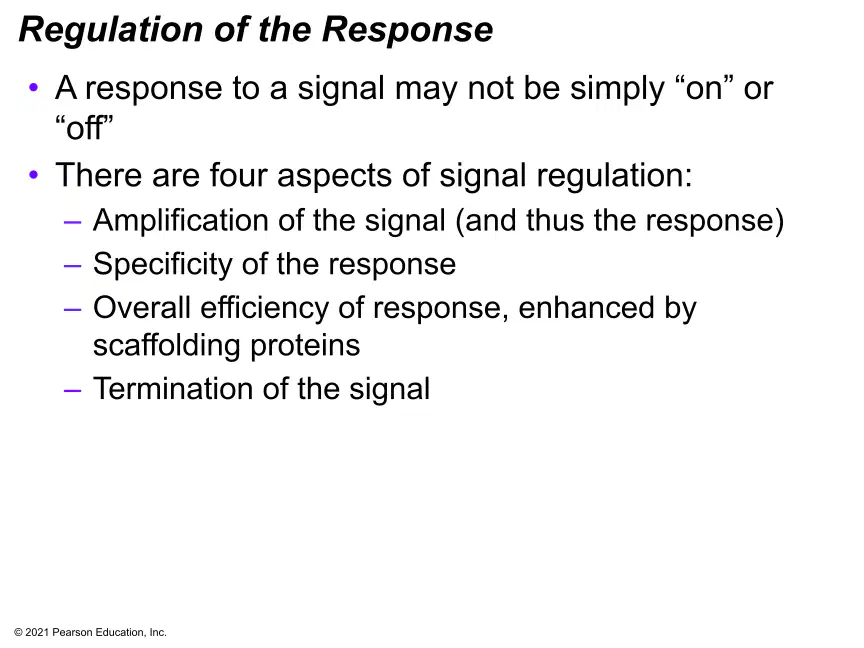
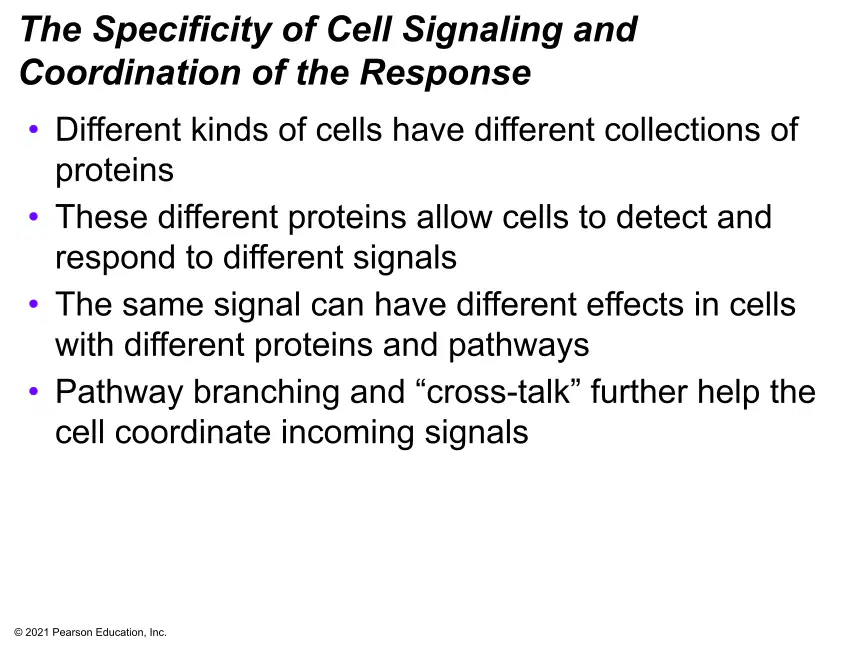
Which is the best example of amplification of signal?
production of many molecules by many signal molecules
activation of 100 molecules by a single signal binding event
activation of a specific gene by a transcription factor
conversion of the signal into many other types of molecules
activation of a receptor by a hormone
73
74
75
76
77
78
79
80
81
82
83
Multiple Choice
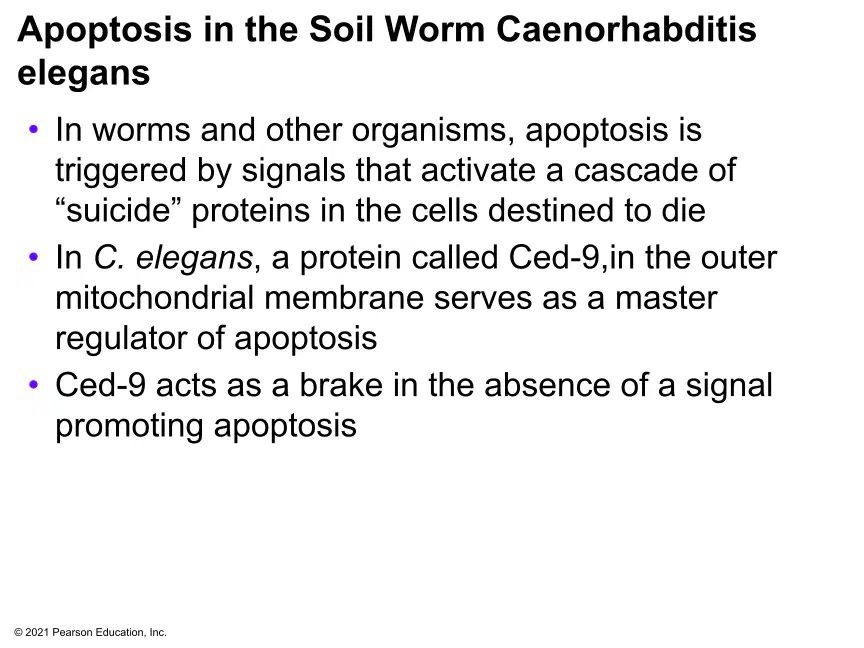
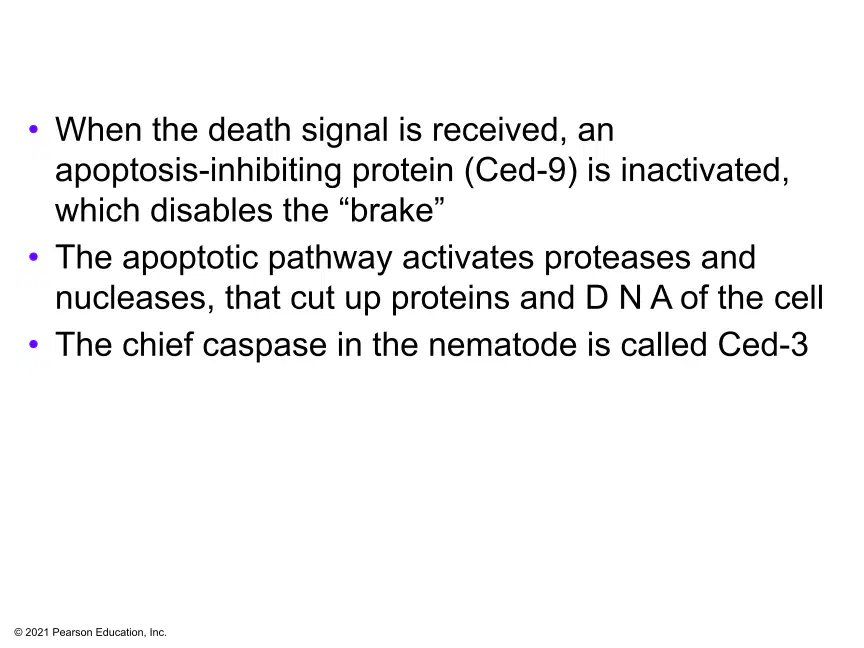
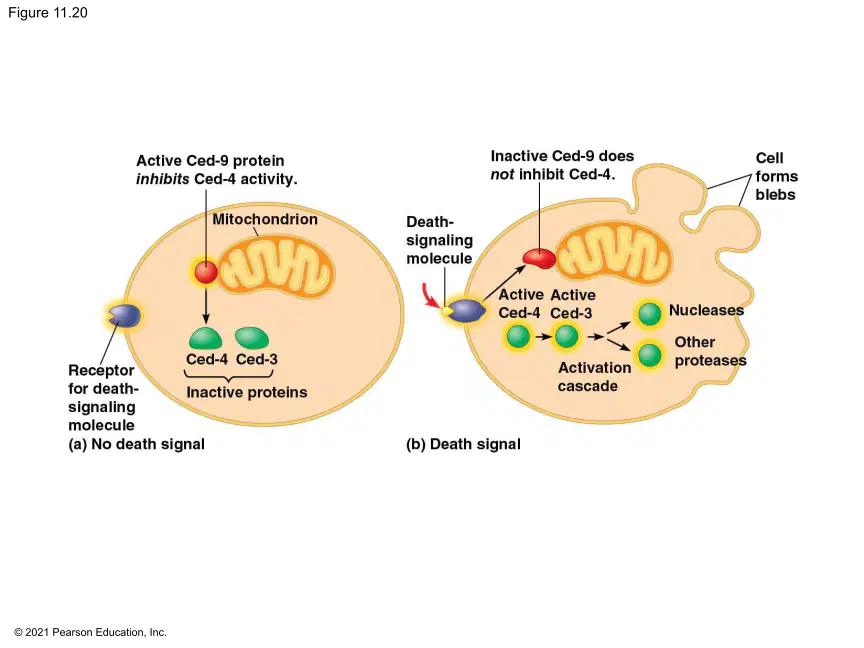
A cell in C. elegans carrying out apoptosis properly depends in part on
a protein that normally inhibits the process being turned off.
the creation of a "death signal" by this cell.
properly resetting all the transductive elements from the last use of this process.
the receptor moving the "death signal" into the nucleus of the cell.
turning off various nucleases and proteases in the cell.
84
85
86
87
88
89
Show answer
Auto Play
Slide 1 / 89
SLIDE
Similar Resources on Wayground

84 questions
Geocentric Model vs Heliocentric Model
Presentation
•
KG
84 questions
Science Tools
Presentation
•
9th - 12th Grade
84 questions
Unit 2: Cells, Organelles, and Transport
Presentation
•
9th - 12th Grade
81 questions
Lab Bio Ch. 7 Slides
Presentation
•
9th - 12th Grade
83 questions
Module 9: Polynomials
Presentation
•
9th - 12th Grade
84 questions
The Holocaust Leaders & Camps Notes & Quizizz Lesson
Presentation
•
9th - 12th Grade
83 questions
Radiacion No ionizante
Presentation
•
KG
Popular Resources on Wayground
16 questions
Grade 3 Simulation Assessment 2

Quiz
•
3rd Grade
19 questions
HCS Grade 5 Simulation Assessment_1 2526sy
Quiz
•
5th Grade
10 questions
Cinco de Mayo Trivia Questions

Interactive video
•
3rd - 5th Grade
17 questions
HCS Grade 4 Simulation Assessment_2 2526sy
Quiz
•
4th Grade
24 questions
HCS Grade 5 Simulation Assessment_2 2526sy
Quiz
•
5th Grade
13 questions
Cinco de mayo
Interactive video
•
6th - 8th Grade
20 questions
Math Review
Quiz
•
3rd Grade
30 questions
GVMS House Trivia 2026
Quiz
•
6th - 8th Grade
Discover more resources for Biology
210 questions
Unit 1 - 4 AP Bio Review
Quiz
•
9th - 12th Grade
35 questions
Biology EOC Review
Quiz
•
9th Grade
16 questions
AP Biology: Unit 1 Review (CED)
Quiz
•
9th - 12th Grade
50 questions
Biology EOC Review
Quiz
•
9th Grade
20 questions
AP Biology: Unit 3 Review (CED)
Quiz
•
9th - 12th Grade
21 questions
AP Biology: Unit 6 Review (CED)
Quiz
•
9th - 12th Grade
14 questions
AP Biology: Unit 4 Review (CED)
Quiz
•
9th - 12th Grade
15 questions
Biology EOC Review P2
Quiz
•
10th Grade