Search Header Logo
Unit 2: Cells, Organelles, and Transport

Unit 2: Cells, Organelles, and Transport

Assessment

Presentation

•

Biology

•

9th - 12th Grade

•

Medium

•
NGSS.MS-LS1-2, NGSS.MS-LS1-1, SB1

+5

Standards-aligned

Created by

Sara Bensink

Used 1+ times

FREE Resource

39 Slides • 45 Questions

1

media

2

media

3

media

4

Multiple Choice

Question image
What is one way in which all living things on Earth are alike?
1
All living things have hair.
2
All living things are made of cells and come from other cells.
3
The cells of all living things have chloroplast.
4
All living things can move. 

5

Multiple Choice

The smallest unit that can perform the basic activities of life is
1
a cell 
2
a tissue
3
an organ
4
an organism

6

Multiple Choice

Question image
Which of the following statements is not part of the cell theory?
1
Cells are the basic unit of structure and function in all living things.
2
All cells are produced from other cells.
3
Only animal cells are composed of cells.
4
All living things are composed of cells.

7

Multiple Choice

Question image
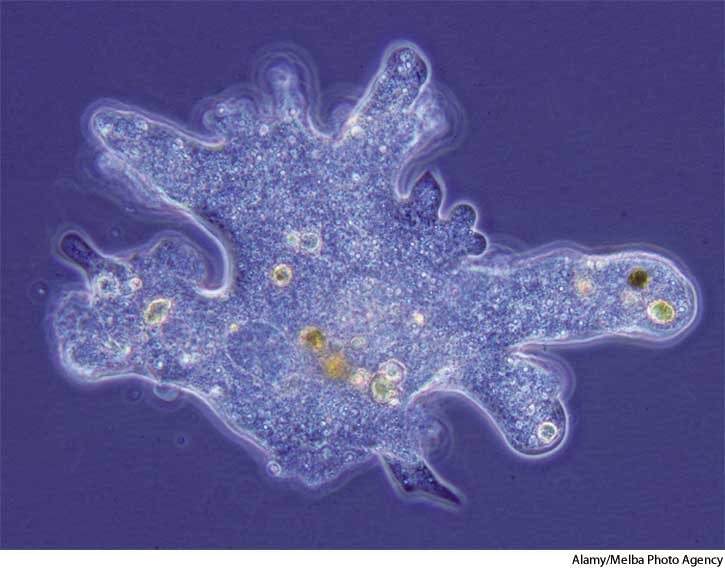
An Amoeba is a unicellular, animal-like protist that lives in ponds and streams. According to cell theory, where did this cell come from?
1
another pre-existing amoeba cell.
2
energy from sun that allowed the protist to reproduce.
3
a multicellular organism.
4
the nonliving environment.

8

Multiple Choice

All cells come from___________ cells.
1
pregnant
2
pre-existing
3
paternal
4
pin size

9

media

10

Multiple Choice

What is the only example of a Prokaryotic cell?

1

Bacteria

2

Mushroom

3

Plant

4

Dog

11

Multiple Choice

Question image

A single- celled organism can be classified as a prokaryote based on the absence of…..

1

a cell membrane.

2

a nucleus.

3

cytoplasm.

4

ribosomes.

12

Multiple Choice

Question image

Some students used information they gathered from lab investigation to prepare a table. They entered the table in their lab notebook.

1

Cell 1 is eukaryotic, and Cell 2 is Prokaryotic

2

Cell 1 is prokaryotic, and Cell 2 is Eukaryotic

3

Both cell 1 and Cell 2 are Eukaryotic

4

Both Cell 1 and Cell 2 are Prokaryotic

13

Multiple Choice

Where are Membrane bound organelles found?

1

Inside the Eukaryotic cell

2

Inside our body

3

Inside the nucleus

4

Inside the Prokaryotic cell

14

media

15

media

16

media

17

media

18

Multiple Choice

Question image
7. Classify the following examples (pictures) as unicellular or multicellular
1
1. Unicellular
2
2. Multicellular

19

Multiple Choice

Question image

What type of organism is this?

1

Unicellular

2

multicellular

3

no cellular

4

both unicellular and multicellular

20

media

21

media

22

Multiple Choice

Prokaryote are?
1
simple, mostly single-celled organism that lacks a nucleus, or any other membrane-bound organelle.
2
have a peptidoglycan cell wall and many have polysaccharide capsules.
3
have a true nucleus, which means the cell's DNA is surrounded by a membrane.
4
contain membrane-bound organelles, such as the nucleus

23

media

24

media

25

media

26

media

27

media

28

media

29

Multiple Choice

Which type of cells contain cytoplasm?
1
Only bacterial cells
2
Both eukaryotic and prokaryotic cells
3
Only animal cells
4
Only plant cells

30

Multiple Choice

Consists of a jellylike substance that contains many organelles.
1
ribosomes
2
cytoplasm
3
chloroplasts
4
cell wall

31

media

32

Multiple Choice

Question image
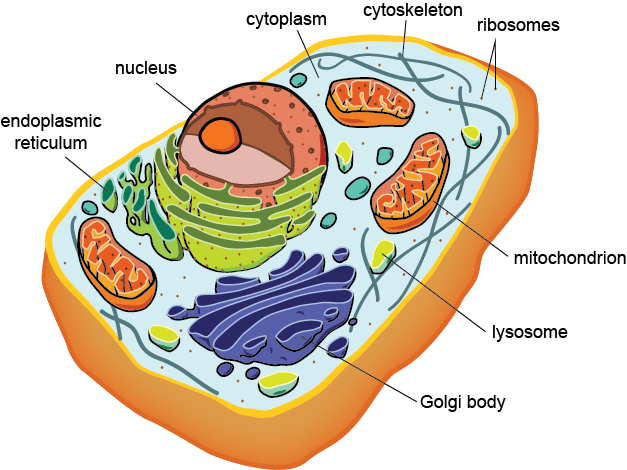
Where can you find ribosomes? 
1
only in prokaryotic cells
2
only in plant cells
3
only in eukaryotic cells
4
in both prokaryotic and eukaryotic cells

33

media

34

media

35

media

36

media

37

Multiple Choice

Question image
Which cell structures cause the outer surface of the endoplasmic reticulum to appear rough?
1
Ribosomes
2
Transport Proteins
3
Mitochondria
4
Golgi Bodies

38

media

39

media

40

media

41

Multiple Choice

Mitochondria are called the "power plants" of the cell because they are the sites of ______________________.

1

protein synthesis

2

translation

3

cellular respiration

4

devolution

42

media

43

media

44

media

45

media

46

media

47

Multiple Choice

In what organelle of plant cells does photosynthesis occur?

1

mitochondria

2

centrioles

3

chloroplast

4

ribosomes

48

media

49

media

50

Multiple Choice

Produces energy in the form of ATP for the cell.
1
chloroplast
2
mitochondria
3
ribosome 
4
nucleus

51

Multiple Choice

Controls cell functions because DNA is stored here.
1
nucleus
2
nucleolus
3
ribosome
4
cholorplast

52

Multiple Choice

Stores materials such as water, salts, proteins, & carbohydrates.
1
ribosome
2
lysosome
3
vacuole
4
endoplasmic reticulum

53

Multiple Choice

Contains digestive enzymes to break down worn out parts of the cell.
1
vacuole
2
lysosome
3
ribosome
4
nucleolus

54

Multiple Choice

Which 2 organelles are only found in plant cells?
1
chloroplast and mitochondria
2
chloroplast and cell membrane
3
mitochondria and cell wall
4
chloroplast and cell wall

55

Multiple Choice

Which organelle receives proteins and materials from the endoplasmic reticulum, packages them, and distributes them?

1

lysosomes

2

golgi apparatus

3

ribosomes

4

endoplasmic reticulum

56

Multiple Choice

a tiny cell structure that carries out a specific function within the cell

1

organelle

2

chromatin

3

chloroplast

4

lysosome

57

Multiple Choice

All of the following are found in both plant and animal cells, except
1
Large central vacuole
2
Mitochondria
3
Golgi apparatus
4
Plasma membrane

58

Multiple Choice

Which organelle is responsible for the synthesis of lipids?

1

Rough endoplasmic reticulum

2

Smooth endoplasmic reticulum

3

Golgi apparatus

4

Nucleus

59

Multiple Choice

Question image
The arrow is point to the 
1
mitochondria 
2
Cell membrane 
3
nucleus 
4
ribosome

60

Multiple Choice

Question image
Using this image, what organelle is C?
1
Cell Wall
2
Mitochondria
3
Large Cell Vacuole
4
Chloroplast

61

Multiple Choice

Prokaryote are?
1
simple, mostly single-celled organism that lacks a nucleus, or any other membrane-bound organelle.
2
have a peptidoglycan cell wall and many have polysaccharide capsules.
3
have a true nucleus, which means the cell's DNA is surrounded by a membrane.
4
contain membrane-bound organelles, such as the nucleus

62

media

63

media

64

media

65

media

66

Multiple Choice

What are the two main components of a phospholipid as shown in the image?

1

Hydrophilic Head and Hydrophobic Tails

2

Hydrophobic Head and Hydrophilic Tails

3

Hydrophilic Tails and Hydrophobic Heads

4

Hydrophilic and Hydrophobic

67

media

68

media

69

Multiple Choice

Question image

The _________ of the phospholipids in a cell membrane face inward towards each other because they are ___________.

1

heads, hydrophobic

2

heads, hydrophilic

3

tails, hydrophobic

4

tails, hydrophilic

70

Multiple Choice

Question image

The image represents the fluid mosaic model. Which of the following best describes the fluid mosaic model?

1

Cell membrane components are able to float and move throughout the membrane surface

2

Cell membrane components are stuck in place. It is critical to get the placement right

3

The membrane is not flexible at all and cannot expand

4

The membrane allows fluids to pass through easily

71

media

72

media

73

Multiple Choice

What are the four main components of the cell membrane structure?

1

Phospholipids, Proteins, Carbohydrates, Cholesterol

2

Nucleic Acids, Proteins, Lipids, Carbohydrates

3

Phospholipids, Nucleic Acids, Cholesterol, Proteins

4

Proteins, Carbohydrates, Nucleic Acids, Cholesterol

74

Multiple Choice

Analyze the role of cholesterol in the cell membrane and its impact on membrane fluidity.

1

Cholesterol decreases membrane fluidity by making it more rigid.

2

Cholesterol increases membrane fluidity by creating more space between phospholipids.

3

Cholesterol stabilizes membrane fluidity by preventing it from becoming too rigid or too fluid.

4

Cholesterol has no effect on membrane fluidity.

75

Multiple Choice

Which of the following is NOT part of the cell membrane?
1
Lipids
2
Carbohydrates
3
Proteins
4
Nucleic Acids

76

Multiple Choice

The function of the plasma membrane is....
1
to regulate what enters and leaves the cell.
2
fight bacteria and viruses that enter the cell.
3
provide rigid support and protection to the cell.
4
make sure each cell can move

77

Multiple Choice

Hydrophilic means...
1
water-loving
2
water-fearing
3
nonpolar
4
lipid soluble

78

Multiple Choice

Question image
Hydrophobic region of the cell membrane?
1
E
2
B
3
C
4

79

Multiple Choice

What is NOT TRUE about the cell membrane
1
It controls what enters and leaves the cell
2
Semipermeable
3
Phospholipid bilayer
4
Contains digestive enzymes

80

Multiple Choice

Describes the arrangement of the cell membrane as bendable and made of many parts. 
1
The Fluid Mosaic Model 
2
The Major Mobility Model 
3
The Crazy Cell Model
4
The Maze Model

81

Multiple Choice

What is another term for "selectively permeable"?
1
porous
2
completely permeable
3
permanent
4
semipermeable

82

Multiple Choice

Question image
Part of the plasma membrane responsible for cell recognition... 
1
C
2
E
3
B
4
D

83

Multiple Choice

What does "bilayer" mean?
1
one layer
2
two layers
3
laminated
4
bilateral

84

Multiple Choice

Another term for maintaining an internal balance is...

1

Equality

2

Equential

3

Homeostasis

4

Balance

media

Show answer

Auto Play

Slide 1 / 84

SLIDE