

2.5 Particle Movement in and out of Cells

Presentation
•
Biology
•
10th - 12th Grade
•
Easy

Lloyd Cascabel
Used 2+ times
FREE Resource
43 Slides • 36 Questions
1
Diffusion,
Facilitated Diffusion,
Active Transport

2
Imagine being an architect and you are to design a building on a rural area. You have to think about where people should enter and exit, where the visitors should go, how cars can go to the garage, how the water lines can easily flow, the electric lines, how air can be filtered, and how you can keep out the large animals and large birds from coming in yet allow insects in to your mini garden.
3
Passive Transport
Active Transport

4
5
this is movement of molecules from high concentration to low concentration-----this is like going down a slide
Passive does NOT require energy!

6
this is the movement of molecules from low concentration to high concentration---this is like running up a slide in the opposite direction
Active requires energy!

7
Multiple Choice
What are the two main types of transport?
active and passive
osmosis and facilitated
8
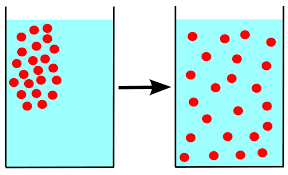
Movement of molecules from high concentration to low concentration.
Stops when equilibrium is reached

9
Multiple Choice
How do molecules move during diffusion?
From high concentration to low concentration
From low concentration to high concentration
10
what is semi-permeable (selectively permeable)
The cell membrane allows some substances to pass in and out of the cell easily, but other substances cannot. Some substances require "helpers" such as protein channels to get through the cell membrane.
11
Match
Match the following
phospholipid
cell membrane proteins
phospholipid bilayer
phospholipid
cell membrane proteins
phospholipid bilayer
12
Passive transport is a movement of ions and other atomic or molecular substances across cell membranes without need of energy input. Unlike active transport, it does not require an input of cellular energy because it is instead driven by the tendency of the system to entropy or "go with the flow" (concentration gradient)

13
There are three examples of passive transport:
1. simple diffusion
2. facilitated diffusion
3. osmosis
14
As shown by the image on the right, diffusion shows how small substances can enter freely through the lipid bilayer. That is possible because the particles that can diffuse easily are SMALL, Electrically UNCHARGED particles like gases.
15

16
Osmosis
17

18
As shown by the image on the right, it is the process of spontaneous passive transport of molecules or ions across a membrane via specific transmembrane integral proteins. (channel/carrier protein)

19

20
Glucose enters the cells through facilitated diffusion with the help of GluT.

21
Multiple Choice
When molecules move DOWN or ALONG the concentration gradient, it means it moves in what direction?
high to low
low to high
22
Multiple Choice
Is facilitated diffusion passive or active transport?
passive
active
23
Multiple Choice
When molecules spread from areas of high concentration, to areas of low concentration across the phospholipid bilayer, this if referred to as:
simple diffusion
facilitated diffusion
24
Facilitated Diffusion
•Facilitated Diffusion is the passive movement of polar or charged particles from an area of higher concentration to an area of lower concentration through a protein channel.
•Charged particles cannot easily diffuse through the phospholipid bilayer so they need passageways in the form of leak channels, or protein gates.
•Equilibrium is still achieved when the concentration of solutes (charged or particles) are even or have the same net movement inside and outside the membrane.
25
Multiple Choice
Which of the following DOES NOT properly describe PASSIVE transport?
small non-polar substances can diffuse through the membrane
no energy is used during diffusion by passive transport
solutes diffuse towards where their concentration is high
in hypotonic solution, diffusion of solutes is higher in going into the cell
26
It is the movement of a solvent across a semipermeable membrane toward a higher concentration of solute (lower concentration of solvent). In biological systems, the solvent is typically water, but osmosis can occur in other liquids, supercritical liquids, and even gases.

27
The image on the right shows how water moves from low concentration of solutes (sugar molecules) to high concentration of solutes. This movement caused a change in volume of the two sides of the container, with a semipermeable membrane dividing them.
28

29
Multiple Choice
Which of the following DOES NOT properly describe ACTIVE transport?
it can move substances against concentration gradient
it moves substances from high concentration to low concentration of solutes
it can switch the positions of two kinds of solutes by using energy (across the membrane)
it can move chemically charged particles (across the membrane)
30
Turgor pressure is the force within the cell that pushes the plasma membrane against the cell wall. It is also called hydrostatic pressure.

31

32

33

34
With the presence of cell wall, plants tend to have better health and metabolic processes when they can store more water. In hypotonic conditions, plants tend to look healthy and well, while in isotonic conditions, plants turn flaccid, soft, and hanging loosely.

35

36
consider the properties required to enter the plasma membrane

37
Multiple Choice
Osmosis transport...
solutes from high concentration to low concentration
water molecules from dilute to concentrated solutions
water molecules from high concentration to low concentration of solutes
38
Multiple Choice
Simple diffusion allows the movement of _________ across the membrane.
small polar substances
small non-polar substances
39
Multiple Choice
What do you call the protein channels that specifically lets water enter and exit the cell membrane?
hydroponics
aquaporins
plasmodesmata
40
Multiple Choice
When water moves from region A to region B...
it means region B has a high concentration of solutes
it means region B has a high concentration of water
it means water can diffuse through the phospholipid bilayer
it means region A has lower concentration of solutes
41
Multiple Choice
Cells in isotonic solution...
have water's net movement virtually at zero; there is equal movement going in and out of the cell.
have water's net movement favor its ENTRY to the cell, hence the cell swells.
have water's net movement favor its OUT of the cell, hence the cell shrinks.
42
Multiple Choice
Which kind of solution is best for plant cells?
isotonic
hypotonic
hypertonic
43
Multiple Choice
Which solution causes animal cells to burst?
isotonic
hypotonic
hypertonic
44
Multiple Choice
Which solution causes animal cells to burst?
isotonic
hypotonic
hypertonic
45
Multiple Choice
A plant cell in a hypertonic solution will
burst
plasmolyze
become turgid
46
Multiple Choice
An animal cell in a hypertonic solution will
become flaccid
lyse
shrivel
47
Active transport is the movement of molecules across a cell membrane from a region of lower concentration to a region of higher concentration—against the concentration gradient. Active transport requires cellular energy to achieve this movement.

48
Active transport comes in 3 kinds:
Endocytosis - can come in the form of phago or pinocytosis
Exocytosis
Protein Pump
49

50
Recall that the phospholipids can orient themselves based on where water is located.

51
A liposome is a spherical-shaped vesicle that is composed of at least one phospholipid bilayer with an aqueous core. Liposomes closely resembles the structure of cell membranes. They are also very useful drug delivery system.

52
Micelles are closed lipid monolayers with a fatty acid core and polar surface, or polar core with fatty acids on the surface (inverted micelle).

53

54
When cells need to bring a very large substance into or out of the cell that cannot fit into the protein channels, these large substances are passed on through micelles (for non-polar/ oil-based substances) and liposomes (for polar substances) and then pinches off.
55

56

57

58

59
Multiple Choice
60
Multiple Choice
61
Multiple Choice

62
Multiple Choice
63
Multiple Choice
64
Multiple Choice

65
Multiple Choice

66
Multiple Choice

67
Multiple Choice
68
Multiple Choice
69
Multiple Choice
70
Multiple Choice
71
Multiple Choice

72
Multiple Choice
73
Multiple Choice
74

75

76

77
Multiple Choice
78
Multiple Choice
79
Multiple Choice
Diffusion,
Facilitated Diffusion,
Active Transport
Show answer
Auto Play
Slide 1 / 79
SLIDE
Similar Resources on Wayground

73 questions
Module No. 1: Universe, Solar System, and Earth System
Presentation
•
11th Grade
72 questions
Natural Artificial Selection
Presentation
•
9th - 12th Grade
75 questions
Body Systems
Presentation
•
9th - 10th Grade
73 questions
Root, Stem, Leaf
Presentation
•
11th Grade
73 questions
Travelling
Presentation
•
KG
74 questions
Level 7.1 Exam Review - Trimester 1
Presentation
•
10th - 11th Grade
71 questions
The Water Cycle Lesson
Presentation
•
9th - 12th Grade
71 questions
Reptile Notes
Presentation
•
10th - 12th Grade
Popular Resources on Wayground
10 questions
Safety Day 2026 – Student Review

Quiz
•
9th Grade
21 questions
Continents and Oceans
Quiz
•
6th Grade
20 questions
Parts of Speech
Quiz
•
5th Grade
16 questions
Subject & Predicate
Quiz
•
5th Grade
25 questions
Multiplication Facts
Quiz
•
5th Grade
12 questions
Map Skills
Quiz
•
3rd Grade
22 questions
Continents and Oceans
Quiz
•
5th Grade
15 questions
Rounding Decimals
Quiz
•
5th Grade
Discover more resources for Biology
20 questions
Cell organelles and functions
Quiz
•
10th Grade
20 questions
Cell Transport
Quiz
•
9th - 12th Grade
8 questions
DNA vs. RNA
Presentation
•
9th - 12th Grade
20 questions
Macromolecules
Quiz
•
10th Grade
20 questions
Characteristics of Life
Quiz
•
9th - 10th Grade
15 questions
Photosynthesis and Cellular Respiration
Quiz
•
10th Grade
16 questions
Epithelial tissues
Quiz
•
11th - 12th Grade
15 questions
DNA Structure and Replication
Quiz
•
9th - 12th Grade