
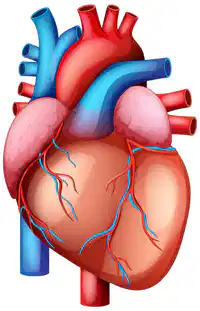
CARDIOVASCULAR REVISION

Presentation
•
Science
•
University
•
Practice Problem
•
Hard

Roohi Sakina
FREE Resource
1 Slide • 40 Questions
1
CVS REVISION
By Roohi Sakina
2
Multiple Choice
1.A 55-year-old man has muscle weakness and difficulty with fine movements. Tests show reduced levels of a neurotransmitter at the neuromuscular junction.
Which process is directly responsible for its synthesis?
A. Choline uptake into the neuron and combination with acetyl-CoA by choline acetyltransferase
B. Conversion of tyrosine to L-DOPA
C. Conversion of tryptophan to serotonin
1.A 55-year-old man has muscle weakness and difficulty with fine movements. Tests show reduced levels of a neurotransmitter at the neuromuscular junction.
Which process is directly responsible for its synthesis?
D. Synthesis of glutamate from α-ketoglutarate
3
Multiple Choice
2. A 48-year-old woman presents with muscle fatigue and drooping eyelids. A drug is given to block the enzyme that breaks down a key neurotransmitter at the neuromuscular junction, improving her symptoms.
Which enzyme is responsible for the degradation of this neurotransmitter?
A. Monoamine oxidase
B. Acetylcholinesterase
C. Catechol-O-methyltransferase
D. Glutamate decarboxylase
4
Multiple Choice
3. A 35-year-old man presents with sudden onset of fever, headache, and neck stiffness. Lumbar puncture is performed, and cerebrospinal fluid (CSF) is sent for analysis to help identify the underlying cause.
Which CSF parameter is most useful in differentiating bacterial from viral meningitis?
A. Glucose
B. Protein
C. Cell count
D. Lactate
5
Multiple Choice
4. A 34-year-old pregnant woman undergoes a screening test at 16 weeks of gestation to assess the risk of fetal chromosomal abnormalities.
Which of the following maternal serum parameters is most commonly used in this screening?
A. AFP
B. Beta-hCG
C. Unconjugated estriol
D. Inhibin-A
6
Multiple Choice
5.A 50-year-old man presents with metabolic acidosis. His kidneys respond to help restore normal blood pH.
Which renal process primarily helps correct this acid-base imbalance?
A. Excretion of H⁺
B. Reabsorption of Na⁺
C. Secretion of K⁺
D. Excretion of titratable acids
7
Multiple Choice
6.A 45-year-old man presents with rapid breathing and fatigue. Laboratory results show:
Na⁺ = 140 mEq/L
K⁺ = 4 mEq/L
Cl⁻ = 100 mEq/L
HCO₃⁻ = 16 mEq/L
Which of the following best describes the type of metabolic acidosis in this patient?
A. Normal anion gap (hyperchloremic) metabolic acidosis
B. High anion gap metabolic acidosis
C. Respiratory acidosis
D. Metabolic alkalosis
8
Multiple Choice
7.A 50-year-old man presents with fatigue and swelling in his legs. The physician orders laboratory tests to assess kidney function.
Which of the following is the most commonly used parameter to evaluate renal function?
A. Blood urea nitrogen (BUN)
B. Serum creatinine
C. Urine osmolality
D. Urinary sodium
9
Multiple Choice
8. A 28-year-old woman presents with irregular menstrual cycles. Laboratory tests reveal a deficiency in enzymes required for the synthesis of ovarian sex steroids.
Which of the following is the immediate precursor for the biosynthesis of estrogen and testosterone?
A. Cholesterol
B. Pregnenolone
C. Progesterone
D. Androstenedione
10
Multiple Choice
9. A 50-year-old man presents with increased thirst and frequent urination. The physician orders a test to assess his blood glucose level.
Which of the following parameters is most commonly measured to diagnose hyperglycemia?
A. Fasting plasma glucose
B. HbA1c
C. Random plasma glucose
D. Oral glucose tolerance test (OGTT)
11
Multiple Choice
10. A 35-year-old woman presents with fatigue, weight gain, and cold intolerance. Laboratory tests show low T₃ and T₄ with elevated TSH.
Which of the following best describes her condition?
A. Primary hypothyroidism
B. Secondary hyperthyroidism
C. Euthyroid
D. Tertiary hypothyroidism
12
Multiple Choice
11. A 30-year-old man experiences hypoglycemia after skipping breakfast. His pancreas responds by releasing a hormone to restore blood glucose levels.
Which of the following correctly describes the hormone involved?
A. Insulin – decreases blood glucose, two-chain polypeptide with disulfide bonds
B. Insulin – increases blood glucose, single-chain polypeptide
C. Glucagon – increases blood glucose, single-chain polypeptide
D. Glucagon – decreases blood glucose, two-chain polypeptide
13
Multiple Choice
12. A 50-year-old man presents with neurological symptoms and lactic acidosis. His physician suspects a deficiency in a vitamin that is a coenzyme for the reaction:
Pyruvate → Acetyl-CoA (catalyzed by pyruvate dehydrogenase).
Which of the following coenzymes is derived from the deficient vitamin?
A. Thiamine pyrophosphate (TPP)
B. Flavin adenine dinucleotide (FAD)
C. Nicotinamide adenine dinucleotide (NAD⁺)
D. Coenzyme A (CoA)
A. Thiamine pyrophosphate (TPP)
B. Flavin adenine dinucleotide (FAD)
C. Nicotinamide adenine dinucleotide (NAD⁺)
D. Coenzyme A (CoA)
14
Multiple Choice
13. A 10-year-old boy shows stunted growth and frequent infections. His diet mainly consists of polished rice and lacks diversity.
Which deficiency in his diet is most likely responsible?
A. Carbohydrates
B. Proteins
C. Fats
D. Water
15
Multiple Choice
14. A 2-year-old child presents with developmental delay, vomiting, and a characteristic maple syrup odor in urine. Laboratory tests reveal elevated branched-chain amino acids.
Which inborn error of protein metabolism is most likely?
A. Phenylketonuria
B. Maple syrup urine disease
C. Homocystinuria
D. Alkaptonuria
16
Multiple Choice
15. A 50-year-old man presents with polyuria, polydipsia, and unexplained weight loss. Laboratory tests show fasting plasma glucose of 160 mg/dL, HbA1c of 8%, and glycosuria.
Which of the following biochemical abnormalities is most characteristic of diabetes mellitus?
A. Increased insulin secretion
B. Decreased blood glucose
C. Impaired glucose uptake by tissues
D. Increased glycogen synthesis
17
Multiple Choice
16. A 45-year-old man with delayed wound healing and frequent infections is found to have impaired glucose tolerance. Laboratory tests show normal insulin levels, but his pancreatic β-cells are not functioning optimally.
Which mineral deficiency is most likely impairing his insulin synthesis and function?
A. Iron
B. Zinc
C. Magnesium
D. Chromium
18
Multiple Choice
17.A 35-year-old man presents with impaired wound healing and mild glucose intolerance. One of his key enzymes in carbohydrate metabolism, alcohol dehydrogenase, requires a metal cofactor for proper function:
Reaction: Ethanol → Acetaldehyde (catalyzed by alcohol dehydrogenase)
Which mineral deficiency is most likely affecting this enzyme’s activity?
A. Iron
B. Zinc
C. Magnesium
D. Copper
19
Multiple Choice
18.A 6-year-old boy presents with developmental delay, anemia, and pale hair. One of his enzymes, cytochrome c oxidase, requires a metal cofactor for electron transport in mitochondria:
Reaction: Cytochrome c (reduced) → Cytochrome c (oxidized) (catalyzed by cytochrome c oxidase)
Which mineral deficiency is most likely affecting this enzyme’s activity?
A. Zinc
B. Copper
C. Iron
D. Selenium
20
Multiple Choice
19.A 2-month-old infant presents with bruising and prolonged bleeding after minor trauma. History reveals the baby did not receive vitamin supplementation after birth. Laboratory tests show prolonged prothrombin time (PT).
Which vitamin deficiency is most likely responsible?
A. Vitamin A
B. Vitamin D
C. Vitamin E
D. Vitamin K
21
Multiple Choice
20.A 6-month-old infant presents with muscle weakness, poor reflexes, and hemolytic anemia. Laboratory tests reveal increased oxidative stress markers.
Which fat-soluble vitamin deficiency is most likely responsible?
A. Vitamin A
B. Vitamin D
C. Vitamin E
D. Vitamin K
22
Multiple Choice
21. A 28-year-old woman undergoes an oral glucose tolerance test (OGTT). Her laboratory results are:
Fasting plasma glucose: 90 mg/dL
2-hour post-glucose load: 95 mg/dL
Urine glucose: positive
Which of the following best explains her condition?
A. Normal glucose tolerance
B. Type 2 diabetes mellitus
C. Renal glycosuria
D. Impaired glucose tolerance
23
Multiple Choice
22. A 6-year-old boy presents with hyperpigmentation, hypotension, and hyponatremia. Laboratory tests reveal low cortisol and aldosterone, with elevated ACTH.
Which enzyme deficiency is most likely responsible for his condition?
A. 11β-hydroxylase
B. 21-hydroxylase
C. 17α-hydroxylase
D. 3β-hydroxysteroid dehydrogenase
24
Multiple Choice
23. A 35-year-old man skips breakfast and begins to feel weak and dizzy. His blood glucose is measured at 60 mg/dL. The pancreas responds to restore normal glucose levels.
Which of the following best describes the primary hormonal response to this condition?
A. Insulin secretion increases → glucose uptake by tissues
B. Glucagon secretion increases → glycogenolysis and gluconeogenesis
C. Insulin secretion increases → glycogen breakdown
D. Glucagon secretion decreases → gluconeogenesis inhibition
25
Multiple Choice
24. A 30-year-old man is found after several days of food deprivation. Laboratory tests show low insulin, high glucagon, increased ketone bodies, and elevated free fatty acids.
Which of the following metabolic adaptations is most characteristic of prolonged starvation?
A. Increased glycolysis in muscle
B. Increased gluconeogenesis and ketogenesis
C. Increased glycogen synthesis in liver
D. Increased insulin secretion
26
Multiple Choice
25. A couple comes for genetic counseling. Their first child has phenylketonuria (PKU), caused by a single nucleotide change leading to a dysfunctional enzyme.
Which type of mutation is most likely responsible for this condition?
A. Missense mutation
B. Nonsense mutation
C. Frameshift mutation
D. Silent mutation
27
Multiple Choice
26. A 25-year-old man is being treated with a drug that inhibits RNA polymerase II. Laboratory tests show decreased synthesis of mRNA in his cells.
Which step of gene expression is directly affected by this drug?
A. Transcription
B. Translation
C. Post-translational modification
D. DNA replication
28
Multiple Choice
27. A 30-year-old man is treated with an antibiotic that binds to the 30S ribosomal subunit, inhibiting protein synthesis in bacteria.
Which step of gene expression is directly affected by this drug?
A. Transcription
B. Translation
C. RNA splicing
D. DNA replication
29
Multiple Choice
28. A 28-year-old patient is being treated with a drug that inhibits DNA polymerase activity. Laboratory tests show impaired DNA synthesis in his rapidly dividing cells.
Which step of gene expression or cell function is directly affected by this drug?
A. Transcription
B. Translation
C. DNA replication
D. RNA splicing
30
Multiple Choice
29. A 7-year-old girl develops freckles and skin blisters on sun-exposed areas. She has an increased risk of skin cancer. The underlying problem is a defect in repairing UV-induced DNA damage.
Which DNA repair mechanism is most likely defective?
A. Base excision repair
B. Nucleotide excision repair
C. Mismatch repair
D. Non-homologous end joining
31
Multiple Choice
30. A researcher wants to detect and quantify specific RNA molecules expressed in a cell after introducing a recombinant gene.
Which technique should the researcher use?
A. Western blotting
B. Southern blotting
C. Northern blotting
D. Eastern blotting
32
Multiple Choice
31. A 50-year-old man presents with sudden severe pain and swelling in his big toe. Laboratory tests reveal hyperuricemia and uric acid crystals in synovial fluid.
Which class of biomolecules is primarily responsible for the accumulation of uric acid in this condition?
A. Purines
B. Pyrimidines
C. Carbohydrates
D. Amino acids
33
Multiple Choice
32. A 35-year-old woman presents with symptoms of hyperthyroidism. Her physician explains that thyroid hormones act by binding to intracellular receptors and regulating gene transcription.
Which type of hormone signaling does this represent?
A. Peptide hormones via membrane receptors
B. Steroid and thyroid hormones via intracellular receptors
C. Catecholamines via G-protein coupled receptors
D. Insulin via tyrosine kinase receptors
34
Multiple Choice
33. A 3-week-old newborn presents with jaundice. Laboratory tests reveal elevated unconjugated bilirubin, normal liver enzymes, and no hemolysis.
Which condition is most consistent with defective bilirubin metabolism?
A. Gilbert syndrome
B. Crigler-Najjar syndrome
C. Dubin-Johnson syndrome
D. Rotor syndrome
35
Multiple Choice
34. A 6-year-old boy presents with vomiting, lethargy, and confusion. Laboratory tests reveal hyperammonemia and normal liver enzymes. The physician suspects a defect in the urea cycle.
Which of the following pathways is primarily responsible for detoxifying ammonia in the body?
A. Glutaminase pathway
B. Urea cycle
C. Glycolysis
D. Beta-oxidation
36
Multiple Choice
35. A 25-year-old man complains of bloating and diarrhea after consuming milk. Laboratory tests suggest a deficiency in an enzyme that hydrolyzes disaccharides at the brush border.
Which enzyme deficiency is most likely responsible?
A. Maltase
B. Lactase
C. Sucrase
D. Amylase
37
Multiple Choice
36. A 30-year-old man with chronic pancreatitis develops steatorrhea and weight loss. Laboratory tests reveal decreased activity of pancreatic proteases.
Which of the following enzymes is directly responsible for breaking down dietary proteins into absorbable peptides?
A. Pepsin
B. Trypsin
C. Lipase
D. Amylase
38
Multiple Choice
37. A 40-year-old woman has fatty stools after cholecystectomy. Laboratory studies show impaired micelle formation due to lack of bile.
Which process is essential for intestinal absorption of fats?
A. Emulsification and micelle formation
B. Peptide bond hydrolysis
C. Starch hydrolysis
D. Active transport of amino acids
39
Multiple Choice
38. A 45-year-old woman presents with right upper quadrant pain after a fatty meal. Ultrasound shows gallstones. Laboratory tests reveal normal liver enzymes.
Which of the following biochemical abnormalities is most commonly associated with gallstone formation?
A. Increased cholesterol in bile
B. Increased bile acid synthesis
C. Increased lecithin in bile
D. Decreased bilirubin in bile
40
Multiple Choice
39. 50-year-old man presents with epigastric pain, steatorrhea, and weight loss. Laboratory tests show elevated pancreatic enzymes in the blood.
Which enzyme is most commonly measured to assess exocrine pancreatic function?
A. Amylase
B. Lipase
C. Trypsin
D. Chymotrypsin
41
Multiple Choice
40. A 2-year-old child presents with severe wasting, loss of subcutaneous fat, and muscle atrophy, but without edema. His diet has been very low in calories for several months.
Which form of malnutrition is most consistent with this presentation?
A. Kwashiorkor
B. Marasmus
C. Scurvy
D. Rickets
CVS REVISION
By Roohi Sakina
Show answer
Auto Play
Slide 1 / 41
SLIDE
Similar Resources on Wayground

38 questions
Citoesqueleto II - Filamentos intermedios y de actina
Presentation
•
University
38 questions
GEd 109 STS Finals Reviewer
Presentation
•
University
36 questions
Repaso T1...parte 1
Presentation
•
University
34 questions
Tehnik Pengambilan Keputusan
Presentation
•
University
35 questions
Untitled Presentation
Presentation
•
KG - University
33 questions
Statics Final Exam Review
Presentation
•
University
33 questions
Trắc nghiệm kinh tế vi mô
Presentation
•
University
38 questions
PAO 2 BCM_CLASE 2
Presentation
•
University
Popular Resources on Wayground
15 questions
Grade 3 Simulation Assessment 1

Quiz
•
3rd Grade
22 questions
HCS Grade 4 Simulation Assessment_1 2526sy
Quiz
•
4th Grade
16 questions
Grade 3 Simulation Assessment 2
Quiz
•
3rd Grade
19 questions
HCS Grade 5 Simulation Assessment_1 2526sy
Quiz
•
5th Grade
17 questions
HCS Grade 4 Simulation Assessment_2 2526sy
Quiz
•
4th Grade
20 questions
Equivalent Fractions
Quiz
•
3rd Grade
24 questions
HCS Grade 5 Simulation Assessment_2 2526sy
Quiz
•
5th Grade
20 questions
Math Review
Quiz
•
3rd Grade