

제목 없는 프레젠테이션

Presentation
•
Specialty
•
10th Grade
•
Practice Problem
•
Hard

진영 박
Used 1+ times
FREE Resource
36 Slides • 28 Questions
1

2
Open Ended
Why is the study of electrostatics important in our daily lives?
3

4
Multiple Choice
Which of the following is most likely to be influenced by electric fields in nature?
A tree growing in soil
A plastic balloon rubbed with wool
A glass of water
A wooden table
5

6

7
Multiple Choice
What is the relationship between atoms and electricity in the context of matter?
Atoms are unrelated to electricity.
Atoms are the smallest unit of matter and electricity is generated by the movement of electrons within atoms.
Electricity is only produced by molecules, not atoms.
Atoms only consist of protons and neutrons, not electrons.
8

9
Multiple Choice
Compare the energy bands and electron movement in conductors, semiconductors, and insulators.
Conductors have a wide energy gap, semiconductors have a moderate gap, and insulators have no gap.
Conductors have overlapping energy bands allowing free electron movement, semiconductors have a small gap allowing limited movement, and insulators have a large gap restricting electron movement.
Semiconductors have no energy gap, conductors have a moderate gap, and insulators have a wide gap.
Insulators allow free electron movement, conductors restrict movement, and semiconductors have no movement.
10
11
Open Ended
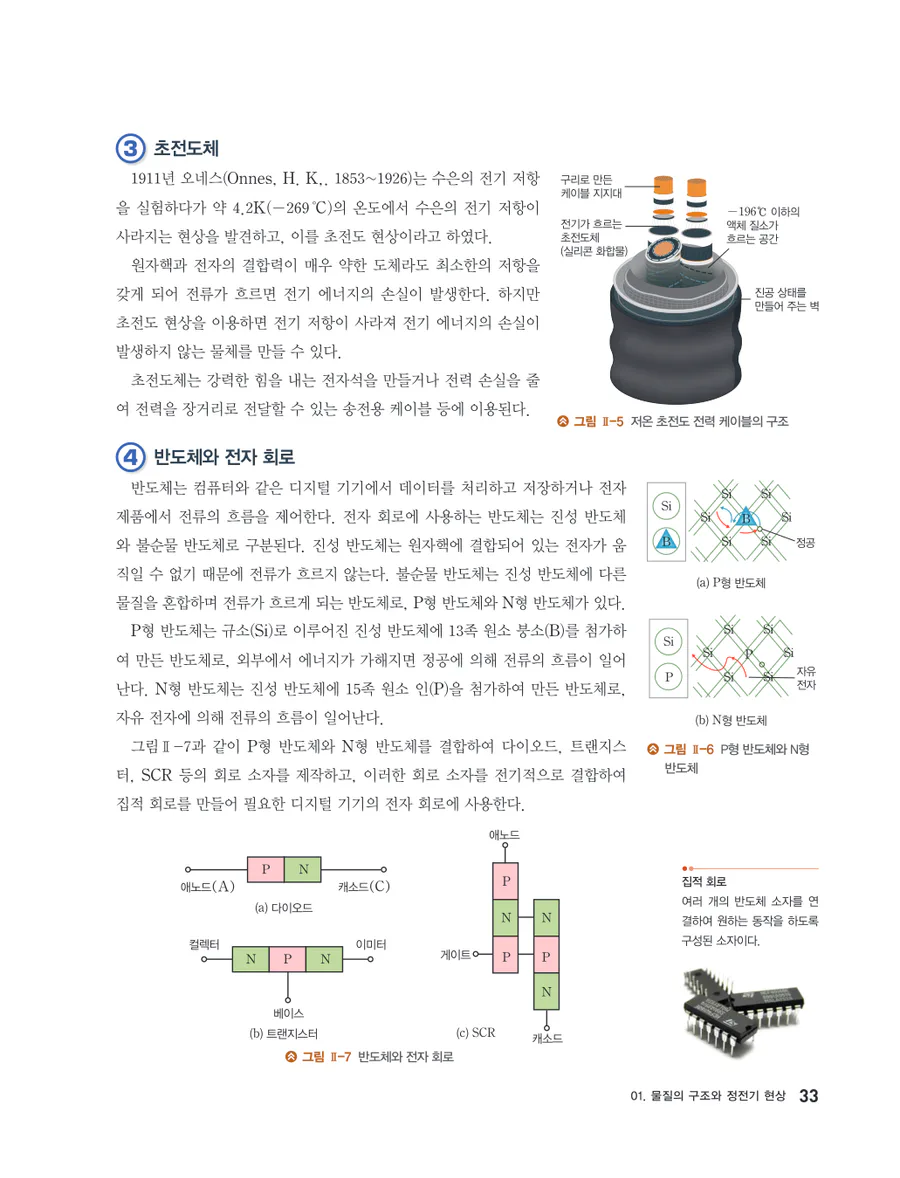
Explain the phenomenon of superconductivity and its significance in electrical transmission.
12

13
Fill in the Blanks
Type answer...
14
Multiple Select
Which of the following are characteristics of static electricity generation as described in the text and diagram?
Occurs when two objects are rubbed together
Involves the transfer of electrons
Can happen when touching elevator buttons
Requires a chemical reaction
15

16
Open Ended
Describe two different ways static electricity can be generated according to the diagrams and explanations provided.
17

18
Fill in the Blanks
Type answer...
19
Multiple Choice
Which of the following statements about the characteristics of electric charge is correct?
Objects with the same type of charge attract each other.
Objects with opposite charges repel each other.
The total amount of electric charge is always conserved.
Electric charge can be created or destroyed.
20

21
Open Ended
Explain the phenomenon of electrostatic induction and how it differs in conductors and insulators.
22
Multiple Choice
What are the main differences between conductors, insulators, and semiconductors as described in the text?
Conductors allow free movement of electrons, insulators do not, and semiconductors have properties in between.
Conductors and insulators both allow free movement of electrons, but semiconductors do not.
Semiconductors allow more free movement of electrons than conductors.
Insulators allow free movement of electrons, conductors do not, and semiconductors have properties in between.
23

24

25
Multiple Select
Which of the following are types of memory in semiconductor devices?
RAM
ROM
CPU
NAND Flash
26

27

28
Open Ended
Describe how the presence of a dielectric material affects the capacitance of a capacitor.
29

30

31
Multiple Choice
What is the main difference between the electrostatic force in a vacuum and in a medium with relative permittivity (εr)?
The force is stronger in a medium with εr > 1
The force is weaker in a medium with εr > 1
There is no difference
The force is zero in a medium
32

33
Open Ended
Describe a real-life application of electrostatic phenomena and discuss its benefits and potential hazards.
34

35
Multiple Select
Which of the following statements about electric field lines is/are correct?
Electric field lines start from positive charges and end at negative charges.
Electric field lines never cross each other.
The density of electric field lines indicates the strength of the field.
Electric field lines exist inside conductors in electrostatic equilibrium.
36
Open Ended
Explain how the concept of electric field lines helps in understanding the direction and strength of the electric field around charges.
37

38
Fill in the Blanks
Type answer...
39

40
Multiple Choice
If two point charges Q1 = 1 nC and Q2 = 2 nC are placed 1 m and 2 m away from point P, respectively, what is the net electric field at P?
13.5 V/m
4.5 V/m
9 V/m
3 V/m
41

42
Multiple Choice
Which physical quantity is represented by the symbol V in the context of electric potential, and how is it calculated in a uniform electric field?
Electric field strength; V = E × d
Electric potential; V = q × E × d
Electric charge; V = q / E × d
Electric force; V = E / d
43

44
Open Ended
Explain how equipotential surfaces are formed in an electric field and describe their significance.
45

46
Multiple Choice
Which of the following statements about Faraday's experiment with the conducting sphere is correct?
The charge inside the sphere affects the external electric field.
The charge outside the sphere affects the internal electric field.
The electric flux through the sphere is proportional to the charge inside.
The electric flux through the sphere is independent of the charge inside.
47

48
Multiple Choice
Which law relates the electric flux passing through a closed surface to the charge enclosed within that surface?
Coulomb's Law
Gauss's Law
Faraday's Law
Ampere's Law
49
Fill in the Blanks
Type answer...
50

51

52
Open Ended
Describe how the touch screen panel (TSP) distinguishes between the resistive and capacitive methods of touch detection.
53

54

55

56

57

58

59

60

61

62

63
Multiple Choice
Which of the following best describes the main focus of the lesson on electricity?
The structure of matter and static electricity phenomena
The history of electricity
The use of electricity in plants
The invention of the light bulb
64
Open Ended
How does the concept of static electricity relate to everyday life, and what are some examples of its effects that you have observed or experienced?
Show answer
Auto Play
Slide 1 / 64
SLIDE
Similar Resources on Wayground

58 questions
9.3 ABSORPTION 9.4 ASSIMILATION 9.5 DEFAECATION
Presentation
•
10th Grade
57 questions
Module 6: Lesson 3: Names & Formula for Ionic Compounds (pg 180)
Presentation
•
10th Grade
61 questions
Lesson #17 - The Progressives Respond (1890-1920)
Presentation
•
10th Grade
61 questions
Unit 1 Test 1 Review (Lessons 1.1 - 1.3)
Presentation
•
9th - 10th Grade
60 questions
Bio Semester Review
Presentation
•
9th Grade
58 questions
Unit 3: Chemical Bonds
Presentation
•
10th Grade
58 questions
Europe Map 3
Presentation
•
9th Grade
60 questions
IELTS Online Week 2
Presentation
•
10th Grade
Popular Resources on Wayground
20 questions
"What is the question asking??" Grades 3-5

Quiz
•
1st - 5th Grade
20 questions
“What is the question asking??” Grades 6-8
Quiz
•
6th - 8th Grade
10 questions
Fire Safety Quiz
Quiz
•
12th Grade
20 questions
Equivalent Fractions
Quiz
•
3rd Grade
34 questions
STAAR Review 6th - 8th grade Reading Part 1
Quiz
•
6th - 8th Grade
20 questions
“What is the question asking??” English I-II
Quiz
•
9th - 12th Grade
20 questions
Main Idea and Details
Quiz
•
5th Grade
47 questions
8th Grade Reading STAAR Ultimate Review!
Quiz
•
8th Grade