

Extended Entity Relationship DIagram

Presentation
•
Computers
•
University
•
Practice Problem
•
Easy

Alt Acc2
Used 4+ times
FREE Resource
22 Slides • 22 Questions
1
2
3
4
5
Fill in the Blanks
A
6
Multiple Choice
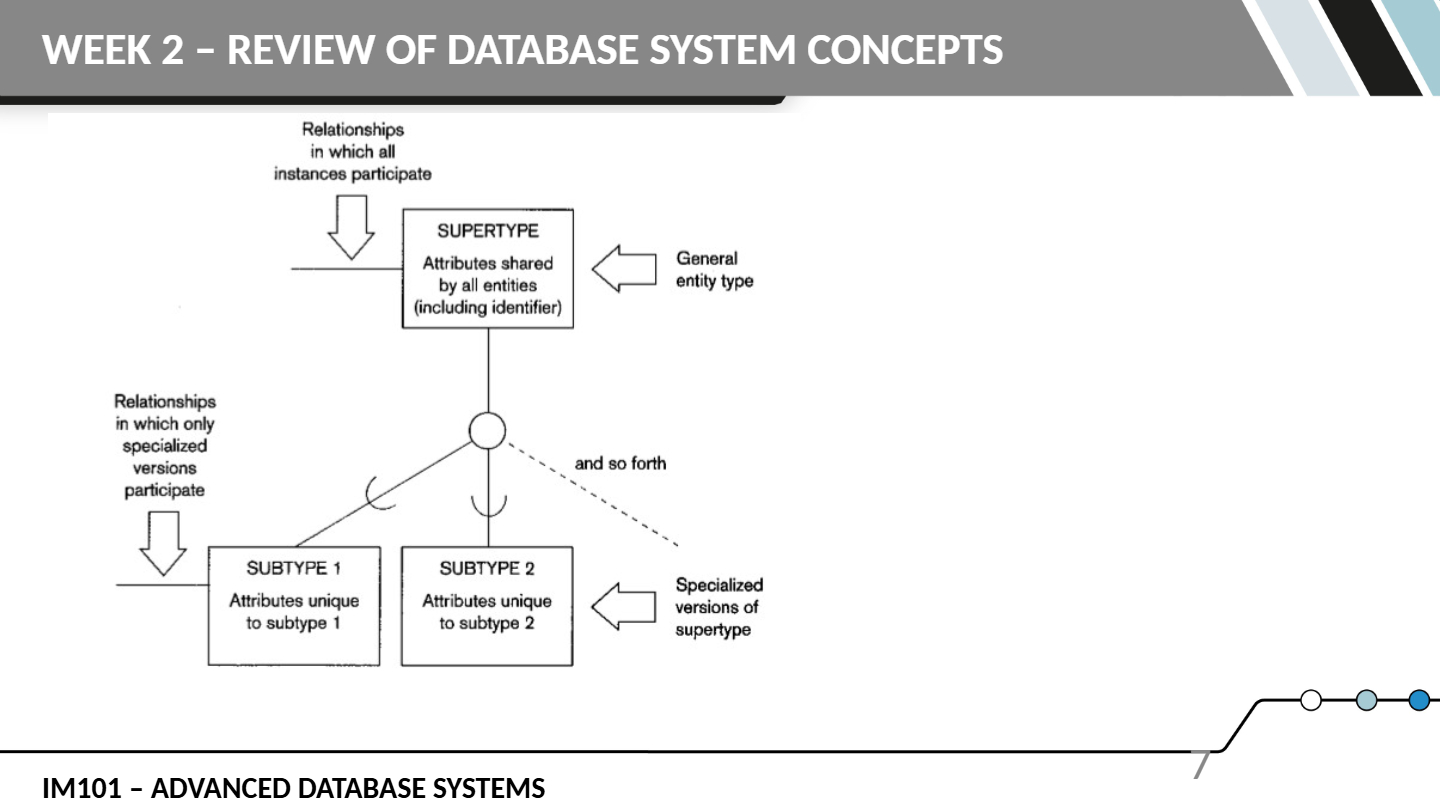
Which of the following best describes the relationship between a supertype and its subtypes in an extended entity relationship diagram?
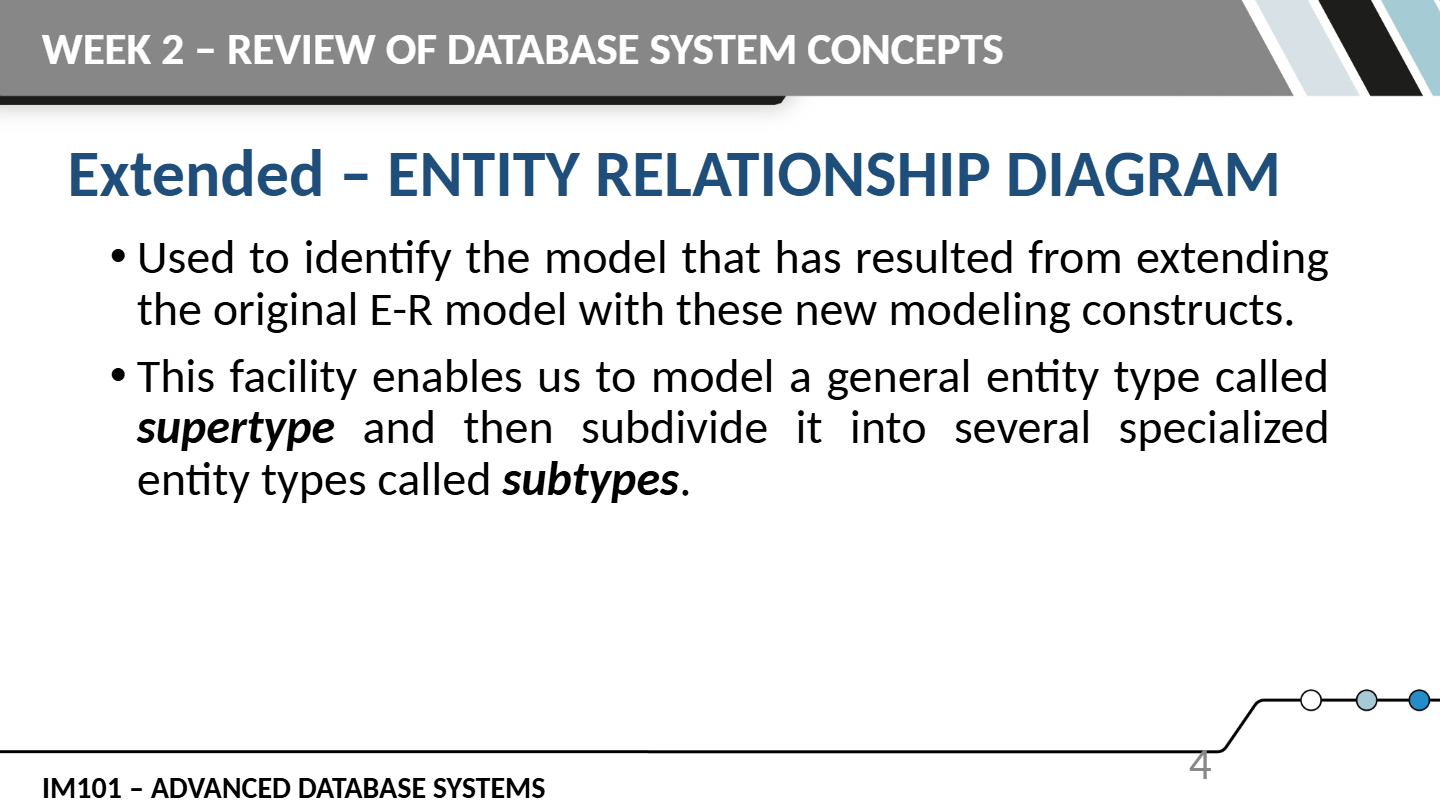
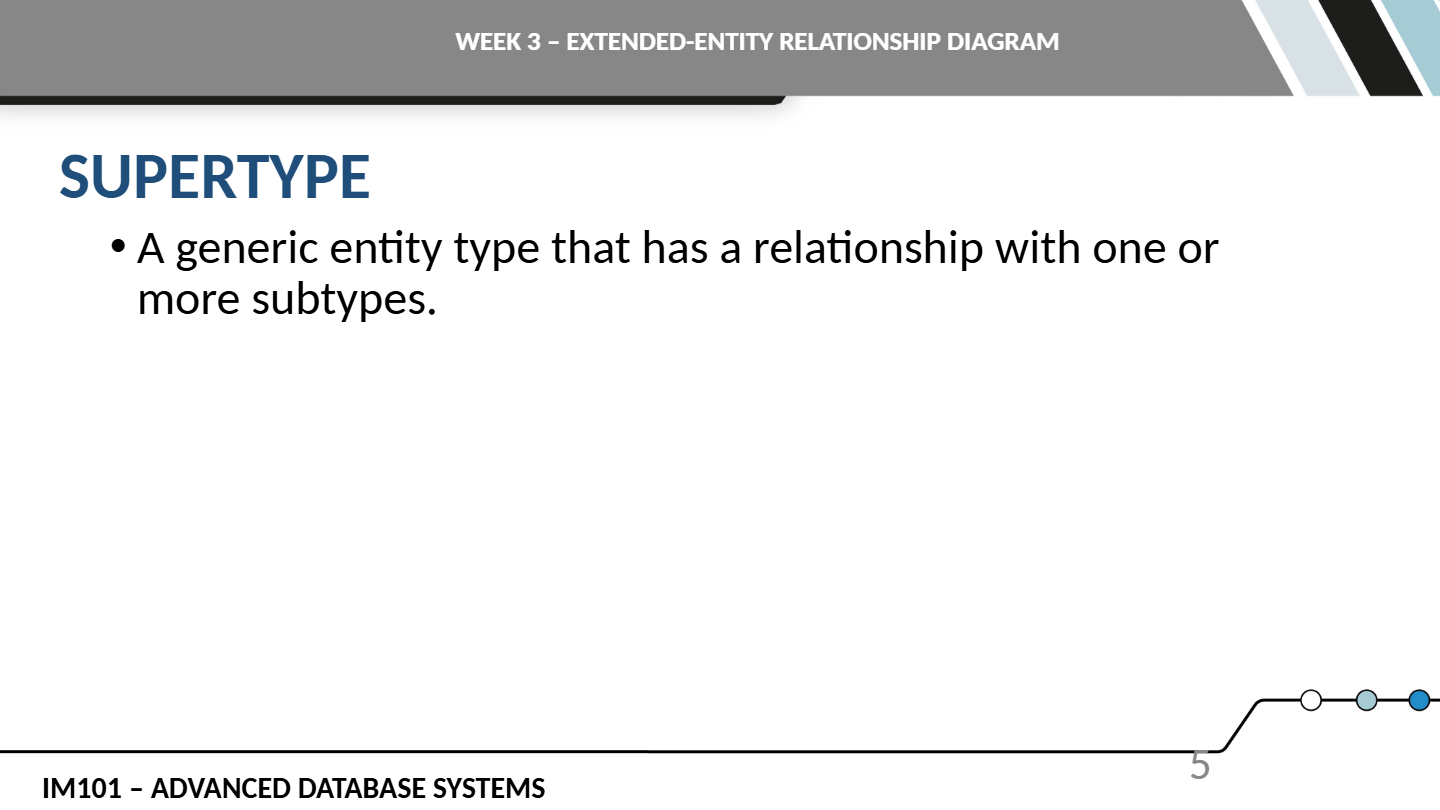
A supertype is a general entity type that can be subdivided into specialized subtypes.
A subtype is a general entity type that can be subdivided into specialized supertypes.
A supertype and subtype are always identical in attributes.
A subtype contains all attributes of all supertypes.
7

8
9
Multiple Choice
Which attributes are shared by all entities in a supertype according to the diagram?
Identifier and common attributes
Unique attributes for each subtype
Only relationship attributes
No attributes are shared
10

11
Multiple Choice
Which of the following is a common attribute for all subtypes of Person in an Extended Entity Relationship Diagram?
PersonID
EmployeeID
CustomerID
SupplierID
12
Multiple Choice
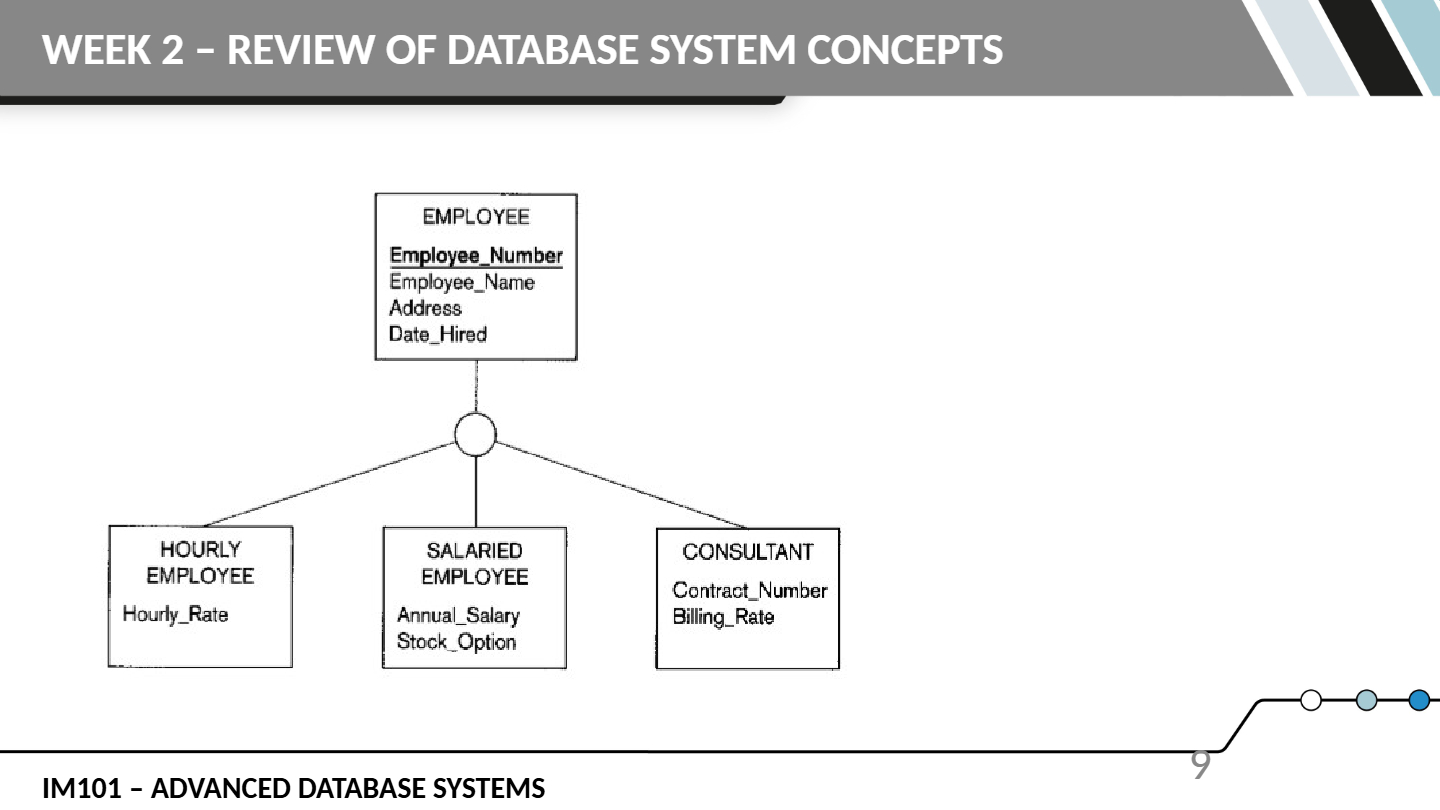
Based on the example provided, which of the following is NOT an attribute of salaried employees?
Hourly_Rate
Employee_number
Annual_Salary
Stock_Option
13
14
Multiple Choice
Which attributes are unique to the CONSULTANT entity in the database system diagram?
Contract_Number and Billing_Rate
Employee_Number and Address
Hourly_Rate and Annual_Salary
Stock_Option and Date_Hired
15
16
Fill in the Blanks
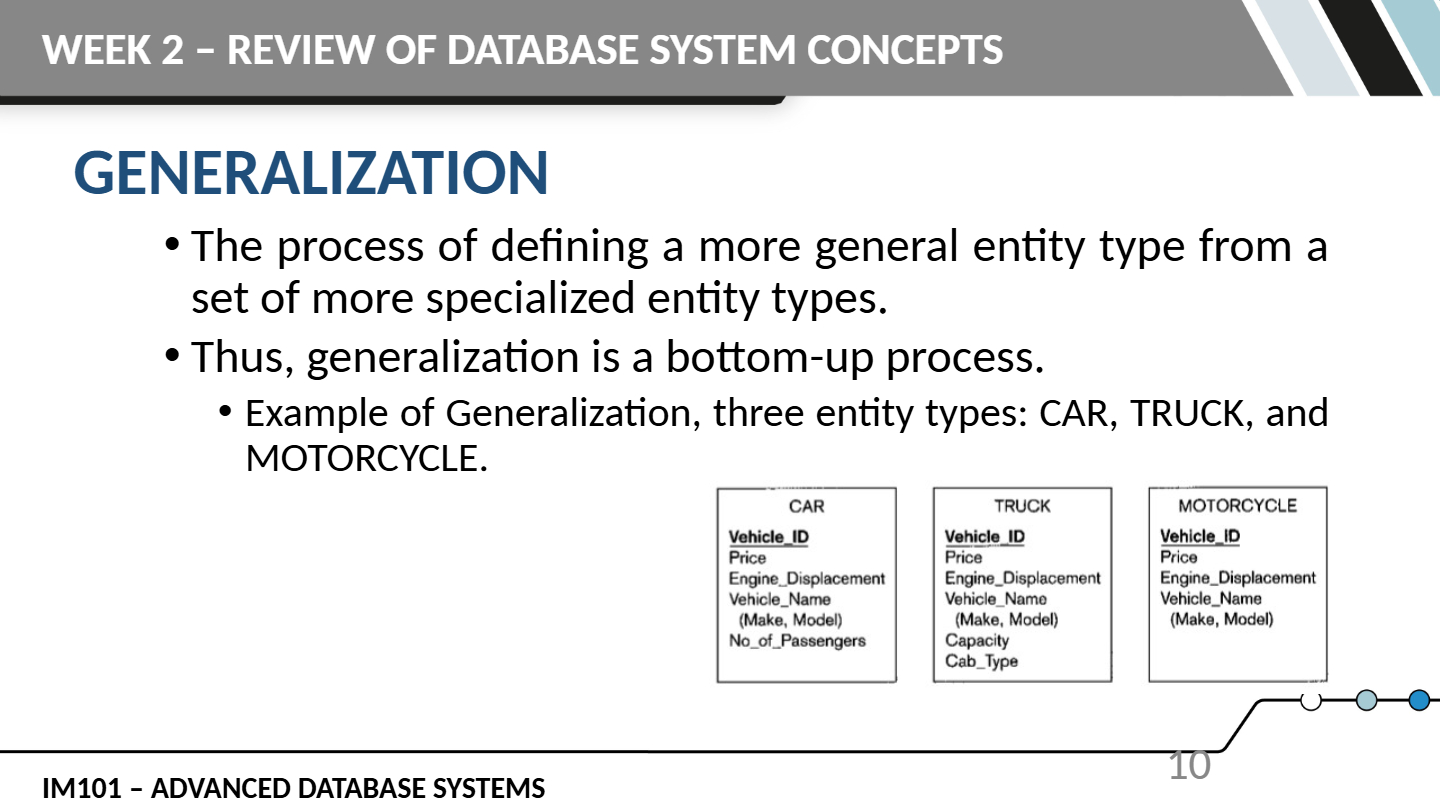
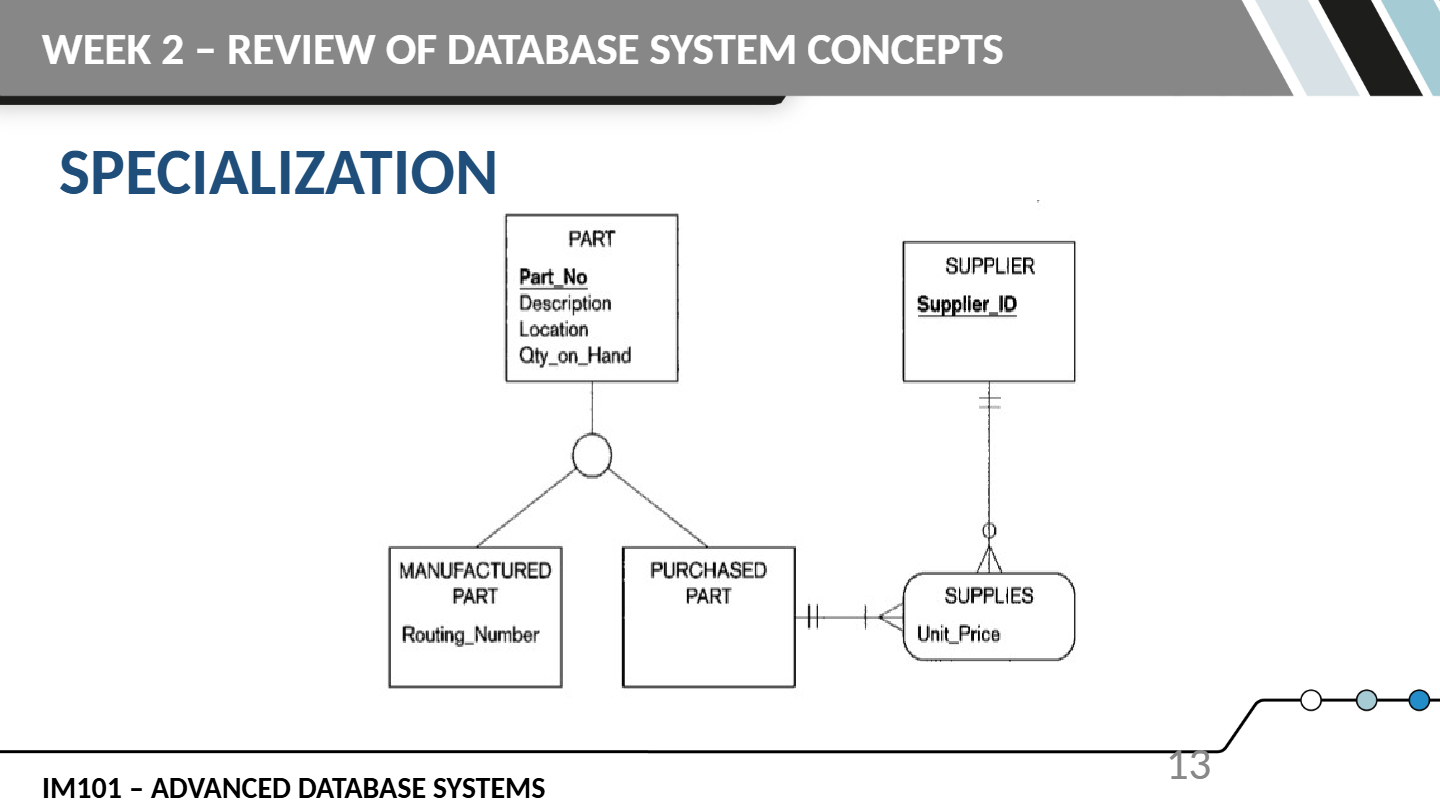
The process of defining a more general entity type from a set of more specialized entity types is called
17
18
Multiple Select
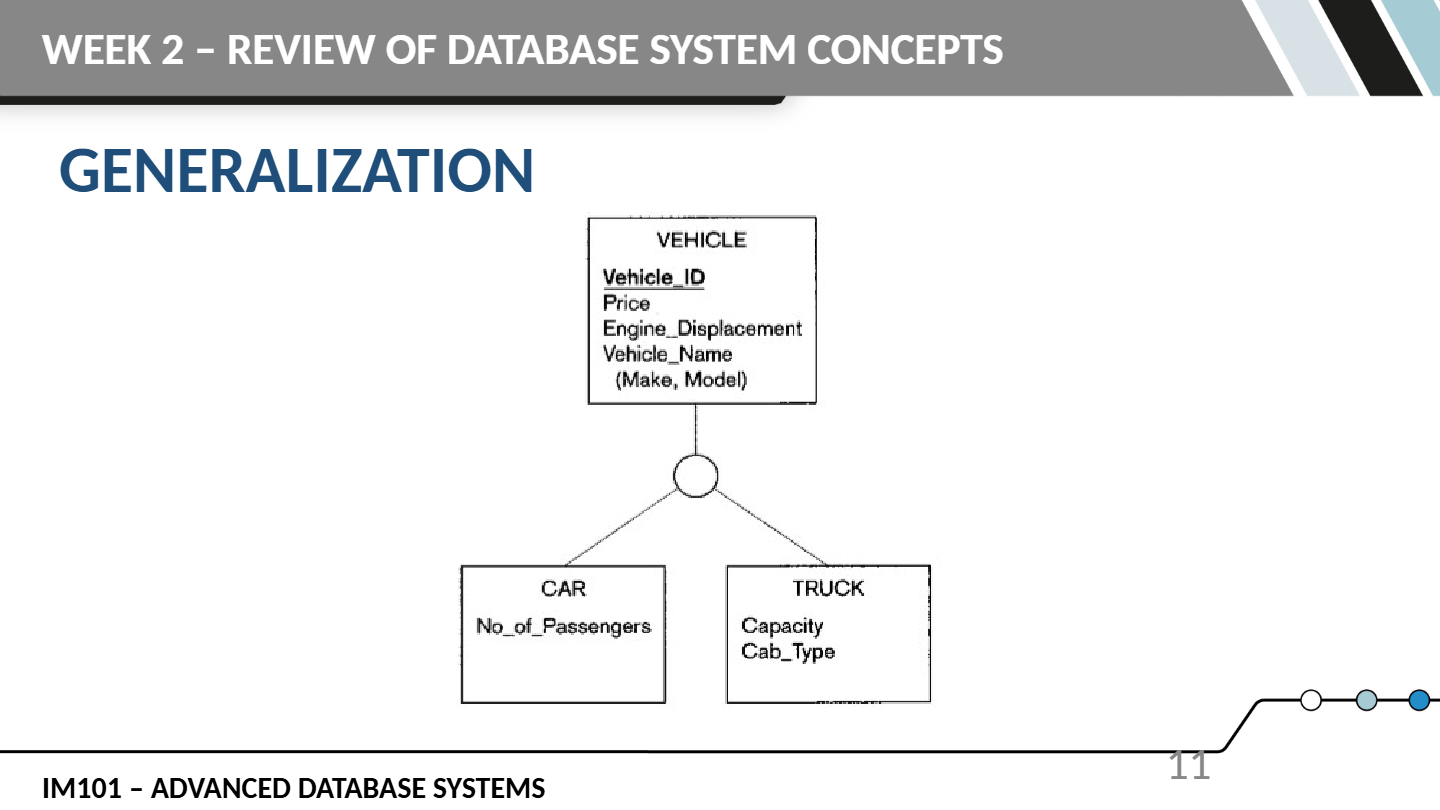
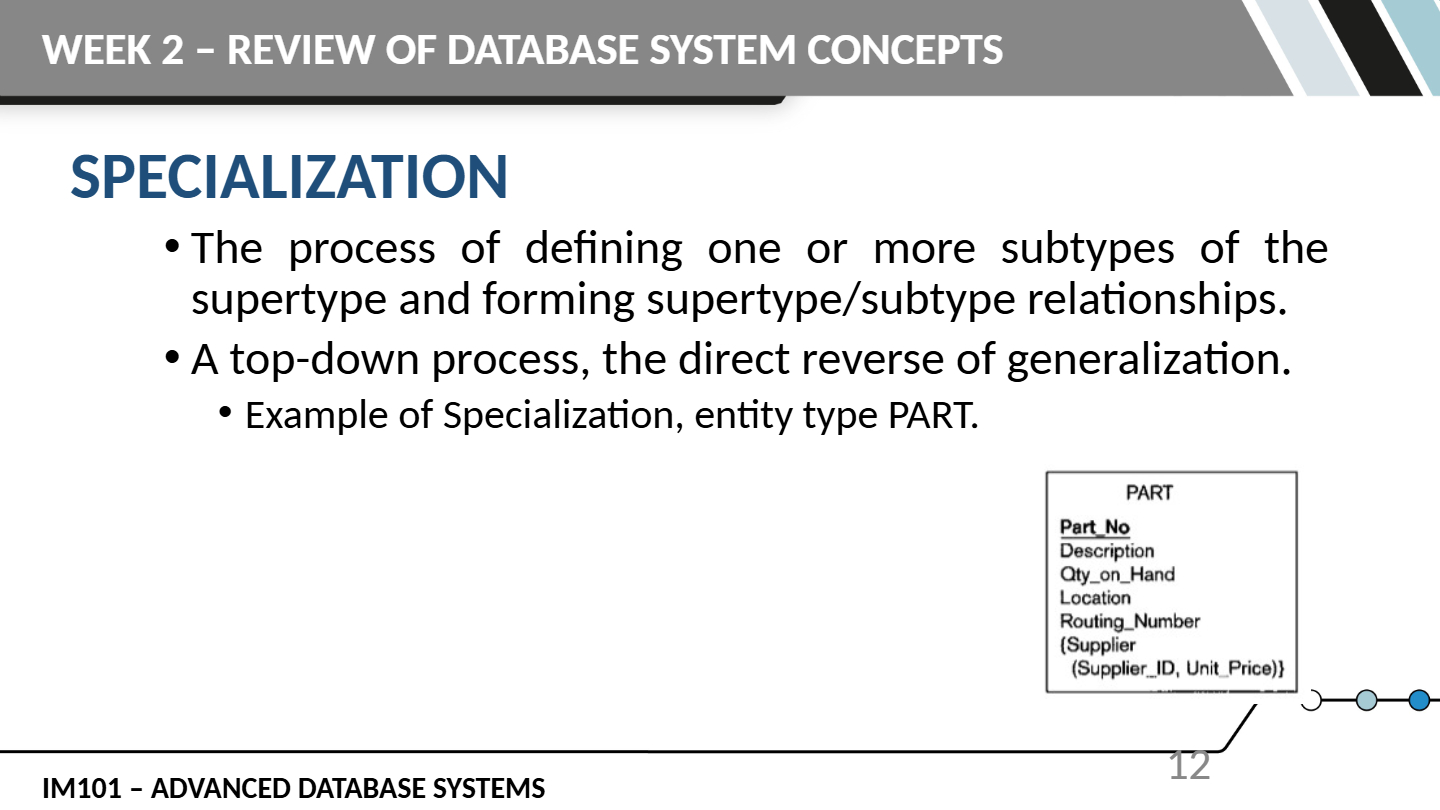
Which of the following are considered specialized entity types in the generalization example involving vehicles?
CAR
TRUCK
MOTORCYCLE
VEHICLE
19
20
21
Multiple Choice
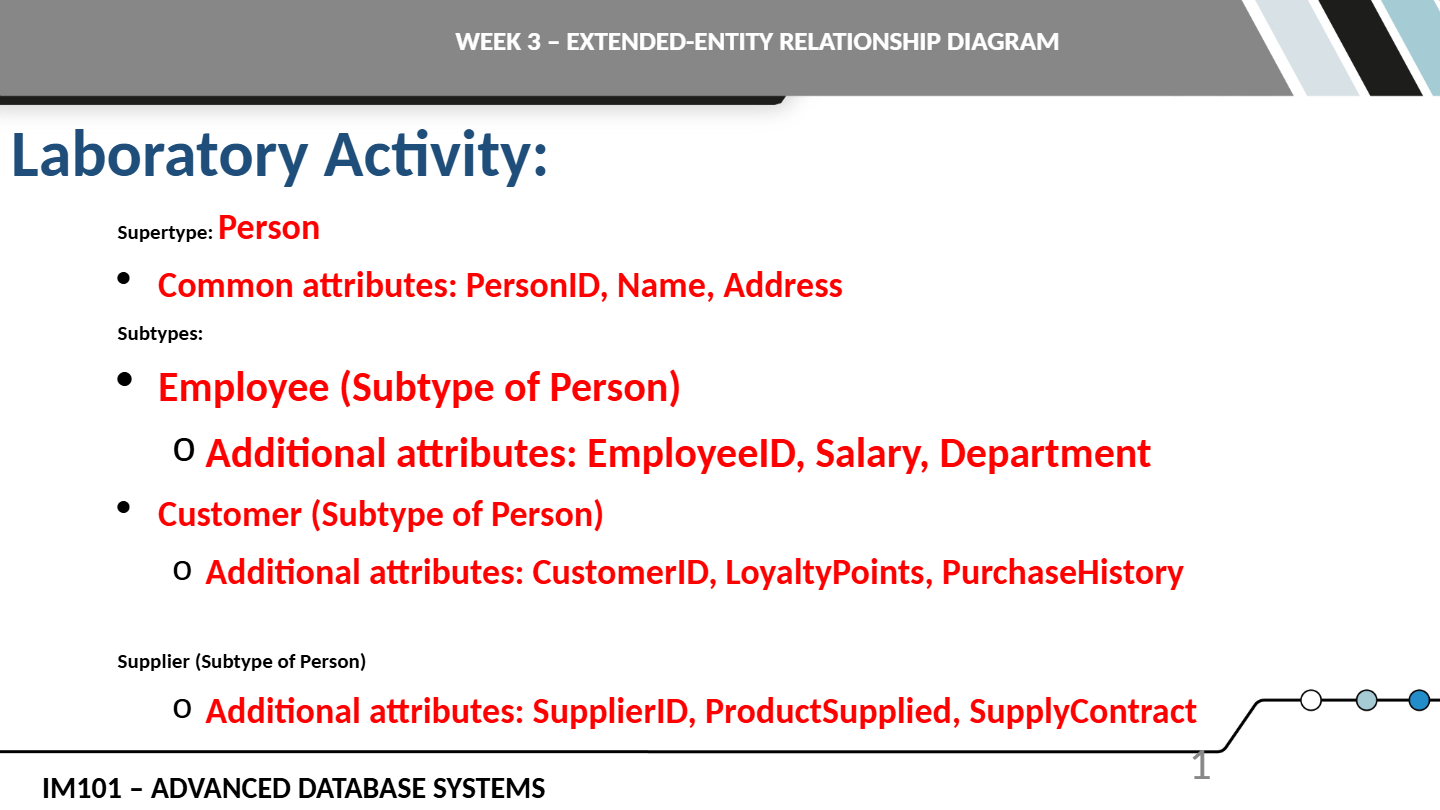
Which of the following is a common attribute shared by all subtypes of the 'Person' supertype in an Extended Entity Relationship Diagram?
EmployeeID
PersonID
LoyaltyPoints
ProductSupplied
22
23
Multiple Select
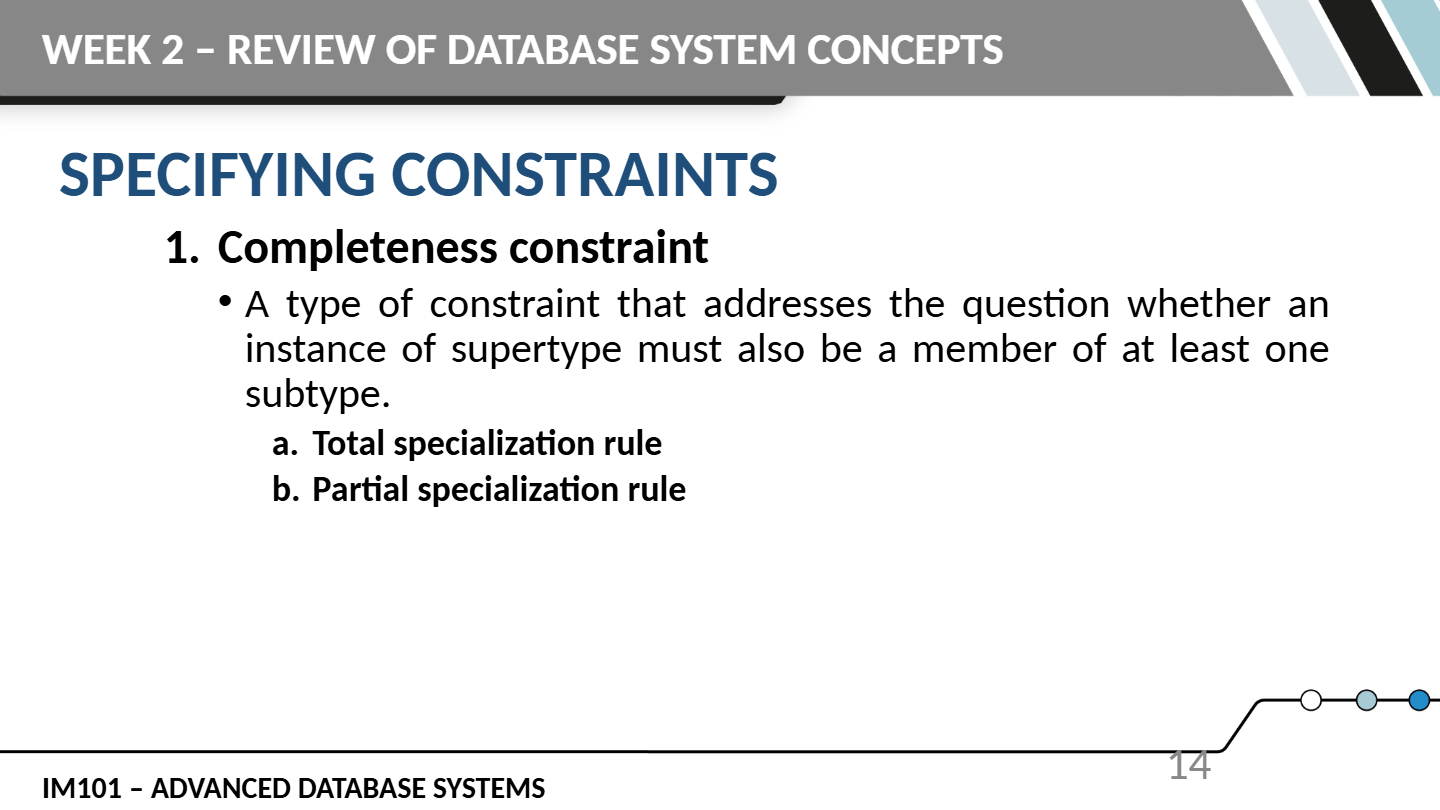
Which rules are associated with the completeness constraint in database specialization?
Total specialization rule
Partial specialization rule
Referential integrity rule
Entity integrity rule
24
Multiple Choice
What is the main purpose of the completeness constraint in specifying constraints for database systems?
To ensure every instance of a supertype is a member of at least one subtype
To define the attributes of a supertype
To create relationships between different entities
To enforce data integrity in all tables
25
26
Multiple Choice
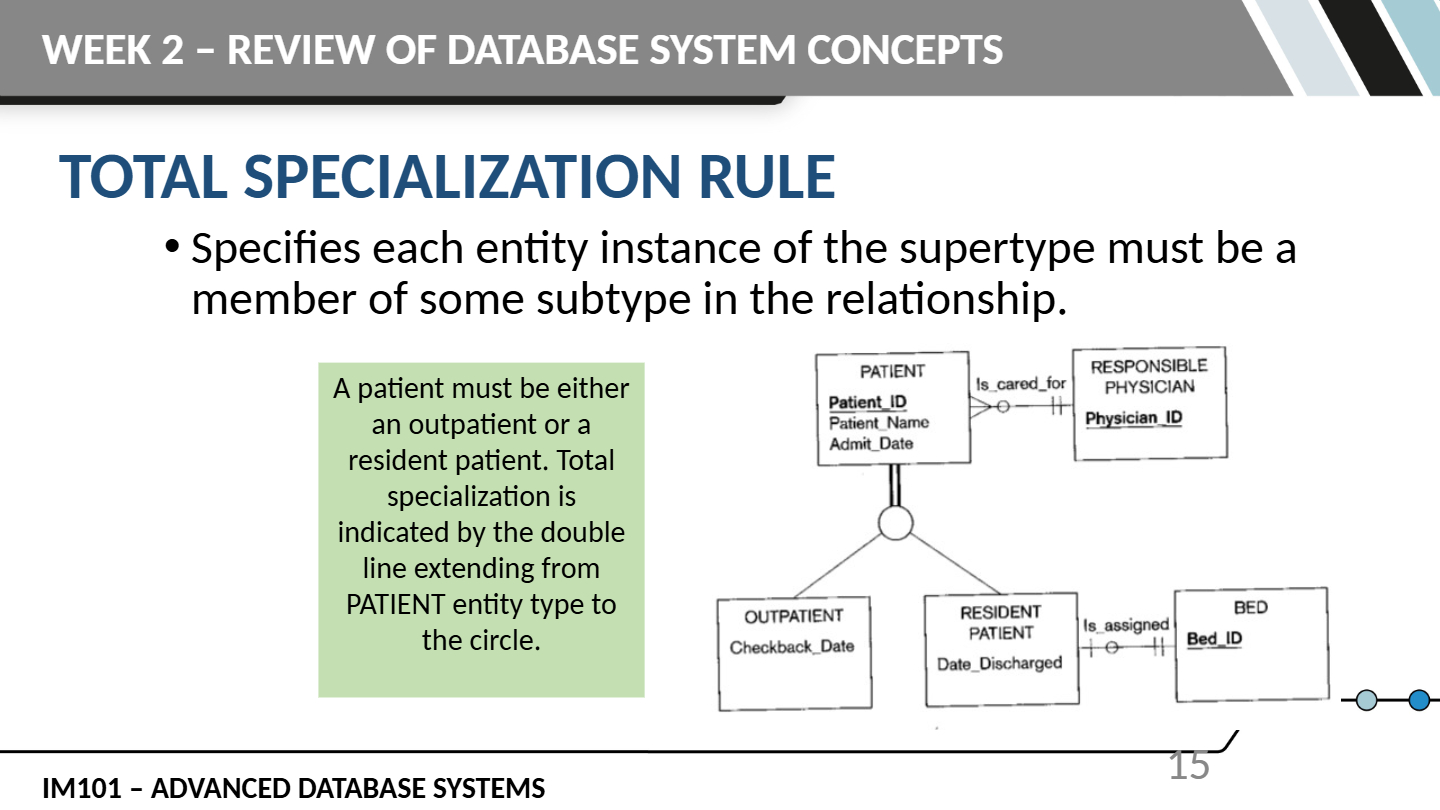
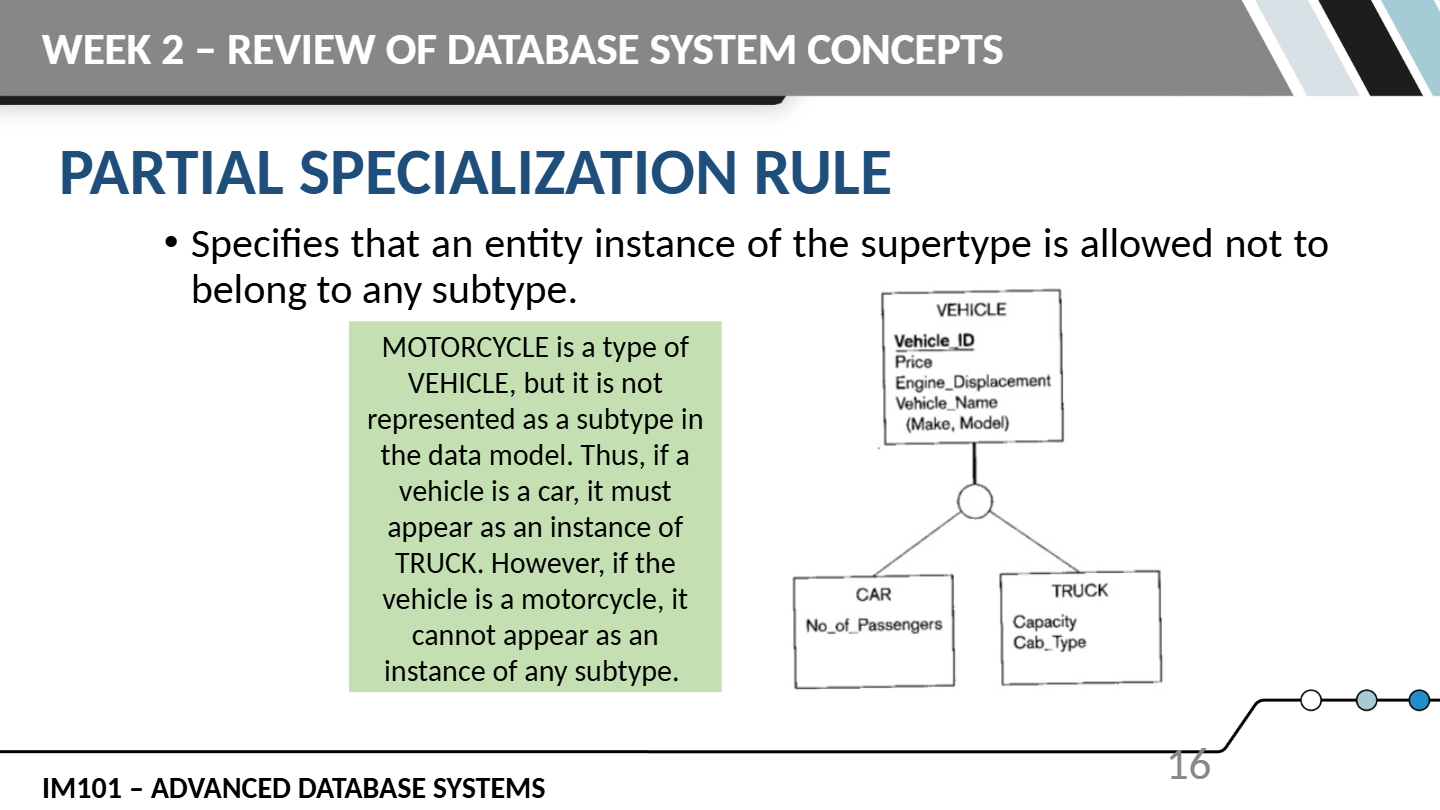
Which rule specifies that each entity instance of the supertype must be a member of some subtype in the relationship?
Total Specialization Rule
Partial Specialization Rule
Disjoint Rule
Overlap Rule
27
28

29
Multiple Select
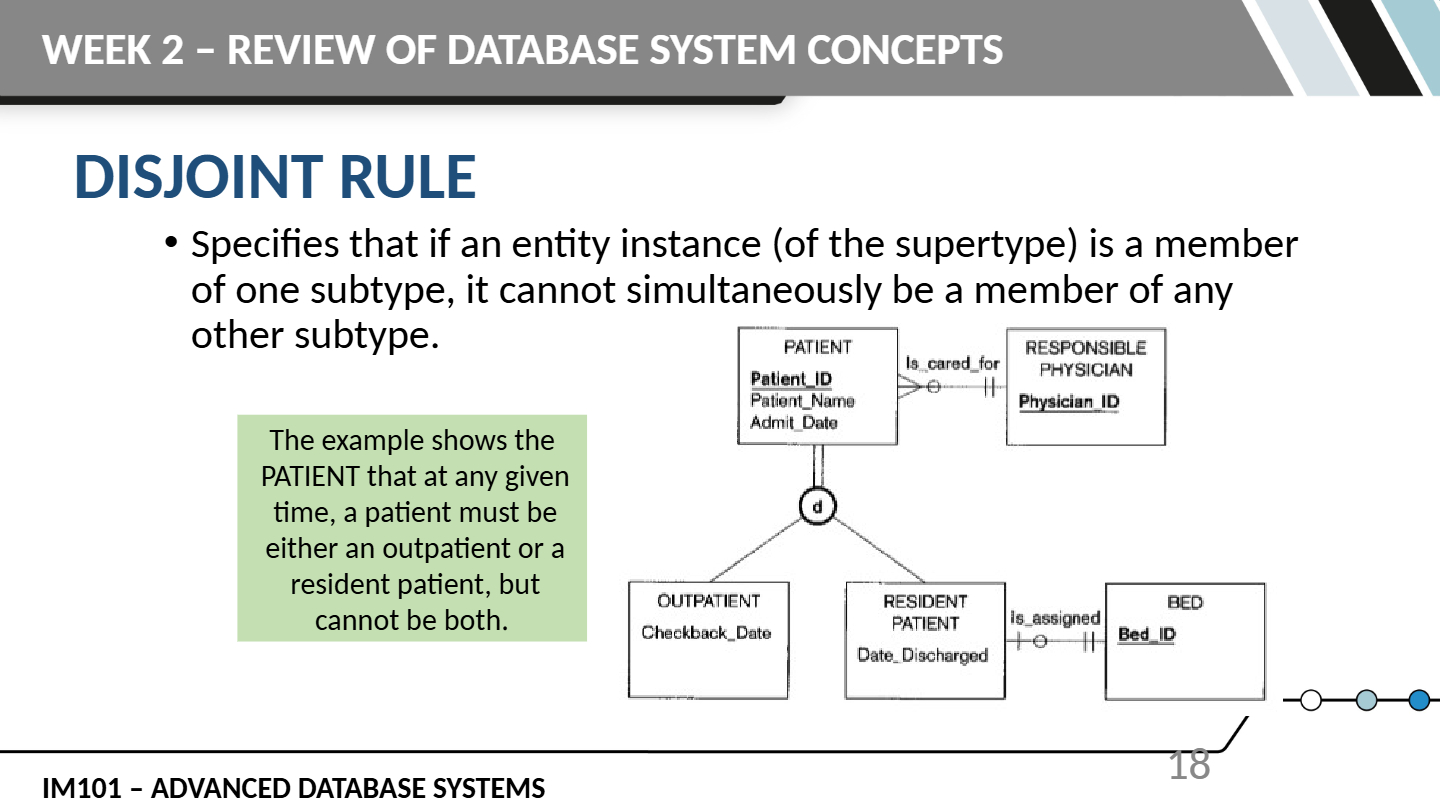
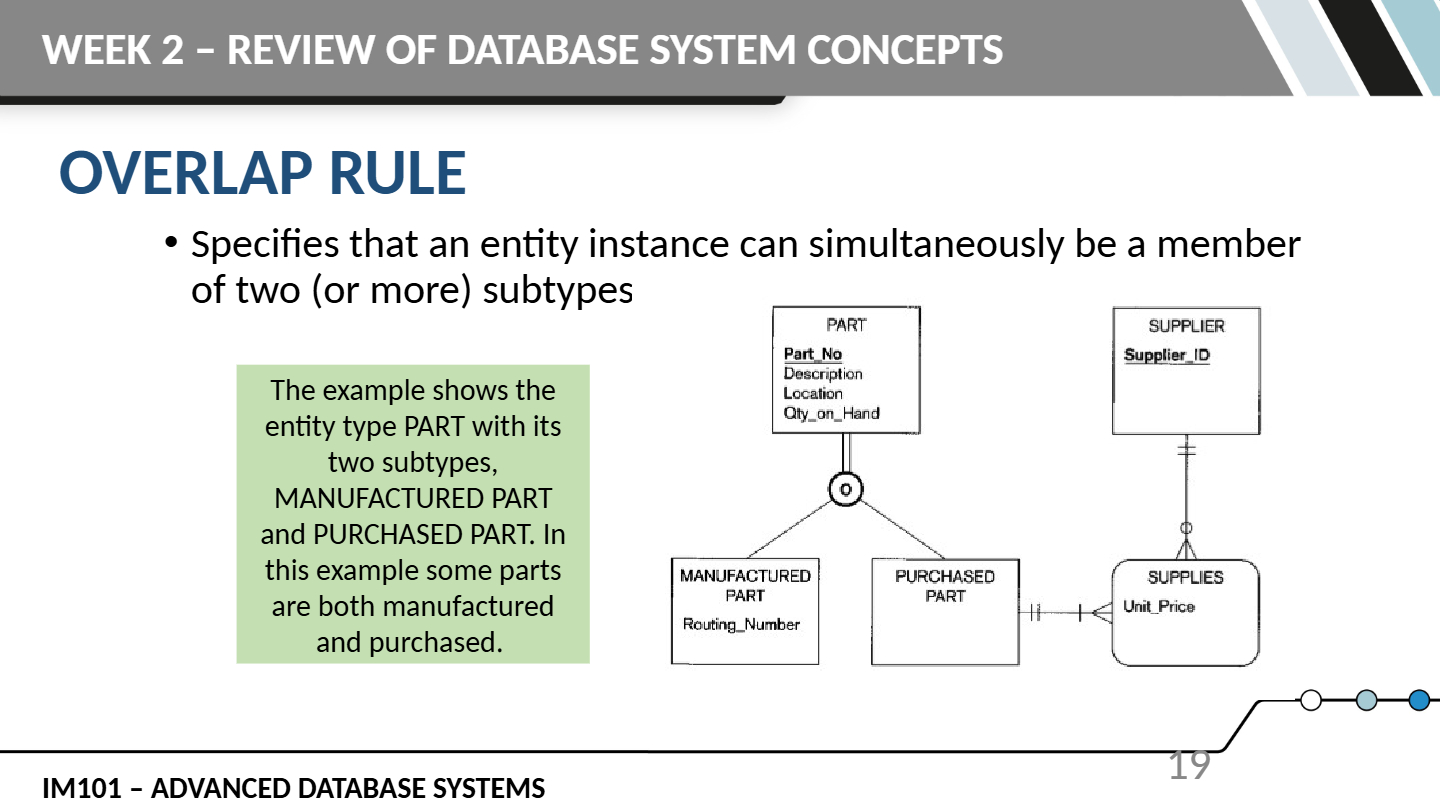
Which of the following statements about disjointness constraints is correct?
Disjointness constraints determine if an instance of a supertype can be a member of multiple subtypes simultaneously.
Disjointness constraints only apply to partial specialization.
Disjointness constraints are not relevant in ER diagrams.
Disjointness constraints have two possible rules: disjoint rule and overlap rule.
30
31
Fill in the Blanks
A patient must be either an outpatient or a resident patient, but cannot be both. This is an example of the
32
33
34
Fill in the Blanks
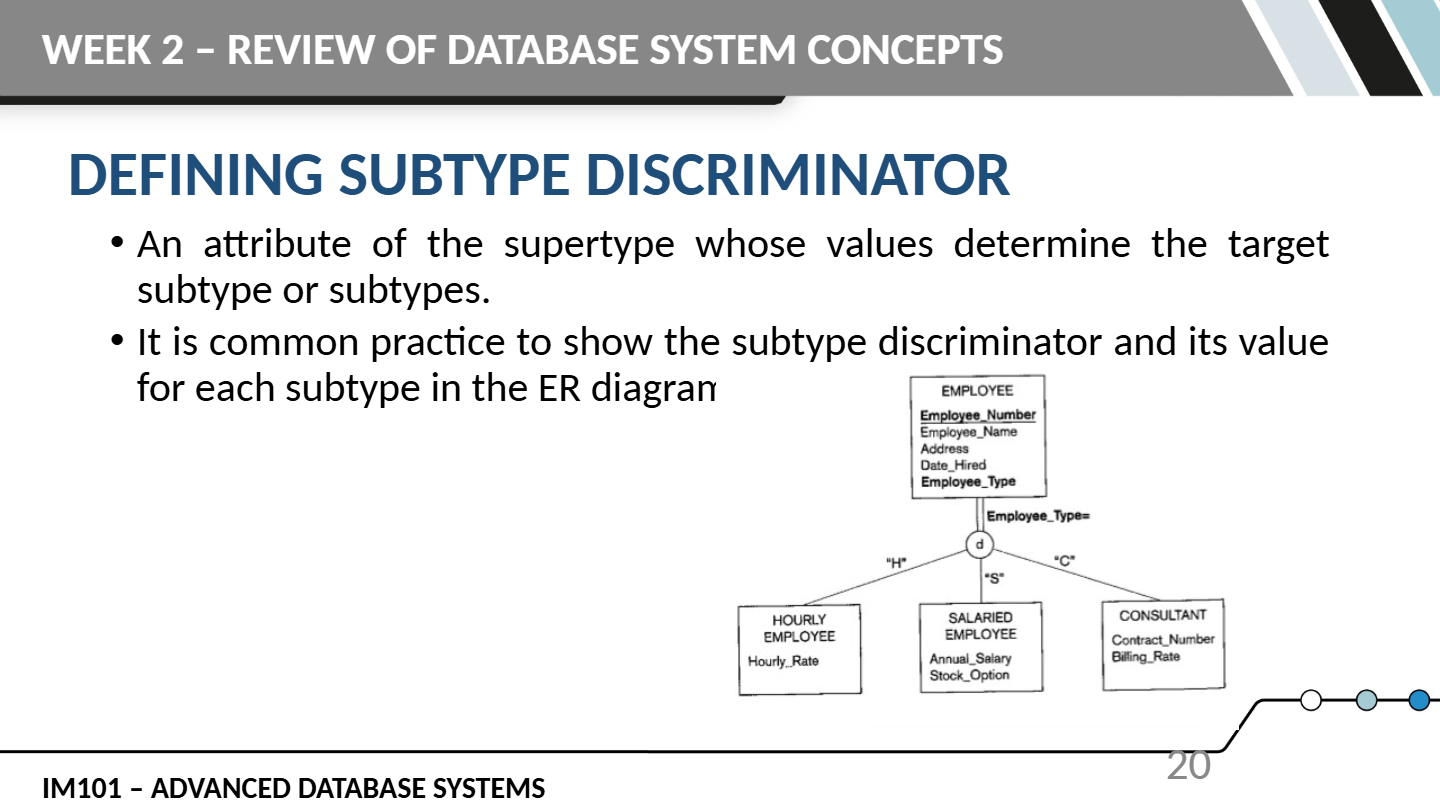
The attribute of the supertype whose values determine the target subtype or subtypes is called the
35
36
Multiple Select
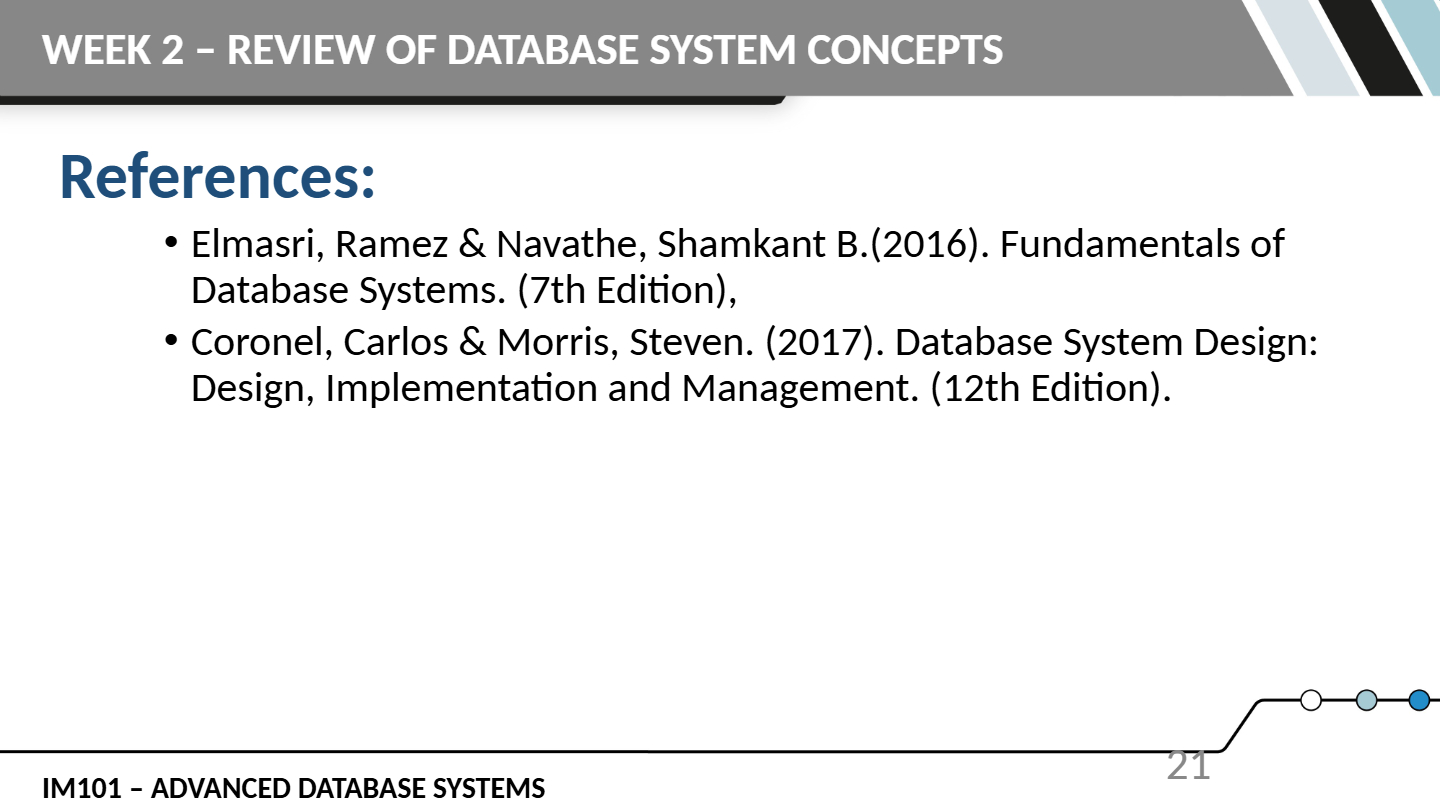
Which of the following books is referenced for learning about database system concepts in this course?
Fundamentals of Database Systems by Elmasri & Navathe (7th Edition)
Database System Concepts by Silberschatz, Korth & Sudarshan (6th Edition)
Modern Database Management by Hoffer, Ramesh & Topi (12th Edition)
Database System Design: Design, Implementation and Management by Coronel & Morris (12th Edition)
37
38
39
Open Ended
Reflecting on today's session about Extended Entity Relationship Diagrams, what are some real-world scenarios where you think using subtypes like Employee, Customer, and Supplier would be beneficial in designing a database?
40
Open Ended
Why is it important to distinguish between supertypes and subtypes in an Extended Entity Relationship Diagram (EERD)?
41
Open Ended
Explain the significance of subtyping in database systems and provide an example based on the slides.
42
Open Ended
Describe how the concept of supertype/subtype can be applied to model employees in an organization. Use the attributes listed in the example to support your answer.
43
Open Ended
Explain the difference between generalization and specialization in the context of database system concepts.
44
Open Ended
Describe a scenario in which the overlap rule would be more appropriate than the disjoint rule in an ER diagram.
Show answer
Auto Play
Slide 1 / 44
SLIDE
Similar Resources on Wayground

38 questions
Auditing Going Concern
Presentation
•
Professional Development
40 questions
Quiz 10: Procurement Management Quiz
Presentation
•
Professional Development
42 questions
WHT ID Sharing Session
Presentation
•
Professional Development
38 questions
VIRUS
Presentation
•
University
37 questions
Module 1 - Business Driven Tech
Presentation
•
University
34 questions
Metode Penelitian
Presentation
•
University
42 questions
ปฐมนิเทศ2567
Presentation
•
University
35 questions
METODE PENELITIAN TEKNIK INFORMATIKA
Presentation
•
University
Popular Resources on Wayground
10 questions
Safety Day 2026 – Student Review

Quiz
•
9th Grade
21 questions
Continents and Oceans
Quiz
•
6th Grade
20 questions
Parts of Speech
Quiz
•
5th Grade
16 questions
Subject & Predicate
Quiz
•
5th Grade
25 questions
Multiplication Facts
Quiz
•
5th Grade
12 questions
Map Skills
Quiz
•
3rd Grade
22 questions
Continents and Oceans
Quiz
•
5th Grade
15 questions
Rounding Decimals
Quiz
•
5th Grade
Discover more resources for Computers
20 questions
Disney Trivia
Quiz
•
University
10 questions
Spanish Greetings and Goodbyes!
Presentation
•
6th Grade - University
20 questions
Physical or Chemical Change/Phases
Quiz
•
8th Grade - University
39 questions
Unit 7 Key Terms
Quiz
•
11th Grade - University
25 questions
SER and Subject Pronouns
Quiz
•
8th Grade - University
38 questions
Unit 6 Key Terms
Quiz
•
11th Grade - University
19 questions
Key Concepts in Buddhism
Quiz
•
University
0 questions
Cell Domain Basic Review (Biology)
Quiz
•
University